Now that @GavinNewsom has signed SB 79, it's time to write #4 and #5 of the threads I promised.
This is SB 79 🧵#4: Advice for local gov't officials.
Read it if you're feeling stuck b/t pitchfork- or recall-wielding NIMBYs and the demands of state law.
1/21
This is SB 79 🧵#4: Advice for local gov't officials.
Read it if you're feeling stuck b/t pitchfork- or recall-wielding NIMBYs and the demands of state law.
1/21
https://twitter.com/CSElmendorf/status/1966910007141867675
First suggestion: Do everything you can to *maximize transparency* about where, when & how SB 79 applies -- and about the discretion it confers on city councils to alter SB 79 default rules or roll back other upzonings.
/2
/2
I say this not b/c I think transparency is inherently good. Rather, I think it has real instrumental benefits for councilpersons who fear a NIMBY uprising.
Clarity about where SB 79 applies will, at least on margin, lead to geographic reshuffling of population.
/3
Clarity about where SB 79 applies will, at least on margin, lead to geographic reshuffling of population.
/3
The most density-averse residents will move out of the SB-79 zones, and others who are more tolerant or even welcoming of SB 79 will move in. This will reduce local opposition to SB 79 projects (which could save your hide).
/4
/4
Clarity about SB 79's application also avoids unwelcome surprises and equips people who really don't like it to make concrete appeals to the state legislature. ("Blame Sacramento, not me!")
/5
/5
And clarity about its application will also give your constituents plenty of time to organize and propose "Eckhouse plans" before the full-force version of SB 79 kicks in (a year into the 7th housing-element cycle, or roughly 2030).
/6
/6

So, how to achieve clarity?
- Create an SB 79 website, w/ maps of local SB 79 zones & height/density/FAR allowed in each, both by default & under local ordinance, if any.
Website should also explain "Eckhouse plan" concept & invite suggestions.
/7
- Create an SB 79 website, w/ maps of local SB 79 zones & height/density/FAR allowed in each, both by default & under local ordinance, if any.
Website should also explain "Eckhouse plan" concept & invite suggestions.
/7
https://x.com/CSElmendorf/status/1966989012427829361
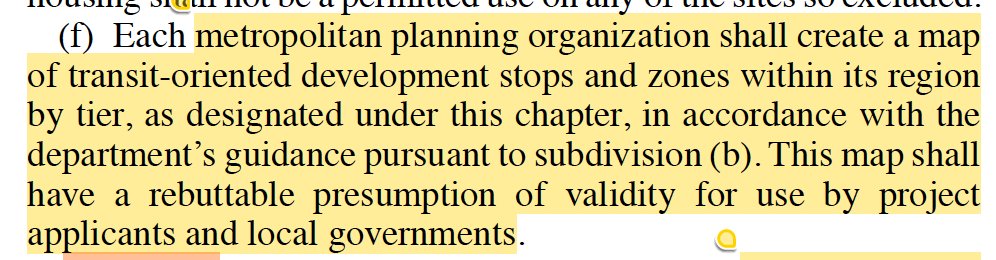
- Lobby your MPO to issue its official SB 79 map as soon as possible. Then use it in your website.
The MPO's map carries a presumption of correctness for purposes of the default SB 79 rules (GC 65912.157) and calculations of the sufficiency of an Eckhouse Plan.
/8
The MPO's map carries a presumption of correctness for purposes of the default SB 79 rules (GC 65912.157) and calculations of the sufficiency of an Eckhouse Plan.
/8
- Lobby @California_HCD to issue ASAP (1) guidelines for its review of SB 79 implementation & Eckhouse ordinances, and (2) standards for counting SB 79 capacity toward RHNA obligations.
Implore HCD to choose bright-line rules over mushy standards whenever possible.
/9
Implore HCD to choose bright-line rules over mushy standards whenever possible.
/9
Clear HCD rules will make it much easier for your constituents to understand how SB 79 applies and what is your zone of discretion when it comes to implementing ordinances & Eckhouse plans.
/10
/10
HCD is likely to resist issuing clear rules. They'll say they don't have the authority.
(SB 79 authorizes HCD to issue standards for counting SB 79 capacity toward RHNA, but doesn't say anything about rulemaking or guidelines for other purposes.)
No matter. For reasons...
/11
(SB 79 authorizes HCD to issue standards for counting SB 79 capacity toward RHNA, but doesn't say anything about rulemaking or guidelines for other purposes.)
No matter. For reasons...
/11
I'll explain in Thread #5 (advice to Leg), the Leg will have to pass a trailer bill next spring exempting HCD's standards for SB 79 "RHNA counting" from the APA.
Other SB 79 standards or guidelines can be validated by the same bill.
/12
Other SB 79 standards or guidelines can be validated by the same bill.
/12
Next big theme: Beware of propitiating your NIMBY constituents via legally questionable policies that try to exploit ambiguities in SB 79.
Why? B/c, starting 1/1/2027, SB 79 imposes severe sanctions on cities that unlawfully disapprove SB projects in high-resource areas.
/13
Why? B/c, starting 1/1/2027, SB 79 imposes severe sanctions on cities that unlawfully disapprove SB projects in high-resource areas.
/13
A court *shall* fine the city at least $10,000 per unit that was unlawfully denied.
Courts have discretion to impose larger fines, and a city that has a track record of gamesmanship w.r.t. SB 79 is likely to be hit with bigger penalties.
/14
Courts have discretion to impose larger fines, and a city that has a track record of gamesmanship w.r.t. SB 79 is likely to be hit with bigger penalties.
/14
https://x.com/CSElmendorf/status/1966988897621352809
One way to demonstrate good faith (and thus minimize potential fines) is to ask @California_HCD for a TA memo if you're unclear about whether you may disapprove an SB 79 project or condition its approval in particular ways.
/15
/15
Another way is to acquiesce in any reasonable HCD finding of noncompliance with respect to your SB 79 implementation ordinance or Eckhouse plan, rather than exercising your prerogative to adopt the ordinance over HCD's objection.
/16
/16
Next theme: Recognize opportunity!
SB 79 may put you in a tough spot with some of your constituents, but it also opens doors.
/17
SB 79 may put you in a tough spot with some of your constituents, but it also opens doors.
/17
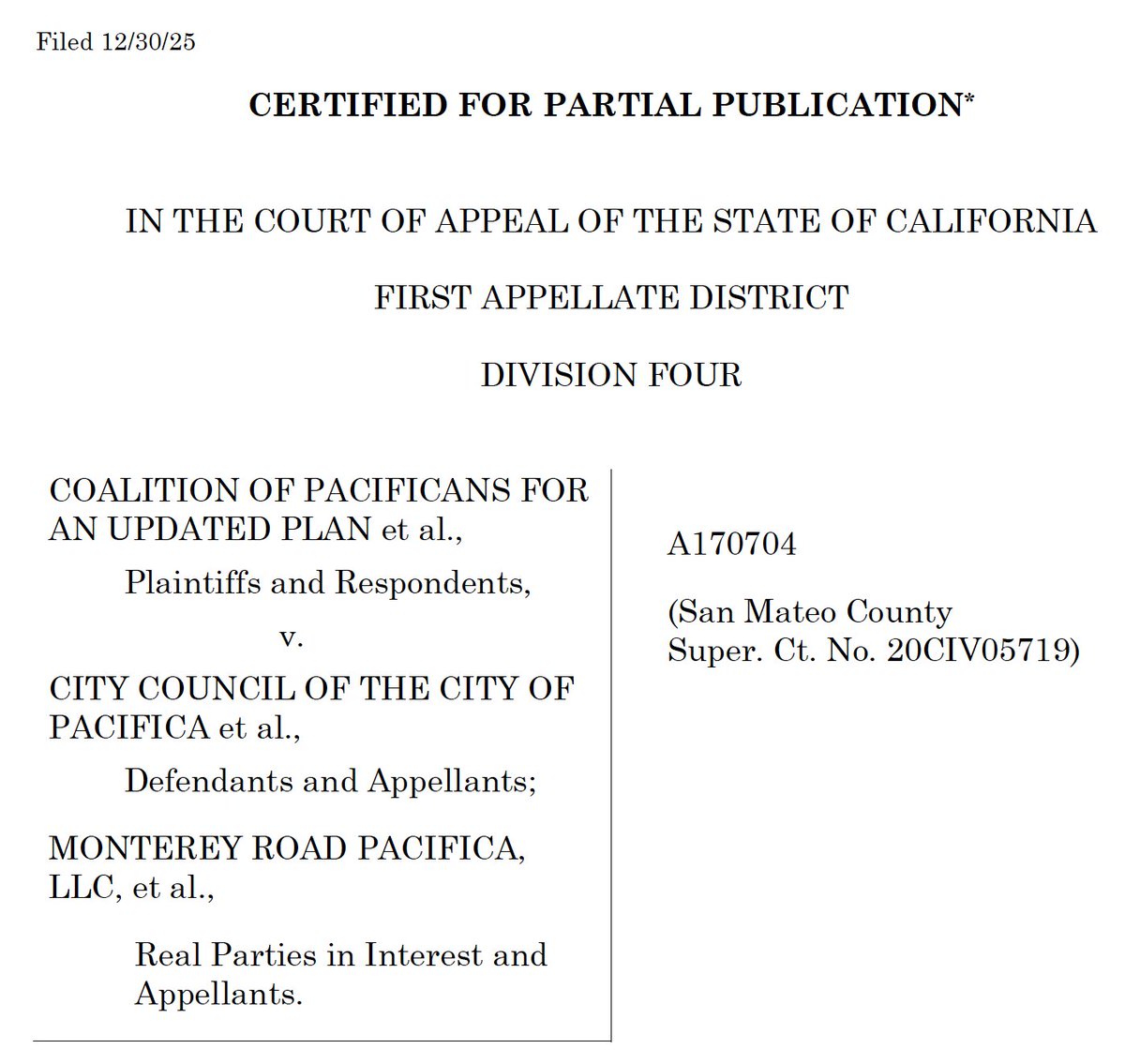
E.g., a case decided last week has probably rendered your housing-element rezoning unlawful. You'll need to fix it quickly or risk lawsuits & builder's remedy projects.
One quick fix is to opt into SB 79 early, w/ or w/o Eckhouse plan. No CEQA required!
One quick fix is to opt into SB 79 early, w/ or w/o Eckhouse plan. No CEQA required!
https://x.com/CSElmendorf/status/1976841858597965900
More generally, SB 79 should help you navigate between the competing demands of your NIMBY constituents and the YIMBY and Chamber of Commerce types who want more housing.
It lets you upzone and approve more housing while shifting blame to the state.
/19
It lets you upzone and approve more housing while shifting blame to the state.
/19
Last thought: Expect fluidity. Prepare your constituents for it.
SB 79 is a work in progress. The Leg is likely to hammer on it year by year, fixing problems as they arise, much like ADU law.
/20
SB 79 is a work in progress. The Leg is likely to hammer on it year by year, fixing problems as they arise, much like ADU law.
/20
Tell your constituents to go to the Leg if there are specific things they want changed.
And design your SB 79 website in the expectation that it will need to be updated at least annually.
/end
And design your SB 79 website in the expectation that it will need to be updated at least annually.
/end
@threadreaderapp unroll
• • •
Missing some Tweet in this thread? You can try to
force a refresh