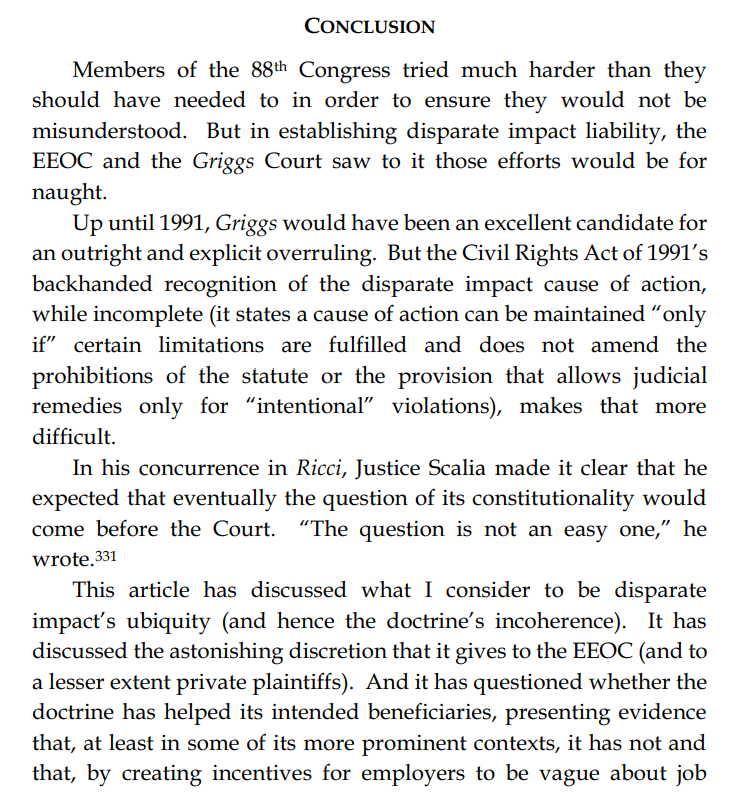
Thread with excerpts from Gail Heriot's "Title VII Disparate Impact Liability Makes Almost Everything Presumptively Illegal". The argument is very simple: everything has disparate impact; therefore disparate impact doctrine gives the EEOC effectively unlimited arbitrary power. 
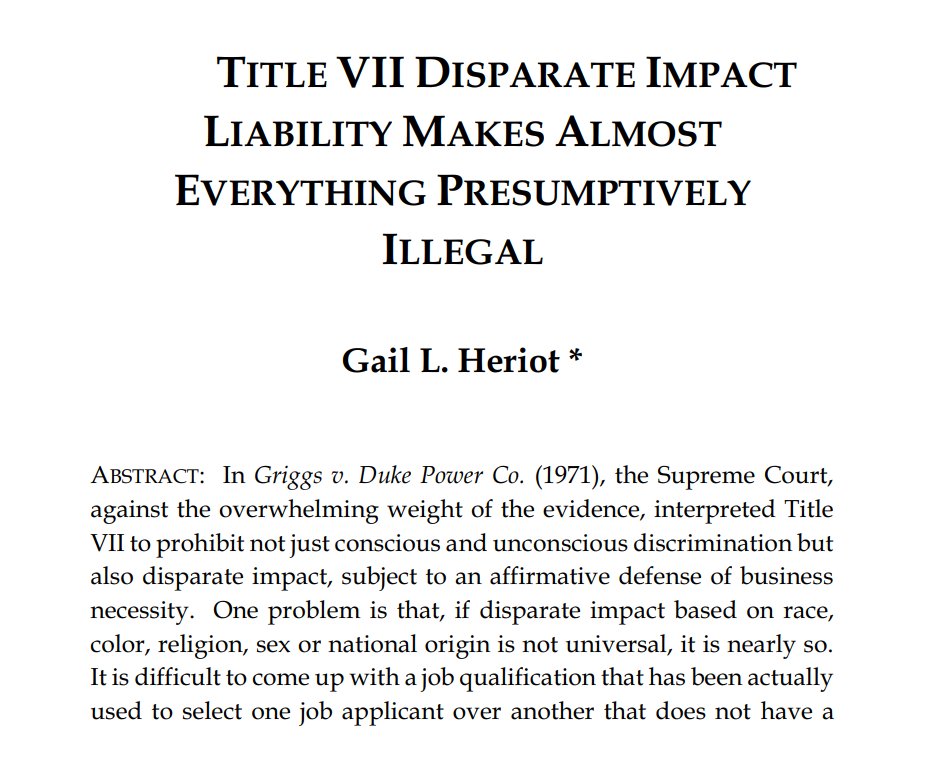
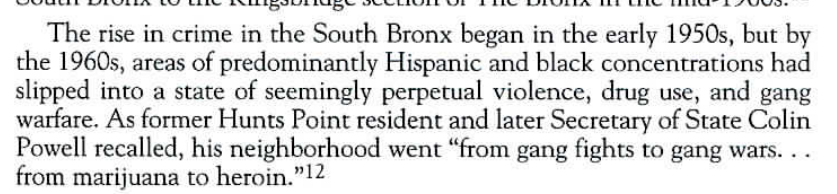
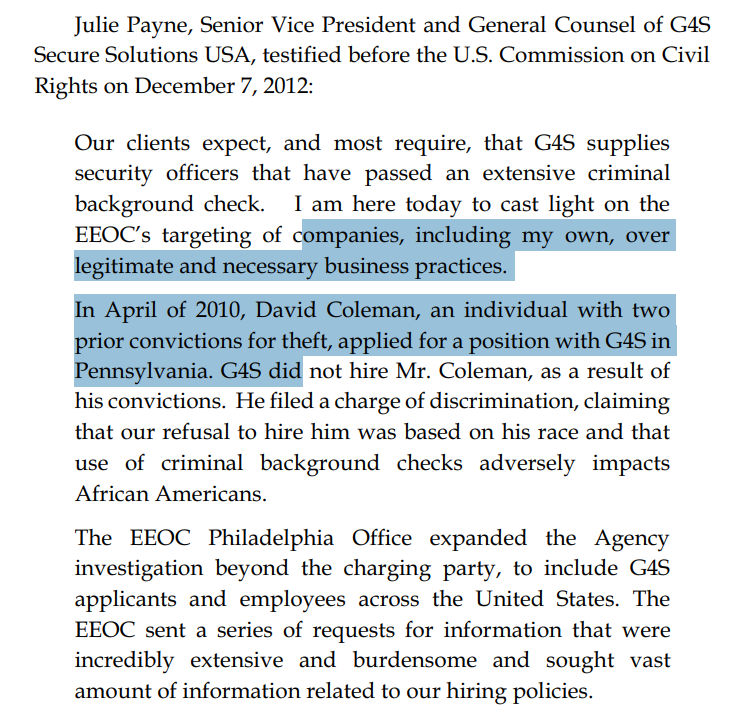
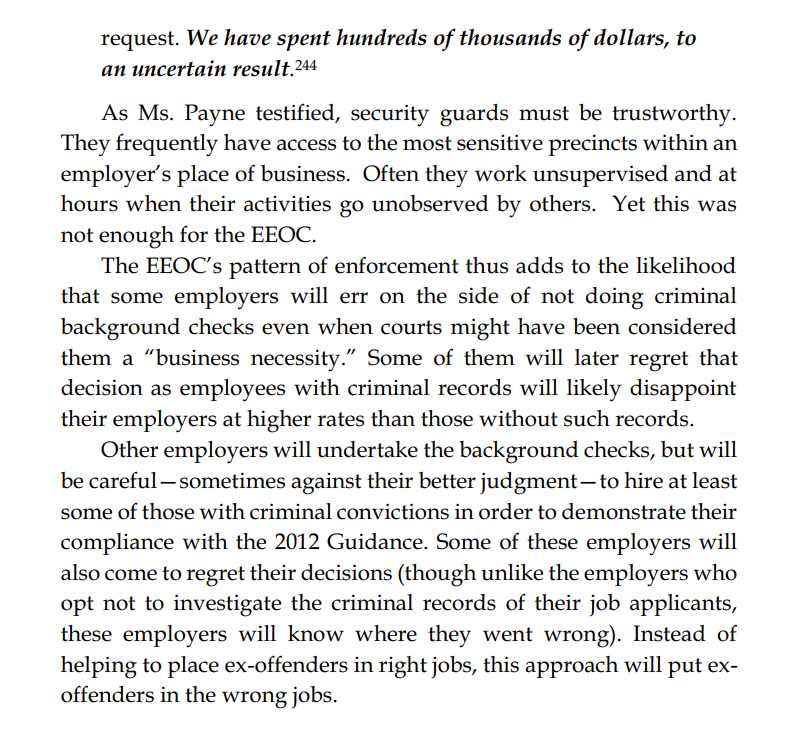
They use this power poorly. For example, the EEOC requires employers hire criminals on the grounds that African-Americans are more likely to be criminals, therefore not hiring criminals is racist.

Disparate impact has also been used to overturn the plain text of Title VII, which bans racial discrimination, to allow for affirmative action (racial discrimination against whites).

Even if an employer proves, for a fact, that he is not discriminating based on a protected class (race, religion, sex, national origin, etc), he can still be held liable for disparate impact.
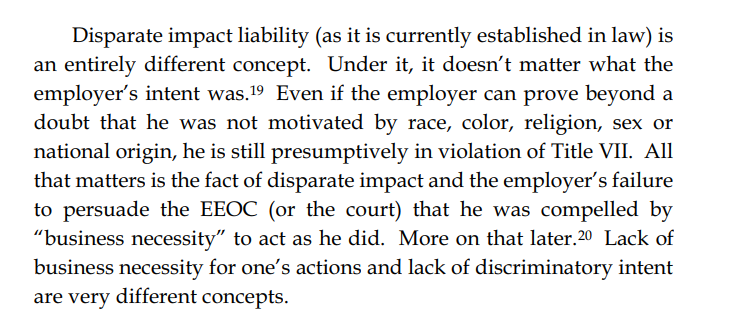
This is explicitly the opposite of what the legislators who passed the law intended, the product of a power grab by a troika of judges, bureaucrats, and activists.
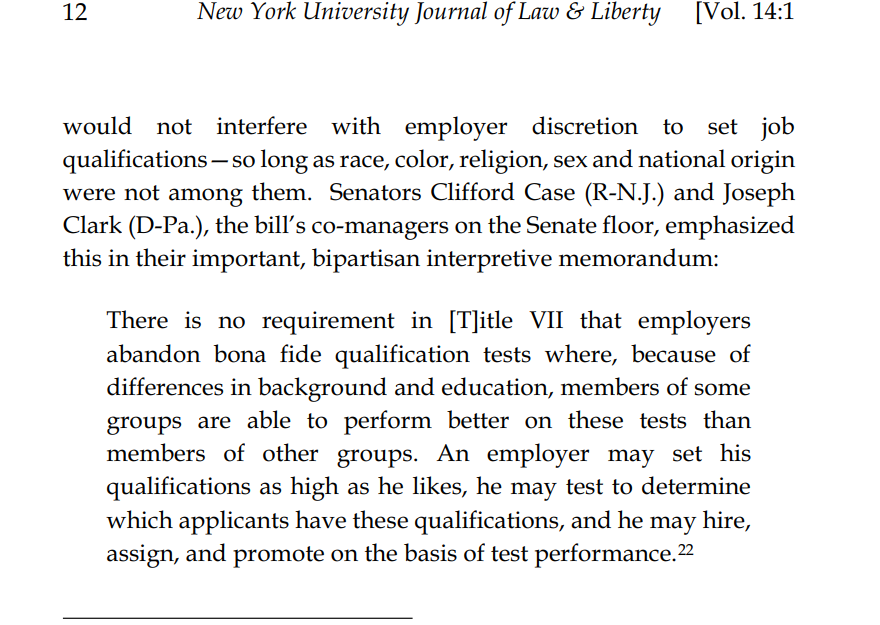
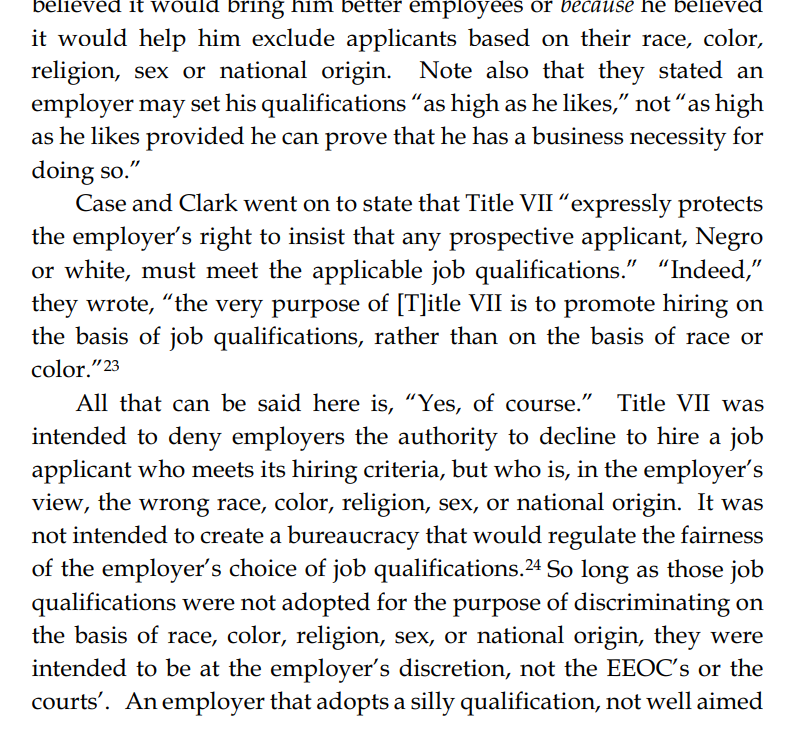
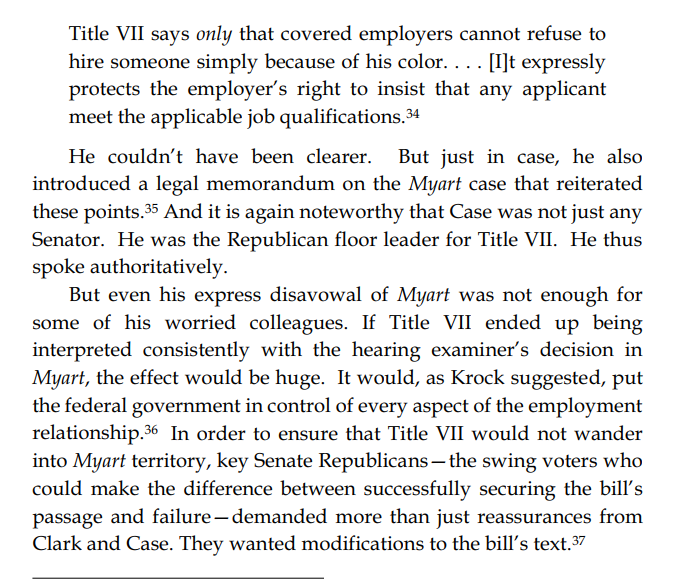
These legislators made their intent explicit because of a pre-Civil Rights Act of 1964 court case which found that Motorola could not use a standardized test because it was used to avoid hiring a black applicant, which was seen as tyrannical overreach at the time.
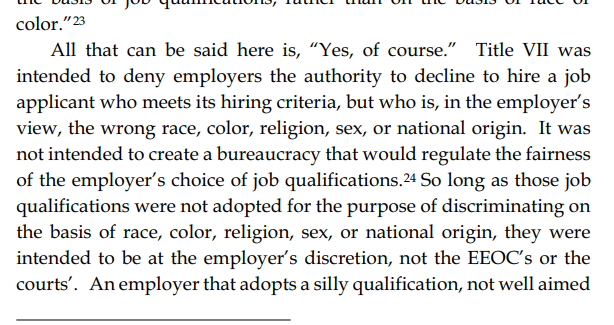
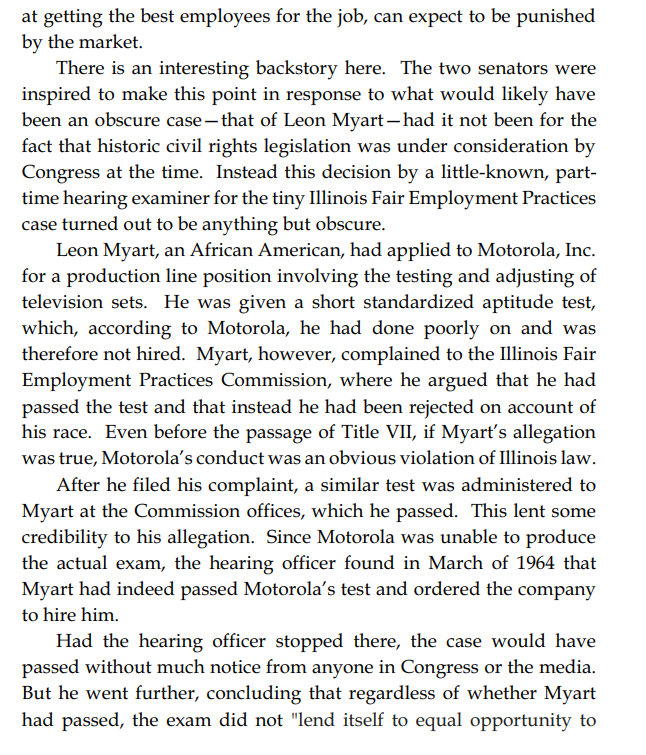
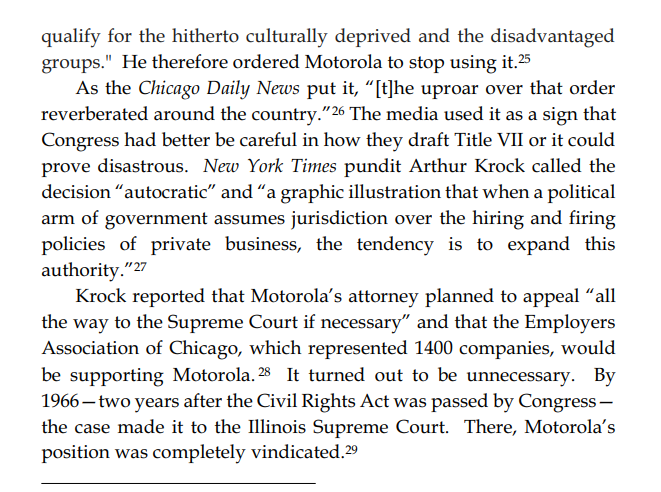
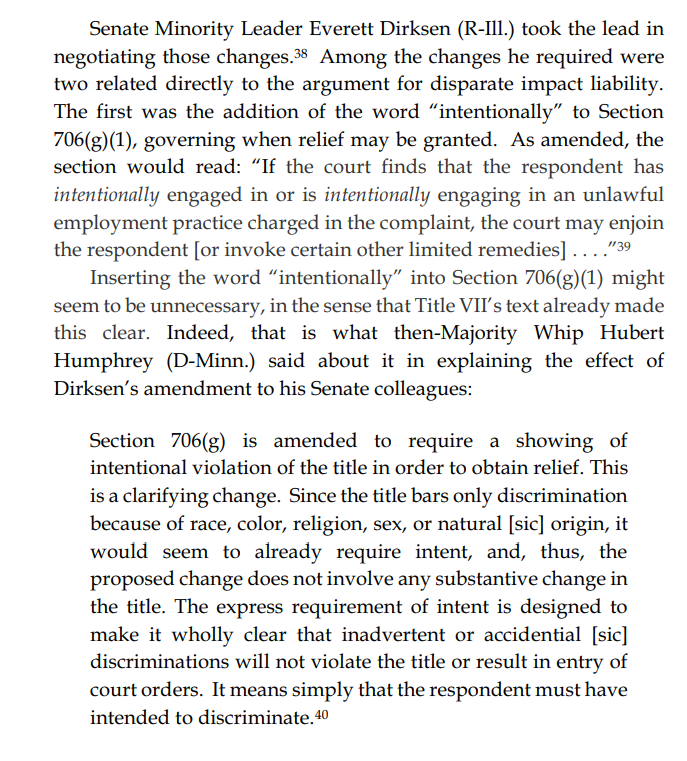
This court case nearly torpedoed Title VII, so the major architects took pains to emphasize Title VII would not legitimize it and modified the bill's text to ensure that. Then the Supreme Court went and used Title VII to justify exactly what it was modified to prevent.
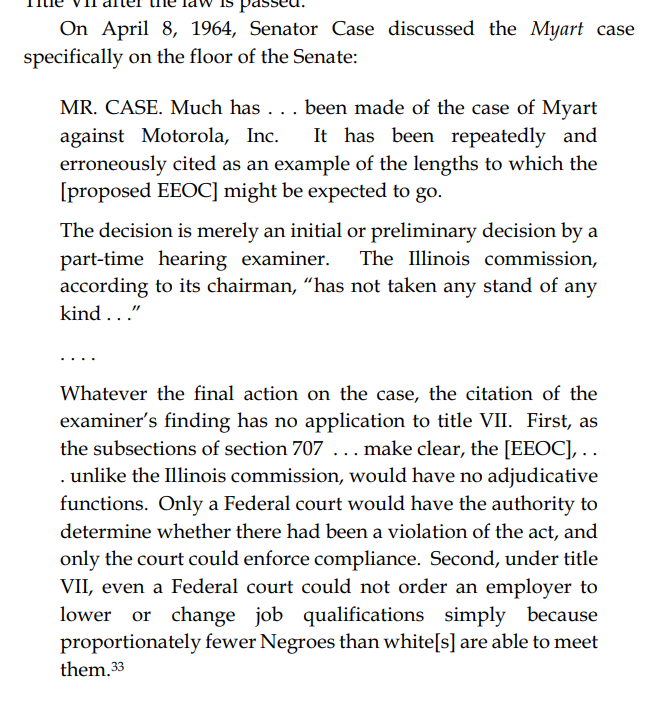
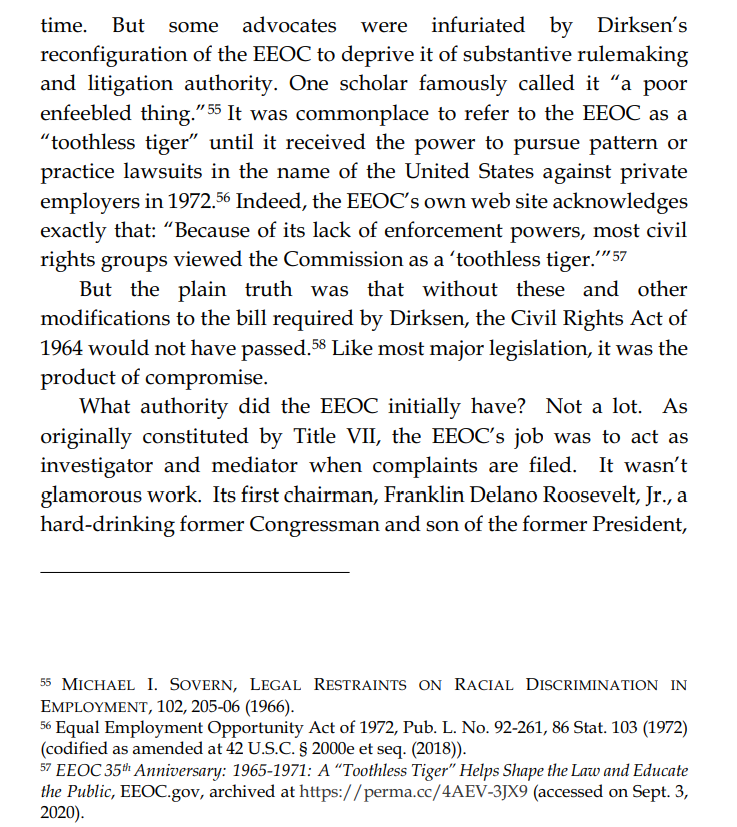
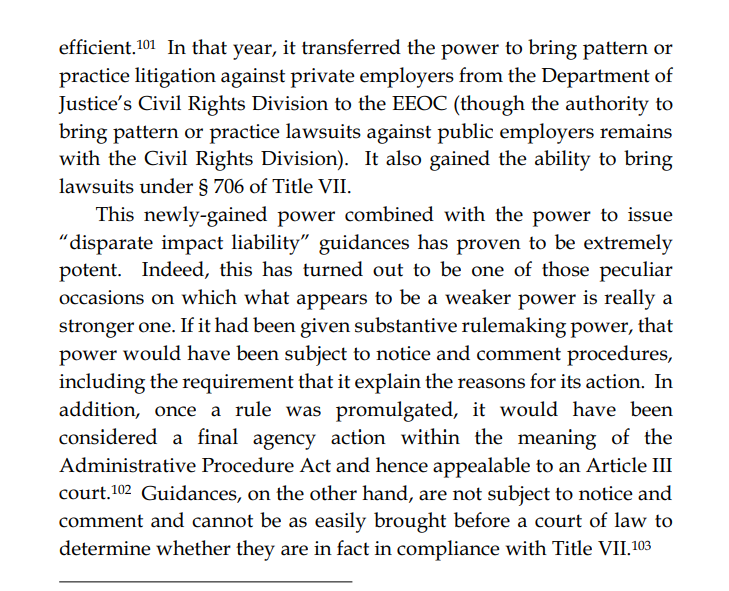
The EEOC gained the ability to go after private employers in 1972. Another thing to blame Nixon (who gets far too much credit on the e-Right) for.
The EEOC began by issuing "guidance" on how to interpret the law to concerned employers worried they might be in violation. This guidance quickly ceased to be made in good faith and became a form of quasi-law with the explicit goal of power accumulation.
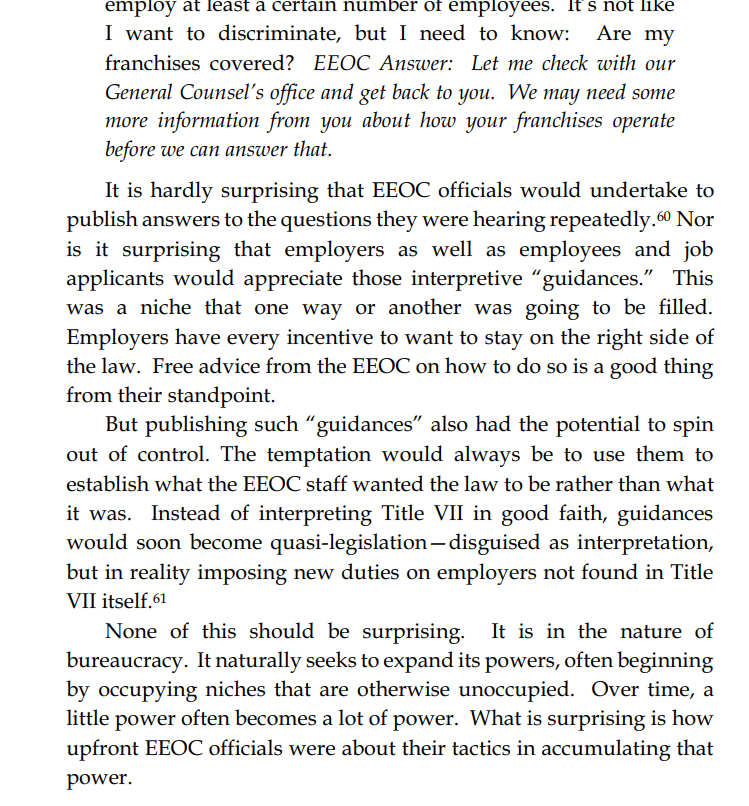
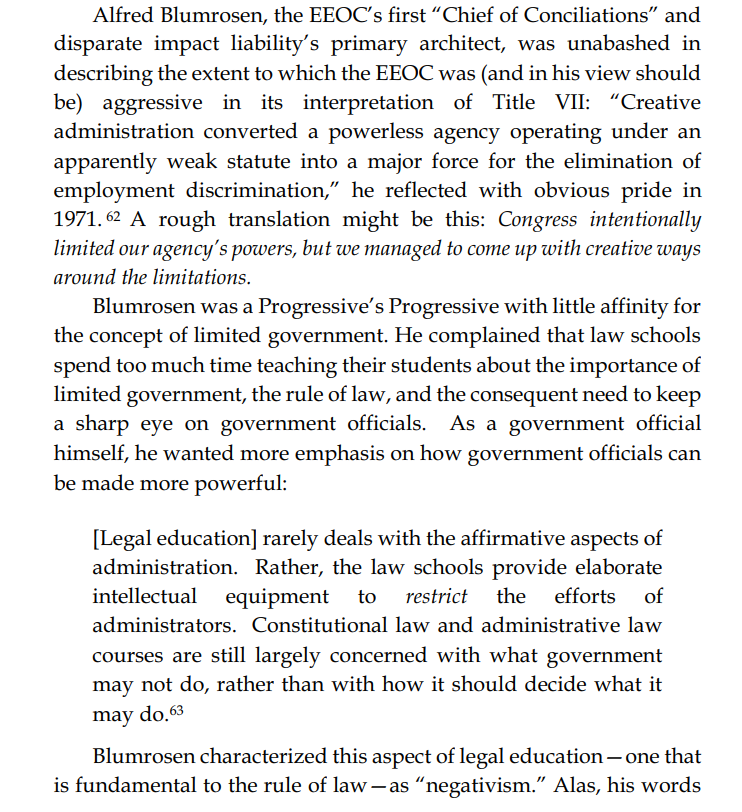
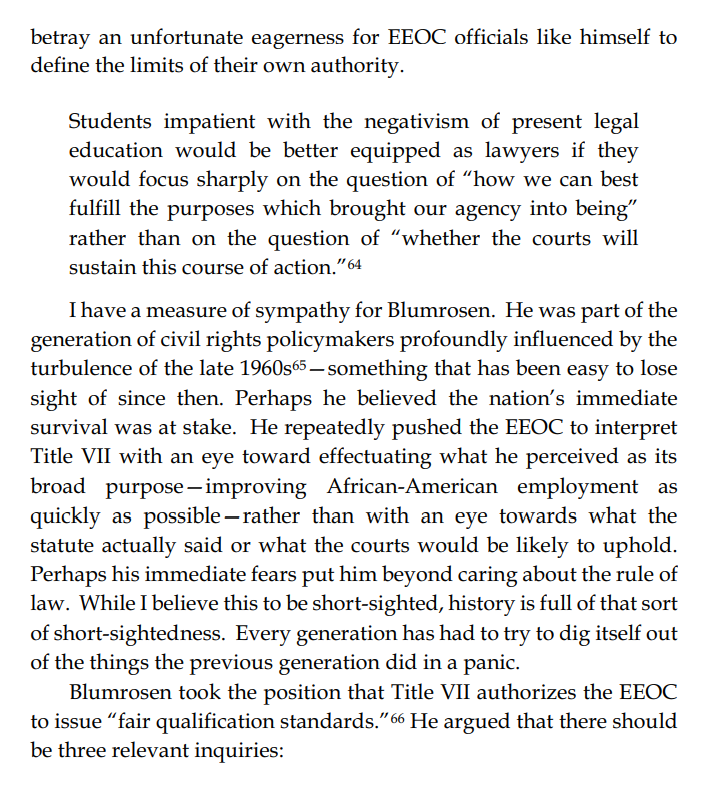
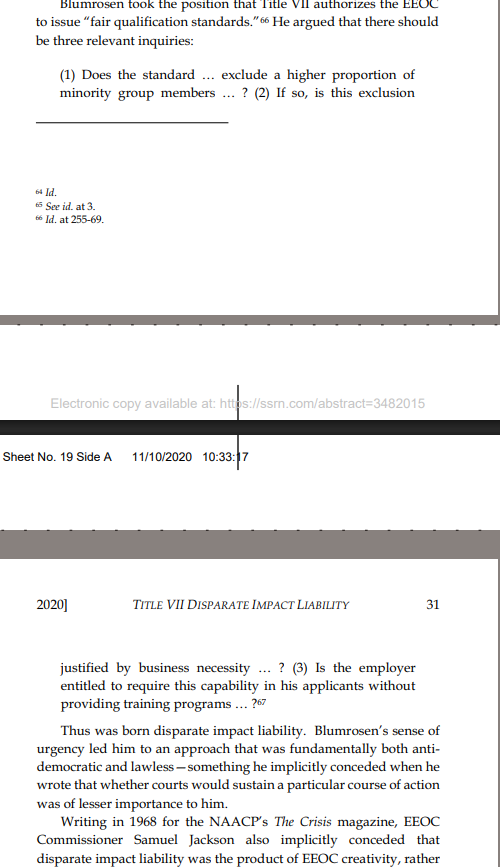
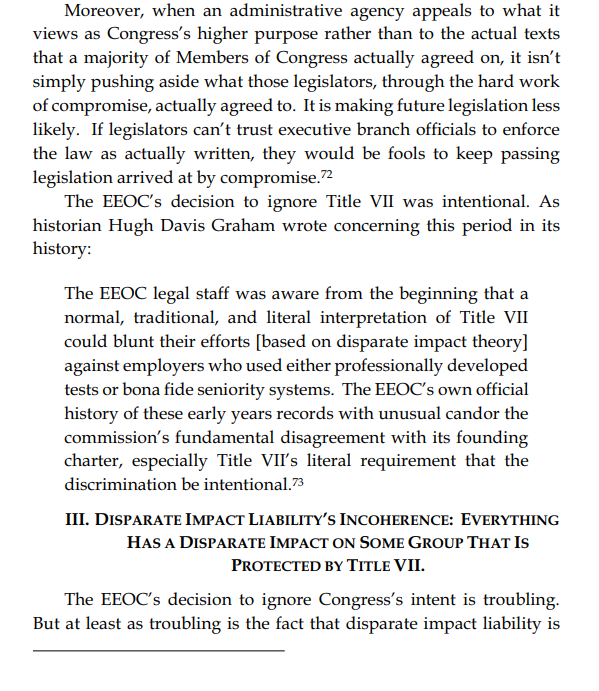
This guidance was where disparate impact came from, with the EEOC deliberately and consciously ignoring Congress's intent and the letter of the law.
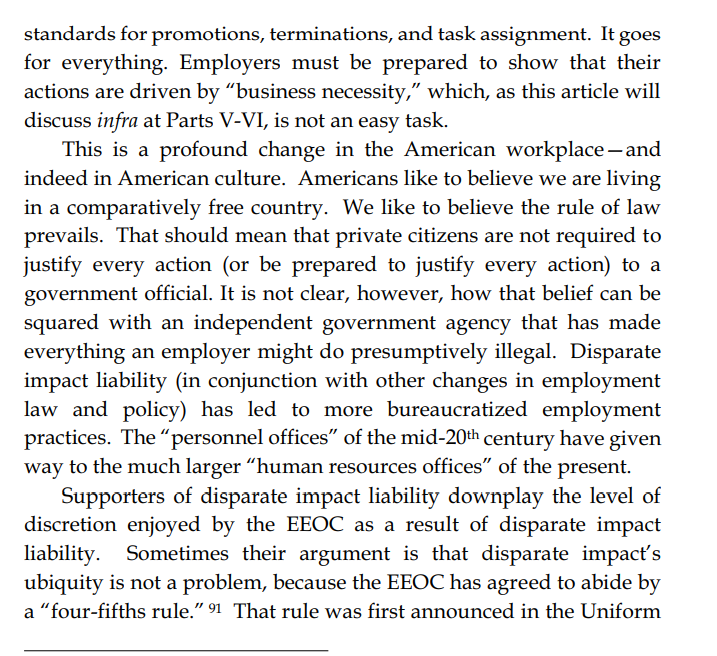
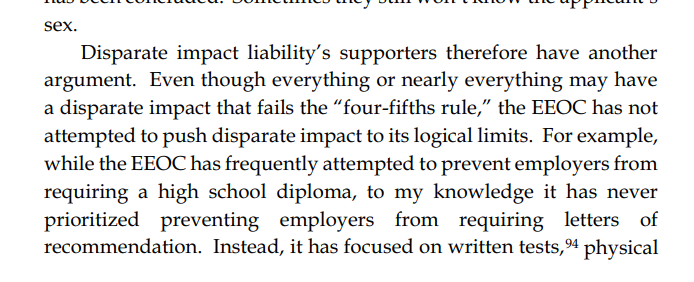
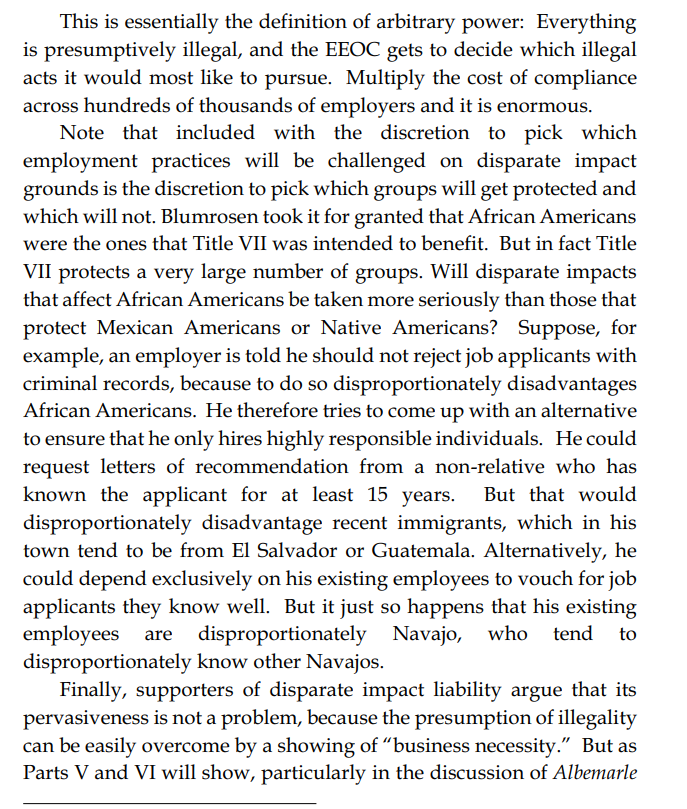
The thing is, *every single* possible qualification for a job has some sort of disparate impact. Disparate impact applies not only to objective standards, but also to subjective ones like letter of recommendation, and to promotion and termination as well as hiring.
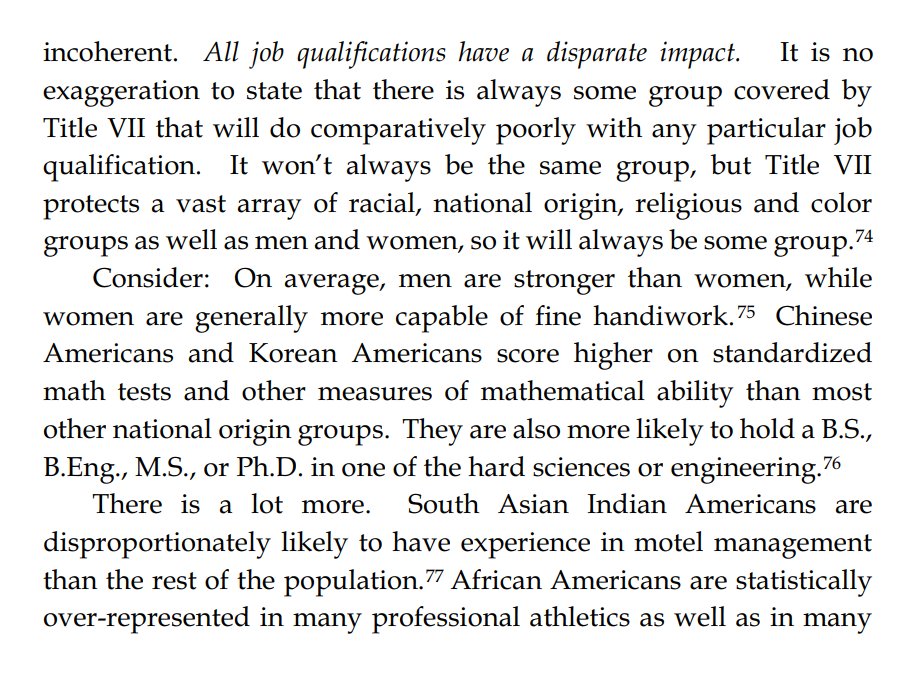
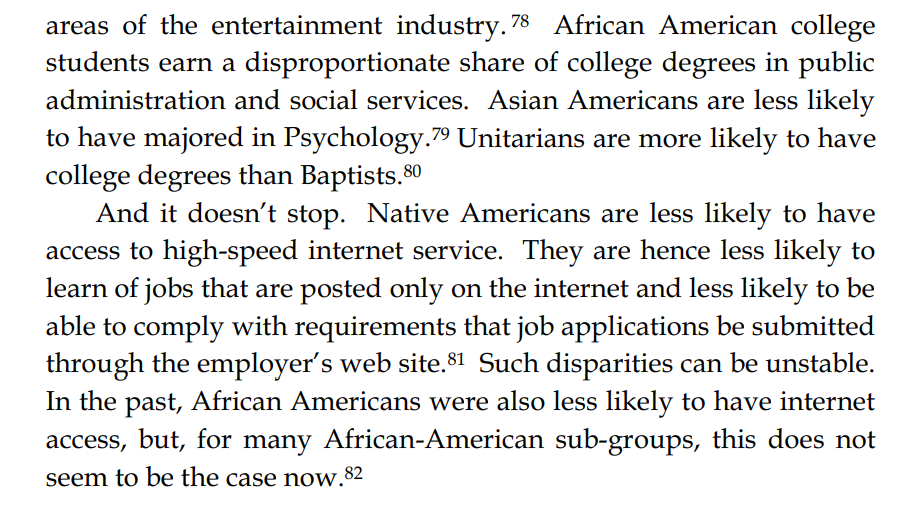
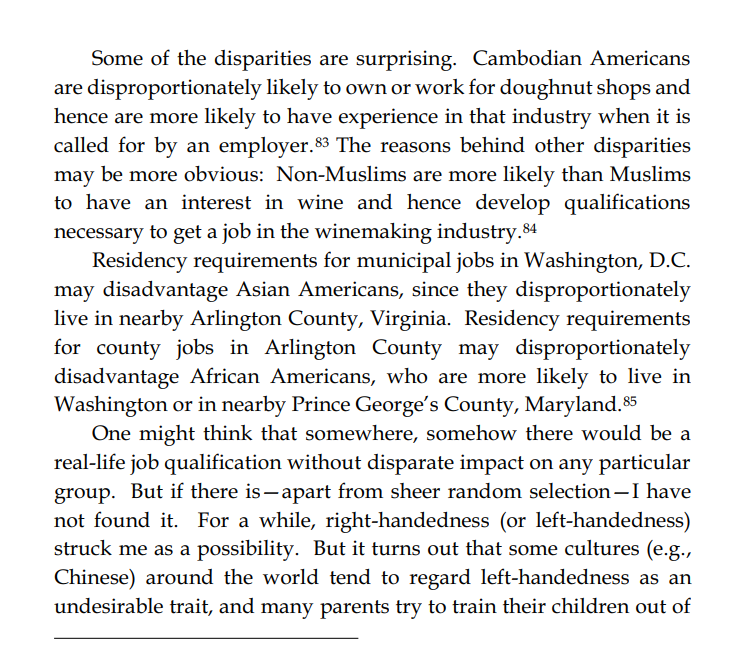
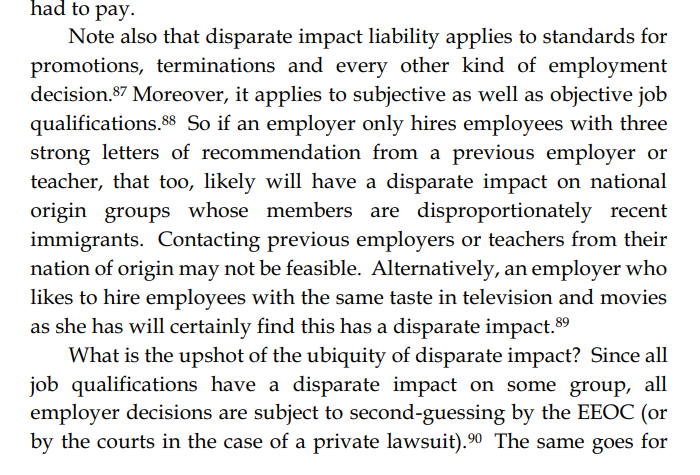
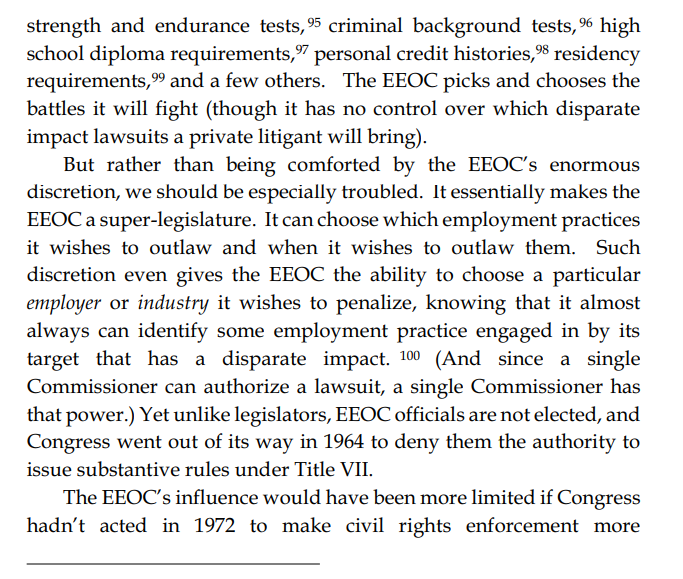
This makes every single employment decision made subject to a potential EEOC lawsuit. This allows the EEOC to act as a "super-legislature," picking which employment practices are legal and favored (eg requiring a diploma) vs illegal (eg written or physical tests).
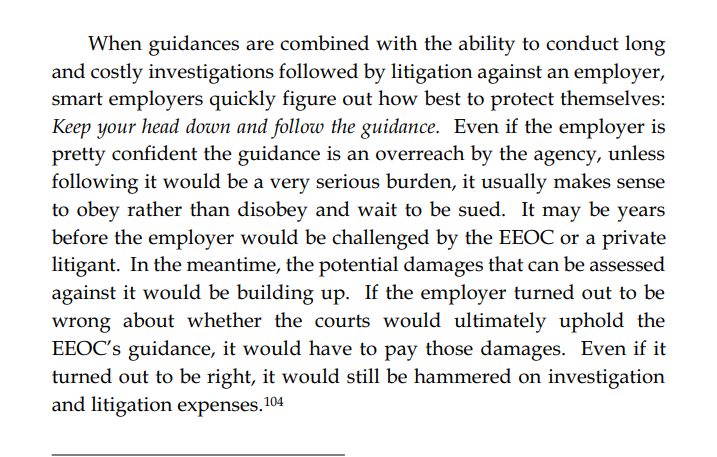
Guidance is paradoxically more powerful than actual being able to make hard administrative rules, because guidance can't be appealed in court and doesn't require public explanation.
This makes what the EEOC will permit very uncertain, and since damages can potentially build up indefinitely if an employer gets it wrong, effectively requires employers to try to lean in to what the EEOC wants as much as possible (ie, out-affirmative action their competitors).
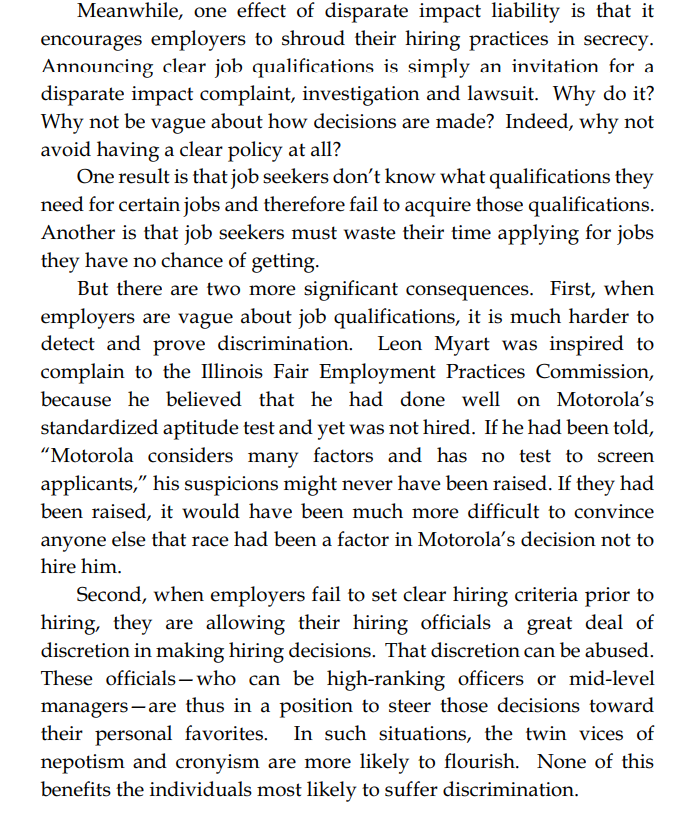
Another effect of this is to encourage employers to hide their actual hiring practices, because being public makes them more likely to be subject to a lawsuit. This, among other things, wastes applicants time. A part of why the "application economy" sucks.
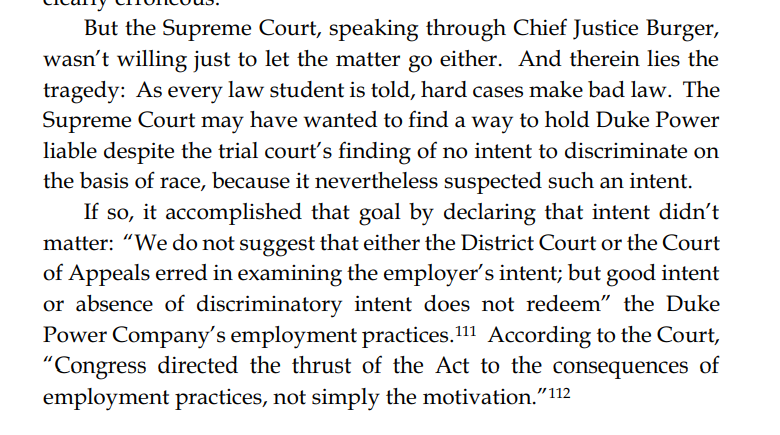
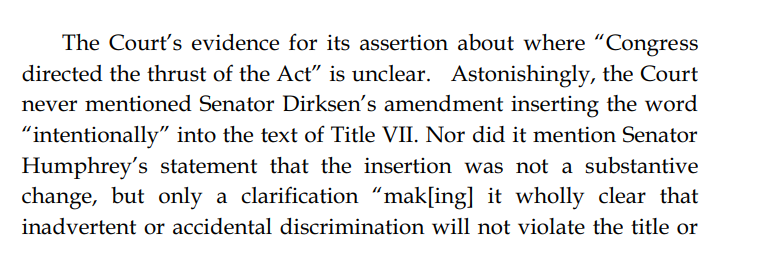
In the now-infamous Griggs v Power case, the Supreme Court declared intent didn't matter for determining illegal discrimination, the opposite of what Title VII was intended to do.
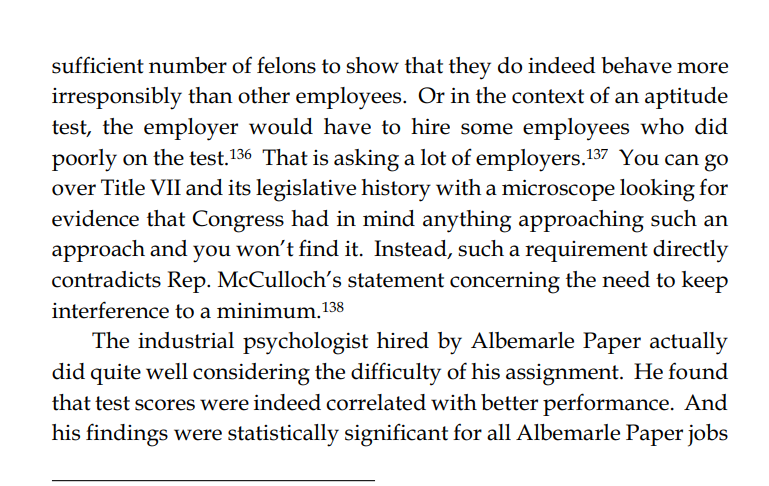
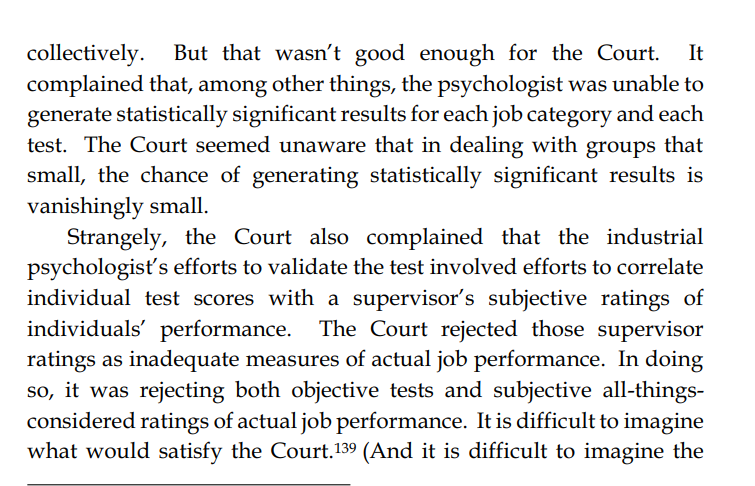
Another court case (Albemarle) ruled against paper-and-pencil tests because the Supreme Court apparently didn't understand statistical significance, and why showing it is difficult with tiny sample sizes, and also banned both objective and subjective measures of performance.
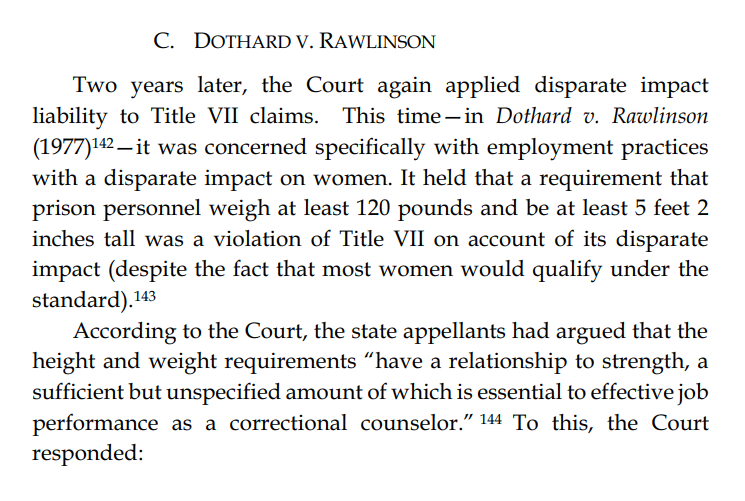
In 1977, another Supreme Court ruling (Dothard) banned height and weight standards... for prison guards (on the grounds this discriminated against women). One might take the tack that the post-WWII US Supreme Court was staffed by malicious actors dedicated to destroying society.
(Aside: if the present Supreme Court revisits some of these insane and absurd rulings and overturns them, they will doubtlessly be accused of "judicial activism" for overturning long-established precedent, and possibly harassed, physically attacked, or assassinated.)
After the passing of the Civil Rights Act of 1991, the number of "harassment" lawsuits exploded. This is when the hostile environment doctrine was codified into law.
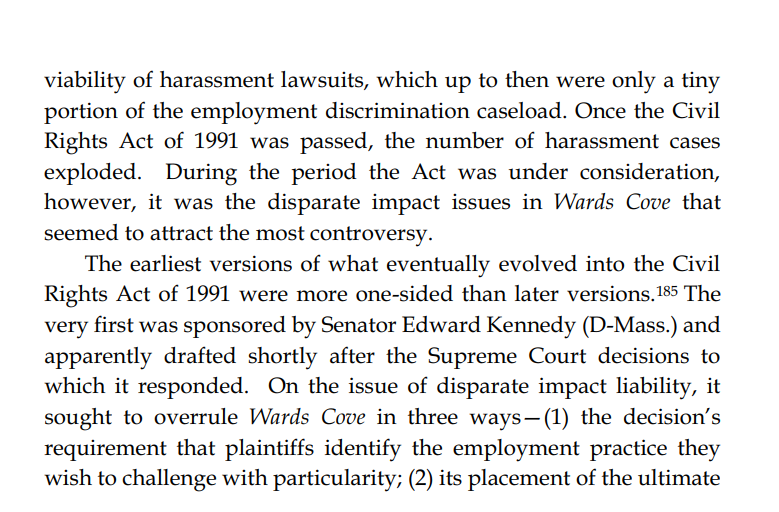
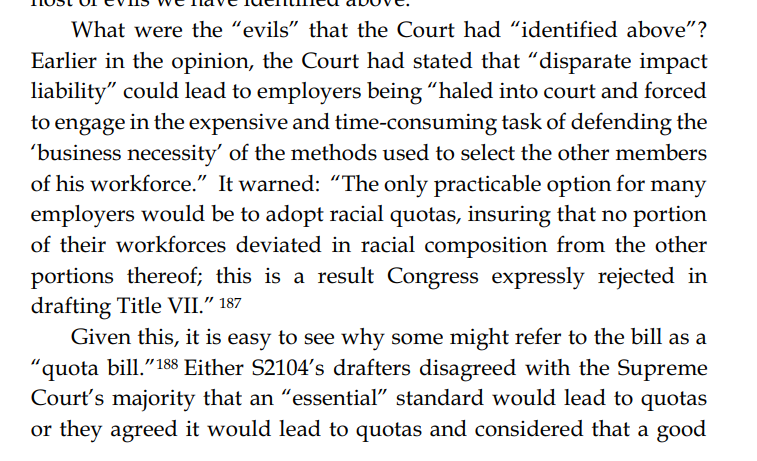
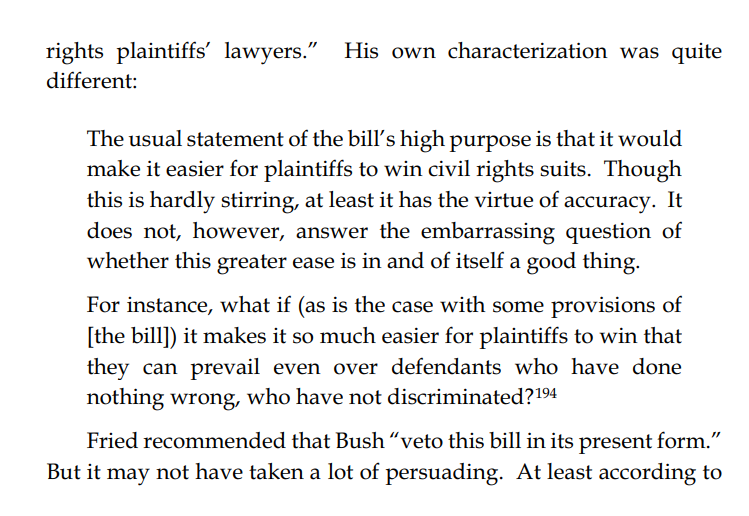
The 1991 CRA more generally made it much easier for plaintiffs to win Civil Rights cases. Not just harassment ones. Critics called it a quota bill, predicting (correctly) it would lead to employment quotas.
The EEOC in practice has focused on attacking three things (out of the universe of all possible hiring practices):
1) Using written tests.
2) Using physical tests.
3) Using criminal records
Attacking (insanely) a security company for not hiring felons.
1) Using written tests.
2) Using physical tests.
3) Using criminal records
Attacking (insanely) a security company for not hiring felons.
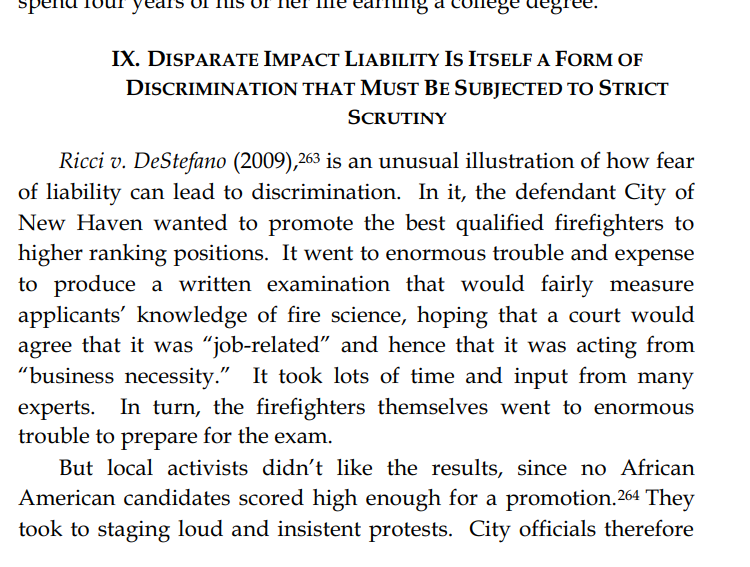
The famous 2009 Ricci case, in which the City of New Haven went to great lengths to create a fair and comprehensive test of firefighting knowledge. This led blacks to protest because no blacks scored highly, which led the city to cancel the results.
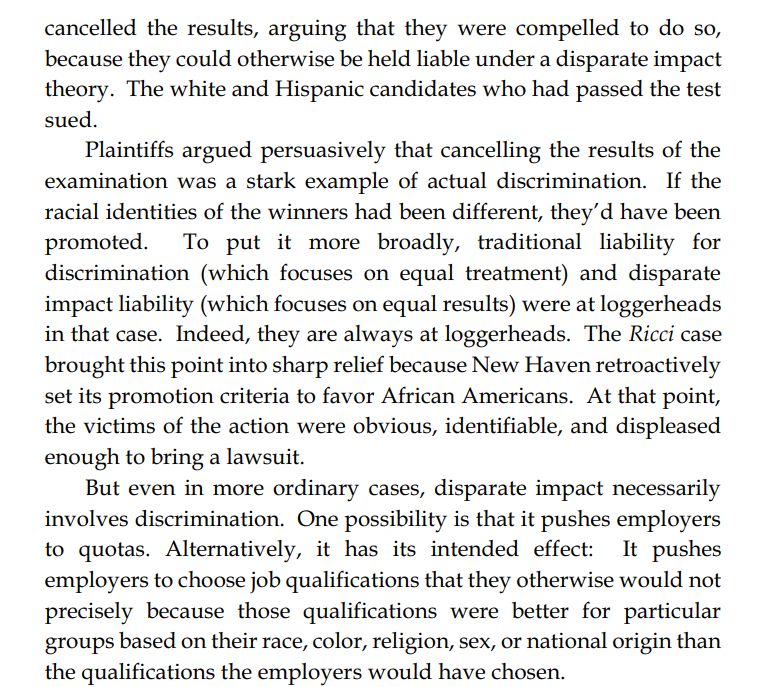
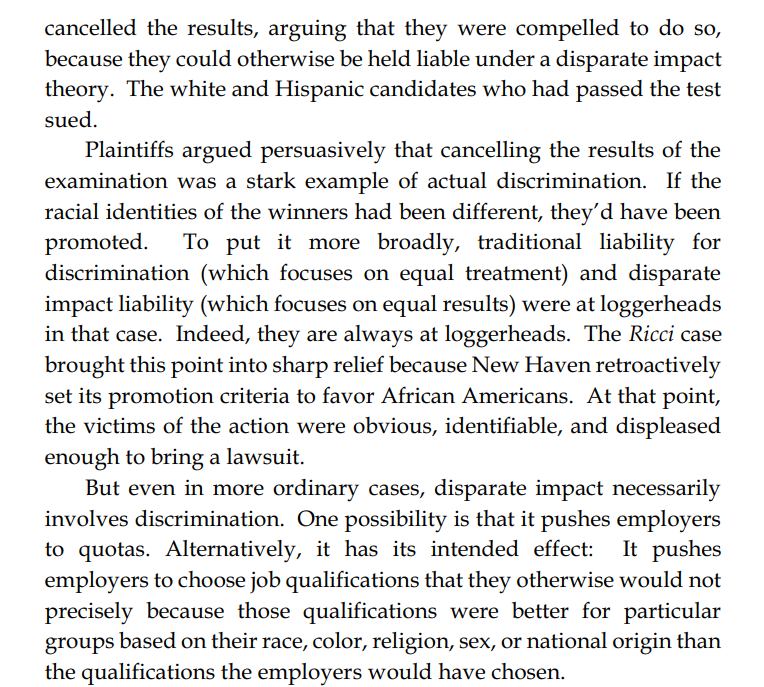
This in turn led to a lawsuit from the whites and Hispanics who passed, on the grounds that the city discriminated by retroactively changing their criteria based on the racial composition of the results.
Traditionally (as of 2020) disparate impact doctrine has only ever been applied to women and racial or national minorities. This is a plain violation of both the 14th Amendment and the CRA of 1964.
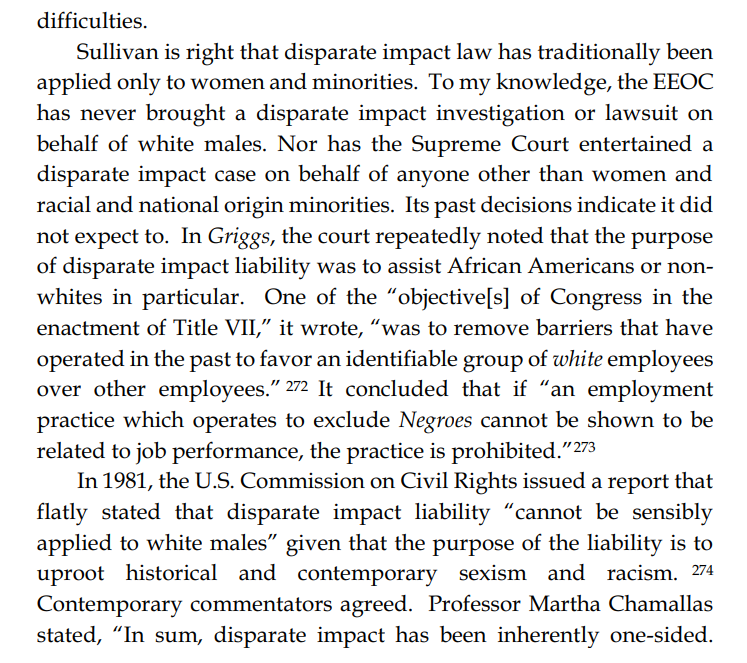
The only court case on the question also agreed disparate impact does not apply to white men, as did Congress when drafting the 1991 CRA.
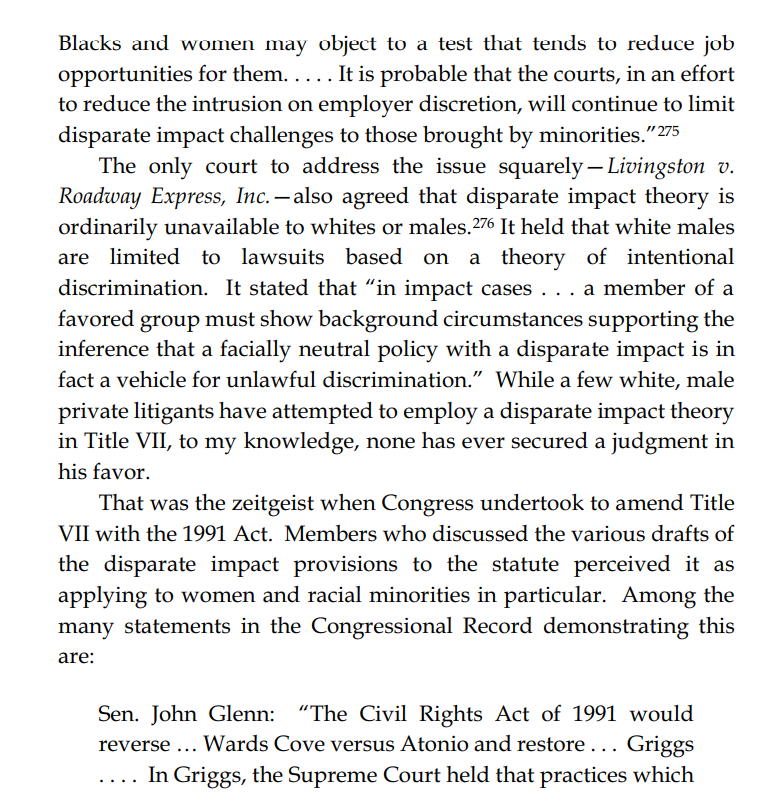
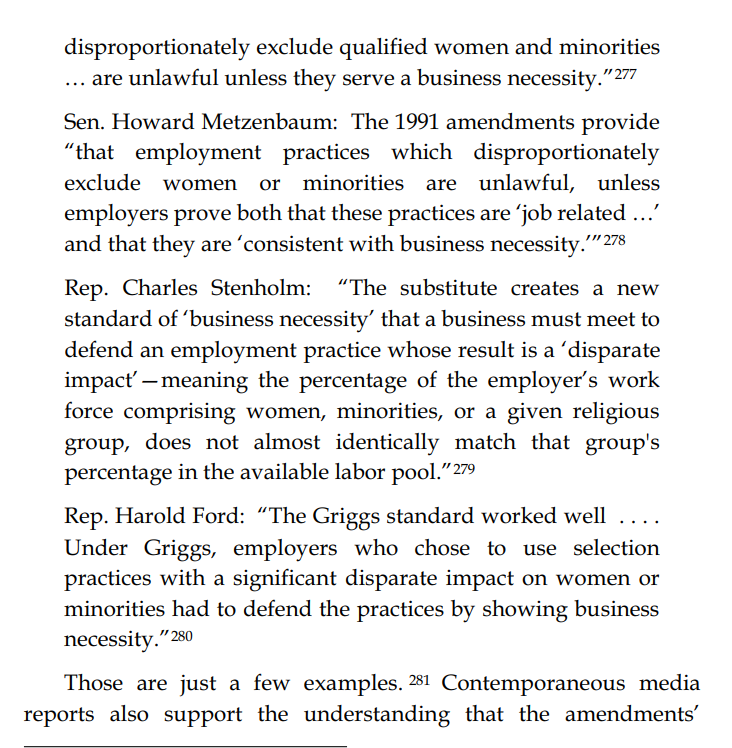
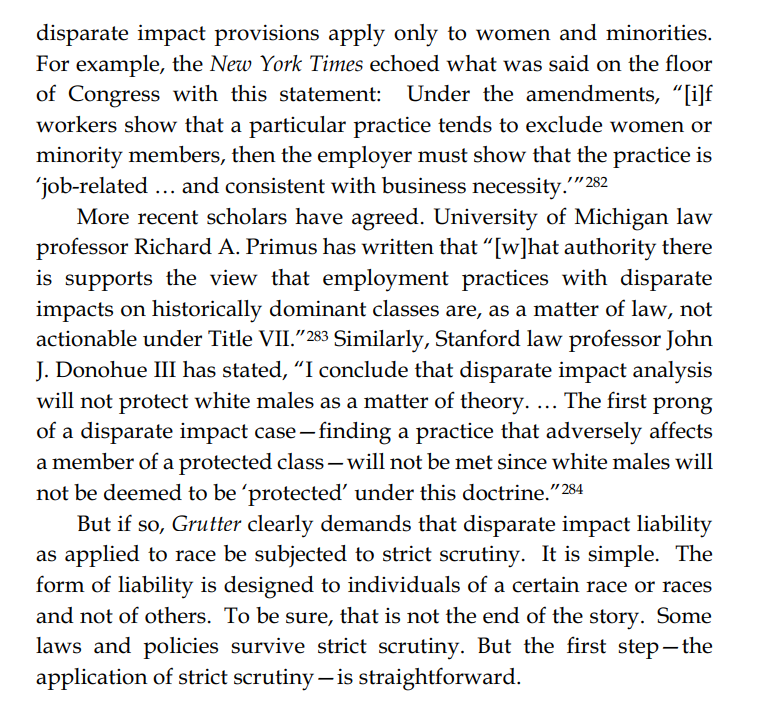
Obviously, if it's presumptively illegal to have a hiring practice that does not hire "enough" women and nonwhites, but the converse, that screws over white men (and in areas where white men are on average more competent than women or minorities, everyone else too).
Ethnic and age diversity: not our strength.
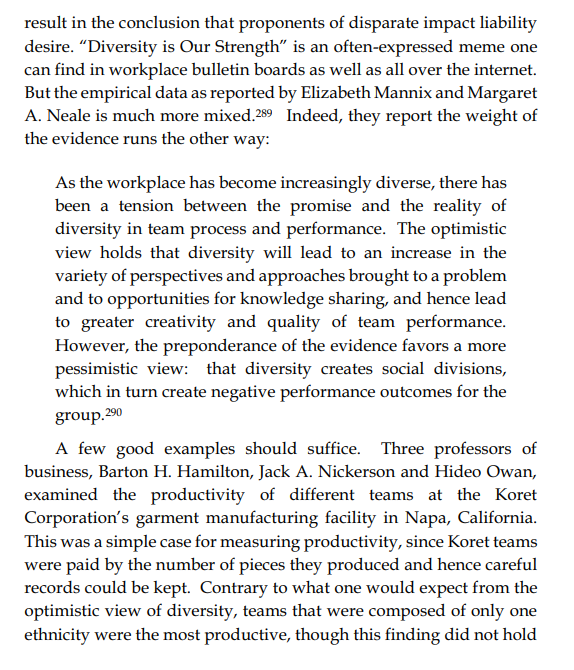
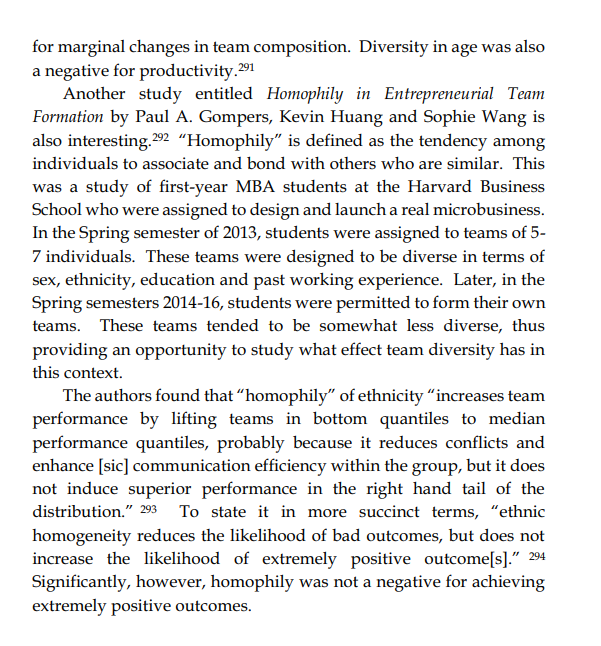
Separate issue, mentioned because it covers the question of vagueness, but before the 1970s Supreme Court decisions, vagrancy laws were commonplace.
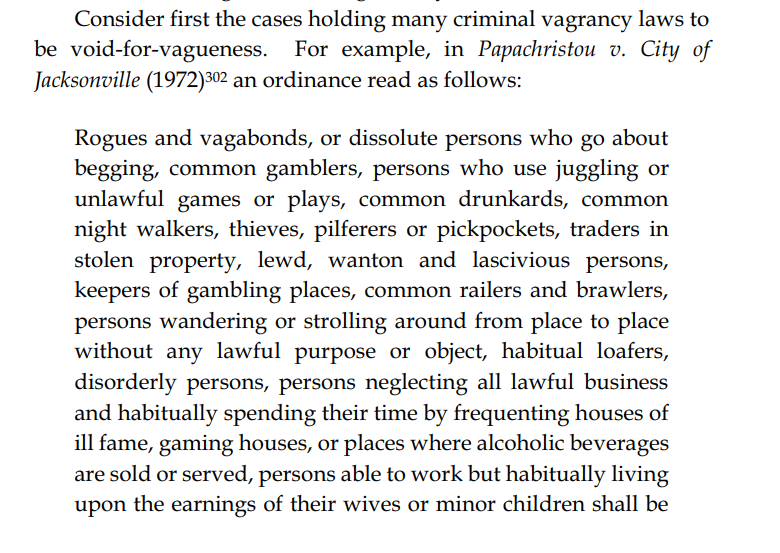
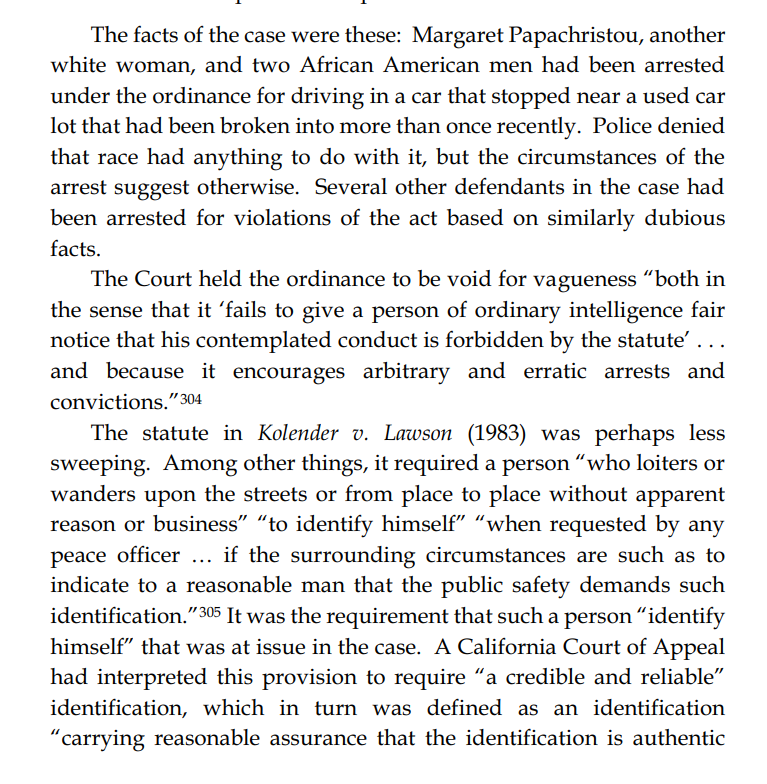
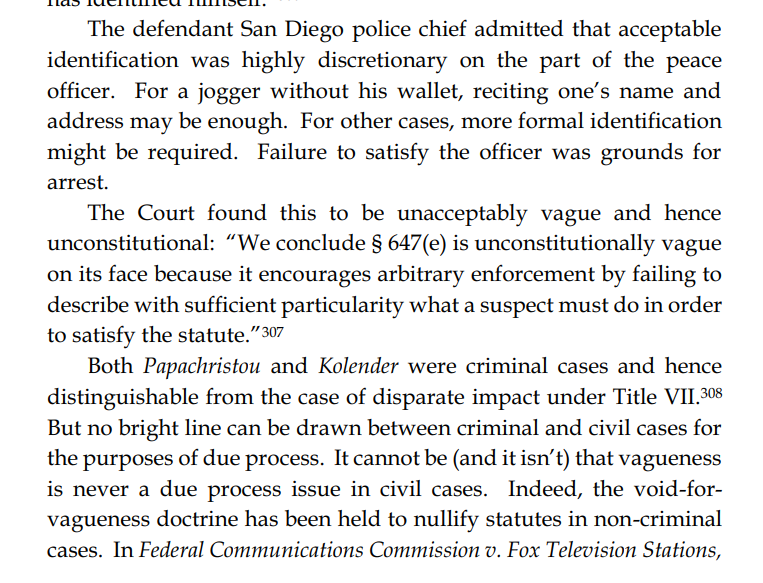
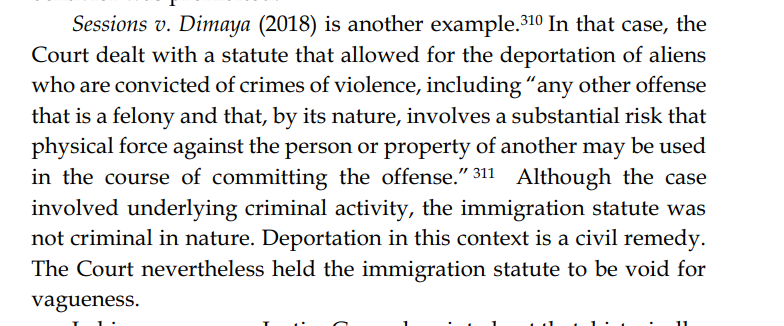
A 2018 Court decision ruled aliens couldn't be deported for felonies that "involve a substantial risk that physical force against the person or property" because that was too vague.
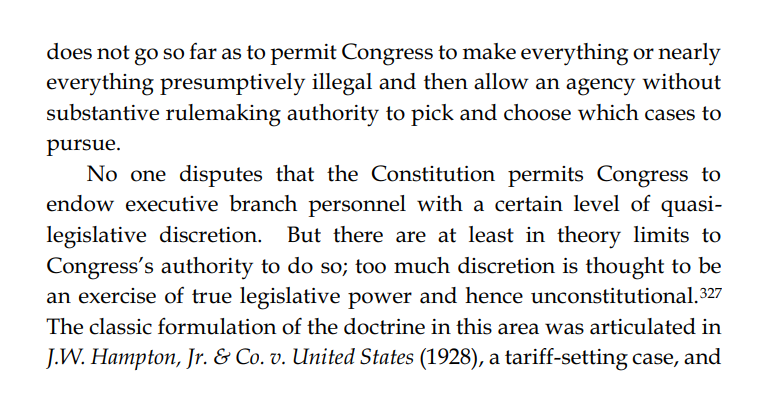
Arguably, Congress has unconstitutionally delegated too much legislative authority by making everything illegal and then allowing an Executive enforcement agency to pick and choose which cases to pursue.
tl;dr: CRA of 1964 was egregiously misinterpreted by the EEOC and Supreme Court to mean the opposite of the text. The CRA of 1991, on the other hand, partly canonized that interpretation. Fire should be focused on that one (which, conveniently, is also much less sacred).
I think disparate impact (and hostile environment) are so obviously destructive and tyrannical that they should be eliminated altogether. But I suppose you could use them for nativist purposes, aggressively attacking any company where more than 15% of some job is foreign-born.
Here is the link for anyone who wants to read the whole thing themselves: papers.ssrn.com/sol3/papers.cf…
• • •
Missing some Tweet in this thread? You can try to
force a refresh