69 years ago today, Hungary's revolution was entering its second day as the population revolted against the Communist government. This thread continues the day-by-day story of the revolution, as the Soviets became involved for the first time.
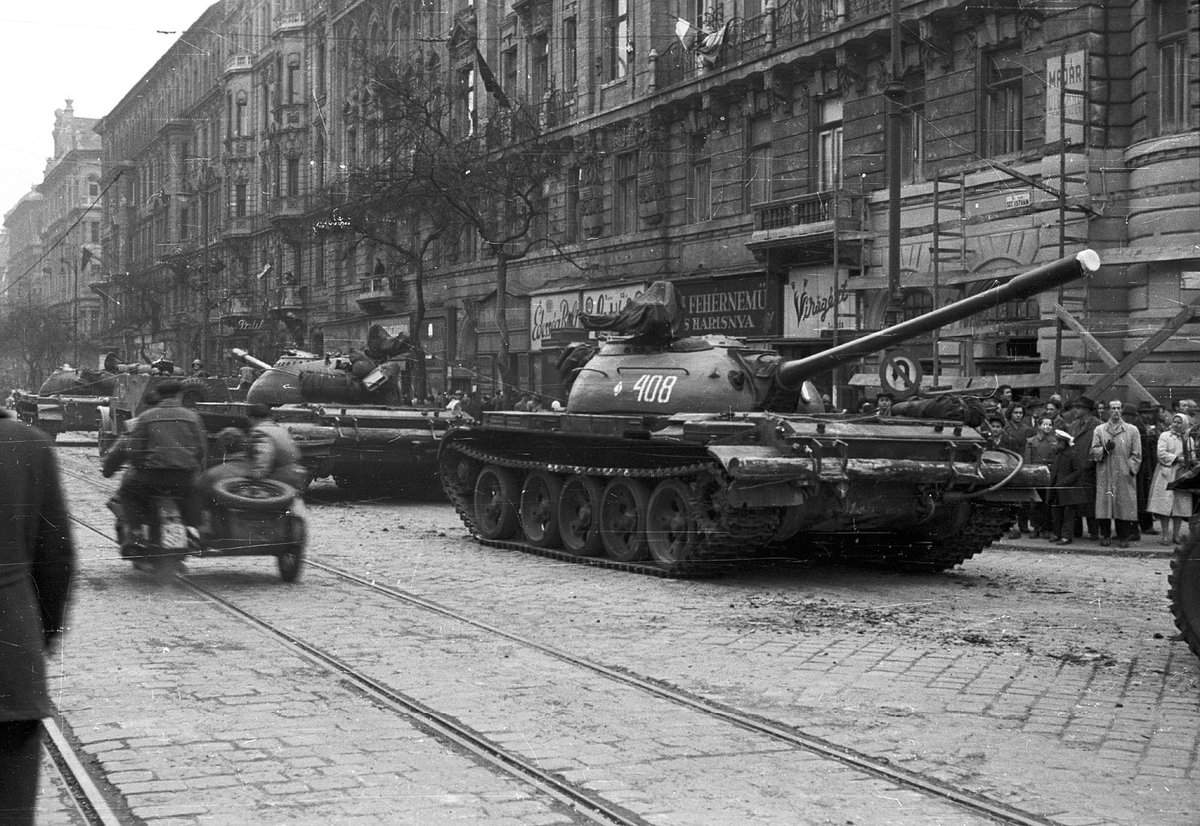
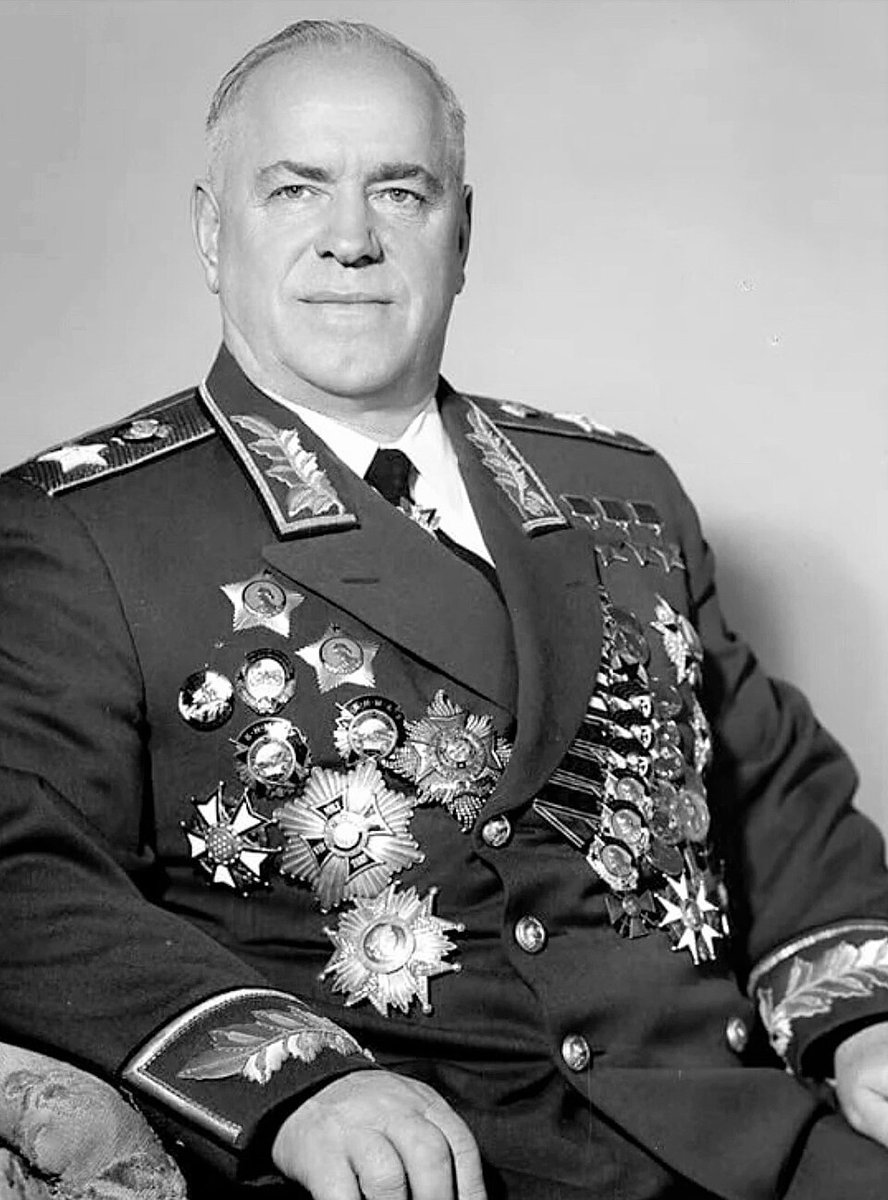
3/ In the early hours of 24 October 1956, Hungarian Communist leader Ernő Gerő appeals to Moscow to help suppress the "counter-revolutionary" uprising. At 02:00, Soviet defence minister Georgy Zhukov authorises the deployment of Red Army troops.
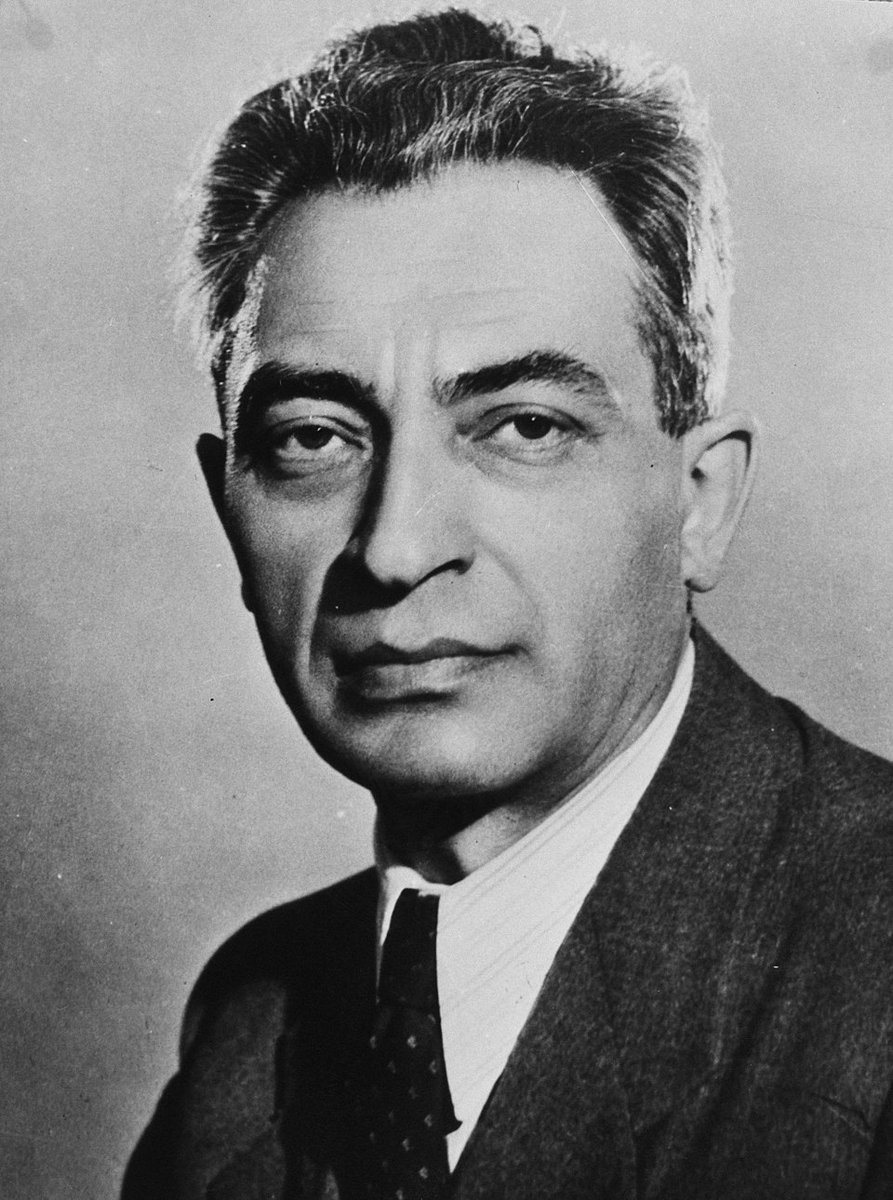
4/ With the Soviets beginning to mobilise from nearby bases, principally Tököl and Székesfehérvár, fighting continues between revolutionary insurgents and members of the ÁVH secret police around the Magyar Rádió building and other locations in Budapest.
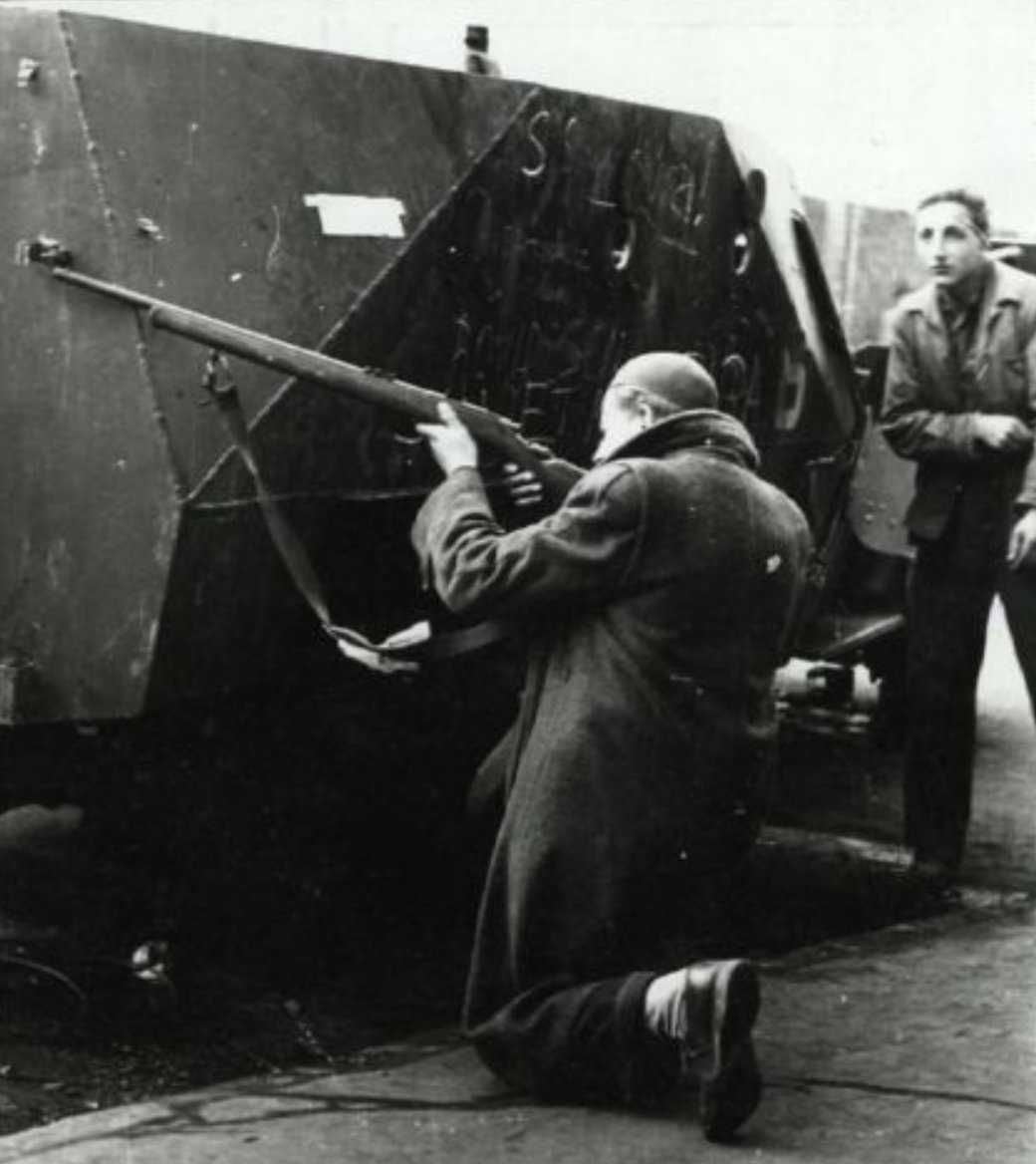
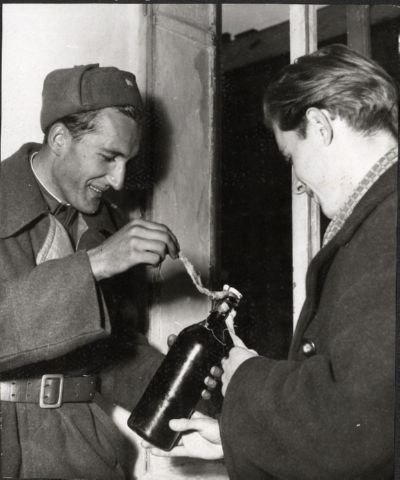
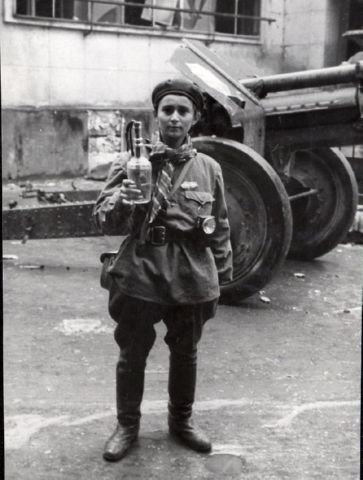
6/ By this time, the revolutionaries are arming themselves with weapons confiscated from or given to them by the police and army units. They begin preparing Molotov cocktails in anticipation of facing armoured vehicles, which can be vulnerable to flammable liquids.
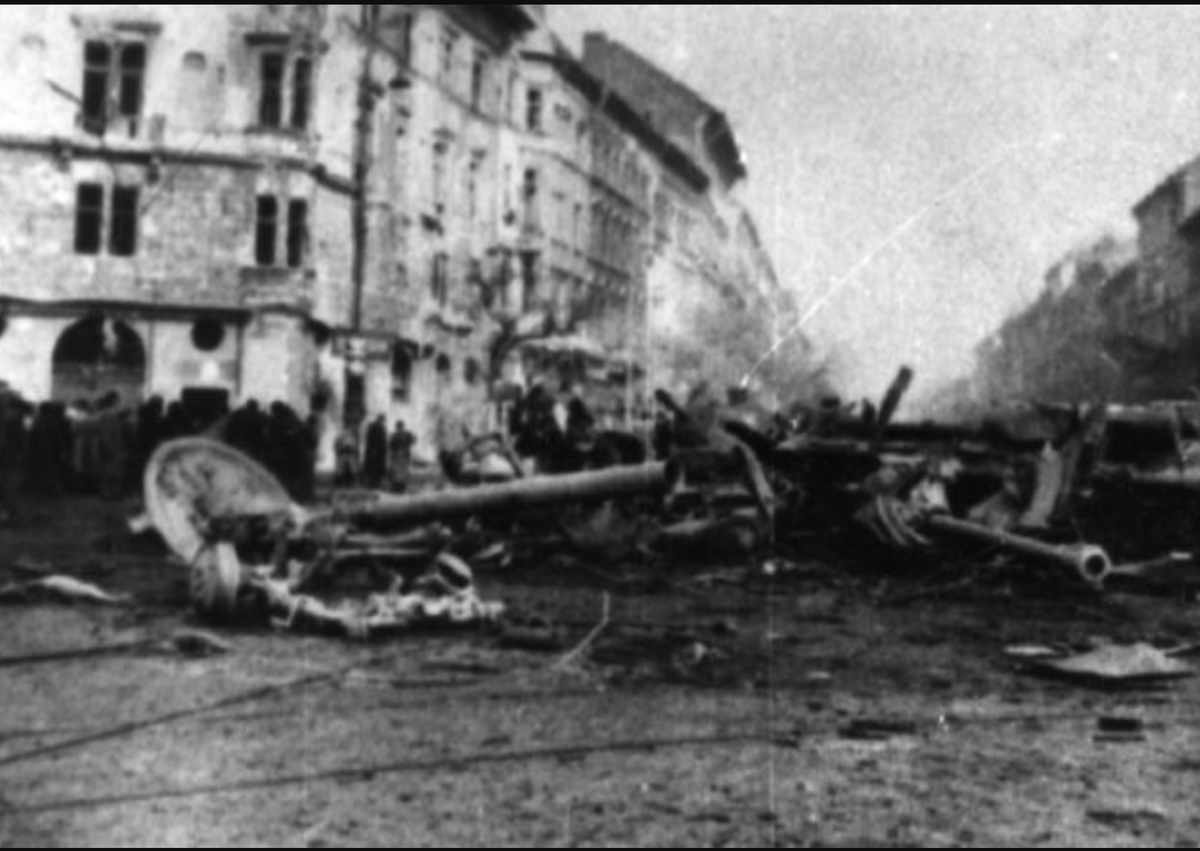
7/ As daylight breaks over Budapest, clashes break out between Soviet forces and revolutionaries, with both men and women taking up arms. There are casualties on both sides. Tanks are set on fire and Hungarians are killed and injured by Soviet machine-gun and tank fire.
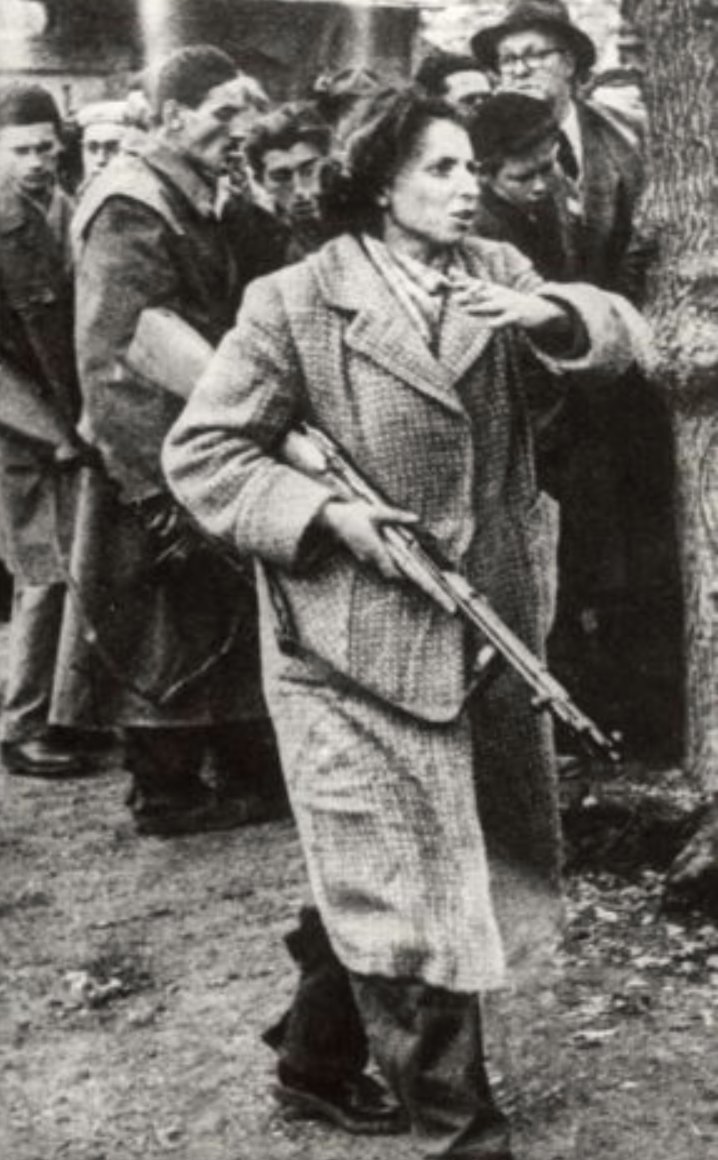
8/ The revolution is only in its second day, but is already spreading through Hungarian society. Women and children build barricades, transport ammunition, or act as messengers, spreading news of Soviet movements. Revolutionary committees are established in Budapest's suburbs.
9/ Other towns establish their own revolutionary committees, with workers' councils forming in factories in Szeged, Debrecen, and Győr to demand economic reforms and an end to Soviet occupation.
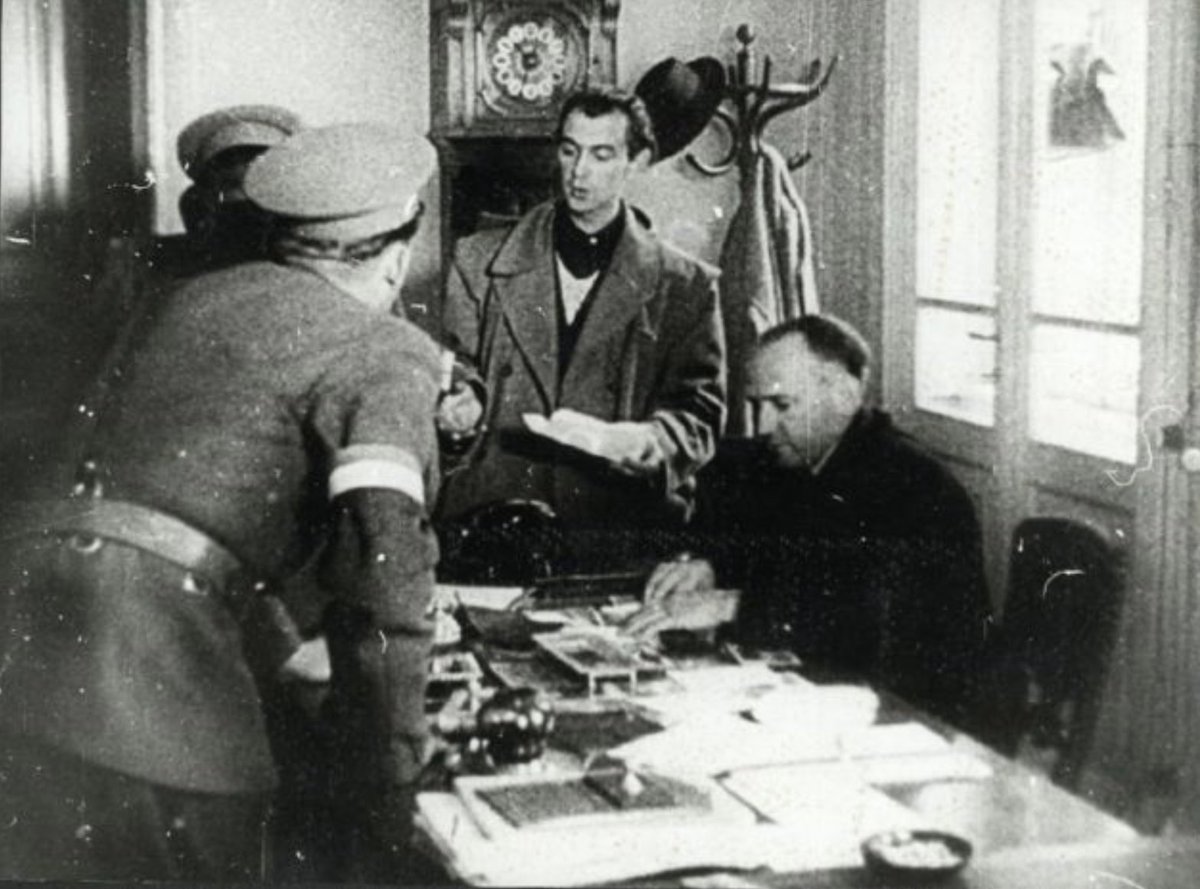
10/ Caught out by the uprising, the Hungarian Communist Party's reaction is confused and contradictory. Gerő gives another defiant speech denouncing the revolutionaries as "fascist", but moderate Communist Imre Nagy is appointed prime minister in place of András Hegedüs.
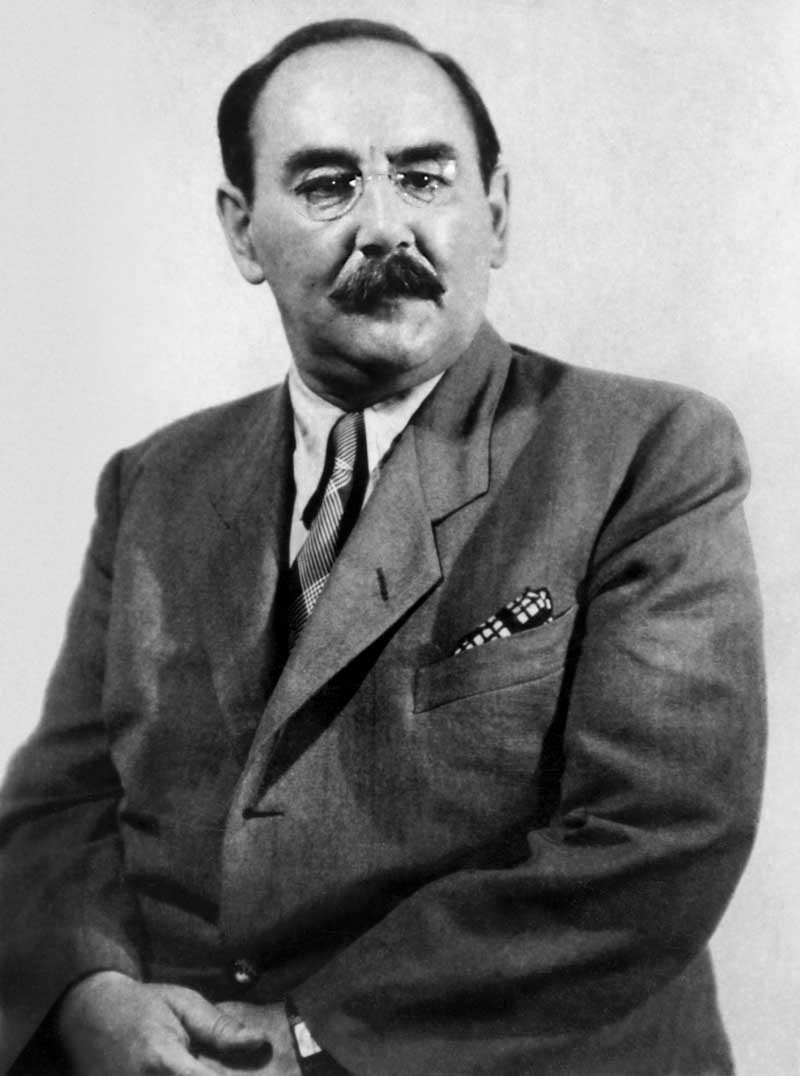
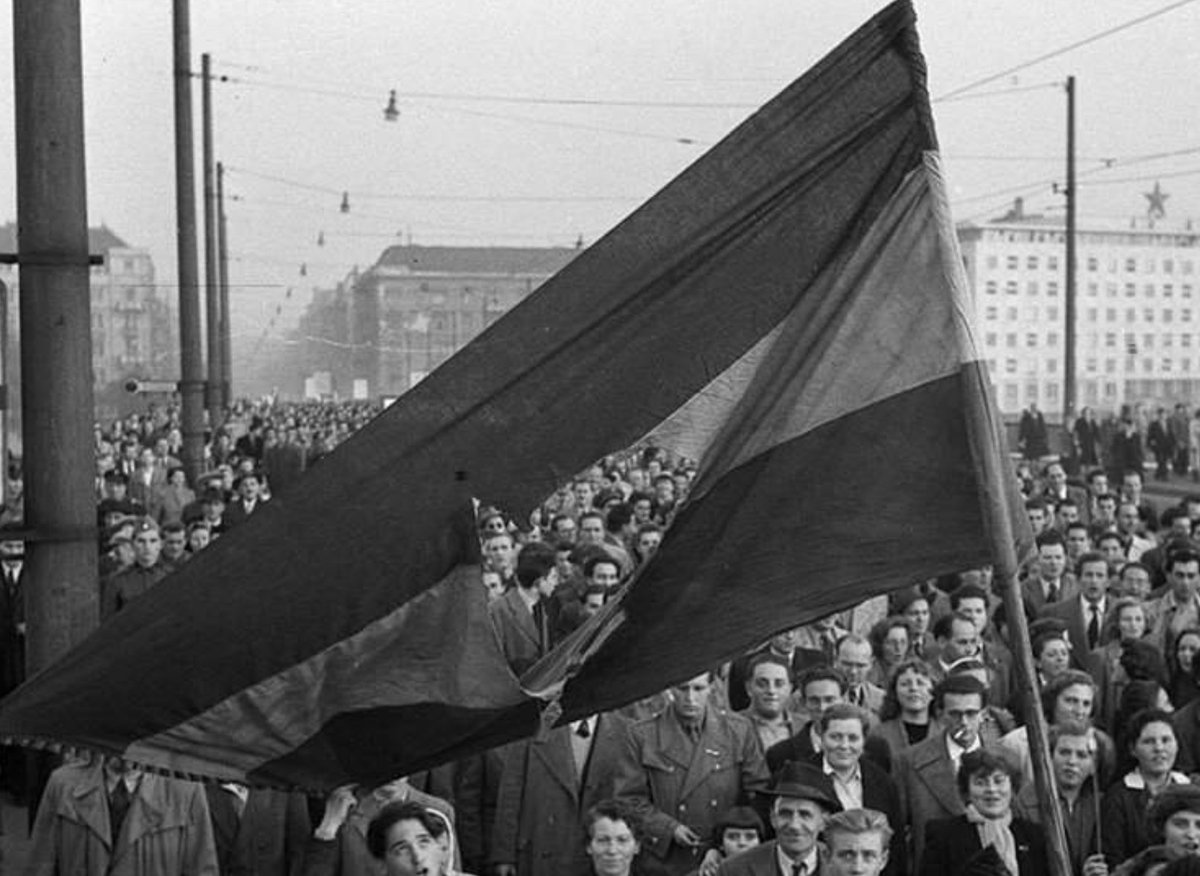
11/ Nagy appeals for a ceasefire but is ignored by both hardline Communists and the revolutionaries. Large crowds gather in the streets, waving Hungarian flags with the Communist insignia ripped out.
12/ Fighting continues throughout the day between revolutionaries, the ÁVH and the Red Army. Soviet commanders are taken aback by the fierce resistance and the increasing losses caused by sending tanks down narrow streets where they could easily be ambushed.
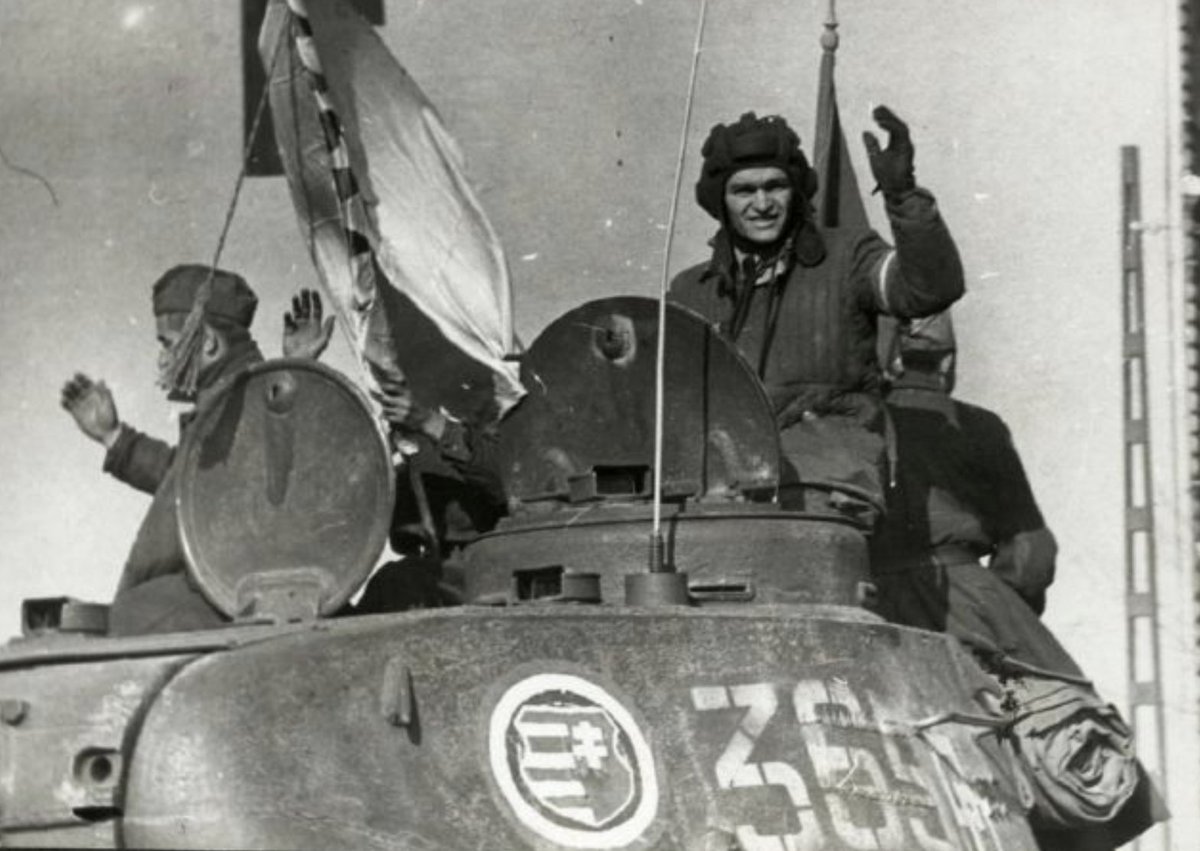
13/ The Hungarian Army's position is equally confused. Some units follow orders and confront the revolutionaries; others stay neutral; some soldiers even join the revolutionaries and give them weapons or paint the pre-communist national coat of arms on their tank turrets.
14/ By midnight, dozens more people on both sides have been killed. The fighting has subsided as fatigue and logistical difficulties take their toll. With the revolution continuing to spread across Hungary, Imre Nagy attempts to formulate a reform plan.
15/ Nagy's plan includes promises of amnesty for rebels and negotiations with the Soviets. However, his position remains precarious due to opposing hardliners and the ambiguous position of the Soviets, who are opposed to the revolution but have no wish to return to Stalinism.
(To be continued tomorrow.)
• • •
Missing some Tweet in this thread? You can try to
force a refresh

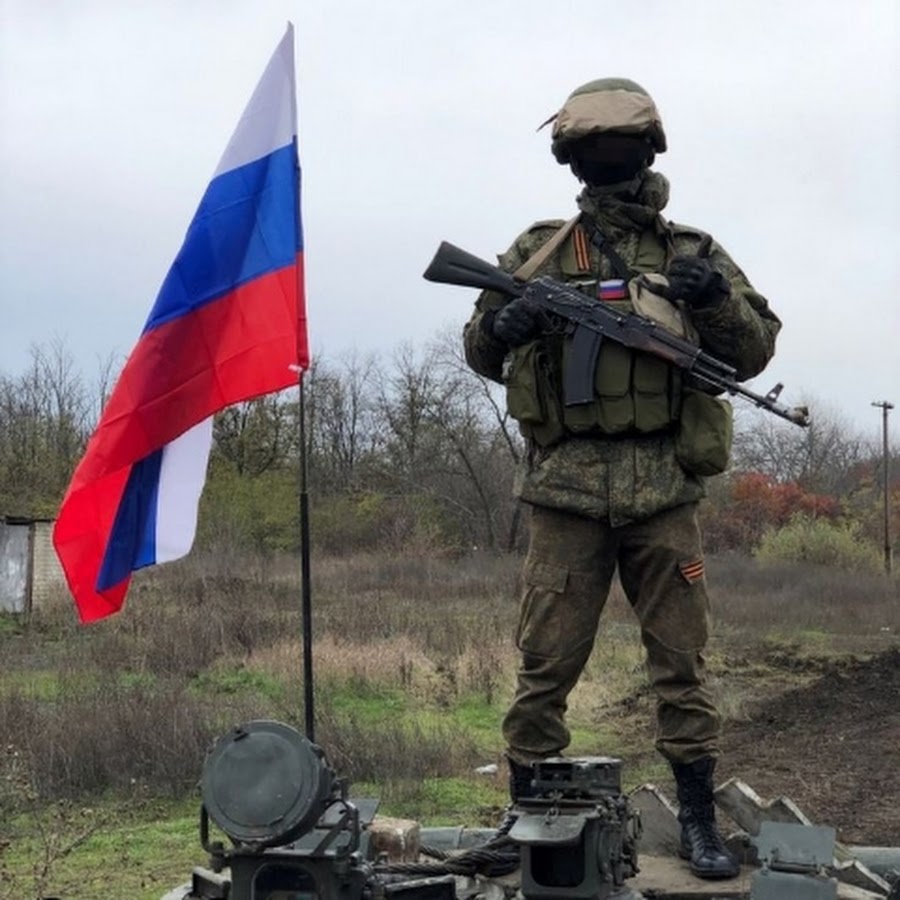
1/ Russian presidential spokesman Dmitry Peskov recently said (very wrongly) that "It's difficult, if not impossible, to imagine ... frontline communications being provided via Telegram or any other messenger." Warblogger Nikita Tretyakov has a list of other 'unimaginables'. ⬇️
2/ "What else is unimaginable?
It's unimaginable that just a week ago, our troops' communications relied on an enemy country's satellite constellation.
3/ "It's unimaginable that soldiers still obtain many essential items for war and military life (anti-thermal blankets, radios, gasoline-powered and electric tools, inverter generators, etc.) almost exclusively from their salaries or from volunteers.
1/ Russian warbloggers are outraged at being told by a journalist that it's their own fault that the Russian government is restricting Telegram. They argue that if not for the warblogger community, the military's lies would have gone unchallenged – which is exactly the point. ⬇️
2/ Komsomolskaya Pravda journalist Ivan Pankin has prompted fury with his claim that "endless nameless insiders, all those endless bloggers, the smartest people on earth who know everything and who have been spreading all sorts of nonsense" have annoyed the Russian government.
3/ He is almost certainly correct, but the warbloggers aren't having any of it and have responded angrily. They claim they have been consistently right in warning about the failures of the Russian military, to the overall benefit of the war effort and Russian population.
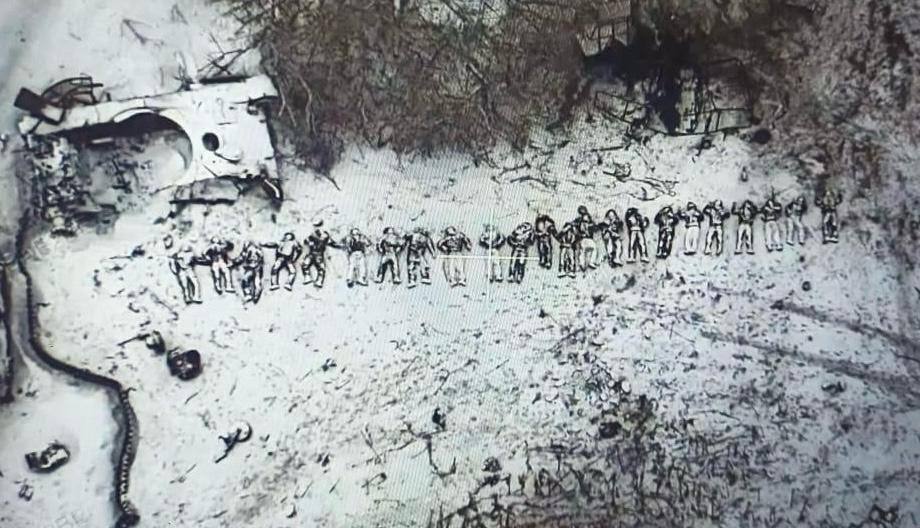
1/ In January 2026, Ukraine reported killing 34,000 Russian soldiers – on average 1,096 a day, or 7,846 per week. Thousands of Ukrainians have likely died in the same period. Last month in Ukraine was much bloodier than the average monthly death toll at Auschwitz. ⬇️
2/ The extraordinary lethality of the Ukraine war stands out in comparison to recent wars and mass killings:
🔺 At least 7,000 people are reported to have been killed in the recent Iranian uprising. More have died in Ukraine in each week of last month.
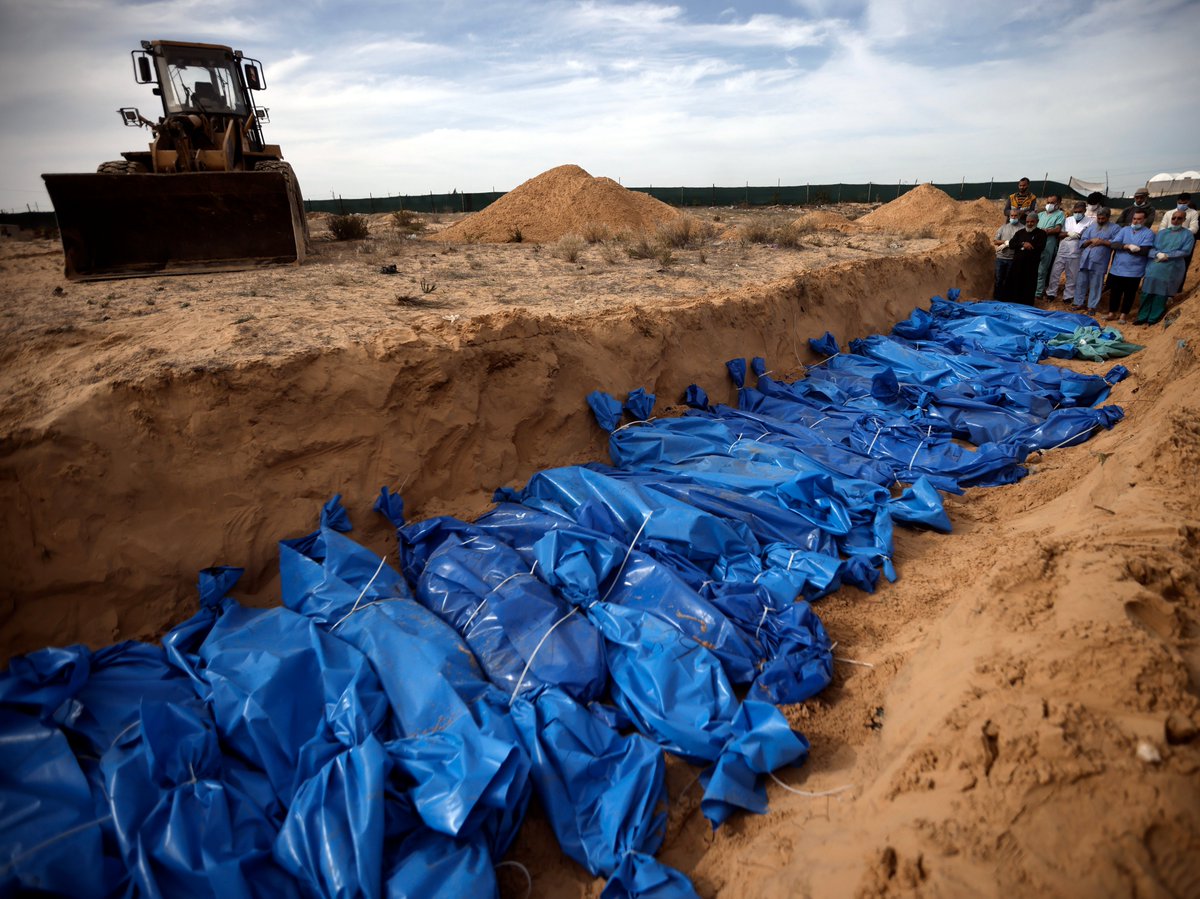
3/🔺 At least 84,000 people died in the Gaza war between 7 October 2023 and 10 October 2025 – an average of 3,500 per week. The number of weekly fatalities in the Ukraine war last month alone was more than twice Gaza's monthly average.
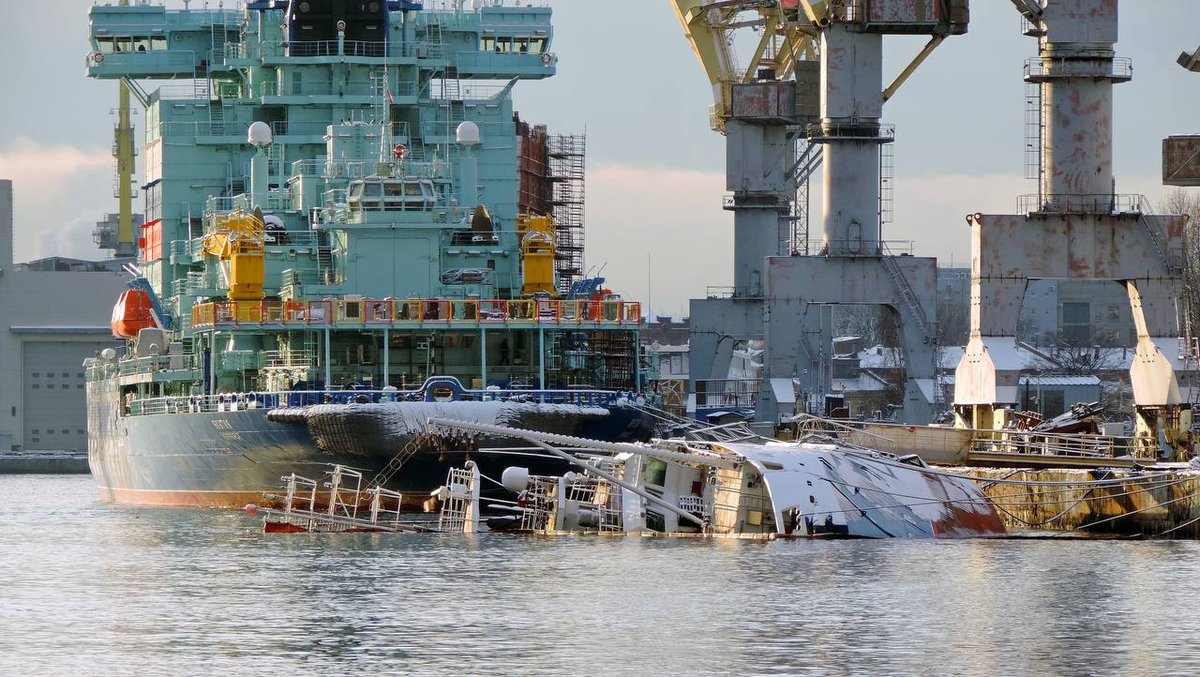
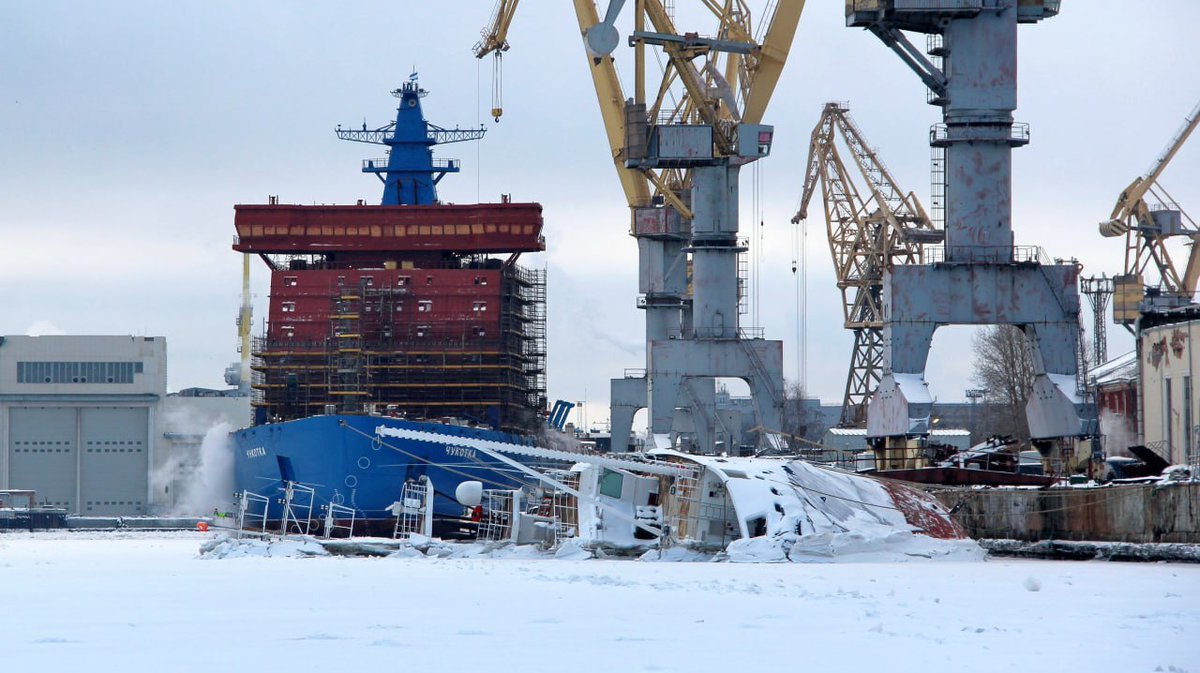
1/ Six months ago, the newly built Russian Navy tugboat Kapitan Ushakov capsized at its moorings during its final outfitting, when it was 97% complete. It's still there today, resting on its side, leading to some hard questions for the Northern Fleet. ⬇️
2/ The only thing that seems to have changed after six months is that the boat is now encased in ice at the Baltic Shipyard pier in St. Petersburg. It's an "endless disgrace", 'Military Informant' complains. But how and why has it not been raised?
3/ The shipyard's owner, Yaroslavl Shipyard (YaSZ), says that because the vessel "is being built under a state defence contract ... there is no permission to disclose this information or comment on it."
1/ Russian ultra-nationalist ideologue Alexander Dugin predicts that Western civilization will collapse due to the Epstein files, clearing the way for Russia and China to take over. He calls for all-out opposition to the West, and for Russia to save Iran from Donald Trump. ⬇️
2/ Dugin writes:
"The West, thanks to Epstein's lists, is beginning to crumble before our eyes. Russia and China have a historic opportunity to become the beneficiaries of the total collapse of the entire Western system.
3/ "Now it's no longer a matter of right or left, if they have a "right" like Epstein Island (or a left). It's time to end the West.
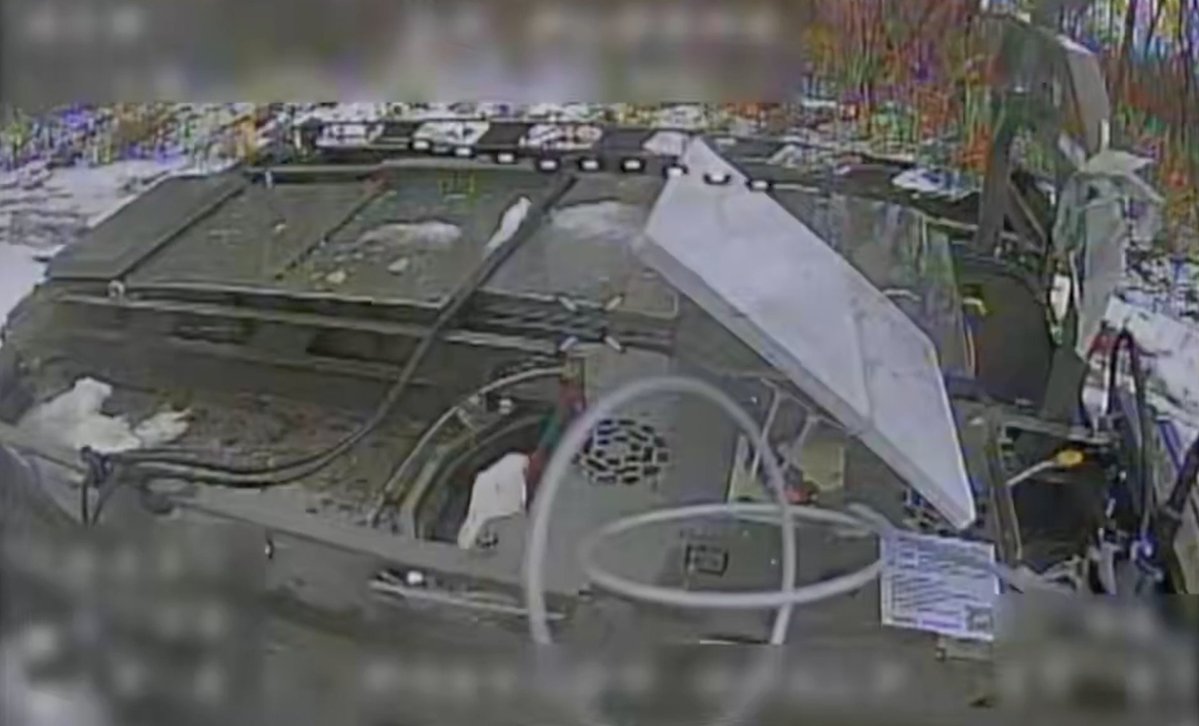
1/ Russian unmanned ground vehicles (UGVs) have become another casualty of the Starlink shutdown. A Russian warblogger highlights UGV operators' reliance on embedded Starlink terminals for their vehicles' navigation. ⬇️
2/ 'Southern Front' writes:
"Significant progress in the use of the UGV was achieved by installing Starlinks onboard. The minimum equipment required was a laptop and a TX-12 remote control.
Now, after Elon sided with evil, the use of Starlinks on the UGV is no longer possible."
3/ "Therefore, the use of the UGV has once again become difficult. Unfortunately, I'll repeat the already well-worn argument: "We don't have even close analogues." Why is this? I think everyone knows everything.