The Fed is going to keep creating inequality in the system until the middle class gets completely cooked
This means that managing macro flows and cycle risk is the only way to maneuver through the next decade 🧵👇
The Fed’s transmission mechanism lifts asset prices faster than wages. QE and low rates raise the price of duration assets first. Households with assets gain. Households living on labor incomes lag.
Even though we have come off a little, we have a MASSIVE amount of reserves in the system.
When the policy rate drops, discount rates fall and collateral values jump. Equity, real estate, and private assets reprice. Access to cheap credit is not evenly distributed, so the wealth effect is not either.
As a result, housing affordability is crashing
Higher collateral values widen credit access for already-wealthy households. That increases leverage capacity, then future asset buying, then prices again. It is a loop that widens wealth dispersion.
On the liability side, rising assets do not erase fixed costs of living. Rents, tuition, and healthcare climb with asset valuations while median wages lag. The policy put lifts balance sheets more than paychecks.
The result is core CPI is still well above 2%
Now the international layer. A strong global demand for dollar assets requires the United States to supply safe balance sheet. The clean way to supply it is to run external deficits and import foreign savings.
This is why the current account is negative
Capital inflows keep the dollar firm. A firm dollar cheapens imports and raises the relative price of US tradables. The result is a structural bias toward consumption and finance over tradable production.
China is taking the other side of this global trade and geopolitical risk is fluctuating in the middle
Because the world wants dollar assets in bad times and in good times, the US absorbs global cycles through the exchange rate and the current account. The distributional effect lands on everyday workers
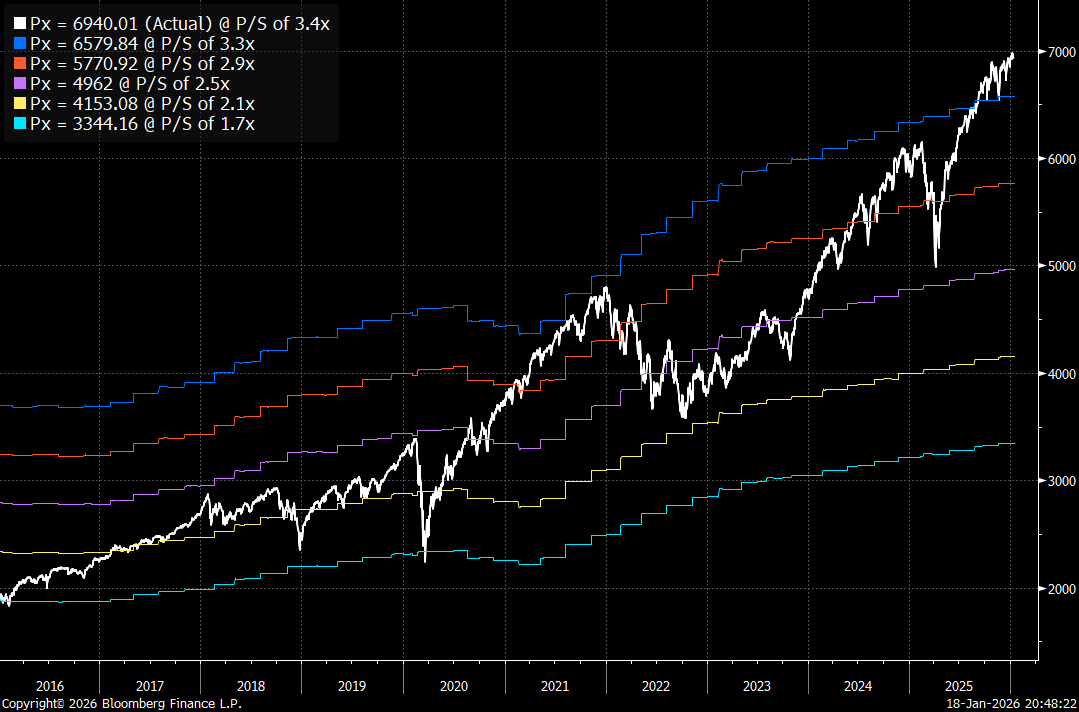
There is a reason the S&P500 is sitting at all time high valuations
This is a reflection of macro liquidity in the system as trade imbalances and the Fed are BOTH pushing money into the system
This is the credit cycle I have been laying out. It will continue until things become unsustainable and then we move into a bear market. For now, we melt up higher
The credit cycle is in the process of one more injection of liquidity, as equity valuations across every country are sitting at all-time highs
None of this is going to end well but the KEY will be playing this final stage of the endgame
This thread explains everything 🧵
I am going to explain WHERE we are in the credit and liquidity cycle and then break down HOW I am looking at the signals for taking risk. These set the stage for the S&P500, Bitcoin, gold, silver, and every major asset.
Everything starts with understanding growth, inflation, liquidity, and credit.
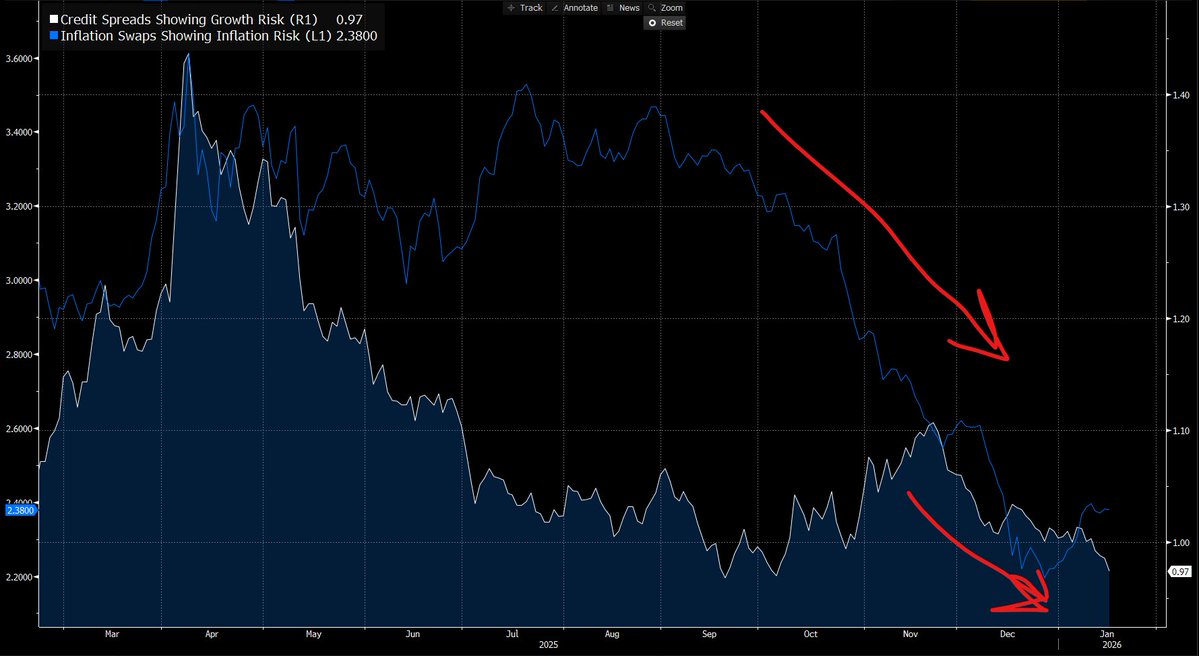
Right now, we know that growth is positive and inflation risk has been falling.
The chart below shows credit spreads (white) falling as growth remains positive in the US economy and inflation swaps (blue) falling more recently as the market realizes 2% inflation is approaching on the horizon.
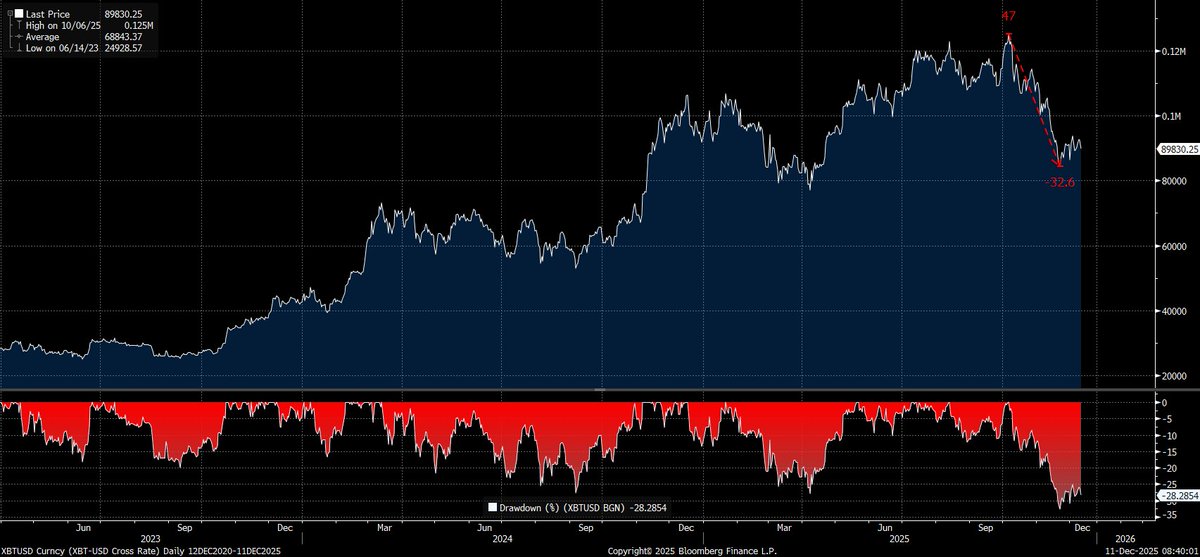
Bitcoin primarily has a positive correlation with risk assets. This is Bitcoin telling you that it has a high sensitivity to flows into risk assets (bottom panel shows correlation with SPX). Bitcoin speaks and doesn't need anyone to speak for it as a decentralized network.
The credit cycle is starting to flash yellow for the first time in this regime
Most investors will only notice once spreads are blowing out
Here’s the framework I use to track the credit cycle and front‑run where capital goes next: 🧵
First, my macro thesis is simple: Since April we had a massive injection of credit into the underlying economy and liquidity into financial markets. This created procyclical liquidity where growth and liquidity rose at the same time. This is why asset prices melted up.
We are now seeing the beginning of some headwindes in the credit cycle. The entire questions is are these risks shrot term signals or could they materialize into a larger issue?
I am going to lay out all of these macro signals but first I would encourage you to read (or reread!) the macro report I wrote explaining the largest structural risks we are seeing in the system right now. Do we know for sure that these risks will materialize? No but if they do, you need to know exactly what to look for cause that is not an environment where you want to be offsides.
Real interest rates have been driving the pullback in equities and Bitcoin
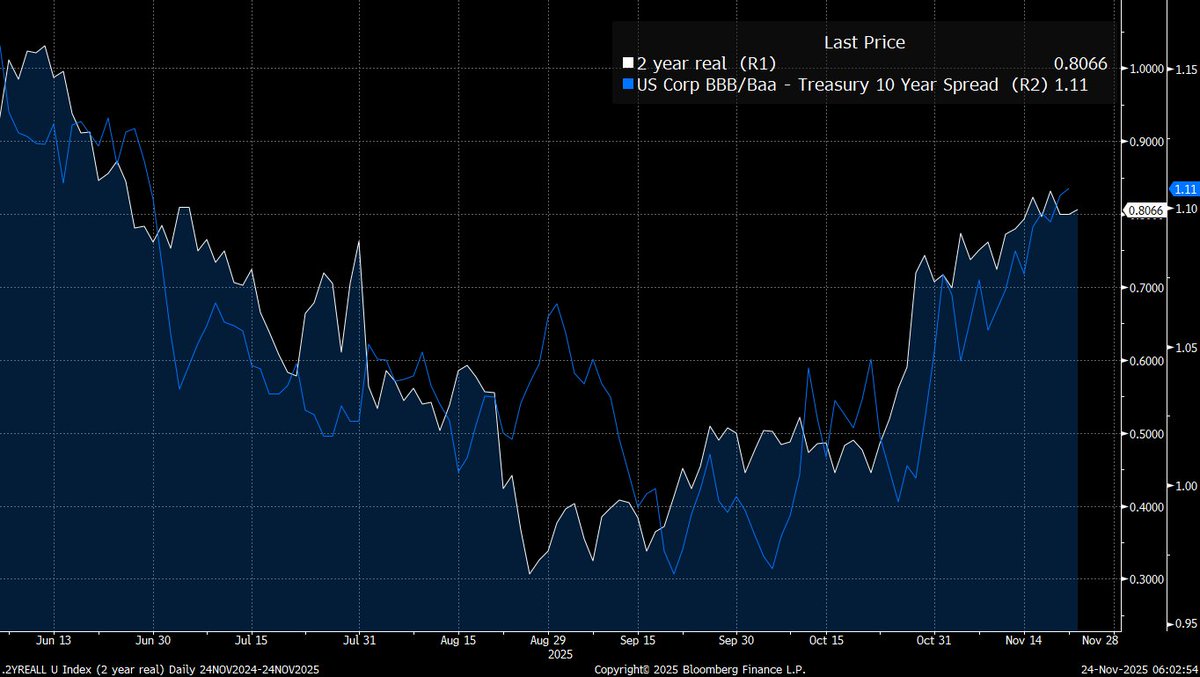
You will notice that 2 year real interest rates have begun to drag up credit spreads, which is a very clear signal about how liquidity is impacting risk assets
Here is how to understand this 🧵
Real rates tell you the true cost of money after adjusting for inflation.
Real rate = Nominal yield minus inflation expectations
So real rates move for only two reasons:
- Nominal yields move
- Inflation expectations move
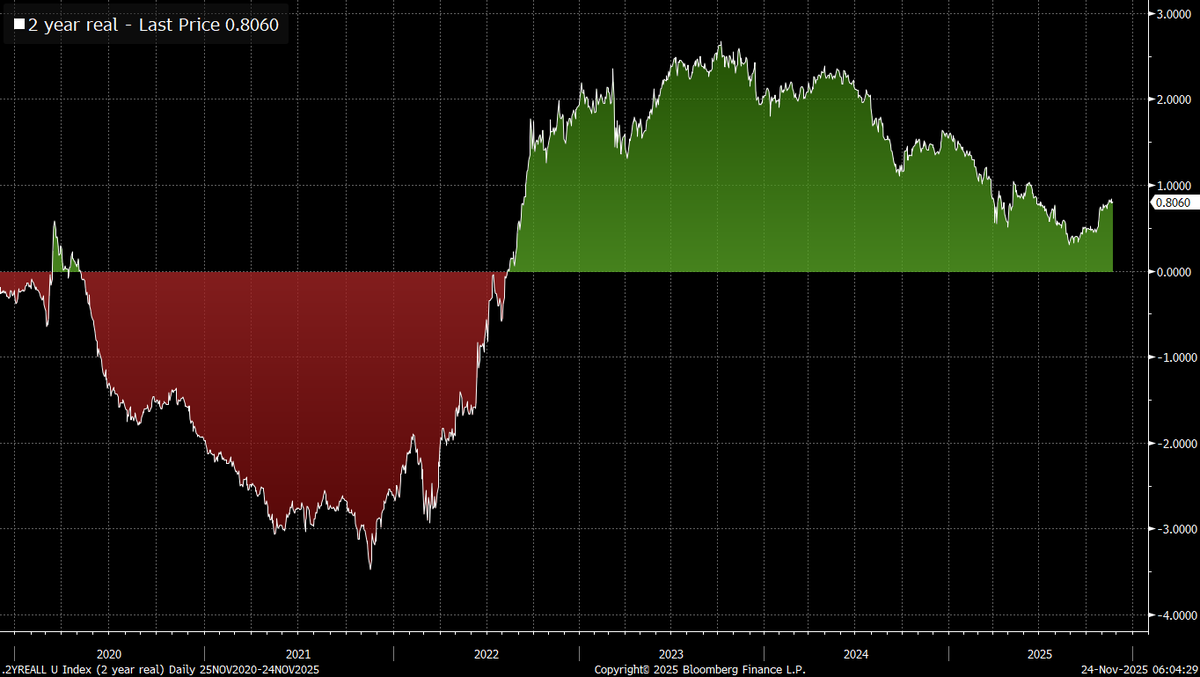
The chart below shows 2 year real interest rates. Notice that they were deeply negative during 2021 when the Fed held rates below inflation. As we moved into the 2022 hiking cycle this reversed. Since this time, we have been normalizing lower.
If nominal yields go up faster than inflation expectations ⇒ real rates rise
If inflation expectations go up faster than nominal yields ⇒ real rates fall
If nominal yields fall and inflation expectations stay the same ⇒ real rates fall
If inflation expectations fall and nominal yields stay the same ⇒ real rates rise (THIS IS WHERE WE ARE)
Everything fits into one idea:
Real rates rising = more expensive money/liquidity in the system on a real basis.
Real rates falling=cheaper money/liquidity in the system on a real basis.
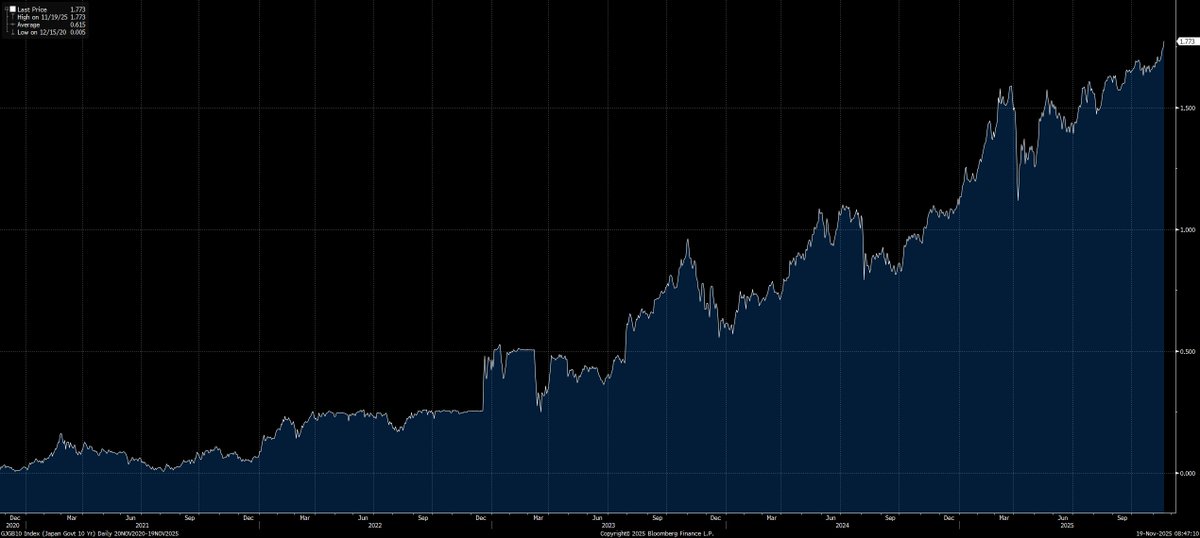
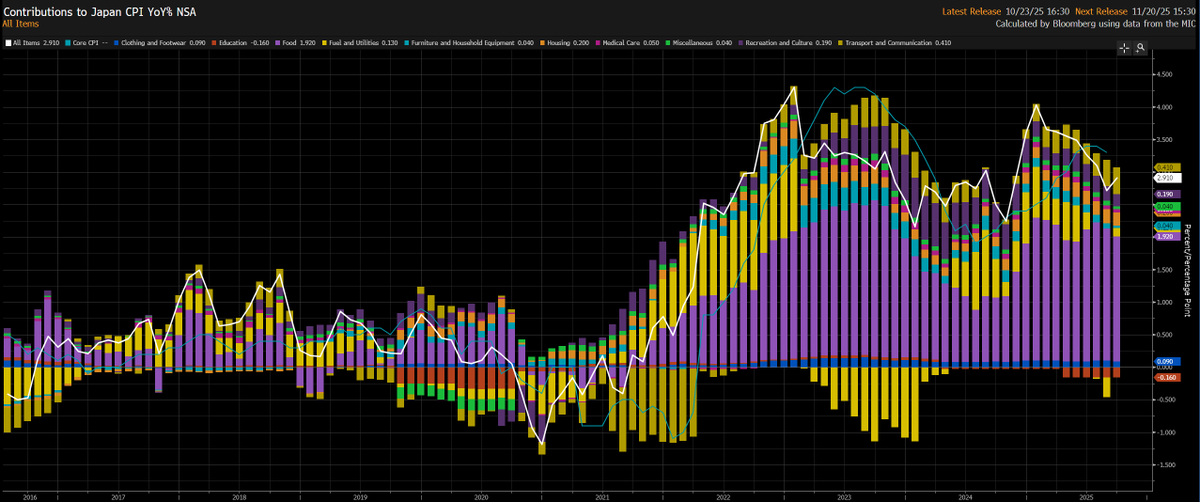
There has been a lot of talk around how 10 year yields in Japan are melting up and how this is an indication that a massive carry trade is about to unwind
The problem with this is that it doesn't match up with ANY of the actual evidence 🧵
First,
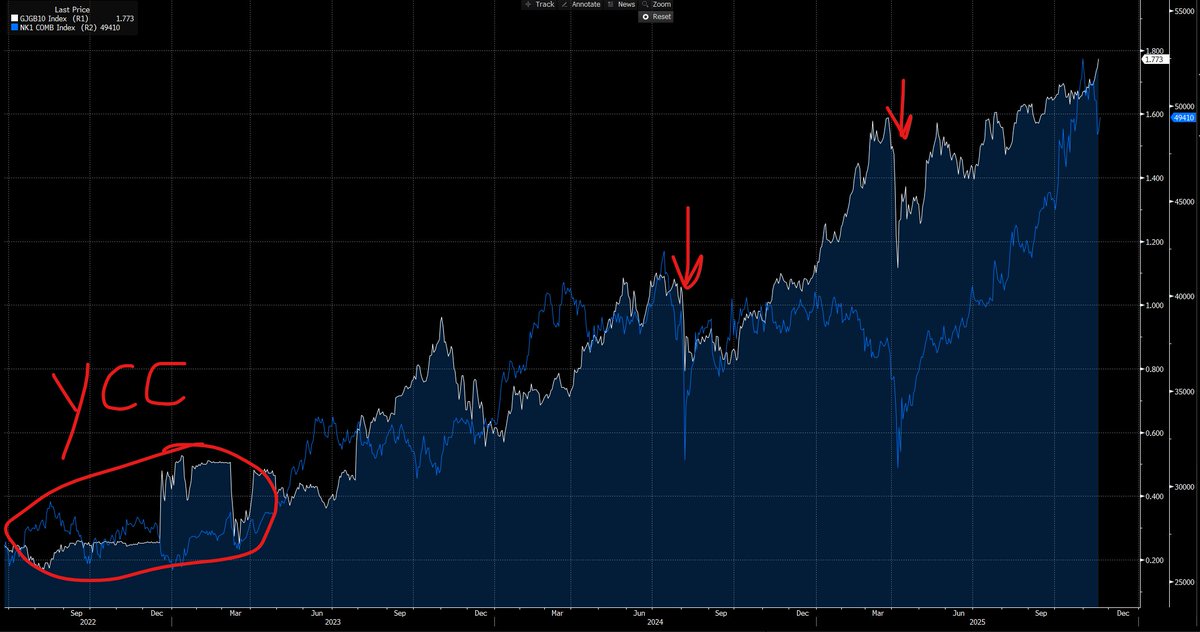
yields have been rising for years now and the Nikkei has been moving in lockstep ever since the BoJ stopped doing yield curve control. On top of this, every major carry trade unwind that pushed the Nikkei and US equities down was when JGB yields were going DOWN, not up!
JGB yields are rising because inflation is still elevated and the BoJ isnt taking a aggressive action toward it. The BoJ has hiked a little but its nowhere near enough to bring inflation down
The credit cycle is in the process of shifting, and this is going to begin increasing volatility significantly
The most important thing you can do is be on the right side of the macro volatility
This 🧵is a breakdown of WHERE we we are and risks for markets
The primary place to start is HOW interest rates are impacting equities
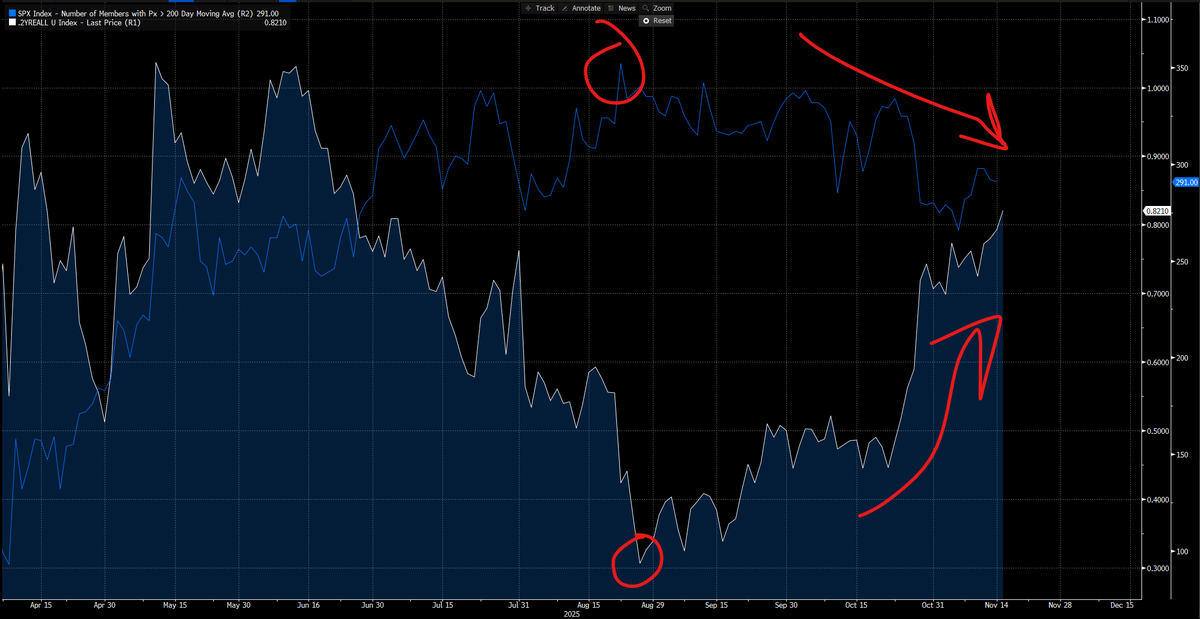
You will notice that the bottom in real interest rates created the top in S&P500 market breadth. Why? Because when real rates begin to rise, it begins to contract liquidity. This begins to weigh on some sectors before others.
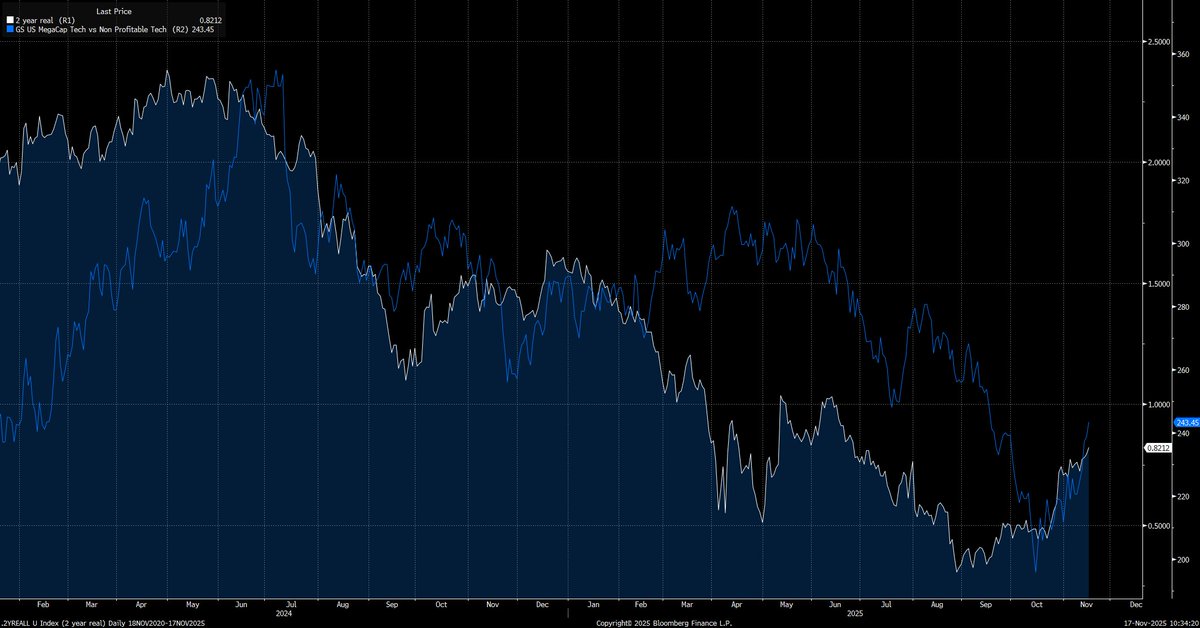
When real interest rates rise into unchanged growth, on net, it pulls capital BACK across the risk curve. This has been happening in the Goldman Sachs Mega Caps vs nonprofitable tech. In simple terms, when real rates rise and liquidity contracts, investors have less money to deploy and as a result they move capital into mega caps as opposed to nonprofitable tech on a relative basis.