🇷🇺/🇺🇦2026: Kramatorsk and Zaporijia?
With two months to go before the end of 2025, the Russian army continues to lay the groundwork for major battles in 2026.
With Pokrovsk falling, Putin will not stop his war before conquering Kramatorsk.
🧵THREAD🧵1/21 ⬇️
With two months to go before the end of 2025, the Russian army continues to lay the groundwork for major battles in 2026.
With Pokrovsk falling, Putin will not stop his war before conquering Kramatorsk.
🧵THREAD🧵1/21 ⬇️

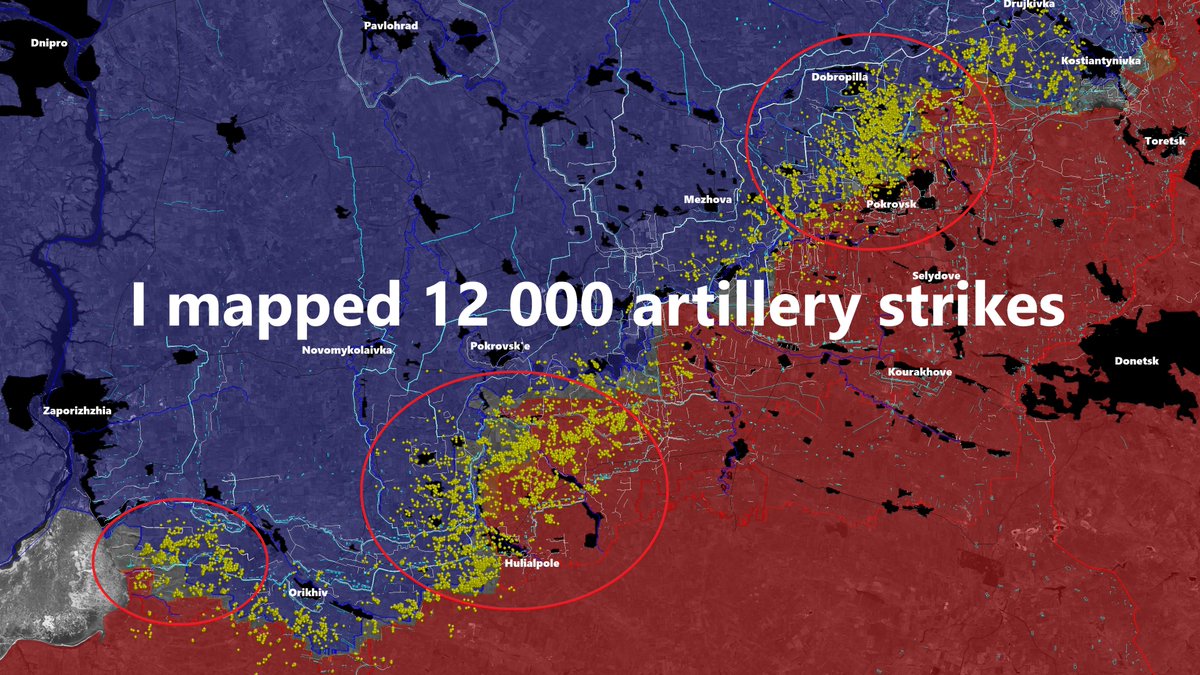
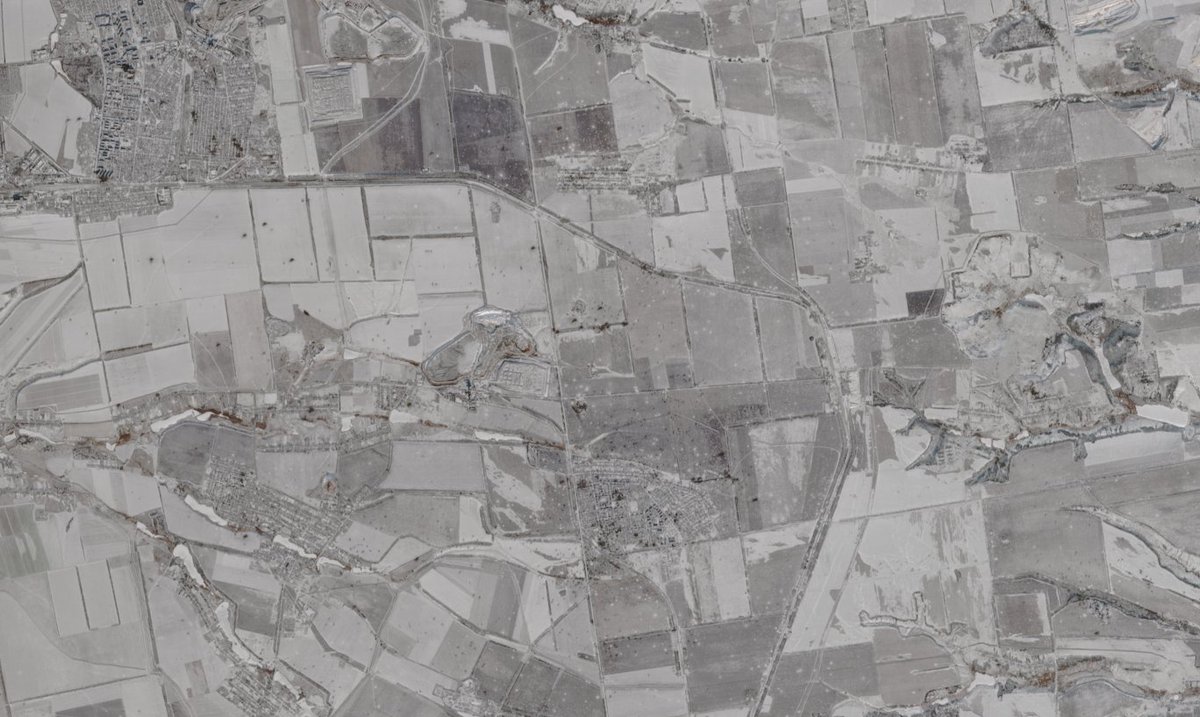
The capture of Pokrovsk is drawing closer, culminating a two-year offensive to first clear the outskirts of Donetsk and then assault this strategic city.
Situated on a hilltop and boasting a significant rail and road network, Pokrovsk will give the russians a major advantage.
Situated on a hilltop and boasting a significant rail and road network, Pokrovsk will give the russians a major advantage.

The capture of Pokrovsk is not yet a done deal, and I estimate that the battle, particularly in the suburbs, will continue for several more months.
The Ukrainian army still holds the strongholds of Udachne and Rodynske, preventing any overrun on its flanks.
The Ukrainian army still holds the strongholds of Udachne and Rodynske, preventing any overrun on its flanks.

Russian units entered the city head-on, infiltrating behind enemy lines for months.
A precise front line cannot be drawn, and the situation remains highly fluid. The Russian army is now attempting to advance into Myrnohrad.
A precise front line cannot be drawn, and the situation remains highly fluid. The Russian army is now attempting to advance into Myrnohrad.

The battle for Pokrovsk, which lasted a whole year, was a significant slowdown in the Russian offensive, allowing the Ukrainians to reorganize the defense of the Kramatorsk Valley and prepare the defenses leading to Dobropilla in the north and Pavlohrad, in the west.

Unlike Avdiivka's rear which was not fortified (Russian push for 5 months, stopped at the gates of Pokrovsk in 2024), Pokrovsk's rear was prepared, just like Bakhmout's in 2023, preventing at the time a collapse all the way to Kramatorsk.

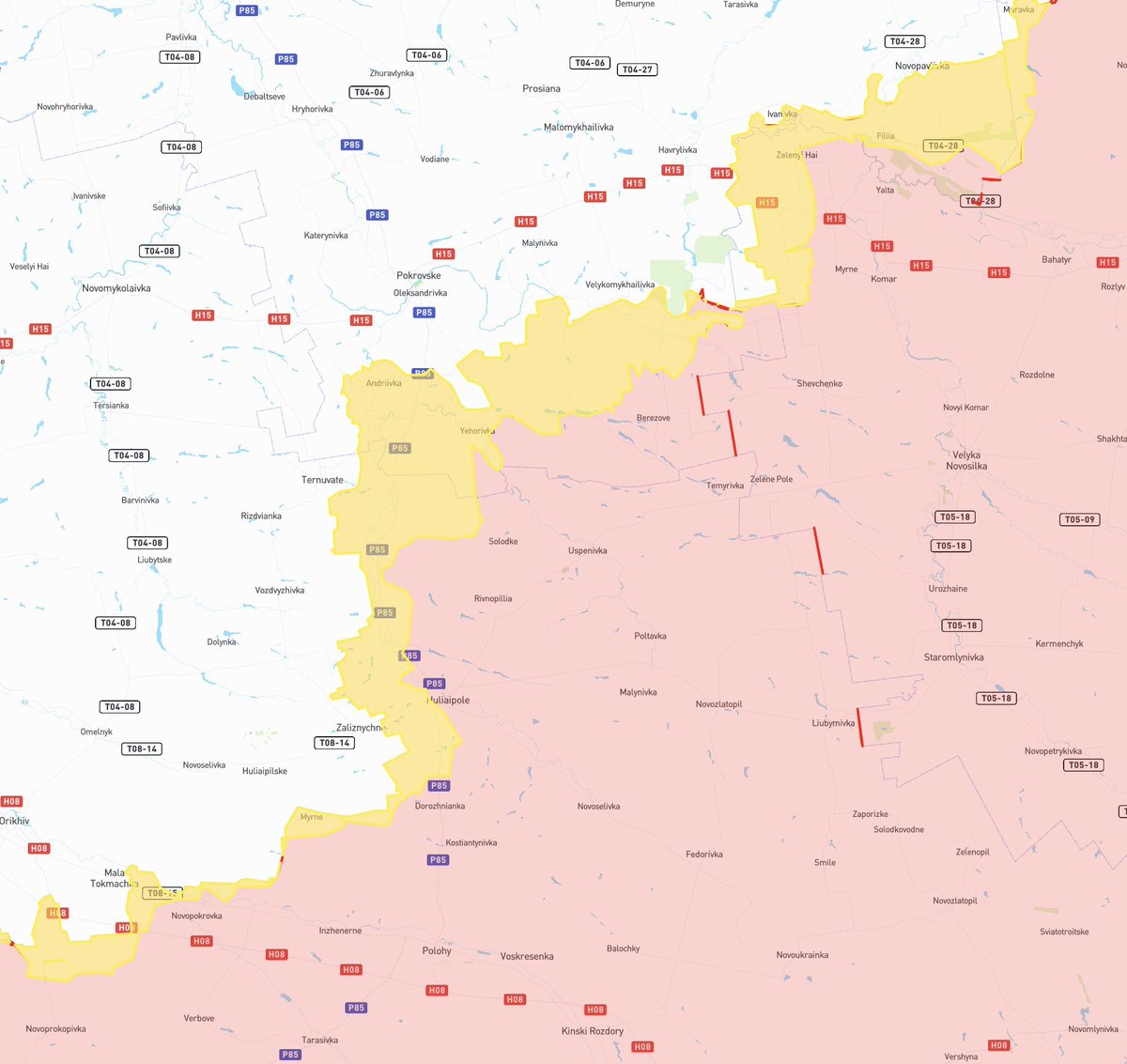
Lacking a significant foothold in the southeast, the Ukrainian army was unable to hold small rural towns, which were quickly bypassed, such as Velika Novosilka, or the smaller rivers.
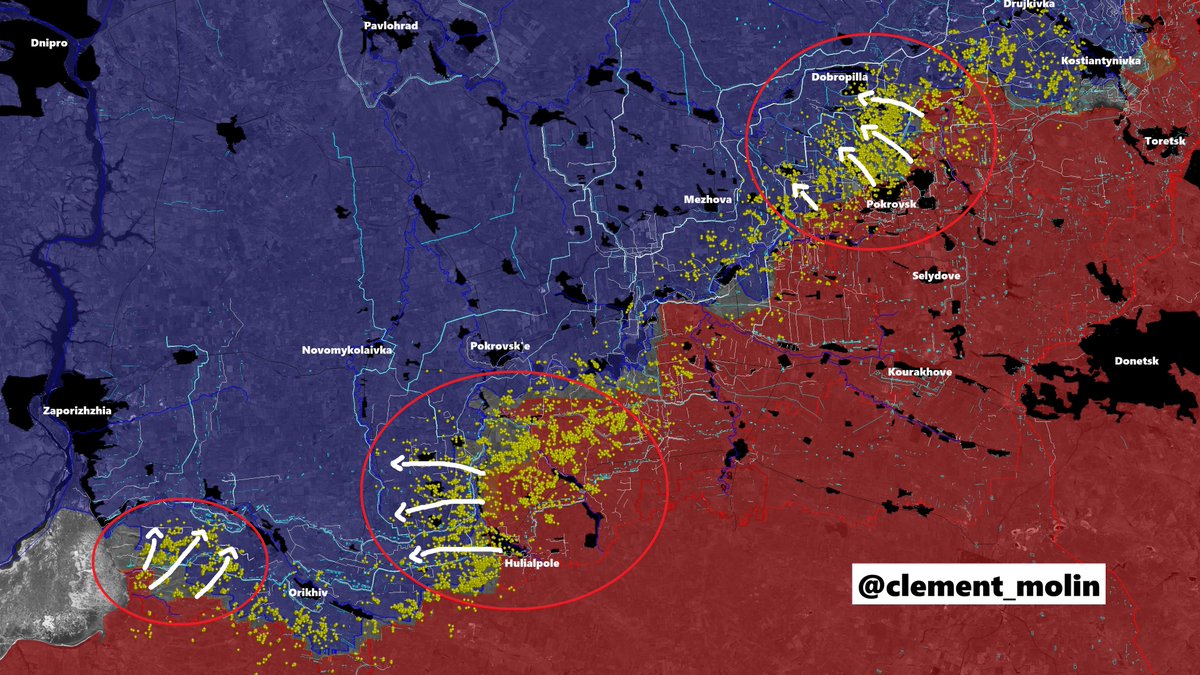
Consequently, a continued Russian advance spilled out from southern Donetsk toward Dnipro and Zaporizhzhia.
Consequently, a continued Russian advance spilled out from southern Donetsk toward Dnipro and Zaporizhzhia.

The Russian army has been largely halted in the vicinity of Novopavlivka, around the confluence of the three rivers Vovotcha, Solena, and Mokri Yali.
This prevents the flooding of Mezhova and Prossiana, two small towns located on higher ground.
This prevents the flooding of Mezhova and Prossiana, two small towns located on higher ground.

The Vovotcha River will slow northward movements, hence the importance of capturing Pokrovsk for any advance toward Pavlorhad.
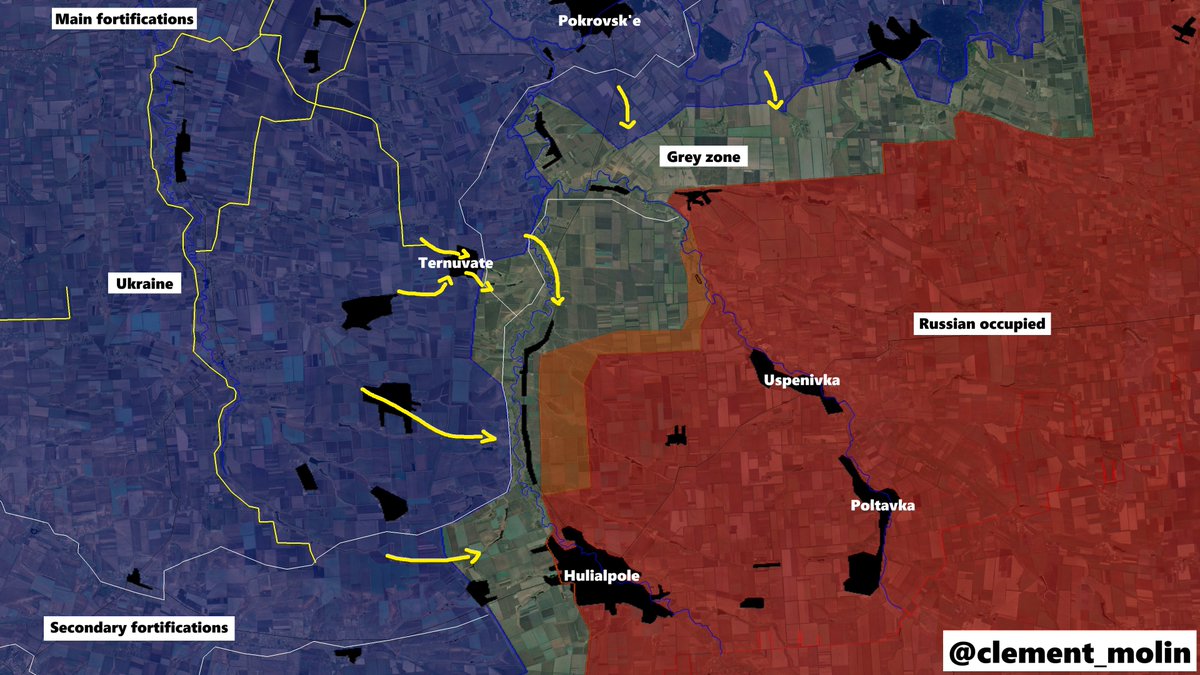
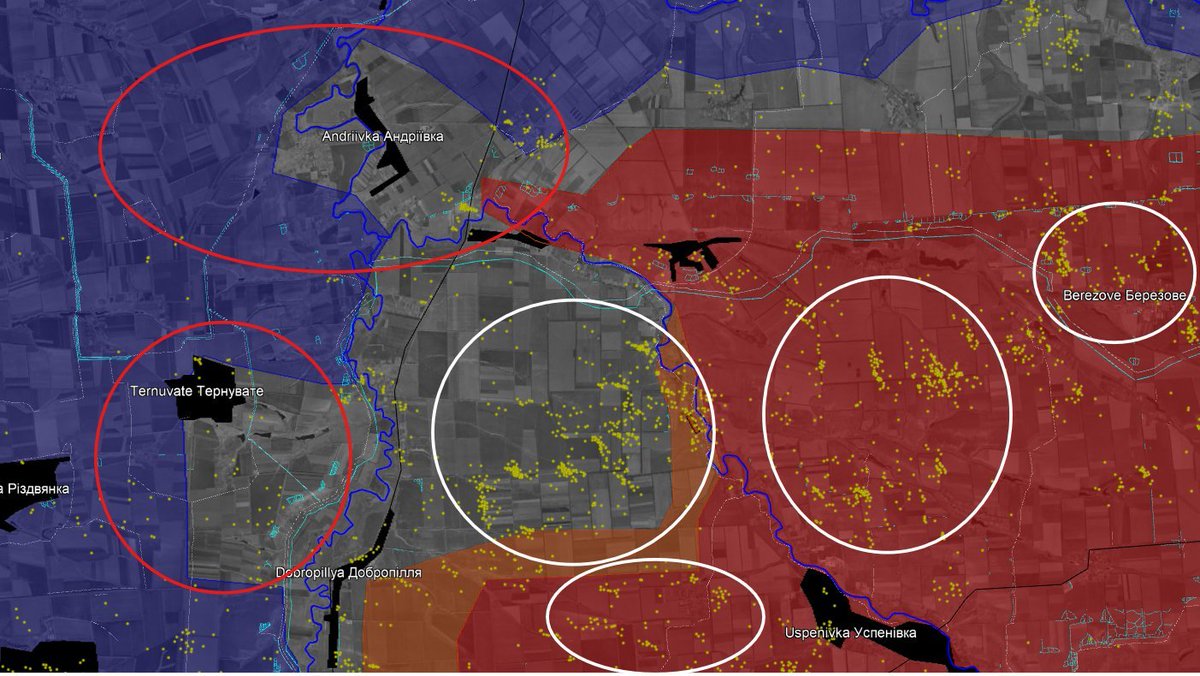
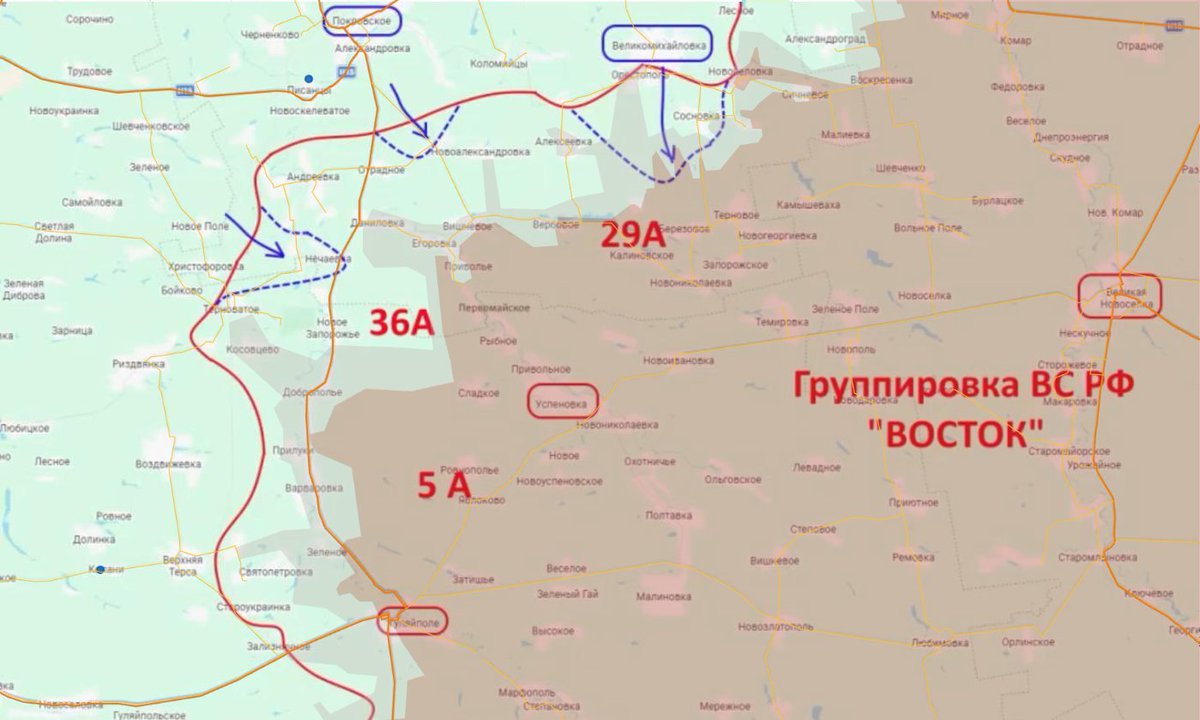
However, the westward offensive has not been halted. The only hope lies with the Haichur River on the Pokrovsk-Hulialpole line.
However, the westward offensive has not been halted. The only hope lies with the Haichur River on the Pokrovsk-Hulialpole line.

While Pokrovsk'e, behind the Vovotcha River, should hold, the situation in Hulialpole is likely to be more complicated.
This will result in a Russian advance on the rear of Orikhiv, towards Zaporizhzhia. All assaults on Orikhiv have been repelled; a small, heroic city.
This will result in a Russian advance on the rear of Orikhiv, towards Zaporizhzhia. All assaults on Orikhiv have been repelled; a small, heroic city.

However, it is becoming clear that there is cause for concern regarding Zaporijia, a city of 800k inhabitants.
As a matter of urgency, the Ukrainian army has erected defensive lines facing east, in Vilniansk and in Novomykhoilivka, on the N15 Donetsk-Zaporijia highway.
As a matter of urgency, the Ukrainian army has erected defensive lines facing east, in Vilniansk and in Novomykhoilivka, on the N15 Donetsk-Zaporijia highway.

The risk also comes from the south; the capture of Kamianske, the clashes in Stepnohirsk, and the infiltration of Prymorske do not bode well.
The 🇷🇺 are less than 20 km from the city; they will soon be able to use drones and FAB bombs. They will have to evacuate part of the city
The 🇷🇺 are less than 20 km from the city; they will soon be able to use drones and FAB bombs. They will have to evacuate part of the city

How can one even imagine defending such a large city with such a shortage of infantry and knowing the critical lack of fortifications south of the city?
The city is a square measuring 16km by 16km. How can infiltrations like those at Pokrovsk be prevented?
The city is a square measuring 16km by 16km. How can infiltrations like those at Pokrovsk be prevented?

It has become very clear that one of Russia's objectives for 2026 is also to threaten Zaporijia.
A populous, industrial city that also has a dam on the Dnipro, Zaporijia is particularly vulnerable given how much southern Ukraine is becoming a desert with the end of irrigation.
A populous, industrial city that also has a dam on the Dnipro, Zaporijia is particularly vulnerable given how much southern Ukraine is becoming a desert with the end of irrigation.
While the push to the southeast may be an opportunity for the Russian army, given the lack of defenses and cities, the primary objective remains the Donbas, and in particular the four cities in the Kramatorsk Valley.
2026 will undoubtedly be the year for this battle.
2026 will undoubtedly be the year for this battle.

I've already explained this, but the Russian plan has been phased in since the failure of the initial offensive.
2022: Mariupol-Sievierodonetsk
2023: Bakhmut
2024: Donetsk suburbs
2025: Pokrovsk-Kostiantynivka
2026: Kramatorsk
2022: Mariupol-Sievierodonetsk
2023: Bakhmut
2024: Donetsk suburbs
2025: Pokrovsk-Kostiantynivka
2026: Kramatorsk

The battle for Kostiantynivka has only just begun, and the city is still far from being encircled. The battle will be easier than Pokrovsk, given that the city is at the bottom of a valley, the roads more exposed.
The key to the battle will be capturing both east and west flanks.
The key to the battle will be capturing both east and west flanks.

To the east and north, the keys to the battle will be Siversk and Lyman, two battles of fixation to protect Sloviansk, the twin city of Kramatorsk, just to the north.

Finally, the battle for the Oskil River is likely to continue even after the fall of Kupiansk. The terrain is more difficult for advances.
For the moment, it is a secondary objective, although it is suspected that the goal of reaching the Oskil River will be followed by another: reaching the Siversk Donets River.
For the moment, it is a secondary objective, although it is suspected that the goal of reaching the Oskil River will be followed by another: reaching the Siversk Donets River.

The gradual end of the Battle of Pokrovsk paves the way for the battle for the last strongholds of the Donbas.
2026 will likely be the year the Russian army uses to advance on two strategic objectives, Kramatorsk and Zaporizhzhia, and potentially launch an assault in the winter of 2026-2027.
2026 will likely be the year the Russian army uses to advance on two strategic objectives, Kramatorsk and Zaporizhzhia, and potentially launch an assault in the winter of 2026-2027.

Thank you for following this new analytical thread. I also want to thank you all for reaching 80,000 followers on my account!
Thank you for your messages. I'll be hosting a live stream in English soon to talk about Ukraine, if you're interested!
Thank you for your messages. I'll be hosting a live stream in English soon to talk about Ukraine, if you're interested!

• • •
Missing some Tweet in this thread? You can try to
force a refresh