In 1965, Singapore was a mess.
● No natural resources
● High unemployment
● GDP per capita = $516
● Crime, dirt, and disease were everywhere
● It had fewer toilets than many Indian villages
But in just one generation, it became:
● 3rd cleanest city in the world
● 1st in Asia for sanitation
● 2nd lowest crime rate globally
● Among the wealthiest nations per capita
How did this miracle happen?
How Lee Kuan Yew turned Singapore into the cleanest city on Earth and what we can learn from it.
Bookmark and retweet this thread to revisit it later
● No natural resources
● High unemployment
● GDP per capita = $516
● Crime, dirt, and disease were everywhere
● It had fewer toilets than many Indian villages
But in just one generation, it became:
● 3rd cleanest city in the world
● 1st in Asia for sanitation
● 2nd lowest crime rate globally
● Among the wealthiest nations per capita
How did this miracle happen?
How Lee Kuan Yew turned Singapore into the cleanest city on Earth and what we can learn from it.
Bookmark and retweet this thread to revisit it later
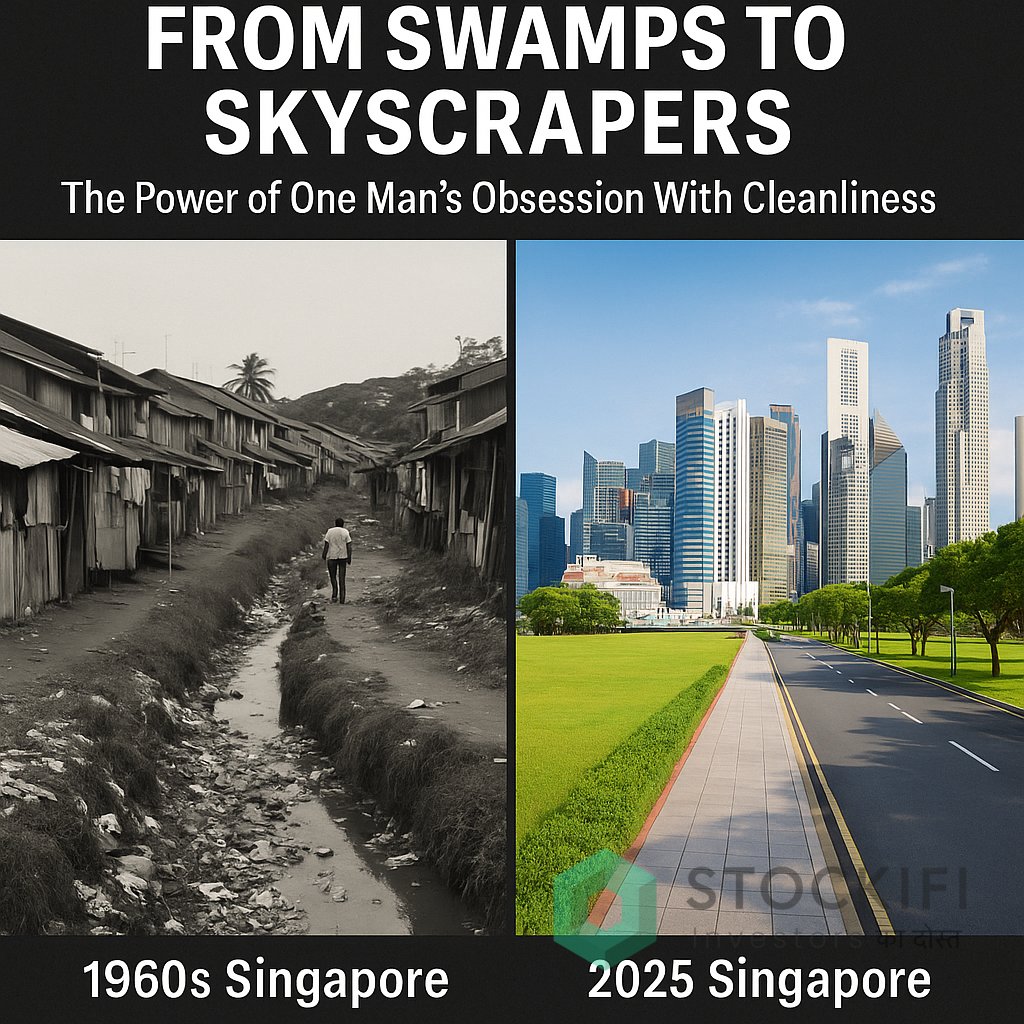
Lee Kuan Yew wasn’t just a Prime Minister.
He was the CEO of Singapore Inc.
And his obsession wasn’t just with GDP—it was with dignity.
He believed cleanliness was a precondition for development.
Not the result.
While the world obsessed over policies, Lee obsessed over psychology.
He said:
“If you want to change a nation, change how its people feel about their surroundings.”
That’s exactly what he did.
He was the CEO of Singapore Inc.
And his obsession wasn’t just with GDP—it was with dignity.
He believed cleanliness was a precondition for development.
Not the result.
While the world obsessed over policies, Lee obsessed over psychology.
He said:
“If you want to change a nation, change how its people feel about their surroundings.”
That’s exactly what he did.
Step 1: Shame Was a Strategy
Lee made littering a crime—but he also made it a source of shame.
In the 1970s, public campaigns ran with slogans like:
● “Be Ashamed to Litter”
● “Use your hands to keep your country clean”
● “Cleanliness is next to godliness—and patriotism”
This wasn’t just policy—it was nation branding.
Singaporeans weren’t just citizens. They were custodians.
Lee made littering a crime—but he also made it a source of shame.
In the 1970s, public campaigns ran with slogans like:
● “Be Ashamed to Litter”
● “Use your hands to keep your country clean”
● “Cleanliness is next to godliness—and patriotism”
This wasn’t just policy—it was nation branding.
Singaporeans weren’t just citizens. They were custodians.
Step 2: Toilets Before Temples
Singapore built over 2,500 public toilets between 1977-1985.
They weren’t just clean. They were inspected daily, with scores displayed publicly.
Bad ratings? The manager lost bonuses.
Imagine if Indian municipalities did this.
Lee even passed a law:
All coffee shops must have clean, working toilets.
No toilet? No license.
No exceptions.
Singapore built over 2,500 public toilets between 1977-1985.
They weren’t just clean. They were inspected daily, with scores displayed publicly.
Bad ratings? The manager lost bonuses.
Imagine if Indian municipalities did this.
Lee even passed a law:
All coffee shops must have clean, working toilets.
No toilet? No license.
No exceptions.
Step 3: Swachh Police
Before “Swachh Bharat” was a slogan, Singapore had “Environment Wardens.”
They were empowered to:
● Fine litterers on the spot
● Shut down dirty eateries
● Issue citations for dirty staircases
One Indian visitor joked in 1985:
“I got cleaner in Singapore by just walking around.”
Before “Swachh Bharat” was a slogan, Singapore had “Environment Wardens.”
They were empowered to:
● Fine litterers on the spot
● Shut down dirty eateries
● Issue citations for dirty staircases
One Indian visitor joked in 1985:
“I got cleaner in Singapore by just walking around.”
Step 4: Strict Laws, No VIP Exceptions
Chewing gum was banned.
Spitting was fined.
Public urination was punishable by court.
In 1994, an American teenager was caned for vandalism.
The world protested.
Lee didn’t blink.
He said:
“We are not like other countries. We survive by being exceptional.”
Even ministers paid fines for traffic violations.
Chewing gum was banned.
Spitting was fined.
Public urination was punishable by court.
In 1994, an American teenager was caned for vandalism.
The world protested.
Lee didn’t blink.
He said:
“We are not like other countries. We survive by being exceptional.”
Even ministers paid fines for traffic violations.
Step 5: Clean Mind = Clean City
Lee knew physical hygiene starts with mental hygiene.
So he overhauled education to include:
● Civic sense
● Environmental etiquette
● Discipline and public conduct
From primary school, children were taught how to:
● Wash hands properly
● Report littering
● Respect public property
Today, 90%+ of Singaporean kids wash hands 5+ times a day.
India still battles with open defecation in some regions.
Lee knew physical hygiene starts with mental hygiene.
So he overhauled education to include:
● Civic sense
● Environmental etiquette
● Discipline and public conduct
From primary school, children were taught how to:
● Wash hands properly
● Report littering
● Respect public property
Today, 90%+ of Singaporean kids wash hands 5+ times a day.
India still battles with open defecation in some regions.
Step 6: Cleanliness Was an Economic Strategy
Lee said:
“No investor will put money in a place where the toilets stink.”
And he was right.
By the 1990s:
● Global MNCs flocked to Singapore
● Tourism revenue grew 4x in 10 years
● It became Asia’s clean-tech hub
Today, Singapore processes 100% of its sewage through advanced treatment plants.
The water is recycled and called NEWater.
They even drink it.
Step 7: Punishment + Pride = Permanence
Laws punish.
Campaigns inspire.
But pride makes it permanent.
Lee used all three.
Every year, Singapore celebrates Clean and Green Week with competitions, awards and civic pledges.
It’s not a government program anymore.
It’s a national ritual.
Lee said:
“No investor will put money in a place where the toilets stink.”
And he was right.
By the 1990s:
● Global MNCs flocked to Singapore
● Tourism revenue grew 4x in 10 years
● It became Asia’s clean-tech hub
Today, Singapore processes 100% of its sewage through advanced treatment plants.
The water is recycled and called NEWater.
They even drink it.
Step 7: Punishment + Pride = Permanence
Laws punish.
Campaigns inspire.
But pride makes it permanent.
Lee used all three.
Every year, Singapore celebrates Clean and Green Week with competitions, awards and civic pledges.
It’s not a government program anymore.
It’s a national ritual.
What We can learn
Make sanitation a source of status, not subsidy
Incentivise local wards for cleanliness metrics
Shame public officials for dirty areas—openly
Mandate school-based cleanliness drills weekly
Link tourist certifications to public hygiene ratings
Use media to glamourize clean habits, not just cricket
Make sanitation a source of status, not subsidy
Incentivise local wards for cleanliness metrics
Shame public officials for dirty areas—openly
Mandate school-based cleanliness drills weekly
Link tourist certifications to public hygiene ratings
Use media to glamourize clean habits, not just cricket
India spends ₹14,623 crore per year on cleanliness campaigns.
Singapore didn’t become clean because it had money.
It became rich because it became clean.
Cleanliness isn’t cosmetic.
It’s strategic.
In 2023, Singapore ranked 3rd globally for environmental quality.
India ranked 180th.
One man made cleanliness a matter of national pride.
Another made it a campaign slogan.
The difference shows.
Singapore didn’t become clean because it had money.
It became rich because it became clean.
Cleanliness isn’t cosmetic.
It’s strategic.
In 2023, Singapore ranked 3rd globally for environmental quality.
India ranked 180th.
One man made cleanliness a matter of national pride.
Another made it a campaign slogan.
The difference shows.
→ Join Stockifi Community to download the detailed research report PDF of our latest potential multibagger idea
👉 Join Now t.me/stockifi
👉 Join Now t.me/stockifi
• • •
Missing some Tweet in this thread? You can try to
force a refresh