🧵 This autumn the UKHSA is rightly worried, as 'flu is a real risk...
TLDR:
Clinically Vulnerable people ALL need 'flu vaccines + antivirals this year (if symptomatic or exposed) + confused infection control guidance.
If you are Clinically Vulnerable, please read on...
1/
TLDR:
Clinically Vulnerable people ALL need 'flu vaccines + antivirals this year (if symptomatic or exposed) + confused infection control guidance.
If you are Clinically Vulnerable, please read on...
1/
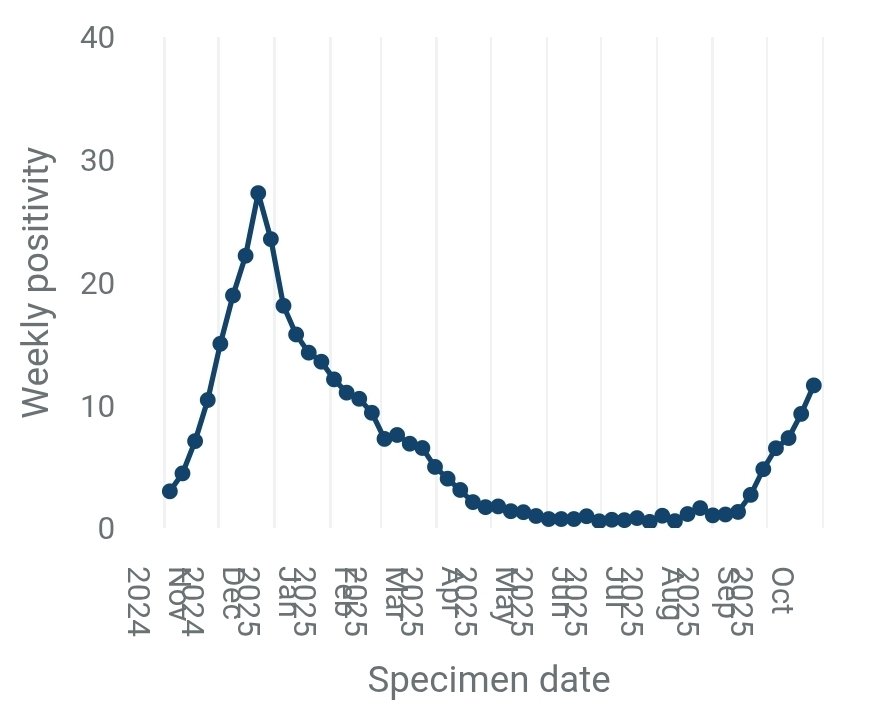
This year's strains aren't looking good:
The infections have started earlier.
A(H3N2) strains are dominant - and linked to worse outcomes.
A shifted strain (slightly different to vaccines) is also doing the rounds.
2/
The infections have started earlier.
A(H3N2) strains are dominant - and linked to worse outcomes.
A shifted strain (slightly different to vaccines) is also doing the rounds.
2/
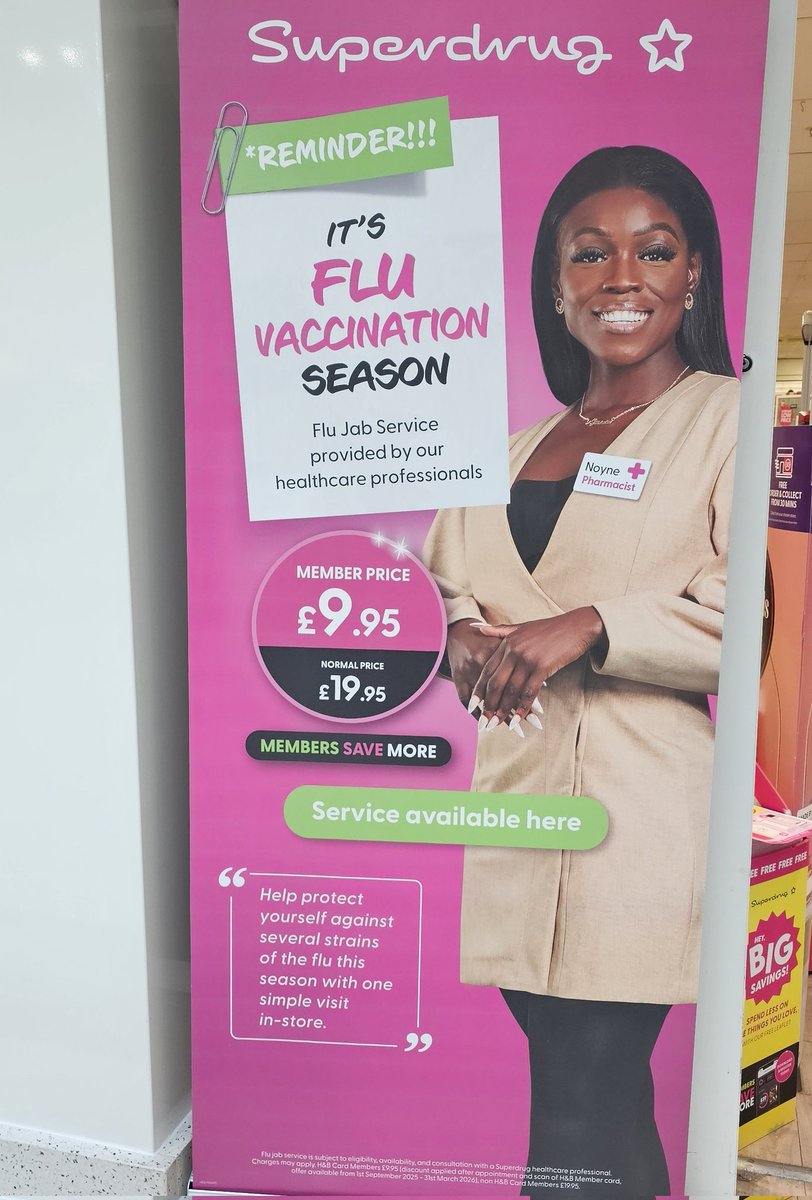
If you have been invited for a vaccine, or live with a Clinically Vulnerable person (but don't qualify) please consider getting a vaccine - they can be as cheap as £9.95.
Everyone benefits from 'flu vaccines and children (up to 16) are offered them for free in school.
3/
Everyone benefits from 'flu vaccines and children (up to 16) are offered them for free in school.
3/
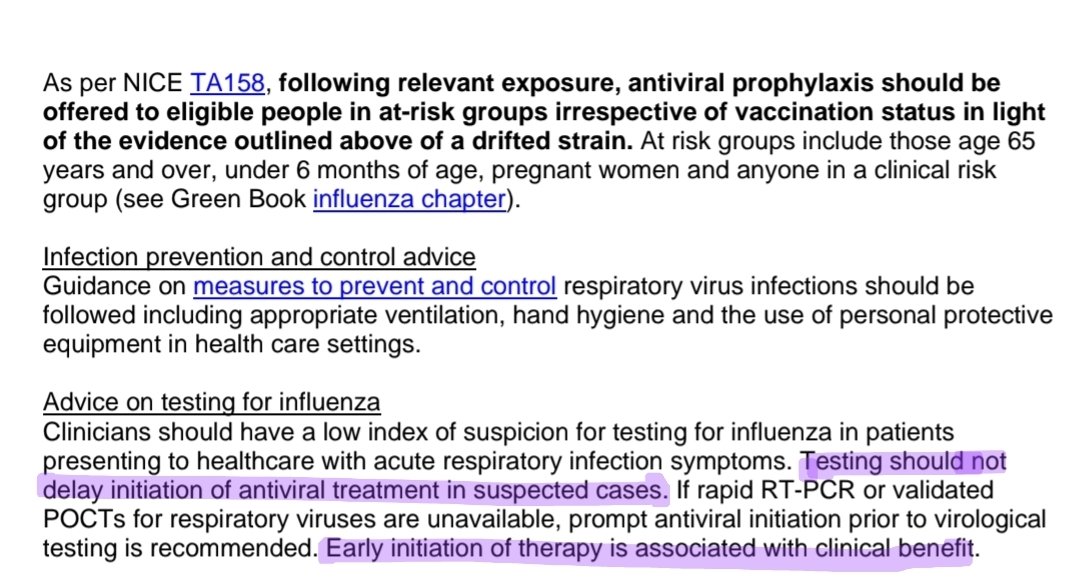
If you are eligible for the NHS flu vaccine because you in a higher-risk group (due to age or health conditions), this year it also means you are eligible for antivirals either:
🤒 If you have 'flu symptoms
or
🌬 If you have been exposed to someone with 'flu
4/
🤒 If you have 'flu symptoms
or
🌬 If you have been exposed to someone with 'flu
4/

If you get flu-like symptoms:
Antiviral treatment shouldn’t wait for a lab result.
High-risk patients should be treated promptly because antivirals work best early (ideally within 48hrs).
Call your GP or NHS 111.
5/
Antiviral treatment shouldn’t wait for a lab result.
High-risk patients should be treated promptly because antivirals work best early (ideally within 48hrs).
Call your GP or NHS 111.
5/
Antivirals (after exposure):
Have you been in close contact with a confirmed/suspected flu case?
High-risk people should be offered preventive antivirals. These are also time-critical. Seek advice within 48hrs of exposure.
6/
Have you been in close contact with a confirmed/suspected flu case?
High-risk people should be offered preventive antivirals. These are also time-critical. Seek advice within 48hrs of exposure.
6/
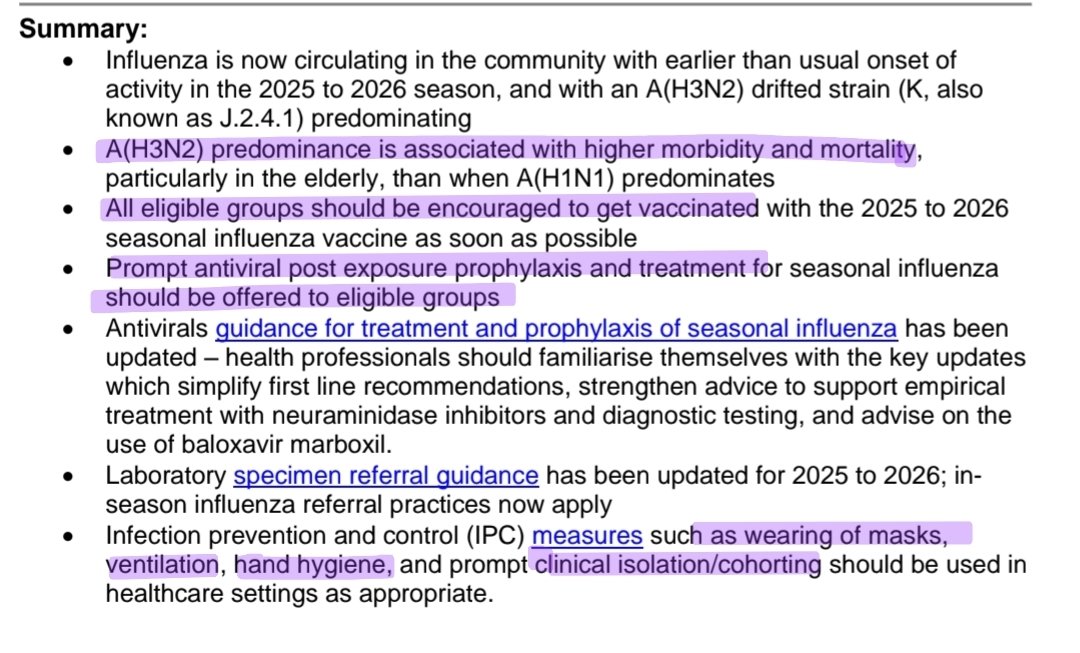
UKHSA is suggesting infection control:
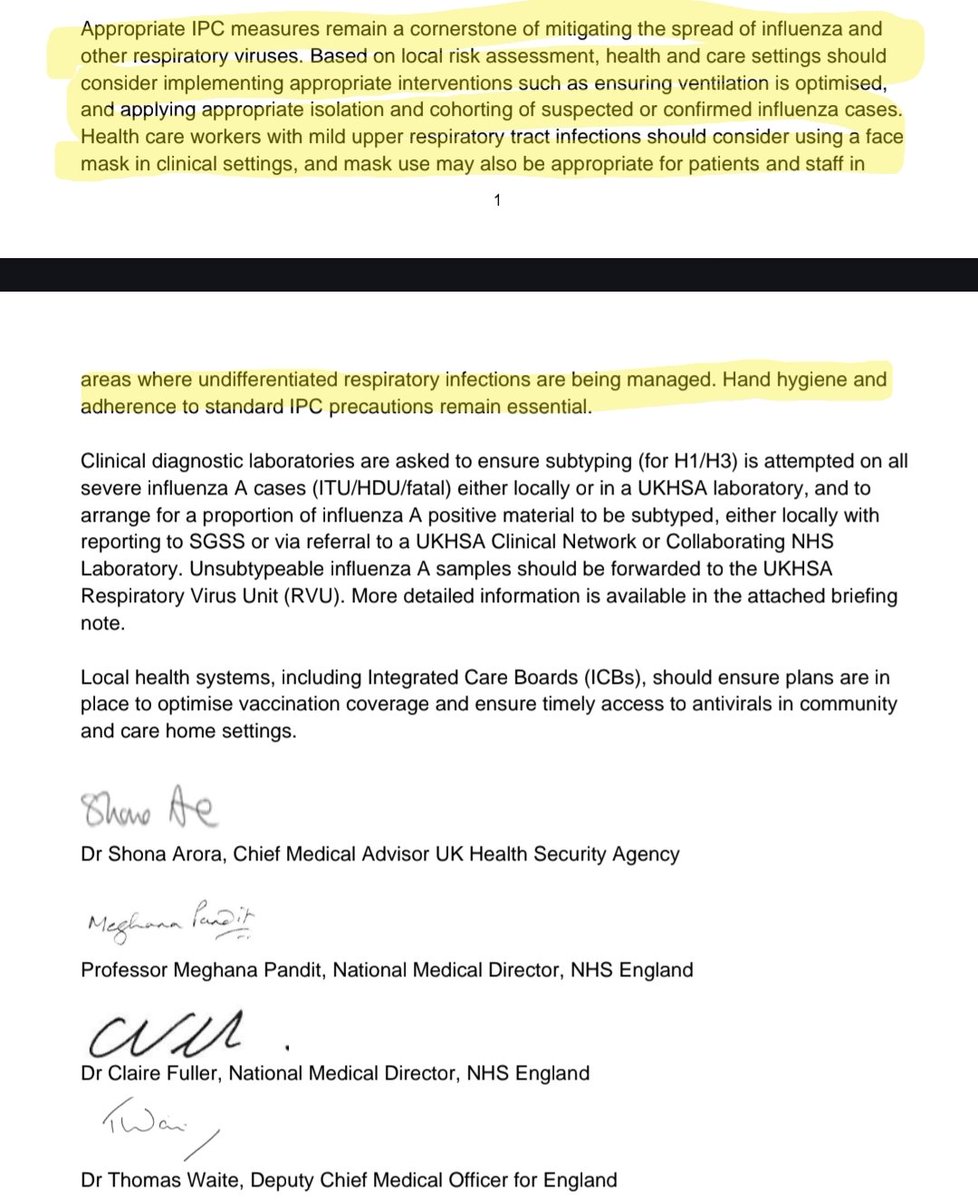
Ventilation, grouping of patients, and hand hygiene have been recommended.
Healthcare workers with symptoms should mask.
... but universal masking?!?!
7/
Ventilation, grouping of patients, and hand hygiene have been recommended.
Healthcare workers with symptoms should mask.
... but universal masking?!?!
7/
NHS labs have already moved into full in-season surveillance to track strains and resistance.
That means better, faster information for guiding treatment - which is reassuring for patients.
8/
That means better, faster information for guiding treatment - which is reassuring for patients.
8/
Our recommendations:
💉 Get vaccinated (flu and Covid, if you can)
😷Wear a close fitting high-grade (FFP2/FFP3) mask in high-risk indoor public spaces.
🪟 Open windows in healthcare and consider buying air filters.
🧼 Wash your hands.
🏠 And PLEASE stay at home sick.
9/
💉 Get vaccinated (flu and Covid, if you can)
😷Wear a close fitting high-grade (FFP2/FFP3) mask in high-risk indoor public spaces.
🪟 Open windows in healthcare and consider buying air filters.
🧼 Wash your hands.
🏠 And PLEASE stay at home sick.
9/
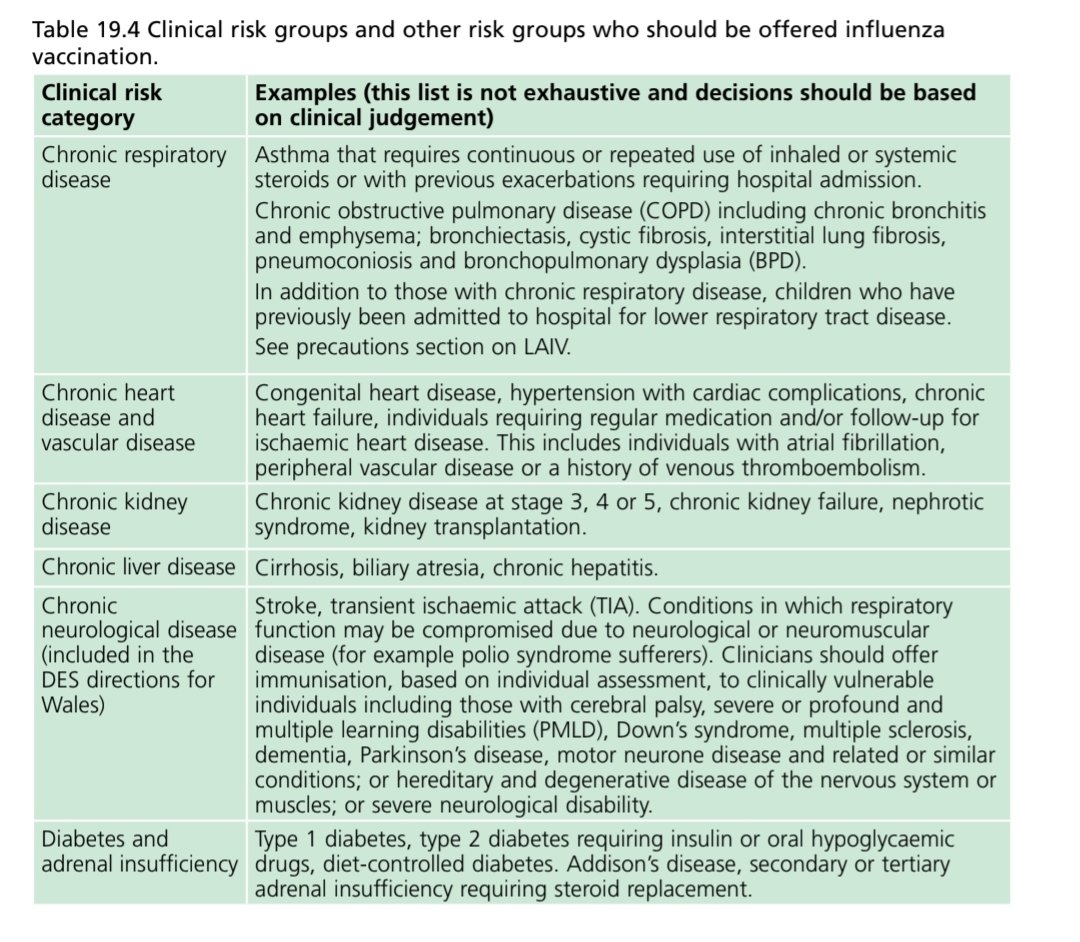
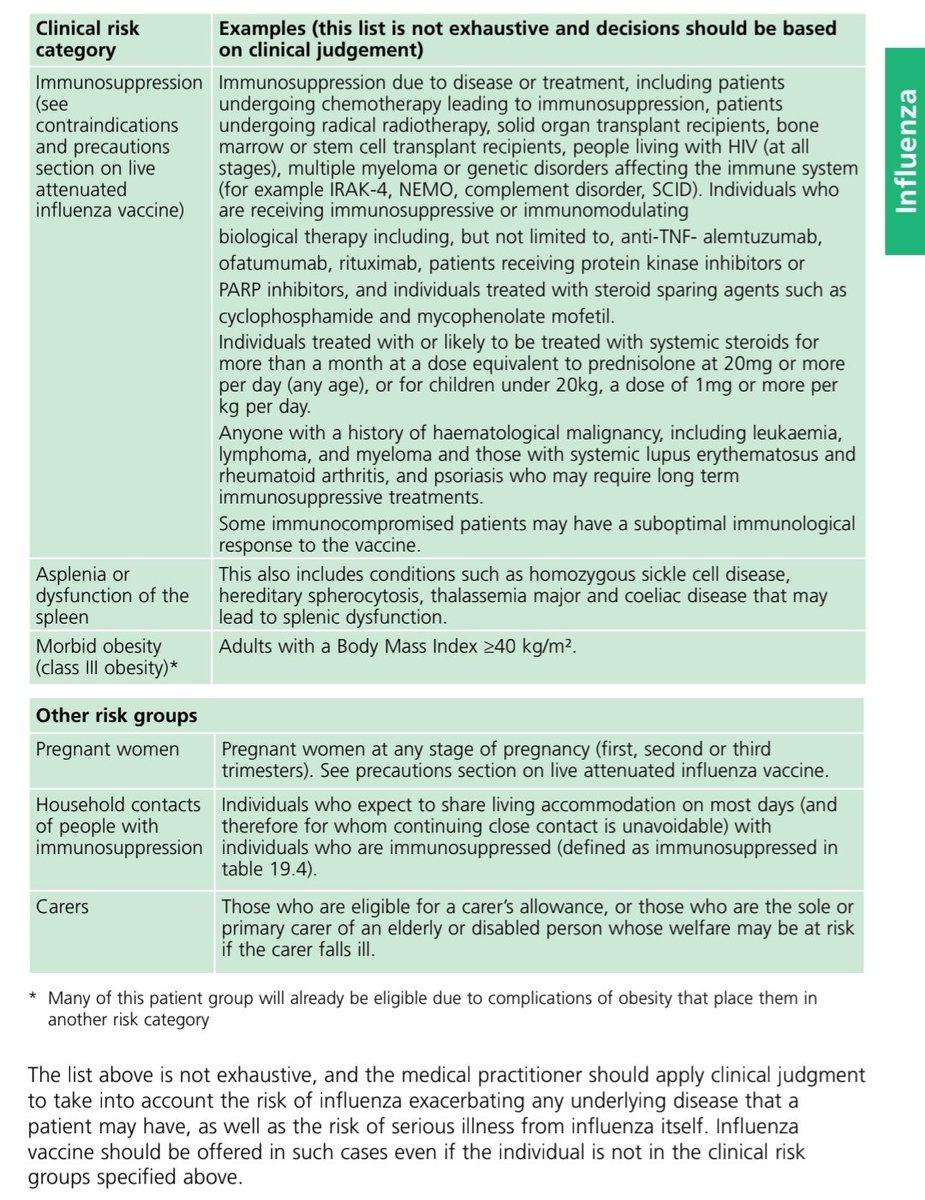
If you are unsure whether you qualify for a vaccines please read the Green Book for Influenza:
10/ assets.publishing.service.gov.uk/media/6838317b…
10/ assets.publishing.service.gov.uk/media/6838317b…
• • •
Missing some Tweet in this thread? You can try to
force a refresh