🧵RED FORT BLAST TIMELINE - The November 10 explosion that shook Delhi exposed a sophisticated JeM terror module operating under the radar.
This thread details the complete chronology from initial intelligence to the blast & beyond. A detailed OSINT breakdown.
This thread details the complete chronology from initial intelligence to the blast & beyond. A detailed OSINT breakdown.

THE BACKDROP
October 2025 Approximately 1 month prior to the blast, JeM Chief Masood Azhar made public announcements calling for attacks in India.
In parallel, 8-9 coordinated terror module busts occurred across India, signaling embedded sleeper cells becoming ACTIVE across NCR.
October 2025 Approximately 1 month prior to the blast, JeM Chief Masood Azhar made public announcements calling for attacks in India.
In parallel, 8-9 coordinated terror module busts occurred across India, signaling embedded sleeper cells becoming ACTIVE across NCR.

OCT 9, 2025 – Punjab
Punjab Police busts Babbar Khalsa terror module; 2 arrested from Jalandhar. Security agencies shift to high alert. First in a series of coordinated arrests linking to various terror cells across India.
Punjab Police busts Babbar Khalsa terror module; 2 arrested from Jalandhar. Security agencies shift to high alert. First in a series of coordinated arrests linking to various terror cells across India.

OCT 15, 2025 - Punjab Border
Punjab Police busts cross-border organized arms-narcotics smuggling module linked to PAKISTAN. The discovery signals active terror supply chains operating between India-Pakistan border regions actively supplying to embedded cells.
Punjab Police busts cross-border organized arms-narcotics smuggling module linked to PAKISTAN. The discovery signals active terror supply chains operating between India-Pakistan border regions actively supplying to embedded cells.

OCT 17, 2025 - Andhra Pradesh
A.P. Police arrest 2 persons from UP & Maharashtra with terror links. Pattern emerging: Multi-state coordination. Not isolated incidents but systematic disruption of interconnected terror cells.
A.P. Police arrest 2 persons from UP & Maharashtra with terror links. Pattern emerging: Multi-state coordination. Not isolated incidents but systematic disruption of interconnected terror cells.

OCT 24, 2025 – Delhi
ISIS module BUSTED. Two suspected terrorists undergoing 'fidayeen' training arrested in Delhi itself. Intelligence agencies begin connecting dots. Multiple terror outfits appear to be simultaneously ACTIVE in the capital.
ISIS module BUSTED. Two suspected terrorists undergoing 'fidayeen' training arrested in Delhi itself. Intelligence agencies begin connecting dots. Multiple terror outfits appear to be simultaneously ACTIVE in the capital.

OCT 28, 2025 – Maharashtra
Maharashtra ATS arrests Pune techie with alleged Al-Qaeda links. Terror networks aren't just militant cells - they're recruiting educated professionals, technicians, & technical experts. The profile is changing.
Maharashtra ATS arrests Pune techie with alleged Al-Qaeda links. Terror networks aren't just militant cells - they're recruiting educated professionals, technicians, & technical experts. The profile is changing.

NOV 7, 2025 – Rajasthan
Cleric with Tehrik-e-Taliban Pakistan (TTP) links arrested in Rajasthan & 4 others detained. Clerics identified as KEY NODES in radicalization infrastructure. These are the ideological & logistical anchors of terror modules.
Cleric with Tehrik-e-Taliban Pakistan (TTP) links arrested in Rajasthan & 4 others detained. Clerics identified as KEY NODES in radicalization infrastructure. These are the ideological & logistical anchors of terror modules.

NOV 9, 2025 (DAY BEFORE BLAST) - Gujarat
Gujarat ATS arrests 3 ISIS terrorists: Dr. Ahmed Mohiuddin Syed, Mohd Suhel & Azad Saif. CRITICAL: First documented arrest of a DOCTOR in terror module. Pattern shift detected - educated professionals now primary recruitment targets.
Gujarat ATS arrests 3 ISIS terrorists: Dr. Ahmed Mohiuddin Syed, Mohd Suhel & Azad Saif. CRITICAL: First documented arrest of a DOCTOR in terror module. Pattern shift detected - educated professionals now primary recruitment targets.

NOV 9, 2025 - THE BREAKTHROUGH: Saharanpur, UP:
Dr Adil Ahmed arrested for JeM links + 360 kg Potassium Nitrate + AK-47 + detonators seized.
Budgam, Kashmir: Terror financier Dr Ghulab Nabi Fai (ISI-funded) residence RAIDED Investigation accelerating. Multiple simultaneous ops.
Dr Adil Ahmed arrested for JeM links + 360 kg Potassium Nitrate + AK-47 + detonators seized.
Budgam, Kashmir: Terror financier Dr Ghulab Nabi Fai (ISI-funded) residence RAIDED Investigation accelerating. Multiple simultaneous ops.

NOV 10, 2025 - MORNING (BLAST DAY) Lucknow:
Dr Shaheena arrested - Al-Falah University faculty, reportedly girlfriend of Dr Muzammil, in contact with JeM's "Sadia" (Head of Jamat-e-Mominat - JeM's women wing). Her connection to Sadia is a direct link to Masood Azhar's family network.
Dr Shaheena arrested - Al-Falah University faculty, reportedly girlfriend of Dr Muzammil, in contact with JeM's "Sadia" (Head of Jamat-e-Mominat - JeM's women wing). Her connection to Sadia is a direct link to Masood Azhar's family network.

NOV 10, 2025 - 6:52 PM - THE BLAST LOCATION:
Subhash Marg traffic signal, Chandni Chowk entrance, Red Fort
VEHICLE: White Hyundai i20 (HR 26CE7674)
CASUALTIES: 12-16 dead, 30+ injured
EXPLOSIVES: 30-50 kg (Ammonium Nitrate)
DRIVER: Dr Umar Farooq (identified via CCTV)
Subhash Marg traffic signal, Chandni Chowk entrance, Red Fort
VEHICLE: White Hyundai i20 (HR 26CE7674)
CASUALTIES: 12-16 dead, 30+ injured
EXPLOSIVES: 30-50 kg (Ammonium Nitrate)
DRIVER: Dr Umar Farooq (identified via CCTV)


THE VEHICLE TRAIL
White i20 trajectory ON NOV 10:
7:30 AM: Parked at Al-Falah Medical College, Faridabad
8:04 AM: Crosses Badarpur border into Delhi
2:30 PM: Circles Connaught Place (scoping footfall/traffic)
3:19 PM: Parks at Sunehri Masjid, Chandni Chowk (3+ hours stationary)
6:52 PM: EXPLOSION at Red Fort signal
White i20 trajectory ON NOV 10:
7:30 AM: Parked at Al-Falah Medical College, Faridabad
8:04 AM: Crosses Badarpur border into Delhi
2:30 PM: Circles Connaught Place (scoping footfall/traffic)
3:19 PM: Parks at Sunehri Masjid, Chandni Chowk (3+ hours stationary)
6:52 PM: EXPLOSION at Red Fort signal

Vehicle ownership traced:
Original owner: Salman Mohd (sold to Nadeem Khan)
Final owners: Tariq → Amir Rashid → Umar Mohd
ALL residents of Pulwama, J&K All arrested in Awantipora
3rd individual (suspected driver Umar Farooq) initially MISSING, suspected dead in car blast - DNA samples being collected
Original owner: Salman Mohd (sold to Nadeem Khan)
Final owners: Tariq → Amir Rashid → Umar Mohd
ALL residents of Pulwama, J&K All arrested in Awantipora
3rd individual (suspected driver Umar Farooq) initially MISSING, suspected dead in car blast - DNA samples being collected
THE MASTERMIND NETWORK Arrested after the blast:
Dr Sajad Ahmed Mala (Pulwama) - Associate of Dr Umar
Dr Parvez Ansari (Dr Shaheena's younger brother) - Associate of Dr Muzammil
Irfan Ahmed Wagay (Ex-paramedic, Ex-Imam) - Radicalization expert with links to Dr Adeel & Dr Muzammil
Radical clerics identified as IDEOLOGICAL NODES driving recruitment.
Dr Sajad Ahmed Mala (Pulwama) - Associate of Dr Umar
Dr Parvez Ansari (Dr Shaheena's younger brother) - Associate of Dr Muzammil
Irfan Ahmed Wagay (Ex-paramedic, Ex-Imam) - Radicalization expert with links to Dr Adeel & Dr Muzammil
Radical clerics identified as IDEOLOGICAL NODES driving recruitment.
EXPLOSIVE CACHE SEIZURES
Post-arrest raid at Maulvi Ishtiaq's residence (Al-Falah University premises):
2,500 kg explosive material (Ammonium Nitrate, Hexamine, Sulphur)
Timers, detonators, assault rifles with ammunition
CRITICAL: Blast used only 30-50 kg from this cache. Implies preparation for MULTIPLE attacks or larger coordinated strikes planned
Post-arrest raid at Maulvi Ishtiaq's residence (Al-Falah University premises):
2,500 kg explosive material (Ammonium Nitrate, Hexamine, Sulphur)
Timers, detonators, assault rifles with ammunition
CRITICAL: Blast used only 30-50 kg from this cache. Implies preparation for MULTIPLE attacks or larger coordinated strikes planned

KEY TAKEAWAYS:
1 Panic Detonation: Terror suspects triggered blast early due to rapid dismantling of infrastructure by security agencies
2 White-Collar Terror: Medical professionals became primary recruitment targets for JeM
3 Network Coordination: Multi-state operation with handlers in Istanbul & Doha
4 Women Radicalization: Jamat-e-Mominat systematically recruiting educated female professionals
5 Intelligence Win: Poster investigation → network exposure → prevented larger catastrophe
1 Panic Detonation: Terror suspects triggered blast early due to rapid dismantling of infrastructure by security agencies
2 White-Collar Terror: Medical professionals became primary recruitment targets for JeM
3 Network Coordination: Multi-state operation with handlers in Istanbul & Doha
4 Women Radicalization: Jamat-e-Mominat systematically recruiting educated female professionals
5 Intelligence Win: Poster investigation → network exposure → prevented larger catastrophe
Connection with Al-Falah University Located in Faridabad, Haryana
Approximately 40% student body from Kashmir
Multiple faculty arrested (Dr Muzammil, Dr Adil, Dr Umar, Dr Shaheena)
Explosive cache seized from rented university premises
Acts as recruitment & coordination hub for terror module
Approximately 40% student body from Kashmir
Multiple faculty arrested (Dr Muzammil, Dr Adil, Dr Umar, Dr Shaheena)
Explosive cache seized from rented university premises
Acts as recruitment & coordination hub for terror module

The Poster Trail
(Origin of Investigation) JeM propaganda posters appeared in Srinagar (Oct 19, 2025)
Praised JeM, threatened "revenge attacks"
Led to arrest of OGWs (Overground Workers)
Through interrogation: identified Irfan Ahmed
Wagay (cleric) Wagay led to Zameer Ahmad Ahanger (coordinator)
Ahanger revealed doctor network
(Origin of Investigation) JeM propaganda posters appeared in Srinagar (Oct 19, 2025)
Praised JeM, threatened "revenge attacks"
Led to arrest of OGWs (Overground Workers)
Through interrogation: identified Irfan Ahmed
Wagay (cleric) Wagay led to Zameer Ahmad Ahanger (coordinator)
Ahanger revealed doctor network
Forensic & Technical Findings Support Network Blast composition:
Ammonium Nitrate Associated with Dr Muzammil IED
Type: Vehicle-Borne Improvised Explosive Device (VBIED)
Charge Weight: 30-50 kg (incomplete device)
Absence of crater/shrapnel indicates device malfunction or panic detonation
Explosion from rear of vehicle
Response: NIA, NSG, FSL, Delhi Police Special Cell on scene within 10 minutes
Ammonium Nitrate Associated with Dr Muzammil IED
Type: Vehicle-Borne Improvised Explosive Device (VBIED)
Charge Weight: 30-50 kg (incomplete device)
Absence of crater/shrapnel indicates device malfunction or panic detonation
Explosion from rear of vehicle
Response: NIA, NSG, FSL, Delhi Police Special Cell on scene within 10 minutes
Pakistan Connection
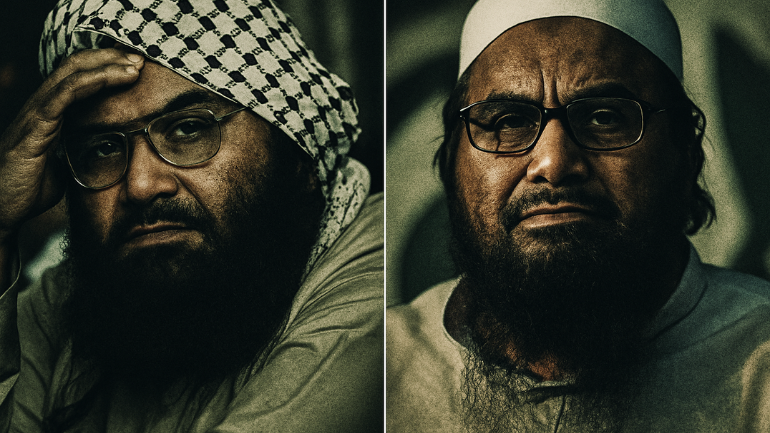
JeM Chief: Maulana Masood Azhar
Women's Wing Head: Sadia (wife of Masood's brother)
Funding traced to: Istanbul & Doha digital wallets
Handlers in: Afghanistan (Nangarhar province) & Turkey ISI involvement in overall coordination.
JeM Chief: Maulana Masood Azhar
Women's Wing Head: Sadia (wife of Masood's brother)
Funding traced to: Istanbul & Doha digital wallets
Handlers in: Afghanistan (Nangarhar province) & Turkey ISI involvement in overall coordination.
A routine poster investigation escalated into uncovering India's most significant white-collar terror module - where educated professionals replaced traditional militant cadres. The investigation showcases the evolving tactics of Pakistan-based terror groups leveraging professional networks for recruitment & logistics. The panic detonation on Nov 10 may have prevented a far larger coordinated strike planned for Republic Day 2026.
• • •
Missing some Tweet in this thread? You can try to
force a refresh