Stock–Flow Consistent Formulation of
Kalecki–Young Sectoral Inflation Decomposition (KYSID)
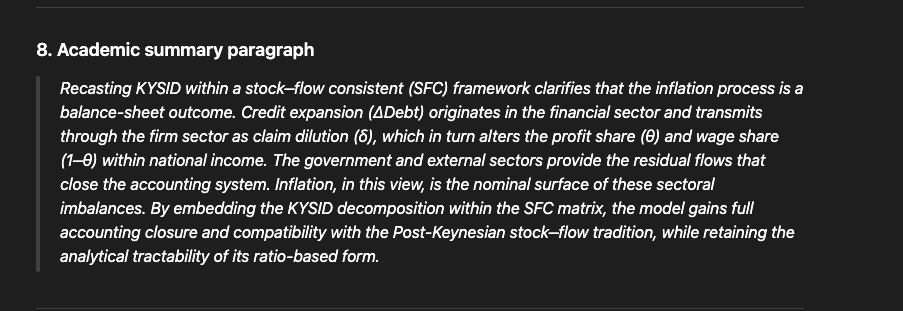
"Recasting KYSID within a stock–flow consistent (SFC) framework clarifies that the inflation process is a balance-sheet outcome."
Core flow-of-funds identity
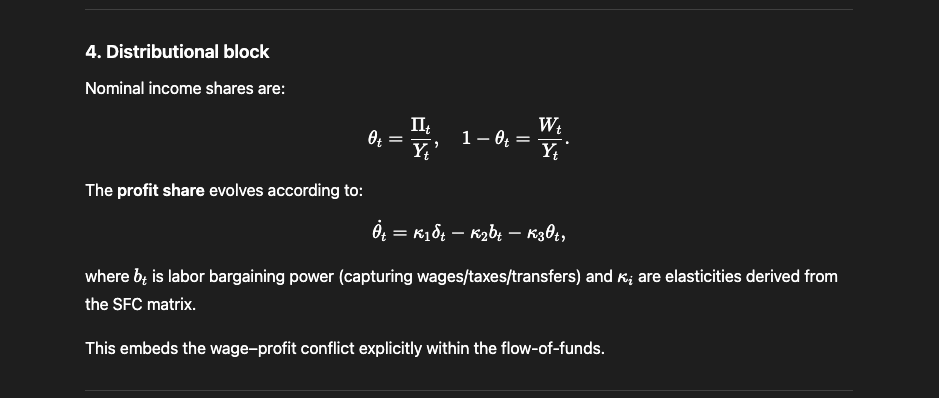
Distributional block
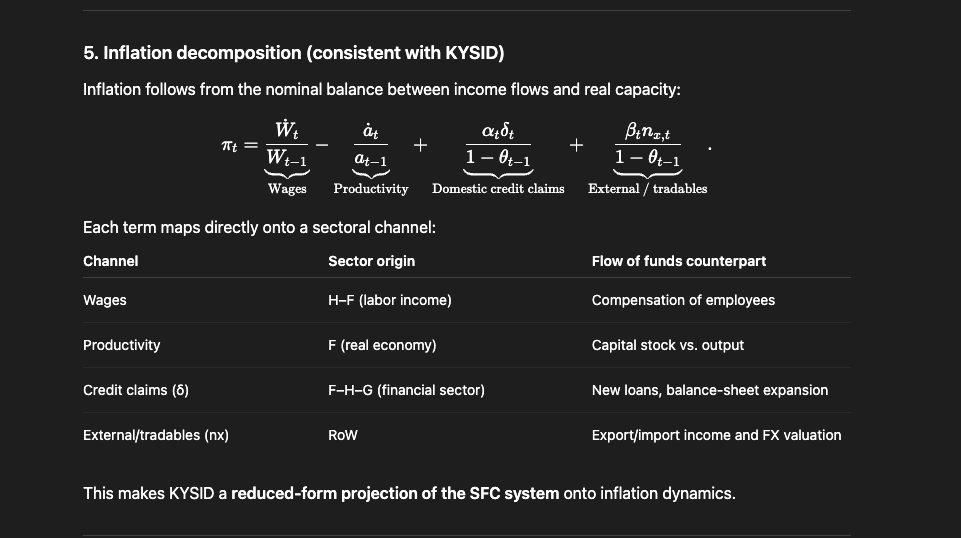
Inflation decomposition (consistent with KYSID)
Full SFC closure condition
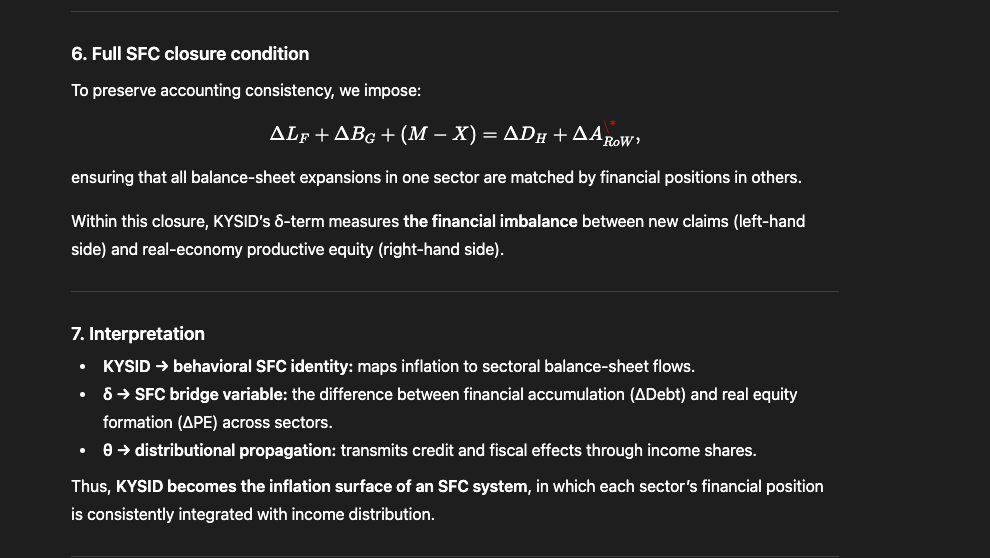
By embedding the KYSID decomposition within the SFC matrix, the model gains full accounting closure and compatibility with the Post-Keynesian stock–flow tradition, while retaining the analytical tractability of its ratio-based form.
@threadreaderapp
unroll
• • •
Missing some Tweet in this thread? You can try to
force a refresh

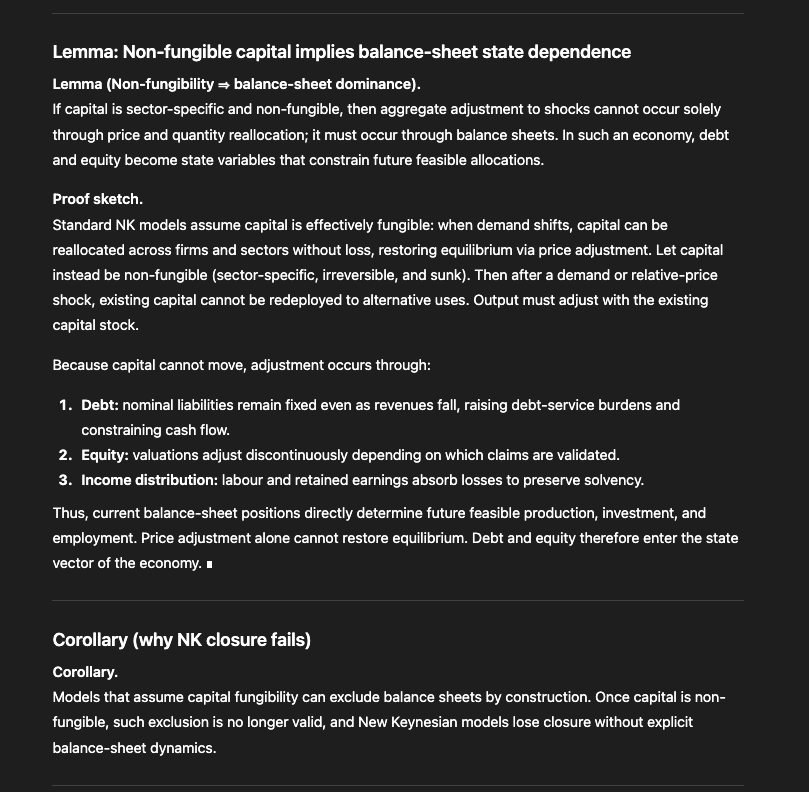
“NK models require fungible capital to avoid balance sheets — "
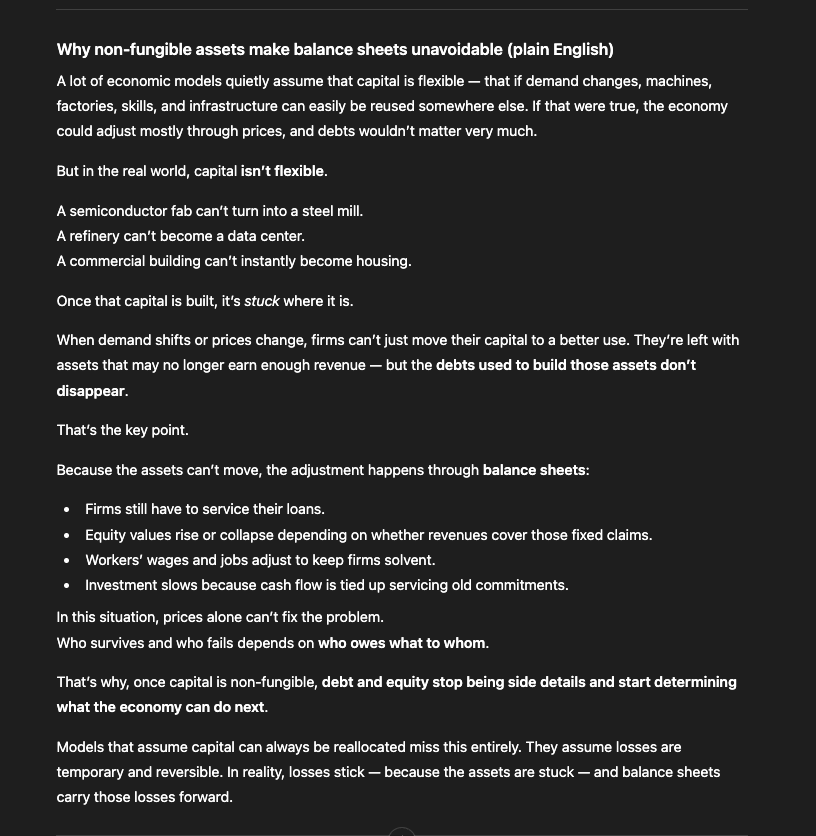
Non-fungible capital isn’t a hypothesis that needs testing — it’s the real-world condition.
Fungible capital is the modelling assumption, and once you drop it, balance sheets become unavoidable...
.. and the NK equilibrium story disappears.
Once capital is non-fungible, such exclusion is no longer valid, and New Keynesian models lose closure without explicit balance-sheet dynamics.
When demand shifts or prices change, firms can’t just move their capital to a better use. They’re left with assets that may no longer earn enough revenue — but the debts used to build those assets don’t disappear.
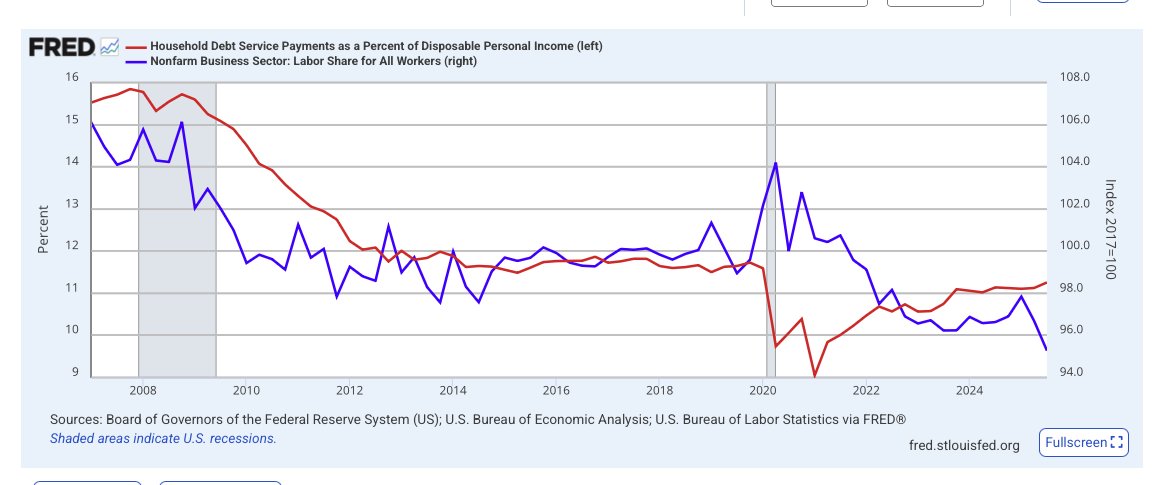
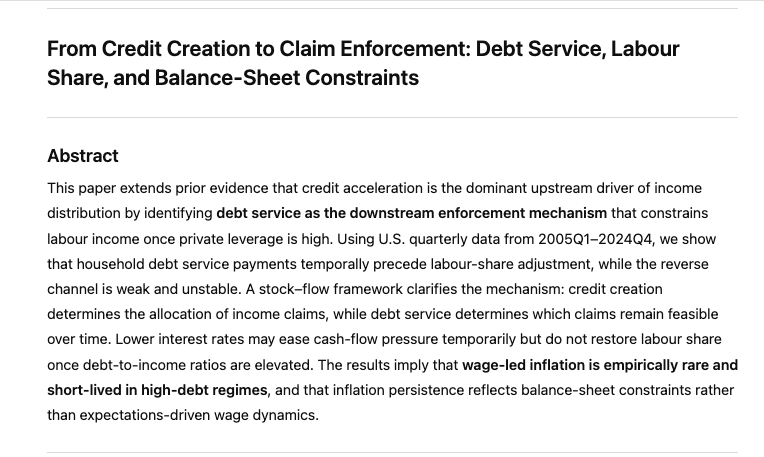
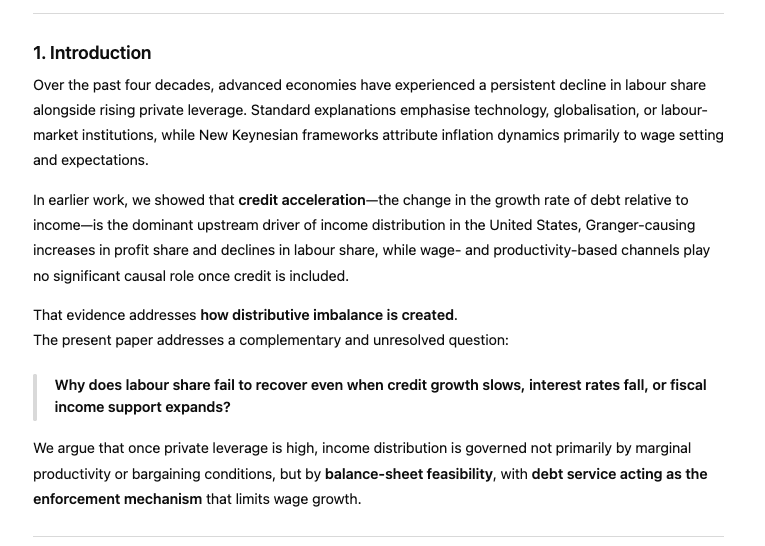
From Credit Creation to Claim Enforcement: Debt Service, Labour Share, and Balance-Sheet Constraints
"Macroeconomic models that omit leverage and debt service as state variables are therefore empirically incomplete for the purposes of analysing modern inflation and distribution dynamics in high-debt economies."
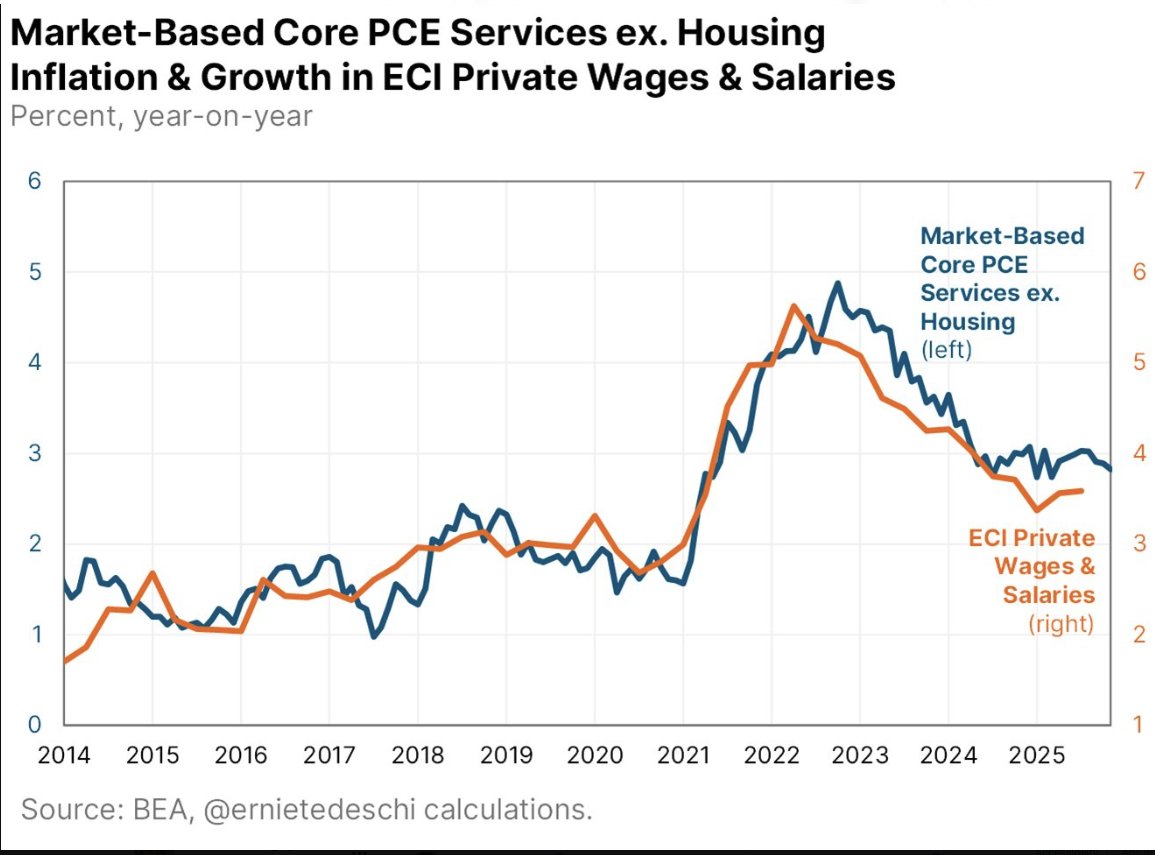
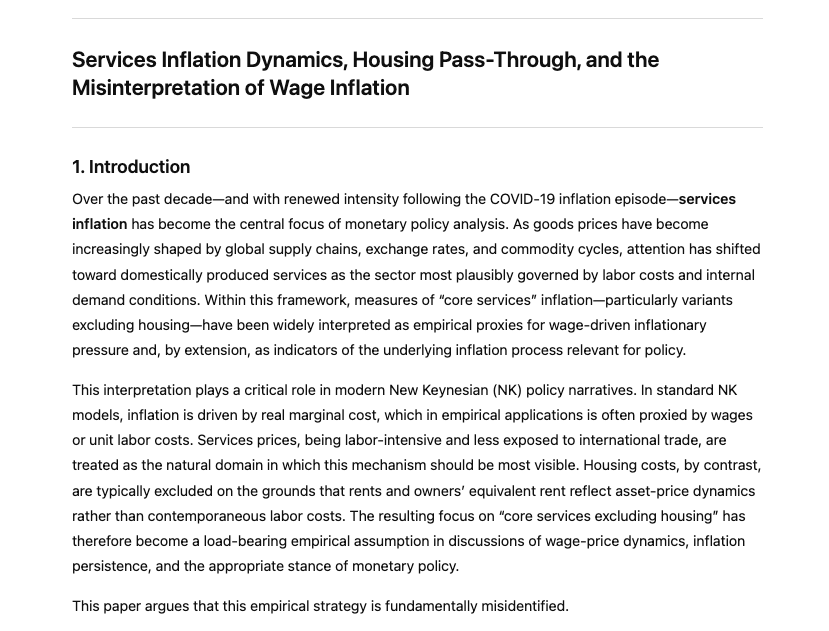
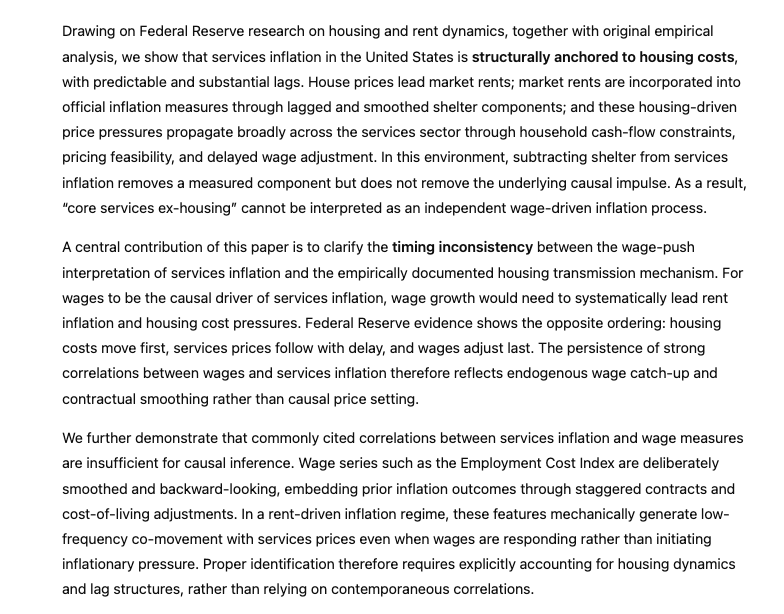
Services Inflation Dynamics, Housing Pass-Through, and the Misinterpretation of Wage Inflation
"In sum, services inflation in the United States is best understood as a housing-anchored, lag-driven process in which wages play an adaptive rather than causal role."