New results!
In "The Symbolic Politics of Housing," @dbroockman @j_kalla & I showed that public opinion about housing policies correlates w/ affect towards the groups that the policies make salient (via framing or criteria in the policy itself).
🧵/19
In "The Symbolic Politics of Housing," @dbroockman @j_kalla & I showed that public opinion about housing policies correlates w/ affect towards the groups that the policies make salient (via framing or criteria in the policy itself).
🧵/19

Readers asked, "But is the relationship causal?"
We set out to answer their question, focusing on a much-maligned group that ordinary people blame for high housing prices & rents: Real-estate developers.
/2
We set out to answer their question, focusing on a much-maligned group that ordinary people blame for high housing prices & rents: Real-estate developers.
/2

Working with a filmmaker and a real-life developer, we created short-form videos that sought to humanize the developer -- without conveying information about what her projects look like or how housing development affects prices or local amenities.
/3
/3
In one video, the developer talks about her background, hobbies, and volunteer work.
In another, she explains that the investors in her projects are retirement funds for teachers, firefighters, and other sympathetic groups.
/4
In another, she explains that the investors in her projects are retirement funds for teachers, firefighters, and other sympathetic groups.
/4
In a third, she explains the mechanics of putting a project together, like a puzzle.
And in the last video, she talks about the experience of being harassed in a dark parking lot by project opponents after a public meeting.
/5
And in the last video, she talks about the experience of being harassed in a dark parking lot by project opponents after a public meeting.
/5
We randomly assigned survey respondents to watch one of these videos, or a placebo, or a news clip about a developer accused of criminal wirefraud.
/6
/6
After watching the video, respondents answered two questions about support for housing policies in which developers are salient.
Using a "feeling thermometer," respondents also expressed how warmly they feel toward developers and other groups.
/7
Using a "feeling thermometer," respondents also expressed how warmly they feel toward developers and other groups.
/7
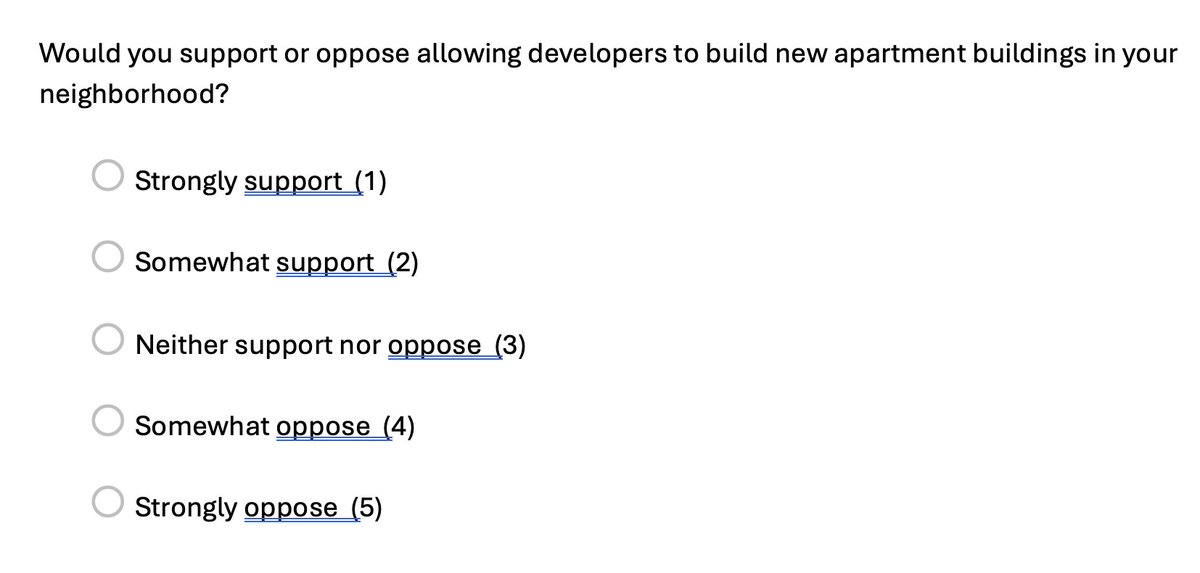
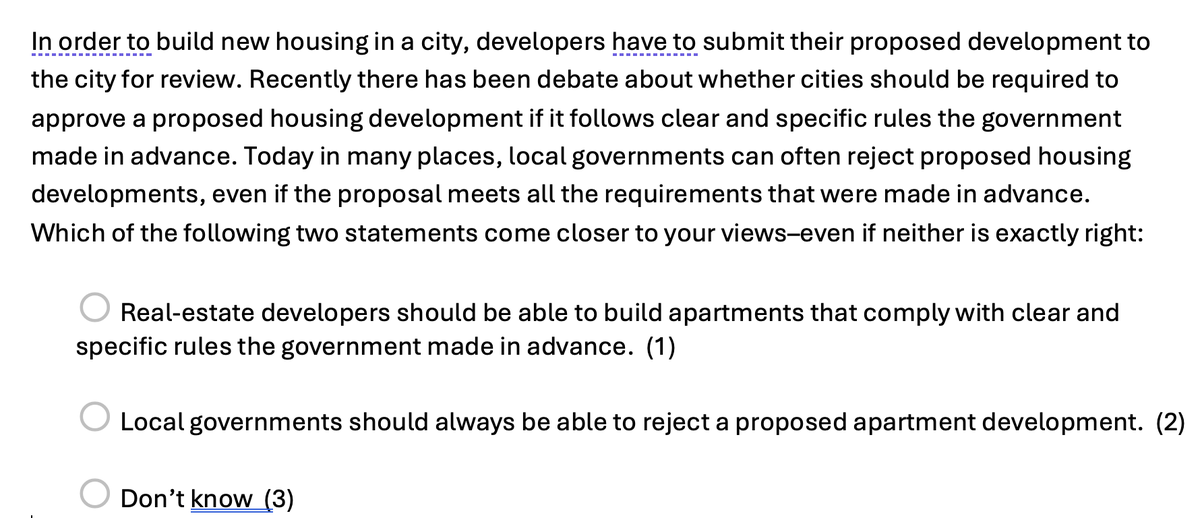
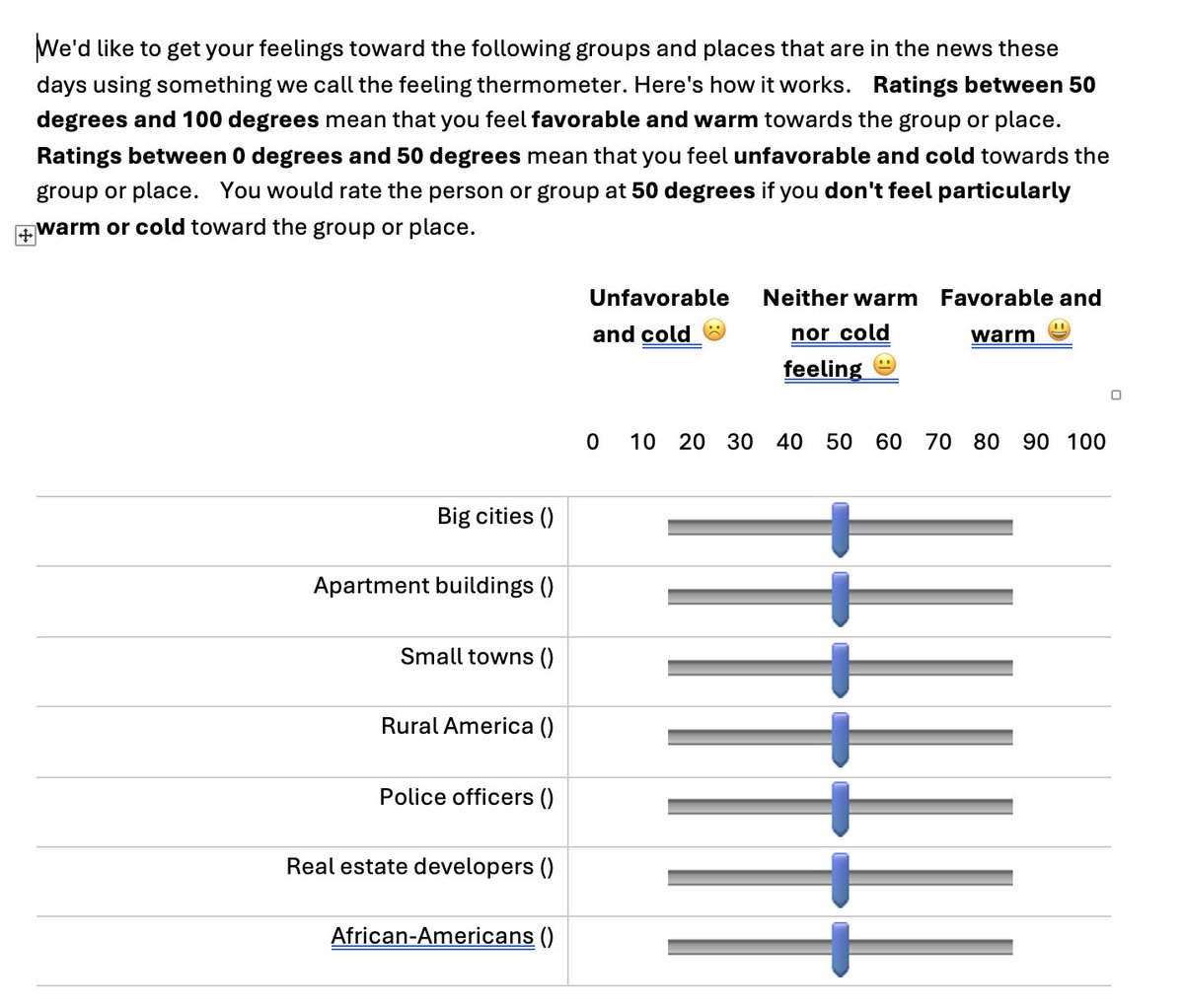
We then estimated the average treatment effect of each video on affect toward developers and support for the two housing policies.
/8
/8
Findings:
- the "pro-developer" videos increased warmth toward developers (by about 10-12 points on a 100-point scale)
- these videos also modestly increased support for allowing developers to build apartments "in your neighborhood," but...
/9
- the "pro-developer" videos increased warmth toward developers (by about 10-12 points on a 100-point scale)
- these videos also modestly increased support for allowing developers to build apartments "in your neighborhood," but...
/9
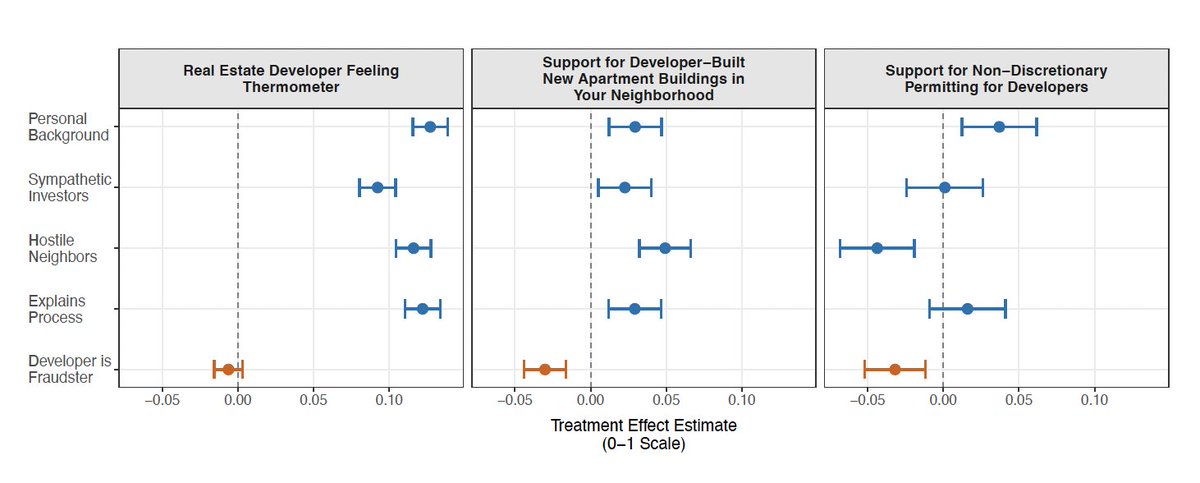
they had mixed effects on support for ministerial approval of developers' projects.
The "hostile neighbors" video actually *reduced* support for ministerial permitting despite increasing warmth toward developers. Perhaps it normalized expectation of a neighborhood veto?
/10
The "hostile neighbors" video actually *reduced* support for ministerial permitting despite increasing warmth toward developers. Perhaps it normalized expectation of a neighborhood veto?
/10
The news clip about the developer charged with fraud didn't reduce warmth toward developers (b/c people already think developers are fraudsters?), but it did reduce support for allowing developers to build apartments in one's neighborhood & for ministerial permitting.
/11
/11
We can't prove that affect is the channel through which the pro-developer videos worked their effect on downstream policy preferences (and in the case of "hostile neighbors," something else is almost certainly going on).
/12
/12
But we did ask several questions probing mechanisms, and in most cases the pro-developer videos similarly improved perceptions of developers with respect to everything we asked about. This is consistent with "warm glow" being the mechanism.
/13
/13

Also, the effect size on the "allow developers to build apartments in your neighborhood" DV is about what one would expect if the observational (control condition) relationship between feeling thermometer ratings and this DV were causal.
/14
/14
There's much more in the paper, including results which illuminate the potency of "anti-Wall Street" and "anti-luxury apartment" messaging.
/15
/15
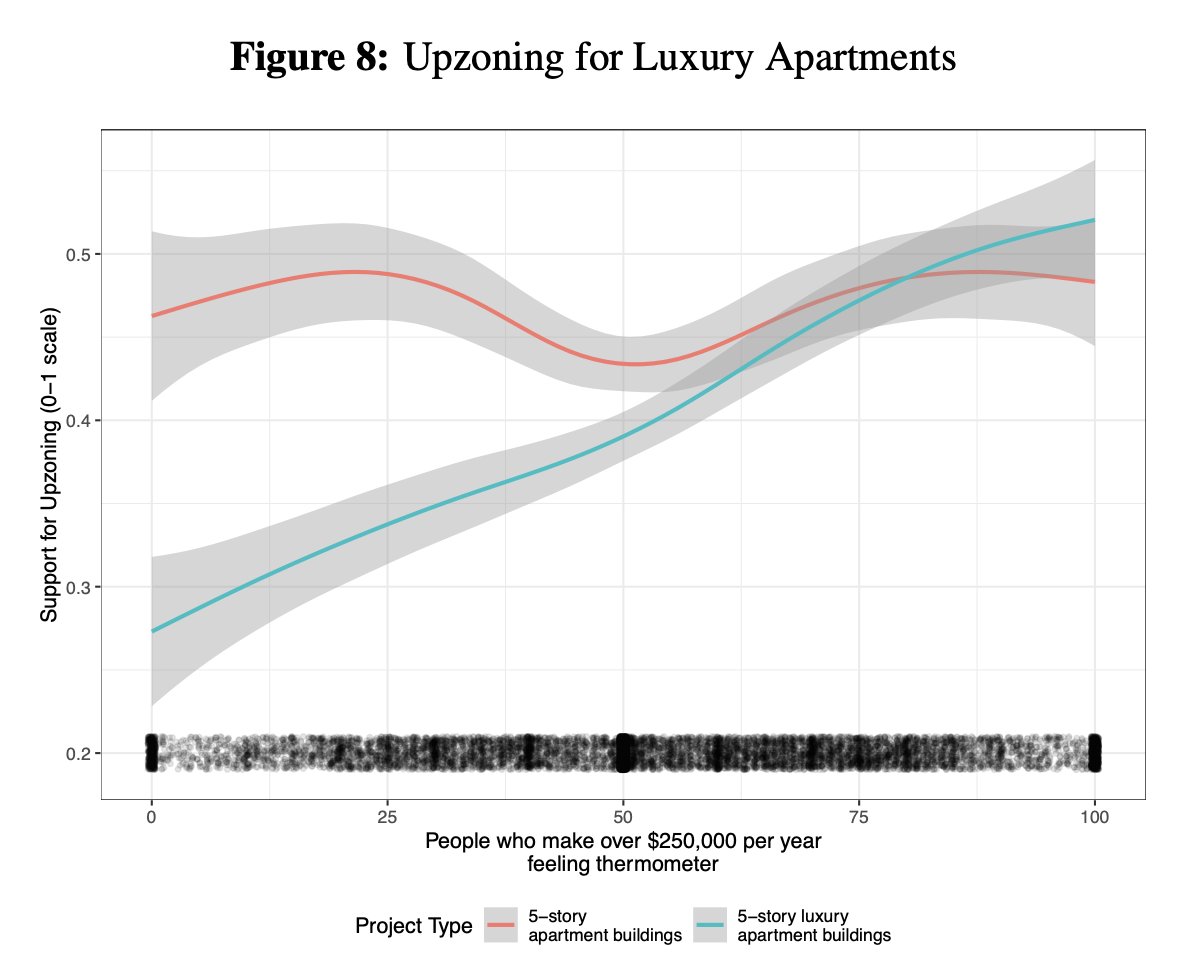
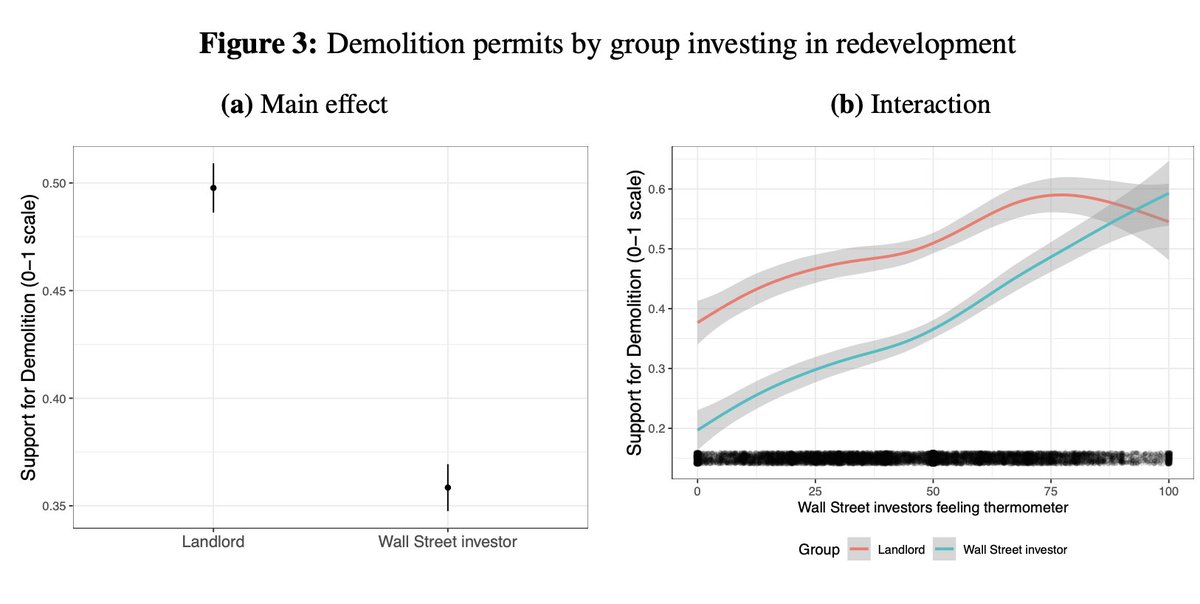
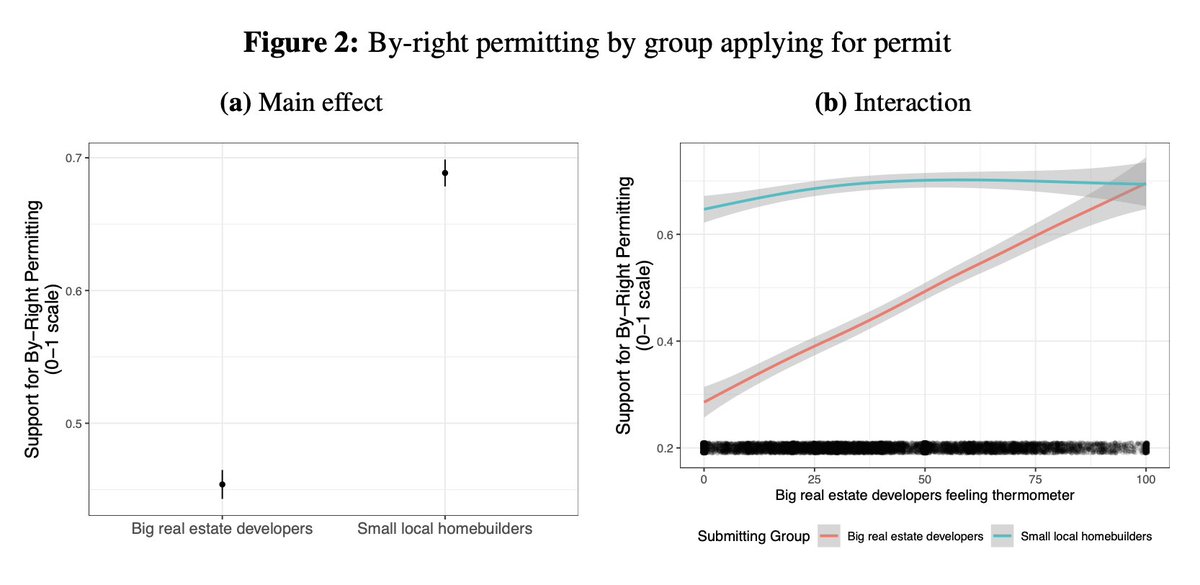
We also find an amazingly strong preference for localism in building.
Support for ministerial permitting increases by ~25 points when the actor applying for permits is a "small local homebuilder" rather than a "big real estate developer."
/16
Support for ministerial permitting increases by ~25 points when the actor applying for permits is a "small local homebuilder" rather than a "big real estate developer."
/16
This complements @leonardo_damico et al's explanation of lagging productivity growth in the homebuilding industry: The mass public is wary of predictable permitting for the firms that have stronger incentives to invest in construction R&D.
/17 nber.org/system/files/w…
/17 nber.org/system/files/w…
Thanks to @Arnold_Ventures for supporting this work, to the many scholars who provided feedback on our first-round results (motivating the video experiments), and to the @APPAM_DC 2025 participants who came to my talk on the new results. (Great conference!)
/18
/18
@threadreaderapp
@threadreaderapp unroll
• • •
Missing some Tweet in this thread? You can try to
force a refresh