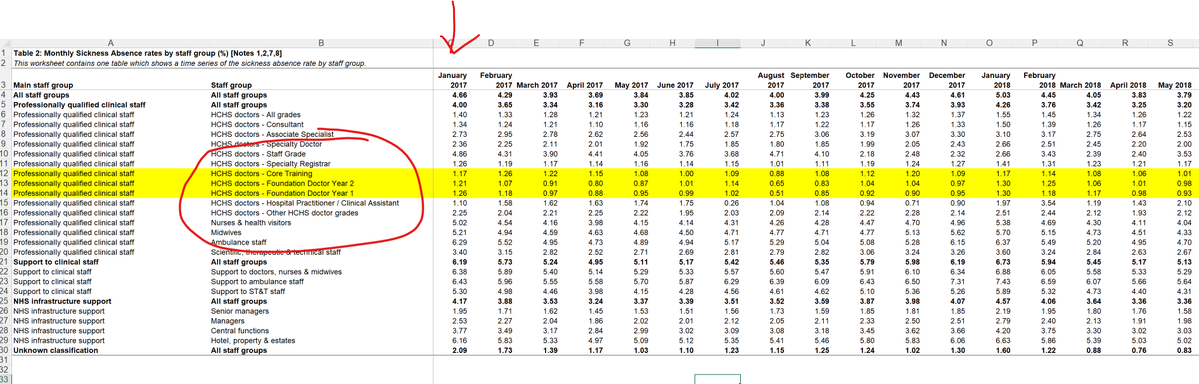
Eye problems are one of the most common after-effects of covid infections, and one of the most common issues of Long Covid - but they're not talked about much.
This is part two of my thread working through eye conditions that have become *much more common* since Covid struck.
This is part two of my thread working through eye conditions that have become *much more common* since Covid struck.
Little step up in older adults. 

A messy plateau in older working adults.

A dangerous and nasty spike in young adults.

A ***HORRIBLE*** climb in teenagers.
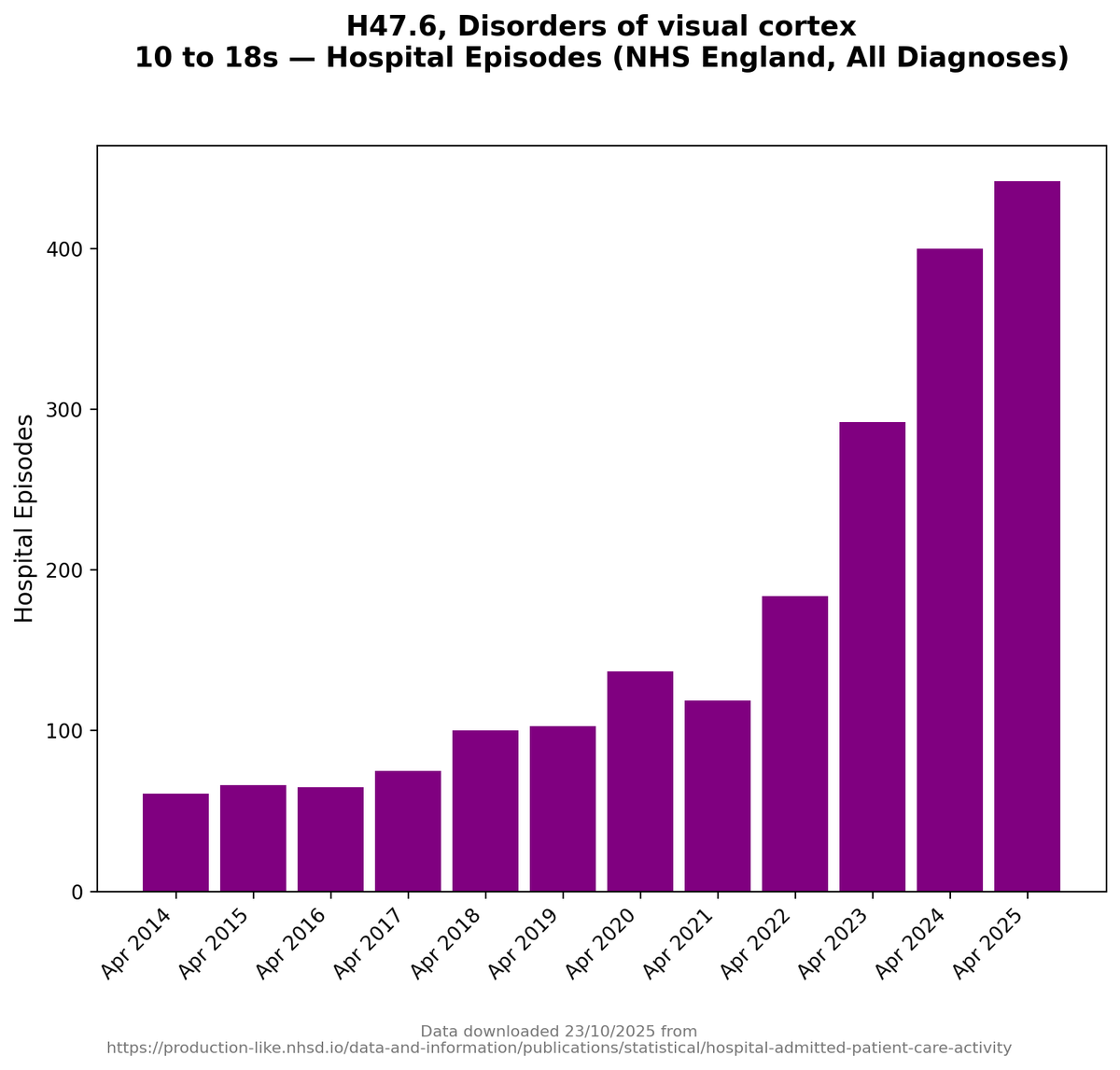
And a very unpleasant rise in ***kids***.
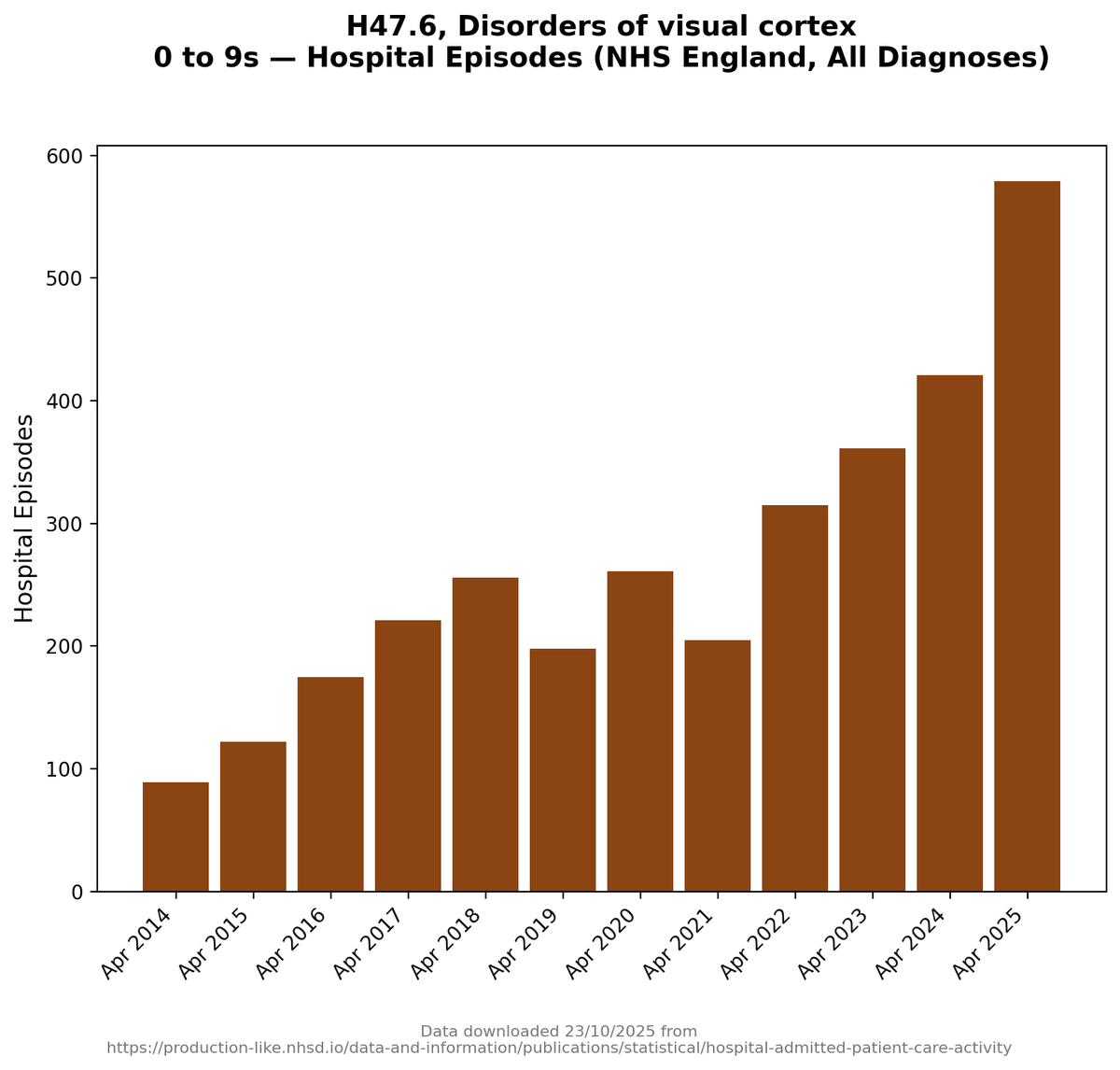
Why?
Aaach. Who knows.
Aaach. Who knows.
But if it's covid infections causing this, then it could be because the visual cortex takes time to reach maturity.
It's generally mature by mid twenties, and until then it's going through lots of development that could be affected by covid infections.
It's generally mature by mid twenties, and until then it's going through lots of development that could be affected by covid infections.
Seriously, I'm going to come back to the brain next week.
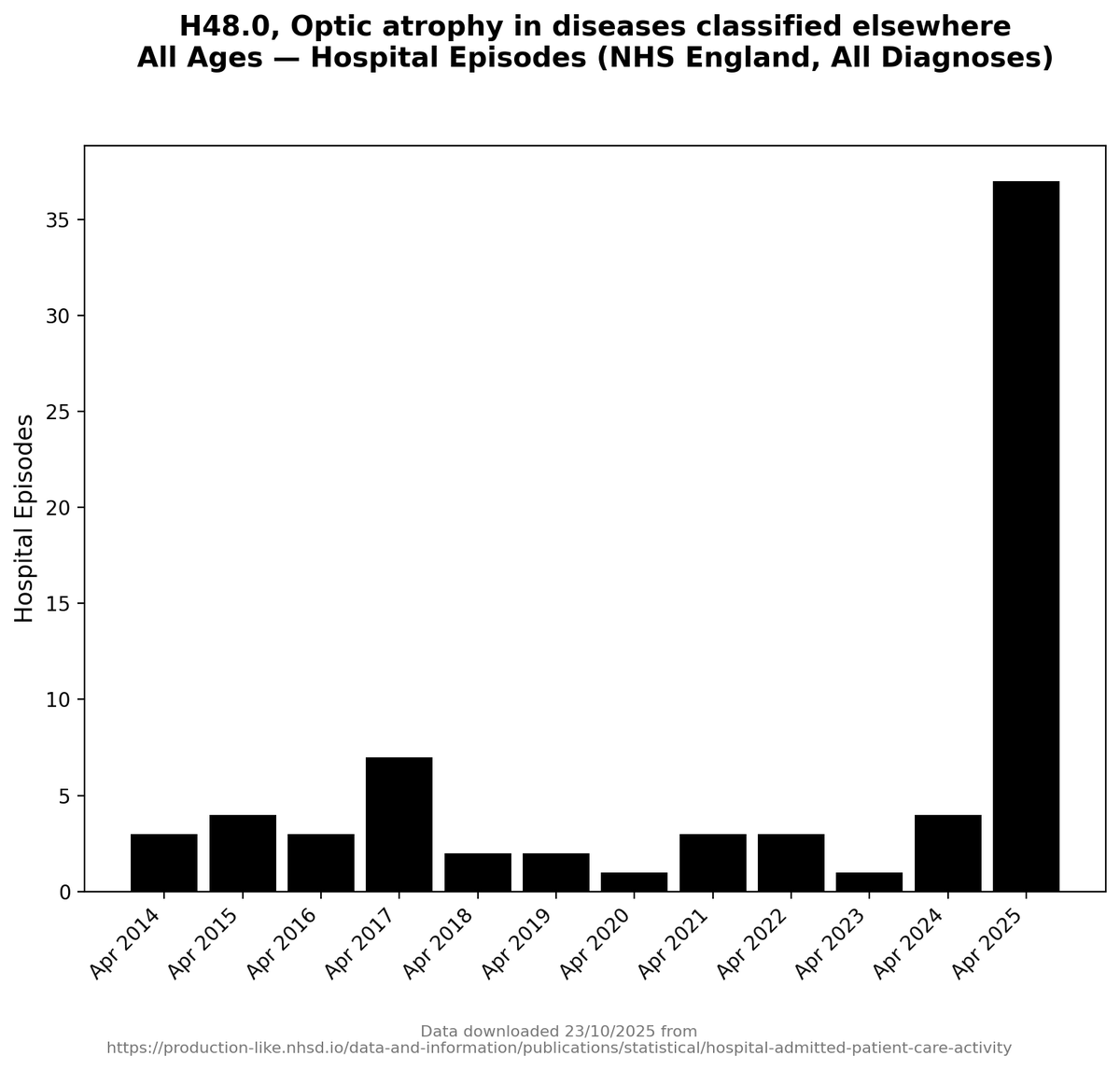
Meanwhile... optic atrophy.
Tall spike, but small numbers.
*so far*.
Tall spike, but small numbers.
*so far*.
This one is ophthalmoplegia, where the eye cannot move properly because the nerves or muscles that control eye movements are not working. It can cause double vision, a fixed gaze, or eyes that cannot track together.
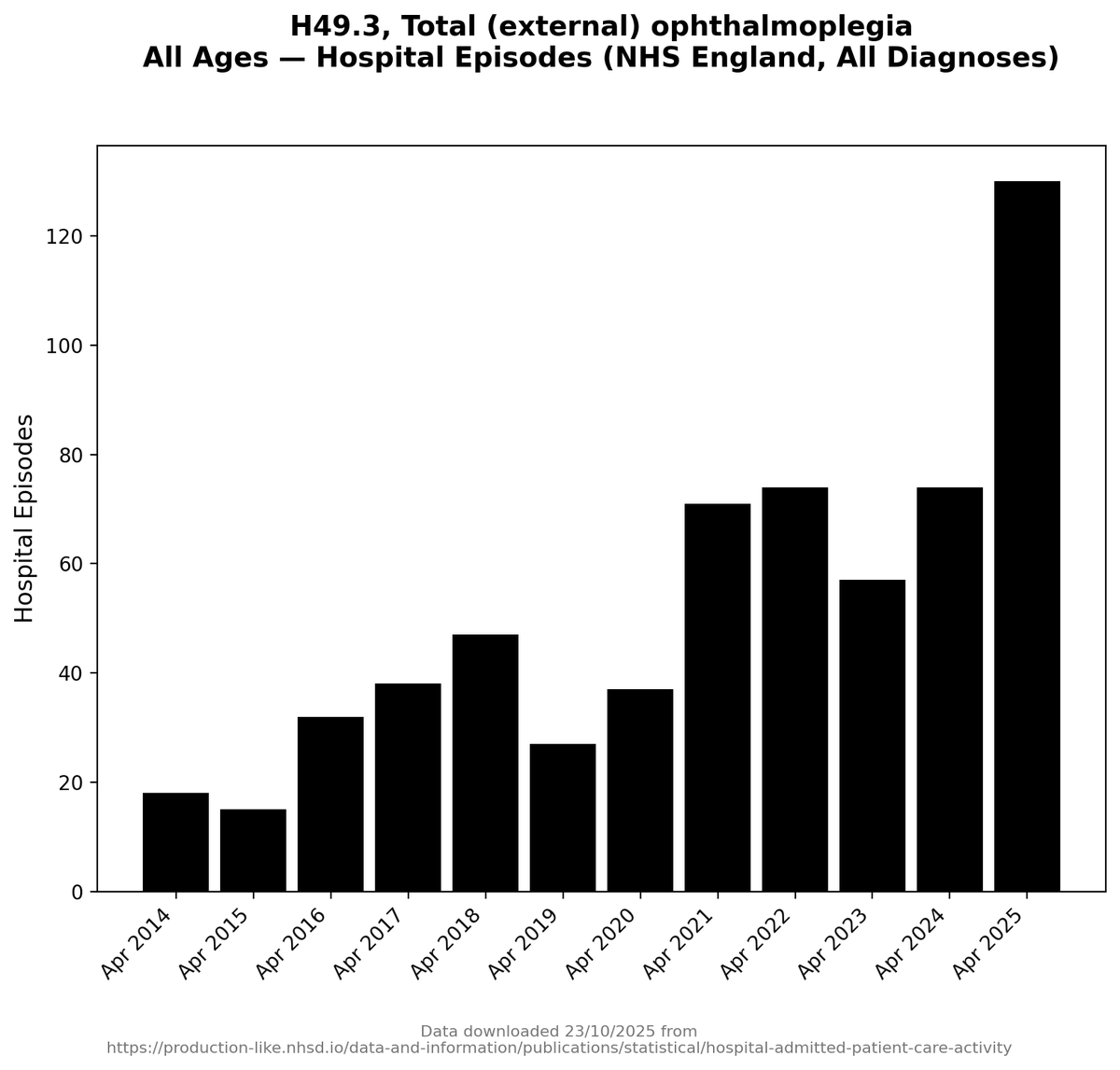
Covid infections can make this more likely because they affect the cranial nerves, the brainstem areas that control eye movements, and the tiny blood vessels that supply them.
Inflammation and brief oxygen drops can weaken these systems. With repeated infections the pressure builds again, so episodes of ophthalmoplegia become more common.
Now...
That sandwich.
And then a few final codes.
That sandwich.
And then a few final codes.
This one is convergent concomitant strabismus, the classic inward turning of one eye. The eye muscles themselves work, but the brain is not keeping both eyes aligned together. It often starts suddenly in children and can cause double vision or loss of depth perception.

Now... this is quite odd across the age groups.
Kids.
No change.
No change.

Teenagers.
Hmm.
Hmm.
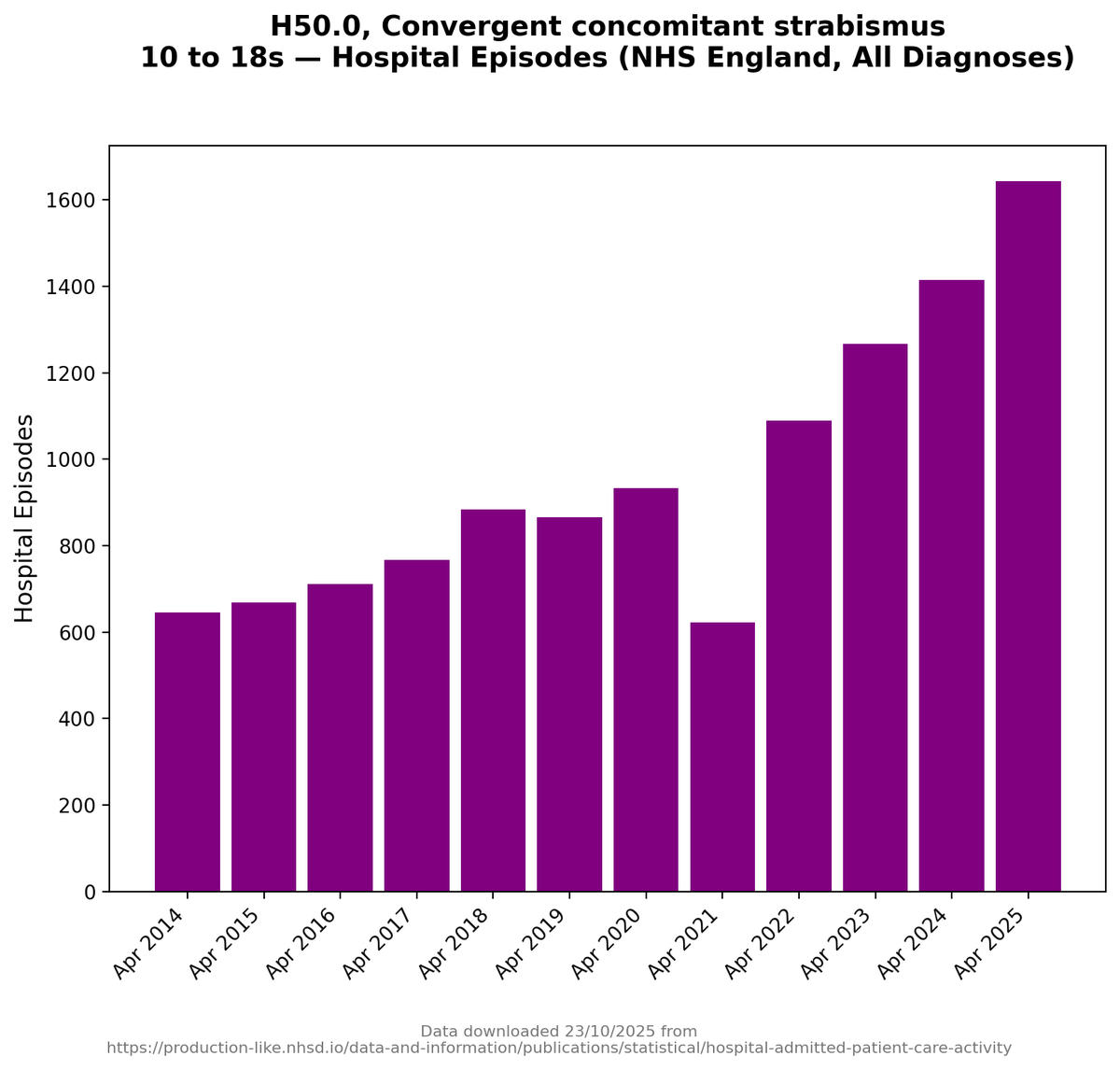
Young adults - the same sort of trend as before Covid.

Older working age adults... sharp change.

And even sharper among over 70s.

I have a few thoughts there, but they're going to stay inside my head, because we're on to the last track of codes...
*Di*vergent version of the same thing as above.
Con > in
Di > out
Con > in
Di > out

This one is intermittent heterotropia, where the eyes only drift out of alignment some of the time. People can have moments of double vision, blurred focus, or eye strain, especially when they are tired or unwell.
Old trend... new jump.
Old trend... new jump.
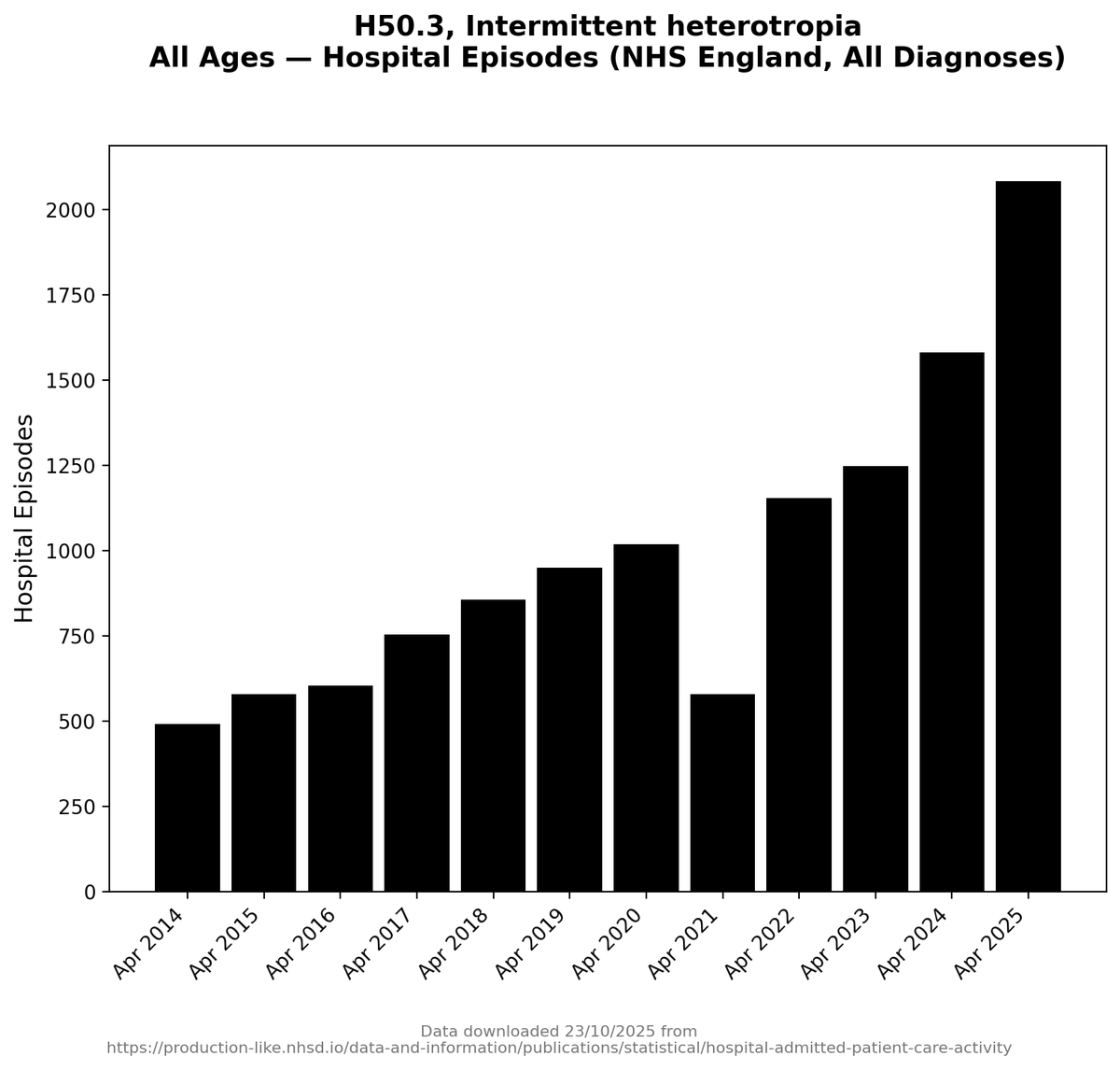
Covid infections can make this more likely because they disrupt the nerve signals and tiny muscles that keep both eyes working together. After infection, the system is easier to fatigue, so the eyes slip out of sync more often.
Kids.
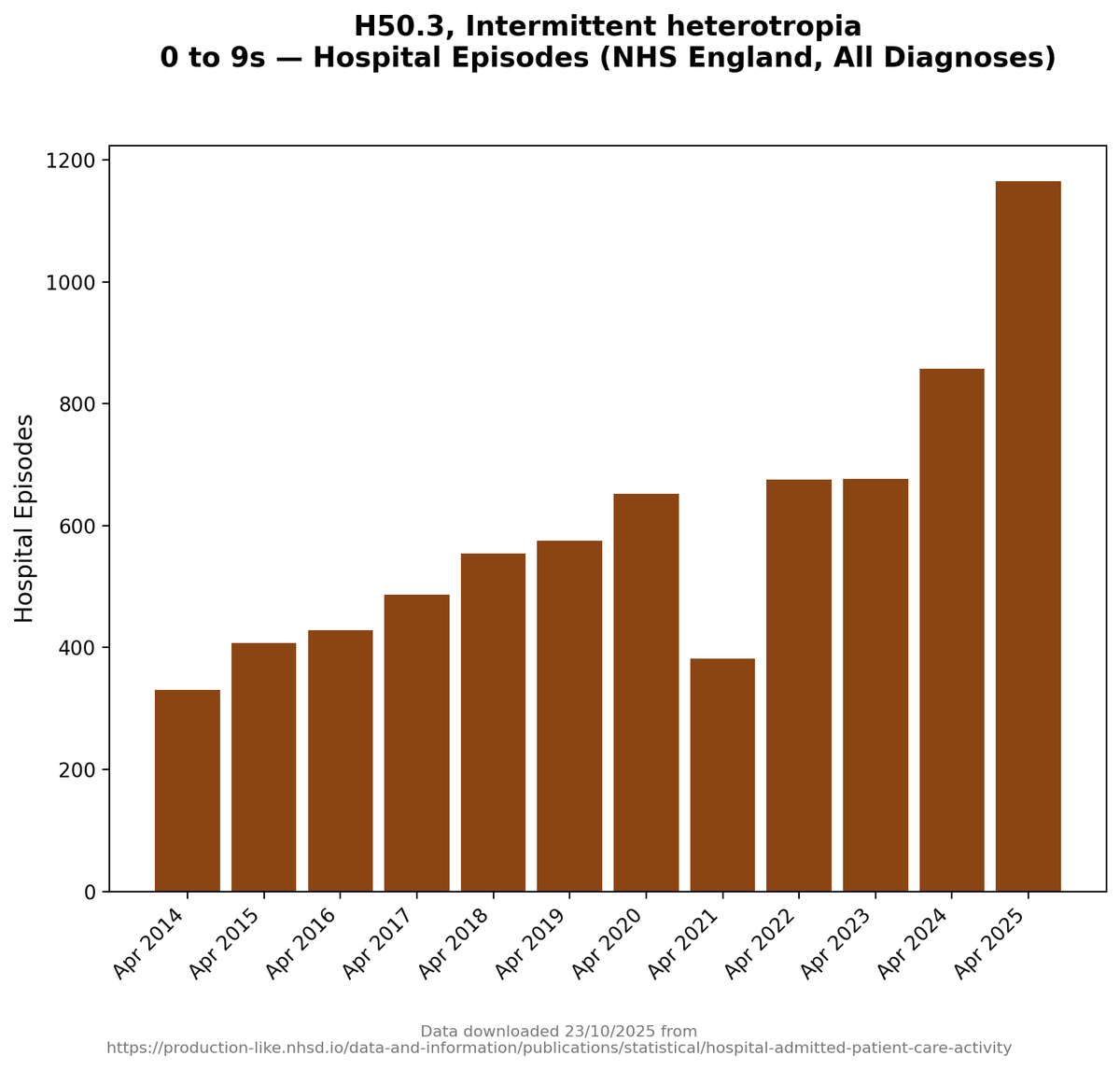
Teenagers.
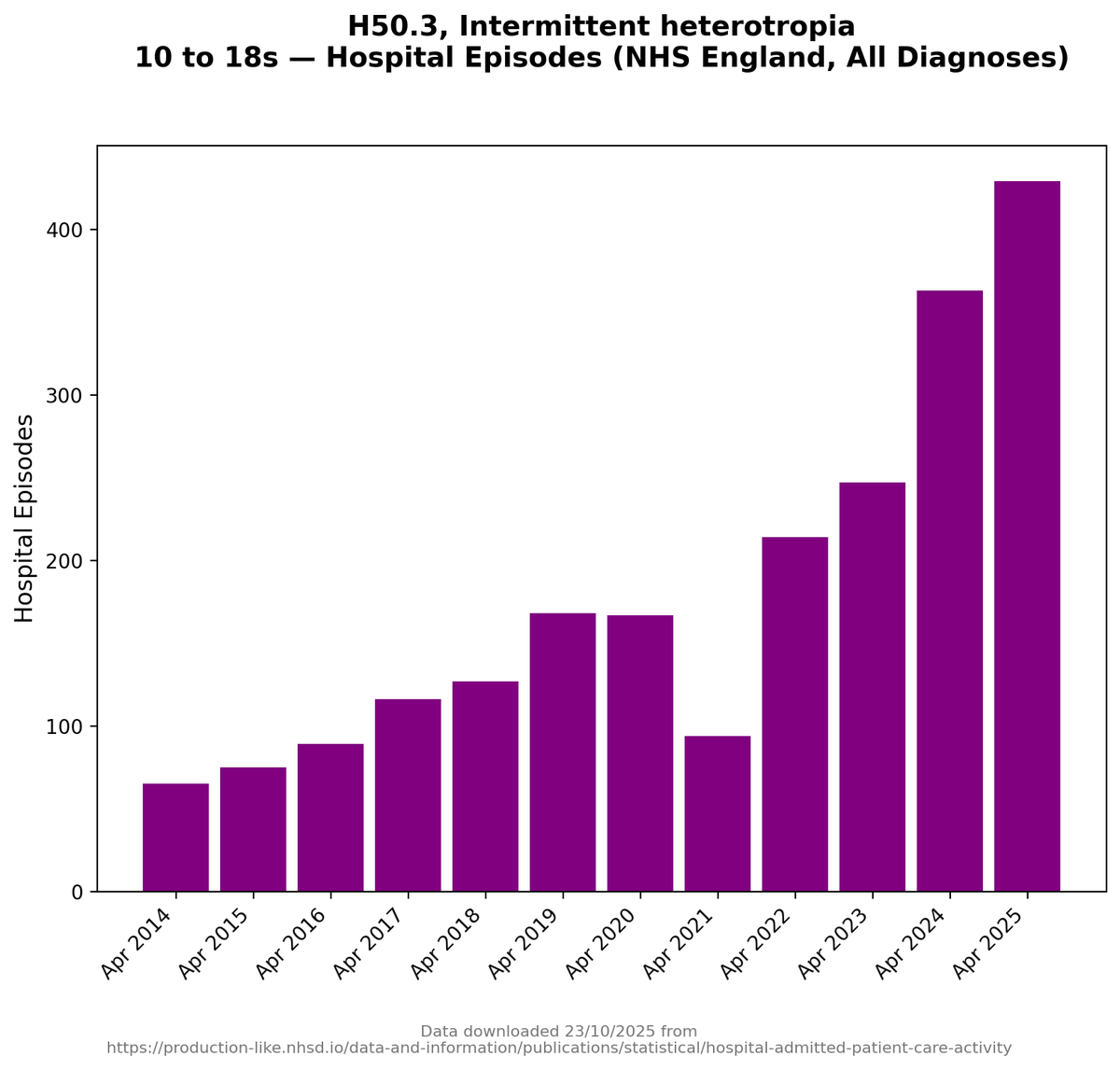
Young adults.
70+

This one is heterophoria, where the eyes have a hidden tendency to drift but the brain normally keeps them aligned. It only becomes noticeable when the system is strained, causing eye ache, blurred vision, or brief double vision.

Covid infections can make this more likely because they fatigue the visual system, disrupt nerve signals, and increase inflammation that affects eye coordination.
After infection, the brain has to work harder to hold alignment, so latent drift shows up more often.
This one is astigmatism, where the front of the eye is shaped more like a rugby ball than a football. It makes vision blurry or stretched, and can cause headaches or eye strain, especially in kids.

Ha.
Just realised that might not work for Americans.
Version for Americans:
This one is astigmatism, where the front of the eye is shaped more like a football than a basketball.
Just realised that might not work for Americans.
Version for Americans:
This one is astigmatism, where the front of the eye is shaped more like a football than a basketball.

Yeah.
There's a rise there before Covid came along.
But look what has happened since.
There's a rise there before Covid came along.
But look what has happened since.
There isn't much change in that trend in kids and teenagers...

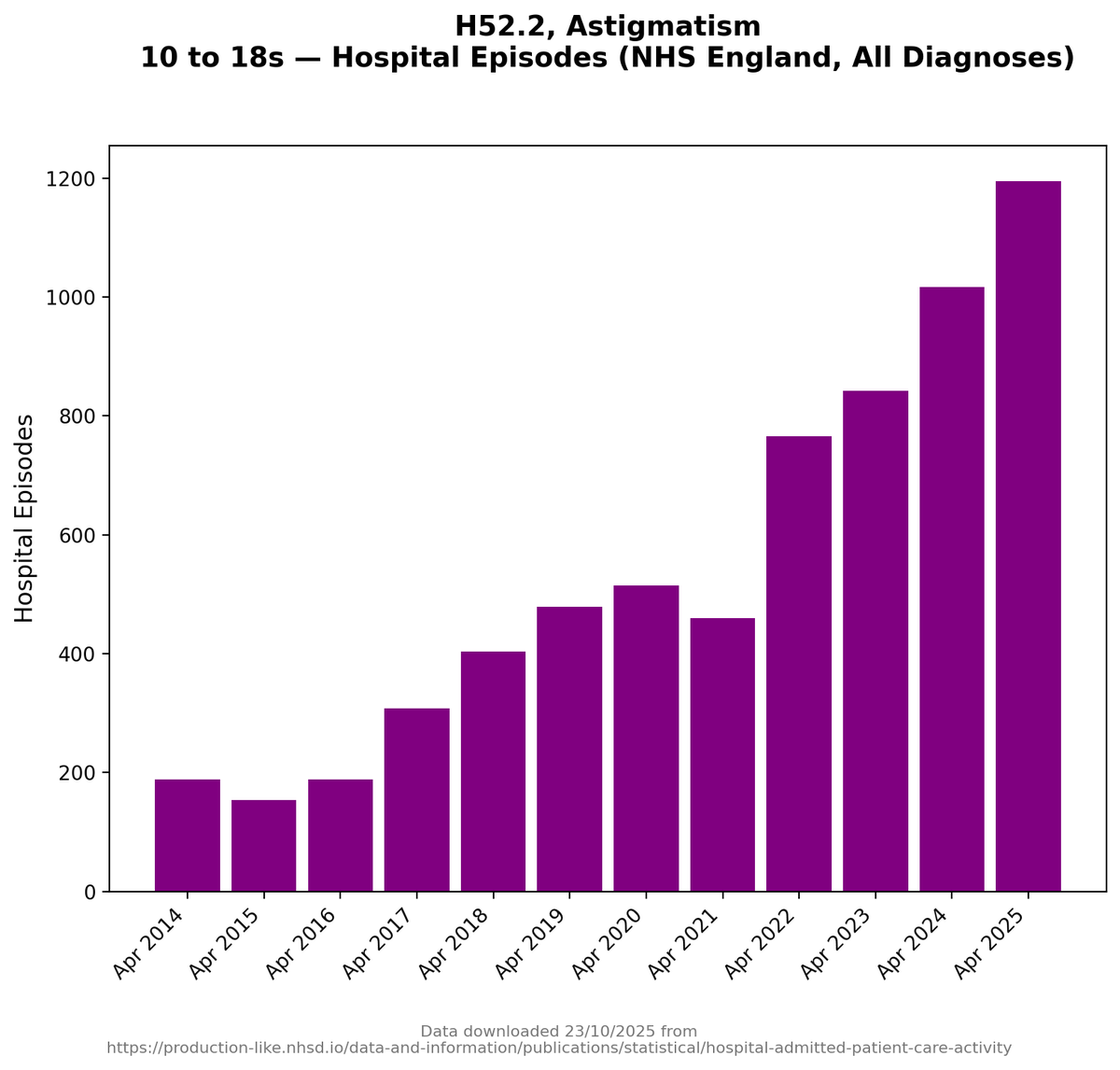
So that probably rules out screen time maybe.
But then young adults...
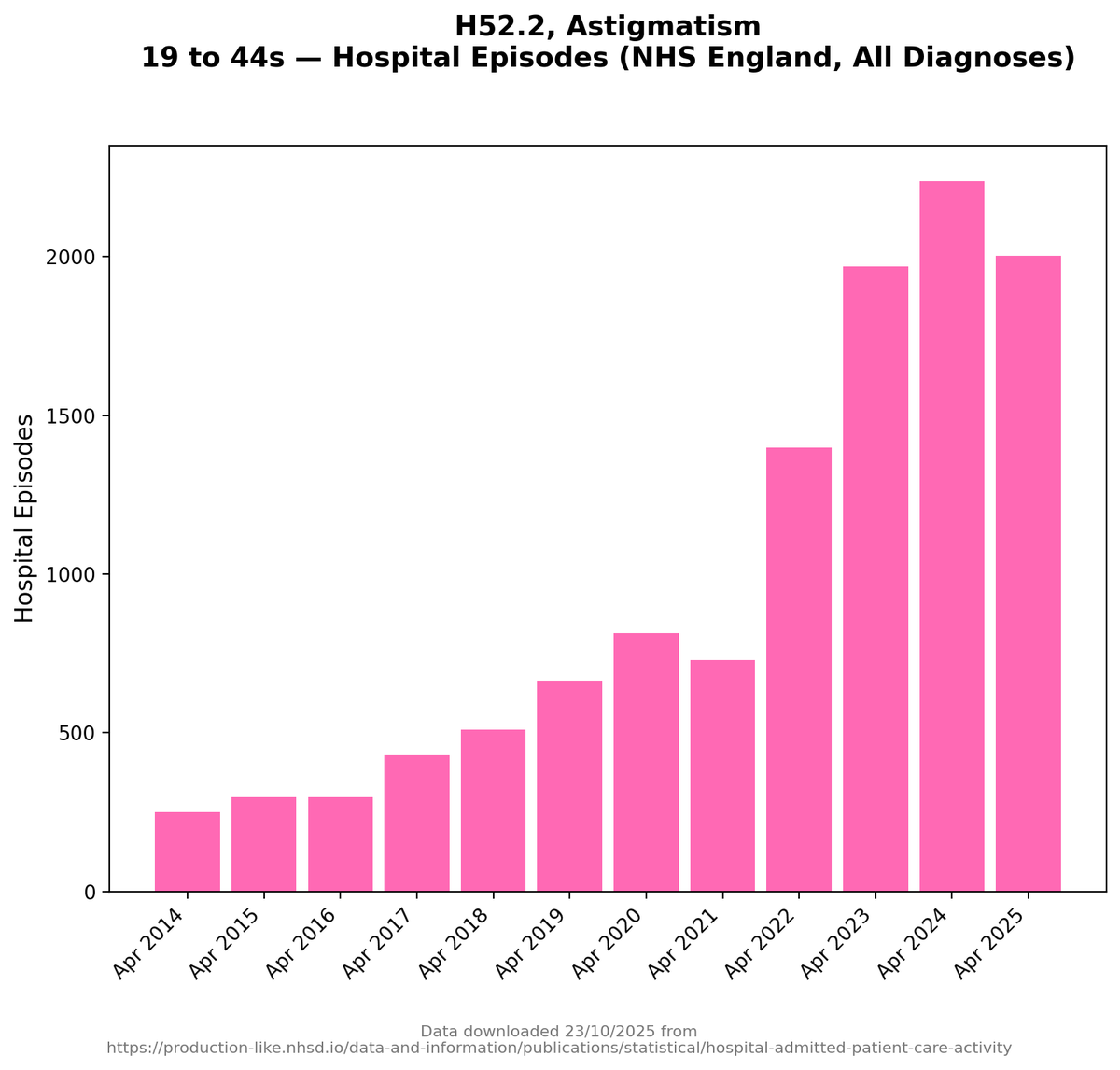
Older working age adults...

And over 70s 👀

This one is night blindness, where vision drops sharply in dim light. People struggle with dark rooms, dusk, or glare from oncoming lights because the retina cannot adapt fast enough.
Maybe it's not just those LED headlights...
Maybe it's not just those LED headlights...
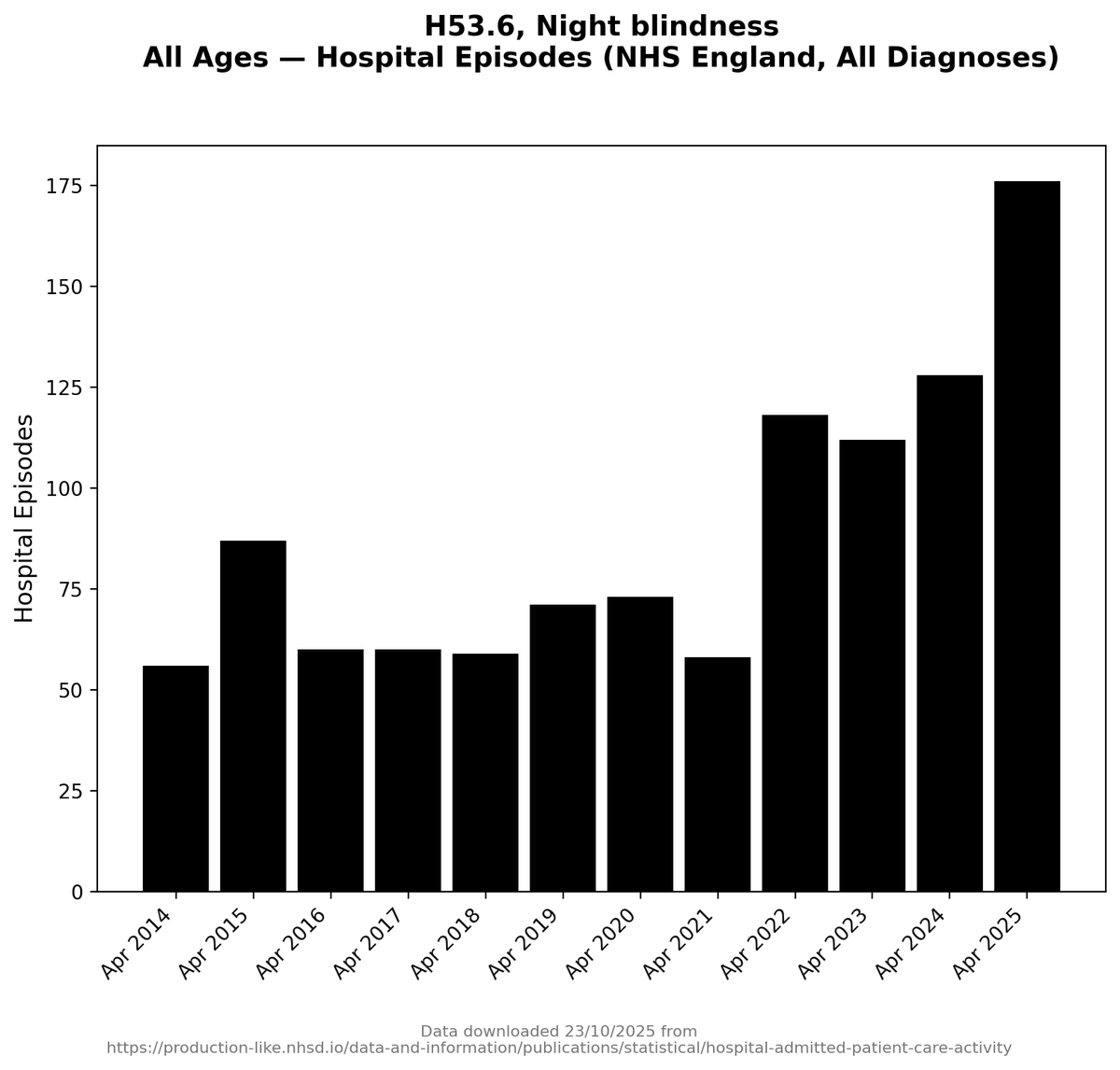
Covid infections can make this more likely because they damage the tiny vessels and support cells that help the retina adjust to low light.
he virus also increases inflammation and oxidative stress in the eye. With repeated infections that stress builds up, so night vision problems become more common.
This one is a mixed group of eye problems that do not fit the more specific codes. It includes things like unusual irritation, pressure changes, small structural issues, or symptoms that need checking but do not yet match a single diagnosis.
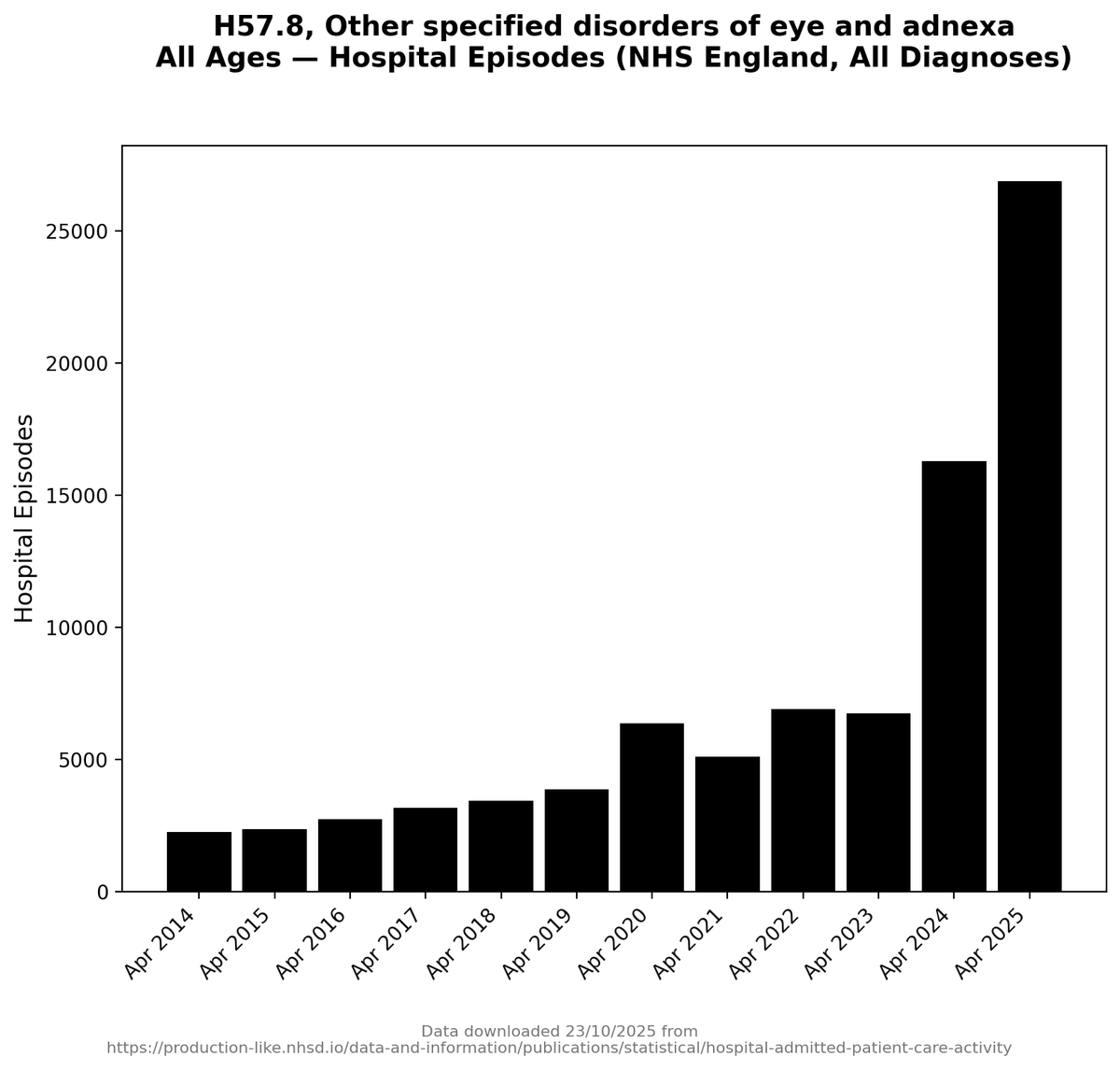
When the eye is under repeated strain, borderline symptoms appear more often, so more people end up in this catch all category.
This one is convergence insufficiency, where the eyes struggle to turn inwards together for close work. It causes tired eyes, headaches, double vision at near distances, and difficulty reading or focusing up close.

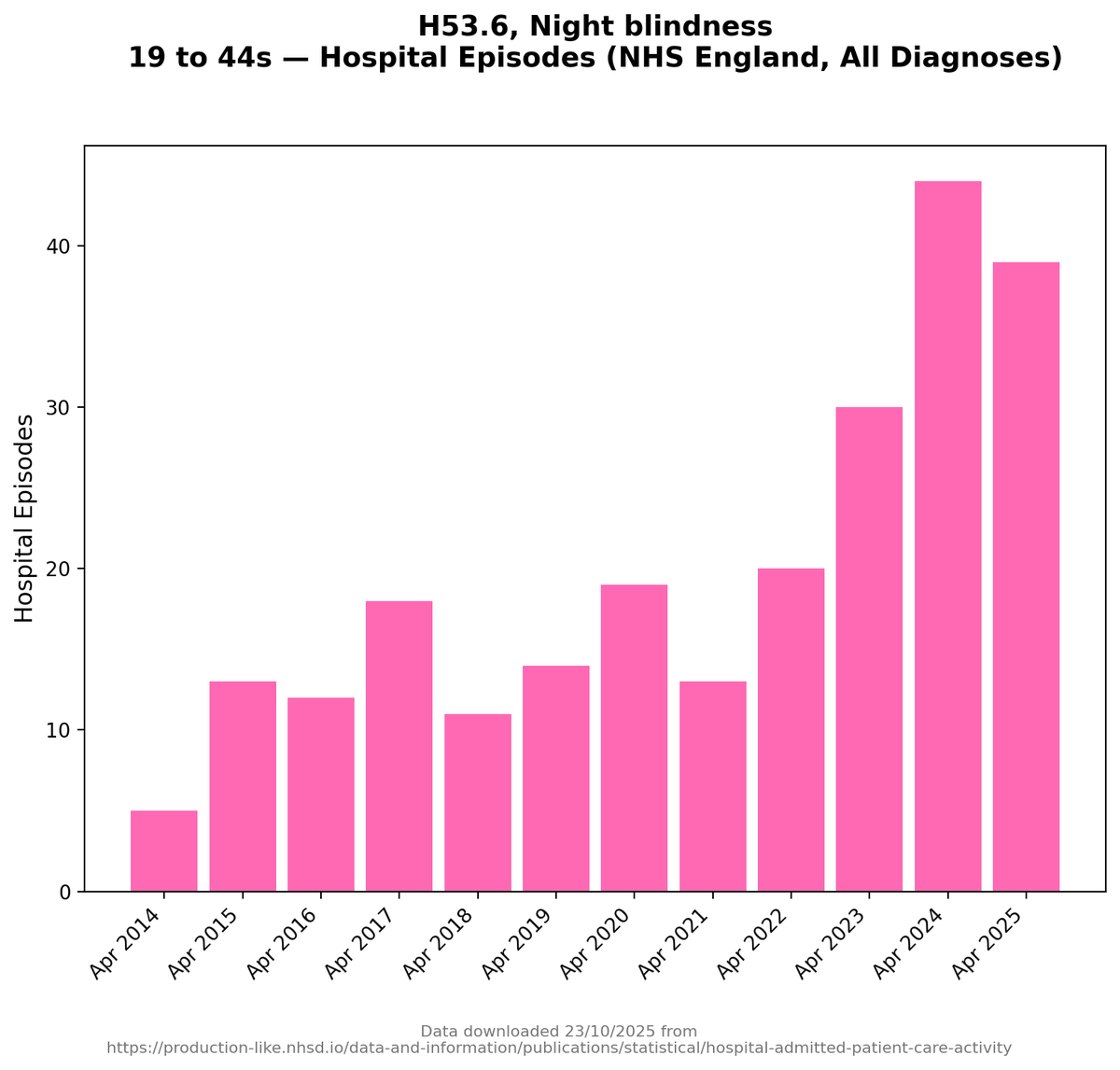
Night blindness in young adults.
So... lots of weird stuff in the eye codes in Hxx... but there are also some codes for other conditions that also cover eye stuff.
Steroid excess... increased cataract and glaucoma risk...

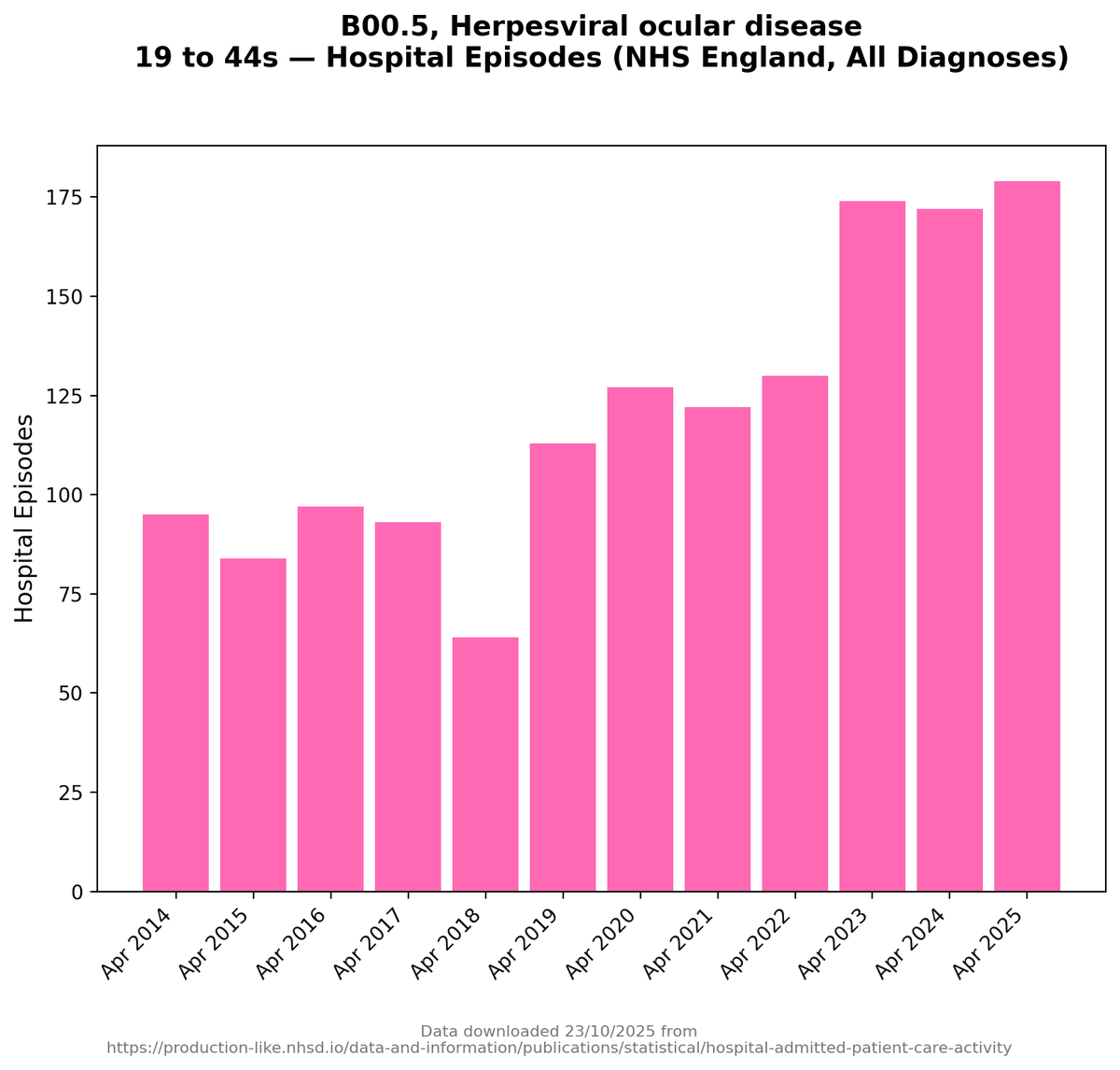
Herpesviral ocular disease.
Cancer of the tear gland and duct...
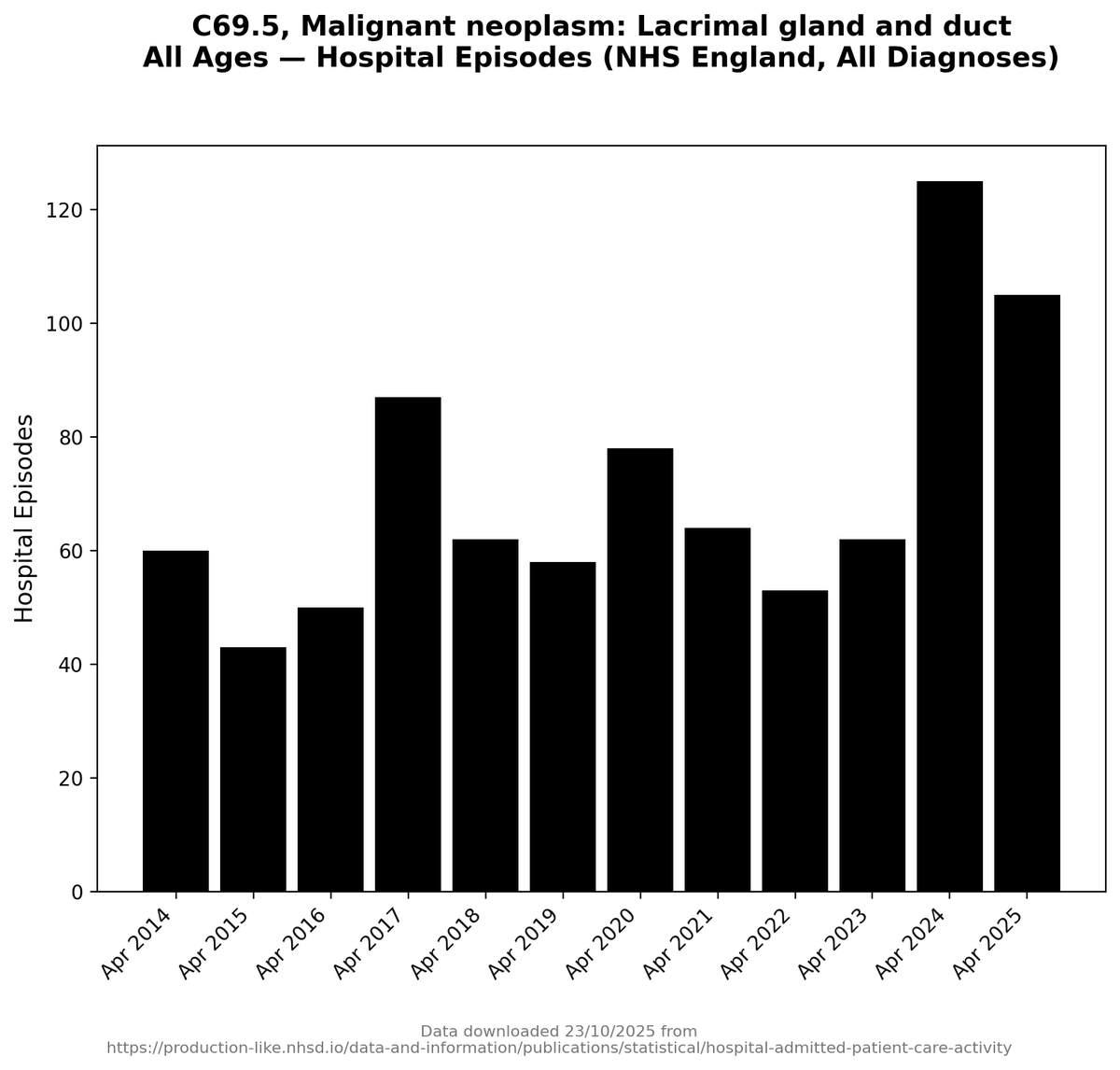
Malignant neoplasm of the retina.

Now here's the scary thing about that one...
Glance back at the numbers on that chart.
Then look at this, over 70s.
A tiny fraction.
A tiny fraction.
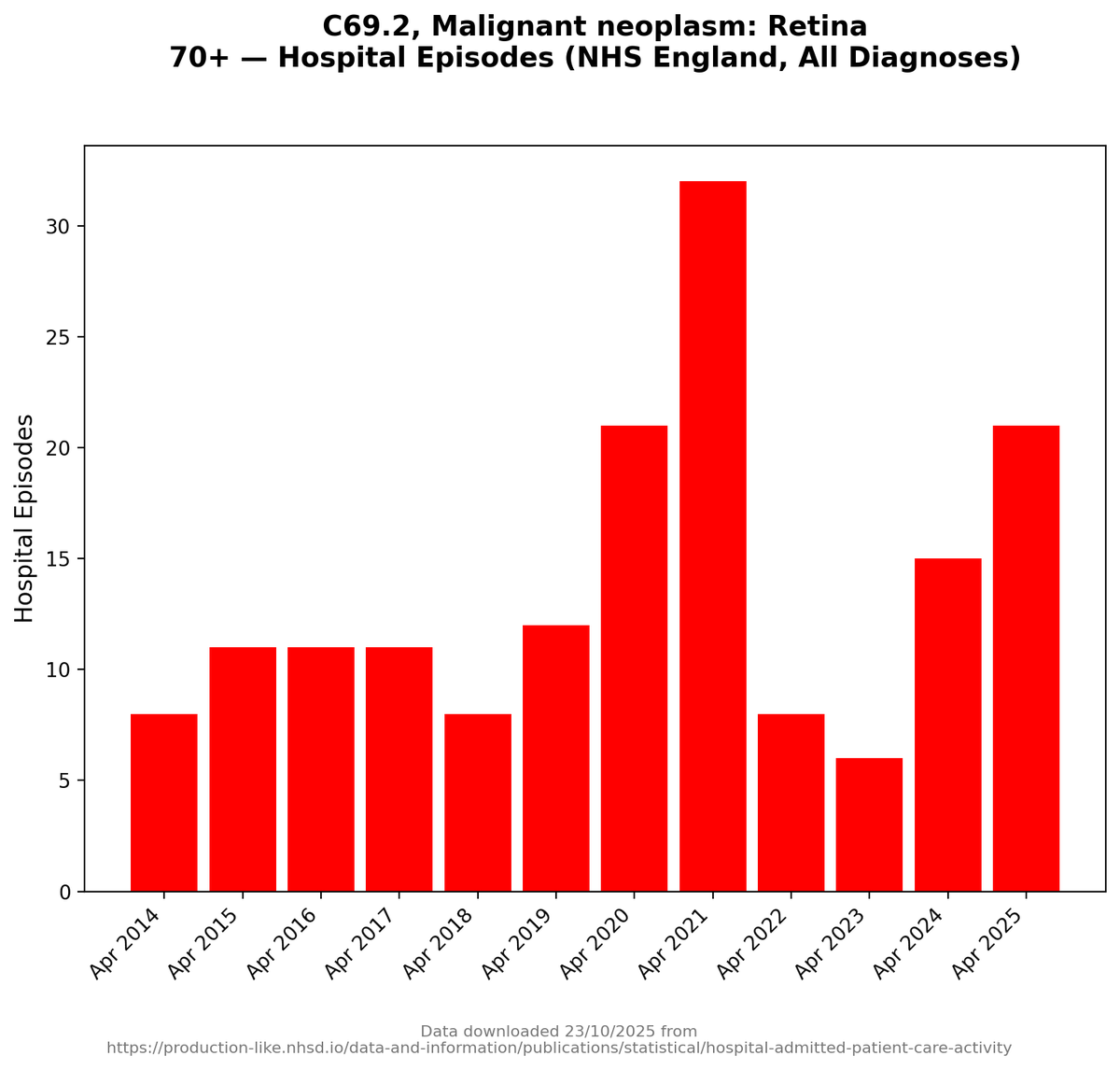
older working age adults, a tiny fraction.
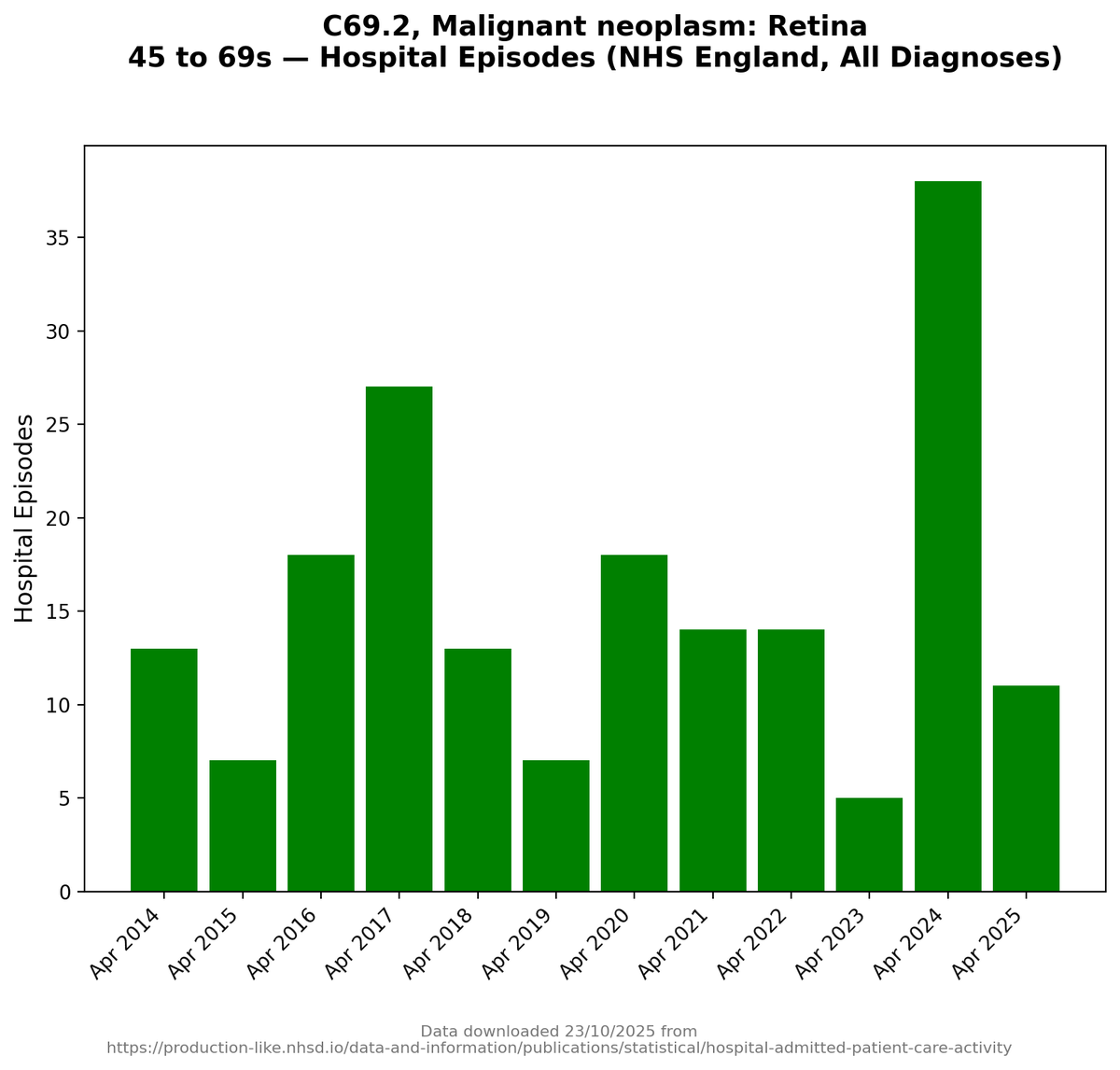
Young adults... a fraction.

Teenagers... a fraction.
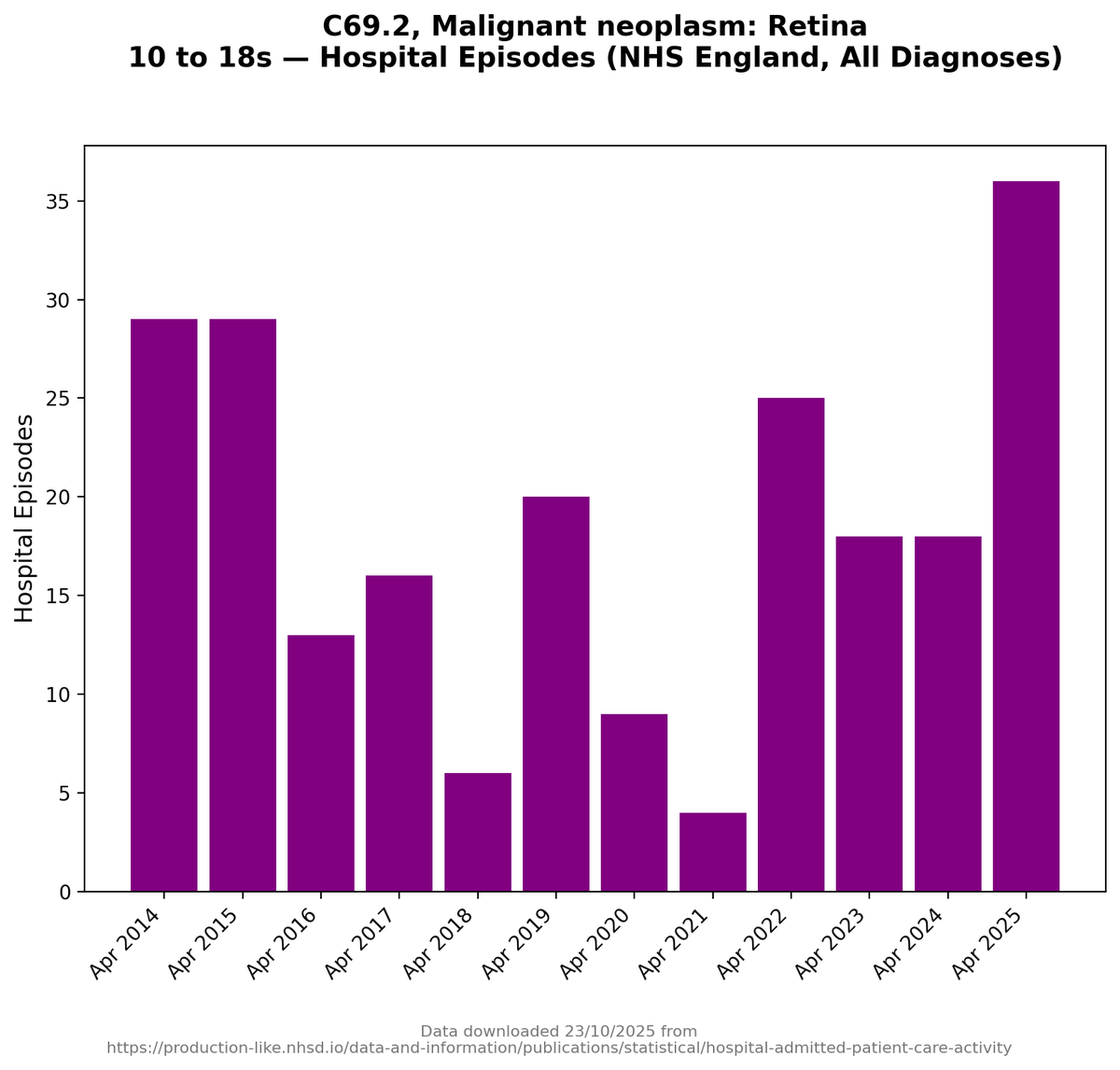
This is a disease... of the very young.

Look at the pre-covid trend.
Going the right way.
Going the right way.
Look what it has done since 2021.
Lots of important points here...
This age group has **not received** covid vaccinations here.
Also, that age group has *become smaller* in the last five years.
Sometimes people criticise me for using non-age adjusted charts.
Well, sorry, but this isn't just about rates, is it.
This is about total volume and pressure on healthcare too.
Sometimes people criticise me for using non-age adjusted charts.
Well, sorry, but this isn't just about rates, is it.
This is about total volume and pressure on healthcare too.
So the increase per person will be larger.
But the big big thing here is *mechanism*.
That code basically covers 'retinoblastoma'.
Retinoblastoma is a childhood eye cancer that almost always appears before age five. It happens when the RB1 gene, the brake that stops retinal cells dividing too fast, is lost or damaged very early in development.
RB1 works together with another system called p53. RB1 controls cell growth and p53 steps in when a cell is stressed or damaged. If RB1 fails, cells divide too freely. If p53 is also weakened, the cell cannot stop that runaway growth.
That may look like a lot of acronyms but just read it through a couple of times and it will make sense.
Now... Covid does not create RB1 mutations, but if a child catches Covid at birth or in early infancy, it can disrupt the same systems that control stress responses, DNA repair, and cell survival, including the p53 pathways.
The first months of life are when the retina is still highly active and vulnerable.
Covid driven inflammation, oxidative stress, and microvascular injury can push a borderline cell over the edge, making a tumour show up sooner or grow faster.
So the story is simple: Covid does not cause RB1 mutations, but infection at birth can increase the pressure on retinal cells at exactly the wrong moment.
This one is cancer of the ciliary body. That is the ring of muscle and tissue just behind the iris that helps the eye focus and also produces the fluid that keeps the front of the eye pressurised.
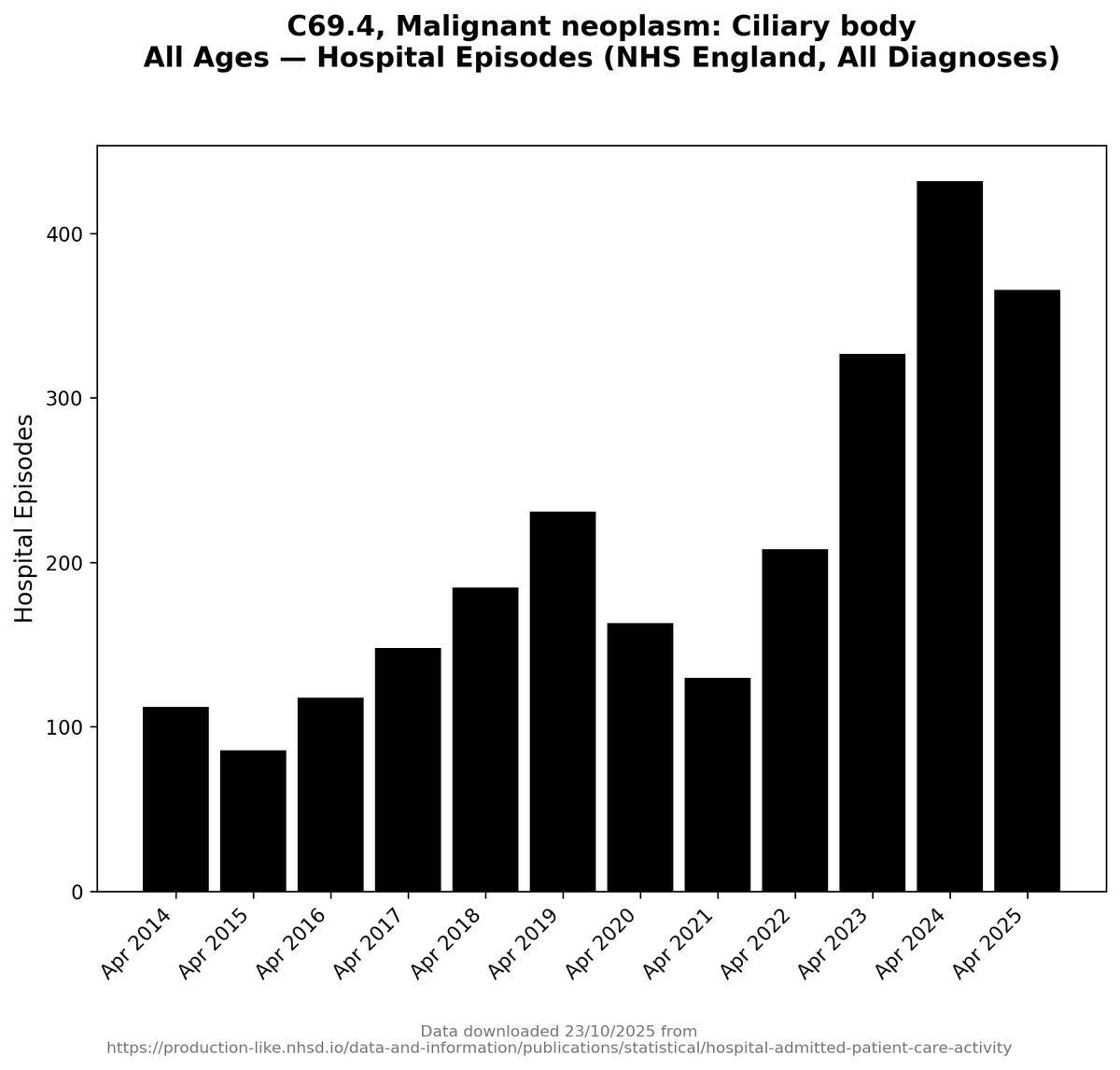
Cancers here are rare. They can affect vision early because they sit so close to the lens and the drainage structures.
Most of the growth is in the older working adults group.

The ciliary body is packed with small blood vessels and rapidly active cells. Repeated infection can raise cell turnover, disrupt DNA repair, and reduce normal immune surveillance.
This one is cancer of the orbit, the space around and behind the eye that holds the muscles, nerves, fat, and blood vessels. Tumours here can push the eye forward, cause pain or double vision, or affect the nerves that control eye movement.
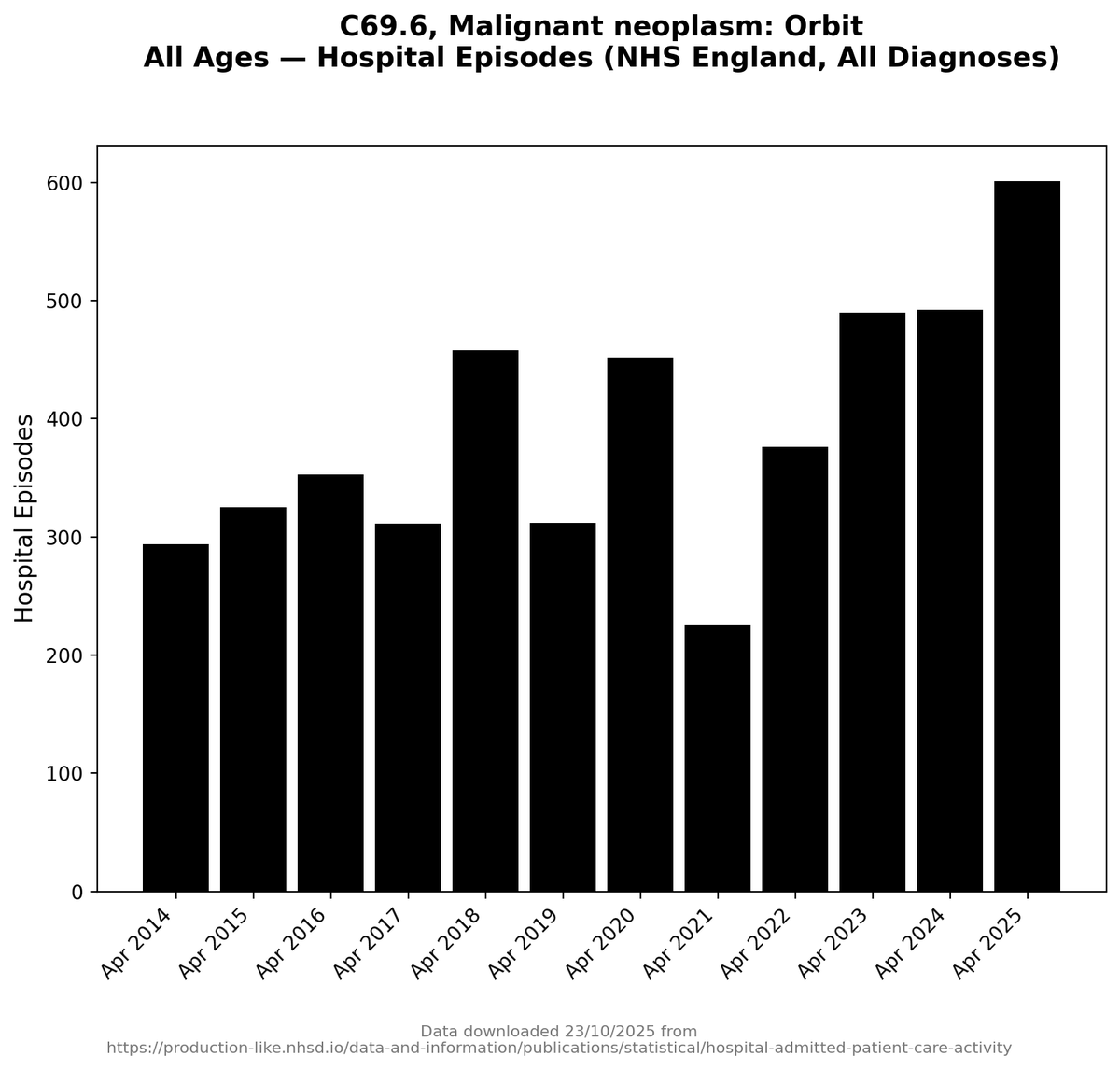
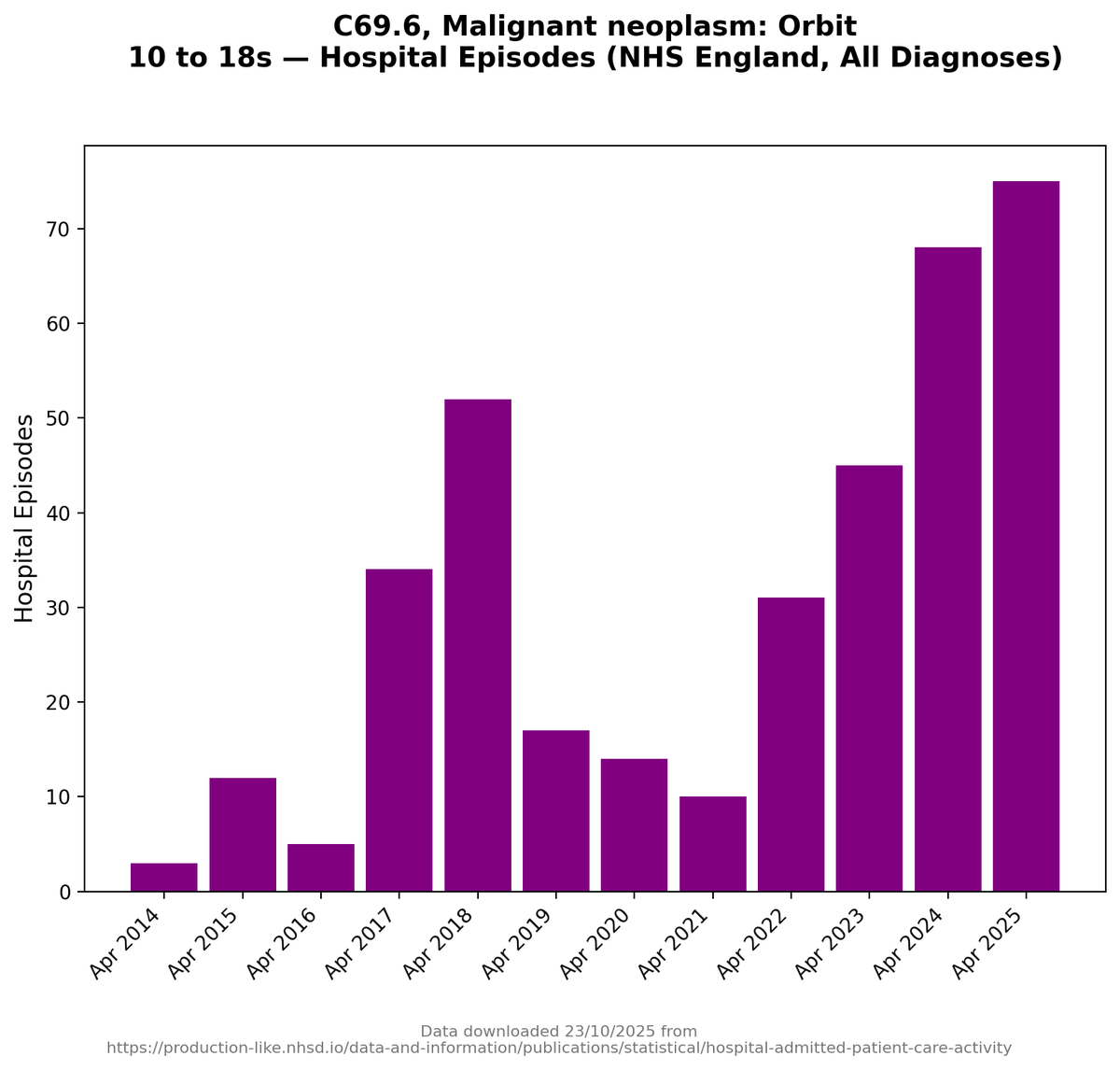
Now, that is quite a messy graph when you look at all ages.
But then you look at teenagers...
But then you look at teenagers...
🧐
All of those eye neoplasms lumped in together...
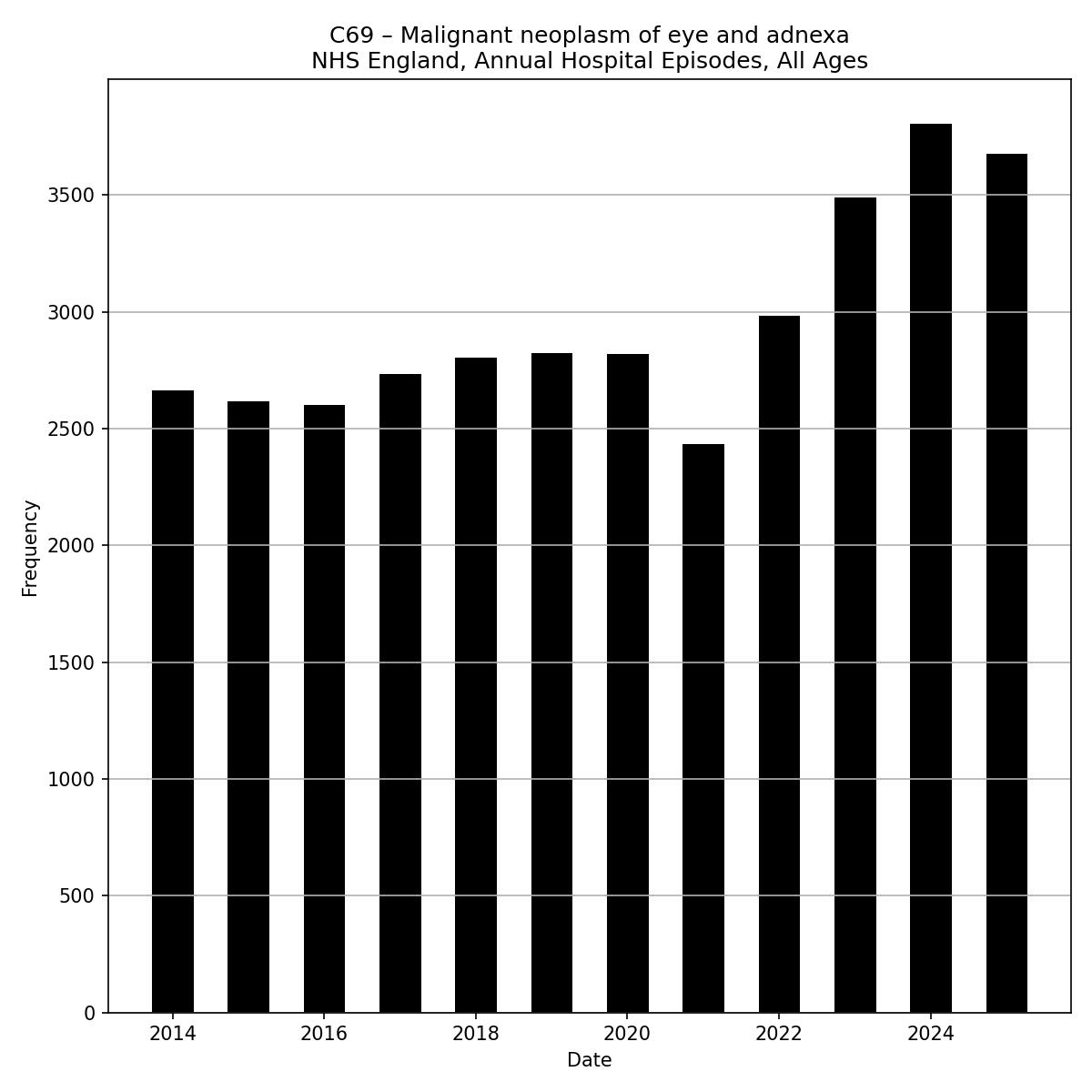
*skin* is having a rough time in the cancer charts.
And the skin around the eye is *no exception*.
And the skin around the eye is *no exception*.
Different areas around the eye.

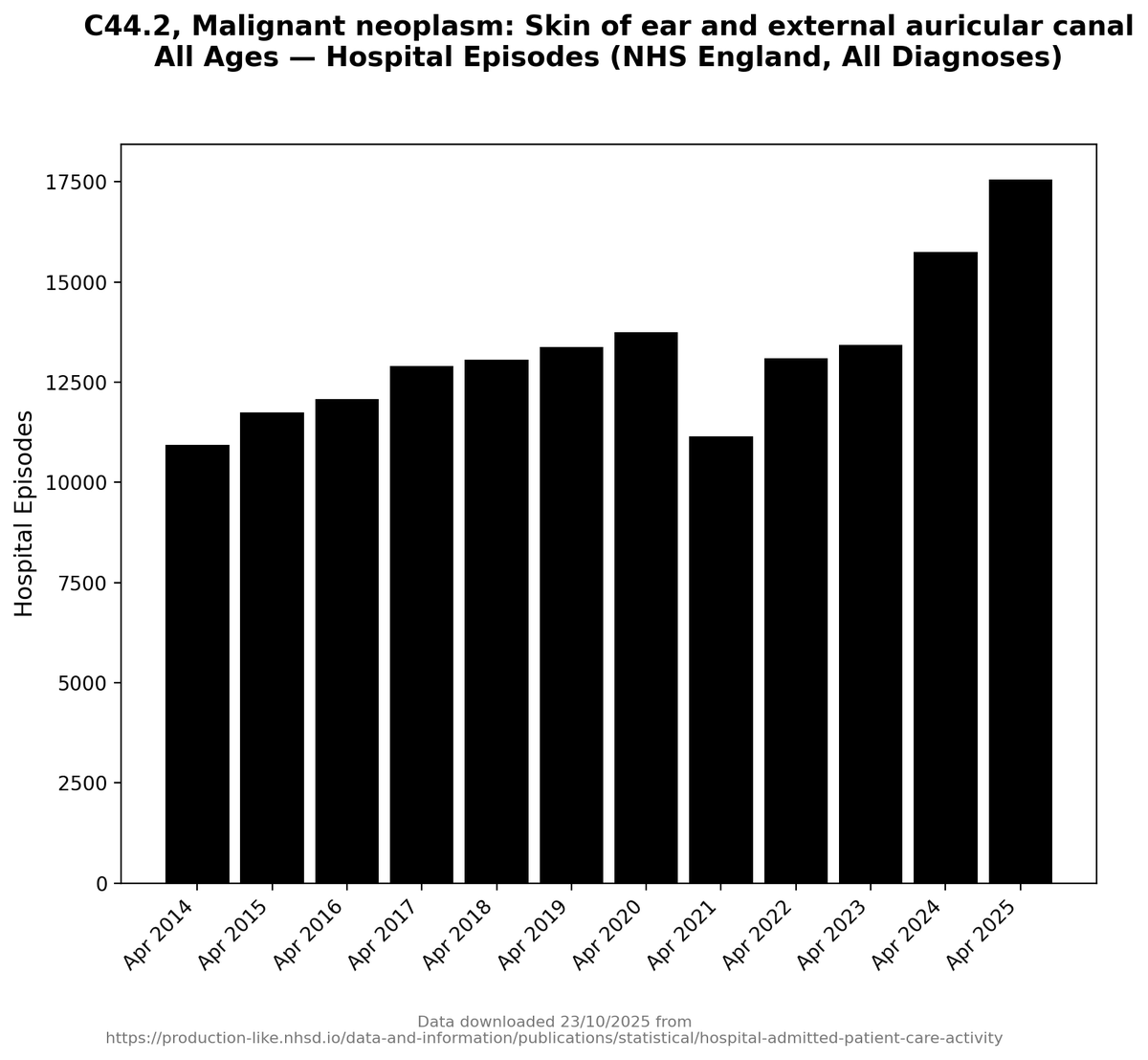
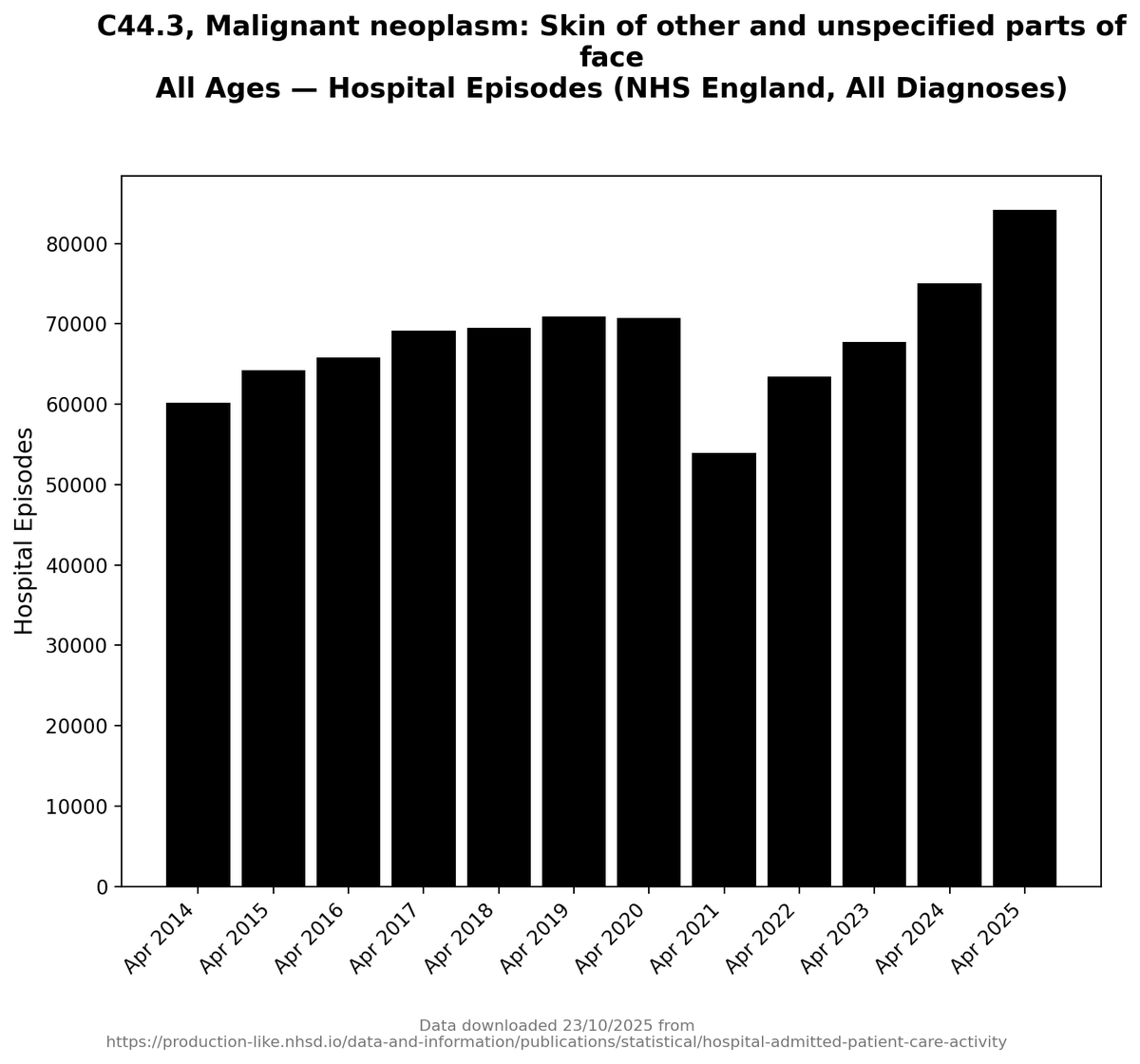
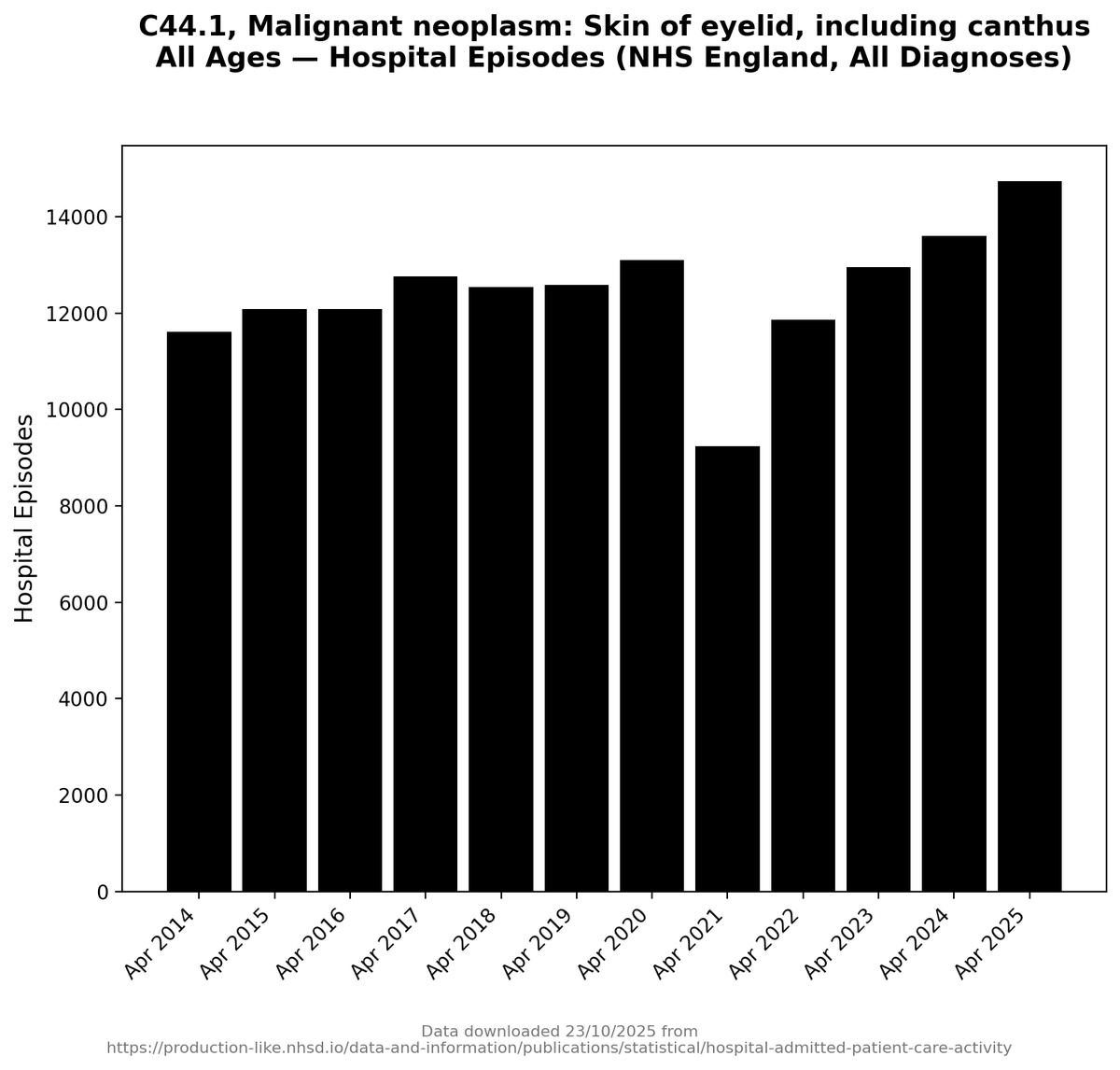
And more...


And the last couple...
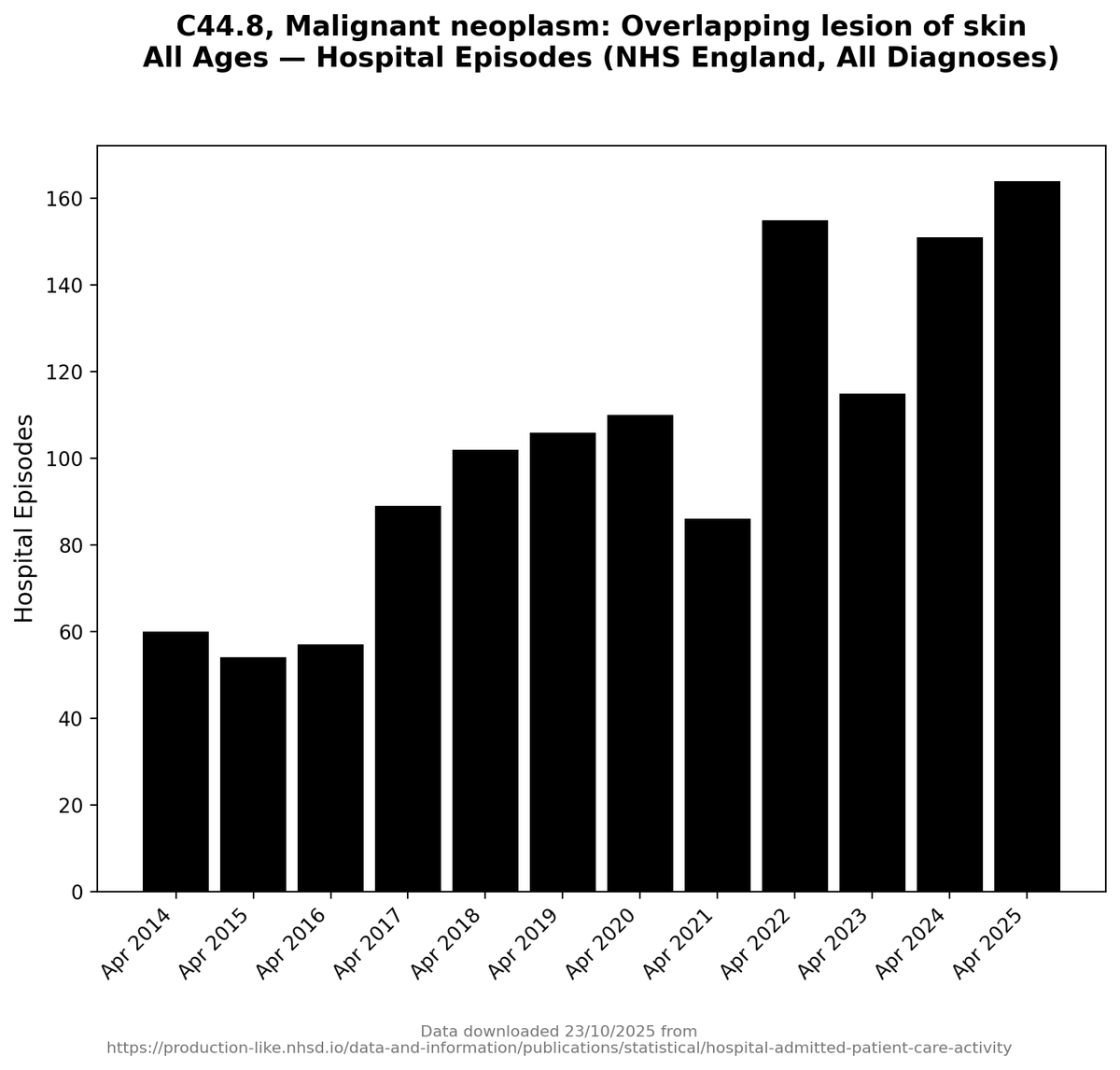
🧐
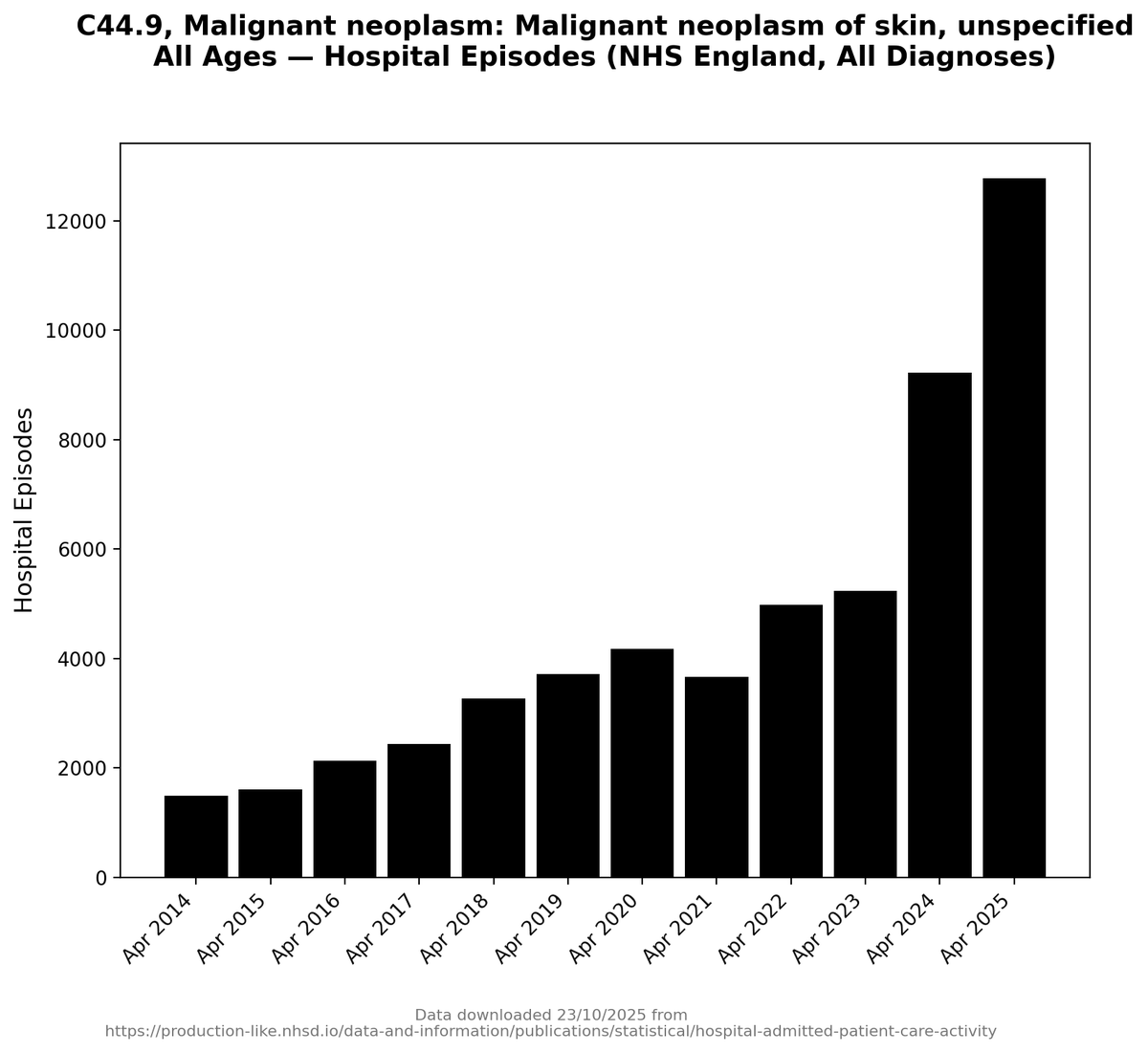
Those are all mostly representing the older age groups, but the patterns aren't hugely different.
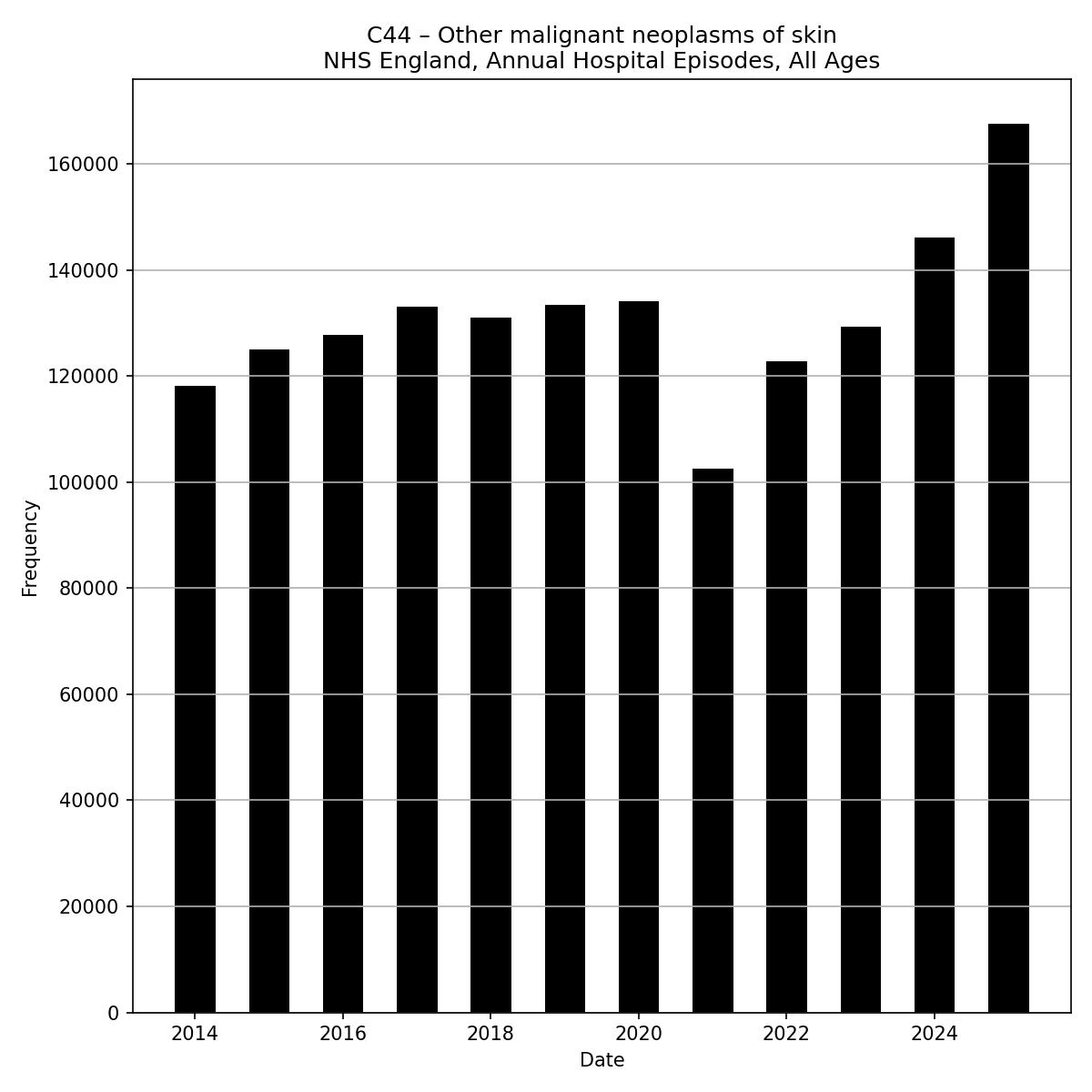
This is all of those added together.
Please feel free to tell yourself that we're just catching up for missed diagnoses 'during covid' if it helps you feel better.
Or face the reality of what it might mean if that trend keeps rising.
Please feel free to tell yourself that we're just catching up for missed diagnoses 'during covid' if it helps you feel better.
Or face the reality of what it might mean if that trend keeps rising.
And while we're here... what the flip is going on with malignant melanomas of the ear in young adults?
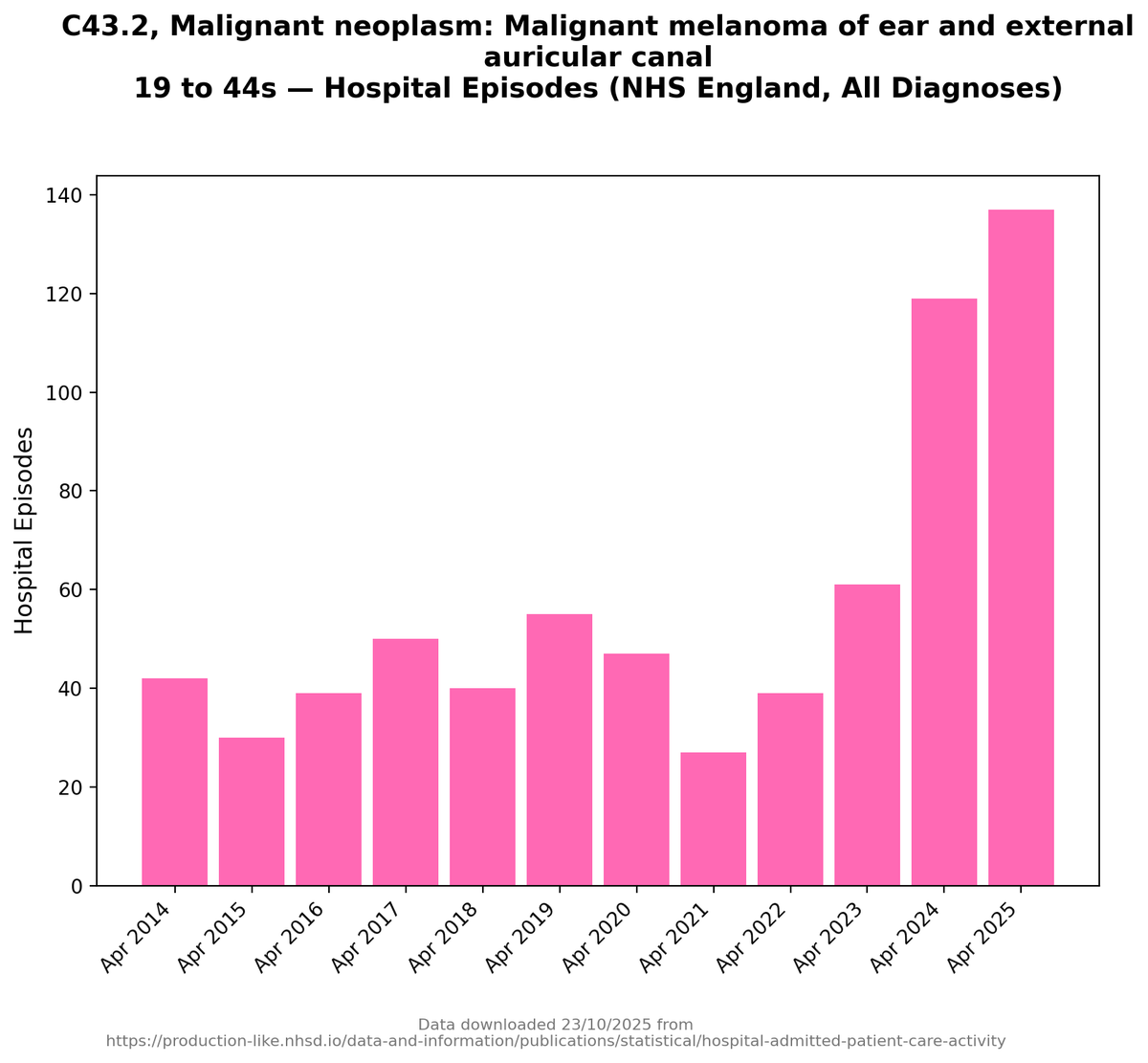
Lots of questions.
Lots of charts.
Lots of charts.
Covid loves your eyes.
Well... in that creepy horror movie stalker kind of way.
Well... in that creepy horror movie stalker kind of way.
Not in the way that I try to talk about love.
Why can't I get a gif of this with the actual eyeballs rolling down the corridor.
Look after your eyes.
Mask up.
Mask up.
Thread ends.
Probably.
Part one here:
https://x.com/1goodtern/status/1989767661425946864?s=20
Don't get caught in a loop reading all the way through that one, and then back through this one.
You will go mad.
• • •
Missing some Tweet in this thread? You can try to
force a refresh