After this article came out, several people responded, alleging that a cultural model made more sense.
Clark has a point-by-point response🧵
Let's start with the first thing: parent-child and sibling correlations in status measures are identical—hard to explain culturally!
Clark has a point-by-point response🧵
Let's start with the first thing: parent-child and sibling correlations in status measures are identical—hard to explain culturally!
https://twitter.com/cremieuxrecueil/status/1673553538557833217
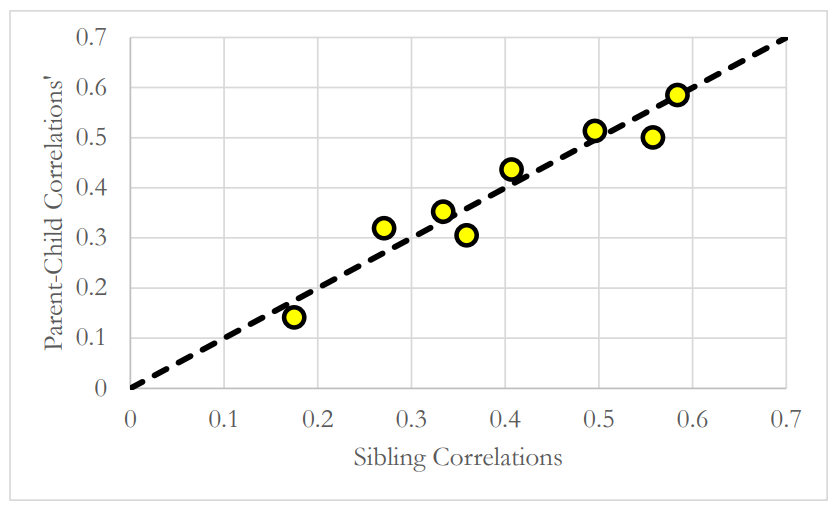
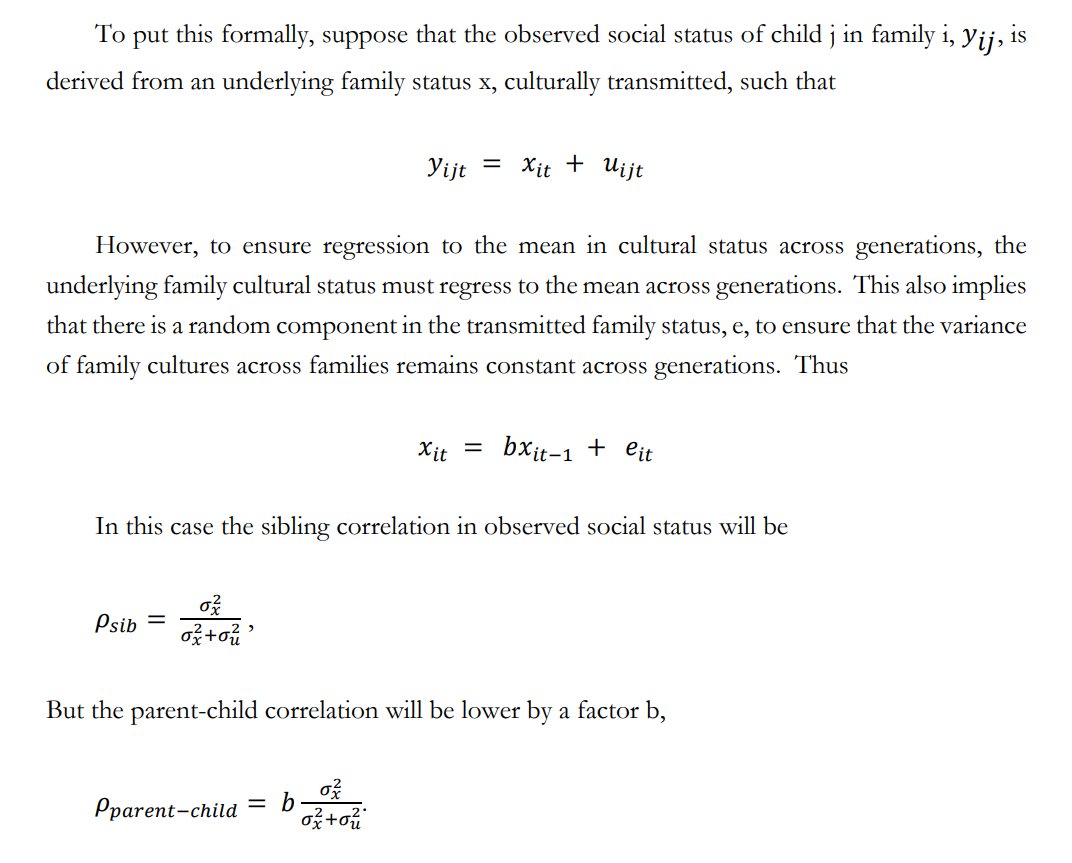
The reason this is hard to explain has to do with the fact that kids objectively have more similar environments to one another than to their parents.
In fact, for a cultural theory to recapitulate regression to the mean across generations, these things would need to differ!
In fact, for a cultural theory to recapitulate regression to the mean across generations, these things would need to differ!
Another fact that speaks against a cultural explanation is that the length of contact between fathers and sons doesn't matter for how correlated they are in status.
We can see this by leveraging the ages parents die at relative to said sons.
We can see this by leveraging the ages parents die at relative to said sons.

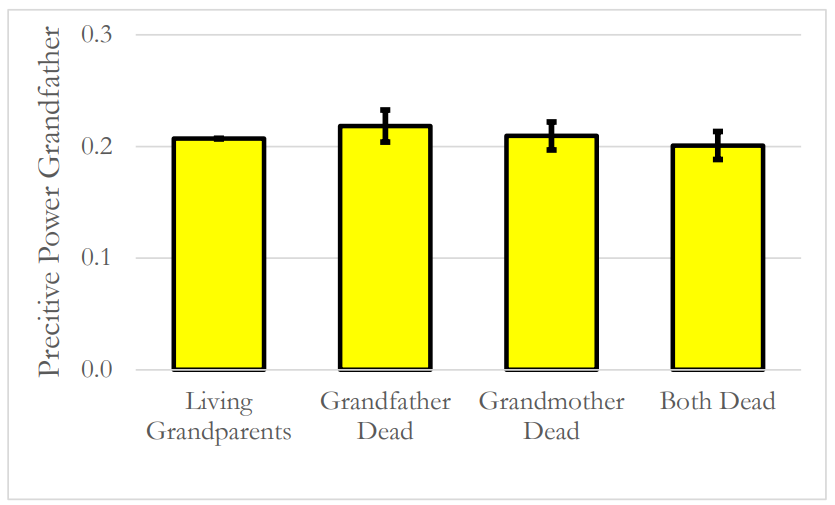
The same thing holds true for grandparents: a cultural theory suggests that if a grandparent dies, kids should be less correlated with them.
And yet, no such thing is observed.
Grandparent-grandchild correlations hold regardless of the grandparents being alive!
And yet, no such thing is observed.
Grandparent-grandchild correlations hold regardless of the grandparents being alive!
One possibility people have raised is that wealth could be used to non-genetically transmit status.
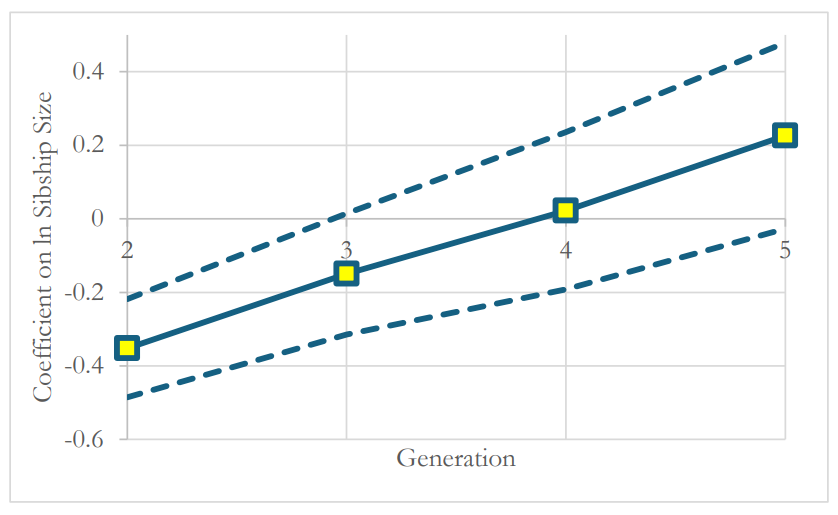
This is unlikely for many reasons. For example, as sibship sizes increase, wealth transmission falls (more kids to split among), but other aspects of status transmit constantly:
This is unlikely for many reasons. For example, as sibship sizes increase, wealth transmission falls (more kids to split among), but other aspects of status transmit constantly:

You can actually couple this fact with the fact that fertility in marriages was historically basically unrestricted to get at 'exogenous wealth' dissipation rates.
It disappears fast. Can't be a confounder!
It disappears fast. Can't be a confounder!
https://x.com/cremieuxrecueil/status/1990620216506618008
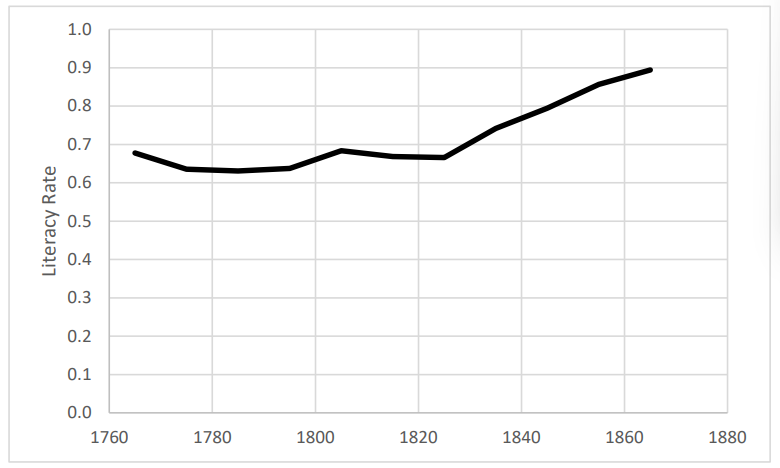
Another thing people take issue with is that many aspects of measured social status have their mean levels change across generations.
For example, universal schooling became a thing.
Thus, literacy rose.
So, does that mean educational status isn't really transmitted?
For example, universal schooling became a thing.
Thus, literacy rose.
So, does that mean educational status isn't really transmitted?
No.
Status is a latent trait that can have its indicators, like literacy and occupation, drift over time.
If you account for this by using latent variables (as with the black line below), you get a more consistent picture:
Status is a latent trait that can have its indicators, like literacy and occupation, drift over time.
If you account for this by using latent variables (as with the black line below), you get a more consistent picture:
https://x.com/cremieuxrecueil/status/1763323770134282260

Basically, this:
Clark pointed out two years ago that Fisher's model predicts (important word) intergenerational status transmission very well.
He has now also pointed out that culture-based alternatives fail on the merits and shown that he understands his data very well.
Clark pointed out two years ago that Fisher's model predicts (important word) intergenerational status transmission very well.
He has now also pointed out that culture-based alternatives fail on the merits and shown that he understands his data very well.

There's more to this, that I couldn't conveniently cover in the thread.
Go give this new paper a read if you're interested: ehes.org/wp/EHES_285.pdf
Go give this new paper a read if you're interested: ehes.org/wp/EHES_285.pdf
• • •
Missing some Tweet in this thread? You can try to
force a refresh