Let’s walk through how the kill chain works for all military targets from the tactical, operational, and strategic levels of warfare, a thread: 🧵 
https://twitter.com/gbnt1952/status/1995127586473521506
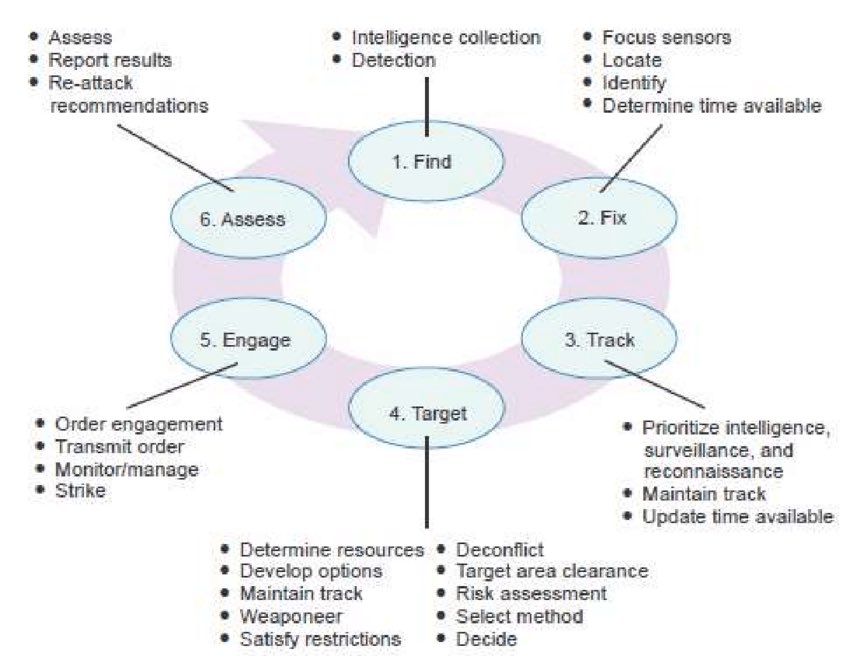
First concept: Positive Identification (PID)
PID is a reasonable certainty that what you’re looking at is a legitimate military target under the Laws of Armed Conflict (LOAC) and the Rules of Engagement (ROE).
No PID = no shot or not clear to engage. Full stop.
PID is a reasonable certainty that what you’re looking at is a legitimate military target under the Laws of Armed Conflict (LOAC) and the Rules of Engagement (ROE).
No PID = no shot or not clear to engage. Full stop.
PID can come from:
- Visual ID (eyes/optics/UAS feed)
- Sensors (radar, IR, SIGINT)
- Intel correlation (we know Enemy Boat X should be here, now)
- Behavior (hostile act or obvious hostile intent)
But “looks sketchy” does not equal PID.
- Visual ID (eyes/optics/UAS feed)
- Sensors (radar, IR, SIGINT)
- Intel correlation (we know Enemy Boat X should be here, now)
- Behavior (hostile act or obvious hostile intent)
But “looks sketchy” does not equal PID.
Now, about how many commanders must approve. There are basically two worlds:
1. Self defense (immediate threat)
2. Planned/Deliberate engagement (no immediate threat)
The number of signatures changes a lot between those.
1. Self defense (immediate threat)
2. Planned/Deliberate engagement (no immediate threat)
The number of signatures changes a lot between those.
Self defense scenario
If a boat or vehicle is committing a hostile act (firing, ramming, so on) or shows hostile intent (clearly about to attack), the rule is simple:
The on ground commander can authorize the shot.
That is 1 level of approval.
If a boat or vehicle is committing a hostile act (firing, ramming, so on) or shows hostile intent (clearly about to attack), the rule is simple:
The on ground commander can authorize the shot.
That is 1 level of approval.
In self defense, the kill chain compresses:
- PID: “Yes, that’s the threat.”
- ROE: Self defense is authorized.
- Authority: On ground commander.
You do not have time to call a 4 star when someone is about to blow you up.
- PID: “Yes, that’s the threat.”
- ROE: Self defense is authorized.
- Authority: On ground commander.
You do not have time to call a 4 star when someone is about to blow you up.
Now, the more interesting case (and the one more people like to scrutinize despite its layers of redundancy):
Planned or deliberate strike (vehicle is suspicious, intel says hostile, but it’s not actively attacking).
Here you usually get 3 to 4 levels of command in the loop before engagement.
Planned or deliberate strike (vehicle is suspicious, intel says hostile, but it’s not actively attacking).
Here you usually get 3 to 4 levels of command in the loop before engagement.
Step 1: Tactical Commander (Level 1)
This is your:
- Boat officer in charge
- Ground Force Commander
- Aircraft/helo commander
They confirm PID at their level and request permission to engage.
They cannot just decide alone (unless ROE says self defense).
This is your:
- Boat officer in charge
- Ground Force Commander
- Aircraft/helo commander
They confirm PID at their level and request permission to engage.
They cannot just decide alone (unless ROE says self defense).
Step 2: Mission Commander / Element Lead (Level 2)
Examples of Level 2:
- Ground Force Commander overseeing multiple elements
- Air Mission Commander
- Maritime Task Unit leader
They own the mission, not just one asset. They verify:
- Does this strike support the mission?
- Is it worth the risk?
Examples of Level 2:
- Ground Force Commander overseeing multiple elements
- Air Mission Commander
- Maritime Task Unit leader
They own the mission, not just one asset. They verify:
- Does this strike support the mission?
- Is it worth the risk?
Step 3: Task Force / Battalion Level Command (Level 3)
This might be:
- SOF Task Force HQ
- Battalion/Task Group HQ
- Carrier Strike Group staff
Here you get:
- Legal review (JAG)
- Collateral Damage Estimate (CDE)
- ROE check
- Blue force deconfliction
This might be:
- SOF Task Force HQ
- Battalion/Task Group HQ
- Carrier Strike Group staff
Here you get:
- Legal review (JAG)
- Collateral Damage Estimate (CDE)
- ROE check
- Blue force deconfliction
Step 4: Operational/Component Command (Level 4)
Examples of level 4:
- Theater JOC
- Maritime Component Commander
- Combined Joint Task Force HQ
They look at:
- Strategic impact
- Political risk
- Theater wide ROE interpretation
At this level, one “yes or no” can change headlines.
Examples of level 4:
- Theater JOC
- Maritime Component Commander
- Combined Joint Task Force HQ
They look at:
- Strategic impact
- Political risk
- Theater wide ROE interpretation
At this level, one “yes or no” can change headlines.
So, a maritime strike on a boat or non self sefense target, a common pattern is:
1. Tactical commander
2. Mission or element commander
3. Task force or strike group
4. Maritime or theater HQ
That is 3 to 4 distinct approvals before a missile or gun run is cleared.
1. Tactical commander
2. Mission or element commander
3. Task force or strike group
4. Maritime or theater HQ
That is 3 to 4 distinct approvals before a missile or gun run is cleared.
And that’s just authority.
Before actual engagement you still need:
- PID confirmed
- Collateral Damage Estimate acceptable
- ROE satisfied
- Proper weapon selected
- Air/sea deconfliction complete
Then you get a “Cleared hot.”
Before actual engagement you still need:
- PID confirmed
- Collateral Damage Estimate acceptable
- ROE satisfied
- Proper weapon selected
- Air/sea deconfliction complete
Then you get a “Cleared hot.”
For highly sensitive targets (such as hitting something near a neutral country or high value political target), approval can climb even higher:
5 to 6 levels, up to a Combatant Commander or national leadership.
Yes, that many people for one target.
5 to 6 levels, up to a Combatant Commander or national leadership.
Yes, that many people for one target.
SOF side note:
Special Operations sometimes get streamlined authorities for pre-approved target sets.
Even then, you’re usually looking at:
- GFC (on scene)
- Task Force HQ
- Theater JOC
So, about 2 to 3 levels, not a lone cowboy with a rifle.
Special Operations sometimes get streamlined authorities for pre-approved target sets.
Even then, you’re usually looking at:
- GFC (on scene)
- Task Force HQ
- Theater JOC
So, about 2 to 3 levels, not a lone cowboy with a rifle.
Why so many signatures?
Because every strike must satisfy three big constraints:
1. Legal (LOAC, ROE)
2. Operational (good for the mission)
3. Strategic (good for the overall campaign & politics)
Keep all of this in mind the next time someone is whining about war crimes while they have the military expertise of a potato.
Because every strike must satisfy three big constraints:
1. Legal (LOAC, ROE)
2. Operational (good for the mission)
3. Strategic (good for the overall campaign & politics)
Keep all of this in mind the next time someone is whining about war crimes while they have the military expertise of a potato.
• • •
Missing some Tweet in this thread? You can try to
force a refresh