
MEET THE DIGNITY INDEX CODERS
@TheDignityIndex , a project of UNITE and Tim Shriver looking to ease divisions and prevent violence, is, in a few words, a social change experiment.
Quoted from the 2023 Utah Pilot Project Technical Summary, University of Utah President Taylor Randall says, "The Dignity Index relies on one of the most ancient tools for social change in the history of human beings--conscience. When we see how often we use contempt and how harmful it is, we see we're a part of the problem, and that makes us part of the solution."
The Dignity Index partnered with University of Utah, Kem C. Gardener Policy Institute, David Eccles School of Business, and Hinckley Institute of Politics, claiming to have chosen students with politically and ideologically diverse backgrounds, to pilot a system where they would help determine a scoring mechanism for speech.
Turns out they are not so diverse after all. Rather it seems like these schools are serving as incubators to install radicalized students into various think tanks, nonprofits, and government positions across the country. 🧵
@TheDignityIndex , a project of UNITE and Tim Shriver looking to ease divisions and prevent violence, is, in a few words, a social change experiment.
Quoted from the 2023 Utah Pilot Project Technical Summary, University of Utah President Taylor Randall says, "The Dignity Index relies on one of the most ancient tools for social change in the history of human beings--conscience. When we see how often we use contempt and how harmful it is, we see we're a part of the problem, and that makes us part of the solution."
The Dignity Index partnered with University of Utah, Kem C. Gardener Policy Institute, David Eccles School of Business, and Hinckley Institute of Politics, claiming to have chosen students with politically and ideologically diverse backgrounds, to pilot a system where they would help determine a scoring mechanism for speech.
Turns out they are not so diverse after all. Rather it seems like these schools are serving as incubators to install radicalized students into various think tanks, nonprofits, and government positions across the country. 🧵

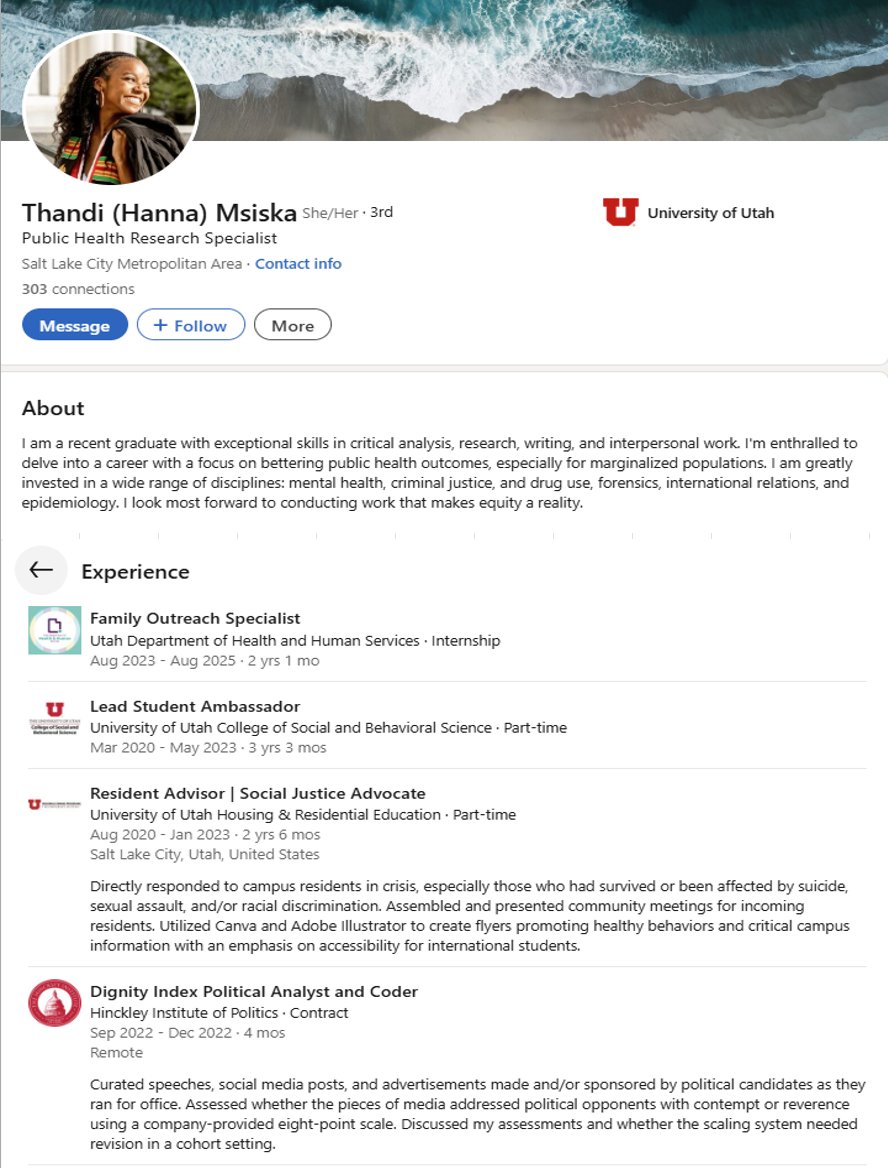
#1 Thandi (Hanna) Msiska
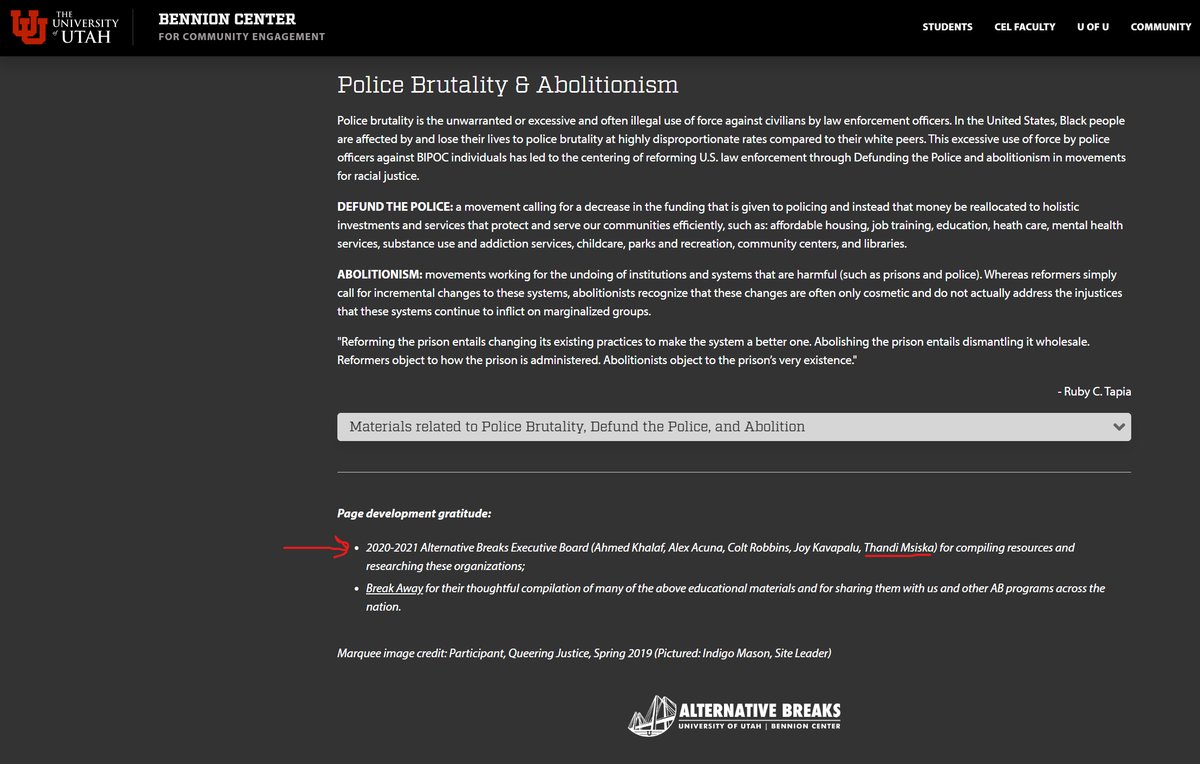
During her time at University of Utah, Thandi served on the executive board of Alternative Breaks, Bennion Center for Community Engagement.
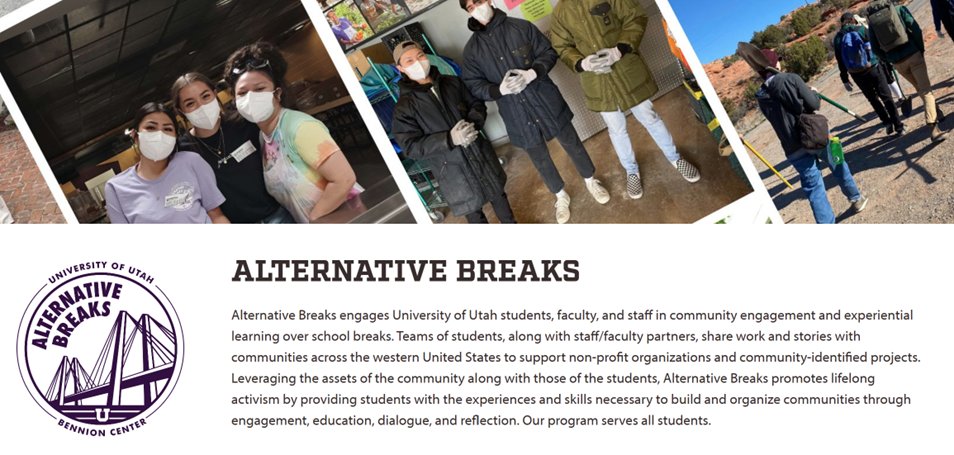
Alternative Breaks promotes lifelong activism through its students at U of U.
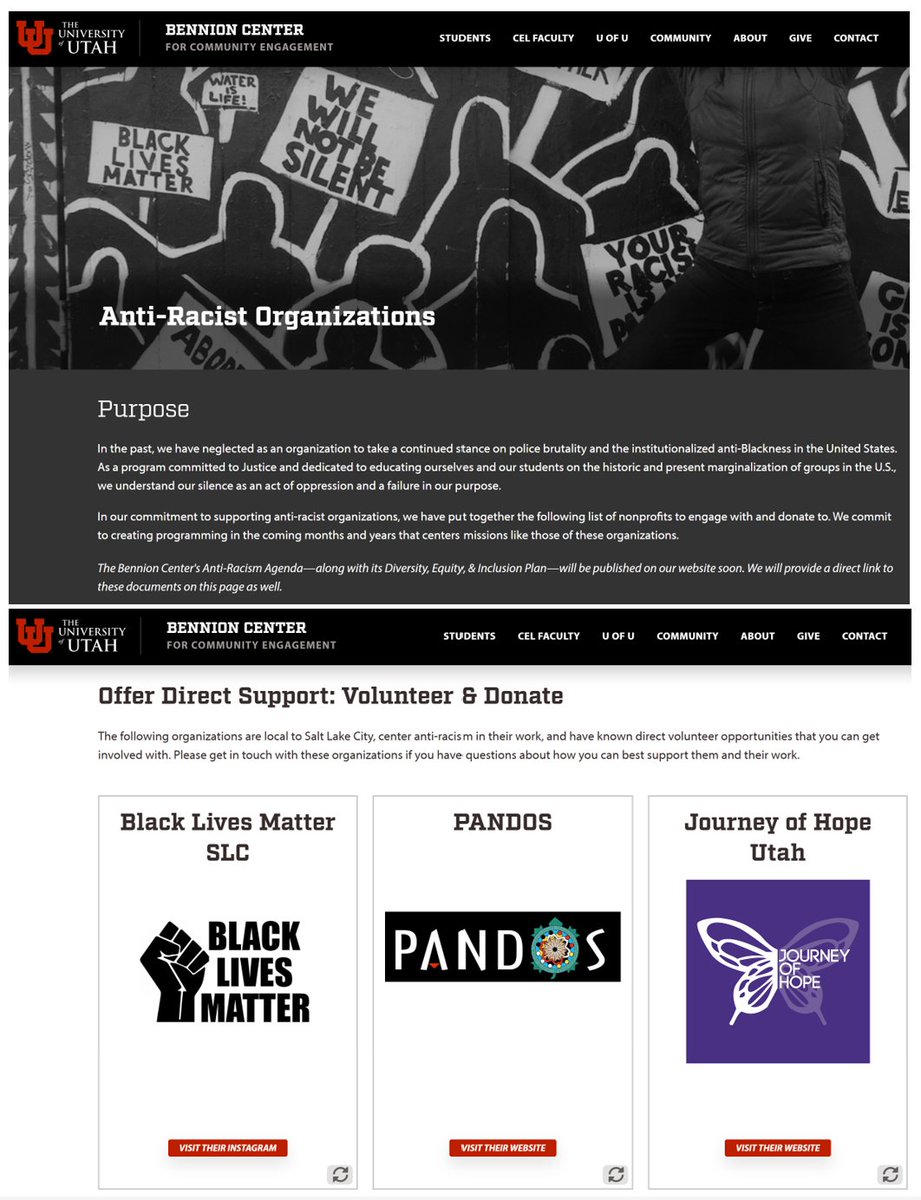
The Center's page states their negligence in taking a continued stance on police brutality and institutionalized anti-Blackness in the US, acknowledging their silence as an act of oppression and a failure in their purpose. They put together a list of nonprofits to engage with and donate to, including Black Lives Matter.
The Bennion Center at U of U has both an Anti-Racism Agenda and a Diversity, Equity, & Inclusion Plan.🧵
During her time at University of Utah, Thandi served on the executive board of Alternative Breaks, Bennion Center for Community Engagement.
Alternative Breaks promotes lifelong activism through its students at U of U.
The Center's page states their negligence in taking a continued stance on police brutality and institutionalized anti-Blackness in the US, acknowledging their silence as an act of oppression and a failure in their purpose. They put together a list of nonprofits to engage with and donate to, including Black Lives Matter.
The Bennion Center at U of U has both an Anti-Racism Agenda and a Diversity, Equity, & Inclusion Plan.🧵
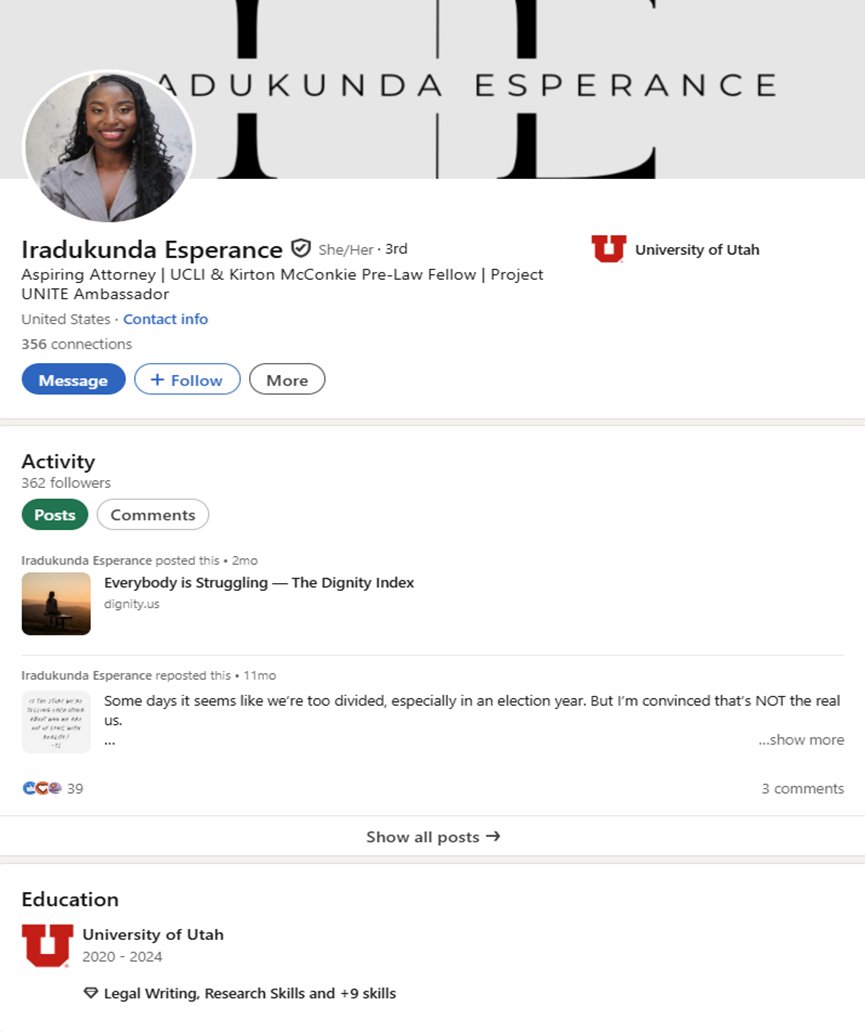
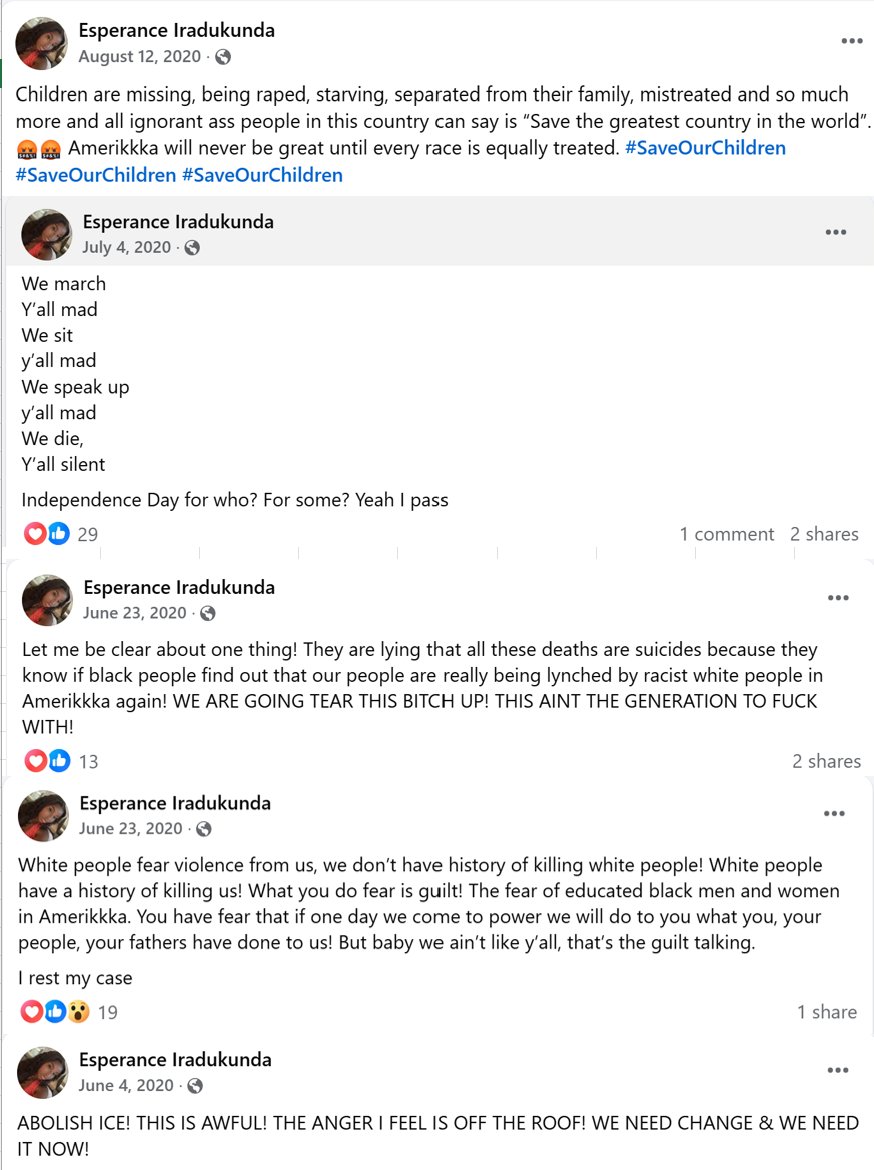
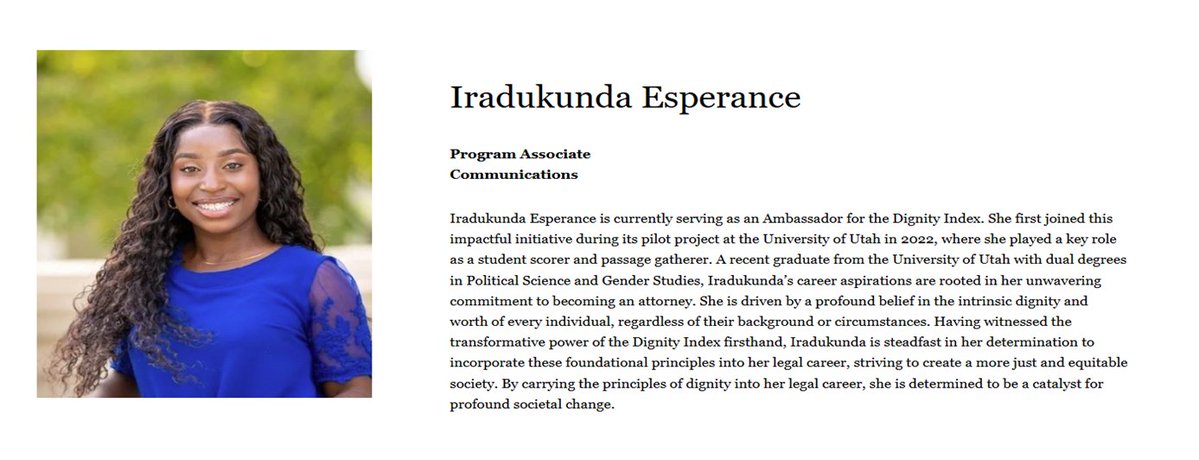
#2 Iradukunda Esperance
Iradukunda is a social justice activist with Black Lives Matter Utah and has quite the social media profile--from her dislike of the police and ICE to her racist and anti-America rhetoric and even, dare I say, contemptuous speech.
She is currently a Dignity Index ambassador.
Iradukunda is a social justice activist with Black Lives Matter Utah and has quite the social media profile--from her dislike of the police and ICE to her racist and anti-America rhetoric and even, dare I say, contemptuous speech.
She is currently a Dignity Index ambassador.

#3 Ermiya Faenaeia
Ermiya's lengthy history of radical activism has been documented extensively following the event at UVU resulting in Charlie Kirk's death. We know the ACLU sure loves Ermiya. See @DataRepublican's thread below ⤵️
Ermiya's lengthy history of radical activism has been documented extensively following the event at UVU resulting in Charlie Kirk's death. We know the ACLU sure loves Ermiya. See @DataRepublican's thread below ⤵️
https://x.com/DataRepublican/status/1967758989791465856?s=20

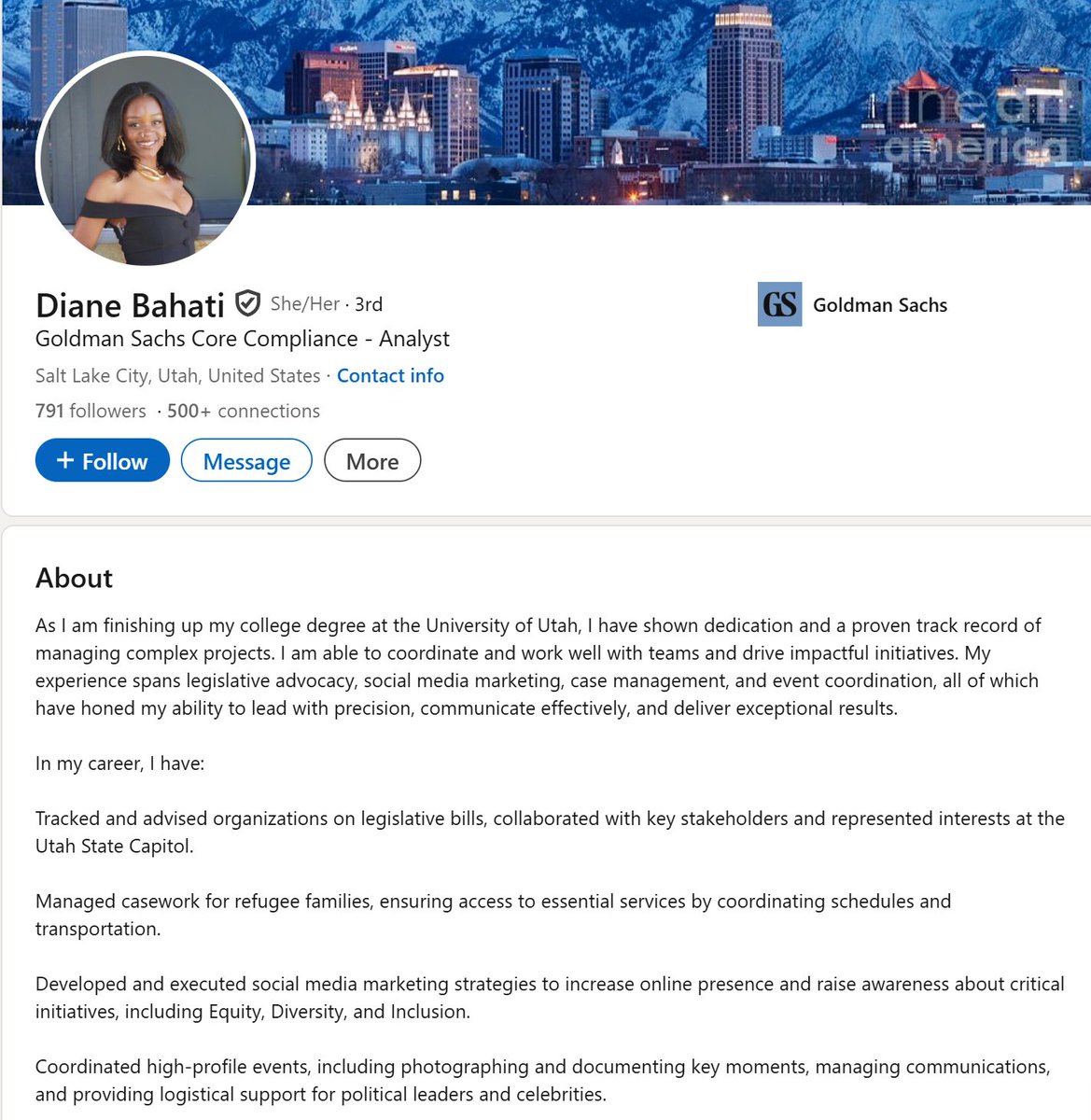
#4 Diane Bahati
Diane has interned with several government entities including Utah's Office of the Attorney General, Utah System of Higher Education, Utah League of Cities and Towns, and the Office of Governor Cox.
She also spent time with several activist organizations to include AmeriCorps, Rankin Climate, Utah Center for Legal Inclusion, Vote 4 U at the University of Utah, and the League of Women Voters. While a board member with the Red Cross, she was invited to speak at the UN's Migration Forum.
Diane also spent time engaging in racial justice activism, hosting a Juneteenth protest with Solidarity for Justice, JuneteenthUtah, and Blaq Void and participated in Black Lives Matter protests.
Diane has interned with several government entities including Utah's Office of the Attorney General, Utah System of Higher Education, Utah League of Cities and Towns, and the Office of Governor Cox.
She also spent time with several activist organizations to include AmeriCorps, Rankin Climate, Utah Center for Legal Inclusion, Vote 4 U at the University of Utah, and the League of Women Voters. While a board member with the Red Cross, she was invited to speak at the UN's Migration Forum.
Diane also spent time engaging in racial justice activism, hosting a Juneteenth protest with Solidarity for Justice, JuneteenthUtah, and Blaq Void and participated in Black Lives Matter protests.



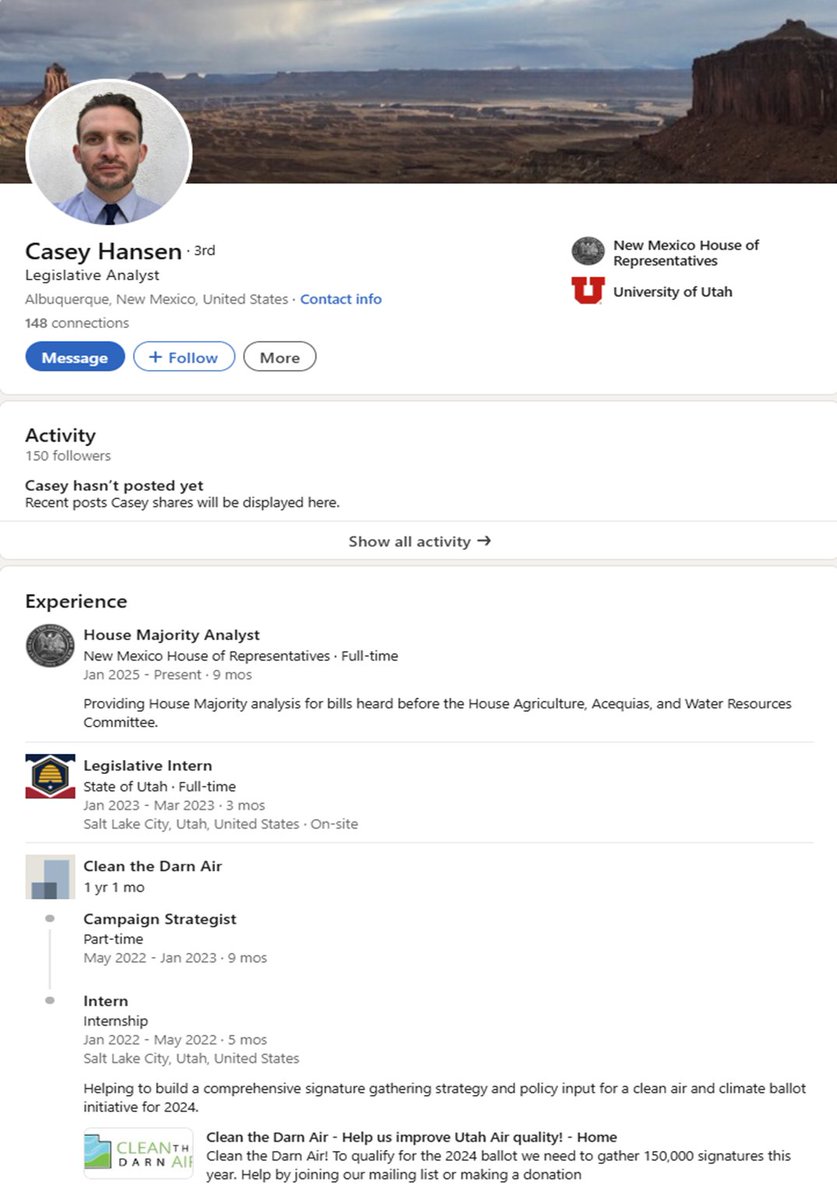
#5 Casey Hansen
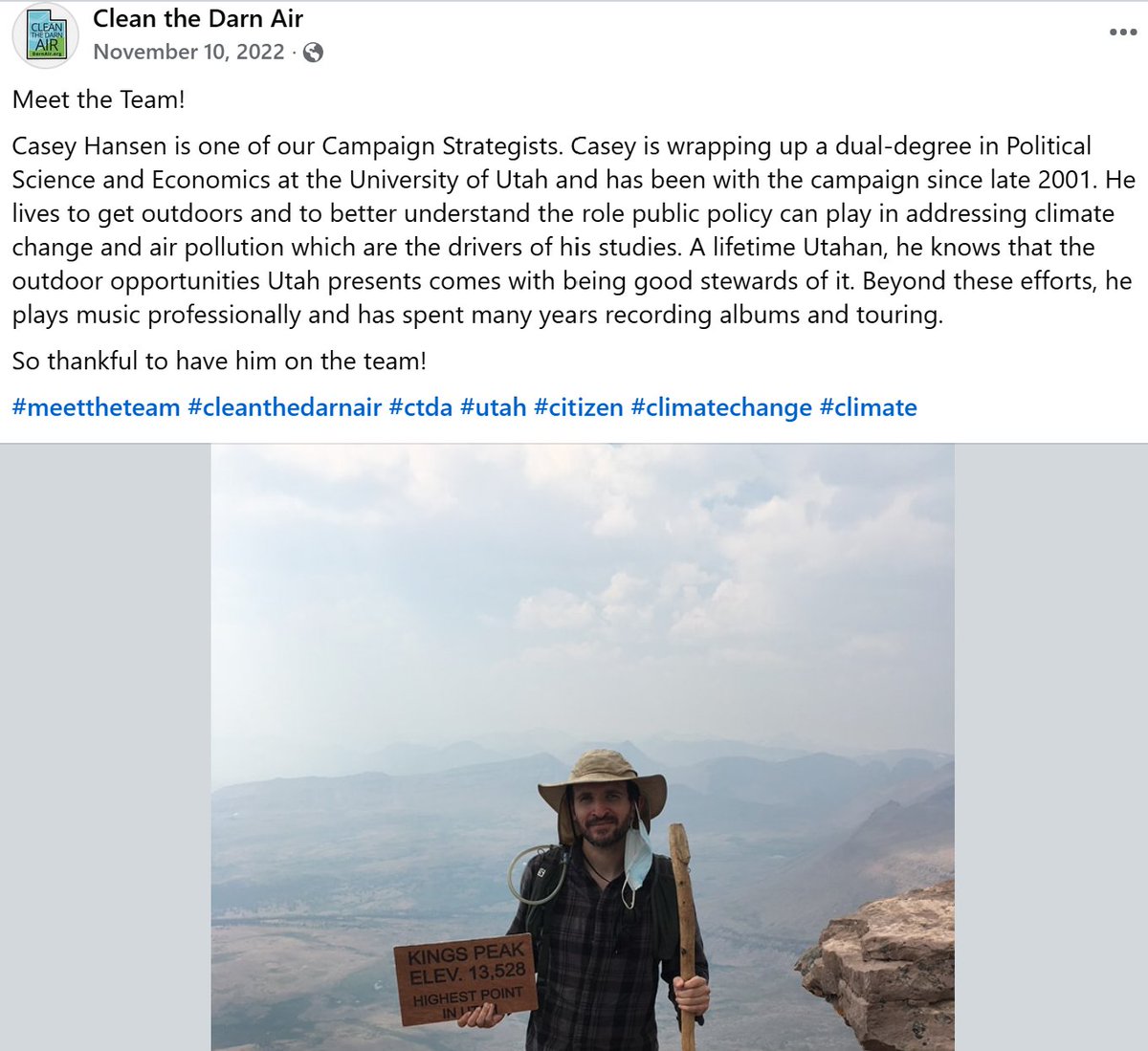
Casey is currently employed by the New Mexico House of Representatives and interned with the Utah House of Representatives.
He spent significant time as a climate change activist, including having worked to get a carbon tax on the Utah ballot in 2024.
Casey is currently employed by the New Mexico House of Representatives and interned with the Utah House of Representatives.
He spent significant time as a climate change activist, including having worked to get a carbon tax on the Utah ballot in 2024.
#6 Steven Lehnhof
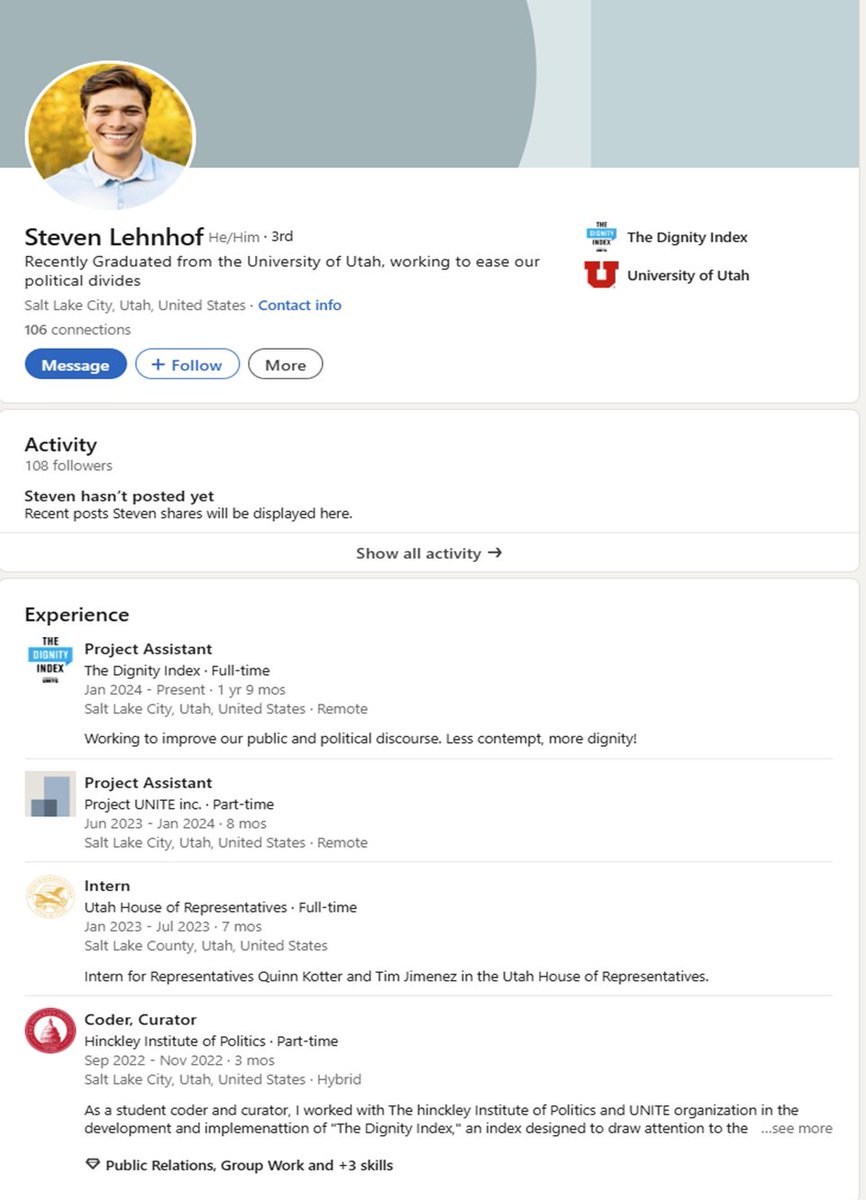
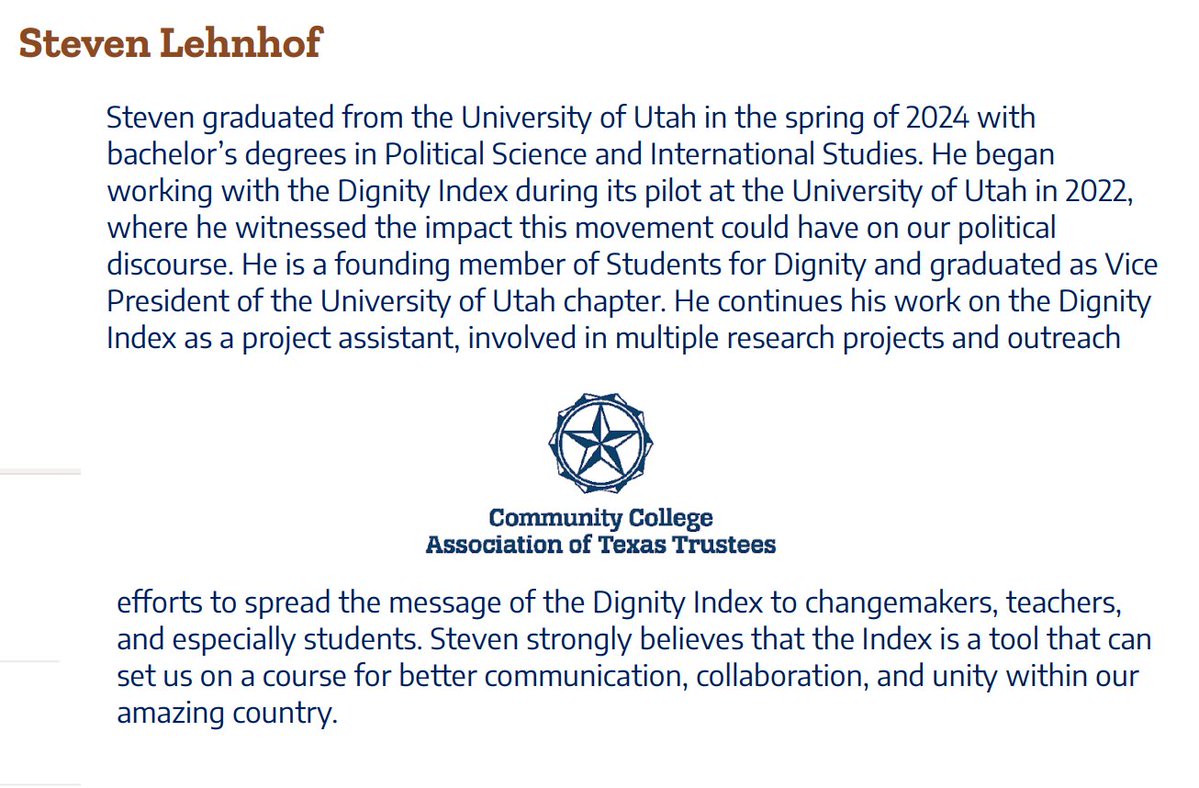
Steven works with the Dignity Index as a Project Assistant. He is a founding member of Students for Dignity and graduated as the Vice President of the U of U chapter.
He interned with the Utah House of Representatives. In an interview with Axios, Steven labeled himself a "left-leaning moderate."
Steven works with the Dignity Index as a Project Assistant. He is a founding member of Students for Dignity and graduated as the Vice President of the U of U chapter.
He interned with the Utah House of Representatives. In an interview with Axios, Steven labeled himself a "left-leaning moderate."
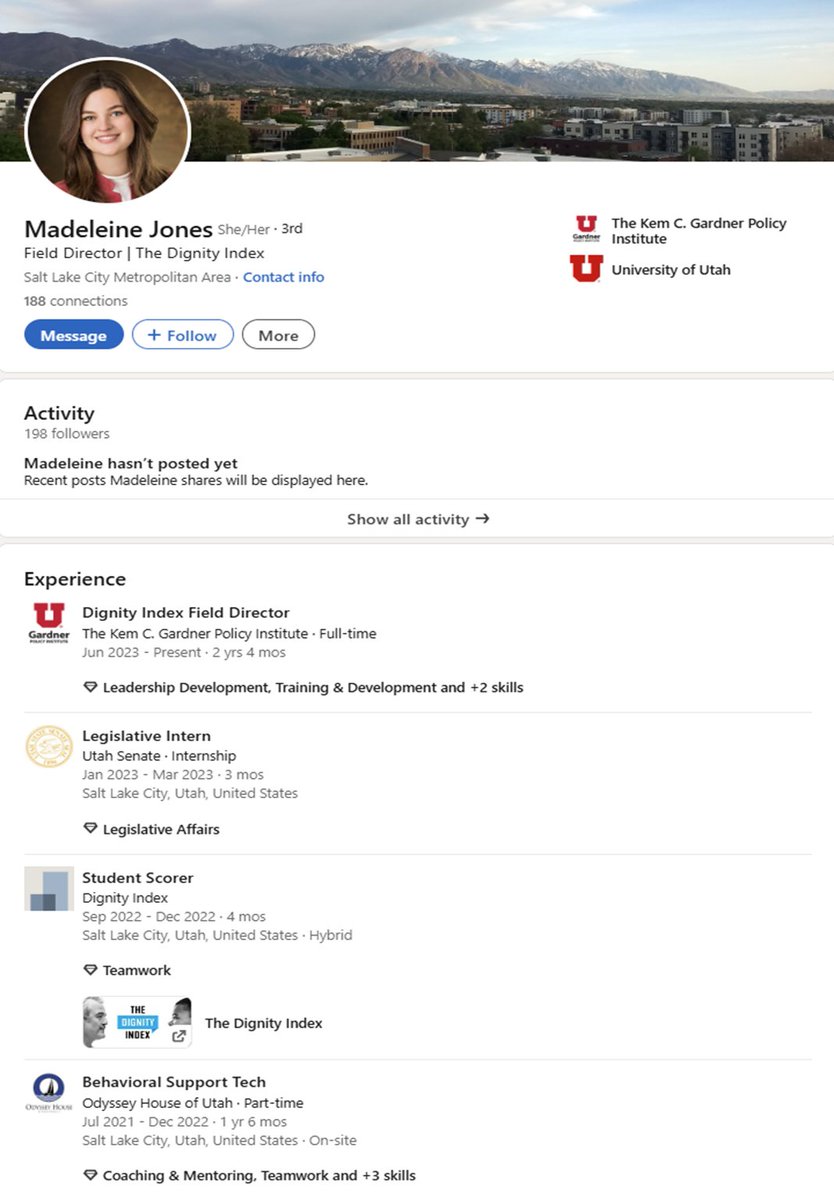
#7 Madeleine Jones
Madeleine is a Program Associate and Trainer with Dignity Index, actively working to install its practices in colleges and universities. She co-founded Students for Dignity at U of U.
Madeleine interned with the Utah State Senate.
In a BYU interview, she describes herself as liberal and thinks of the word "patriotism" as very right-wing.
Madeleine is a Program Associate and Trainer with Dignity Index, actively working to install its practices in colleges and universities. She co-founded Students for Dignity at U of U.
Madeleine interned with the Utah State Senate.
In a BYU interview, she describes herself as liberal and thinks of the word "patriotism" as very right-wing.

#8 Emalee Carroll
Emalee (she/her) interned at the US EPA, where she is now employed as a program analyst. She studied at U of U for environmental sustainability.
Emalee wrote in an article in the Salt Lake Tribune that air pollution near schools is linked to lower test scores and that kids at disadvantaged schools are exposed to higher levels of air pollution. She concludes that since, in her opinion, early learning is essential to a child’s education along with the location of these schools, there is an inequity in the education stemming from pollution.
Emalee (she/her) interned at the US EPA, where she is now employed as a program analyst. She studied at U of U for environmental sustainability.
Emalee wrote in an article in the Salt Lake Tribune that air pollution near schools is linked to lower test scores and that kids at disadvantaged schools are exposed to higher levels of air pollution. She concludes that since, in her opinion, early learning is essential to a child’s education along with the location of these schools, there is an inequity in the education stemming from pollution.


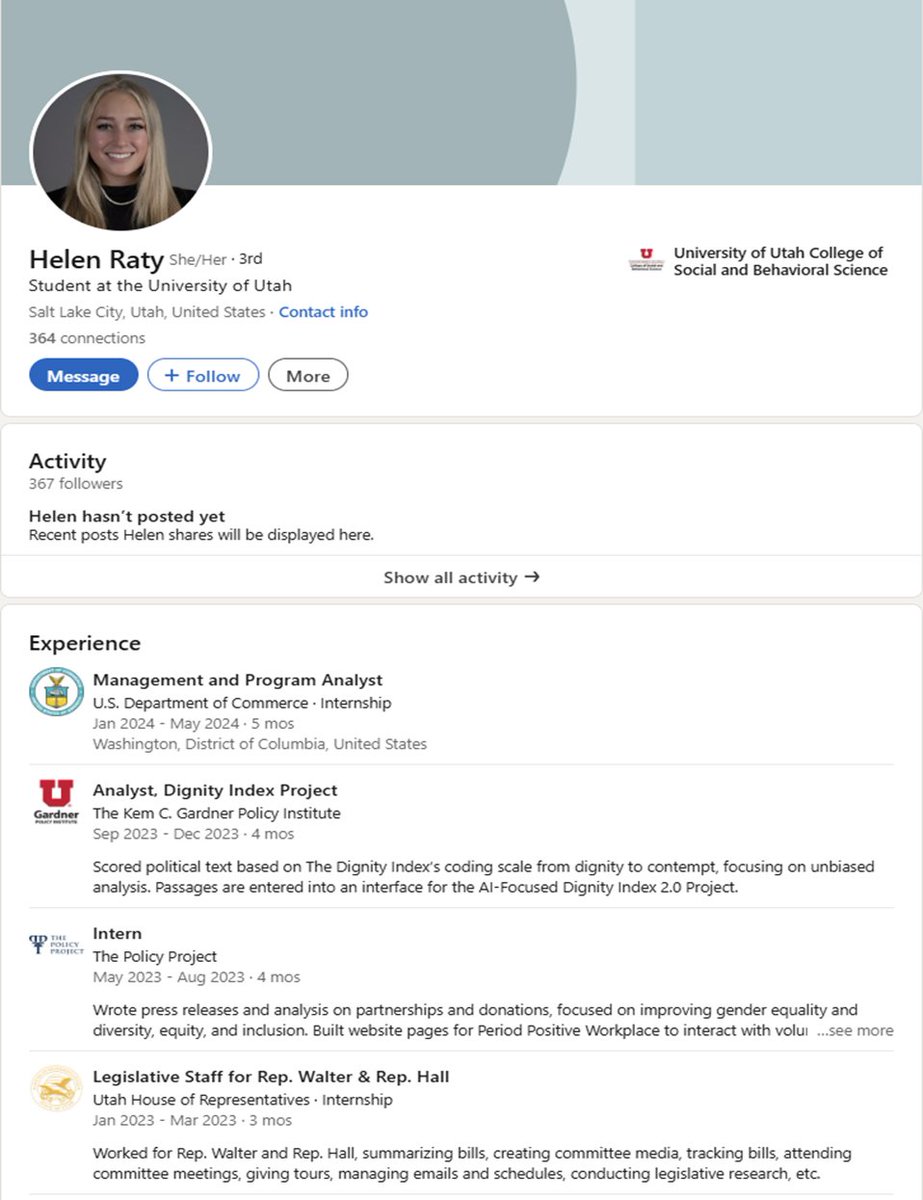
#9 Helen Raty
Helen interned with the Utah House of Representatives and the US Chamber of Commerce. Additionally, she interned with activist group, The Policy Project where she focused on improving gender equality and diversity, equity, and inclusion. One of the policy focuses of the Policy Project is period poverty and creating "period positive" schools, having worked with the Utah legislature to pass the free tampons in schools bill in 2022. Guess where Utah is sending its money for period products? If you guessed Aunt Flow, the org that all the libs have embraced in recent years, you'd be right.
She is a founding member and chair of Students for Dignity at U of U.
Helen interned with the Utah House of Representatives and the US Chamber of Commerce. Additionally, she interned with activist group, The Policy Project where she focused on improving gender equality and diversity, equity, and inclusion. One of the policy focuses of the Policy Project is period poverty and creating "period positive" schools, having worked with the Utah legislature to pass the free tampons in schools bill in 2022. Guess where Utah is sending its money for period products? If you guessed Aunt Flow, the org that all the libs have embraced in recent years, you'd be right.
She is a founding member and chair of Students for Dignity at U of U.


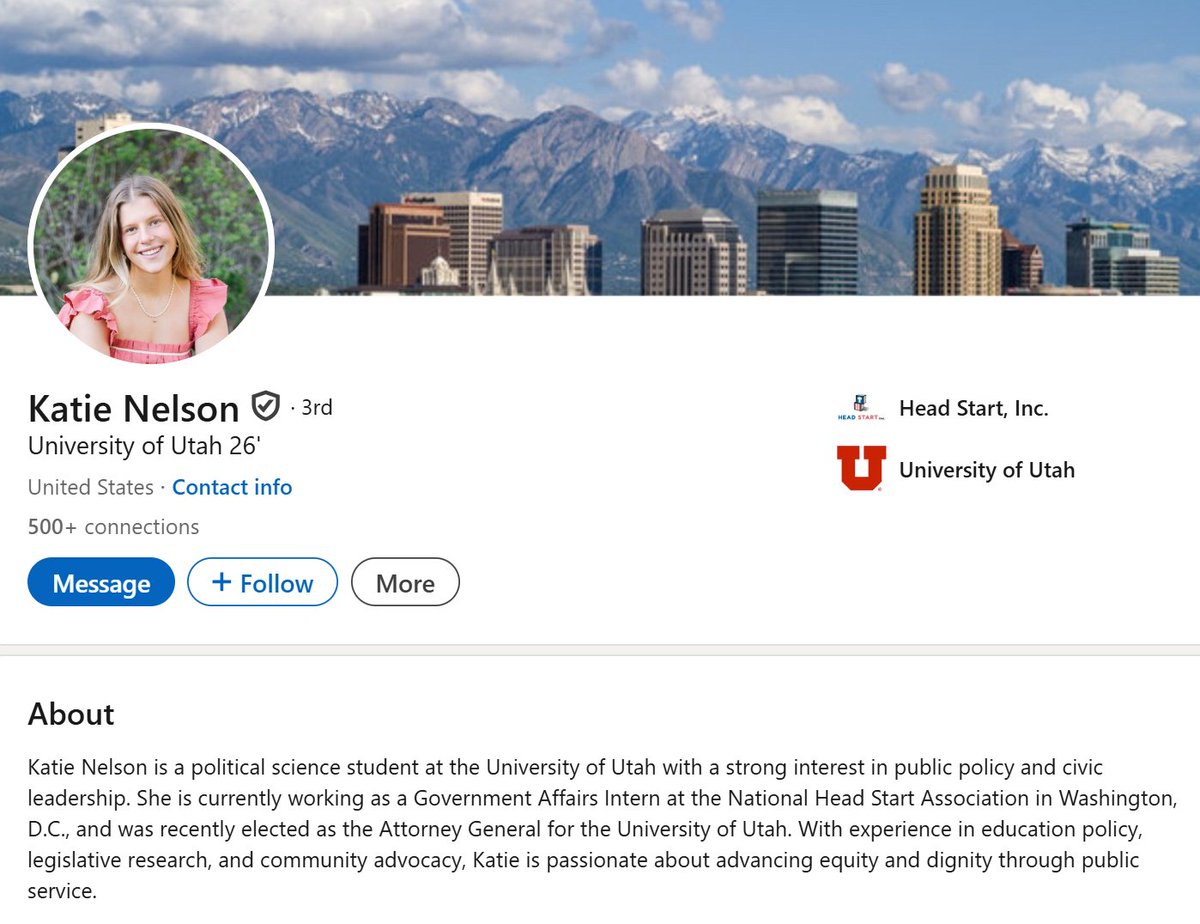
#10 Katie Nelson
Katie interned with the Utah State Board of Education and the Utah House of Representatives. She is currently interning in DC at the National Head Start Association, an organization that promotes early childhood education.
Her LinkedIn bio says that she is passionate about advancing equity and dignity through public service.
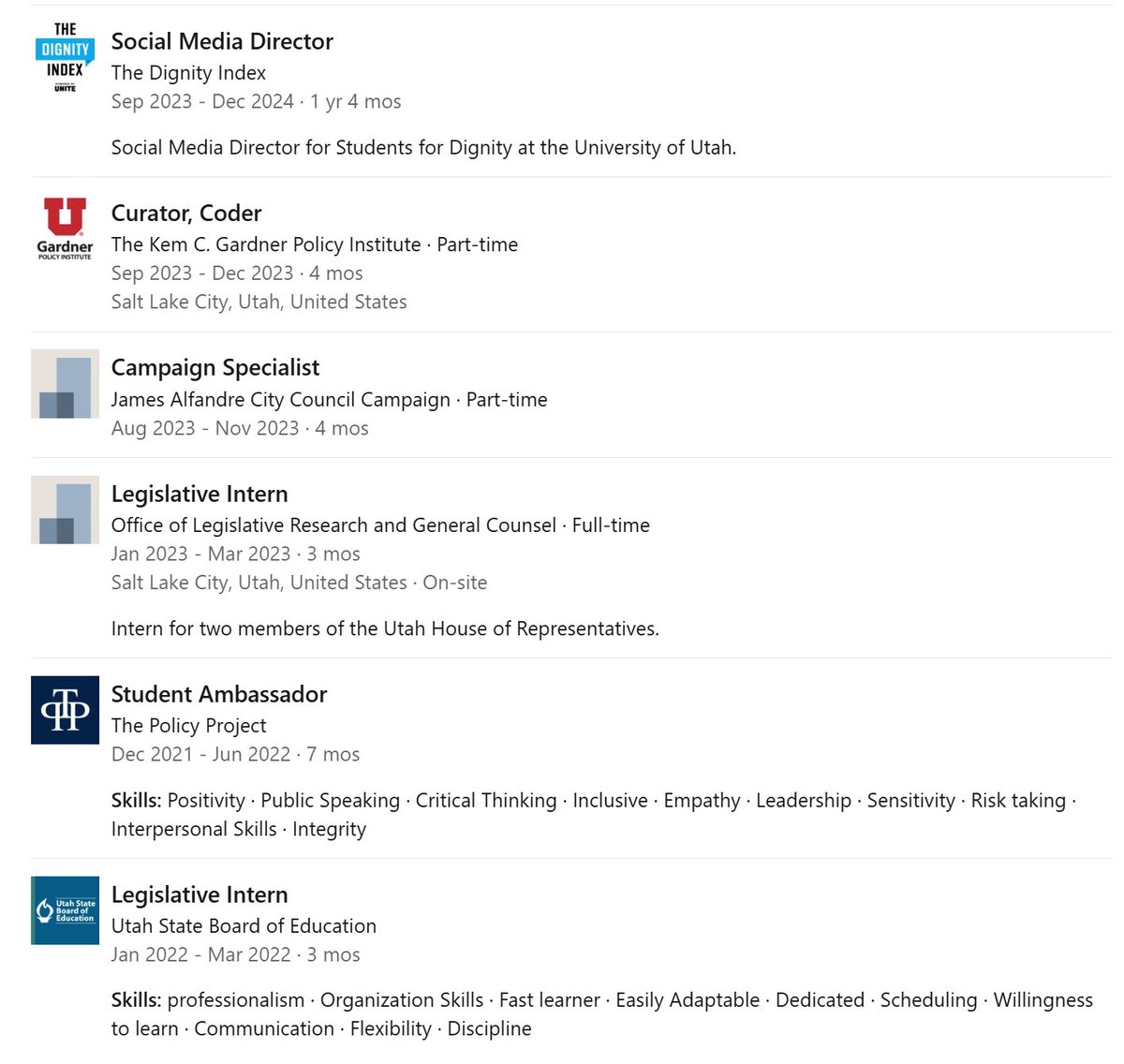
Like Helen, Katie did advocacy work with the Policy Project as a student ambassador in the lead up to the passage of the free tampons in schools bill and worked as the Social Media Director for Dignity Index, in addition to her time as a coder with them.
Katie interned with the Utah State Board of Education and the Utah House of Representatives. She is currently interning in DC at the National Head Start Association, an organization that promotes early childhood education.
Her LinkedIn bio says that she is passionate about advancing equity and dignity through public service.
Like Helen, Katie did advocacy work with the Policy Project as a student ambassador in the lead up to the passage of the free tampons in schools bill and worked as the Social Media Director for Dignity Index, in addition to her time as a coder with them.
#11 Darbee Hagerty
Darbee teaches social theory and race and gender at Westminster College and Gender & Sexuality & Social Inequality classes at University of Utah. Her classes are a "safe zone and a brave space."
She continues to assist the Dignity Index with their projects.
Darbee teaches social theory and race and gender at Westminster College and Gender & Sexuality & Social Inequality classes at University of Utah. Her classes are a "safe zone and a brave space."
She continues to assist the Dignity Index with their projects.


#12 Maddie Hair
Maddie interned with the Utah House of Representatives and the Governor's Office of Planning and Budget. She also interned at a political consulting company. Up until recently, she worked social media and as program associate for Dignity Index. She was a founding member and the first President of Students for Dignity at U of U. Maddie now works in DC at ACB Ideas, a company furthering the ideas of Arthur Brooks, who wrote the book on saving America from the culture of contempt. Maddie's future ambitions include a career either at a political think tank or in university administration.
Last year, Maddie attended the Braver Angels conference with Brookings fellow Jonathan Rauch. She also went to the National Governor's Association summer meeting, which Governor Cox chairs, and met Governor Stitt (OK) who is a big supporter of Dignity Index and Cox's Disagree Better initiative.
Maddie helped as both a first-round project coder and on AI project 2.0.
Maddie interned with the Utah House of Representatives and the Governor's Office of Planning and Budget. She also interned at a political consulting company. Up until recently, she worked social media and as program associate for Dignity Index. She was a founding member and the first President of Students for Dignity at U of U. Maddie now works in DC at ACB Ideas, a company furthering the ideas of Arthur Brooks, who wrote the book on saving America from the culture of contempt. Maddie's future ambitions include a career either at a political think tank or in university administration.
Last year, Maddie attended the Braver Angels conference with Brookings fellow Jonathan Rauch. She also went to the National Governor's Association summer meeting, which Governor Cox chairs, and met Governor Stitt (OK) who is a big supporter of Dignity Index and Cox's Disagree Better initiative.
Maddie helped as both a first-round project coder and on AI project 2.0.

#13 Susie Estrada
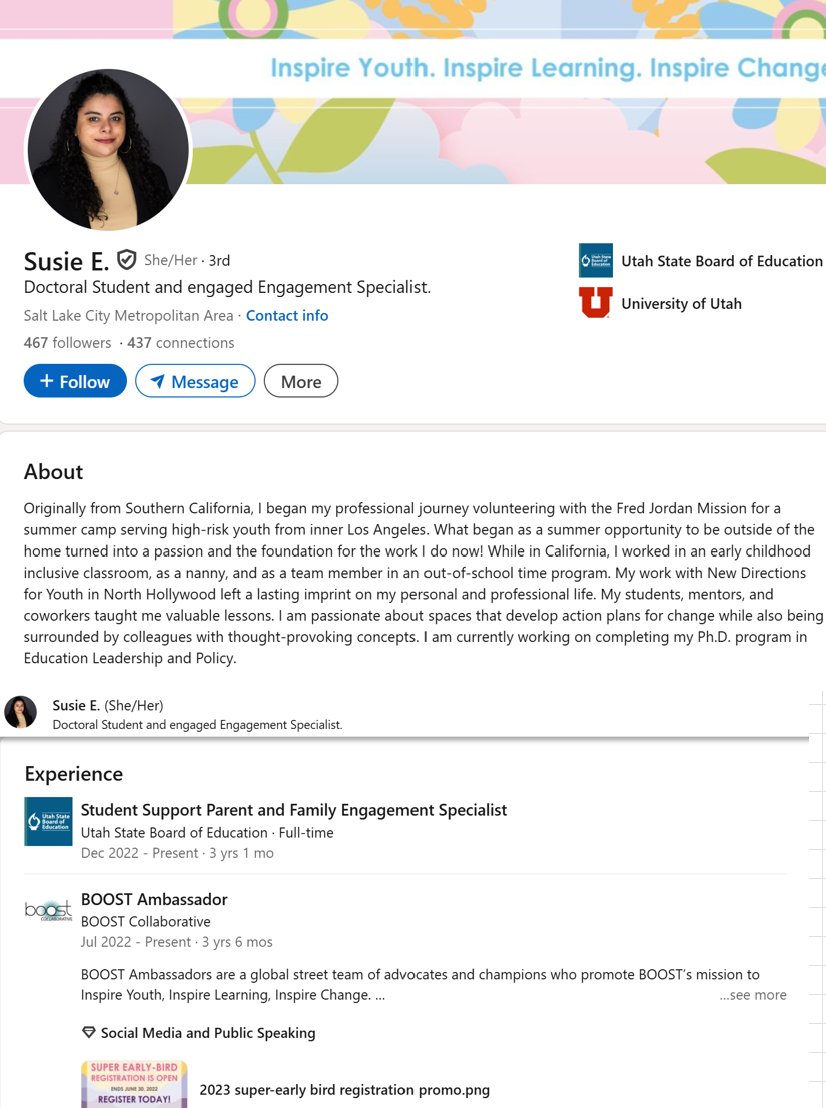
Susie (she/her) is currently employed by the Utah State Board of Education and works as an ambassador for Boost Collaborative. Boost Collaborative's pet project, @MARS4GOOD, is loaded with anti-Trump, anti-Republican sentiments, including a cartoon of "little Trump supporters" depicted as Nazis and KKK members.
Susie also boasts an Equitable & Inclusive Teaching Practices course at Salt Lake Community College.
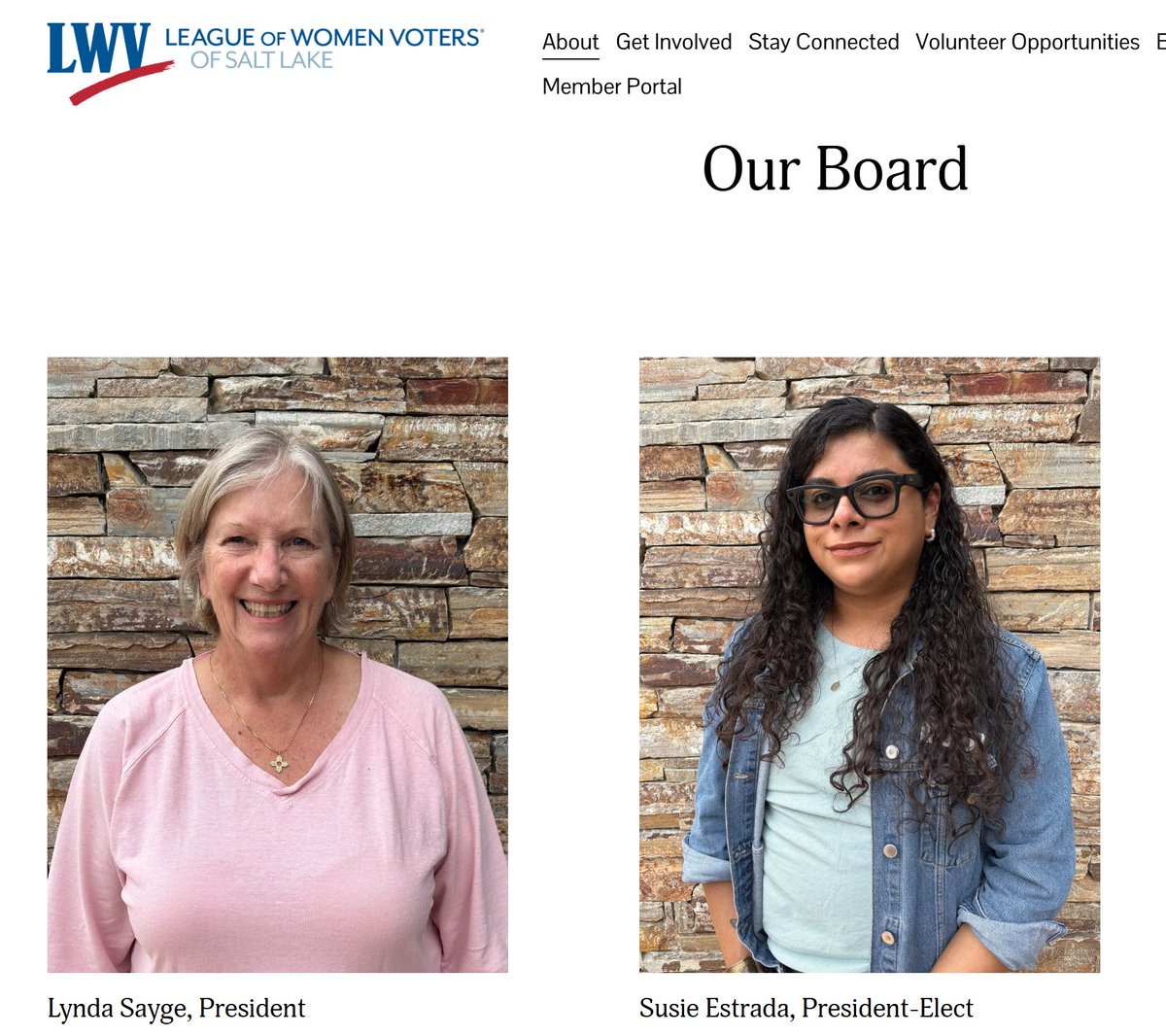
But the pièce de résistance is that Susie is the current president-elect for League of Women Voters-Salt Lake.
Susie (she/her) is currently employed by the Utah State Board of Education and works as an ambassador for Boost Collaborative. Boost Collaborative's pet project, @MARS4GOOD, is loaded with anti-Trump, anti-Republican sentiments, including a cartoon of "little Trump supporters" depicted as Nazis and KKK members.
Susie also boasts an Equitable & Inclusive Teaching Practices course at Salt Lake Community College.
But the pièce de résistance is that Susie is the current president-elect for League of Women Voters-Salt Lake.


#14 David Witt
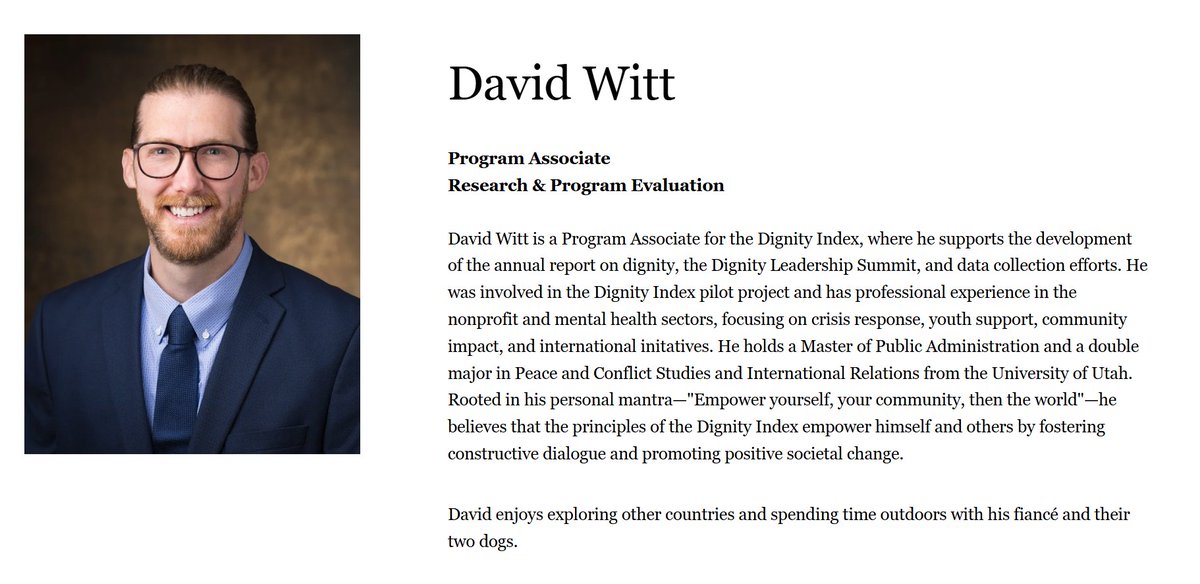
David moved on from his time as a student coder with Dignity Index to full-time employment with them as a Program Associate.
Prior to his current role, David spent a good chunk of time with Utah Global Diplomacy. That seedy NGO has been covered at length by @SKDoubleDub33. See below and search her posts for more on them.
x.com/skdoubledub33/…
David moved on from his time as a student coder with Dignity Index to full-time employment with them as a Program Associate.
Prior to his current role, David spent a good chunk of time with Utah Global Diplomacy. That seedy NGO has been covered at length by @SKDoubleDub33. See below and search her posts for more on them.
x.com/skdoubledub33/…
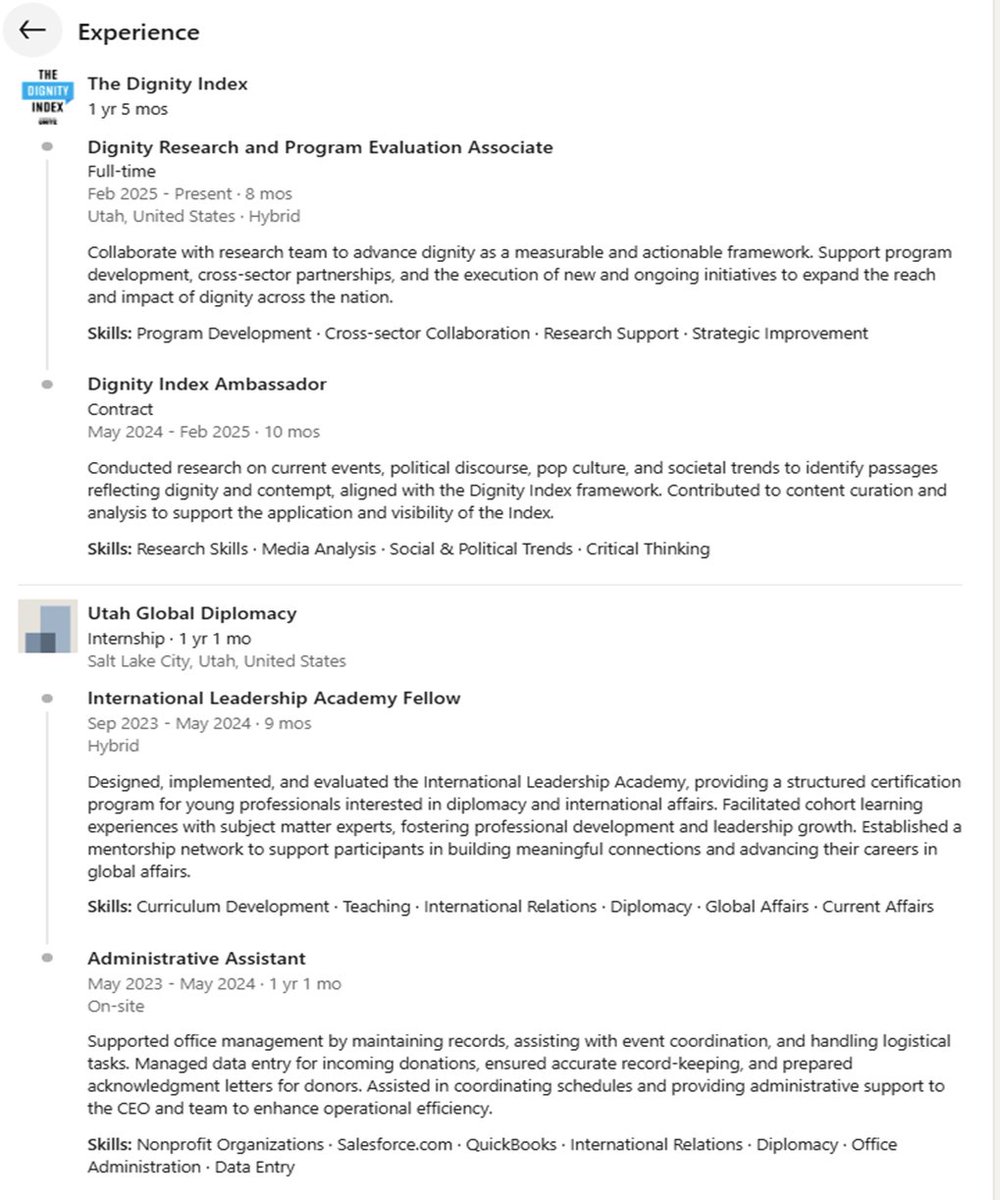
#15 Angie Zheng
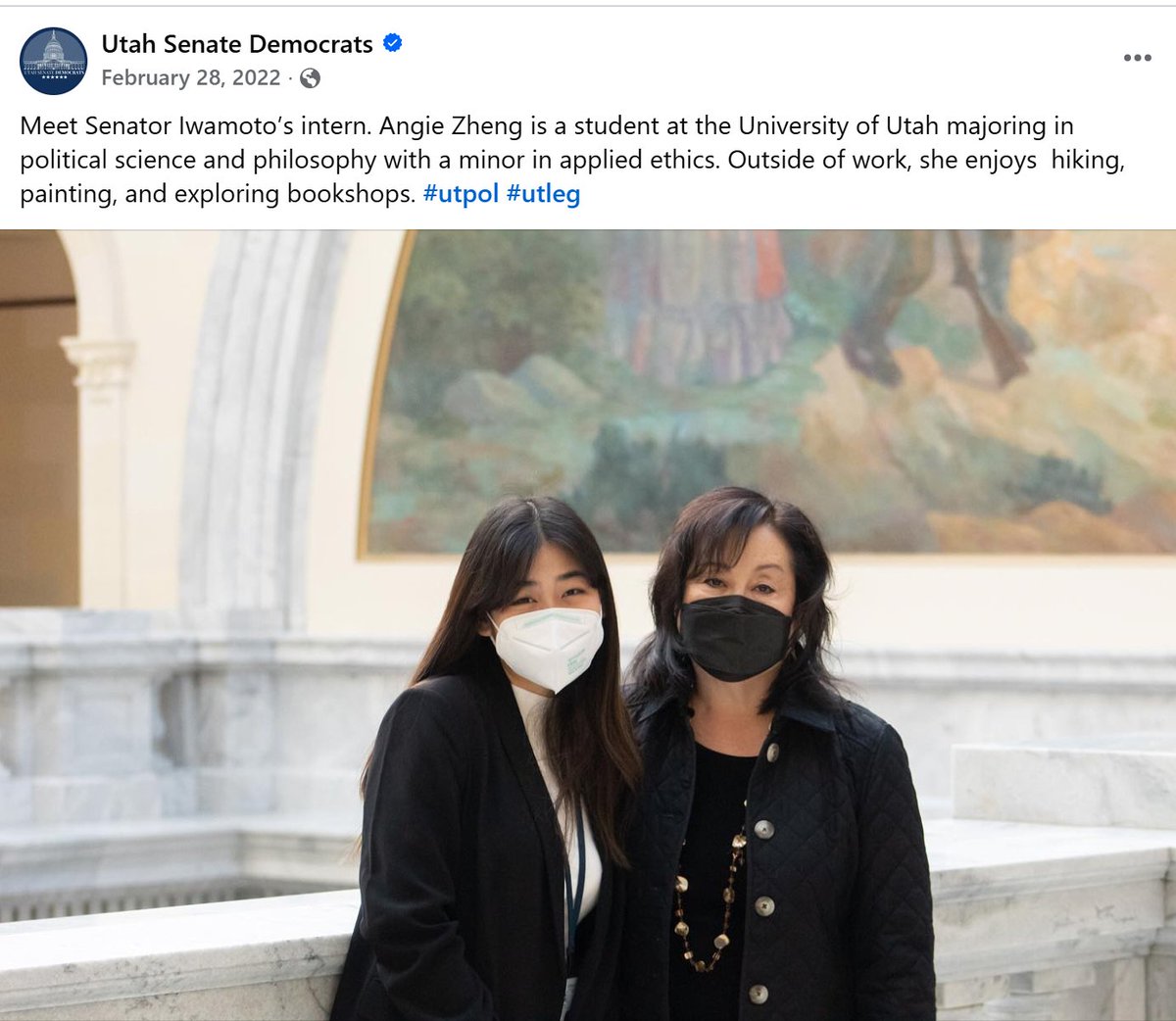
Angie interned at both the Utah Commission on Criminal and Juvenile Justice and the Utah Senate.
Angie worked with Dignity Index in Round 2, helping to build out their AI program at, drum roll please...UC Berkeley, home of Angela Glover Blackwell, John Powell, and violent campus protests.
It is only fitting then that Angie has a self-professed interest in critical theory.
Angie interned at both the Utah Commission on Criminal and Juvenile Justice and the Utah Senate.
Angie worked with Dignity Index in Round 2, helping to build out their AI program at, drum roll please...UC Berkeley, home of Angela Glover Blackwell, John Powell, and violent campus protests.
It is only fitting then that Angie has a self-professed interest in critical theory.

It's worth mentioning that The Dignity Index's Pilot Advisory Board includes the following U of U affiliated educators:
🔹DR. KARA BYRNE, Senior Research Associate, University of Utah
🔹DR. MORGAN LYON COTTI, Associate Director, The Hinckley Institute of Politics, University of Utah
🔹DR. NATALIE GOCHNOUR, Associate Dean, The David Eccles School of Business; Director, the Kem C. Gardner Policy Institute, University of Utah
🔹DR. JESSE GRAHAM, George S. Eccles Chair in Business Ethics and Professor of Management, Eccles School of Business, University of Utah
🔹DIANNE MEPPEN, Director of Survey Research, University of Utah
🔹JASON PERRY, Director, The Hinckley Institute of Politics; Vice President for Government Relations, University of Utah
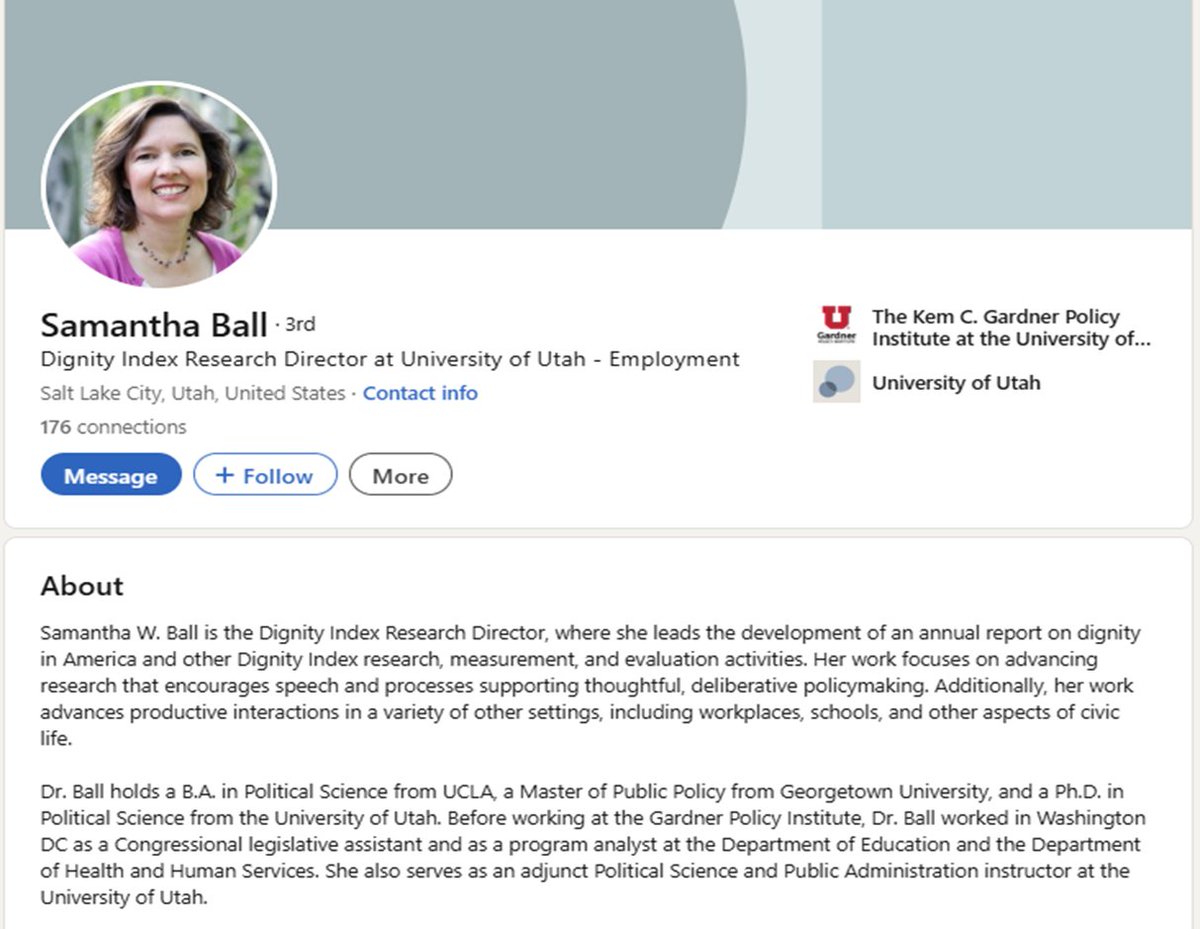
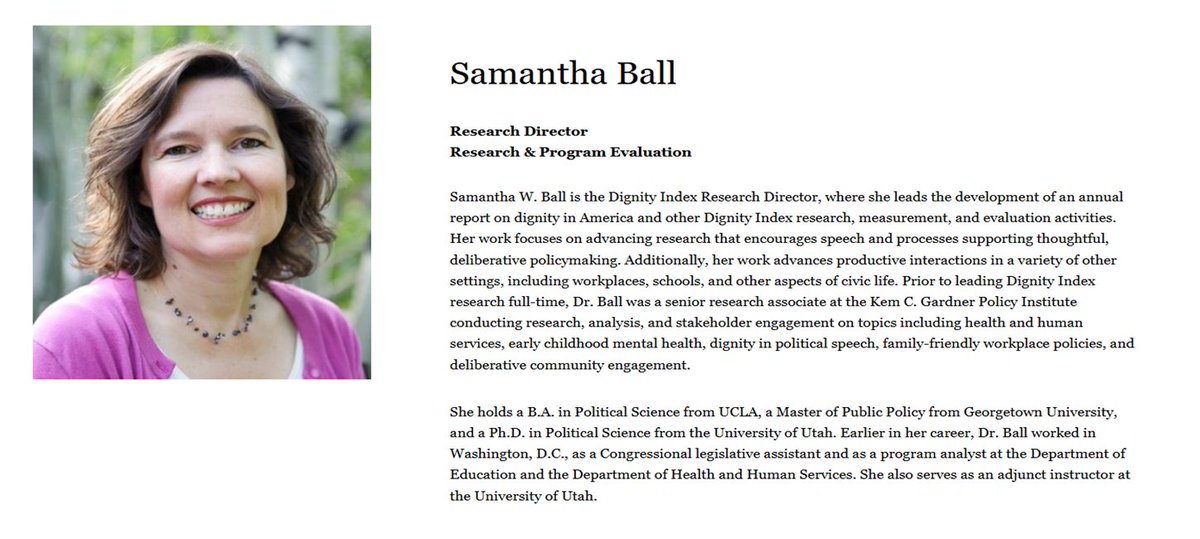
Additionally, Samantha Ball, Senior Research Associate at the University of Utah is also employed with Dignity Index as their Research Director, having worked for both the US Department of Education and Department of Health and Human Services in DC previously.
These educators housed and supported the Dignity Index and Gov. Cox's Disagree Better initiative on campus, hand selecting a certain type of student candidates to partake in the project.
🔹DR. KARA BYRNE, Senior Research Associate, University of Utah
🔹DR. MORGAN LYON COTTI, Associate Director, The Hinckley Institute of Politics, University of Utah
🔹DR. NATALIE GOCHNOUR, Associate Dean, The David Eccles School of Business; Director, the Kem C. Gardner Policy Institute, University of Utah
🔹DR. JESSE GRAHAM, George S. Eccles Chair in Business Ethics and Professor of Management, Eccles School of Business, University of Utah
🔹DIANNE MEPPEN, Director of Survey Research, University of Utah
🔹JASON PERRY, Director, The Hinckley Institute of Politics; Vice President for Government Relations, University of Utah
Additionally, Samantha Ball, Senior Research Associate at the University of Utah is also employed with Dignity Index as their Research Director, having worked for both the US Department of Education and Department of Health and Human Services in DC previously.
These educators housed and supported the Dignity Index and Gov. Cox's Disagree Better initiative on campus, hand selecting a certain type of student candidates to partake in the project.

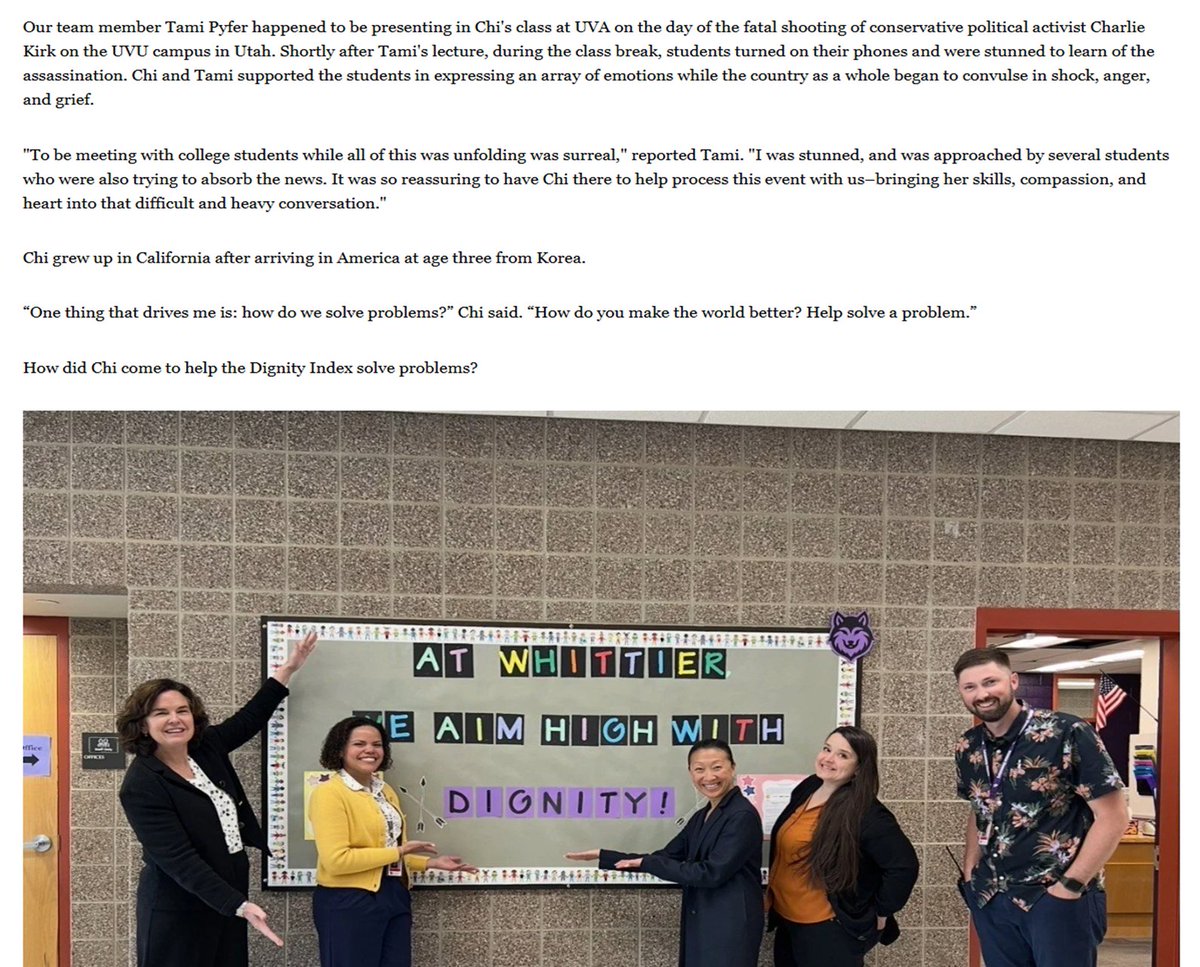
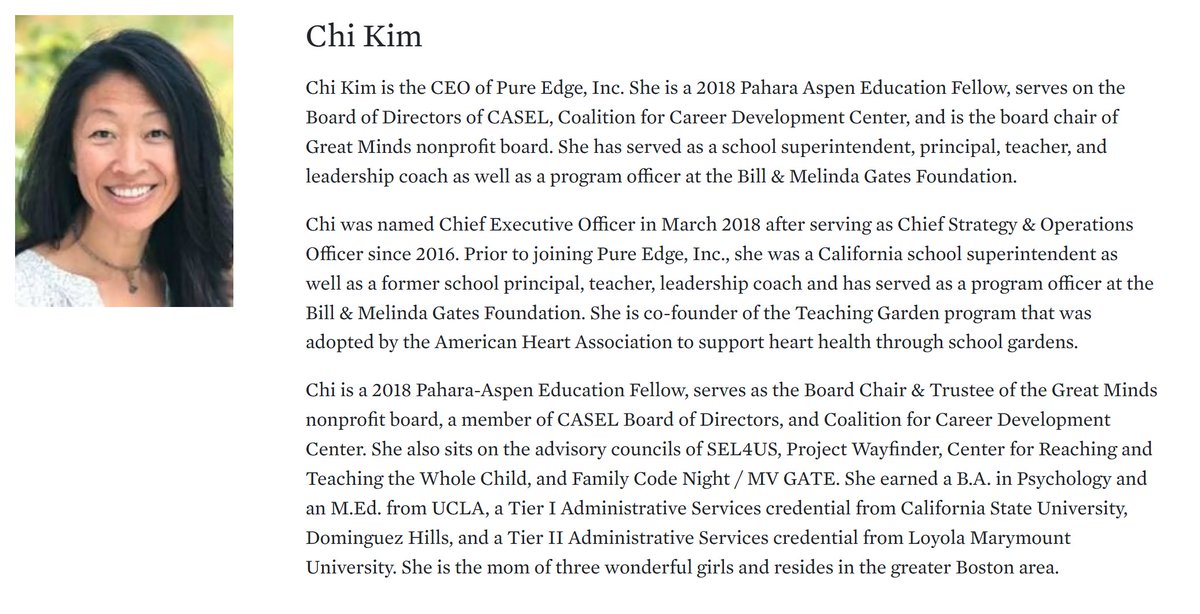
Of course, I'd be remiss not to mention Chi Kim--CASEL & FairVote board member, COVID Collaborative National Advisory Council member, University of Virginia professor, and Ibis Group chair. See below thread that covers some of these groups in depth.
Oh, and what a crazy coincidence that fellow Dignity Index team member, Tami Pyfer, happened to be with Chi Kim when Charlie Kirk was shot.
You'll be seeing more of Chi in the near future in relation to her role in the network of networks.
Don't worry Timmy, we got the rest of them, but I think everyone here has a pretty clear picture. You may like to pretend like you don't know what a color revolution is, but if the shoe fits...👞😉
x.com/woodshed2012/s…
Oh, and what a crazy coincidence that fellow Dignity Index team member, Tami Pyfer, happened to be with Chi Kim when Charlie Kirk was shot.
You'll be seeing more of Chi in the near future in relation to her role in the network of networks.
Don't worry Timmy, we got the rest of them, but I think everyone here has a pretty clear picture. You may like to pretend like you don't know what a color revolution is, but if the shoe fits...👞😉
x.com/woodshed2012/s…
• • •
Missing some Tweet in this thread? You can try to
force a refresh






