
The Hepatitis B vaccine is mandated for children to attend public schools in 46 states.
Hepatitis B is transmitted via needles or sexual contact, yet this vaccine is pushed on babies on their first day of life.
Why?
We finally have some answers.
Here’s the real reason every newborn is forced to get it—and why that could finally be changing. 🧵
Hepatitis B is transmitted via needles or sexual contact, yet this vaccine is pushed on babies on their first day of life.
Why?
We finally have some answers.
Here’s the real reason every newborn is forced to get it—and why that could finally be changing. 🧵
For decades, @MidwesternDoc has tried to answer the question:
Why do we inject a vaccine meant for adult risk groups into every newborn?
The truth reveals a story of shaky science, ignored safety signals, and hidden agendas.
midwesterndoctor.com/p/why-is-every…
Why do we inject a vaccine meant for adult risk groups into every newborn?
The truth reveals a story of shaky science, ignored safety signals, and hidden agendas.
midwesterndoctor.com/p/why-is-every…
@MidwesternDoc The debate isn’t new. The hepatitis B vaccine has been hotly debated for years.
But the debate is getting a little more, shall we say, weird.
Check out this clip from @HighWireTalk featuring none other than Dr. Demetre Daskalakis.
But the debate is getting a little more, shall we say, weird.
Check out this clip from @HighWireTalk featuring none other than Dr. Demetre Daskalakis.
Just weeks ago, former CDC director Susan Monarez seemed unable to explain why we vaccinate newborns for hepatitis B.
The hepatitis B virus is, after all, a bloodborne pathogen with transmission typically occurring through unprotected sex, blood exchanges like shared needles, and mother-to-child transmission during childbirth.
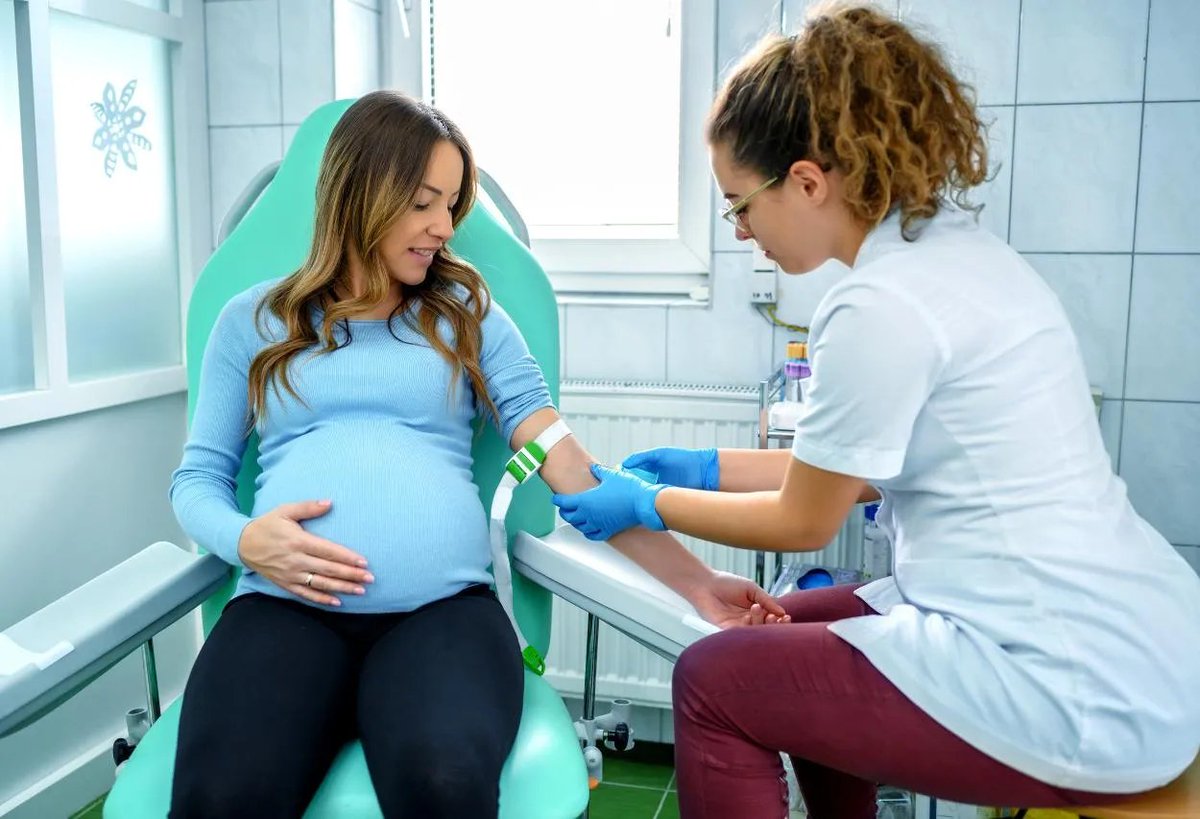
Only one of these risk factors is relevant to a newborn, but expectant mothers are typically screened for hepatitis B during their prenatal care anyway.
So why exactly do we give it to newborns? Does anyone know? Are we protecting them for a lifetime of unprotected sex and drugs? Does any protective effect from the vaccine even last that long?
The hepatitis B virus is, after all, a bloodborne pathogen with transmission typically occurring through unprotected sex, blood exchanges like shared needles, and mother-to-child transmission during childbirth.
Only one of these risk factors is relevant to a newborn, but expectant mothers are typically screened for hepatitis B during their prenatal care anyway.
So why exactly do we give it to newborns? Does anyone know? Are we protecting them for a lifetime of unprotected sex and drugs? Does any protective effect from the vaccine even last that long?
The many concerns surrounding giving the hepatitis B vaccine to newborns are not unfounded. The concern is not simply a matter of being anti-vax. And concern about this vaccine certainly isn’t anti-science.
Let’s take a look at the science.
The vaccine was first introduced in the 1980s. And early warnings came fast.
Respected vaccine researcher Bohn Dunbar exposed the pattern of autoimmune complications after her own brother was injured by the hepatitis vaccine in 1994.
A 1998 article in the journal Science highlighted the growing concerns surrounding the vaccine, including the fact that attorneys representing more than 15,000 people sued France’s government for downplaying the risks and exaggerating its benefits.
France then suspended hepatitis B vaccination in schools.
Let’s take a look at the science.
The vaccine was first introduced in the 1980s. And early warnings came fast.
Respected vaccine researcher Bohn Dunbar exposed the pattern of autoimmune complications after her own brother was injured by the hepatitis vaccine in 1994.
A 1998 article in the journal Science highlighted the growing concerns surrounding the vaccine, including the fact that attorneys representing more than 15,000 people sued France’s government for downplaying the risks and exaggerating its benefits.
France then suspended hepatitis B vaccination in schools.
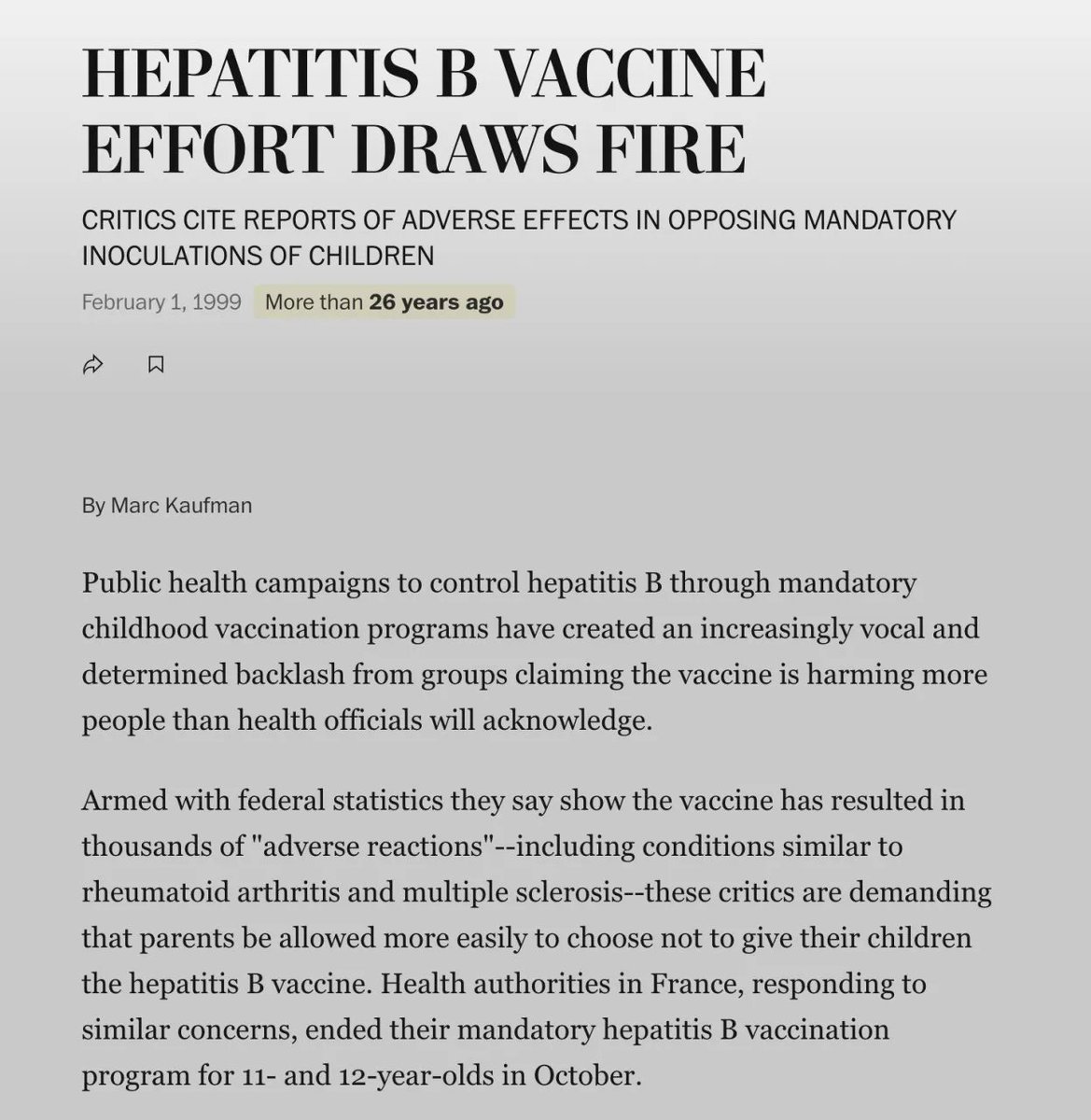
A 1999 Congressional hearing laid it out:
• Numerous severe adverse reactions including death, seizures, autism, dysautonomia, MS, rheumatoid arthritis, diabetes, and liver cancer.
• Adverse reaction reports were ignored or dismissed, and short trial durations missed delayed reactions.
• Parents were not informed of the risks, newborns were vaccinated without parental consent, and parents were threatened with intervention from social services.
• Vaccinating low-risk newborns for an adult-associated disease is just plain inappropriate.
• The National Vaccine Injury Compensation Program was denying most claims.
That same year, fewer than 100 U.S. children under age 2 got hepatitis B.
The math doesn’t add up. It never has.
• Numerous severe adverse reactions including death, seizures, autism, dysautonomia, MS, rheumatoid arthritis, diabetes, and liver cancer.
• Adverse reaction reports were ignored or dismissed, and short trial durations missed delayed reactions.
• Parents were not informed of the risks, newborns were vaccinated without parental consent, and parents were threatened with intervention from social services.
• Vaccinating low-risk newborns for an adult-associated disease is just plain inappropriate.
• The National Vaccine Injury Compensation Program was denying most claims.
That same year, fewer than 100 U.S. children under age 2 got hepatitis B.
The math doesn’t add up. It never has.

@MidwesternDoc @HighWireTalk Also in 1999, back when it was actually possible to find a little truth about Big Pharma on TV, ABC News aired an entire program addressing the hepatitis B vaccine.
They even included vaccine-injured patients and parents of severely injured children.
They even included vaccine-injured patients and parents of severely injured children.
@MidwesternDoc @HighWireTalk The untold history of the hepatitis B vaccine is jaw-dropping.
From contaminated trials to secret CDC rationales—it’s all here in @MidwesternDoc's full report:
midwesterndoctor.com/p/why-is-every…
From contaminated trials to secret CDC rationales—it’s all here in @MidwesternDoc's full report:
midwesterndoctor.com/p/why-is-every…
The science is and has been stacked against this vaccine.
Studies showed hepatitis B vaccination increased the risk of MS, lupus, arthritis, and other autoimmune conditions.
In France, cases of MS spiked 65% after a national campaign. A CDC dataset showed a 12X higher autism risk when given in the first 30 days of life!
Studies showed hepatitis B vaccination increased the risk of MS, lupus, arthritis, and other autoimmune conditions.
In France, cases of MS spiked 65% after a national campaign. A CDC dataset showed a 12X higher autism risk when given in the first 30 days of life!

Why does the hepatitis B vaccine cause so much damage?
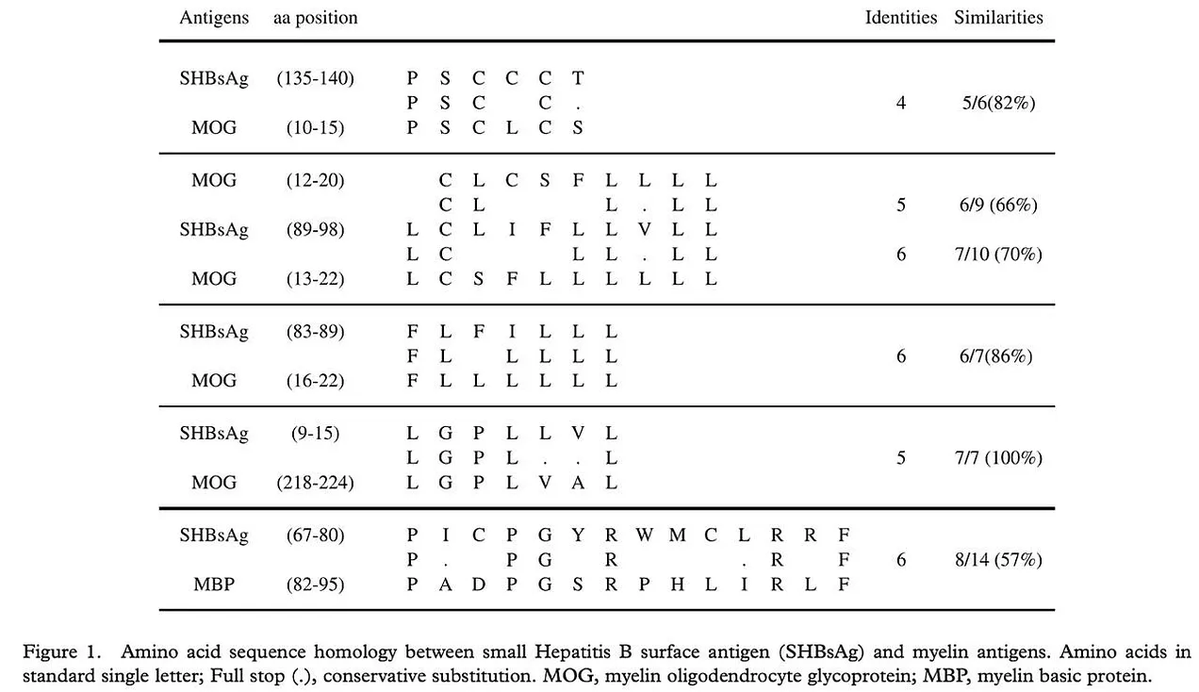
Autoimmune conditions caused by the vaccine are likely due to its antigen having a significant overlap with human myelin.
The molecular mimicry of the vaccine was denied because it couldn’t be proven.
A 1994 Institute of Medicine (IOM) report noted that, although preliminary data existed for many of the reactions attributed to the hepatitis B vaccine, no further research had been conducted.
Wow, thanks IOM.
Autoimmune conditions caused by the vaccine are likely due to its antigen having a significant overlap with human myelin.
The molecular mimicry of the vaccine was denied because it couldn’t be proven.
A 1994 Institute of Medicine (IOM) report noted that, although preliminary data existed for many of the reactions attributed to the hepatitis B vaccine, no further research had been conducted.
Wow, thanks IOM.
@MidwesternDoc @HighWireTalk The trials were a joke.
They monitored “side effects” for a mere 4–5 days. And the placebos they used? No, not saline—they were other vaccines or even aluminum adjuvants!
Are you kidding me??
Serious reactions—sometimes fatal—were reclassified as SIDS or coincidence.
They monitored “side effects” for a mere 4–5 days. And the placebos they used? No, not saline—they were other vaccines or even aluminum adjuvants!
Are you kidding me??
Serious reactions—sometimes fatal—were reclassified as SIDS or coincidence.
If transmission is typically due to adult risk factors, why not give it only to adults at risk? Healthcare workers, IV drug users, and gay men with multiple partners…
Studies have shown that it can dramatically reduce cases in these groups.
Why infants? There is virtually no risk, and immunity does, in fact, wane.
So what is the point?
Studies have shown that it can dramatically reduce cases in these groups.
Why infants? There is virtually no risk, and immunity does, in fact, wane.
So what is the point?
The CDC’s main argument is prevention of mother-to-child transmission.
But nearly all U.S. expectant mothers are screened for hepatitis B during pregnancy. And infection rates are under 0.5%!
By the numbers, millions of babies must be vaccinated to prevent a single severe outcome.
And that’s not an exaggeration.
And if mom’s status is unknown, it’s actually mandated in many states to screen newborns for hepatitis B anyway.
But nearly all U.S. expectant mothers are screened for hepatitis B during pregnancy. And infection rates are under 0.5%!
By the numbers, millions of babies must be vaccinated to prevent a single severe outcome.
And that’s not an exaggeration.
And if mom’s status is unknown, it’s actually mandated in many states to screen newborns for hepatitis B anyway.
So why the universal newborn mandate?
A former ACIP insider revealed the dark truth:
It’s not about maternal transmission. It’s about capturing a “captive audience” in the hospital—before at-risk youth slip through the cracks later in life.
So, because the CDC was failing to reach inner-city teens, they decided to vaccinate every baby in America.
It was never, ever medically justified—it was bureaucratic convenience disguised as science.
Let that sink in.
A former ACIP insider revealed the dark truth:
It’s not about maternal transmission. It’s about capturing a “captive audience” in the hospital—before at-risk youth slip through the cracks later in life.
So, because the CDC was failing to reach inner-city teens, they decided to vaccinate every baby in America.
It was never, ever medically justified—it was bureaucratic convenience disguised as science.
Let that sink in.

@MidwesternDoc @HighWireTalk The hepatitis B vaccine’s dark history will leave you speechless.
Were you vaccinated for hep B? What about your children?
@MidwesternDoc's full report is a must-read.
midwesterndoctor.com/p/why-is-every…
Were you vaccinated for hep B? What about your children?
@MidwesternDoc's full report is a must-read.
midwesterndoctor.com/p/why-is-every…
The history is disturbing.
The first hepatitis B vaccines were plasma-derived—actually using infected human blood. It even involved chimpanzee-human blood exchanges.
This was during the early AIDS crisis in New York, San Francisco, and LA. Remember: HIV is considered to have come from a chimpanzee virus. Sounds risky.
Merck then rushed out the first recombinant GMO vaccine in 1986.
The first hepatitis B vaccines were plasma-derived—actually using infected human blood. It even involved chimpanzee-human blood exchanges.
This was during the early AIDS crisis in New York, San Francisco, and LA. Remember: HIV is considered to have come from a chimpanzee virus. Sounds risky.
Merck then rushed out the first recombinant GMO vaccine in 1986.
From the start, the hepatitis B vaccine was expensive—about $145 for three doses compared to $2 for other vaccines.
Uptake was low among the high-risk groups it was meant for.
So regulators shifted strategy: add it to the childhood schedule, where government funding guaranteed sales.
Uptake was low among the high-risk groups it was meant for.
So regulators shifted strategy: add it to the childhood schedule, where government funding guaranteed sales.

By 1991, ACIP mandated hepatitis B vaccination for all newborns. By 1999, it expanded to all children and adolescents.
Parents objected. Pediatricians resisted. Even gay activists called it a failure of public health outreach.
But the CDC pressed forward—insisting it was “safe and effective” for day old newborn babies, despite what the science said.
Parents objected. Pediatricians resisted. Even gay activists called it a failure of public health outreach.
But the CDC pressed forward—insisting it was “safe and effective” for day old newborn babies, despite what the science said.
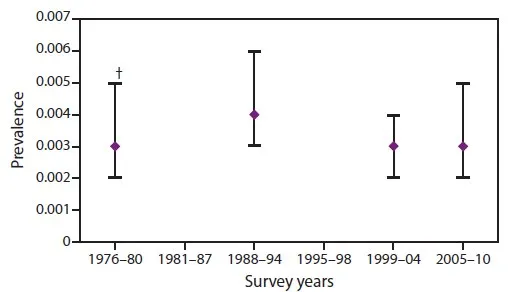
Decades later, the outcome couldn’t be more clear.
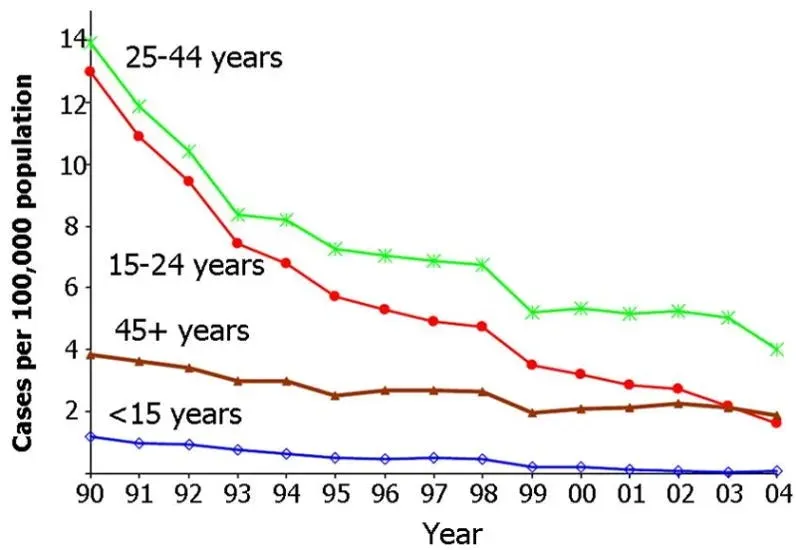
Acute hepatitis B cases declined—but chronic hepatitis B rates never budged.
The very condition the program was supposed to eliminate hasn’t even changed since 1976.
Severe injuries from the vaccine, however, skyrocketed.
So was it worth it?
Acute hepatitis B cases declined—but chronic hepatitis B rates never budged.
The very condition the program was supposed to eliminate hasn’t even changed since 1976.
Severe injuries from the vaccine, however, skyrocketed.
So was it worth it?
@MidwesternDoc @HighWireTalk For the first time in decades, the ACIP is actually doing its job and reconsidering the hepatitis B newborn mandate.
This is our chance to demand change.
midwesterndoctor.com/p/why-is-every…
This is our chance to demand change.
midwesterndoctor.com/p/why-is-every…
This isn’t just about one vaccine.
It’s about how “safe and effective” became a slogan.
How risk-benefit ratios were buried.
How the human cost was swept aside.
And how bureaucrats forced a medical intervention on every newborn infant—not for health, but for control and profit.
It’s about how “safe and effective” became a slogan.
How risk-benefit ratios were buried.
How the human cost was swept aside.
And how bureaucrats forced a medical intervention on every newborn infant—not for health, but for control and profit.

@MidwesternDoc @HighWireTalk The hepatitis B saga is a warning.
When government health policy is driven by politics and profit instead of evidence, children always become collateral damage.
For decades, parents were never told the truth. Now, the cracks are showing.
When government health policy is driven by politics and profit instead of evidence, children always become collateral damage.
For decades, parents were never told the truth. Now, the cracks are showing.

This is a once-in-a-lifetime chance to correct the terrible course we’ve been on.
If you care about medical freedom, informed consent, and protecting children, now is the time to act.
Read the full report. Spread the word. Contact your Senators. Watch the ACIP hearings.
This could be the turning point.
For 30 years, America’s newborns were sacrificed to a policy that never made sense.
Will the ACIP finally end it?
If you care about medical freedom, informed consent, and protecting children, now is the time to act.
Read the full report. Spread the word. Contact your Senators. Watch the ACIP hearings.
This could be the turning point.
For 30 years, America’s newborns were sacrificed to a policy that never made sense.
Will the ACIP finally end it?

@MidwesternDoc @HighWireTalk Thanks for reading! This information was based on a report originally published by @MidwesternDoc.
Key details were streamlined and editorialized for clarity and impact. Read the original report here.
midwesterndoctor.com/p/why-is-every…
Key details were streamlined and editorialized for clarity and impact. Read the original report here.
midwesterndoctor.com/p/why-is-every…
@MidwesternDoc @HighWireTalk For a deeper dive into what modern medicine has overlooked—or intentionally buried—check out these other eye-opening reports by @MidwesternDoc:
What We’ve Learned from a Year of Vaccine Shedding Data
midwesterndoctor.com/p/what-weve-le…
What We’ve Learned from a Year of Vaccine Shedding Data
midwesterndoctor.com/p/what-weve-le…
@MidwesternDoc @HighWireTalk What They Don’t Tell You About C-Sections
midwesterndoctor.com/p/what-the-don…
midwesterndoctor.com/p/what-the-don…
@MidwesternDoc @HighWireTalk What’s The Healthiest Water To Drink?
midwesterndoctor.com/p/whats-the-he…
midwesterndoctor.com/p/whats-the-he…
@MidwesternDoc @HighWireTalk While you’re at it, give @MidwesternDoc a follow.
No one brings more research, clinical insight, or historical context when it comes to exposing the health myths we’ve all been fed.
This is easily one of the most valuable accounts you’ll ever follow.
--> @MidwesternDoc
No one brings more research, clinical insight, or historical context when it comes to exposing the health myths we’ve all been fed.
This is easily one of the most valuable accounts you’ll ever follow.
--> @MidwesternDoc
• • •
Missing some Tweet in this thread? You can try to
force a refresh






