Although man only was created on the sixth day, as resurrected one he was already present on the first, because of which the first day was called "yom echad" = day one
sefaria.org/Genesis.1.5?ve…
sefaria.org/Genesis.1.5?ve…
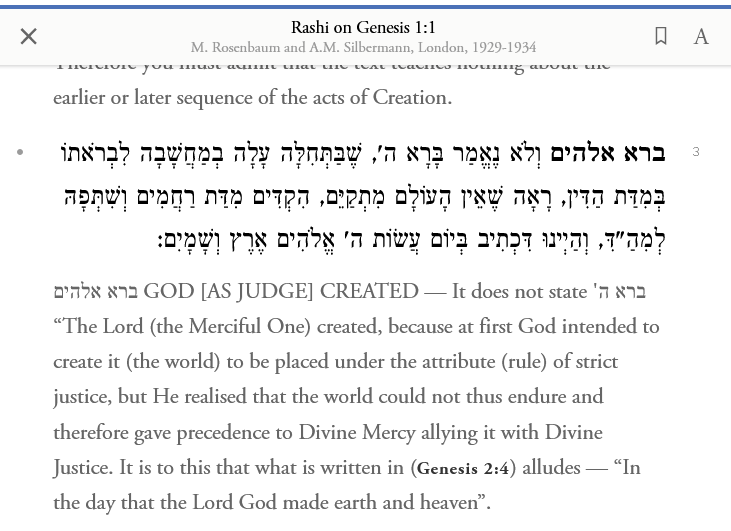
Rashi:
Why does it write אחד “one”? Because the holy one, blessed be he, was only one (יָחִיד "yachid") in his world, since the angels were not created until the second day.
sefaria.org/Rashi_on_Genes…
Why does it write אחד “one”? Because the holy one, blessed be he, was only one (יָחִיד "yachid") in his world, since the angels were not created until the second day.
sefaria.org/Rashi_on_Genes…
"yom echad" to be understood as "yom hayachid" = day of the only one
https://x.com/Minkmaat/status/1513049626517069826
John 1:14
καὶ ἐθεασάμεθα τὴν δόξαν αὐτοῦ, δόξαν ὡς μονογενοῦς παρὰ πατρός, πλήρης χάριτος καὶ ἀληθείας

καὶ ἐθεασάμεθα τὴν δόξαν αὐτοῦ, δόξαν ὡς μονογενοῦς παρὰ πατρός, πλήρης χάριτος καὶ ἀληθείας
https://x.com/Minkmaat/status/1739245663601209591

truth = "emet" = 441
153 is the odd part of "emet" (1 +27 + 125)
288 the even part (8 + 64 + 216)
x.com/search?q=153%2…
153 is the odd part of "emet" (1 +27 + 125)
288 the even part (8 + 64 + 216)
x.com/search?q=153%2…
@threadreaderapp unroll
• • •
Missing some Tweet in this thread? You can try to
force a refresh