In the topsy-turvy world of CA Density Bonus Law:
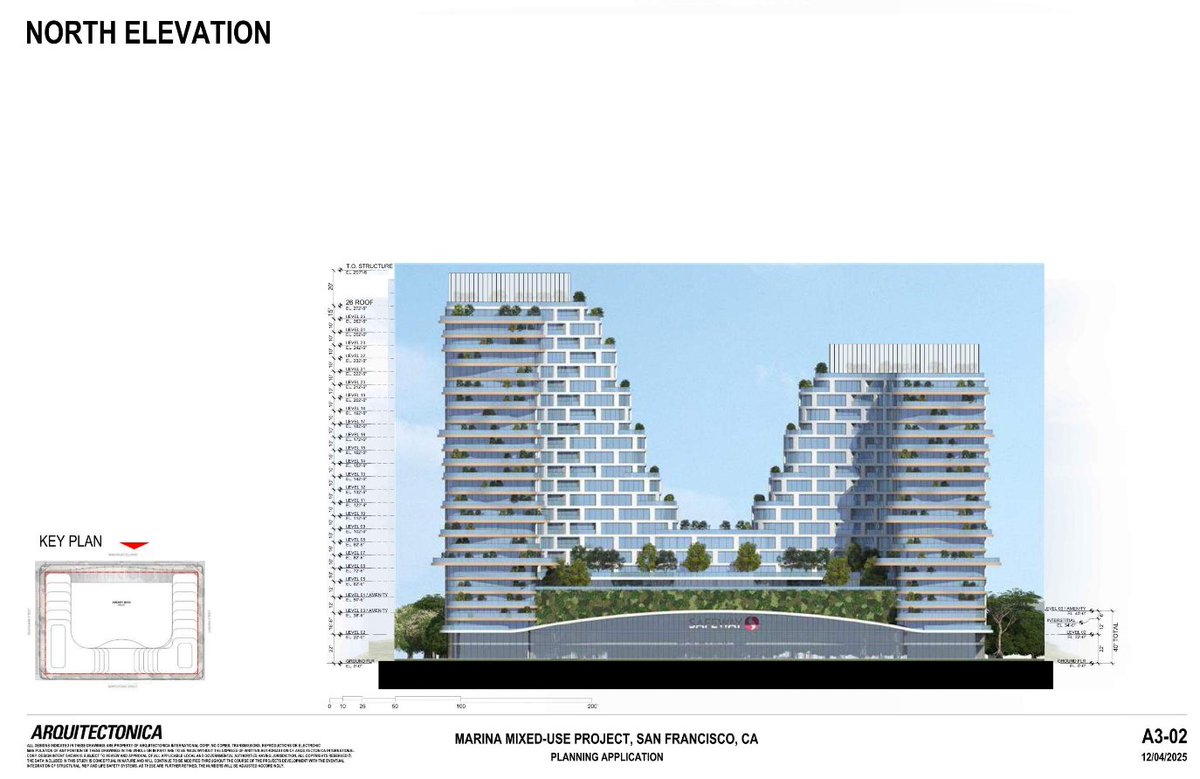
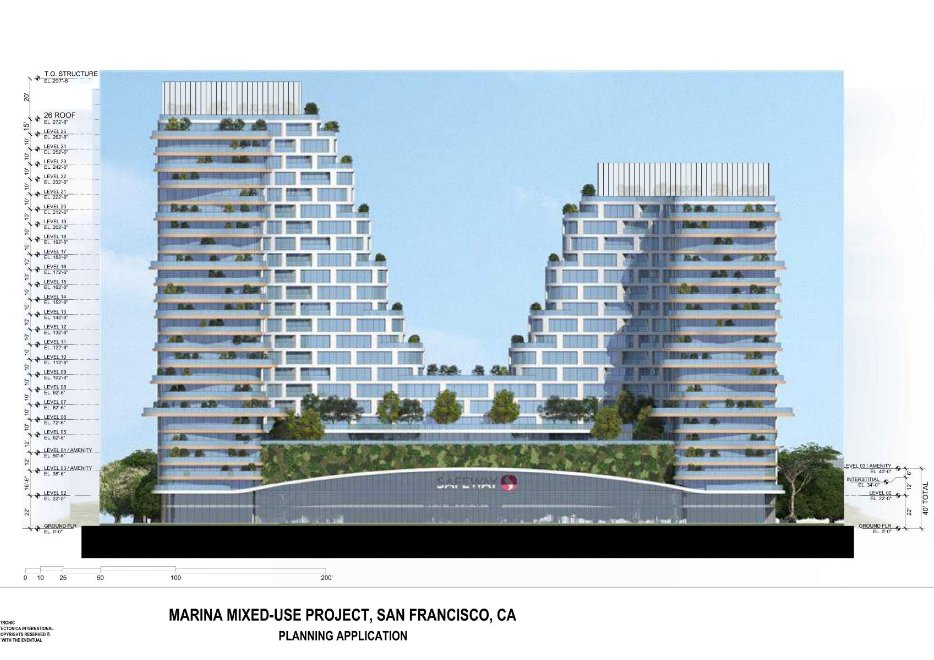
- San Francisco almost certainly must approve this 25-story project on a site zoned for 4 stories
- The city's new ordinance deregulating density in "well-resourced areas" will operate as de-facto downzoning of such sites
🧵
- San Francisco almost certainly must approve this 25-story project on a site zoned for 4 stories
- The city's new ordinance deregulating density in "well-resourced areas" will operate as de-facto downzoning of such sites
🧵

This project's site is zoned for retail use and is currently occupied by the Marina Safeway.
The zoning classification also allows residential use at density of 1 unit per 600 sqft of lot area or density of nearest residential district, whichever is greater.
/2
The zoning classification also allows residential use at density of 1 unit per 600 sqft of lot area or density of nearest residential district, whichever is greater.
/2

The nearest residential district, RM-4, allows density of 1 unit per 200 sqft of lot area.
That translates into 567 units on site.
Developer proposes to build 790 units, which requires a 39% density bonus (790/567 = 1.39).
/3
That translates into 567 units on site.
Developer proposes to build 790 units, which requires a 39% density bonus (790/567 = 1.39).
/3

Under SDBL, to get a 39% bonus, developer must provide either:
- 21% of the 567 "base project" units as deed-restricted "low income" units, or
- 12% of the base project units as deed-restricted "very low income" units
/4
- 21% of the 567 "base project" units as deed-restricted "low income" units, or
- 12% of the base project units as deed-restricted "very low income" units
/4
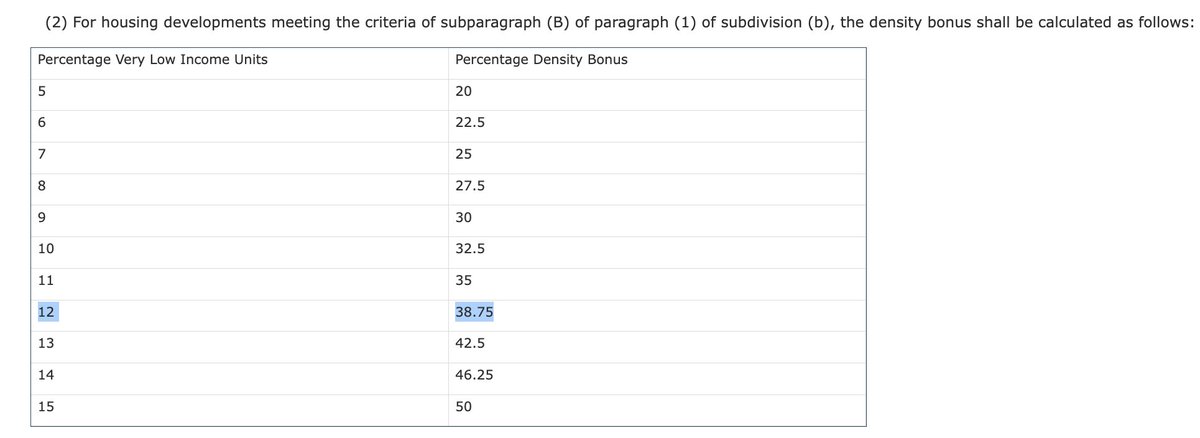
In this case, developer is proposing 15% very-low income units.
Why? B/c that's the minimum affordable share under S.F.'s inclusionary zoning ordinance, and developer presumably doesn't want to push the envelope by asking for SDBL "incentive" in form of waiver of extra IZ.
/5
Why? B/c that's the minimum affordable share under S.F.'s inclusionary zoning ordinance, and developer presumably doesn't want to push the envelope by asking for SDBL "incentive" in form of waiver of extra IZ.
/5
So far, so good. But does state law actually allow the developer can build 25 stories on a site zoned for 4?
Yes!
SDBL requires waiver of any zoning standard that "physically precludes" the project (unless waiver would violate objective health/safety standards).
/6
Yes!
SDBL requires waiver of any zoning standard that "physically precludes" the project (unless waiver would violate objective health/safety standards).
/6
Could city deny the waivers if it proves there's some other reasonable way to build 790 units on the site in a shorter building?
No, b/c SDBL as glossed by courts protects the "amenities" in the developer's design.
/7
No, b/c SDBL as glossed by courts protects the "amenities" in the developer's design.
/7
Here, the project's unusual design provides amenities in form of an elevated open-space deck w/ views -- cleverly titled an "amenity deck" in the site plan -- and exceptional light, balconies, and views from the units.
City's 40' height limit must be waived.
/8
City's 40' height limit must be waived.
/8

Does city have *any* discretion to modify the project's design or impose conditions of approval that might induce the developer to back out or negotiate for something smaller?
No. Two state laws require ministerial approval. (No discretion.)
/9
No. Two state laws require ministerial approval. (No discretion.)
/9
SB 423 requires ministerial approval b/c city is not on track to meet its share of regional target for market-rate housing.
AB 2011 requires ministerial approval b/c site is on a big street & zoned for commercial use, & project meets AB 2011 affordability minimums.
/10
AB 2011 requires ministerial approval b/c site is on a big street & zoned for commercial use, & project meets AB 2011 affordability minimums.
/10
Developer checked the AB 2011 box on the preliminary application.
(Incidentally, AB 2011 would probably allow 65' heights on this site -- b/c it's within 1/2 mile of Van Ness BRT -- but that's irrelevant b/c of SDBL.)
/11
(Incidentally, AB 2011 would probably allow 65' heights on this site -- b/c it's within 1/2 mile of Van Ness BRT -- but that's irrelevant b/c of SDBL.)
/11
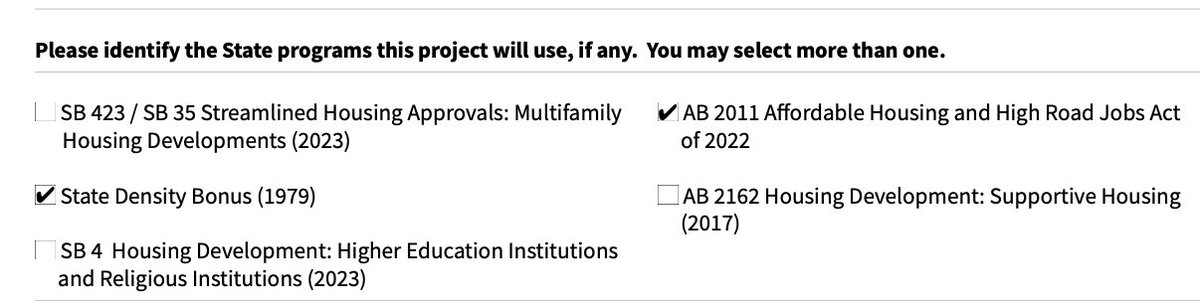
The preliminary application that the developer filed yesterday locks in place the rules that apply to this project.
Had it been filed after enactment of @DanielLurie's "Family Zoning Plan," however, the project wouldn't fly.
/12
Had it been filed after enactment of @DanielLurie's "Family Zoning Plan," however, the project wouldn't fly.
/12
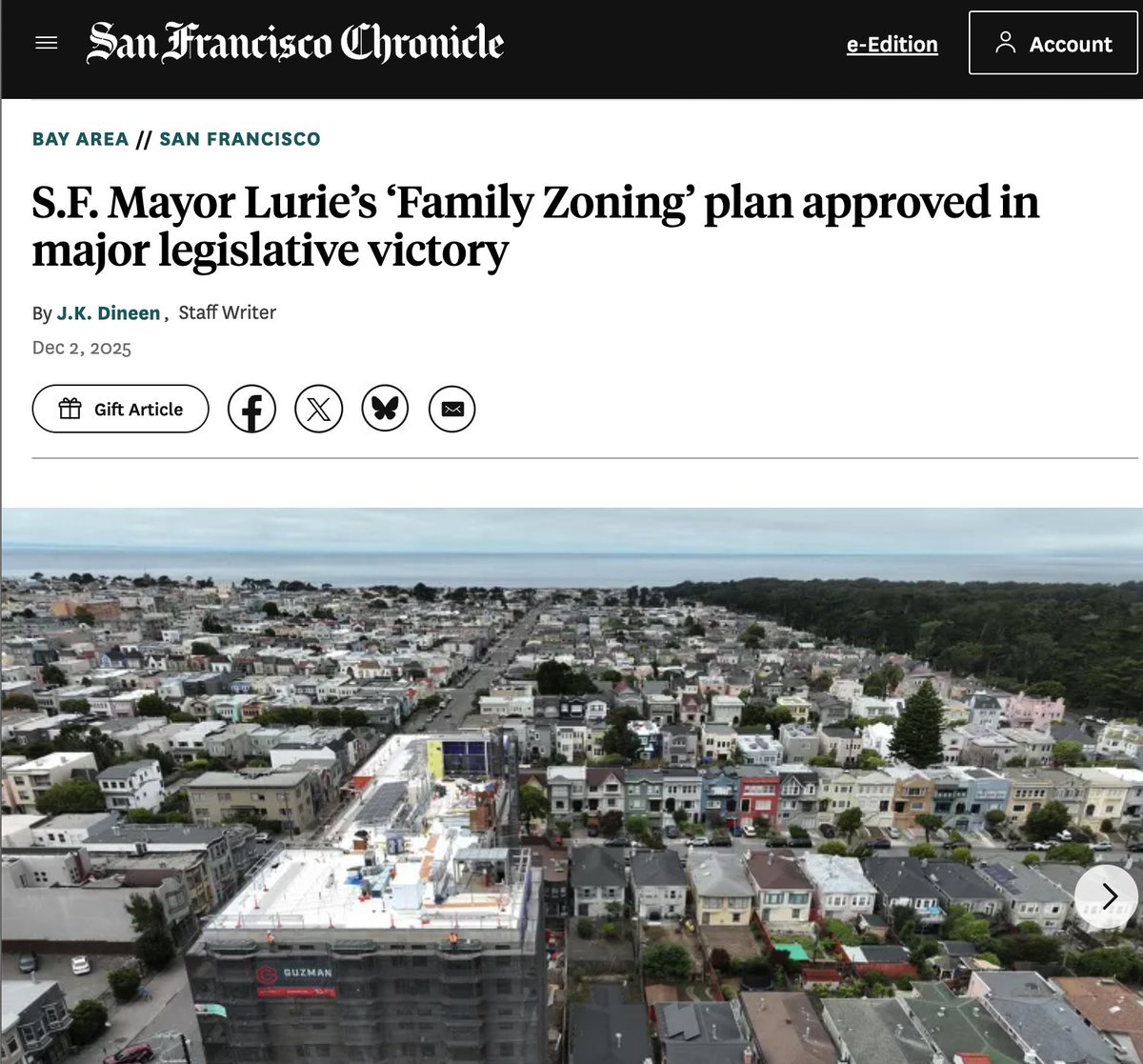
The reason is that in the name of opening up access to high-opportunity neighborhoods, the Family Zoning Plan will remove density controls on major corridors in those neighborhoods.
/13
/13

Assuming that the RM-4 District (on which the project relies to get 1 unit per 200 sqft of lot area) becomes density-decontrolled in the Marina, the SDBL will work very differently on this site.
/14
/14
A developer will have to mock up a "base project" that complies with all applicable objective standards (height, setbacks, FAR, rear-yard open space, etc.).
The SDBL will still lead to bonuses, but the bonus will be in floor area relative to the base project.
/15
The SDBL will still lead to bonuses, but the bonus will be in floor area relative to the base project.
/15
Meaning that a 39% bonus will allow a project that 39% bigger in volume than the zoning-allowed base project, not a project (like this) that bears no relation to base zoning except in its density.
Explanation ⤵️.
/16
Explanation ⤵️.
/16
https://x.com/CSElmendorf/status/1952583079224389714
On this site, a 39% increase in volume would probably yield a 6-story building, not 25 stories.
So it is that a trivial distinction in local zoning -- form + density standards vs. form alone -- leads to an ~18-story difference in what state law allows!
/17
So it is that a trivial distinction in local zoning -- form + density standards vs. form alone -- leads to an ~18-story difference in what state law allows!
/17
I've been arguing for a while now that CA should do w/ SDBL what it did with the Builder's Remedy: establish reasonable limits on project size, in exchange for removing constraints on projects' financial feasibility.
/18
/18
https://x.com/CSElmendorf/status/1684613013301821441
E.g., (1) limit "height bonus" to a pro-rata increase (39% bonus -> 39% increase in project height); (2) authorize developers to pay into state affordable housing fund in lieu of providing on-site BMR units; and (3) preempt local IZ that's higher than the SDBL floor.
/19
/19
Maybe this project will provide the impetus to get such a deal done.
/end
/end
@threadreaderapp unroll
• • •
Missing some Tweet in this thread? You can try to
force a refresh