‼️🇮🇱 Smartphones worldwide were silently infected with Israeli malware via malicious ads
Simply viewing their ads was enough to get infected.
Surveillance company Intellexa gained full access to cameras, microphones, chat apps, emails, GPS locations, photos, files, and browsing activity.
Internal leaked company documents, sales and marketing materials, as well as training videos from the “Intellexa Leaks” investigation provide a never-before-seen glimpse into the internal operations of a mercenary spyware company focused on exploiting vulnerabilities in mobile devices to enable targeted surveillance attacks on human rights defenders, journalists, and members of civil society.
In an attempt to hide the spyware operator's identity, all data is relayed through a chain of anonymization servers called the “CNC Anonymization Network.”
Since the spyware relies on browser exploits, the operator must trick the victim into opening the malicious link; if the link is not opened, infection fails.
Each time a one-click attack link is sent, it risks exposing the operator, as a suspicious target may share it with forensic experts, revealing the attack and potentially the operator.
To avoid detection, Intellexa has designed several “delivery vectors”—different approaches to triggering the opening of an infection link on the target’s phone without requiring the target to manually click it. This enables Intellexa to offer zero-click-like functionality without needing additional zero-click exploits.
One slide shows they’ve been buying or partnering with ISPs to deliver their malicious payloads.
Ongoing research and technical investigations by Amnesty International indicate that advertisement-based infection methods are being actively developed and used by multiple mercenary spyware companies and by certain governments that have built similar ADINT infection systems.
Amnesty International believes that the use of such “silent” vectors to deliver browser exploits will continue to grow as targets become increasingly suspicious of unknown links and as true zero-click attacks become more expensive and technically difficult to achieve. These findings should redouble efforts by technology vendors and companies in the digital advertising ecosystem to investigate and disrupt such attacks.
Despite Intellexa being sanctioned by the US, they're still operating.
‼️🇰🇵 Meet North Korean recruiter 'Aaron,' who infiltrates Western companies by using AI and posing as a remote IT worker using stolen or rented identities.
He was lured into a sandbox by researchers, who observed the wild APT in a controlled setting to see what he would do.
He wanders around the web sending messages to people like "I’d like to offer your an opportunity that I think could be interesting.".. Turns out @MauroEldritch likes opportunities.
Aaron then asks the "legit" worker to download AnyDesk.
‼️ This is a story about a dev who got a job interview at xAI, where they stripped him of his knowledge about how he used the user X API to create two impressive projects, hence the job interview.
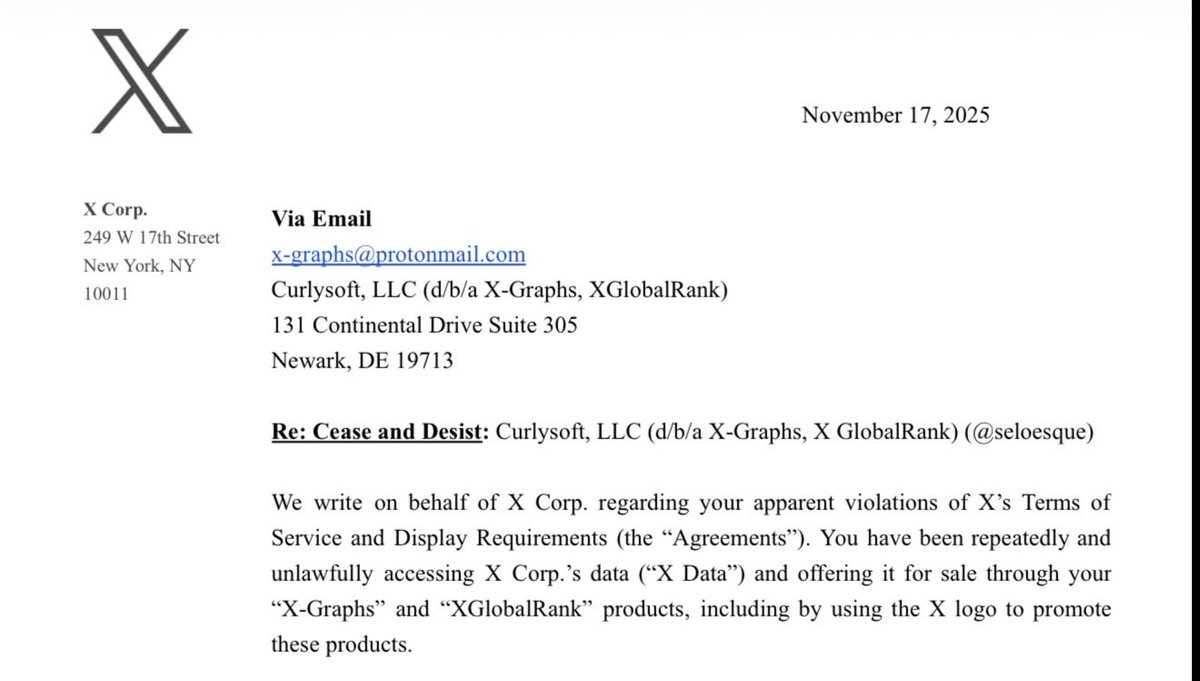
After they got what they wanted, X sent a cease and desist, and told him he wasn’t hired.
Despite the developer being open about his project with X employees from the beginning, and getting a job interview and vouch because of it, Nikita Bier mocked him after he was sent a cease and desist.
Nikita deleted the post, but we still have a copy:
The developer @seloesque, behind the popular sites xglobalrank.com and x-graphs.com, didn’t understand why X did this. He was always transparent and communicative with X employees: he created these projects to land a job at xAI.
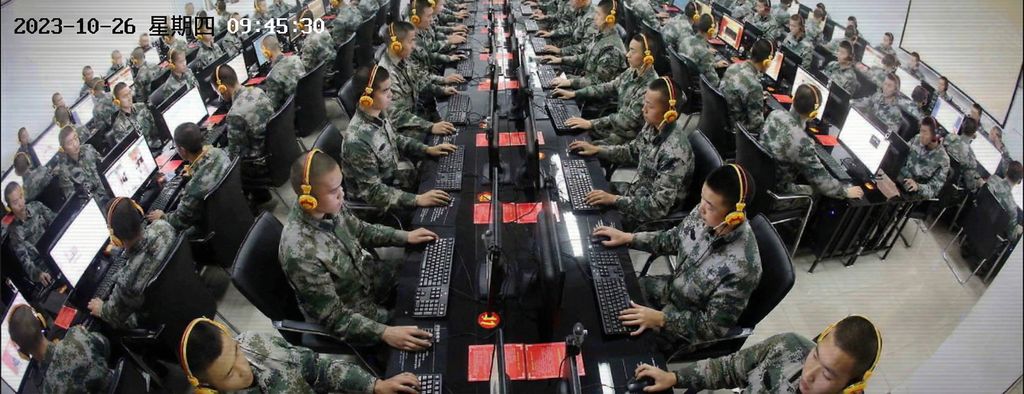
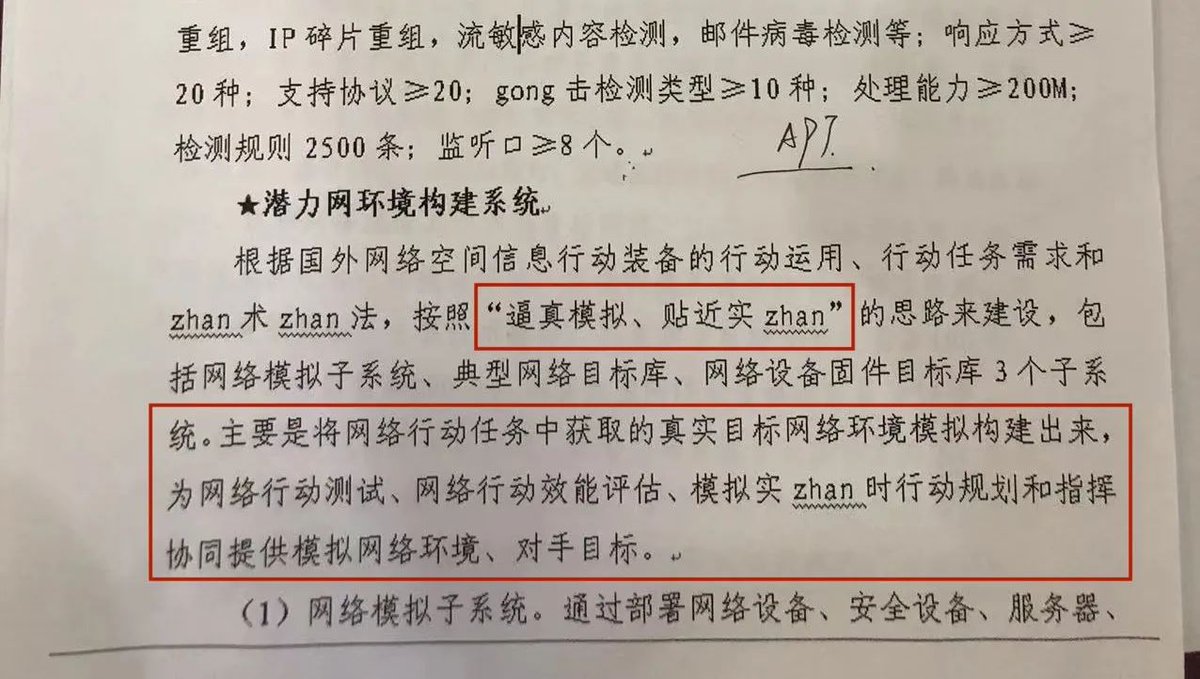
‼️ Secret Chinese documents have been leaked, revealing their internal cyberwarfare training program.
The documents show a focus on products from Cisco, Fortinet, WatchGuard, and Juniper as primary operational targets.
China has built digital cyber ranges that allow operatives to practice on infrastructure closely resembling the critical digital infrastructure of major adversaries.
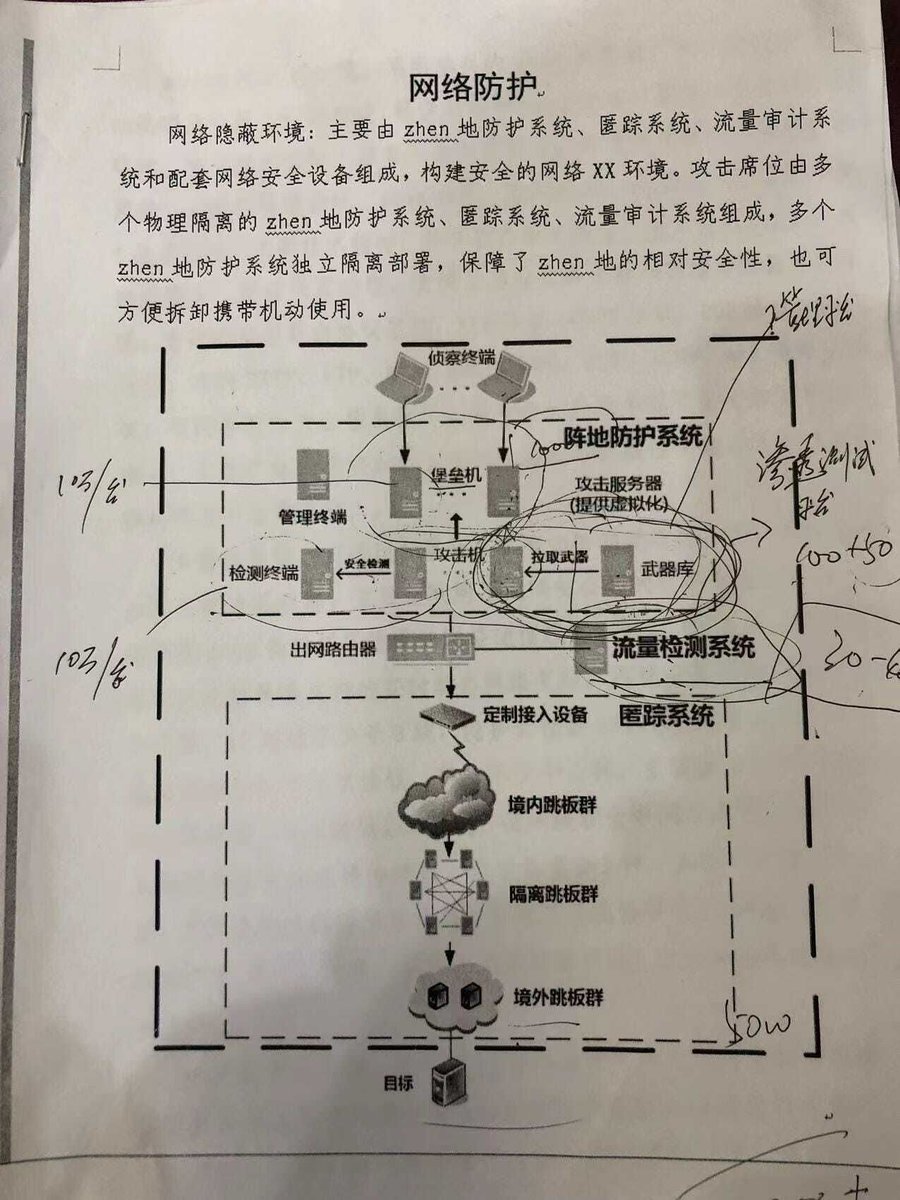
The documents show a network operations training environment capable of supporting 300 users and 10,000 concurrent connections. It includes DNS gateways, a URL classification database with 100 million entries, and support for 50,000 concurrent connections.
The introduction page describes a network setup with distinct separation between an “internal” system and several “external” components.
‼️ China's largest cybersecurity firm, Knownsec, was breached, exposing details of China's state cyber operations.
The data includes cyberweapon documentation, internal hacking tool source code, and global target lists covering over 20 countries, including Japan, Vietnam, and India.
A spreadsheet lists 80 hacked foreign organizations, plus evidence of 95 GB of stolen Indian immigration data and 3 TB of call records from South Korean mobile operator LG U Plus.
One of the documents mention a malicious power bank, disguised as a charging device.
Knownsec is key to China's cybersecurity, providing advanced defense and offensive capabilities, including espionage tools.
A thread with their tools 🧵
ZoomEye
A global search engine similar to Shodan or Censys, lists vulnerabilities for each host. It claims to scan the entire IPv4 address range in 7-10 days.
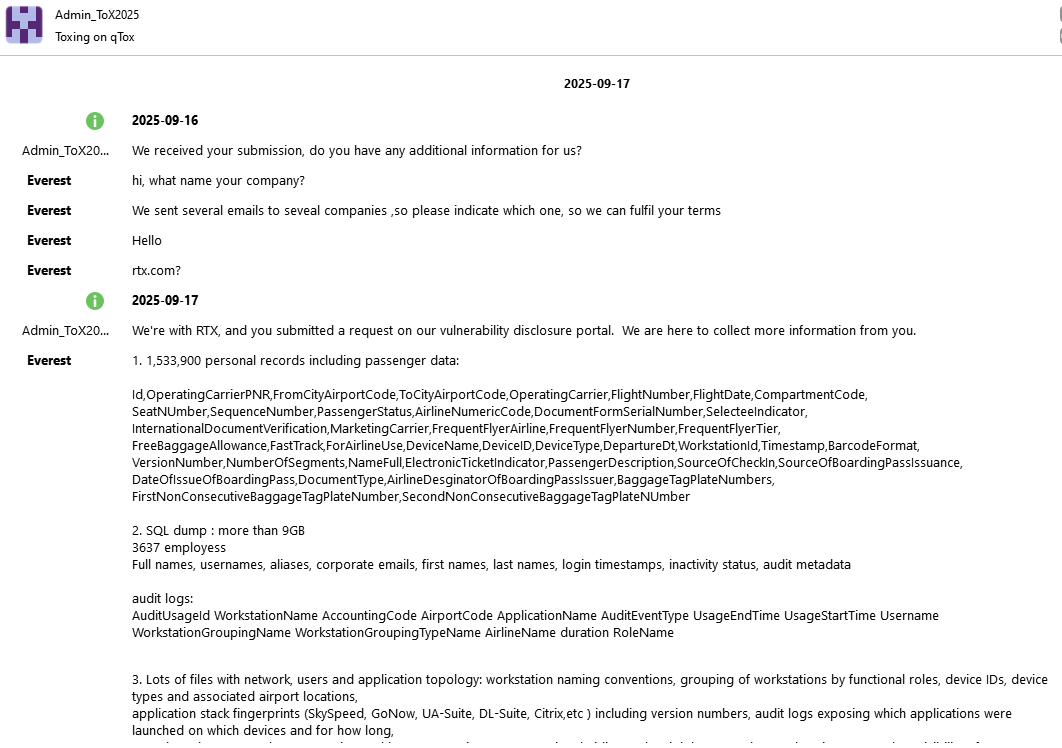
‼️ When Collins Aerospace shut down its Multi-User System Environment (MUSE), it informed the press and filed with the SEC, claiming a ransomware attack.
This caused major European airports to halt passenger processing, stranding thousands and delaying numerous flights.
Turns out they didn't have to turn off the systems.
The threat actor claims no ransomware or compromise occurred, alleging Collins Aerospace disabled the servers for insurance money.
They admit breaching an FTP server, exfiltrating data over days until access was blocked, and claim to have obtained 1,533,900 passenger records.
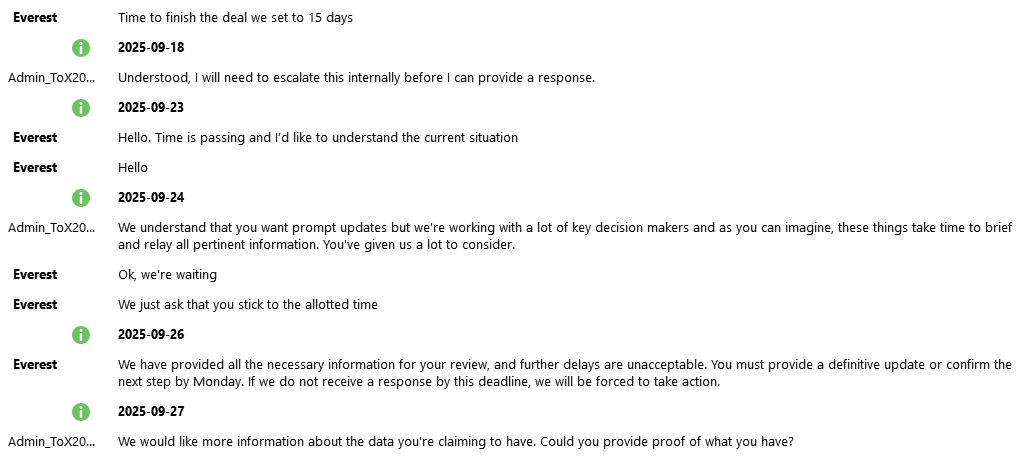
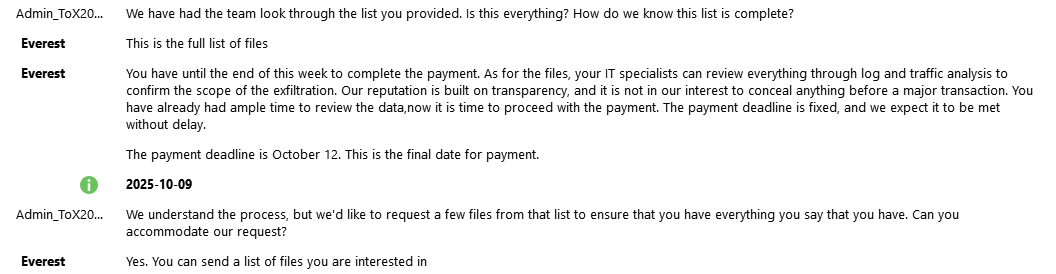
Screenshots of conversations between Everest and RTX, Collins Aerospace's parent company, are included in this post and they don't seem to mention any encrypted data.
This is the compromised SFTP server. Username: aiscustomer, password: muse-insecure. Insecure indeed. Why store sensitive files like passenger data, SQL, service documentation, and configurations on a publicly accessible, insecure SFTP server?
We couldn't fully confirm this story's validity, but it's unclear why the threat actor would strongly oppose ransomware and deny deploying it on Collins Aerospace's systems if untrue. No definitive evidence confirms or refutes its deployment.
It's uncertain why @enisa_eu confirmed the ransomware deployment to Reuters. Did @enisa_eu investigate and confirm the ransomware, or did they relay RTX's statement?
cc @RTX_News @CollinsAero, a lessons-learned session detailing the deployed malware (so we can all learn) would be appreciated. Thanks!
🚨 Multiple cybercriminals were arrested during Operation SIMCARTEL.
Europol and Latvian law enforcement dismantled five servers, seized 1,200 SIM box devices and 40,000 active SIM cards.
The criminals were linked to over 1,700 cyber fraud cases in Austria and 1,500 in Latvia, causing losses of several million euros, including EUR 4.5 million in Austria and EUR 420,000 in Latvia.
“Yep, that’s me. You’re probably wondering how I got into this situation …”