Why do identical twins have such similar personalities?
Is it because they're reared together? Is it because people treat them alike due to their visual similarity?
Nope! Neither theory holds water.
Is it because they're reared together? Is it because people treat them alike due to their visual similarity?
Nope! Neither theory holds water.
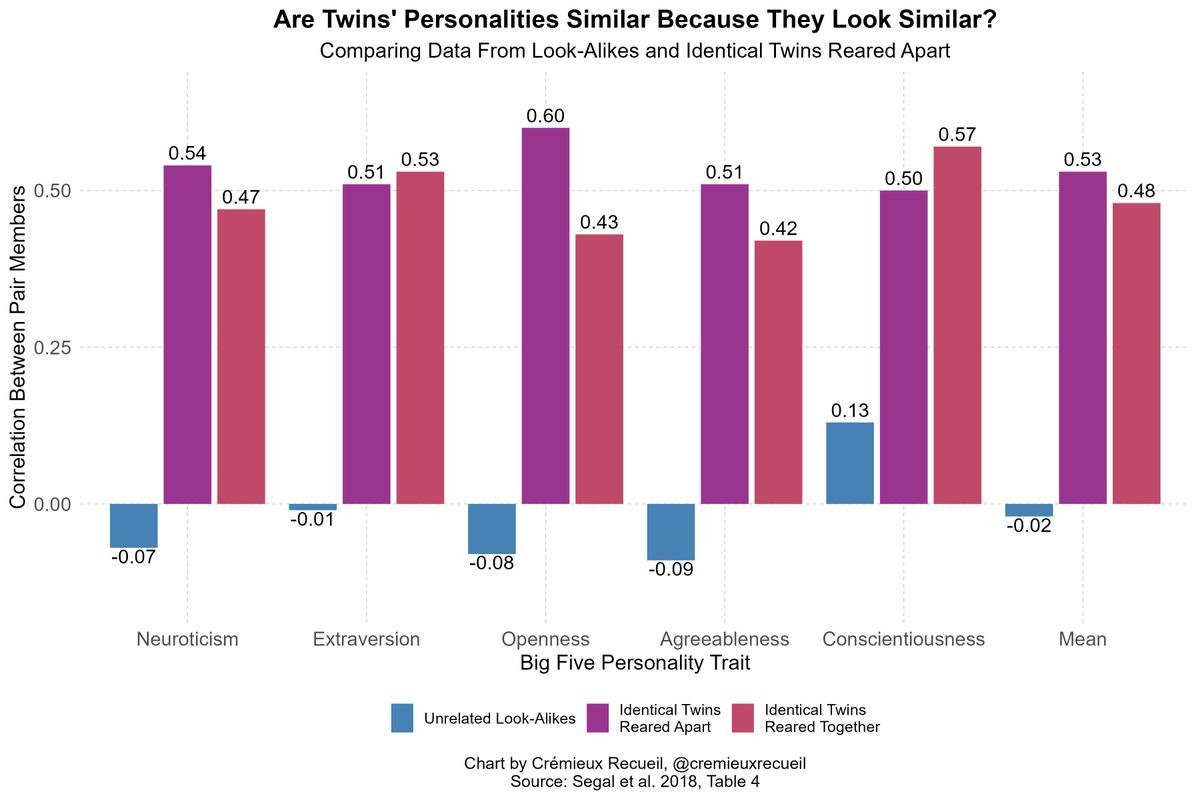
Despite looking as similar as identical twins and being reared apart, look-alikes are not similar like identical twins are. In fact, they're no more similar than unrelated people.
This makes sense: they're only minimally more genetically similar than regular unrelated people.
This makes sense: they're only minimally more genetically similar than regular unrelated people.
The other thing is that twins reared apart and together have similarly similar personalities.
In fact, there might be a negative environmental effect going on, where twins reared together try to distinguish their personalities more!
In fact, there might be a negative environmental effect going on, where twins reared together try to distinguish their personalities more!
This data also came with data on dizygotic twins reared together and apart, delivering heritabilities of 0.76, 0.66, or 0.56, depending on which group is used as the comparison.
And as an aside, the traits of same-sex and opposite-sex dizygotic twins are similarly correlated.
And as an aside, the traits of same-sex and opposite-sex dizygotic twins are similarly correlated.
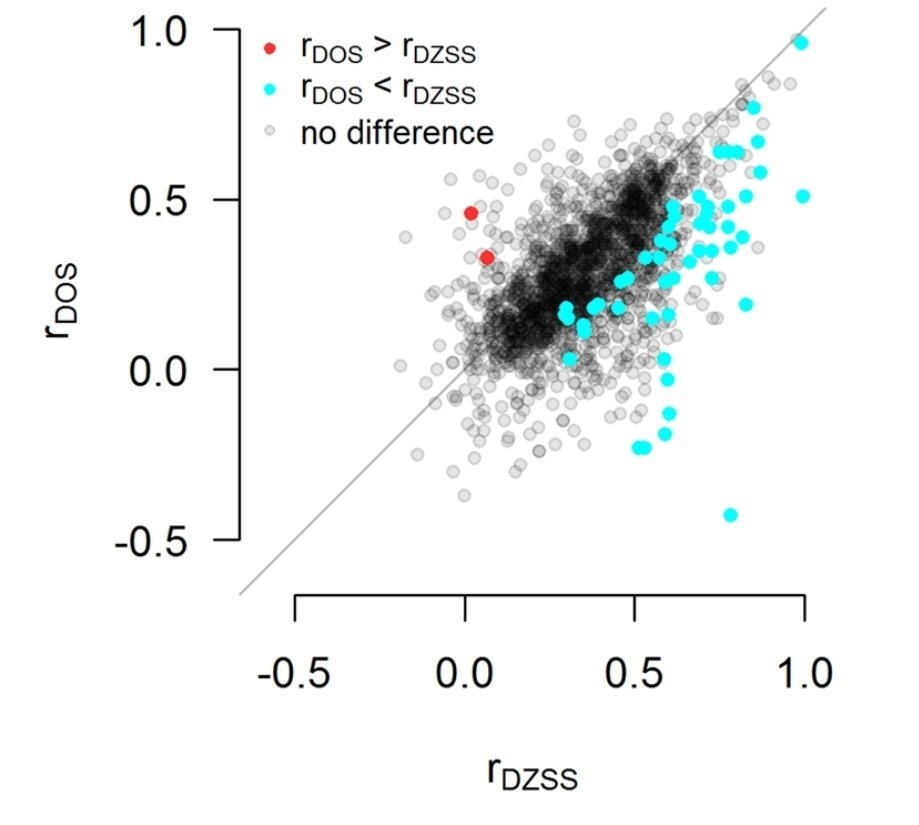
Twins who are perceived to be fraternal rather than identical and vice-versa also seem to be aligned as predicted genetically, not by perceptions.
That is, people seen as identical (fraternals) but who are not are as similar as fraternals (identicals).
That is, people seen as identical (fraternals) but who are not are as similar as fraternals (identicals).
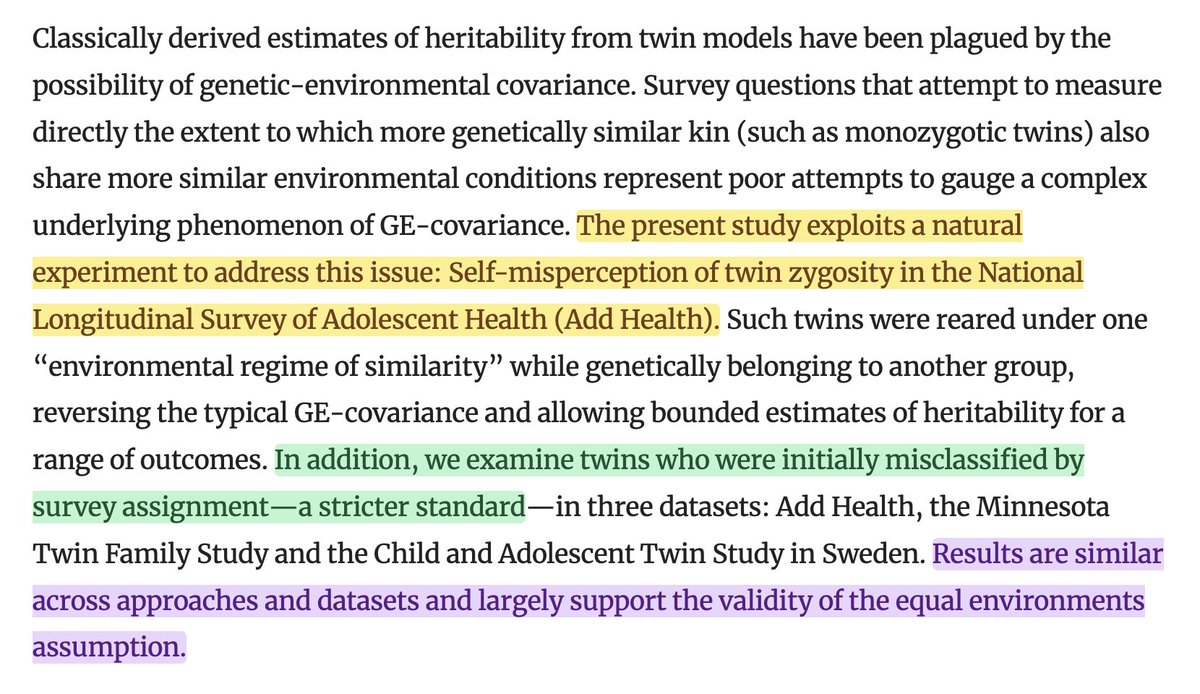
If being reared apart or together doesn't matter, and looking alike doesn't matter, misperception of zygosity doesn't matter, and even sex doesn't matter (mostly excepting sex-linked traits), there's just not much room for twin methods to be biased by a lack of equal environments
Sources:
link.springer.com/article/10.100…
nature.com/articles/s4159…
link.springer.com/article/10.100… (amazing this holds given the sources of misperception and genetic variation ostensibly correlating with it for DZs!)
link.springer.com/article/10.100…
nature.com/articles/s4159…
link.springer.com/article/10.100… (amazing this holds given the sources of misperception and genetic variation ostensibly correlating with it for DZs!)
• • •
Missing some Tweet in this thread? You can try to
force a refresh