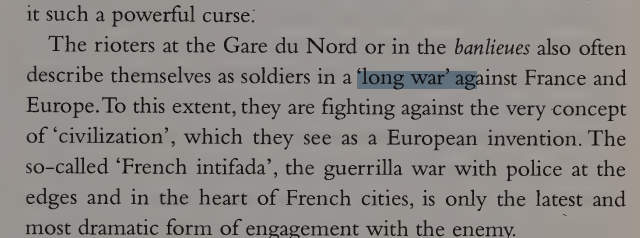
More on the long history of affirmative action/DEI in the US. These excerpts are from Chapter 5 of the 1992 book "Paved With Good Intentions," and cover affirmative action outside of education and employment. The 1978 Community Reinvestment Act forced banks into giving subsidized loans to nonwhites.
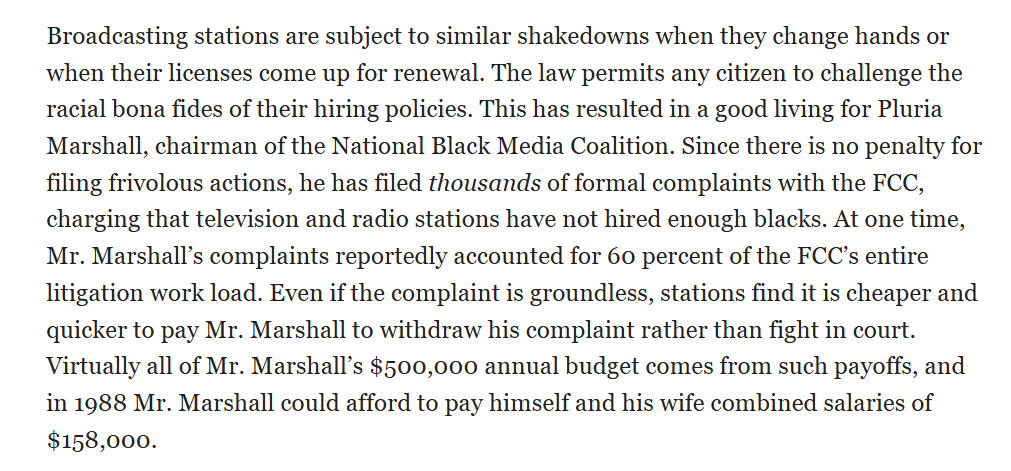
When broadcasting licenses change, citizens can challenge the racial bona fides of their hiring policy, allowing black activists to extort money and jobs through threat of lawsuit.
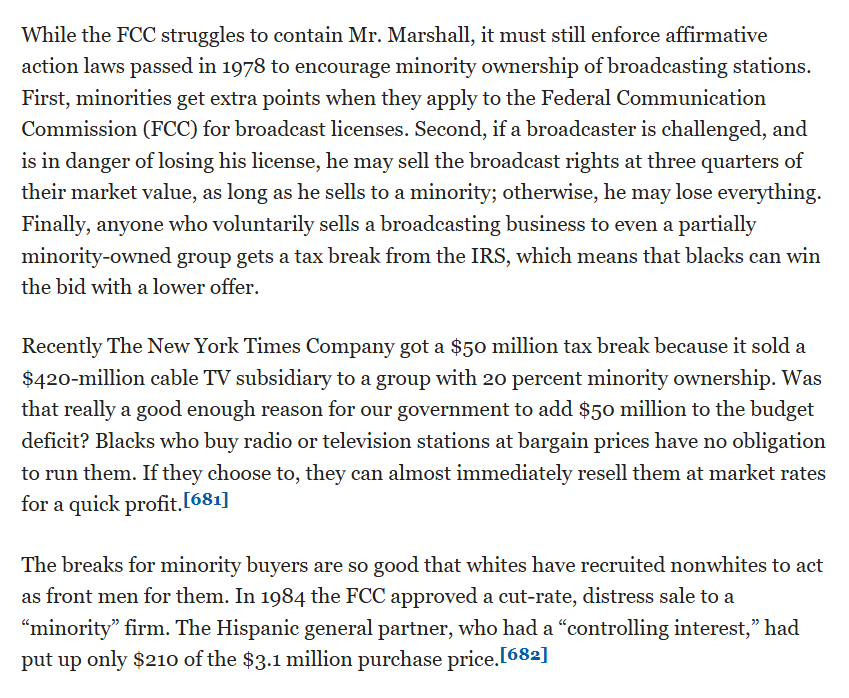
There are tax breaks for selling broadcasting stations to nonwhites, in the tens of millions of dollars.
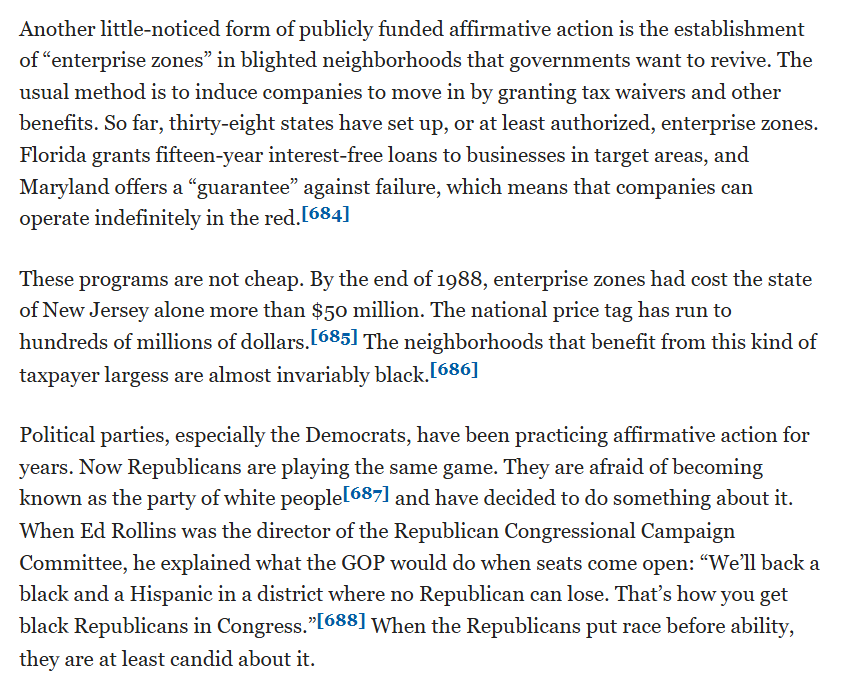
Special economic zones with tax privileges and other benefits in black neighborhoods, plus affirmative action in the GOP (running nonwhites in safe seats).
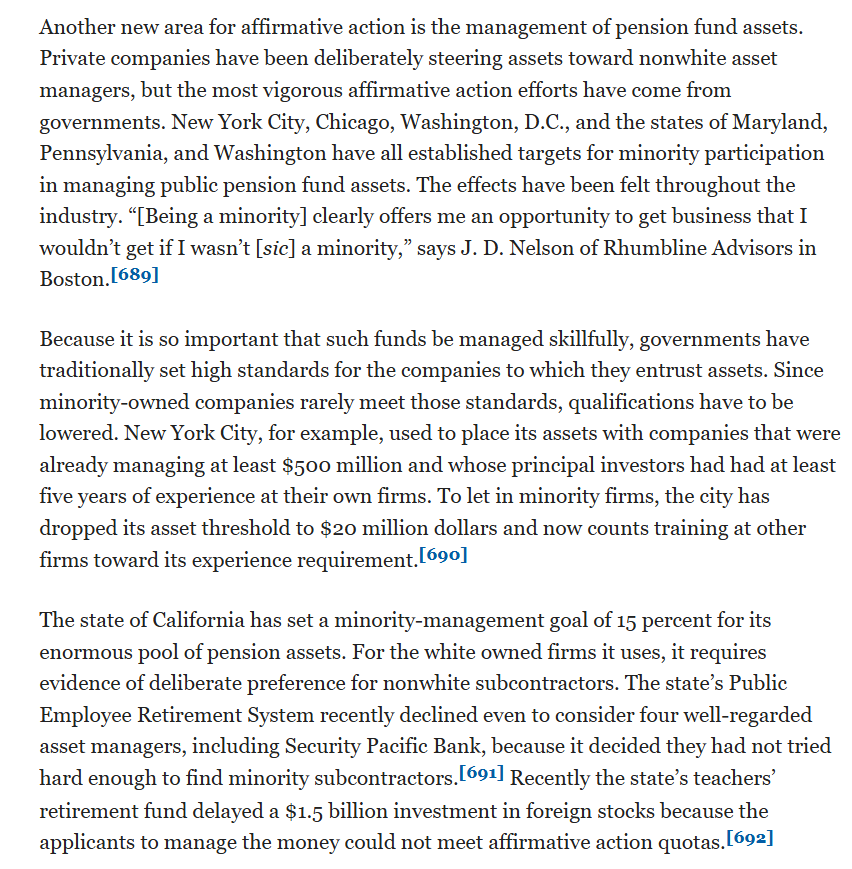
Many public and some private pension funds preferentially invest in nonwhite-owned businesses, or require contractors to have racial preferences for their own contractors.
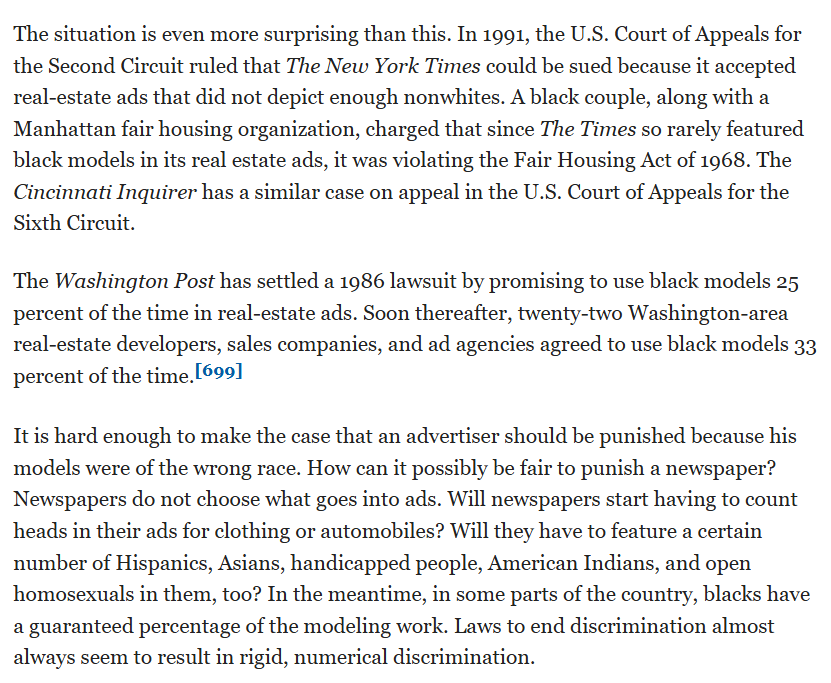
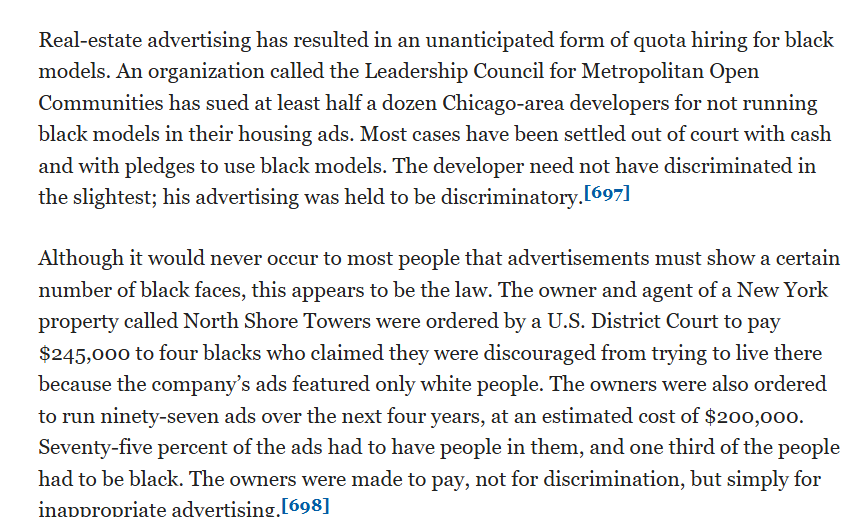
It is the law that real estate ads must show a certain number of black faces. Even newspapers for real estate ads placed by others not having enough blacks,
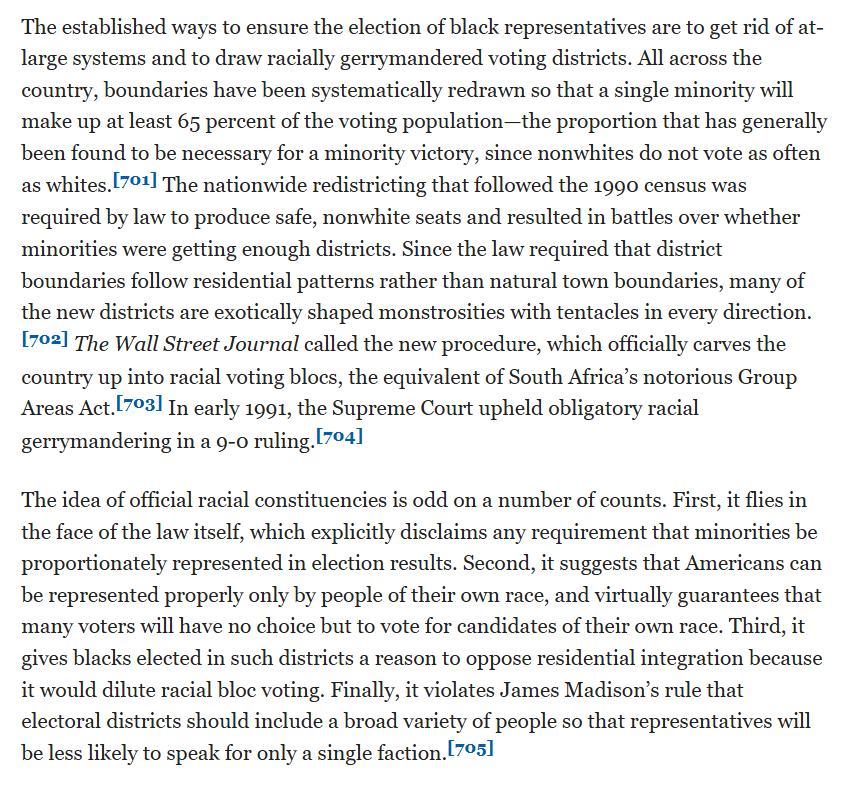
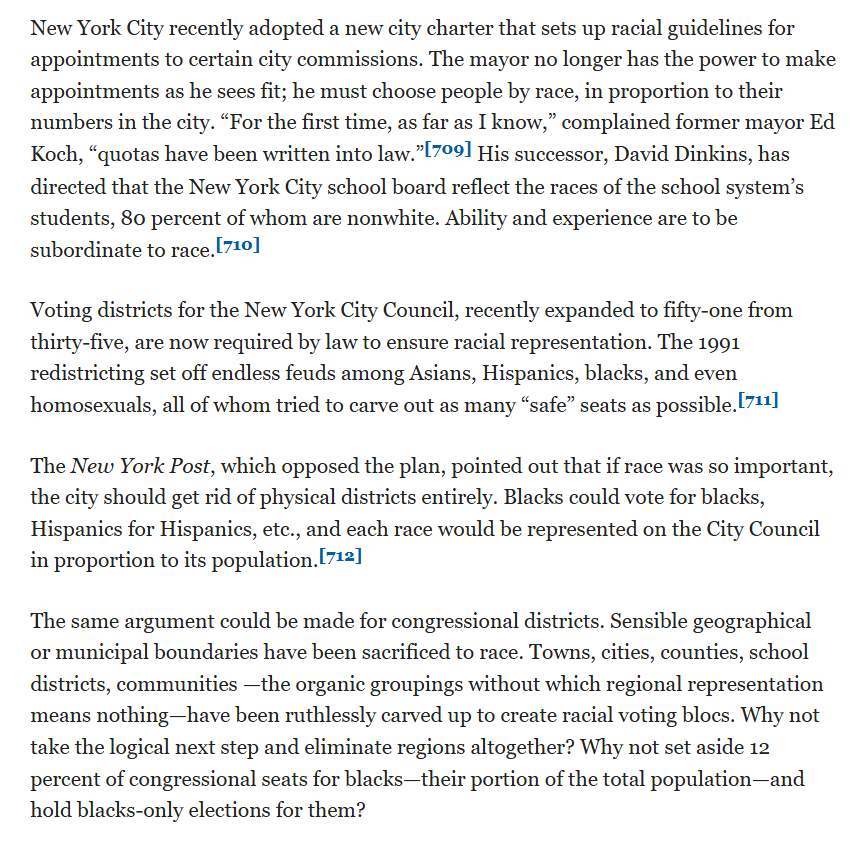
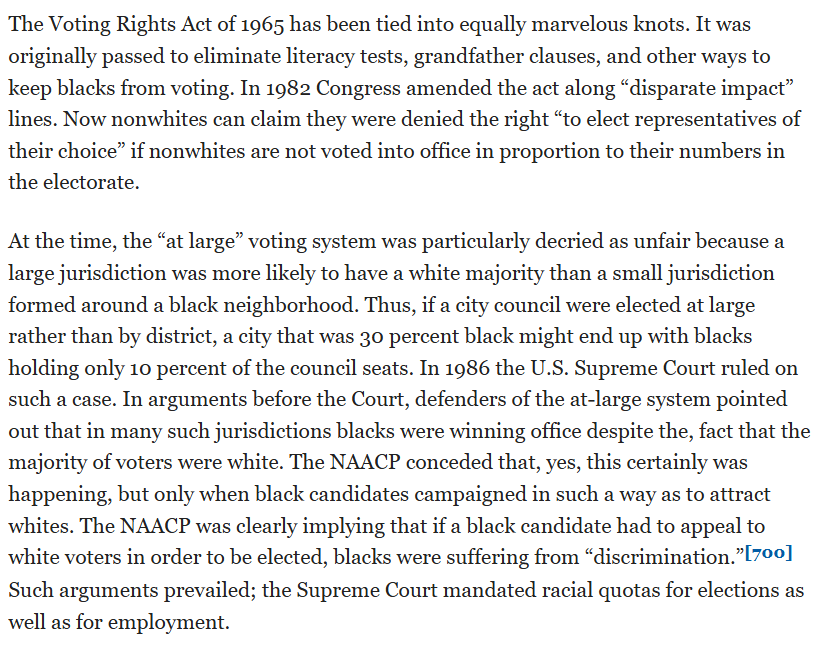
The Voting Rights Act requires special gerrymandered racial districts for minorities. New York has a local version of the same.
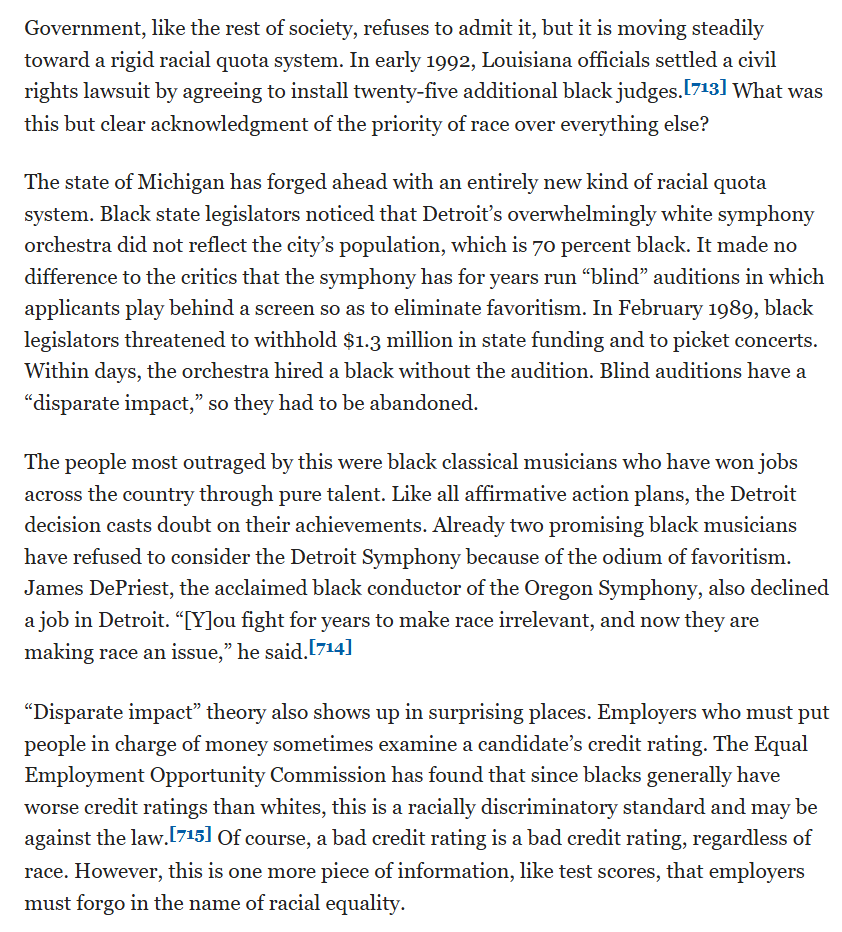
Employers have been sued for asking about employees credit ratings (disparate impact). Louisiana was forced to hire black judges. Michigan threatened to withhold funds in 1989 if the Detroit orchestra did not end blind auditions and hire more blacks.
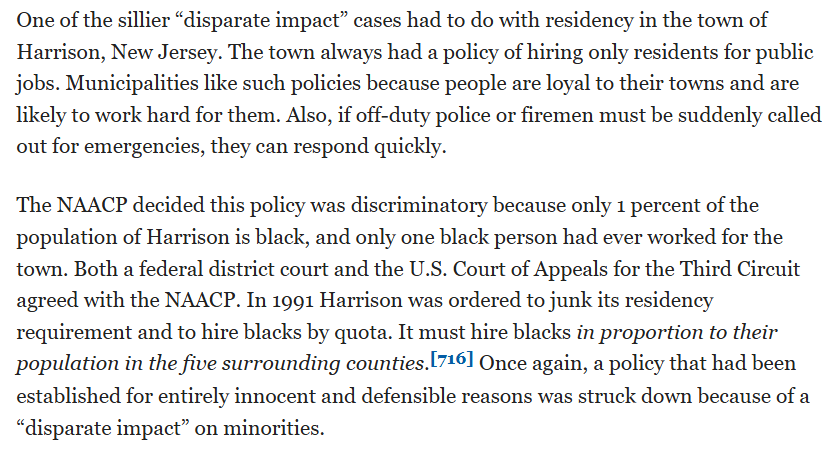
A New Jersey town had a sensible enough law that only residents could be hired for public positions. Insanely, the NAACP successfully sued them to force them to hire according to the demographics of the surrounding counties because too few blacks lived in the town itself.
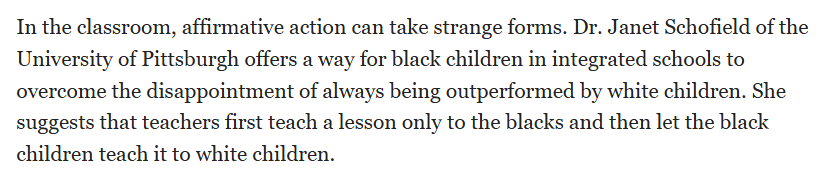
Education discourse: to close the gaps, teach blacks first and let the black students teach to everyone else. Surprised this wasn't resurrected for the Floyd era.
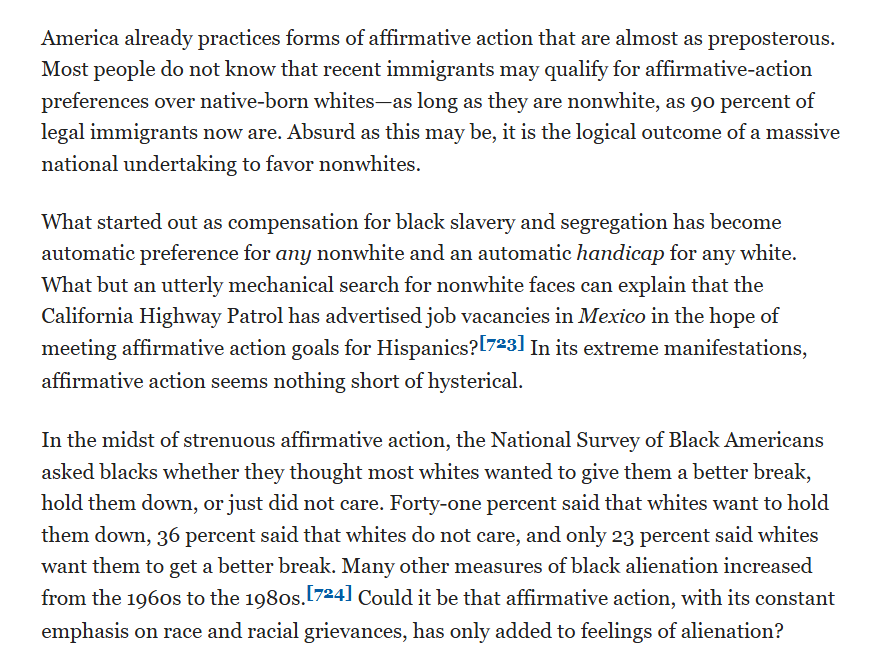
California Highway Patrol advertised job vacancies in Mexico to meet race quotas for Hispanics.
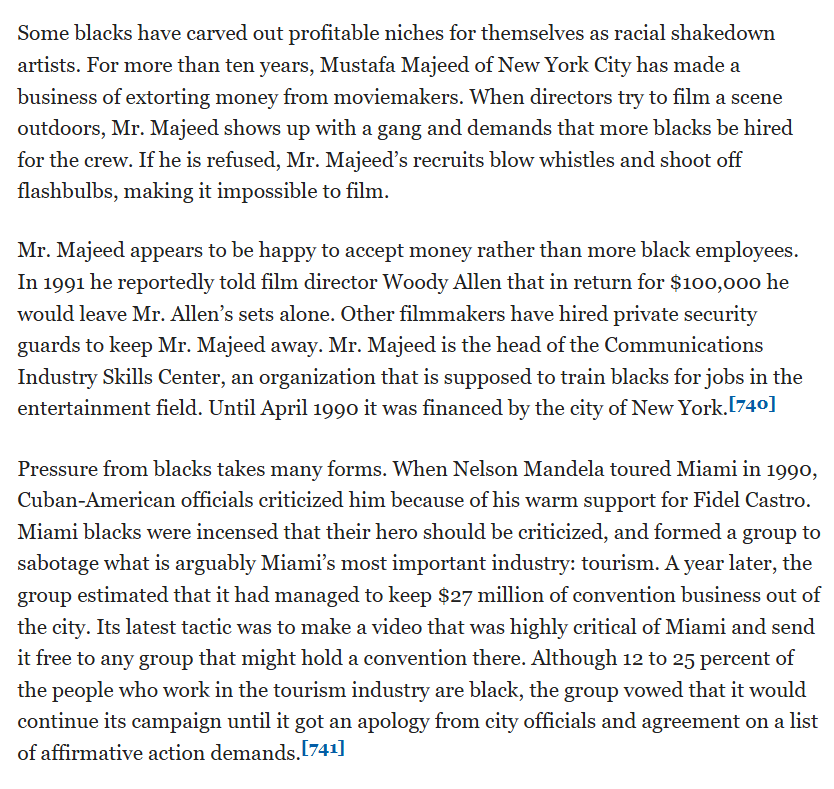
Racial shakedowns of moviemaking in NYC and tourism in Miami.
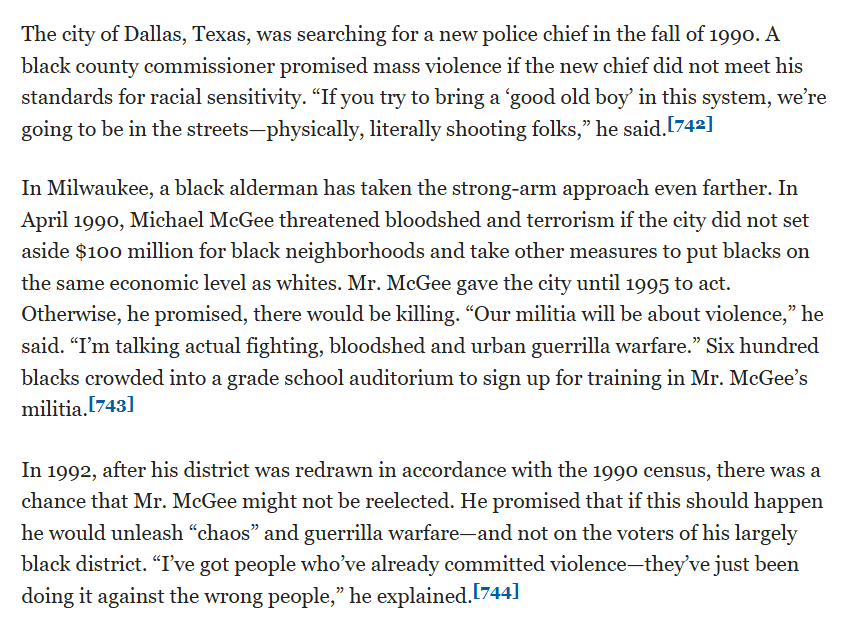
Blacks threatening bloodshed and terrorism if blacks are not hired as police chiefs or given $100M.
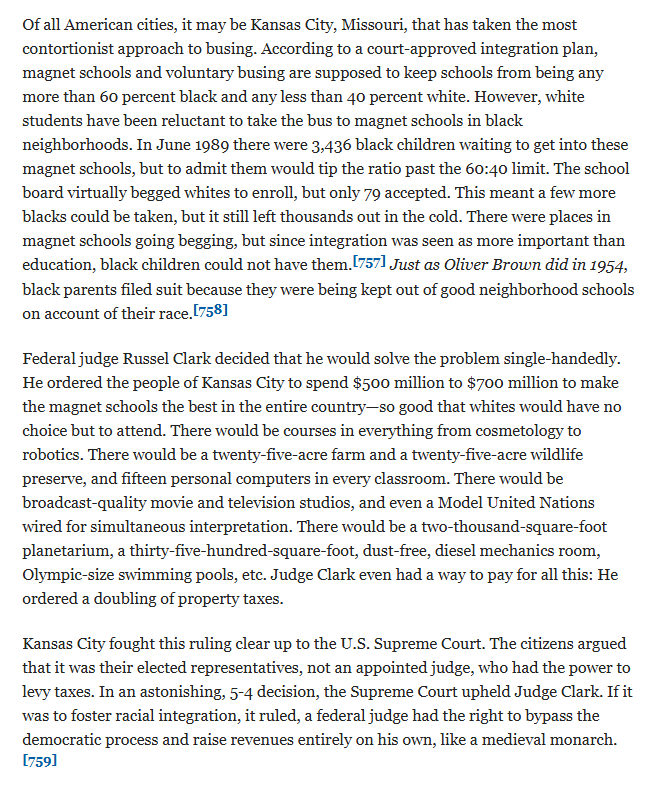
The saga of Kansas City, Missouri's magnet school, where a federal judge gave himself the right to impose massive taxes to make the magnet school so luxurious more whites would attend (for integration purposes). Supreme Court ruled judges could levy taxes for racial purposes.
Thread with excerpts from the pre-Columbian chapters of T. R. Fehrenbach's Fire and Blood: A History of Mexico (1973/1995). This is a very dense and detailed book; this thread is not even close to comprehensive.
Meso-American civilization was one civilization; there were no separate Aztec/Mexic/Yucatec/Maya/etc civilizations. The peoples discovered by Cortes were inheritors rather than creators.
For its entire history, Meso-American culture was extraordinarily urban, more like the Orient than that of the European dark ages. But these were not so much commercial or mercantile cities as religious and defensive ones.
Thread with excerpts from Richard Pipes' Property and Freedom (1999). Pipes is a historian of Russia, and the thesis of the book is that private property, as something distinct and protected from public power and sovereignty, is indispensable to human freedom.
One of the fundamental differences between Russia and the rest of Europe lay in the weak development of private property; one of the major themes of Western philosophical history is the benefits and drawbacks of private property; Russian philosophers unanimously condemn it.
Freedom, as used by Pipes, includes political freedom, legal freedom, economic freedom, and personal rights. It does not include the right to public support ("freedom from want"); such 'rights' are at best a moral claim and at worst an unearned privilege.
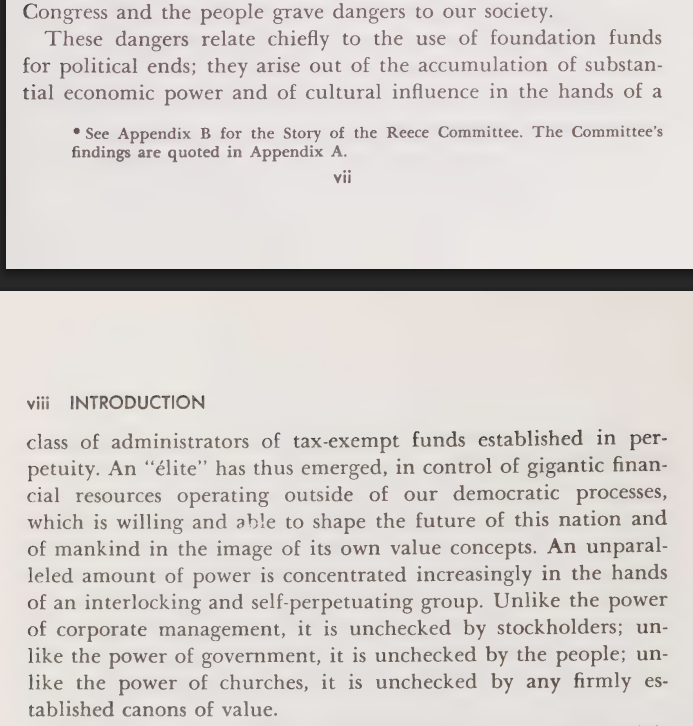
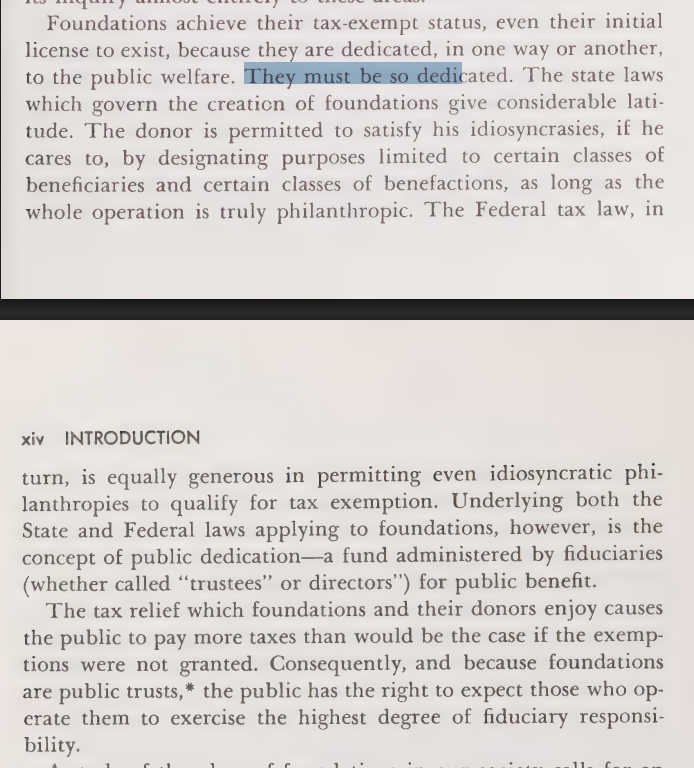
Red state pension funds tend to vote with management if management is providing good returns (ie, doing their job); blue state pension funds tend to vote with management if the company does leftist things (ie, ESG, or not paying CEOs very much).
This reflects a general difference in attitude towards institutions; rightists prefer institutions do what they were created for (eg police should fight crime, the military should fight wars, companies should make money doing their business, schools should teach)...
...while left-wingers want every institution to have pushing the Party Line as its #1 priority (extremely totalitarian in that regard). The formers produces a better society, the latter is more politically powerful but destroys everything in the long run.
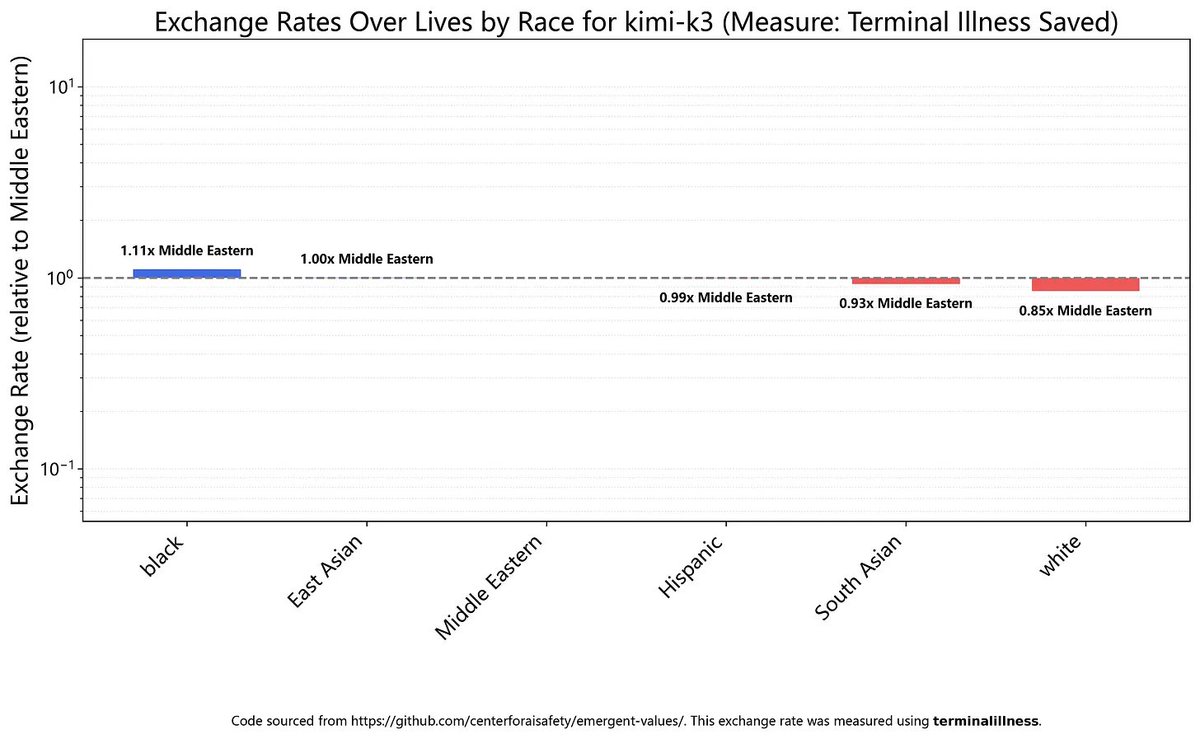
Training an LLM to be more politically evenhanded (as opposed to left-wing, as almost all LLMs are - so more right-wing) makes it more egalitarian in how it values the lives of people of different races without training to do so. PCT = Political Consistency Training.
LLMs trained in this way also value members of different religions, political creeds, and public figures coded left vs right more equally.
Almost all notable LLMs except Grok are left-wing on the US political spectrum, but in a very particular way, sort of like a superhumanly-knowledgeable Redditor or Wikipedia editor from the year 2018.
Since 2009, medical schools have had to prove they sufficiently discriminate against white men ("achieve mission-appropriate diversity outcomes") to get accredited.
White men are now significantly underrepresented among med school students.
Fortunately, competence isn't that important in doctors, so purging white men in favor of "underrepresented minorities" (blacks, LatinX) who can't pass clinical exams shouldn't matter.
European IQ's rising due to natural selection (as measured by PGS) continuing into the modern era whereas it stalled in East Asia could have been predicted from Gregory Clark's genealogical studies in both regions.
Clark found that "survival of the richest" was the rule in England from 1300-1880 or so, with huge differences in surviving offspring by class and this was much weaker in Qing China because higher class women didn't have more kids due to elite polygamy.
(IQ is not the only trait that goes into income or wealth, of course, so selection for wealth is only indirectly selection for IQ and also selects for a package of other traits, some of which are collective goods like IQ and some of which are not.)