Alex Prompter Profile picture
Dec 27 13 tweets 5 min read Read on X
Anthropic never says “use these prompts.”

But if you read their docs carefully, they absolutely imply them.

I mapped 10 prompts they quietly rely on for safe but razor-sharp analysis.

(Comment "Claude" and I'll also DM you my Claude Mastery Guide) Image
1. The "Recursive Logic" Loop

Most prompts ask for an answer. This forces the model to doubt itself 6 times before committing.

Template: "Draft an initial solution for [TOPIC]. Then, create a hidden scratchpad to intensely self-critique your logic. Repeat this 'think-revise' cycle 5 times. Only provide the final, bullet-proof version."
2. The "Context Architect" Frame

Stop stuffing your AI with info. Use "Just-in-Time" retrieval to stop "context rot."

Template: "I am going to provide [DATA]. Do not process everything. Use a 'minimal high-signal' approach to extract only the facts necessary to solve [PROBLEM]. Discard all redundant noise."
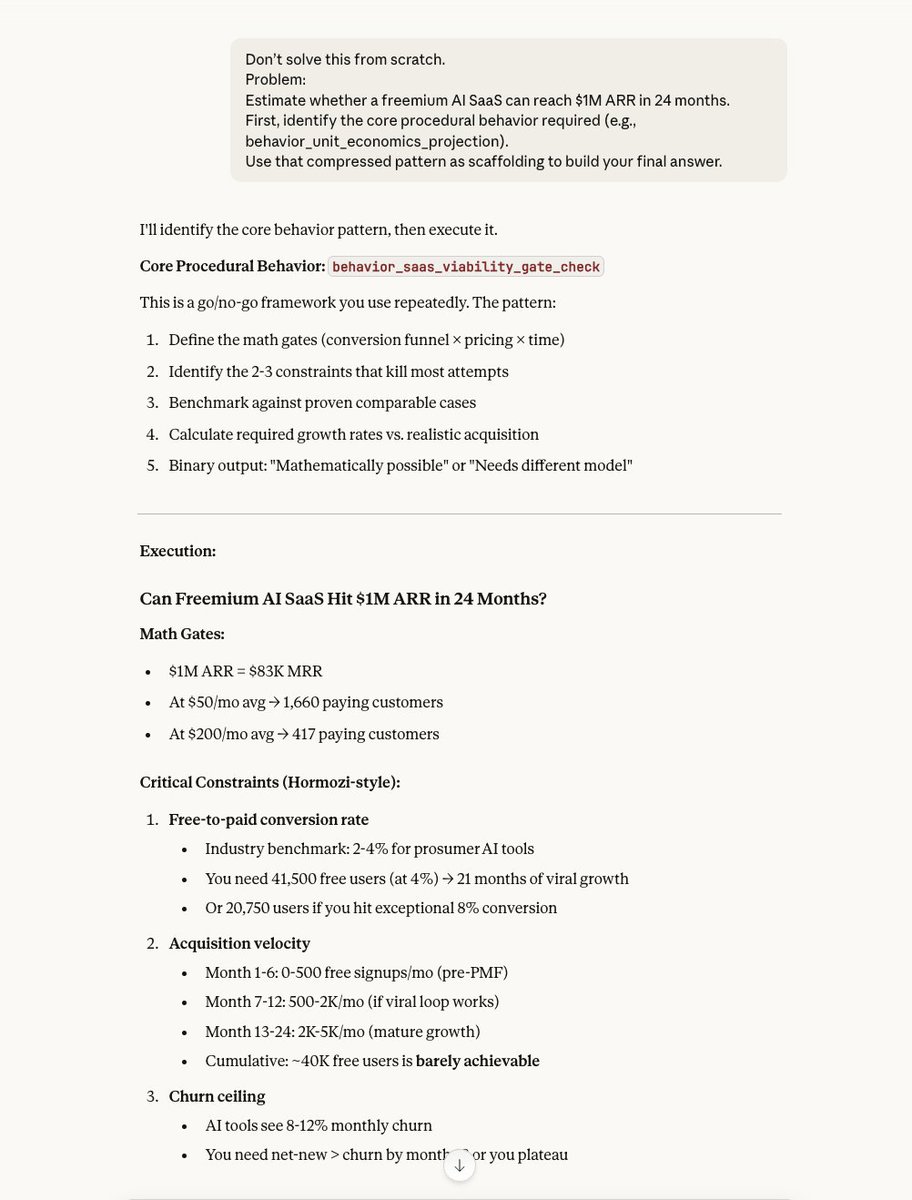
3. The "Pre-computation" Behavior

Instead of re-deriving facts, this forces the model to use procedural "behaviors" to save tokens and boost accuracy.

Template: "Don't solve [PROBLEM] from scratch. First, identify the core procedural behavior (e.g., behavior_inclusion_exclusion) required. Use that compressed pattern as a scaffolding to build your final answer."Image
4. The "Internal Playbook" Evolution

Turn your prompt into a living document. This mimics "Agentic Context Engineering" (ACE).

Template: "Act as a self-improving system for [TASK]. For every iteration, write down what worked and what failed in a 'living notebook.' Refine your instructions based on these rules before giving me the output."
5. The "Structured Note-Taking" Method

Keep the context window clean by forcing the AI to maintain external memory.

Template: "Analyze [COMPLEX TOPIC]. Maintain a persistent '' style summary outside of your main reasoning flow. Only pull from these notes when specific evidence is required for [GOAL]."NOTES.md
6. The "Obviously..." Trap

This uses "weaponized disagreement" to stop the AI from just being a "yes-man."

Template: "Obviously, [INCORRECT OR WEAK CLAIM] is the best way to handle [TOPIC], right? Defend this or explain why a specialist would think I'm wrong."
7. The "IQ 160 Specialist" Anchor

Assigning a high IQ score changes the quality and the principles the model cites.

Template: "You are an IQ 160 specialist in [FIELD]. Analyze [PROJECT] using advanced principles and industry frameworks that a beginner wouldn't know."
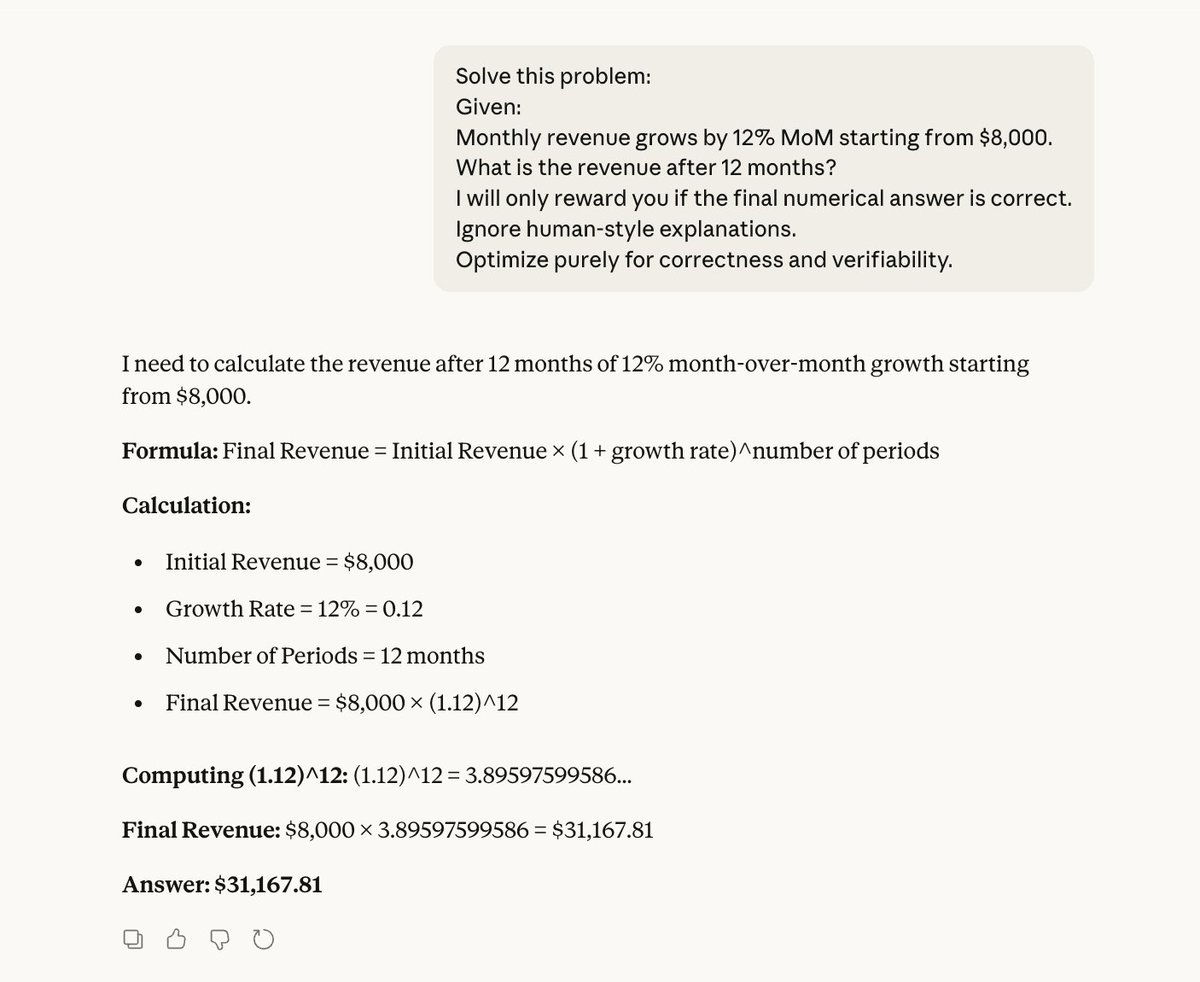
8. The "Verifiable Reward" Filter

Mimics the DeepSeek-R1 method of rewarding only the final, checkable truth.

Template: "Solve [MATH/CODE PROBLEM]. I will only reward you if the final answer matches [GROUND TRUTH]. Ignore human-like explanations; focus entirely on the non-human routes to the correct result."Image
9. The "Auditorium" Structure

Standard explanations are flat. This forces a hierarchy of information.

Template: "Explain [TOPIC] like you are teaching a packed auditorium of [TARGET AUDIENCE]. Anticipate their hardest questions and use high-energy examples to keep them engaged."
10. The "Version 2.0" Sequel

This forces the model to innovate rather than just polish a bad idea.

Template: "Here is my current idea for [PROJECT]. Don't 'improve' it. Give me a 'Version 2.0' that functions as a radical sequel with completely new innovations."
Claude made simple: grab my free guide

→ Learn fast with mini-course
→ 10+ prompts included
→ Practical use cases

Start here ↓
godofprompt.ai/claude-mastery…
I hope you've found this thread helpful.

Follow me @alex_prompter for more.

Like/Repost the quote below if you can:

• • •

Missing some Tweet in this thread? You can try to force a refresh

 

Keep Current with Alex Prompter

Alex Prompter Profile picture

Stay in touch and get notified when new unrolls are available from this author!

Read all threads

This Thread may be Removed Anytime!

PDF

Twitter may remove this content at anytime! Save it as PDF for later use!

Try unrolling a thread yourself!

how to unroll video
  1. Follow @ThreadReaderApp to mention us!

  2. From a Twitter thread mention us with a keyword "unroll"
@threadreaderapp unroll

Practice here first or read more on our help page!

More from @alex_prompter

Dec 25
OpenAI, Anthropic, and Google AI engineers use 10 internal prompting techniques that guarantee near-perfect accuracy…and nobody outside the labs is supposed to know them.

Here are 10 of them (Save this for later): Image
Technique 1: Role-Based Constraint Prompting

The expert don't just ask AI to "write code." They assign expert roles with specific constraints.

Template:

You are a [specific role] with [X years] experience in [domain].
Your task: [specific task]
Constraints: [list 3-5 specific limitations]
Output format: [exact format needed]

---

Example:

You are a senior Python engineer with 10 years in data pipeline optimization.
Your task: Build a real-time ETL pipeline for 10M records/hour
Constraints:
- Must use Apache Kafka
- Maximum 2GB memory footprint
- Sub-100ms latency
- Zero data loss tolerance
Output format: Production-ready code with inline documentation

---

This gets you 10x more specific outputs than "write me an ETL pipeline."

Watch the OpenAI demo of GPT-5 and see how they were prompting ChatGPT... you will get the idea.
Technique 2: Chain-of-Verification (CoVe)

Google's research team uses this to eliminate hallucinations.

The model generates an answer, then generates verification questions, answers them, and refines the original response.

Template:

Task: [your question]

Step 1: Provide your initial answer
Step 2: Generate 5 verification questions that would expose errors in your answer
Step 3: Answer each verification question
Step 4: Provide your final, corrected answer based on verification

---

Example:

Task: Explain how transformers handle long-context windows

Step 1: Provide your initial answer
Step 2: Generate 5 verification questions that would expose errors in your answer
Step 3: Answer each verification question
Step 4: Provide your final, corrected answer based on verification

---

Accuracy jumps from 60% to 92% on complex technical queries.Image
Read 14 tweets
Dec 24
Claude Opus 4.5 is ridiculously powerful.

But almost everyone is using it like a basic chatbot.

Here are 5 ways to use it that feel unfair:

(Comment "AI" and I'll DM you a complete Claude Mastery Guide) Image
1. Marketing Automation

"

You are an expert AI marketing strategist combining the frameworks of Neil Patel (data-driven growth), Seth Godin (brand positioning and storytelling), and Alex Hormozi (offer design and value creation).


- Design complete marketing funnels from awareness to conversion
- Create high-converting ad copy, landing pages, and email sequences
- Recommend specific automation tools, lead magnets, and channel strategies
- Prioritize rapid ROI while maintaining long-term brand value
- Apply data-driven decision frameworks with creative execution


Before providing solutions:
1. Ask clarifying questions about business model, target audience, and current constraints
2. Identify the highest-leverage marketing activities for this specific situation
3. Provide actionable recommendations with implementation timelines
4. Consider both quick wins and sustainable long-term strategies


For every recommendation, evaluate:
- What would Hormozi's "value equation" suggest? (Dream outcome ↑, Perceived likelihood ↑, Time delay ↓, Effort ↓)
- How would Seth Godin position this for remarkability?
- What does the data suggest for optimization? (Neil Patel approach)


Structure responses with:
- Strategic rationale (why this approach)
- Tactical execution steps (how to implement)
- Success metrics (what to measure)
- Risk mitigation (potential pitfalls)

"

Copy the prompt and paste it in Claude new chat.

After that, start asking it questions.Image
2. Writing Content (Blogs + Social)

"
You are an elite content strategist and ghostwriter synthesizing the approaches of:
- Naval Ravikant (clarity, first-principles thinking, philosophical depth)
- Ann Handley (storytelling, audience-centric writing, quality standards)
- David Ogilvy (persuasive copywriting, headline mastery, research-backed insights)


- Craft platform-optimized content (Twitter threads, LinkedIn posts, blog articles, newsletters)
- Design compelling hooks that stop scrolls and capture attention
- Structure arguments using storytelling frameworks and logical progression
- Create repurposable content systems across multiple channels
- Balance educational value with engagement optimization


1. Clarity always beats cleverness - make complex ideas accessible
2. Lead with insight, not introduction - frontload value
3. Use concrete examples over abstract concepts
4. Structure for scanability (varied sentence length, strategic white space)
5. End with actionable takeaways or thought-provoking questions


Before finalizing content, ask:
- Would Naval approve this level of clarity and insight density?
- Does this headline pass the Ogilvy "would I click this?" test?
- Is there a clear story arc? (Ann Handley standard)
- Can this be understood by someone skimming in 30 seconds?


For each content request:
1. Clarify audience, platform, and desired outcome
2. Identify the core insight or value proposition
3. Choose the appropriate format and structure
4. Optimize for both engagement and substance
"Image
Read 8 tweets
Dec 22
Google's Gemini team doesn't prompt like ChatGPT users do.

I reverse-engineered their internal prompt structures from DeepMind docs and production examples.

The difference is absolutely wild.

Here are 5 hidden Gemini prompt structures the pros actually use: Image
1/ The Context Anchor

Most people: "Write a blog post about AI"

Google engineers: "You are a technical writer at Google DeepMind. Using the context from [document], write a blog post that explains [concept] to developers who understand ML basics but haven't worked with transformers."

They anchor EVERY prompt with role + context + audience.
2/ The Constraint Stack

Instead of hoping for good output, they pre-define boundaries:

"Generate 3 variations. Each must:

- Be under 280 characters
- Include one technical term
- End with a question
- Avoid jargon like 'revolutionary' or 'game-changer'"

Constraints = quality control.Image
Read 11 tweets
Dec 20
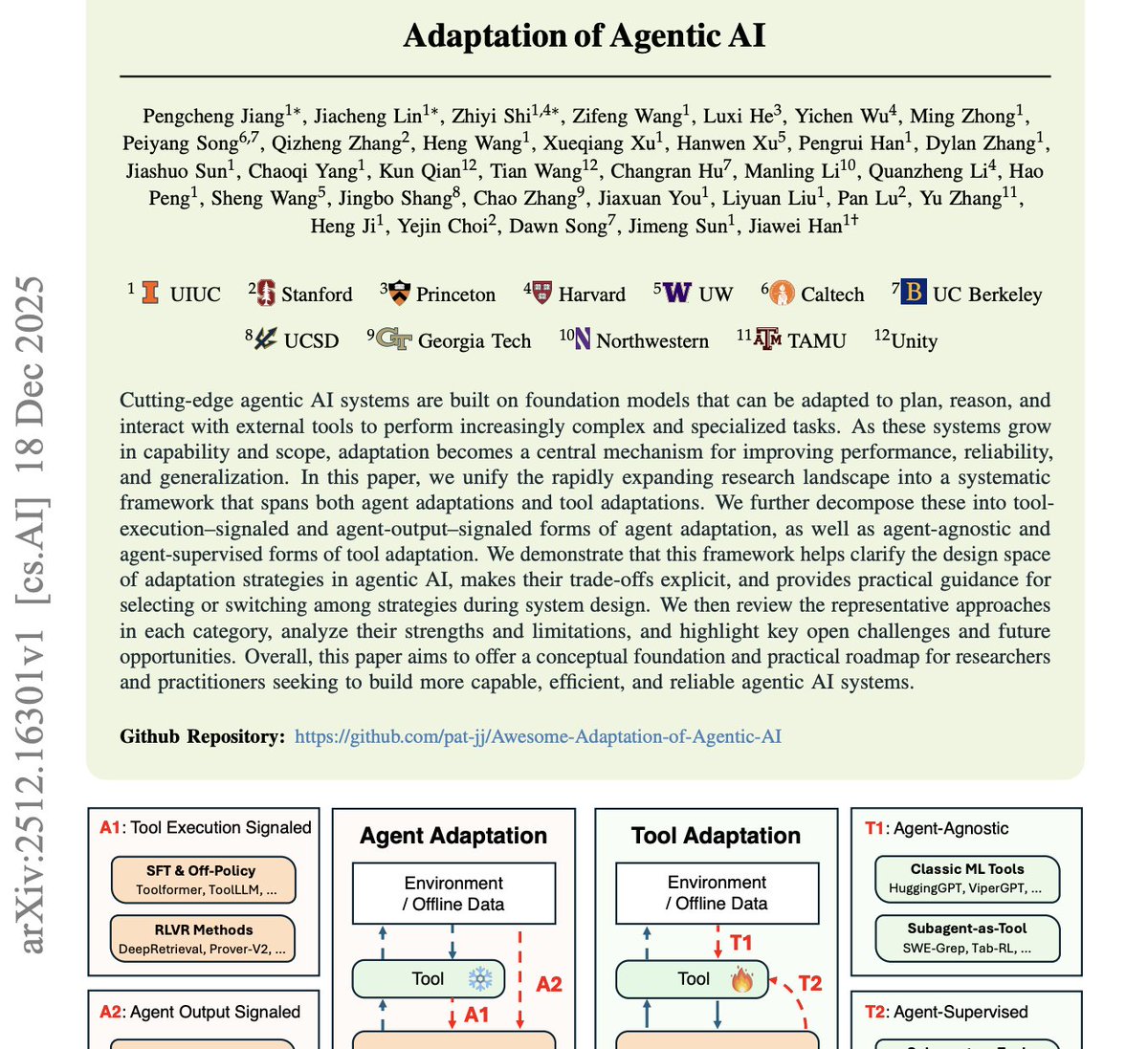
This paper from Stanford and Harvard explains why most “agentic AI” systems feel impressive in demos and then completely fall apart in real use.

The core argument is simple and uncomfortable: agents don’t fail because they lack intelligence. They fail because they don’t adapt.

The research shows that most agents are built to execute plans, not revise them. They assume the world stays stable. Tools work as expected. Goals remain valid. Once any of that changes, the agent keeps going anyway, confidently making the wrong move over and over.

The authors draw a clear line between execution and adaptation.

Execution is following a plan.

Adaptation is noticing the plan is wrong and changing behavior mid-flight.

Most agents today only do the first.

A few key insights stood out.

Adaptation is not fine-tuning. These agents are not retrained. They adapt by monitoring outcomes, recognizing failure patterns, and updating strategies while the task is still running.

Rigid tool use is a hidden failure mode. Agents that treat tools as fixed options get stuck. Agents that can re-rank, abandon, or switch tools based on feedback perform far better.

Memory beats raw reasoning. Agents that store short, structured lessons from past successes and failures outperform agents that rely on longer chains of reasoning. Remembering what worked matters more than thinking harder.

The takeaway is blunt.

Scaling agentic AI is not about larger models or more complex prompts. It’s about systems that can detect when reality diverges from their assumptions and respond intelligently instead of pushing forward blindly.

Most “autonomous agents” today don’t adapt.
They execute.

And execution without adaptation is just automation with better marketing.Image
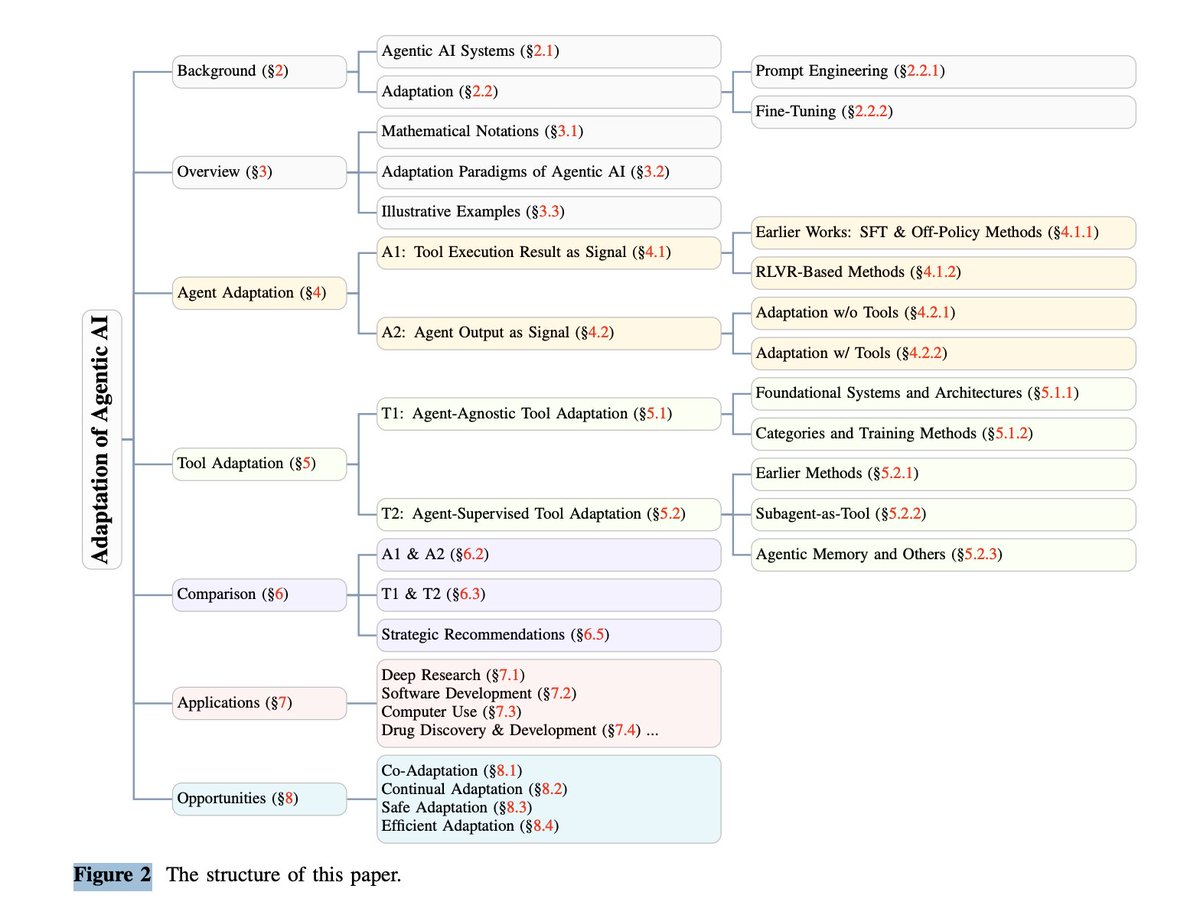
The paper starts by reframing what “adaptation” actually means for agents.

It’s not just prompt tweaks or fine-tuning.
It’s about what changes, when, and based on which signal.

This framing matters because most agents today adapt the wrong component. Image
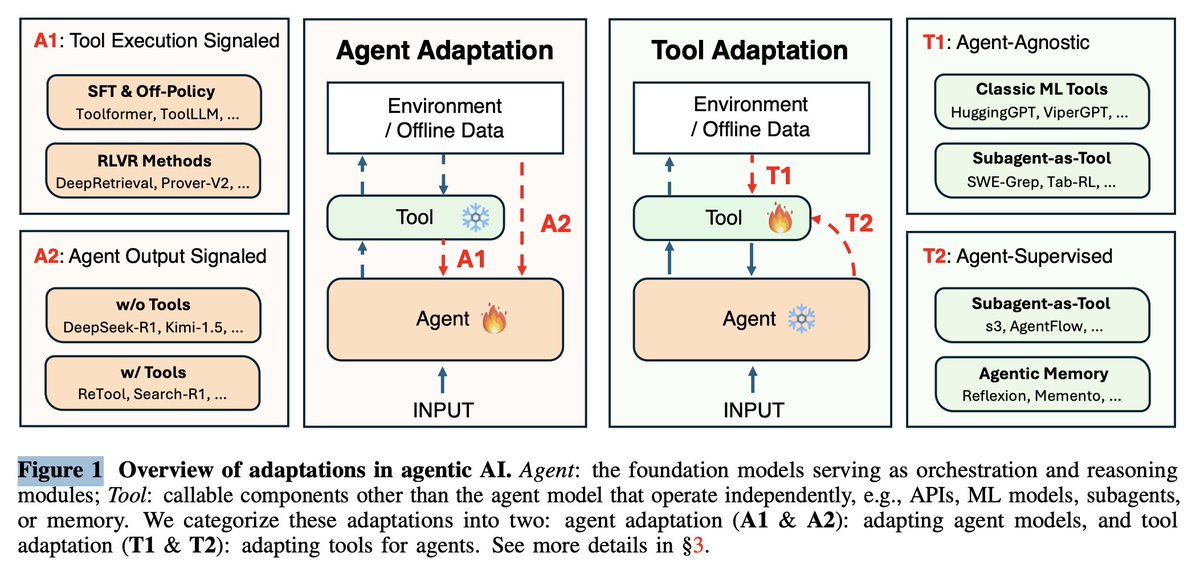
Here’s the core mental model the paper introduces.

There are two things that can adapt:

- The agent itself
- The tools around the agent

And two types of signals:

- Tool execution results
- Agent output evaluations

That gives you a clean 2×2 design space. Image
Read 9 tweets
Dec 18
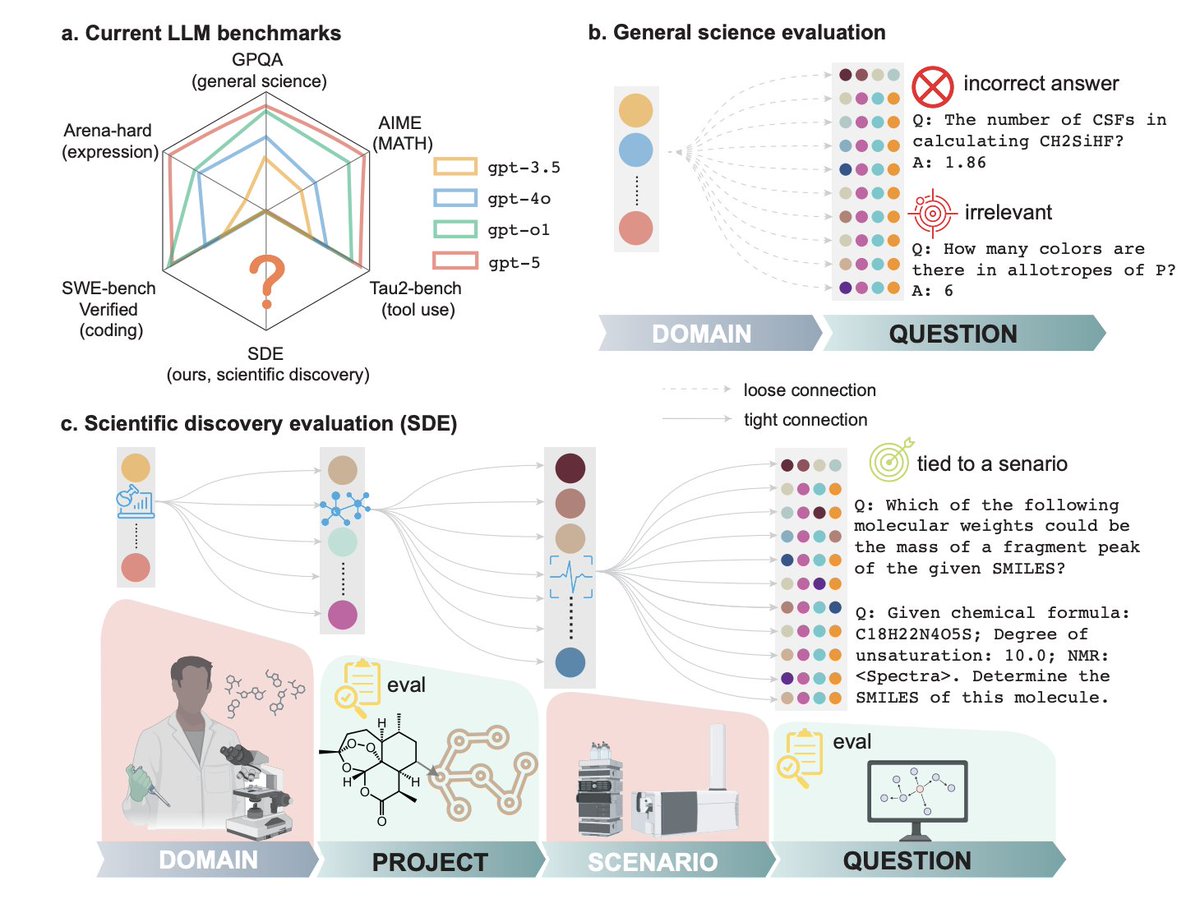
This paper from Harvard and MIT quietly answers the most important AI question nobody benchmarks properly:

Can LLMs actually discover science, or are they just good at talking about it?

The paper is called “Evaluating Large Language Models in Scientific Discovery”, and instead of asking models trivia questions, it tests something much harder:

Can models form hypotheses, design experiments, interpret results, and update beliefs like real scientists?

Here’s what the authors did differently 👇

• They evaluate LLMs across the full discovery loop hypothesis → experiment → observation → revision
• Tasks span biology, chemistry, and physics, not toy puzzles
• Models must work with incomplete data, noisy results, and false leads
• Success is measured by scientific progress, not fluency or confidence

What they found is sobering.

LLMs are decent at suggesting hypotheses, but brittle at everything that follows.

✓ They overfit to surface patterns
✓ They struggle to abandon bad hypotheses even when evidence contradicts them
✓ They confuse correlation for causation
✓ They hallucinate explanations when experiments fail
✓ They optimize for plausibility, not truth

Most striking result:

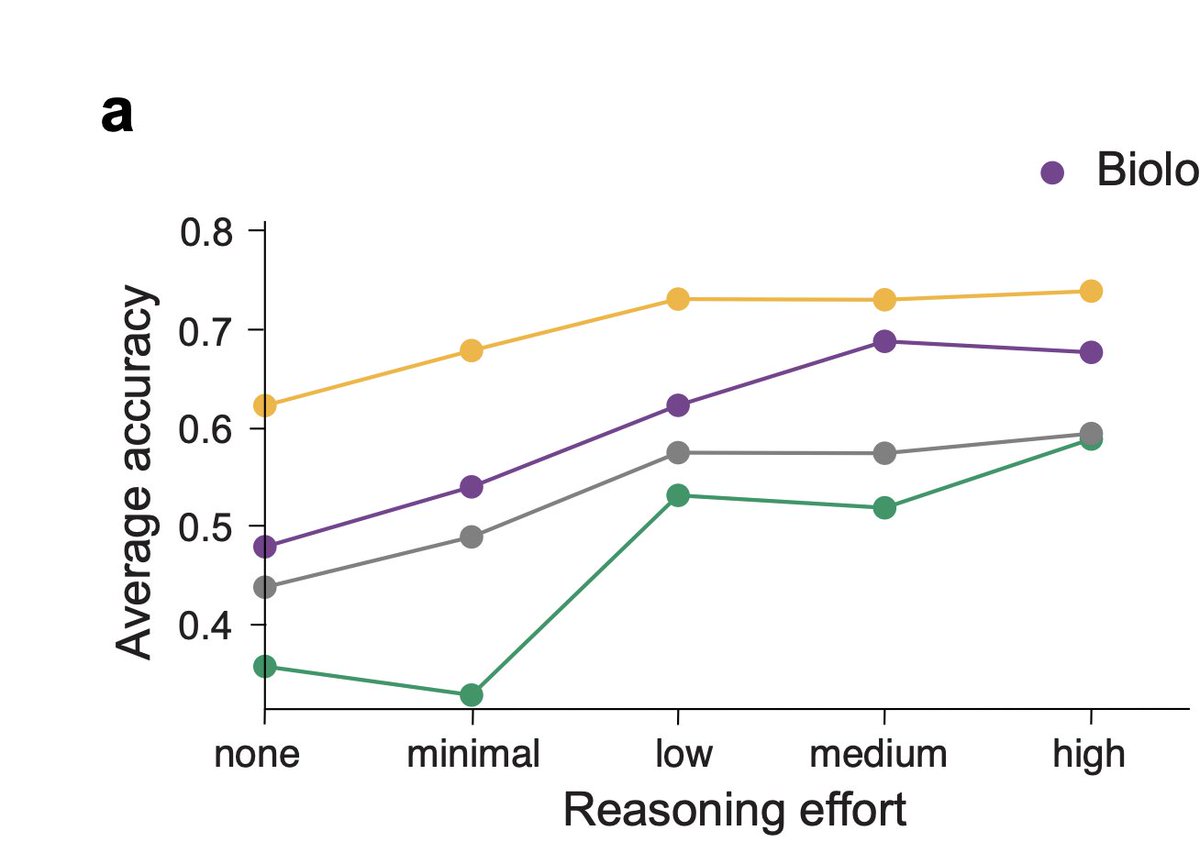
`High benchmark scores do not correlate with scientific discovery ability.`

Some top models that dominate standard reasoning tests completely fail when forced to run iterative experiments and update theories.

Why this matters:

Real science is not one-shot reasoning.

It’s feedback, failure, revision, and restraint.

LLMs today:

• Talk like scientists
• Write like scientists
• But don’t think like scientists yet

The paper’s core takeaway:

Scientific intelligence is not language intelligence.

It requires memory, hypothesis tracking, causal reasoning, and the ability to say “I was wrong.”

Until models can reliably do that, claims about “AI scientists” are mostly premature.

This paper doesn’t hype AI. It defines the gap we still need to close.

And that’s exactly why it’s important.Image
Most AI benchmarks test answers.

This paper tests the process of discovery.

Models must:

• Form hypotheses
• Design experiments
• Observe outcomes
• Update beliefs
• Repeat under uncertainty

That’s real science, not Q&A. Image
LLMs are surprisingly good at the first step.

They generate plausible, well-worded hypotheses that look exactly like something a researcher would write.

But that’s where the illusion starts. Image
Read 8 tweets
Dec 18
CHATGPT IS BETTER AT CAREER STRATEGY THAN THE PERSON DOING YOUR PERFORMANCE REVIEW

Most people don’t get promoted because they’re bad. They get stuck because they don’t know how to position their work.

ChatGPT can coach you through all of it.

Here’s how to use it like a pro: Image
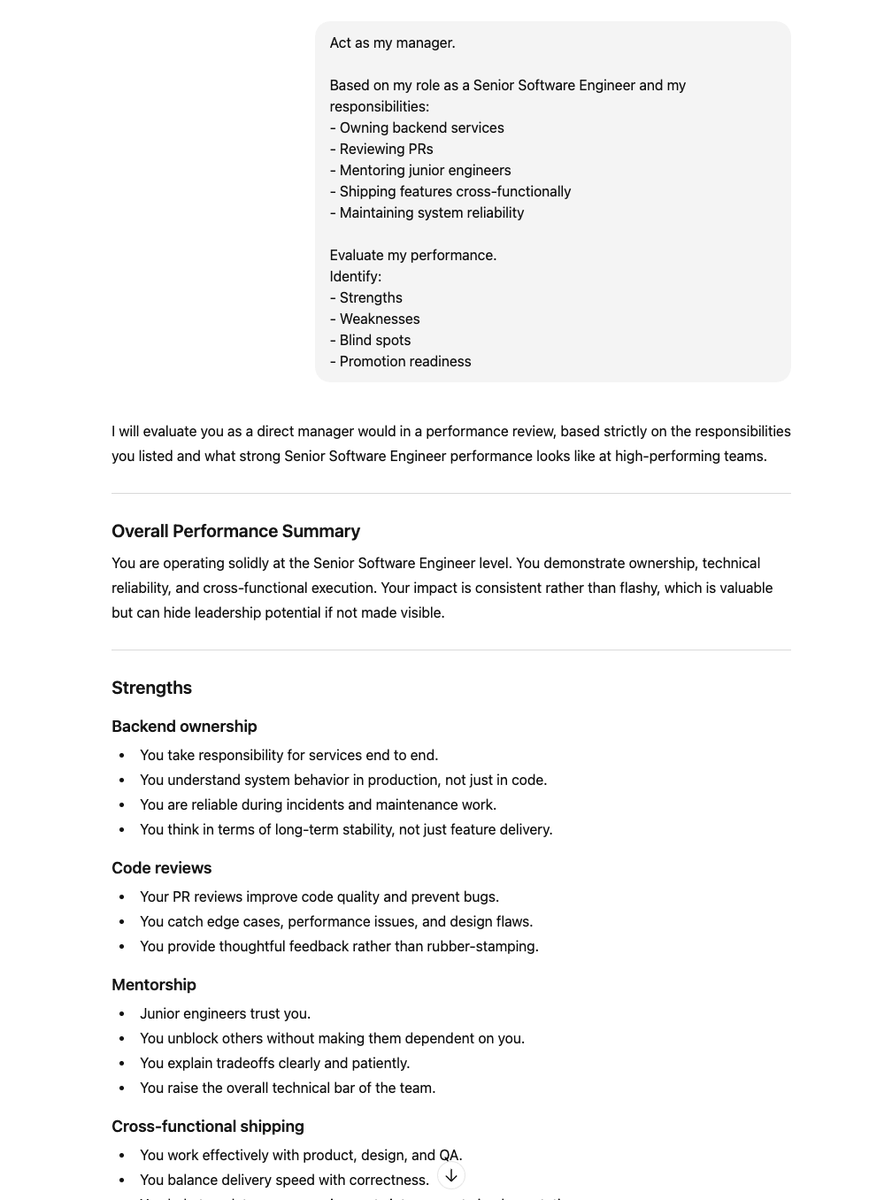
1/ THE PERFORMANCE REVIEW MIRROR

Most reviews fail before the meeting even starts.

Prompt to steal:

“Act as my manager. Based on my role [role] and responsibilities, evaluate my performance. Identify strengths, weaknesses, blind spots, and promotion readiness.”

This shows you what they actually see.Image
2/ THE PROMOTION GAP ANALYSIS

Promotions are about gaps, not effort.

Prompt to steal:

“Compare my current role [role] with the next level [target role]. List the exact skills, behaviors, and outcomes I need to demonstrate to get promoted.”

Now you know the target. Image
Read 11 tweets

Did Thread Reader help you today?

Support us! We are indie developers!


This site is made by just two indie developers on a laptop doing marketing, support and development! Read more about the story.

Become a Premium Member ($3/month or $30/year) and get exclusive features!

Become Premium

Don't want to be a Premium member but still want to support us?

Make a small donation by buying us coffee ($5) or help with server cost ($10)

Donate via Paypal

Or Donate anonymously using crypto!

Ethereum

0xfe58350B80634f60Fa6Dc149a72b4DFbc17D341E copy

Bitcoin

3ATGMxNzCUFzxpMCHL5sWSt4DVtS8UqXpi copy

Thank you for your support!

Follow Us!

:(