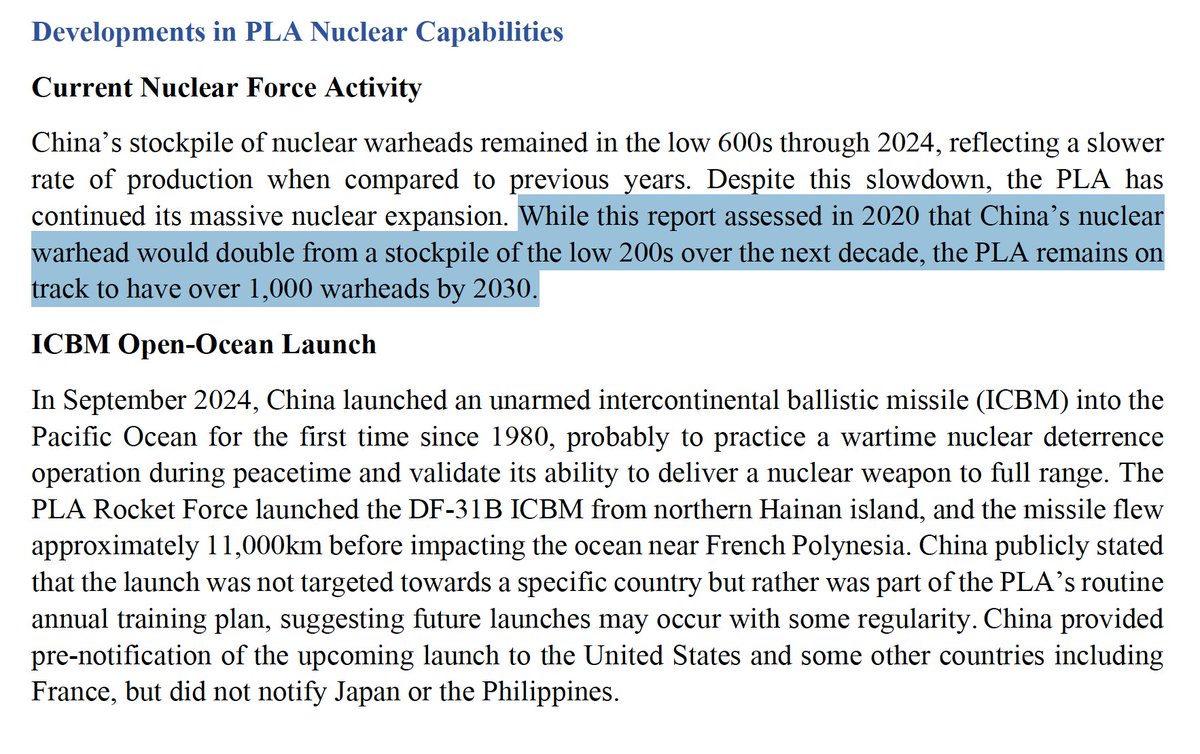
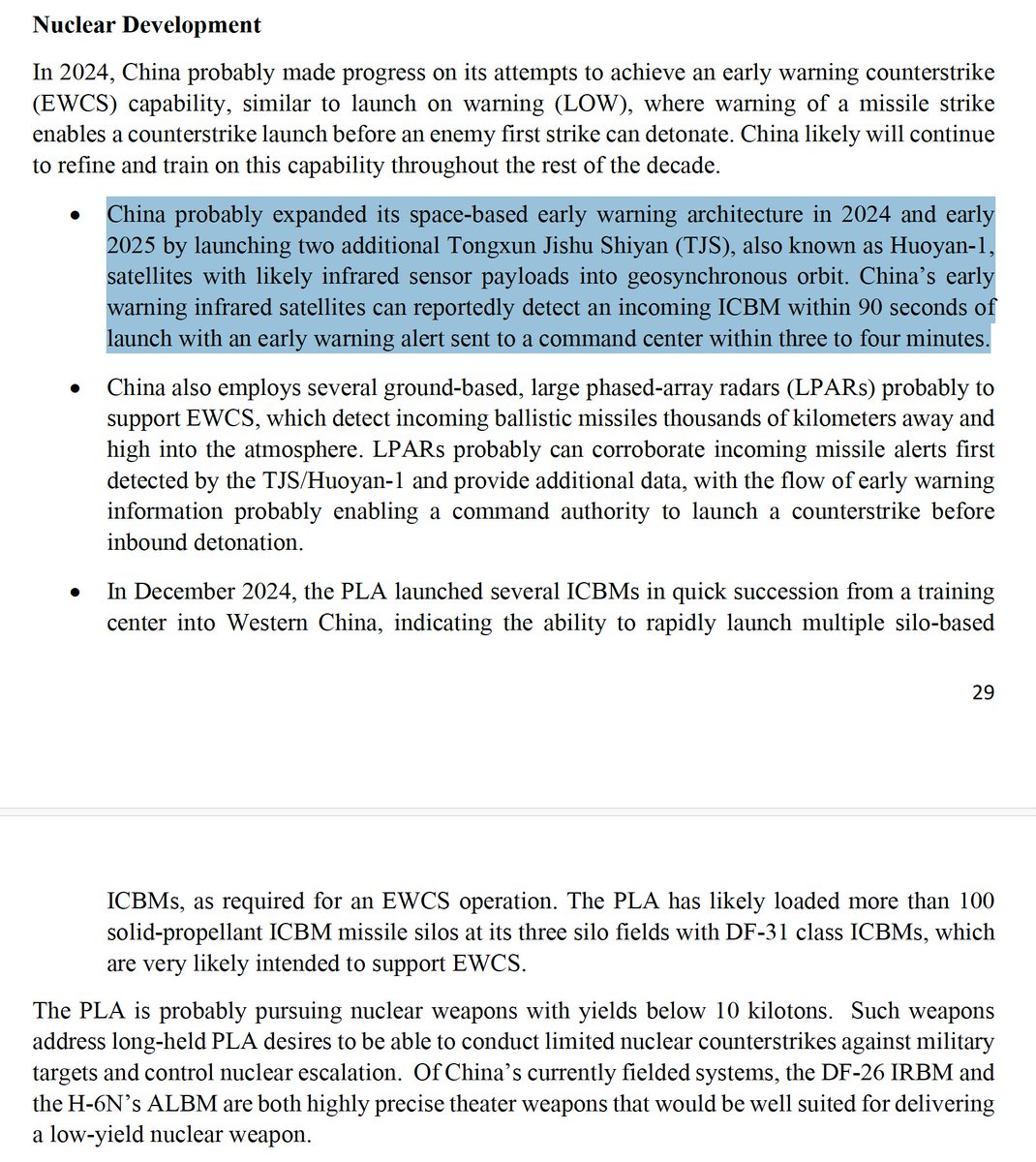
Last week saw the release of the 2025 China Military Power Report (CMPR). For those not familiar, this is DoD’s Congressionally-mandated unclassified update on the Chinese military. It’s an annual feast of open-source data.
So, here are few thoughts (Part 1) on the report:
So, here are few thoughts (Part 1) on the report:
I'll focus on those things that I thought were most noteworthy: significant changes from previous reports, reveals of information not previously seen in the open-source world, etc.
Where there is a point of comparison I'll have the new report on the left, older on the right.
Where there is a point of comparison I'll have the new report on the left, older on the right.
The new report is fairly different: for one thing, it clocks in at 100 pages to the previous report's 182.
From the top, the preface differs: the 2024 report's reads mostly like an intel product, where there's more proclamation of administration policy in the new one.
From the top, the preface differs: the 2024 report's reads mostly like an intel product, where there's more proclamation of administration policy in the new one.
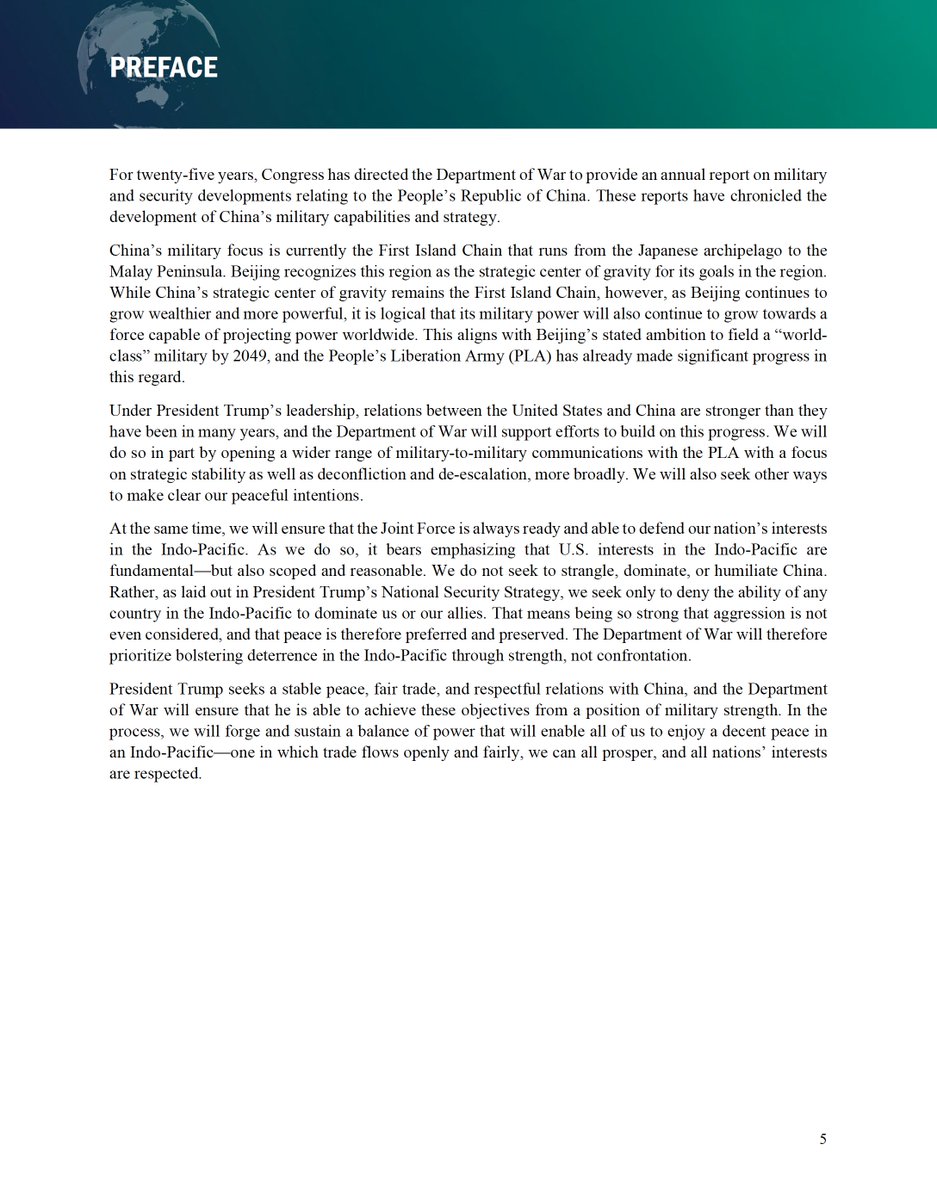
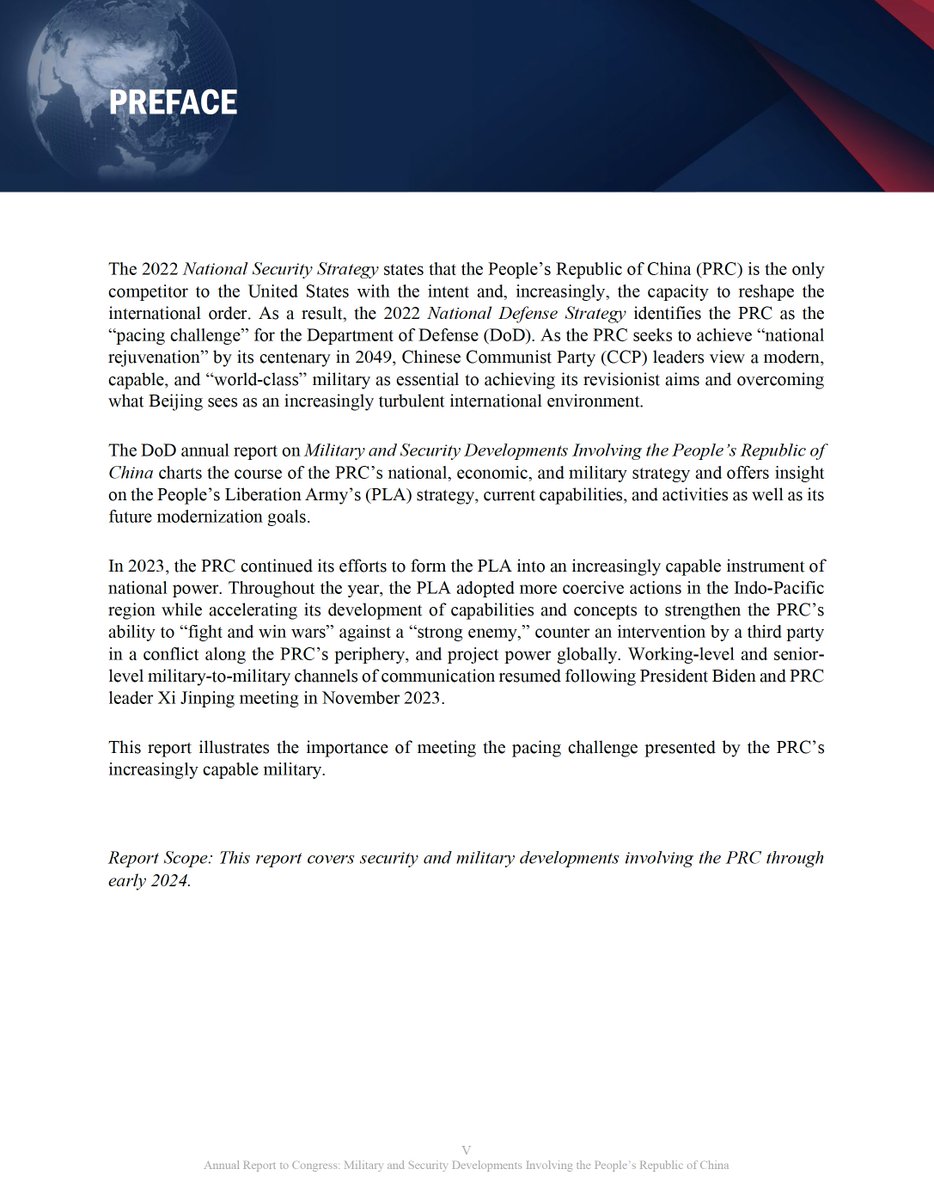
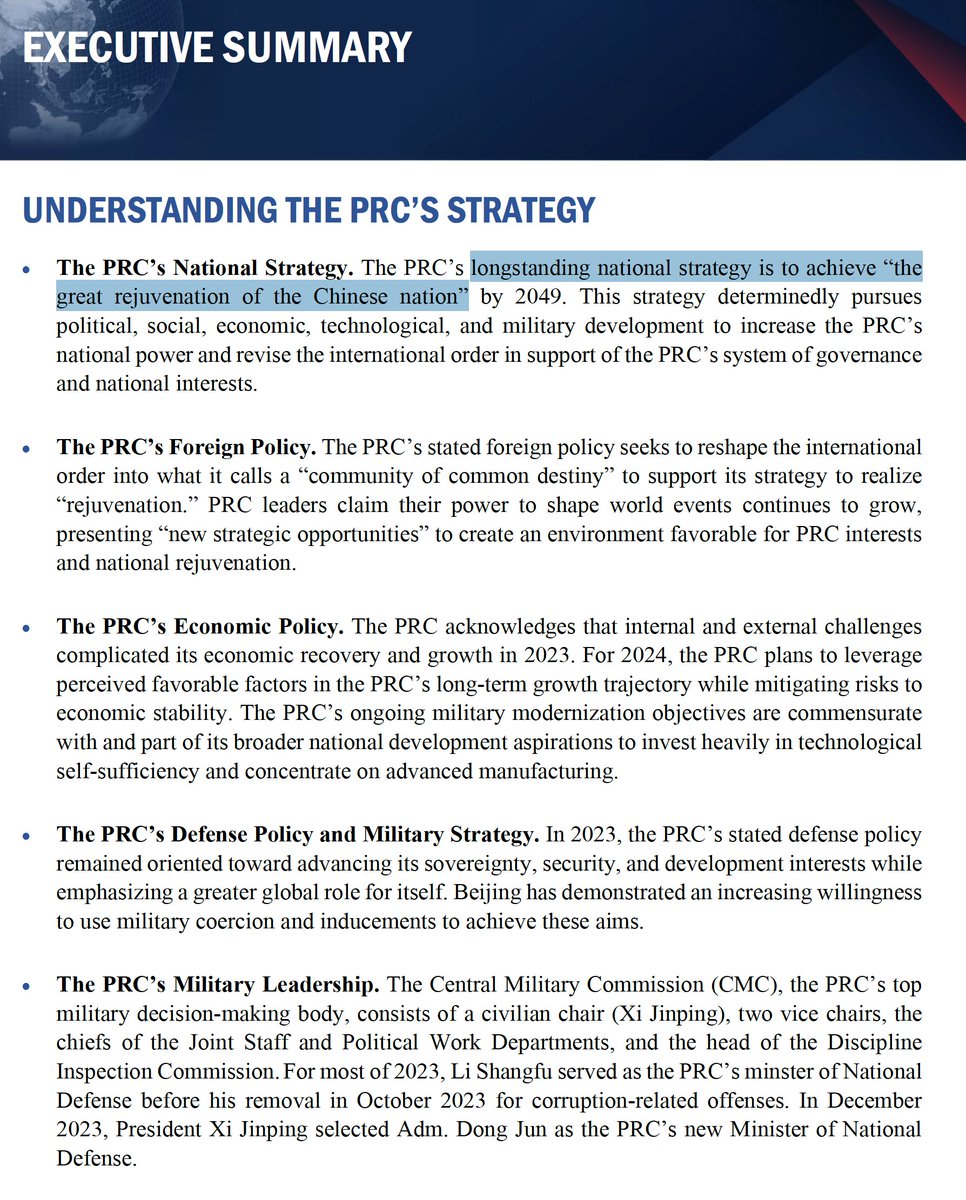
While the 2024 report's exec summary says the driver of China's national strategy is to achieve China's "great rejuvenation" by 2049, the 2025 report sees China overall goal as the displacement of the U.S. as the world's most powerful nation.

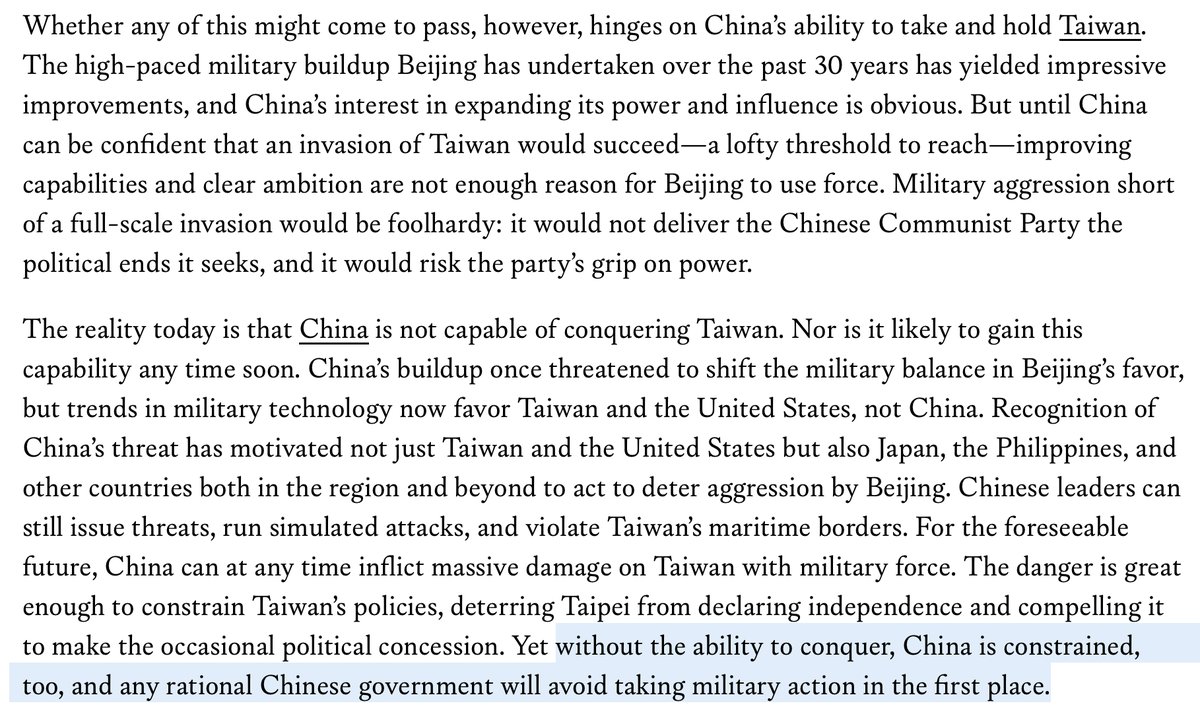
The new report's exec summary makes a pretty strong statement: the PLA is making progress specifically toward its goal to be able to achieve victory over Taiwan and balance against the U.S. - that China expects to be able to "fight and win a war on Taiwan by the end of 2027".

This is a significant change from last year's report (see story). I don't know if that change in assessment is due to a change in analysts, administrations, the trends in the military balance, or a mix of factors.
In any case, I'm inclined to agree.
news.usni.org/2024/12/19/chi…
In any case, I'm inclined to agree.
news.usni.org/2024/12/19/chi…
The new report also states that China has been practicing components of all of its options to force Taiwan unification, including strikes on U.S. forces in the Pacific that could "seriously challenge and disrupt" them out to 1500-2000 nm.
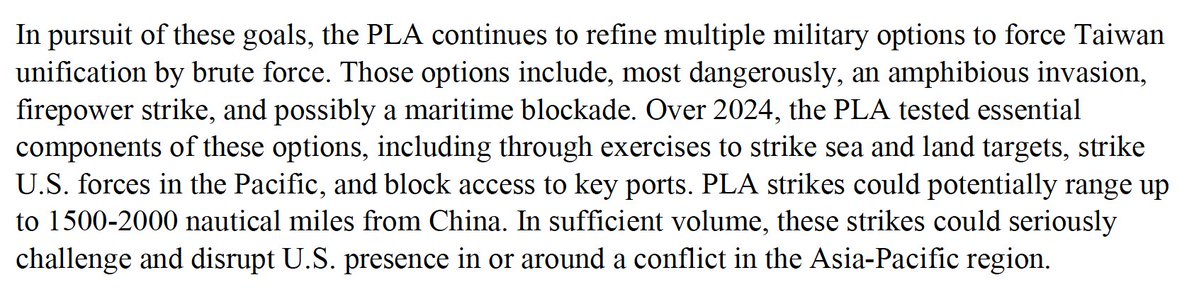
Again, I agree with this assessment—and have for some time.
Would you like to know more? cnas.org/publications/r…
Would you like to know more? cnas.org/publications/r…
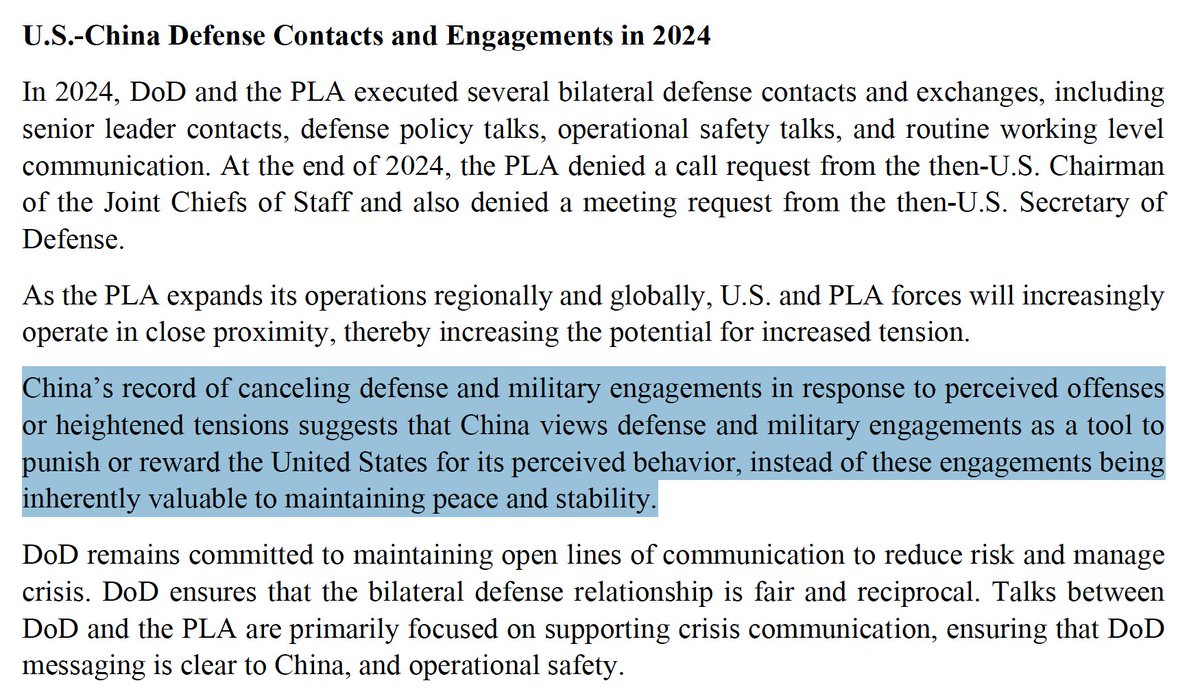
The report makes a good point about US-PRC defense engagements: as much as some U.S. opinion-havers might talk about how more of those engagements are needed to lower the risk of conflict, they are addressing the wrong audience—the PRC sees denial of those contacts as a tool.
On the topic of the conflict with the Houthis in the Red Sea, the report confirms that China engaged the Houthis to ensure the continued safety of their shipping in the area, and also sold dual-use components that were used in attacks on shipping.
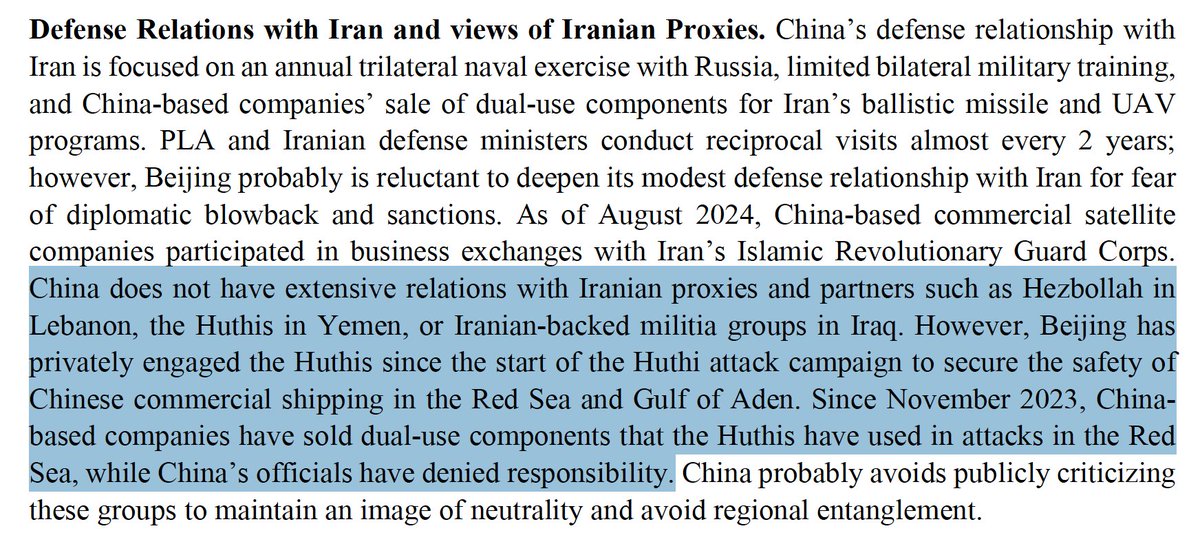
This is a point I've harped on before: China claims to be a provider of international security and a guarantor of safe shipping, when that's just not the case:
https://x.com/tshugart3/status/1795824808271466761
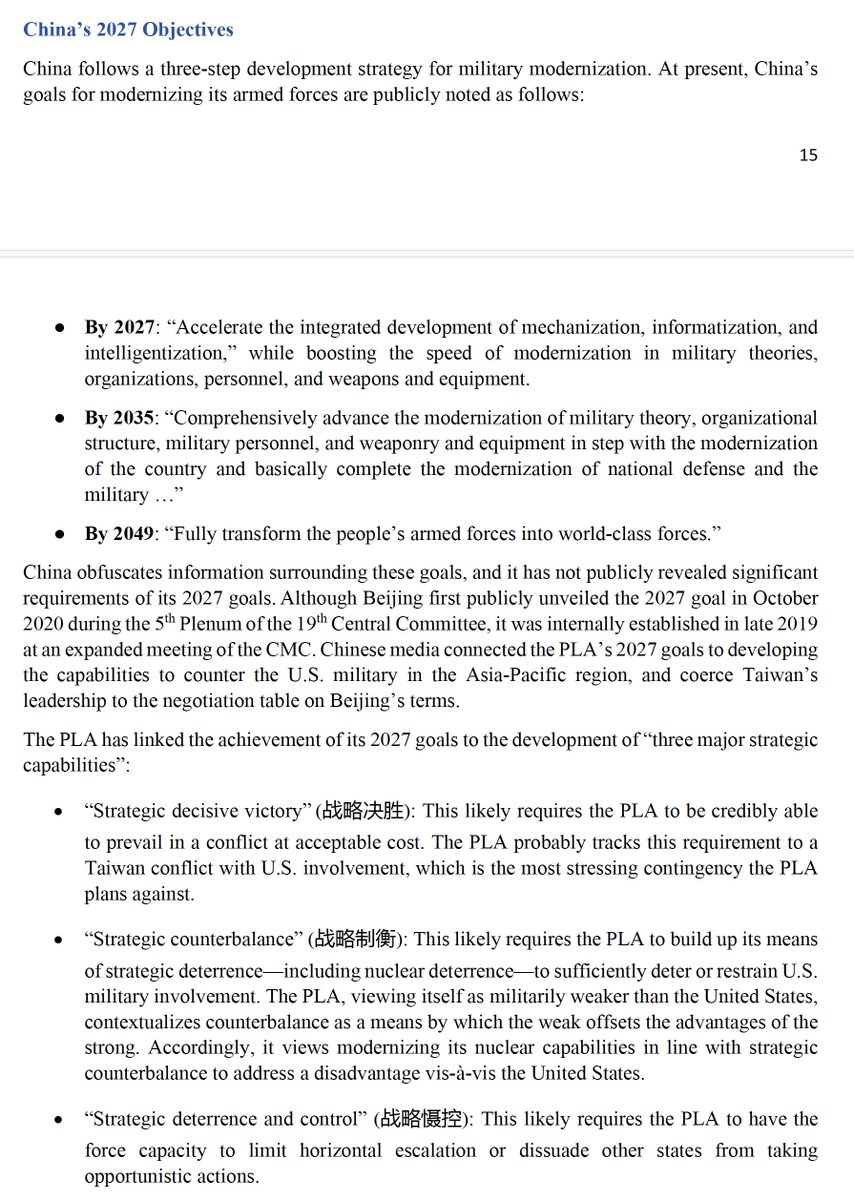
The new report provides a good deal more clarity on China's 2027 goals, which have been a point of contention in recent years:defensenews.com/pentagon/2024/…
It makes clear that, despite obfuscation on China's part, the PLA's 2027 goals really are about the U.S. and Taiwan—and the ability to win a war over it.
Later, I found it interesting that the report discussed how the PLA's National Defense University (NDU) has updated its joint operations course to include scenario-based operations...
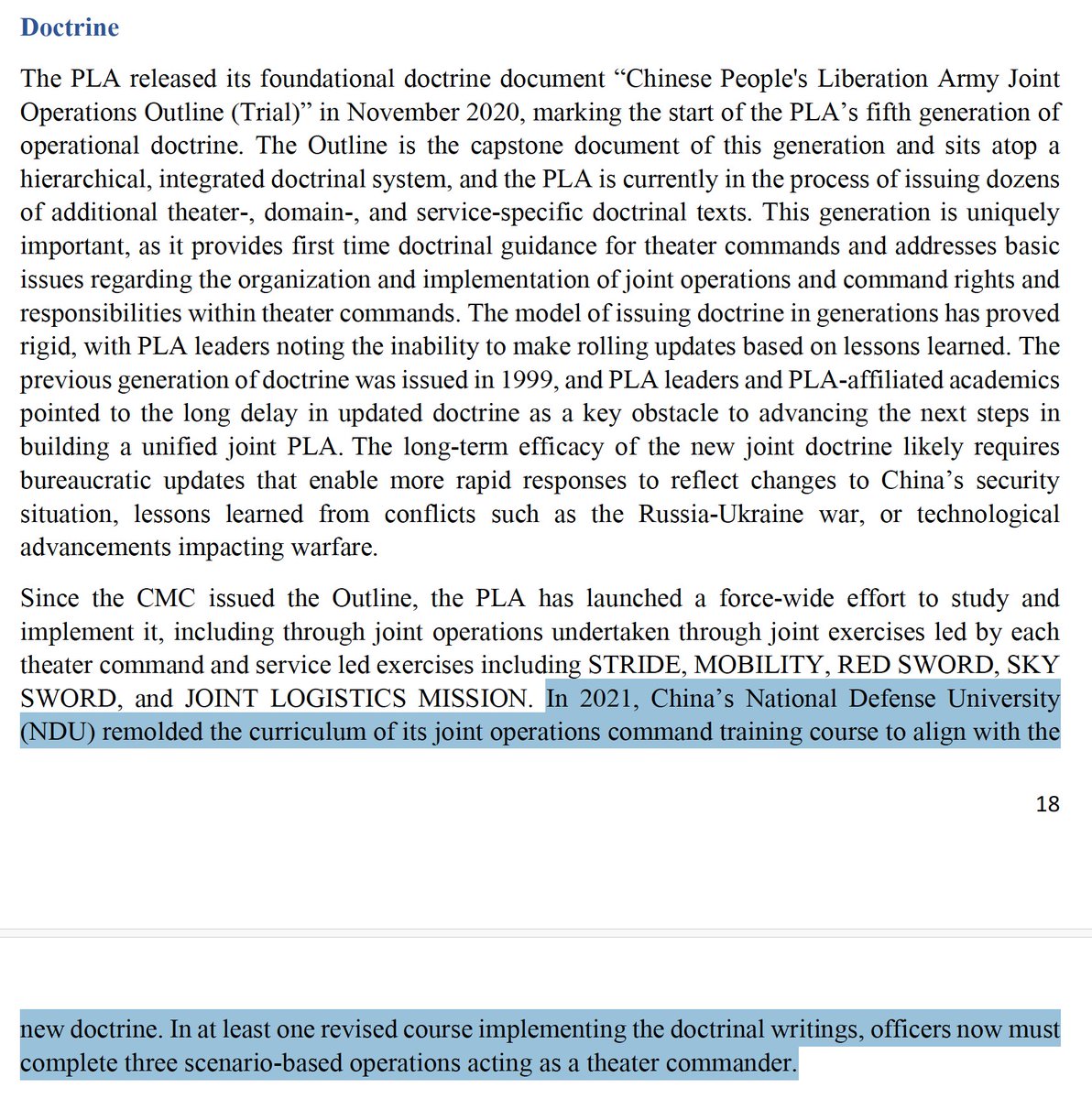
...as this was something I saw in the PLA's recent "Forging Ahead" series, and which I talked about here:
https://x.com/tshugart3/status/1971934395163369684
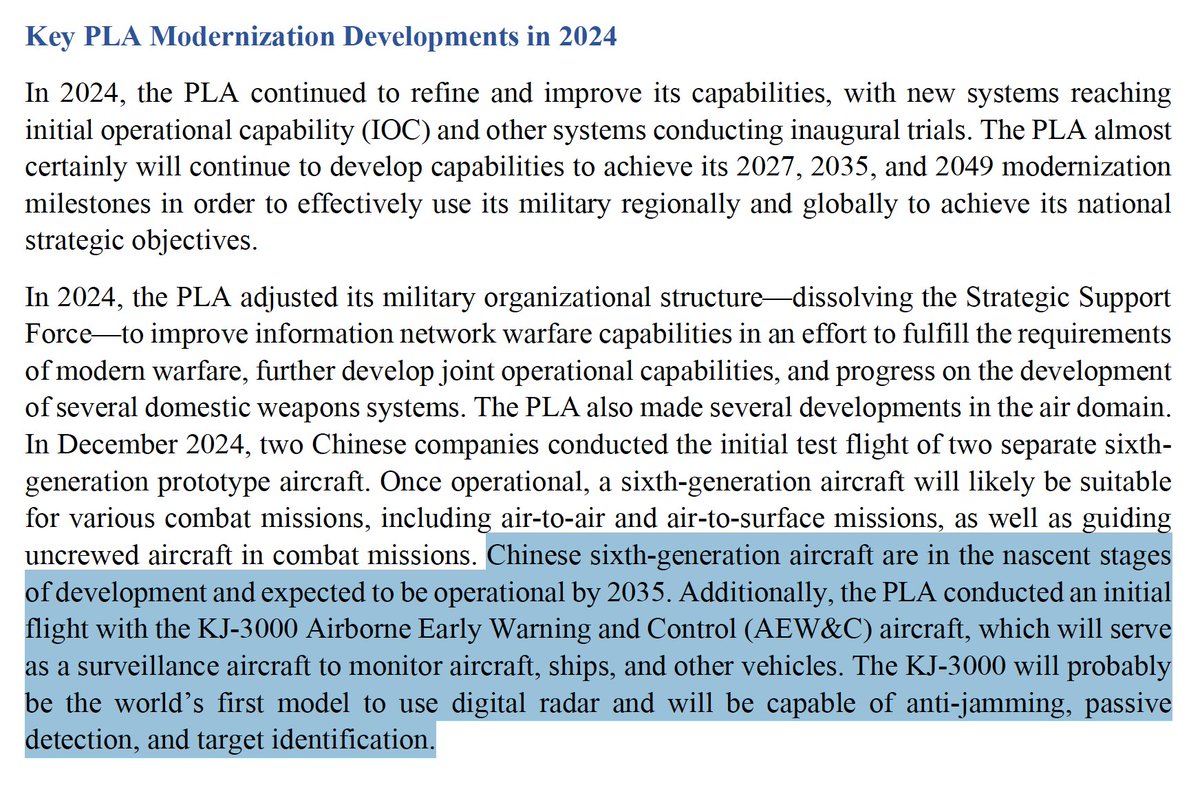
On the topic of PLA modernization, we see confirmation China's been testing 6th-gen aircraft, with an operational timeline of 2035.
We're also told China's KJ-3000 AEW aircraft will probably be the first to use digital radar, though I don't know why the E-2D & E-7 don't count?
We're also told China's KJ-3000 AEW aircraft will probably be the first to use digital radar, though I don't know why the E-2D & E-7 don't count?
In the section on PLA Navy modernization (which lacks some data like total hull count predictions as in previous reports), we see a statement that's been making some headlines: that the PLAN aims to produce six MORE aircraft carriers over the next decade. news.usni.org/2025/12/24/chi…
This is the first time I can recall seeing a PRC carrier force size prediction from DoD, and tbh I find it somewhat astonishing.
This means that in addition to the 2 ski-jump carriers, and Fujian which is on sea trials now, and the purported CVN (not confirmed here by DoD)...
This means that in addition to the 2 ski-jump carriers, and Fujian which is on sea trials now, and the purported CVN (not confirmed here by DoD)...
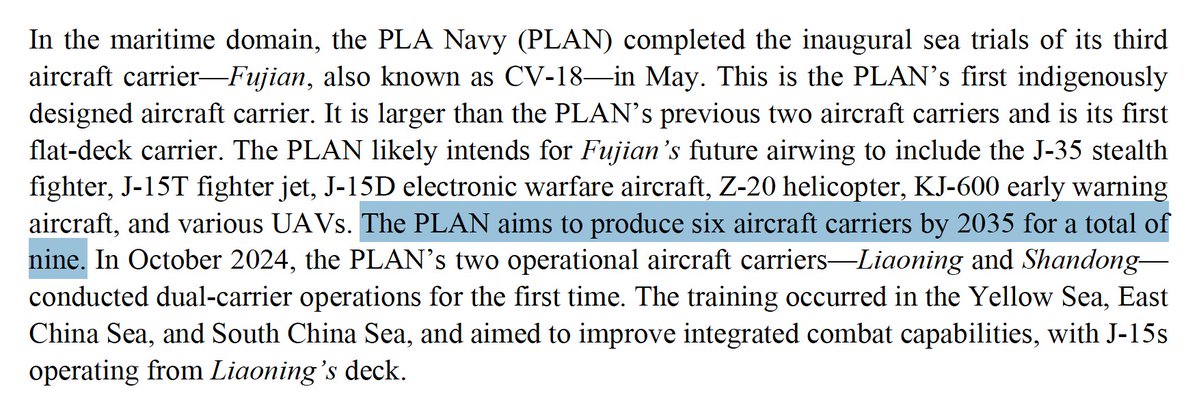
...DoD expects the PLA to at least launch five MORE carriers in the next 10 years?
For perspective, the USN will be buying its next five carriers over more than twice that timeline so...given that U.S. carriers are deployed globally, they will end up outnumbered in the Pacific.
For perspective, the USN will be buying its next five carriers over more than twice that timeline so...given that U.S. carriers are deployed globally, they will end up outnumbered in the Pacific.
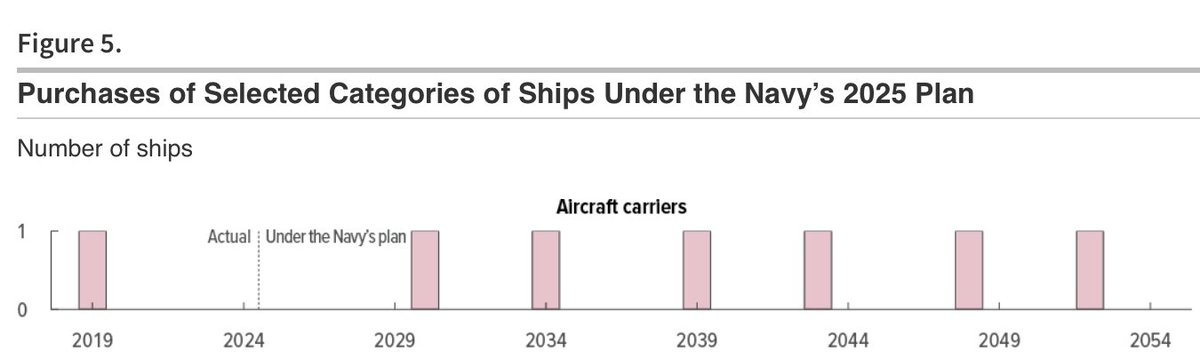
One things is clear: for all the talk about the carrier being an obsolete platform because of things like drones and anti-ship ballistic missiles (ASBMs), the Chinese (who are the world's largest producer of both) clearly haven't gotten the message. 🤷♂️
nationalinterest.org/feature/why-ai…
nationalinterest.org/feature/why-ai…
In a discussion of the PLA's ISR complex, we once again see the statement that PRC strikes would be effective out to 1500-2000 nm, as well as how that is enabled by a quite robust (and rapidly growing) satellite constellation.

On the topic of China's 2024 Joint Sword exercises, we see that for the first time, the exercises included Taiwan's offshore islands - and integration of the China Coast Guard into the exercise.
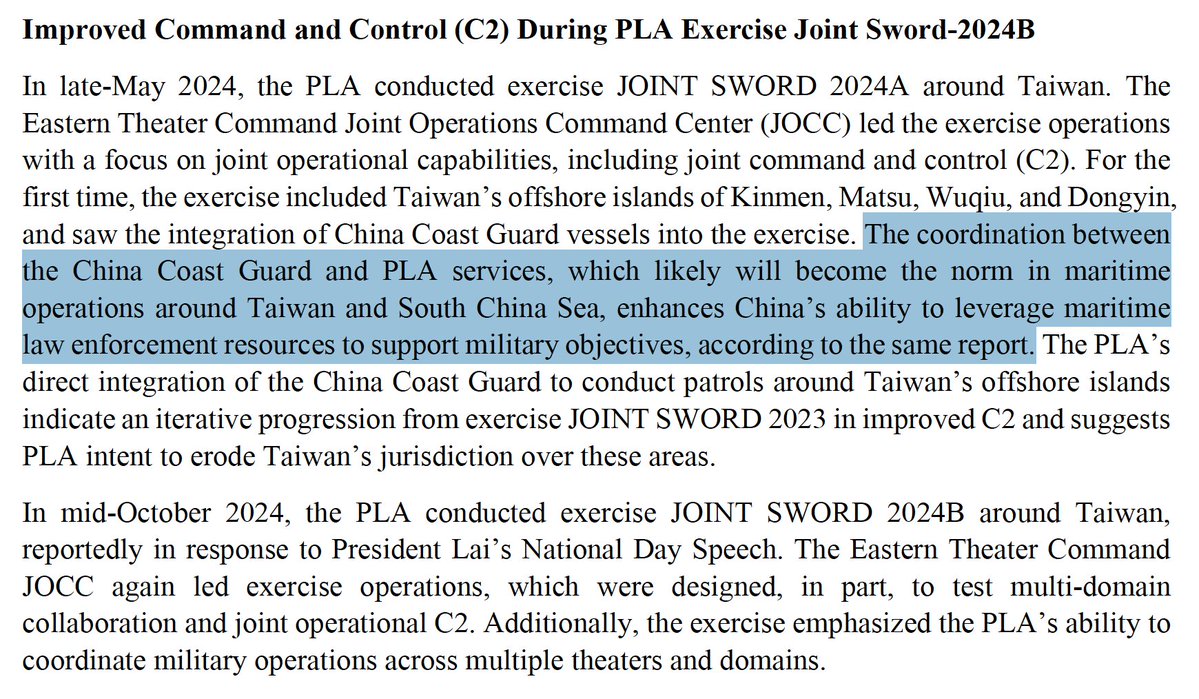
The rapid growth of the CCG's capability is something I've pointed to before.
Would you like to know more?
Would you like to know more?
https://x.com/tshugart3/status/1922673768918393265
Ok, more to follow but I'm going to go ahead post this portion as this is about the point where I often lose this sort of long thread in a glitch, and then get to spend time contemplating my choices in life...
See here for Part 2:
https://x.com/tshugart3/status/2005357024939499672
@threadreaderapp unroll
• • •
Missing some Tweet in this thread? You can try to
force a refresh