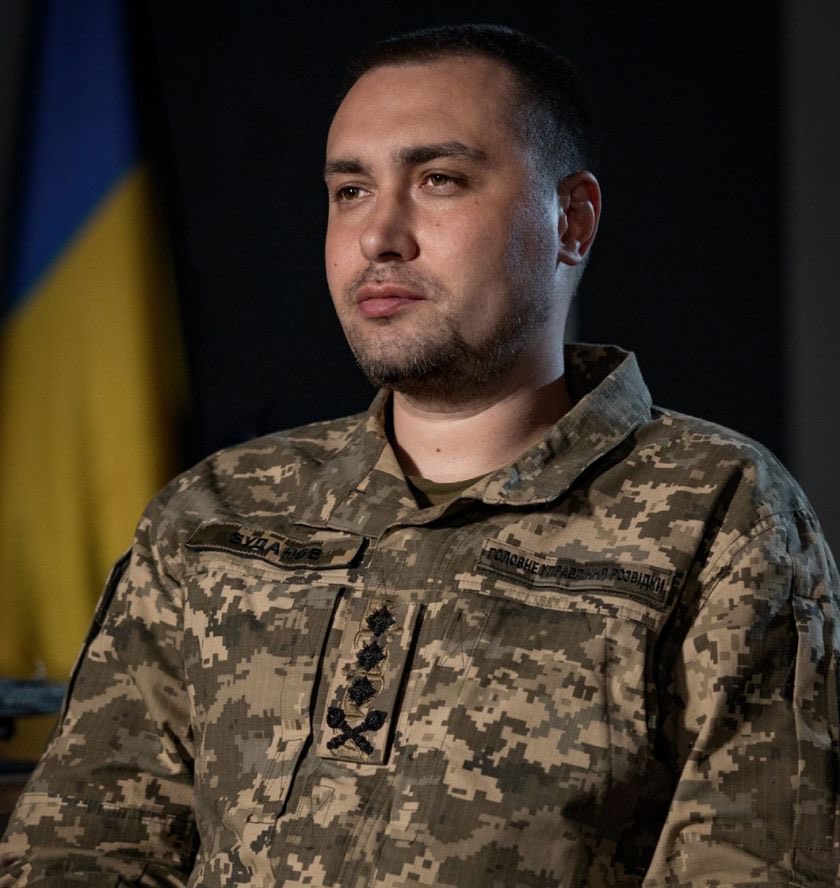
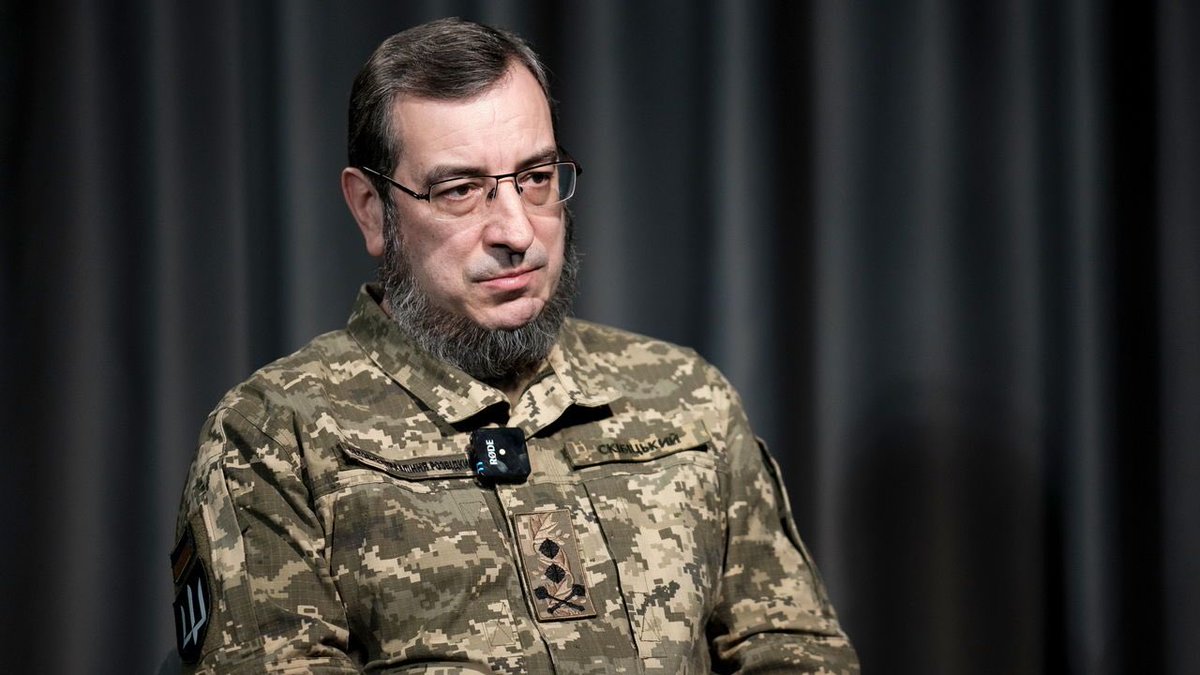
An Insightful Assessment by General Budanov, Chief of Ukraine’s Defense Intelligence
Peace Talks:
The territorial question remains the central issue of negotiations, and at this stage it is precisely where no convergence exists. Negotiations are about finding a compromise. 1/14
Peace Talks:
The territorial question remains the central issue of negotiations, and at this stage it is precisely where no convergence exists. Negotiations are about finding a compromise. 1/14
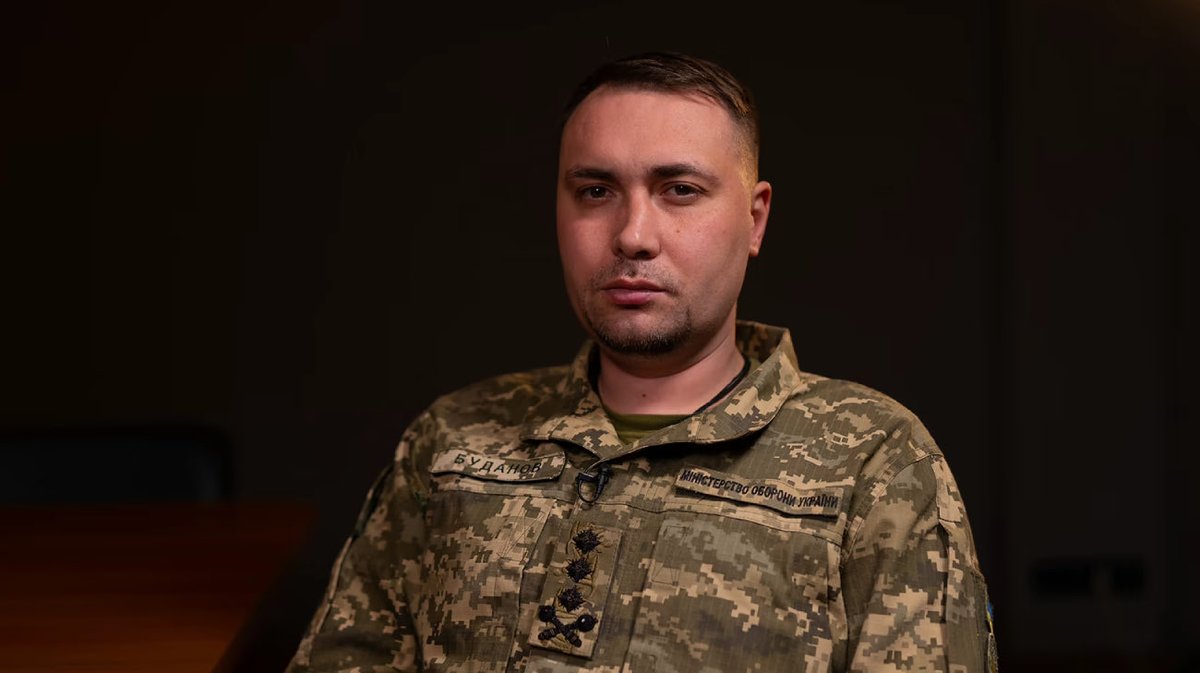
At one point, someone articulated what I consider a very apt phrase: “A compromise in negotiations is not when one side leaves happy and the other unhappy, but when both sides leave unhappy.” This is a general formula, but it captures the essence. 2/14
U.S. National Security Strategy:
For the United States, China is officially identified as the primary adversary and strategic competitor. Washington views the deepening partnership between China and Russia as a serious threat. 3/14
For the United States, China is officially identified as the primary adversary and strategic competitor. Washington views the deepening partnership between China and Russia as a serious threat. 3/14
Accordingly, there is a clear interest in attempting to distance the Russian Federation from China, and doing so inevitably requires offering incentives. There is nothing unusual about this approach. 4/14
Russia’s 2026 Objectives:
Russia has not halted its offensive. While advances are slower than planned, Russian forces continue to push forward. 5/14
Russia has not halted its offensive. While advances are slower than planned, Russian forces continue to push forward. 5/14
Moscow’s stated objectives in 2026 remain full control of Donetsk and continued advances into Dnipropetrovsk, Zaporizhzhia, and Kherson oblasts. 6/14
Russia is seeking to expand so-called sanitary or buffer zones along the border. In essence, the strategic focus for 2026 is the Donbas and Zaporizhzhia, specifically the complete occupation of the Zaporizhzhia region. 7/14
Opposition to War in Russia:
Even within the military, far from everyone supported launching a full-scale invasion. 8/14
Even within the military, far from everyone supported launching a full-scale invasion. 8/14
And now, within Putin’s inner circle, there are voices arguing that this needs to be brought to an end — many more than before. Significantly more than there were earlier. 9/14
Russian Military Mobilization:
Russia fulfilled military mobilization numbers in 2025. The plan called for the recruitment of 403,000 personnel. For 2026, the mobilization target is set at 409,000. In previous years, these targets have consistently been met. 10/14
Russia fulfilled military mobilization numbers in 2025. The plan called for the recruitment of 403,000 personnel. For 2026, the mobilization target is set at 409,000. In previous years, these targets have consistently been met. 10/14
Recruitment plans for personnel from the temporarily occupied Autonomous Republic of Crimea, as well as parts of Kherson, Zaporizhzhia, Luhansk, and Donetsk Oblasts, have been fulfilled at 100%. 11/14
World Order:
The old world order has been completely dismantled. It no longer exists, and a new one will inevitably have to be constructed. 12/14
The old world order has been completely dismantled. It no longer exists, and a new one will inevitably have to be constructed. 12/14
Various conceptual and architectural models for a future international system are currently under discussion, though they remain at an early, formative stage. 13/14
Ukraine will either secure a meaningful place within this emerging order, or significant risks will arise — not only for Ukraine itself, but for other states as well. 14/14
—
Please don’t forget to support and subscribe to my Substack - Russia Analyzed - for the latest insights and analysis on Russian foreign and security policy and the war against Ukraine. cutt.ly/pw9h2qju
Please don’t forget to support and subscribe to my Substack - Russia Analyzed - for the latest insights and analysis on Russian foreign and security policy and the war against Ukraine. cutt.ly/pw9h2qju
• • •
Missing some Tweet in this thread? You can try to
force a refresh