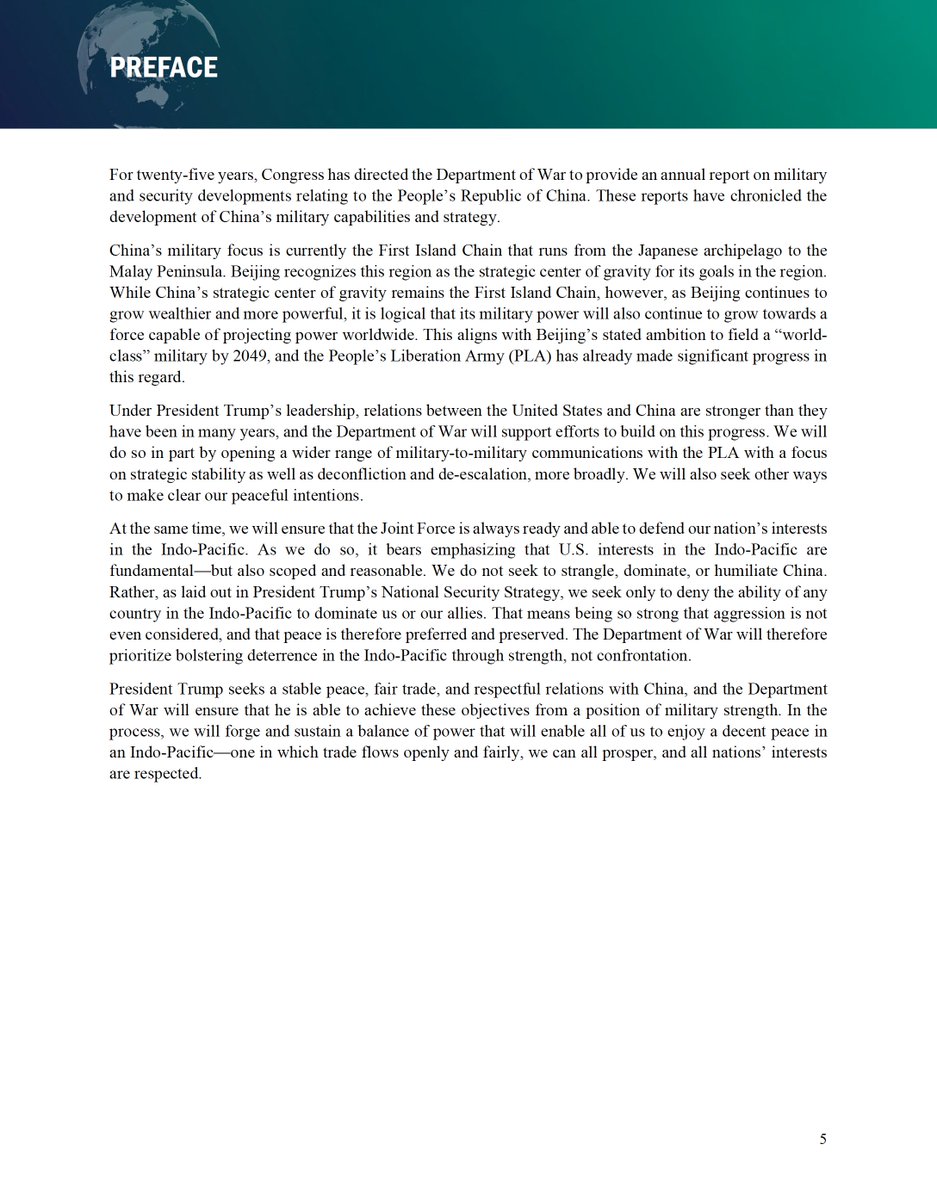
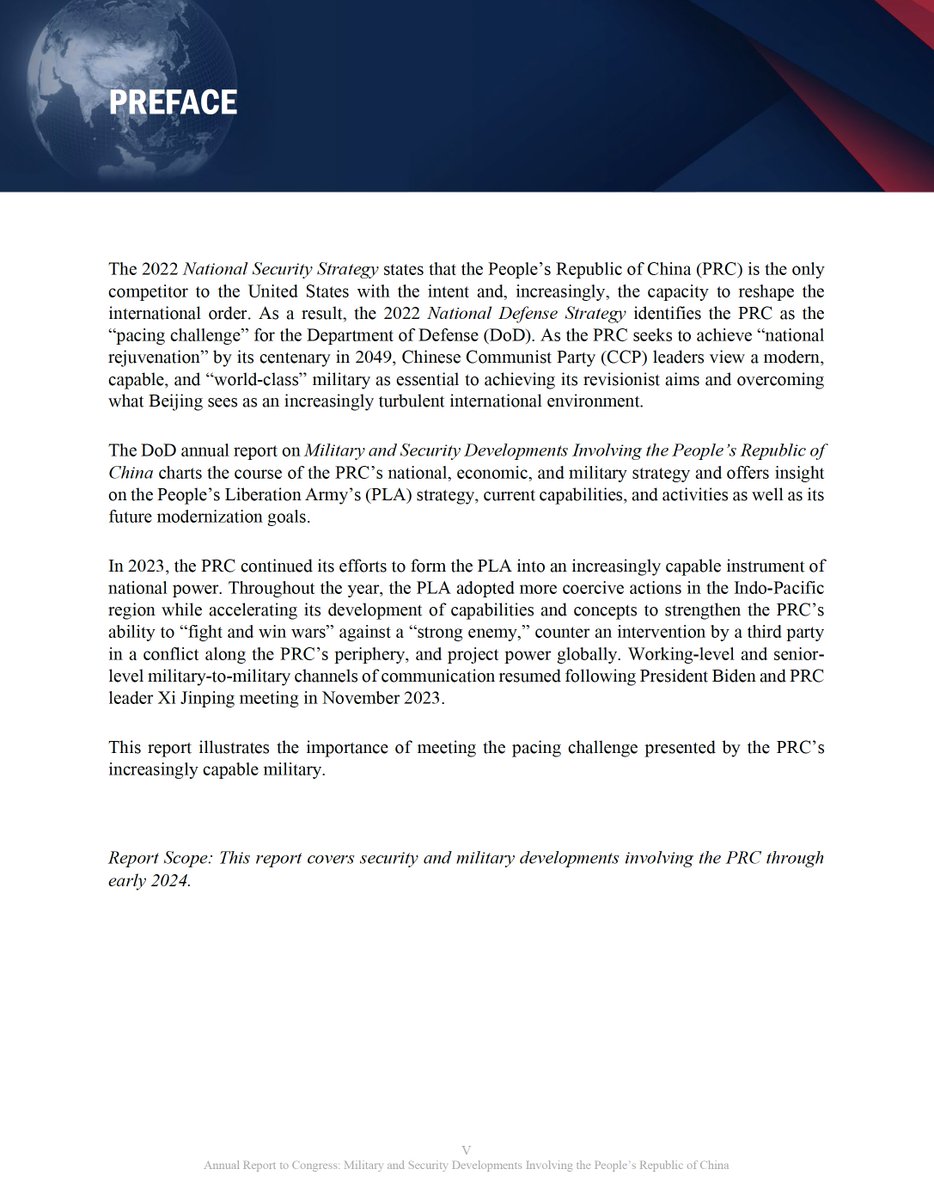
Ok, continuing on this thread on the 2025 CMPR...
https://twitter.com/tshugart3/status/2005315617906401580
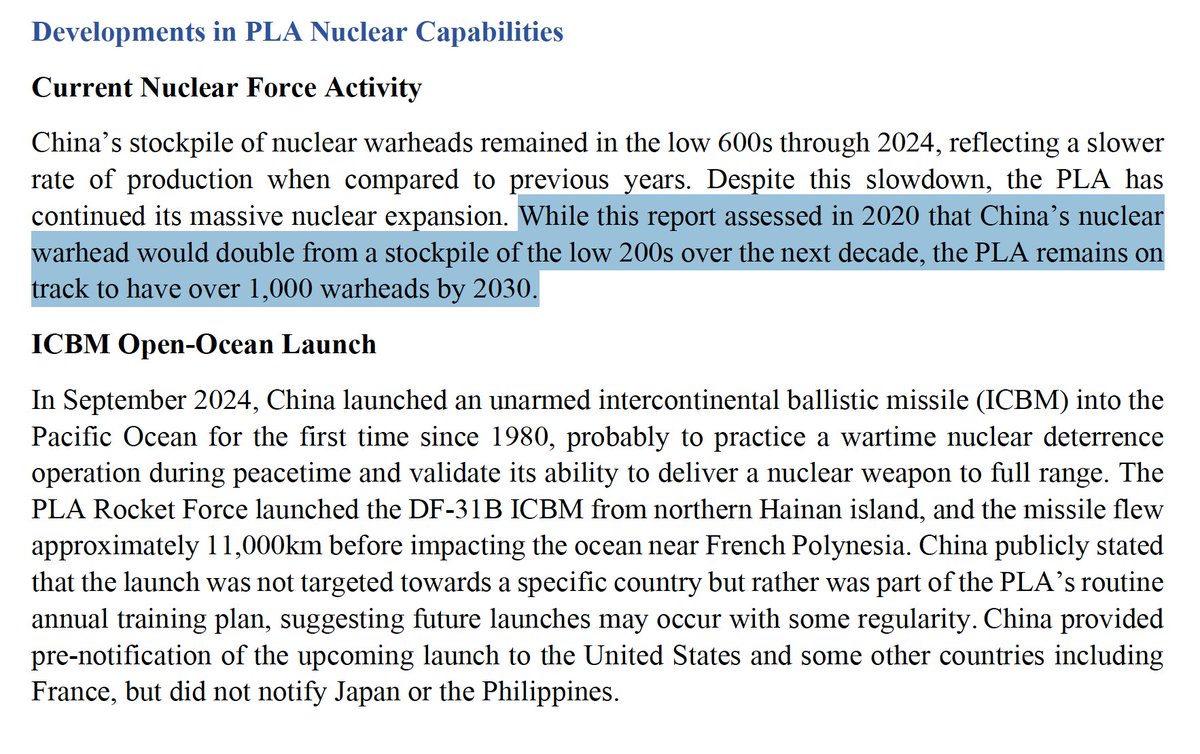
...first up, China's nuclear warhead totals. This year's report says that warhead production has slowed, with a total in the low 600s, but that the PLA is still on track to have 1000+ warheads by 2030. 
Regarding China's early warning capability, we get a lot more specificity than I've seen before: that China now has IR warning satellites that can detect and warn of an incoming ICBM within minutes.
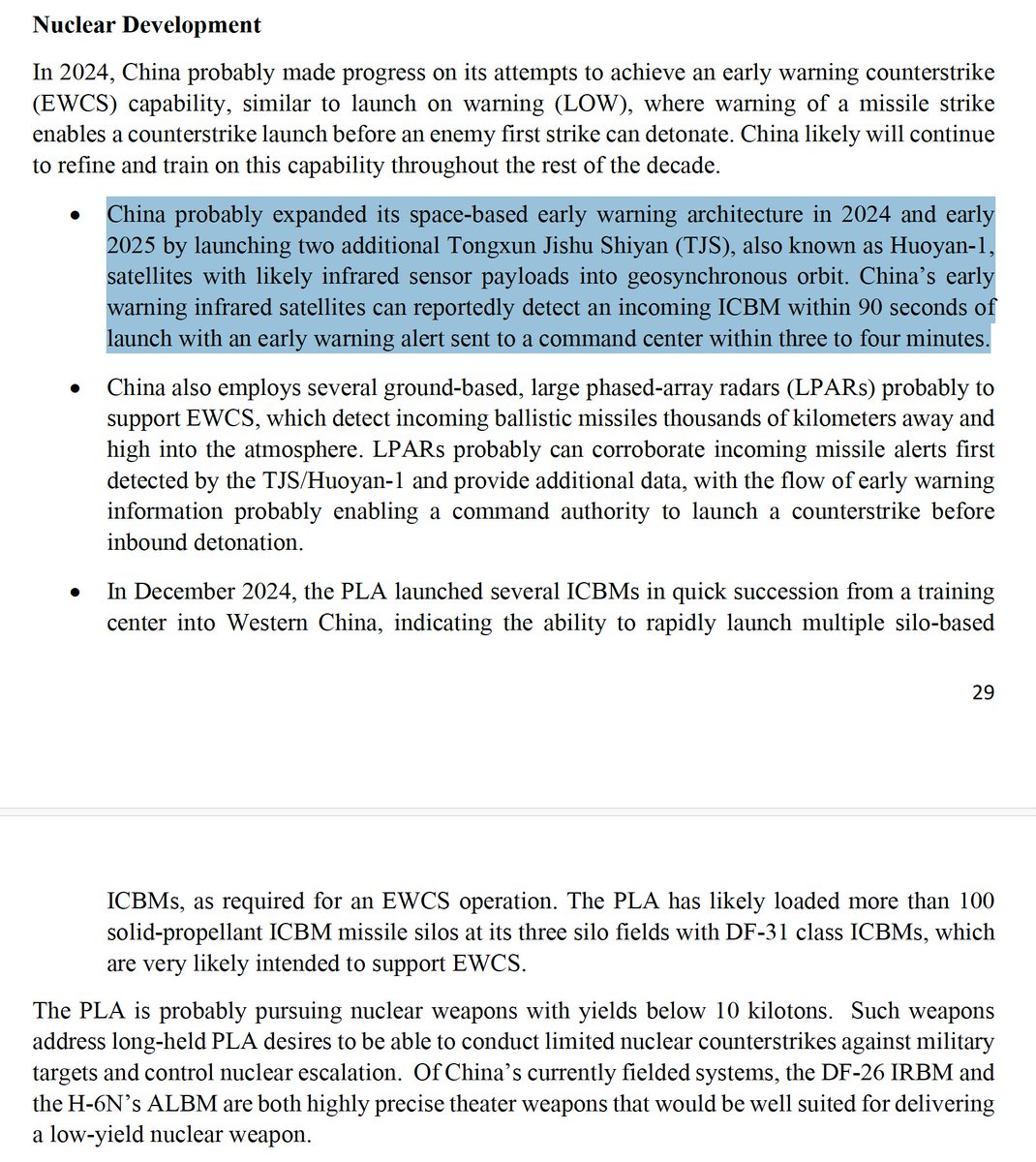
Note: this is a capability for which the U.S. is into its 2nd generation of satellites—though you might not know it by watching some of our nuclear-scare movies (even if they're praised for realism by folks considered [by some] to be nuclear experts). 🫤
https://x.com/tshugart3/status/1986513486034227491
Regarding China's reasons for its recent (and massive) nuclear force expansion, the report posits that one major reason is likely so that China has more confidence conducting conventional military operations.
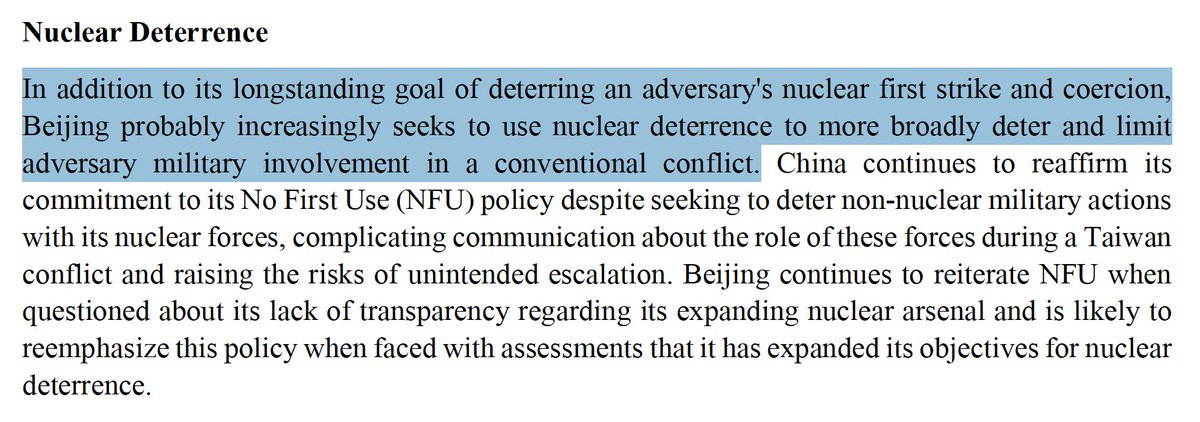
I've thought this for some time—that by having a robust, survivable nuclear arsenal, China removes the nuclear option as a credible U.S. response to large-scale *conventional* strikes (or even crippling strategic cyber attacks in CONUS).
https://x.com/tshugart3/status/1929511100367704380
To bolster the credibility of China' nuclear deterrent, the PLA apparently launched multiple ICBMs in a single test launch. Since this test didn't go out over the Pacific like the one that got all the attention, AFAIK this is the first public reveal of this test.
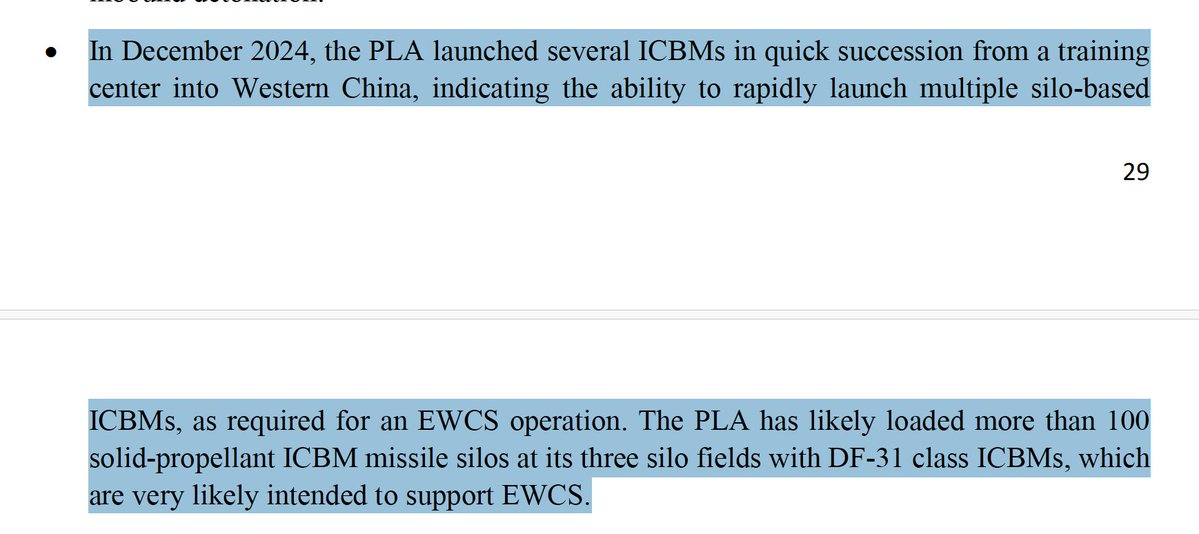
Also they've apparently loaded 100+ solid-rocket ICBMs into their new missile silos, which IMO makes it even less likely they're pursing a "shell game" strategy—as some folks theorized a few years ago.
I'm guessing that when they're done those holes are going to get filled.
I'm guessing that when they're done those holes are going to get filled.
Regarding the PRC's anticorruption purges, the report assesses (as I have) that while there are likely to be short-term impacts to PLA readiness, in the long term it's probably going to be a good for the force's military effectiveness.
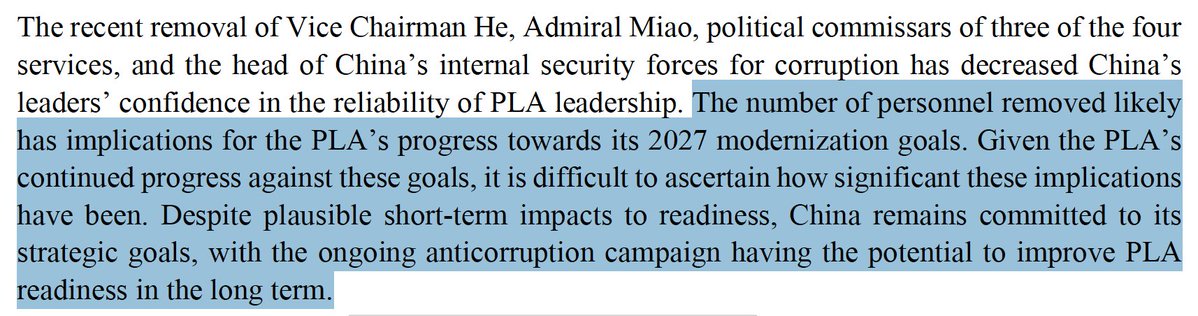
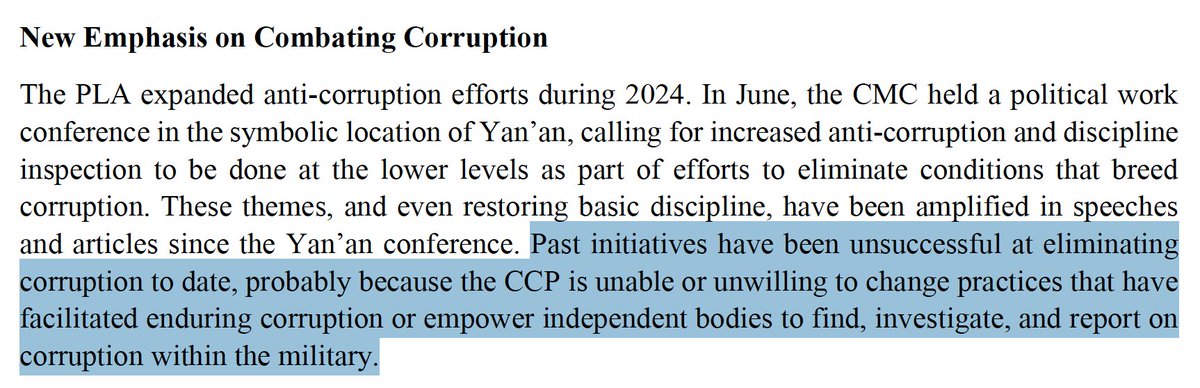
That said, the report notes that in the absence of empowered independent bodies (like strong inspectors general), corruption is likely to continue to be a problem.
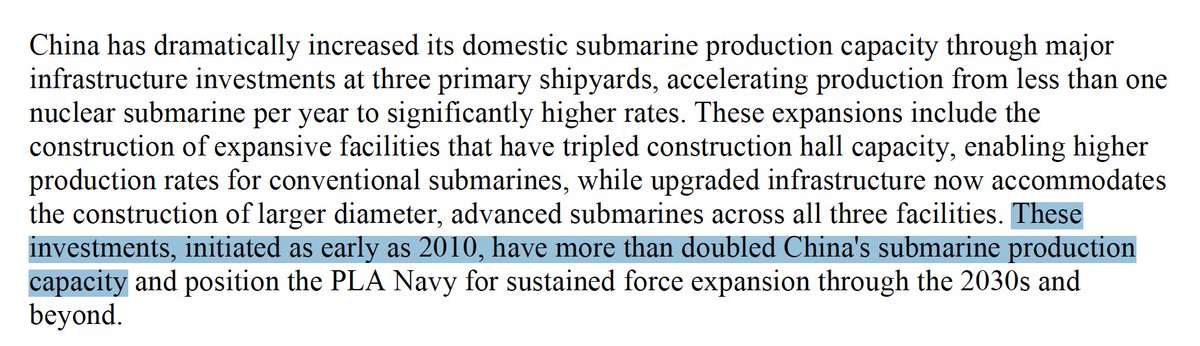
Buried within the corruption section is a little gem: confirmation in this written DoD publication that China's Zhou-class submarine sank at the pier in Wuhan.
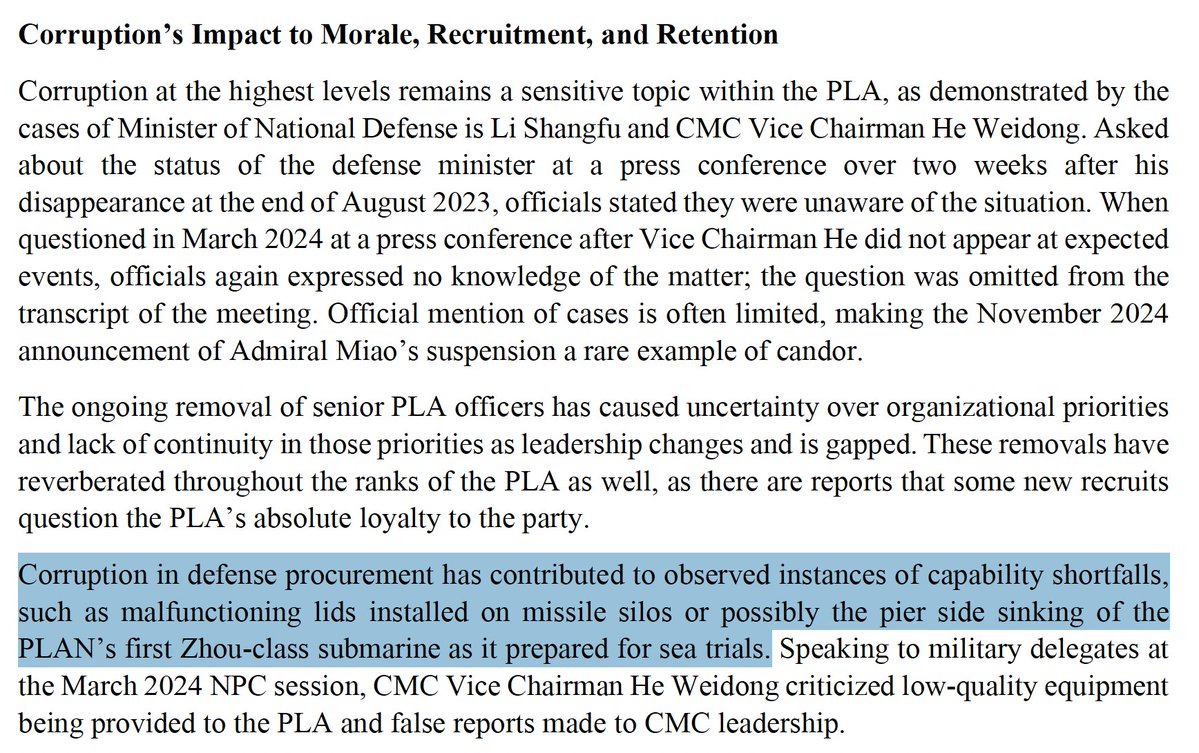
While some folks may wonder why that matters, I can tell you that even months after the news broke, there were still folks (still are) in denial/cope mode that'd point at the fact that the news was from "anonymous" DoD sources (even if confirmed to multiple reporters). No more.
Oh, and before folks start in on "possibly" meaning something (especially if English isn't their first language), that almost assuredly means it was possibly corruption that contributed to the sinking, not that there's uncertainty on DoD's part about whether the boat sank.
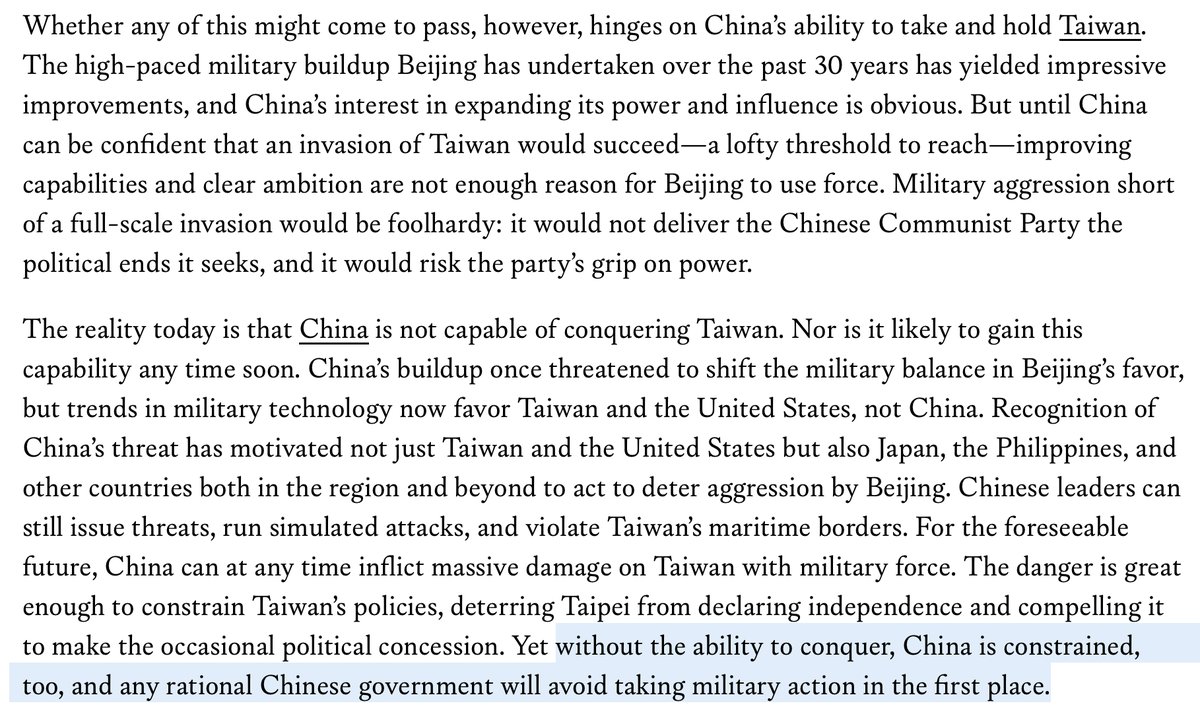
Discussing China's options to force unification with Taiwan, the report makes a point that somehow seems lost on some folks: that as risky as an invasion would be, it's the only *assured* way to force Taiwan to give up.
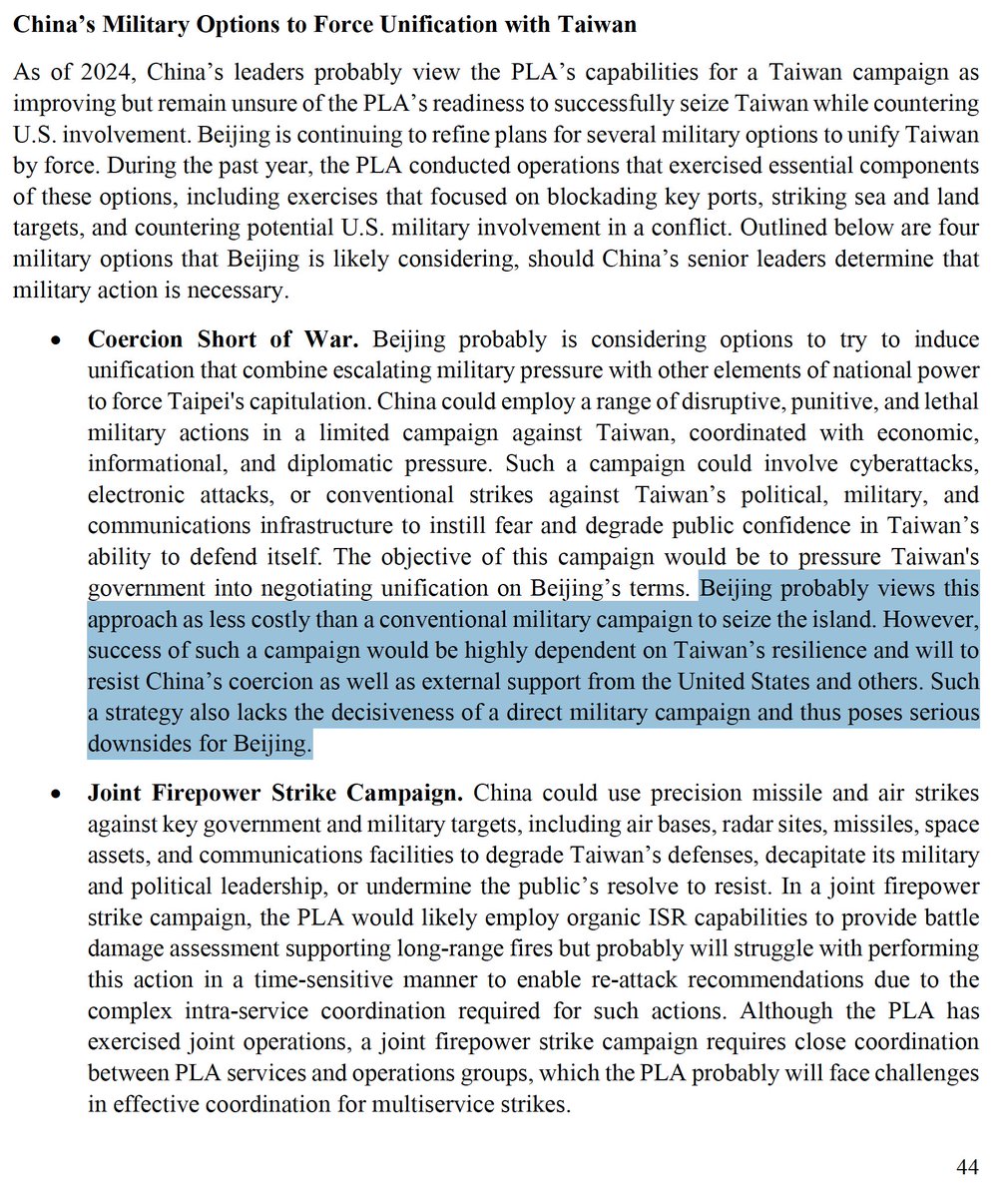
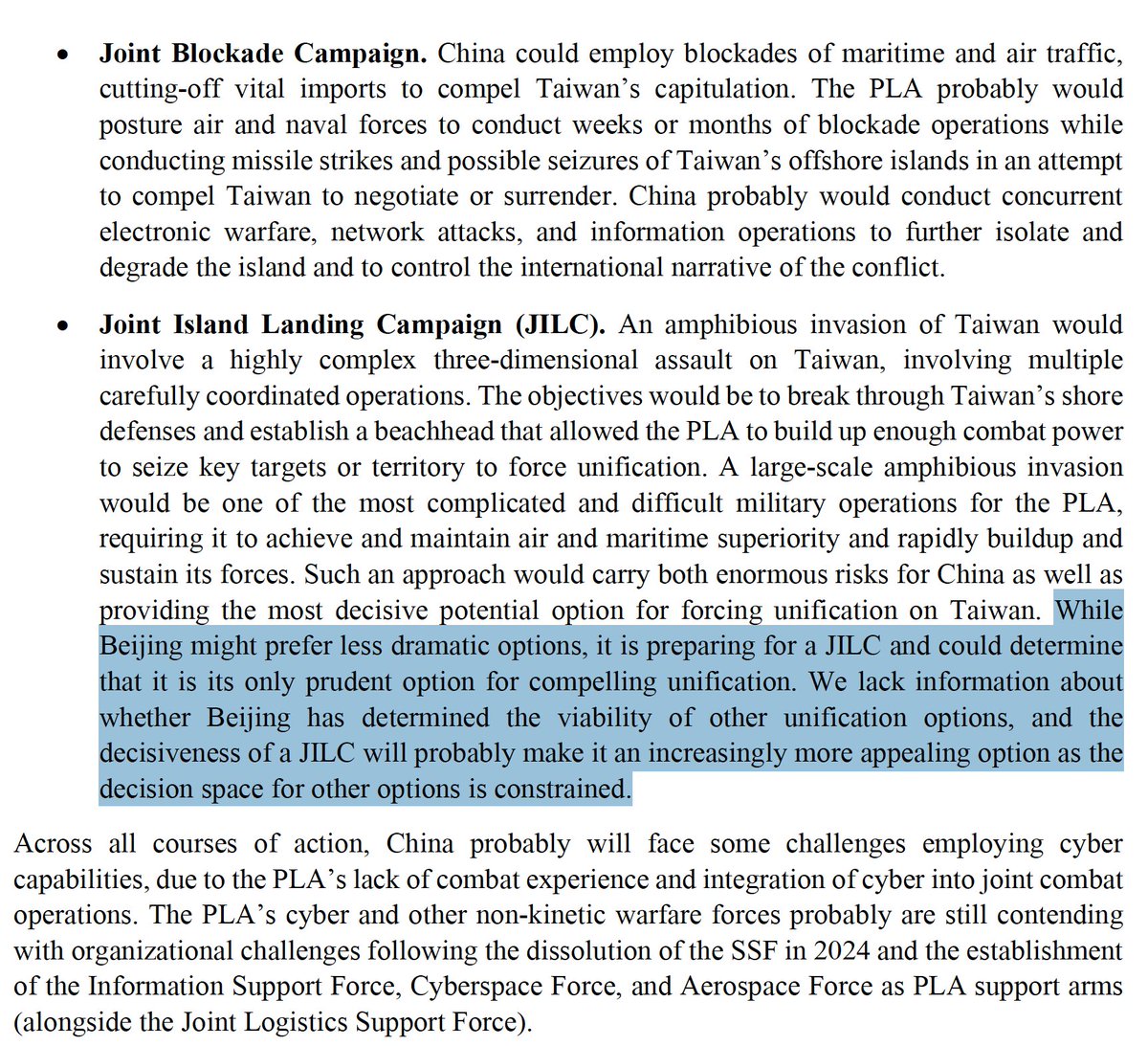
While lesser options like a blockade/missile bombardment might seem lower risk, they require Taiwan to give up.
(Though in any case I would expect those to be preliminary parts of an invasion plan that Beijing might hope would cause Taiwan to fold before pulling the trigger.)
(Though in any case I would expect those to be preliminary parts of an invasion plan that Beijing might hope would cause Taiwan to fold before pulling the trigger.)
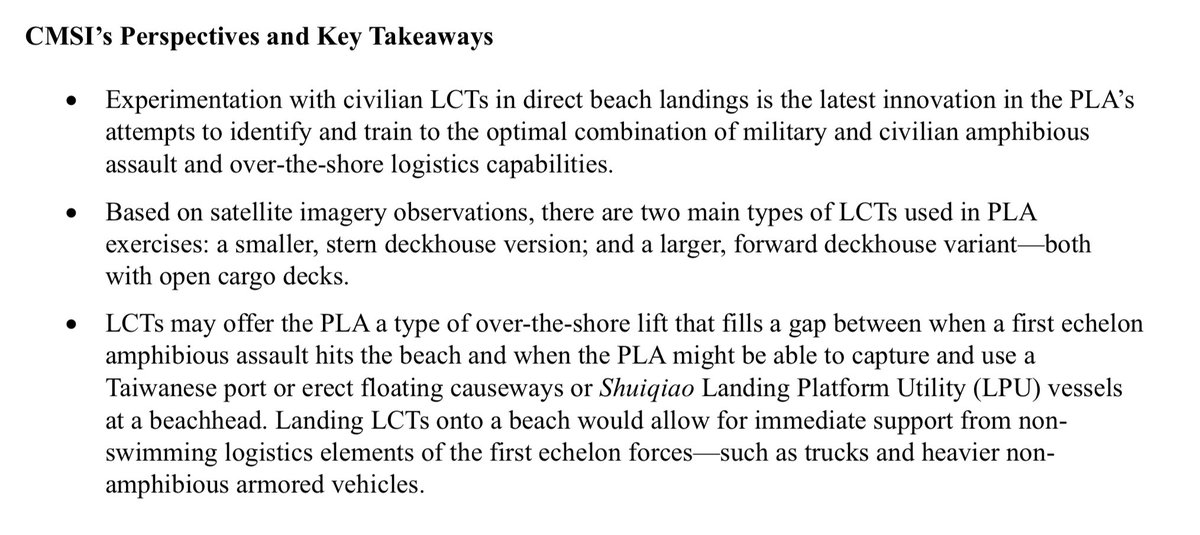
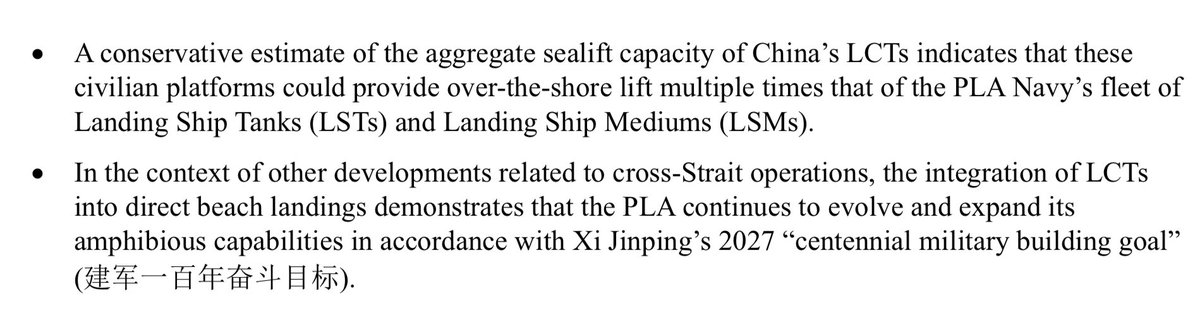
That all said, the report reiterates previous assessments that the PLA doesn't seem to be building the landing ships necessary for an invasion, though they continue to train with civilian Ro/Ro vessels.
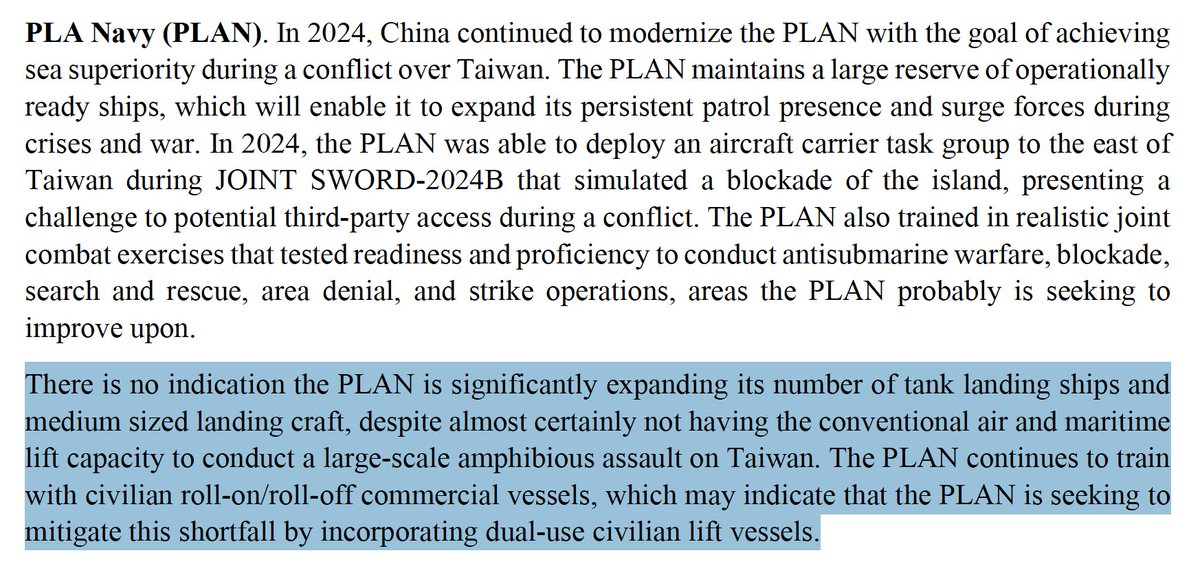
However, I'd note the report makes no mention of China's new Shuiqiao-class landing ships (LPUs), which is a bit of a disappointment as those broke cover publicly at the very start of 2025 and there are other items mentioned in the report through March. digital-commons.usnwc.edu/cmsi-notes/14/
Also, I doubt the report includes what I and others saw that happened this summer: the use of commercial "landing craft" that exist in large numbers—and that might provide just the sort of additional sealift to the beach that has seemed to be missing.
https://x.com/tshugart3/status/1982899239136240098
More on that topic in this excellent @Reuters explainer: reuters.com/graphics/USA-C…
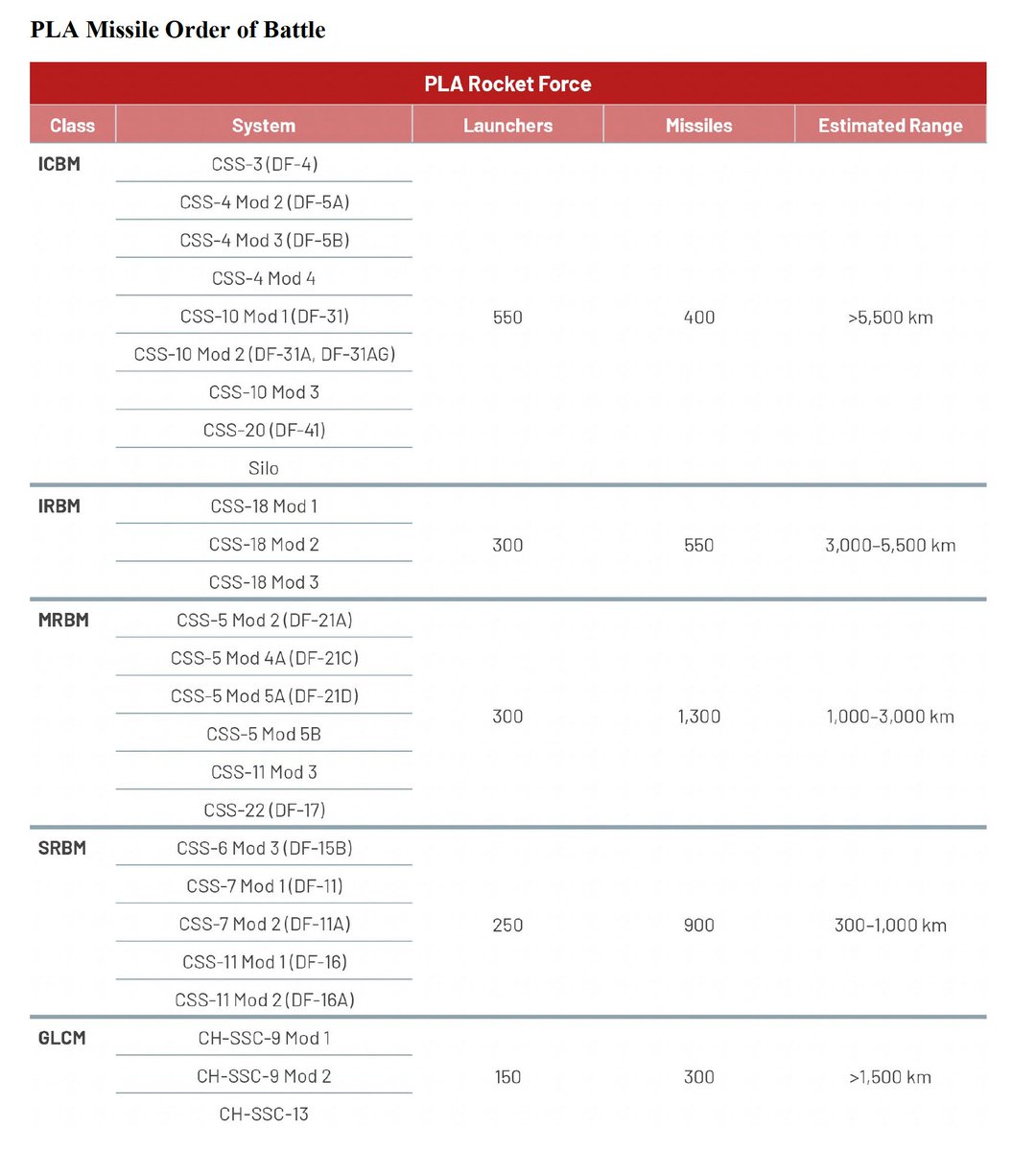
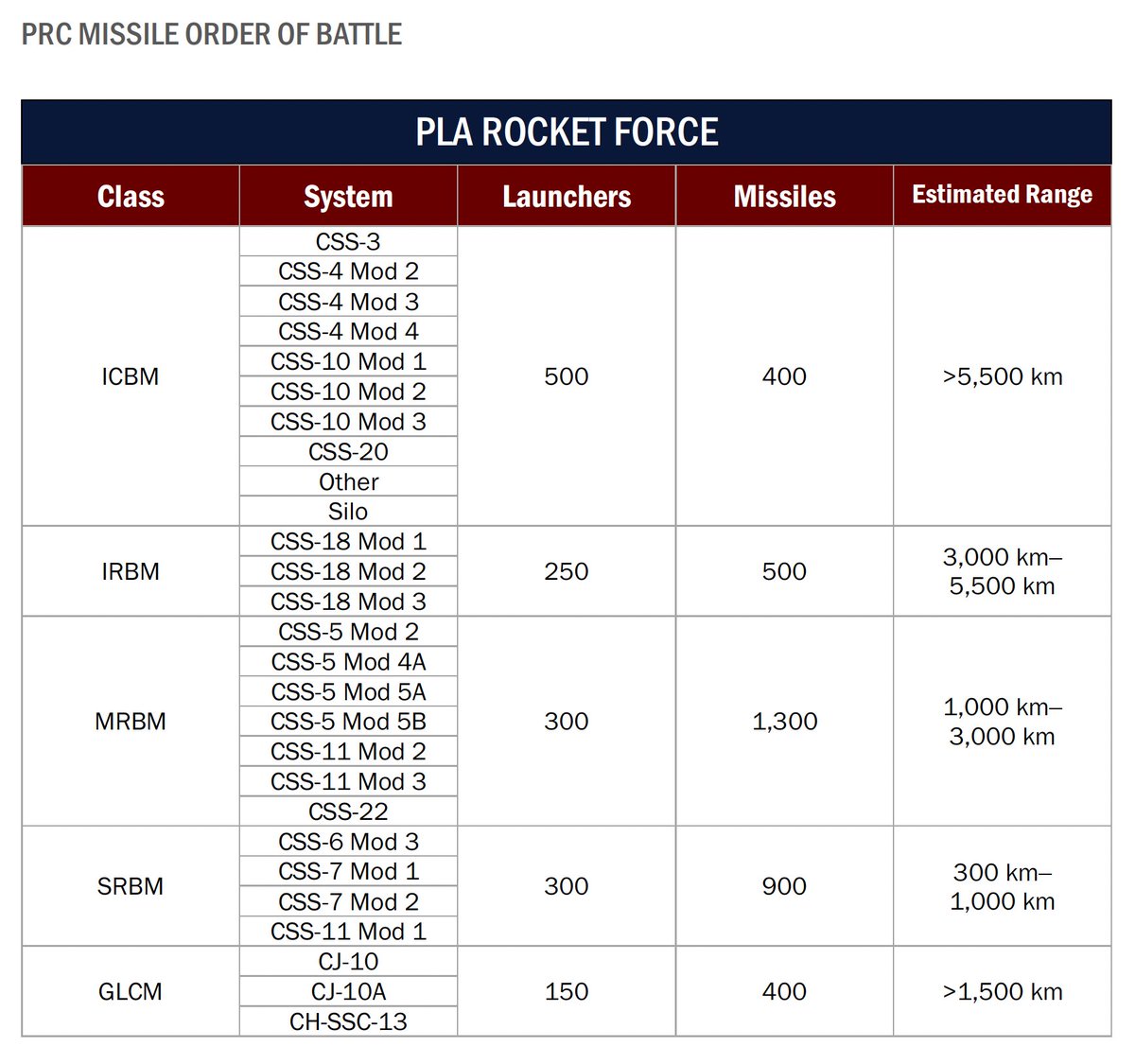
In the cross-Strait military balance appendices, there honestly weren't too many big changes. For the PLA Rocket Force, the one thing that catches my eye is an increase in 50 IRBM launchers, and a decrease in 50 SRBM launchers. I'm guessing that was a unit conversion?
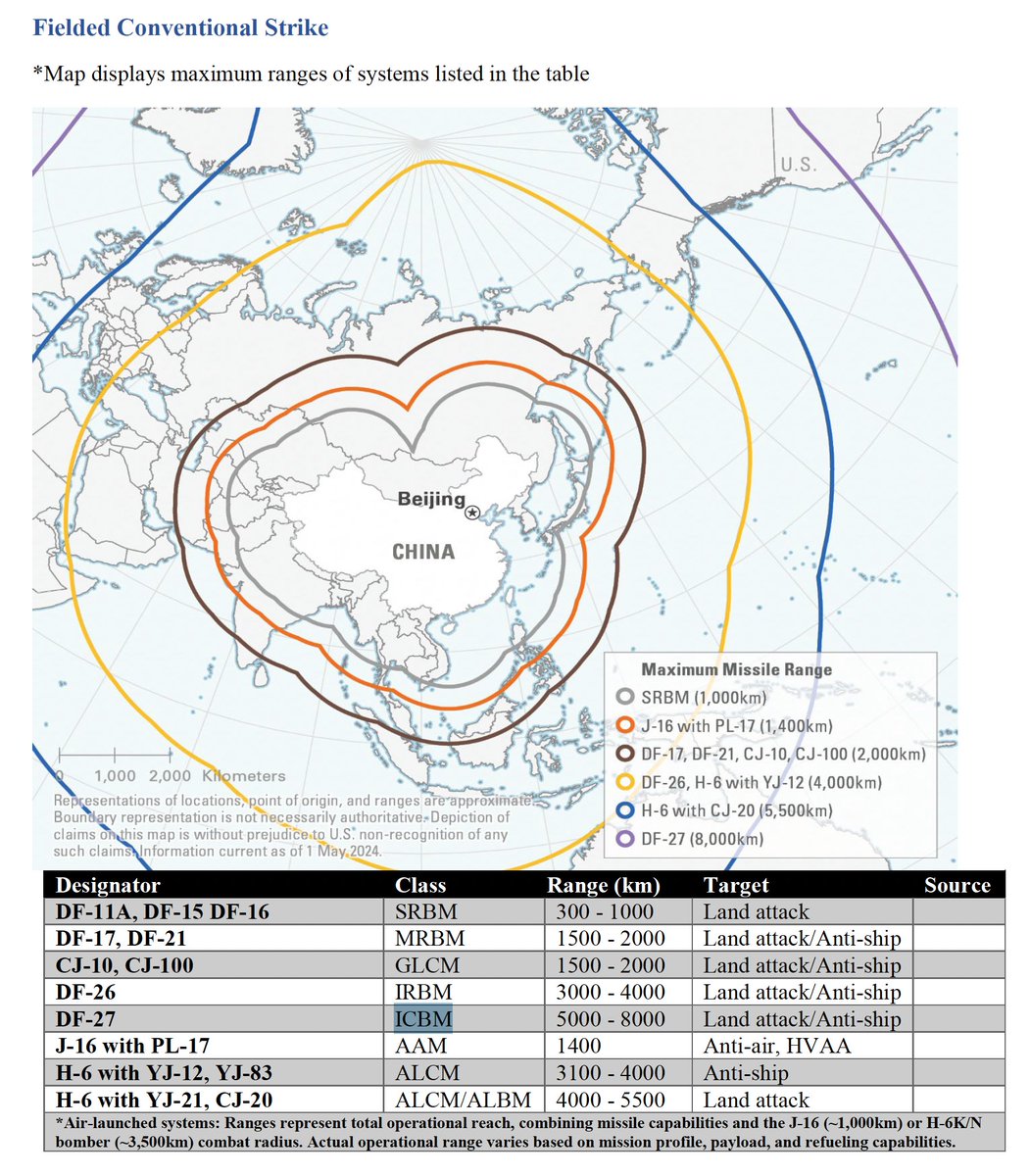
One final update that's already caught folks' attention is this missile range chart in the Appendix (which formerly lived within the main body of the report)—specifically, the fact that it shows the DF-27 as an ICBM that can reach the U.S. west coast, and is anti-ship capable.
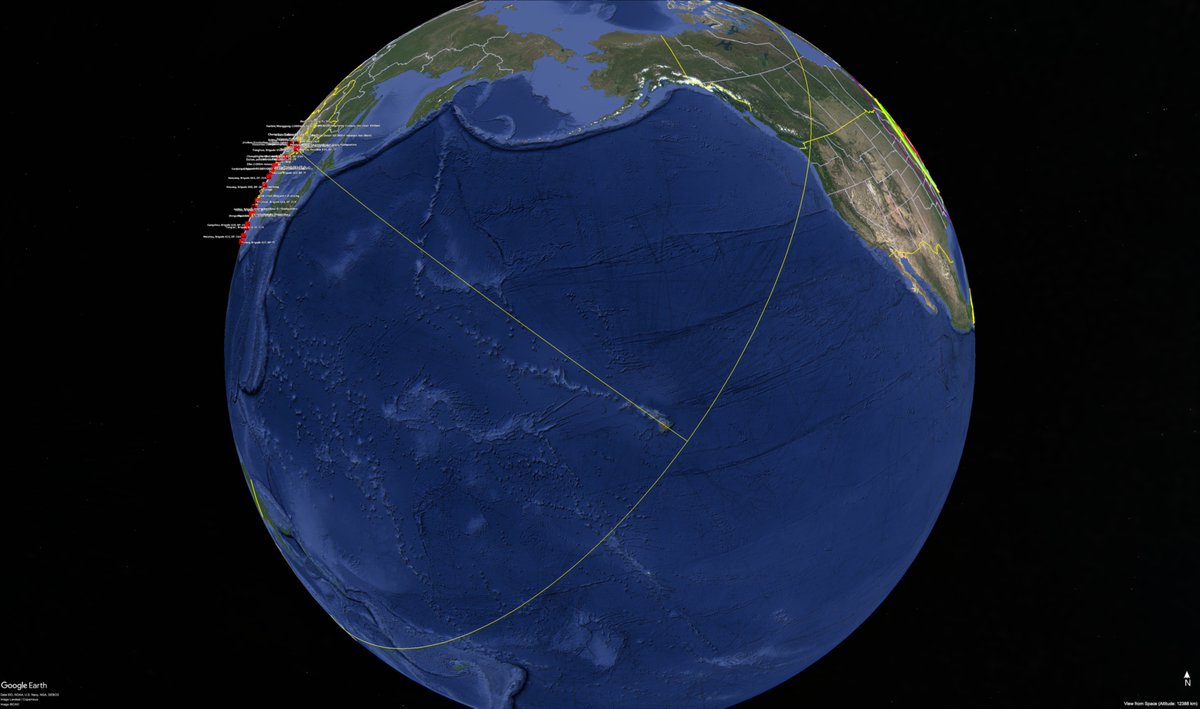
Now while I know that some folks On Here get irritated by the fact that DoD draws range arcs from the verrry extreme edge of China's borders, if you do draw an 8000 km arc from an actual PLARF base in NE China, the arc does encompass Hawaii and Alaska, which isn't nothing.
The last thing I'll discuss was I noted to be absent from the report:
- as mentioned before, updated current/predicted total PLA Navy hull counts
- any discussion of the status of the next-generation Type 095/096 SSN/SSBNs
- updates on China's development of intercontinental-range conventional weapons, which has been reported before but wasn't discussed in any clear way.
- as mentioned before, updated current/predicted total PLA Navy hull counts
- any discussion of the status of the next-generation Type 095/096 SSN/SSBNs
- updates on China's development of intercontinental-range conventional weapons, which has been reported before but wasn't discussed in any clear way.
So that's it for now, I hope folks have found this rundown to be useful.
Until next year...
Until next year...
@threadreaderapp unroll
• • •
Missing some Tweet in this thread? You can try to
force a refresh