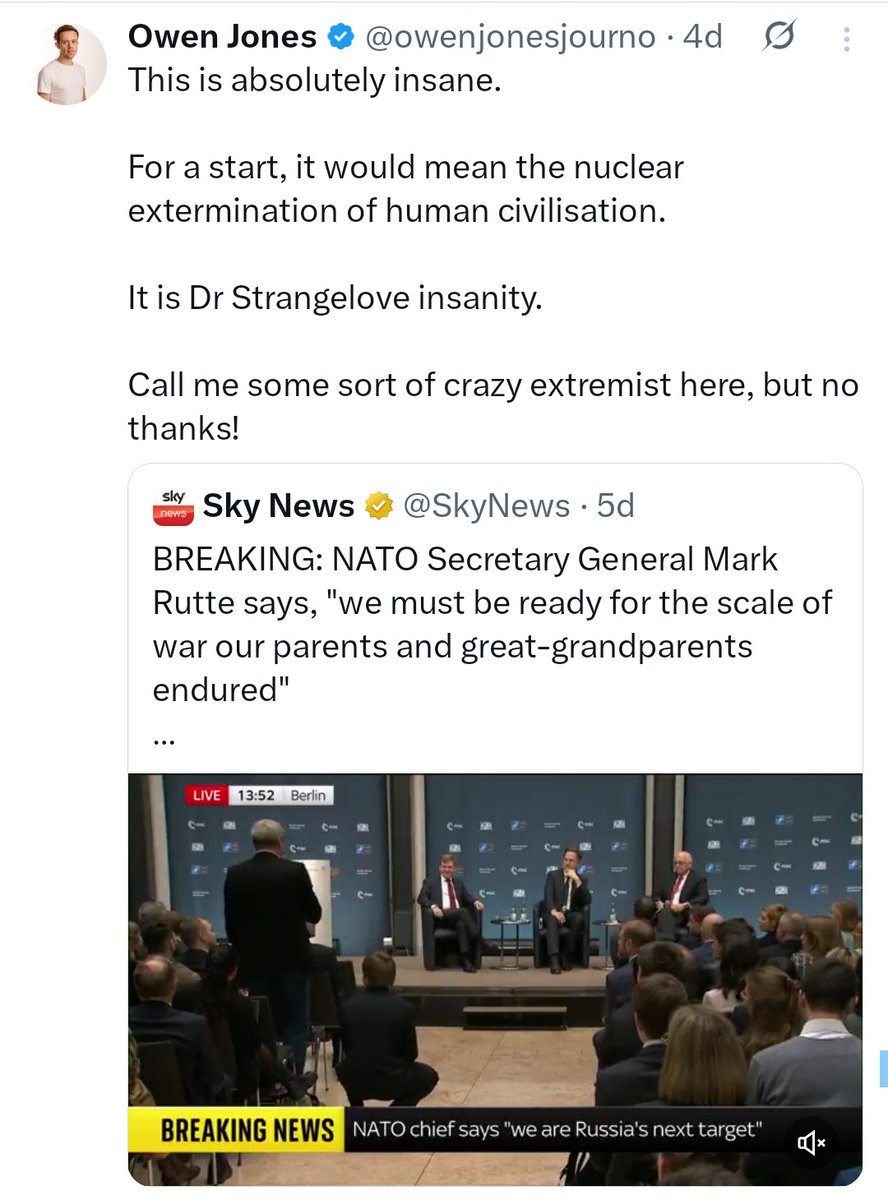
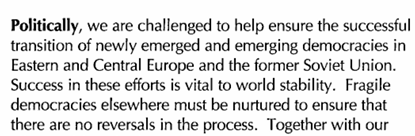
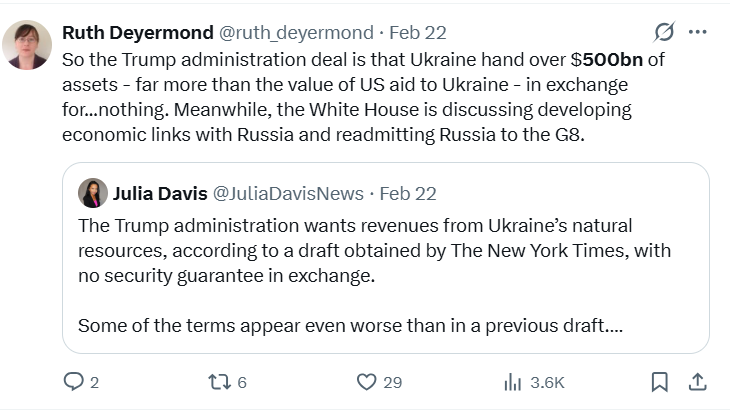
It's New Year, so time to look back and forward. These are 10 things I think we need to recognise in 2026. It’s a response to what I think are profoundly damaging mistaken assumptions I’ve heard and read from practitioners, journalists, and analysts in 2025. Warning: very long🧵
1. Russia isn’t winning in Ukraine.
Russia has expended extraordinary levels of resources, lost hundreds of thousands of men, and restructured its economy all in the attempt to win a war it started for no obvious reason against a smaller, less well-resourced state.
After four years – equivalent to all of the US Civil War or almost all of WW1 - it’s no closer to this goal than it was in 2022. There’s no reason to think that Russia, with a weaker economy, will do in 2026 or 2027 what it was unable to do in 2022-2025.
Russia’s only real chances to win anything in Ukraine are political – by convincing the US and Europe that it’s inevitably winning. Take that away, and Russia looks much more vulnerable.
2. Russia isn’t a great power, so stop thinking of it as one.
This is the reason there’s an assumption that Russia will inevitably win in Ukraine: it’s a great power so it must be unbeatable against a smaller state. But it isn’t unbeatable and it isn’t a great power.
Russia inherited 3 great power attributes from the USSR: a large nuclear arsenal, a permanent UNSC seat, and a position at the centre of a former empire that gave it (it thought) an automatic sphere of influence.
But those are legacies of an actual great power and Russia under Putin has done nothing to earn the label for which its political elite is so desperate beyond some patchy overseas military and diplomatic engagement and highly effective interference operations in democracies.
Thanks to the monumentally stupid decision to invade Ukraine, Russia is even less of a great power than it was 4 years ago. If your military capacity relies on DPRK and Iran, and you've turned yourself into a dependent of China, you’re not a great power. carnegieendowment.org/russia-eurasia…
One important implication of this is that practitioners need to spend more time thinking about the implications of the senior-junior partnership between China and Russia for European and US security.
3. Don’t assume there’s definitely going to be a clear end to the war in Ukraine.
All the mentions of peace talks and peace plans are deeply misleading – these are ceasefire talks, not paths to permanent resolution of the conflict. That’s because the status of the Ukrainian occupied territories will remain unresolved as long as Russia occupies them.
Anyone in the West who thinks that pressuring Ukraine into an unfavourable “peace deal” will draw a line under the war is in for a nasty surprise.
4. The end of Putin’s presidency won’t be the end of Russia.
Since the start of the war, many policymakers and advisors have worried that Russia losing the war in Ukraine would mean the end of Putin’s presidency, meaning the collapse of the Russian government, meaning the disintegration of Russia.
They think this because they are mis-applying the lessons of the end of the USSR. The relationship of parts to centre in the contemporary Russian Federation is nothing like the late USSR, the domestic politics and civil society situation is also completely different.
So people need to stop treating Putin’s continued presidency like a less-than-ideal but necessary way to avoid Russian collapse. They also need to recognise that Putin is 73. He wants to live for ever but he’s not going to. reuters.com/business/media…
Even if he isn’t as ill as rumours sometime suggest, he’s not going to be in power that much longer, even if he’s still in office. Everyone needs to think about what Russia after Putin means for the rest of us, and start planning to deal with it.
5. Under the Trump administration, the US is no longer an ally of Europe or Canada, it has aligned itself with Russia.
At lower levels the old relationships may still be functioning despite this, but the policymakers in what used to be the West’s leader are deeply and immovably hostile to Europe (and to traditional US foreign policy values).
The NATO Treaty commits members to the principle that “an armed attack against one [member] shall be considered an attack against them all”, but the White House spent 2025 threatening to invade two NATO other members.
Europe and Canada need to move carefully to avoid creating further dangers, but they need to decouple from the US in areas like defence planning, intelligence sharing, and defence procurement.
That is going to be exceptionally hard and the temptation is either to pretend the US realignment isn’t happening or to wait and hope it course corrects. This would be a serious mistake.
6. Europeans convinced they just need to wait out the next three years need to stop it.
The relationship will probably improve after Trump, but whoever replaces Trump in the White House and by whatever means, they won’t be turning back the clock to the good old days.
In 2017-21, many Europeans told themselves that Trump was a one-off and as long as they were patient, things would go back to normal. But four years later, Trump was back. People who should know better are saying the same again now.
Trump may be extreme in all sorts of ways, but looking at the last 30 years of US politics, there’s no reason to think of Trump as an anomaly.
We have to assume that there will be more US administrations that are profoundly hostile to what they think Europe represents; they will not be interested in reviving the alliance.
And even more importantly, the focus of US attention under both Republican and Democrat presidents has been moving away from Europe towards the Asia-Pacific for 30 years while taking the enormous economic and security benefits of a friendly Europe for granted.
The US may realise its mistake on Europe, but the focus on Asia won’t change. So even if a future administration moves to repair the relationship (which seems likely), it won’t devote the resources or attention needed to restore it fully.
7. Europe’s security depends on Europe – a wider Europe.
That includes some states outside the continent of Europe (Canada) and some outside European institutions (Ukraine, Moldova).
It also depends on addressing two serious internal challenges: how to work around pro-Russian authoritarian leaderships in Europe, and how to hold North and South Europe together in a meaningful alliance despite divergent views on security priorities.
The answer to both may involve smaller groups of states with shared interests working together on some issues (the Baltic-North Sea states on Russia, most obviously).
But Europe needs to think about its collective future in a world after US leadership, US alliance, and – if the Trump administration continues to tank America’s capabilities and credibility – US significance.
8. The world’s two nuclear superpowers are now headed by irrational decisionmakers.
Putin appears to operate in a misinformation bubble in which his circle tells him what he wants to hear. The idiotic decision to invade Ukraine appears to have been one consequence of this; his mistaken belief that Russia is winning on the battlefield is reportedly another.
In the US, whoever is making foreign policy it seems highly unlikely to be the current president, who lacks the knowledge, the skills, or the temperament.
All administrations have different factions competing over policy, but they normally have a president with the interest and capacity to manage and adjudicate these fights. The current US administration doesn’t.
So policymaking is a battle between individuals with wildly varying levels of expertise and different ideologies to get the president to sign off on their policies before the next guy flatters him into changing his mind.
The deliberate hollowing out of foreign and security policy structures by the Trump administration makes the situation even worse.
Western policymaking, media reporting, and think tank and scholarly analysis are not set up to acknowledge this because, in the US case, it’s messy, its outside their previous experience, and its frightening.
But Europe needs to stop trying to impose an imaginary coherence on Trump administration foreign policy and to work out how to deal with the reality.
9. Western states are rightly focused on both conventional military and ‘grey zone’ threats from Russia, but they need to start taking political interference much more seriously than some of them have done to date.
For years, the UK has been allergic to talking about the issue of Russian influence in its politics, partly because neither of the traditional main parties has historically spotless on the issue of relations with Russian oligarchs. 
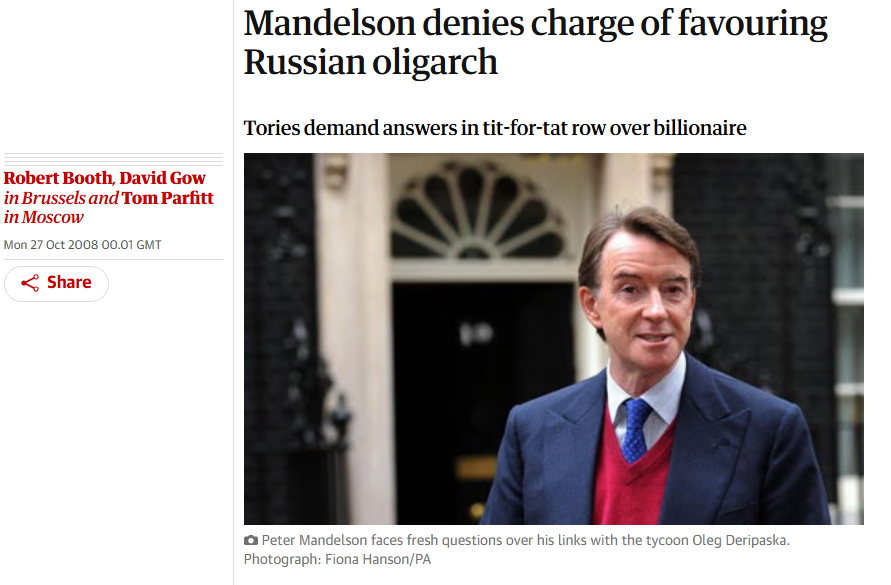
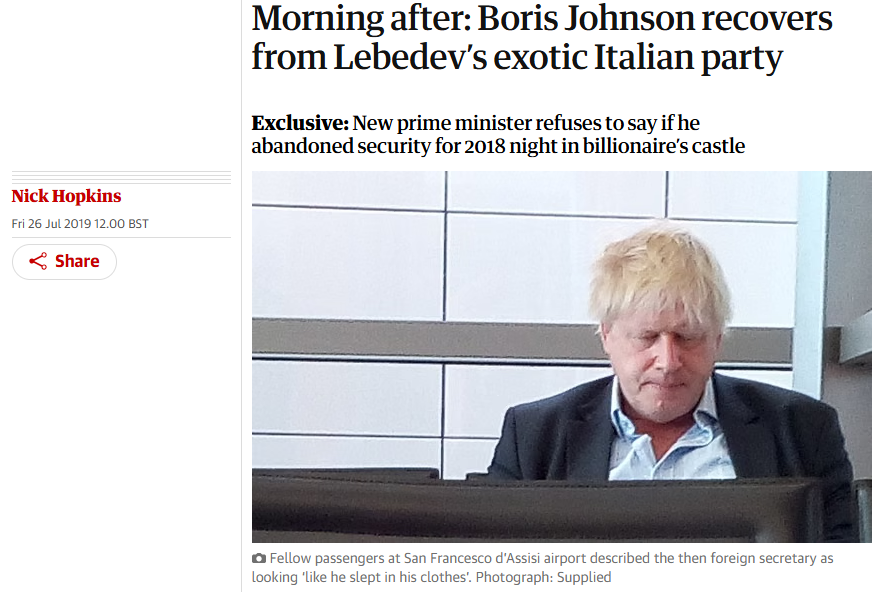
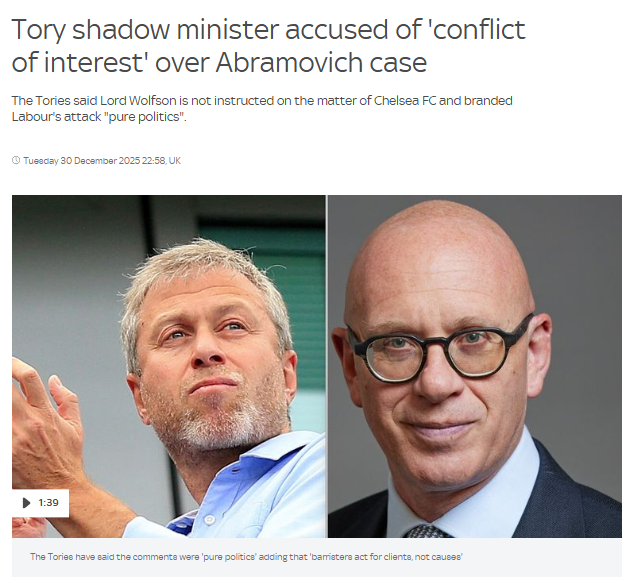
But there are clear signs that the UK and other NATO and EU states have very serious Russian interference problems that pose a threat to their democracy and security.
Countries that pride themselves on their long history of democracy and openness, like the UK, may be reluctant to take Romania’s approach to dealing with Russian interference, but governments need to be tackling the problem as a matter of extreme urgency. bbc.co.uk/news/articles/…
The recent UK government decision to hold an independent review into foreign interference is very welcome. It needs to be thorough, quick, and to lead to meaningful actions to address the problem. bbc.co.uk/news/articles/…
10. We can only protect ourselves against threats we acknowledge.
That means facing up to uncomfortable realities, not pretending they don’t exist or waiting for them to go away and hoping things will return to the old days.
Nothing has prepared most European policymakers for what they’re now facing: threats from Russia; the end of the US as friend and protector; US alignment with Russia; uncertain political futures in Moscow and Washington; external interference threatening their own democracies.
Some politicians are catching up, but many others in the UK and elsewhere are still trying to operate in the world of 5, or 25, years ago. That world's gone and they need to face that before their reluctance to acknowledge the scary and expensive world of 2026 does more harm.
Final thought. This is all both frightening and depressing. But although addressing these problems will be very difficult and, in many cases, very costly, it can be done. I think Europe is in a better place on these issues than it was a year ago; I’m optimistic that can continue.
And I think the path to a safer Europe lies through and with Ukraine.
• • •
Missing some Tweet in this thread? You can try to
force a refresh