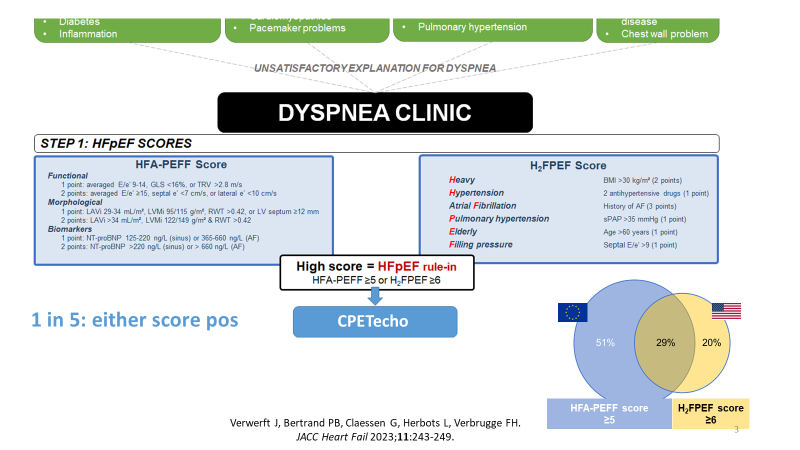
🧵 New paper in Journal of Cardiac Failure
How does atrial fibrillation affect exercise hemodynamics in HFpEF?
🫀🫁🚴 =#CPETecho
We combined CPET with echocardiography to dissect the mechanisms 👇
led by 🌟@S_FoulkesAEP @_Sara_Ferreira @mhaykows 🌟
#HFpEF #AtrialFibrillation
How does atrial fibrillation affect exercise hemodynamics in HFpEF?
🫀🫁🚴 =#CPETecho
We combined CPET with echocardiography to dissect the mechanisms 👇
led by 🌟@S_FoulkesAEP @_Sara_Ferreira @mhaykows 🌟
#HFpEF #AtrialFibrillation
1/8
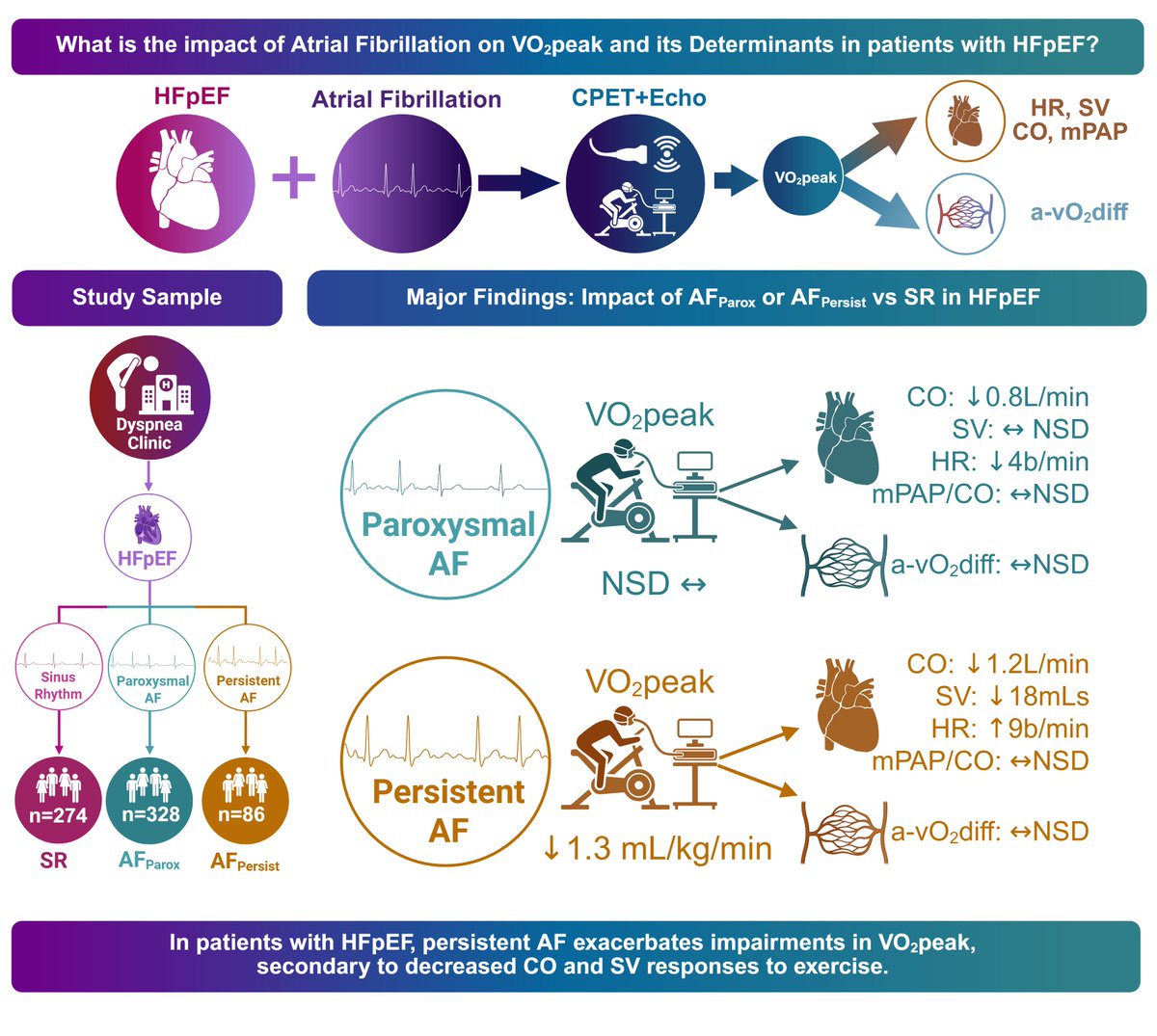
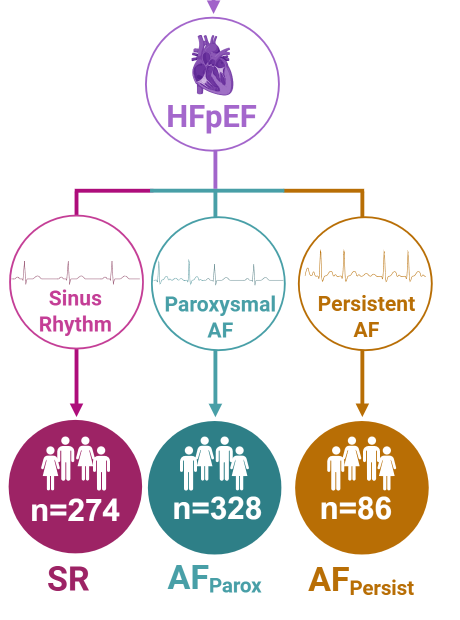
In a large HFpEF cohort undergoing CPETecho, we compared
• Sinus rhythm
• Paroxysmal AF
• Persistent AF
at the time of exercise testing
In a large HFpEF cohort undergoing CPETecho, we compared
• Sinus rhythm
• Paroxysmal AF
• Persistent AF
at the time of exercise testing
2/8🔑 Key finding:
Only persistent #AF was associated with a significantly lower peak VO₂.
Paroxysmal AF behaved much closer to sinus rhythm.
Only persistent #AF was associated with a significantly lower peak VO₂.
Paroxysmal AF behaved much closer to sinus rhythm.

3/8
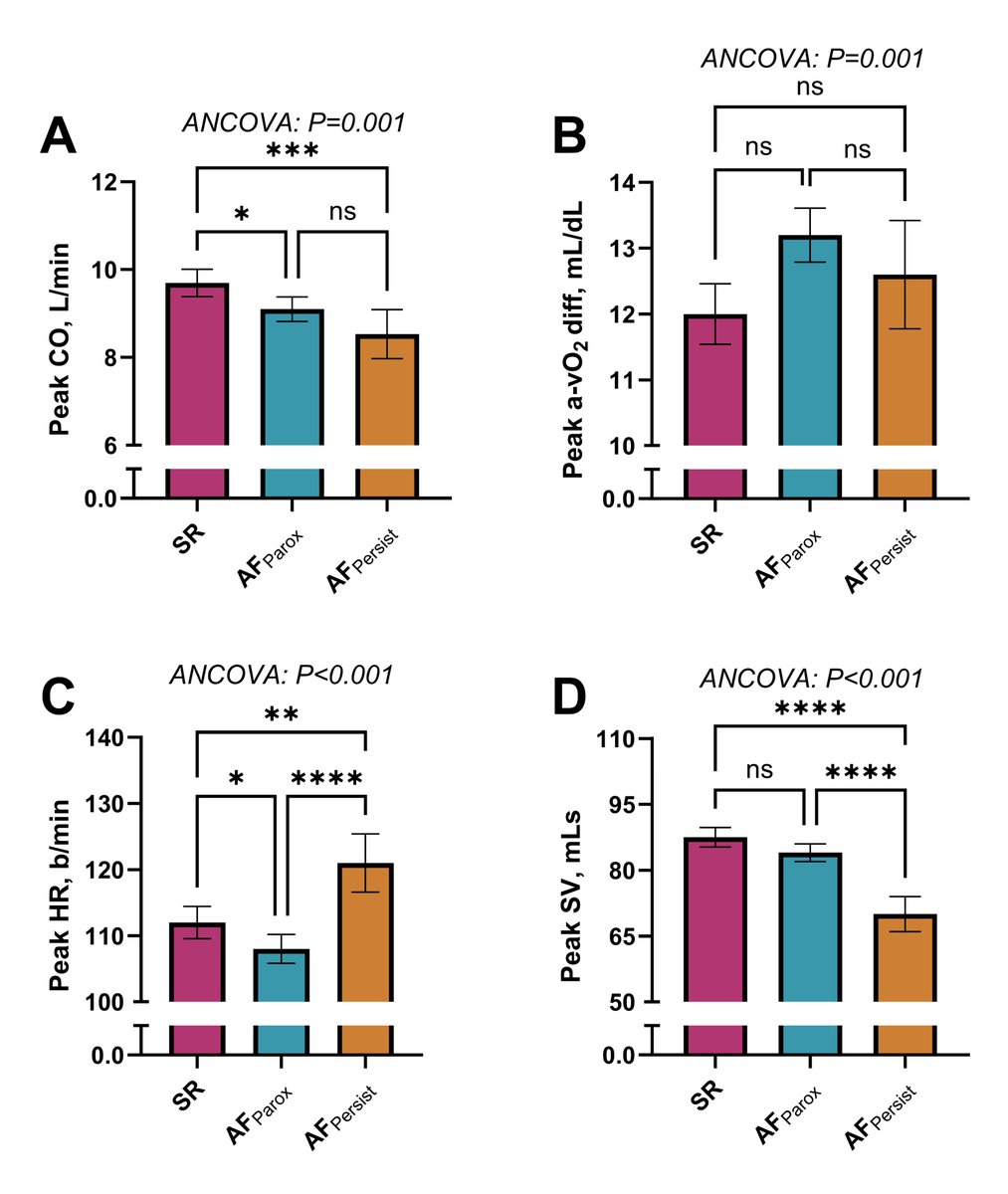
Why?
The reduction in peak VO₂ in persistent AF was driven primarily by:
⬇️ Peak cardiac output
⬇️ Stroke volume augmentation during exercise
Despite higher HR and similar peripheral O₂ extraction.
#ExercisePhysiology
Why?
The reduction in peak VO₂ in persistent AF was driven primarily by:
⬇️ Peak cardiac output
⬇️ Stroke volume augmentation during exercise
Despite higher HR and similar peripheral O₂ extraction.
#ExercisePhysiology
4/8
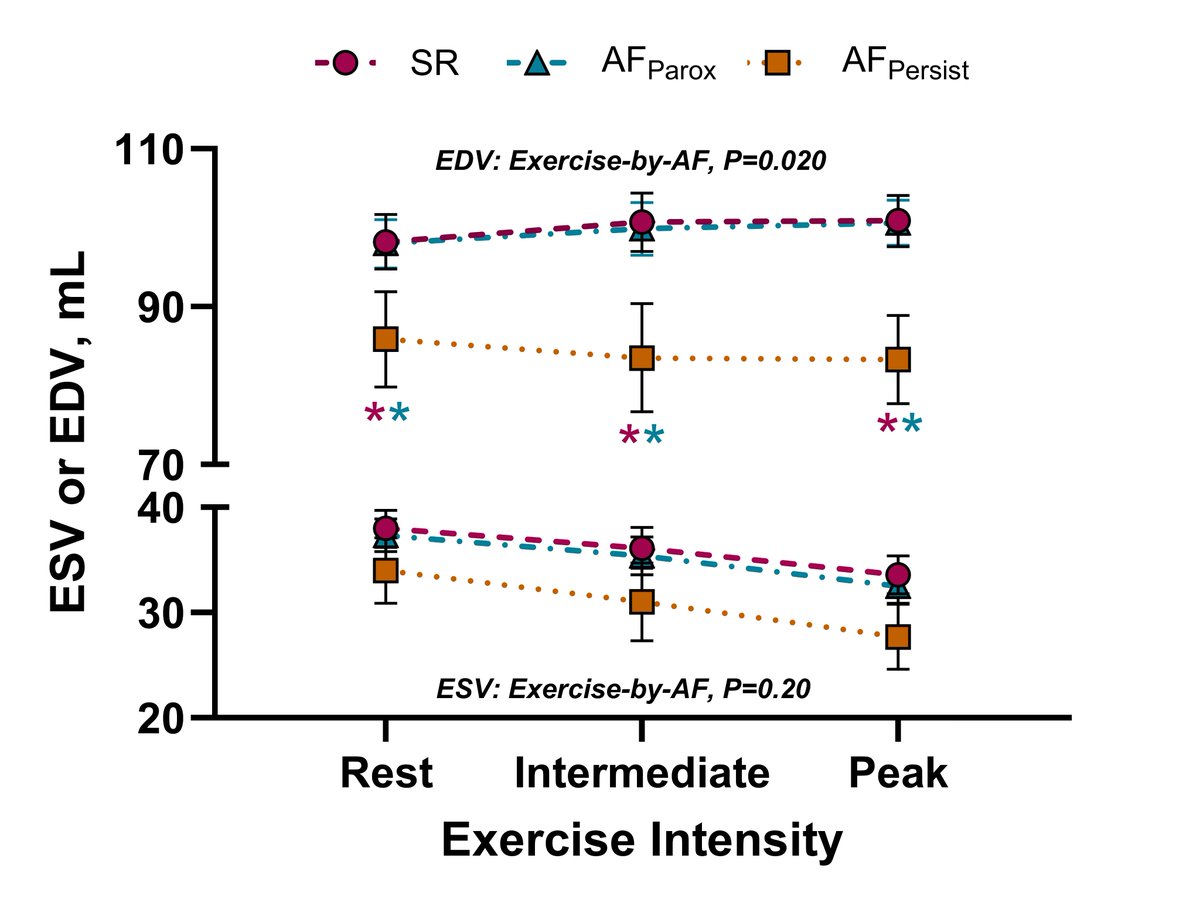
Is impaired preload reserve part of the explanation?
Is impaired preload reserve part of the explanation?
5/8
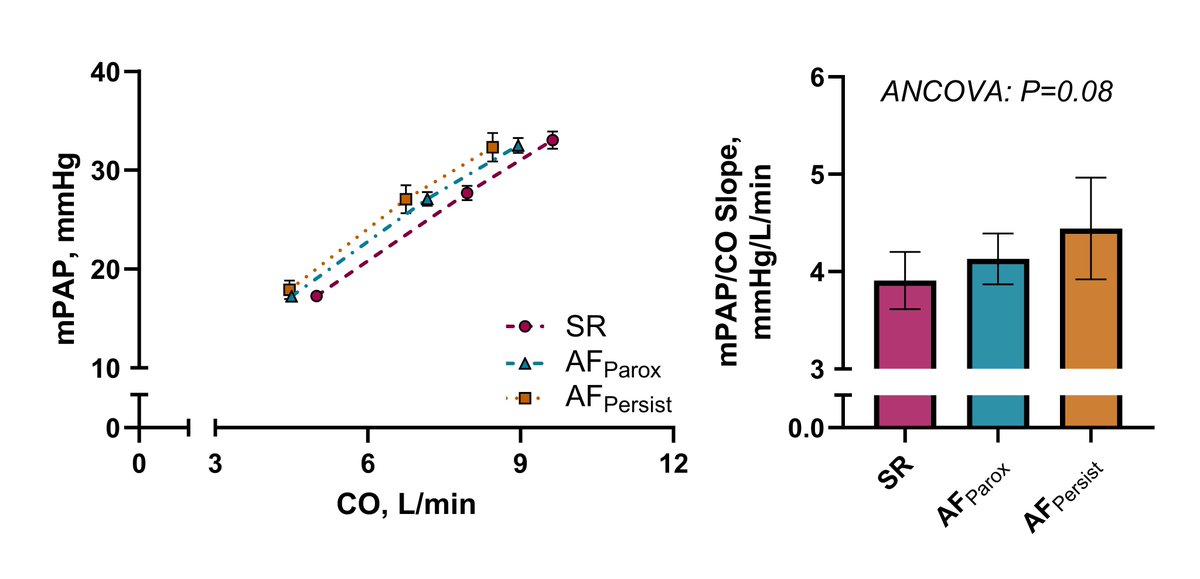
🚫 Figure 4:
Despite worse exercise capacity, persistent AF showed similar
• mPAP
• sPAP
• mPAP/CO slope
across rhythm groups.
🚫 Figure 4:
Despite worse exercise capacity, persistent AF showed similar
• mPAP
• sPAP
• mPAP/CO slope
across rhythm groups.
6/8
✔ Findings were robust after adjustment for
BMI, medications (incl β-blockers), MR, renal function, and pulmonary hypertension.
✔ Findings were robust after adjustment for
BMI, medications (incl β-blockers), MR, renal function, and pulmonary hypertension.
7/8🧠 Take-home:
In HFpEF, rhythm at the time of exercise matters.
Rhythm control strategies may therefore be pivotal in optimizing exercise performance and clinical outcomes in patients with HFpEF and AF.
📄 Journal of Cardiac Failure
In HFpEF, rhythm at the time of exercise matters.
Rhythm control strategies may therefore be pivotal in optimizing exercise performance and clinical outcomes in patients with HFpEF and AF.
📄 Journal of Cardiac Failure
8/8📄 Read the full paper: Journal of Cardiac Failure
🙏Thanks to an outstanding team, and to the patients and reviewers
#HFpEF #AtrialFibrillation #CPETecho #ExerciseHemodynamics #CardioTwitterdoi.org/10.1016/j.card…
🙏Thanks to an outstanding team, and to the patients and reviewers
#HFpEF #AtrialFibrillation #CPETecho #ExerciseHemodynamics #CardioTwitterdoi.org/10.1016/j.card…
@threadreaderapp unroll
• • •
Missing some Tweet in this thread? You can try to
force a refresh