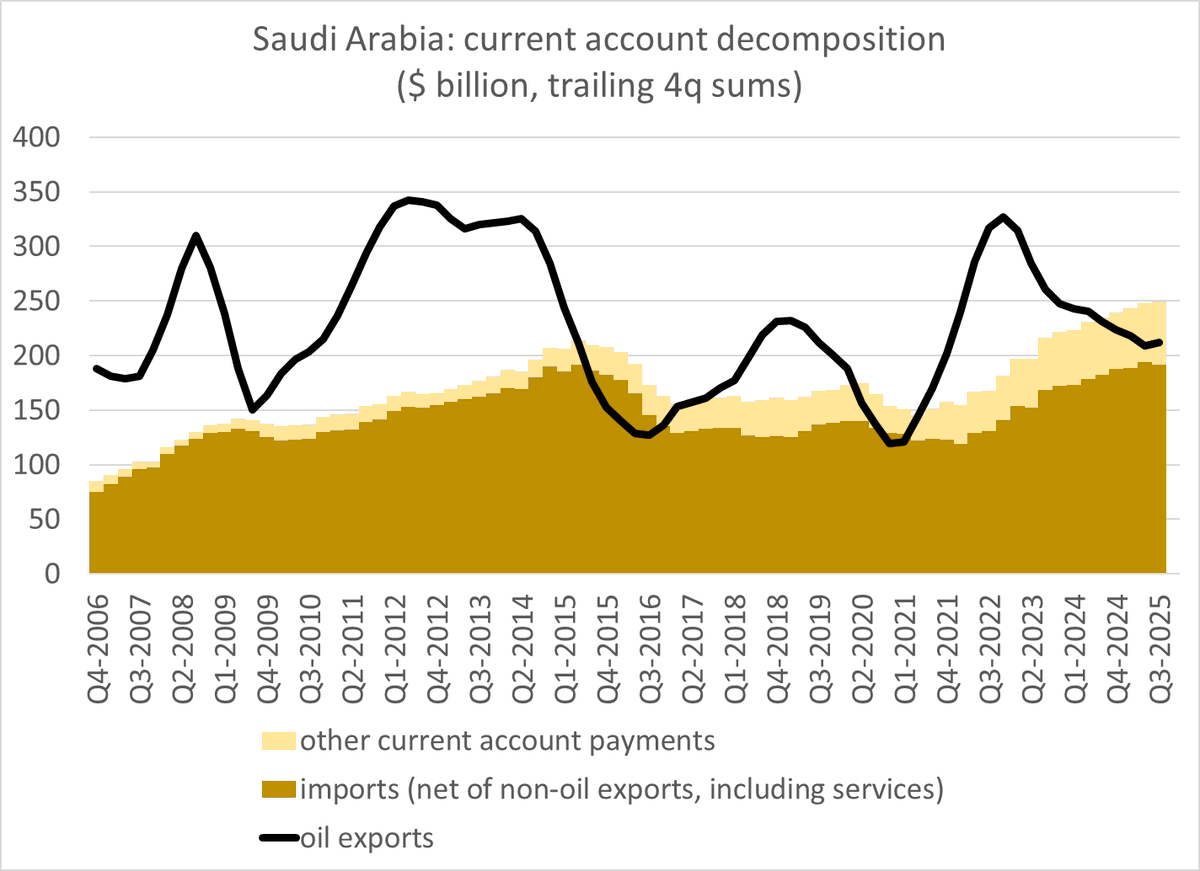
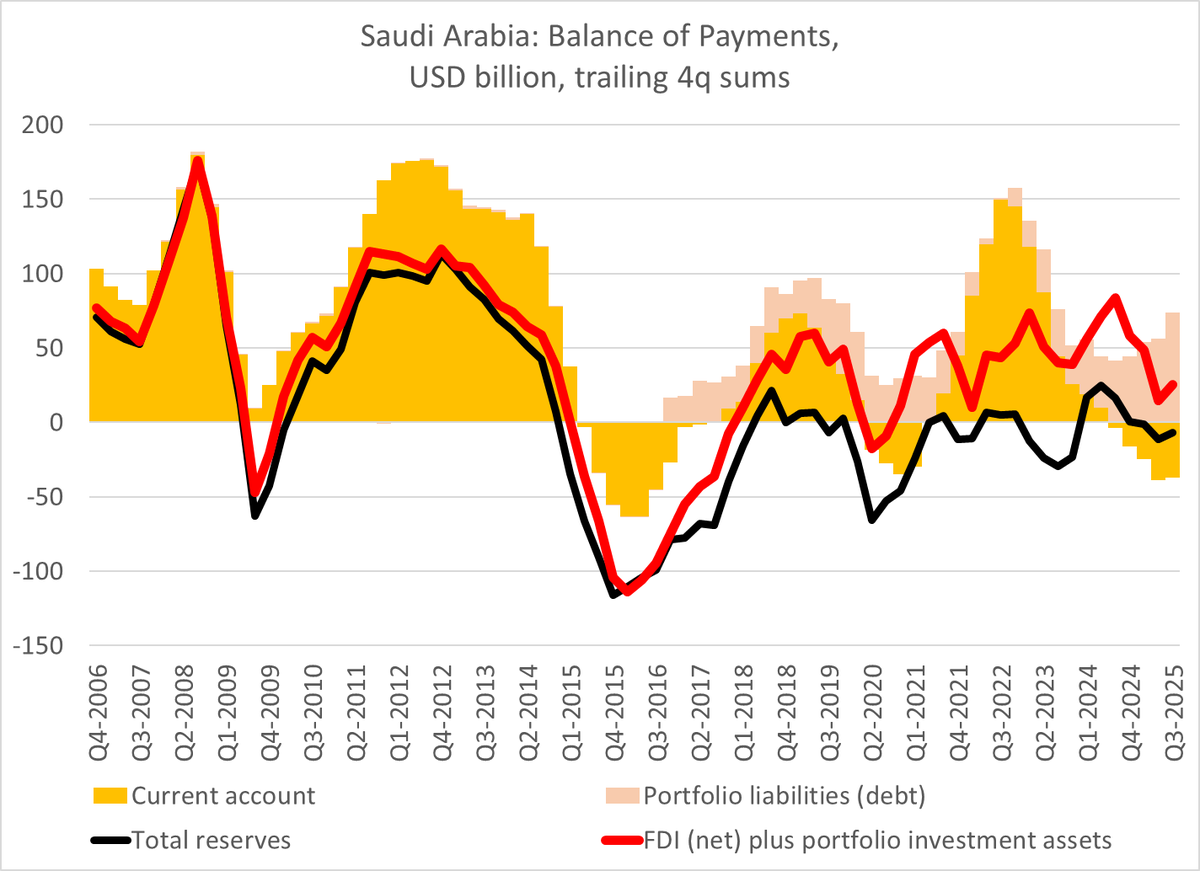
Saudi Arabia's q3 current account numbers are out, and they -- unsurprisingly -- showed an ongoing deficit.
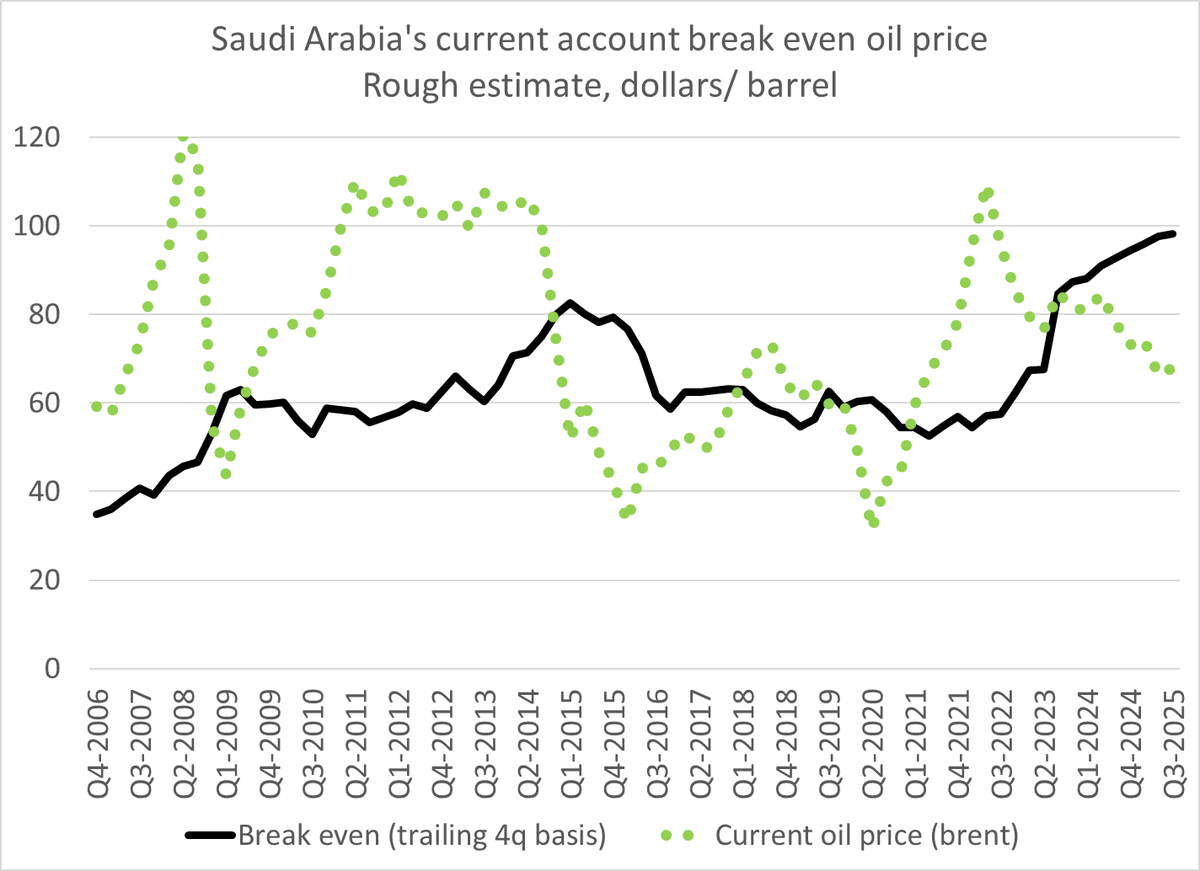
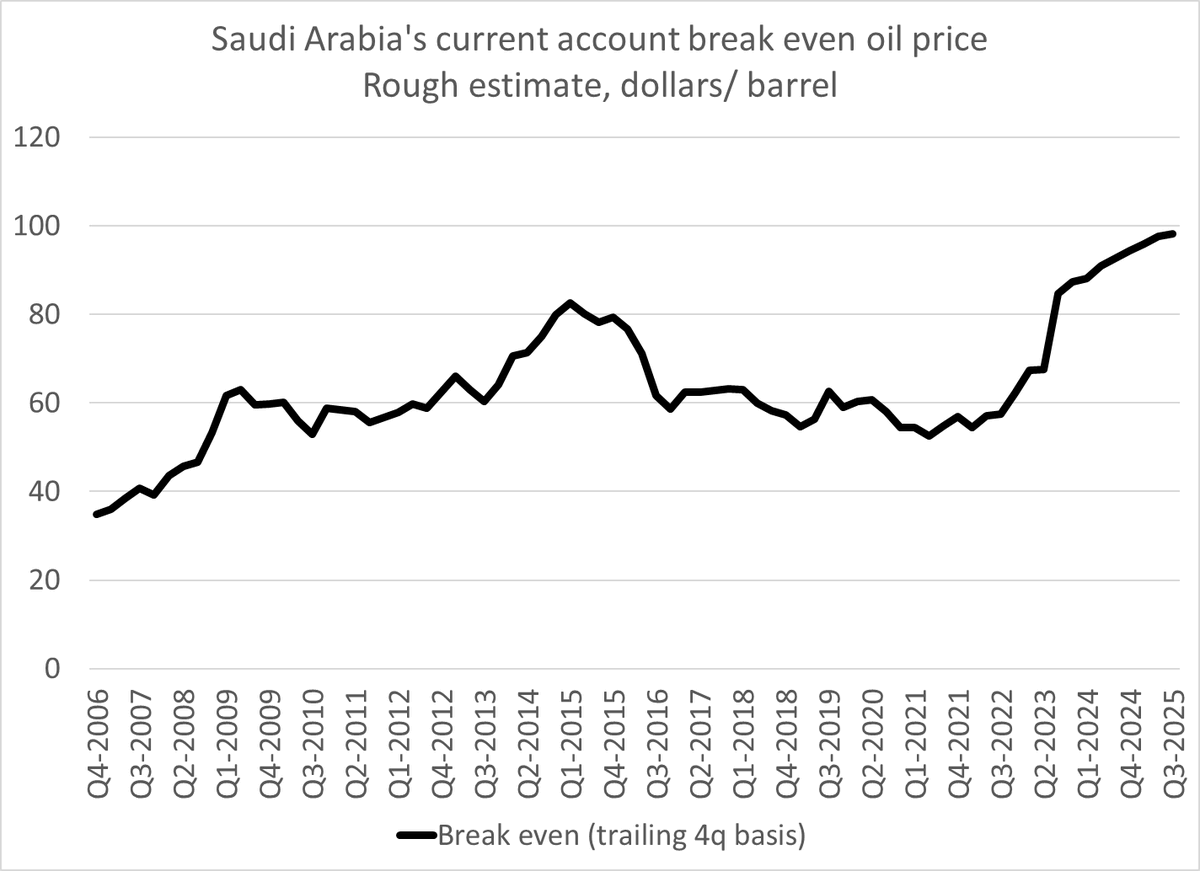
My rough estimate for Saudi Arabia's current account break even (the oil price that results in external balance) continues to be over $90 a barrel
1/x
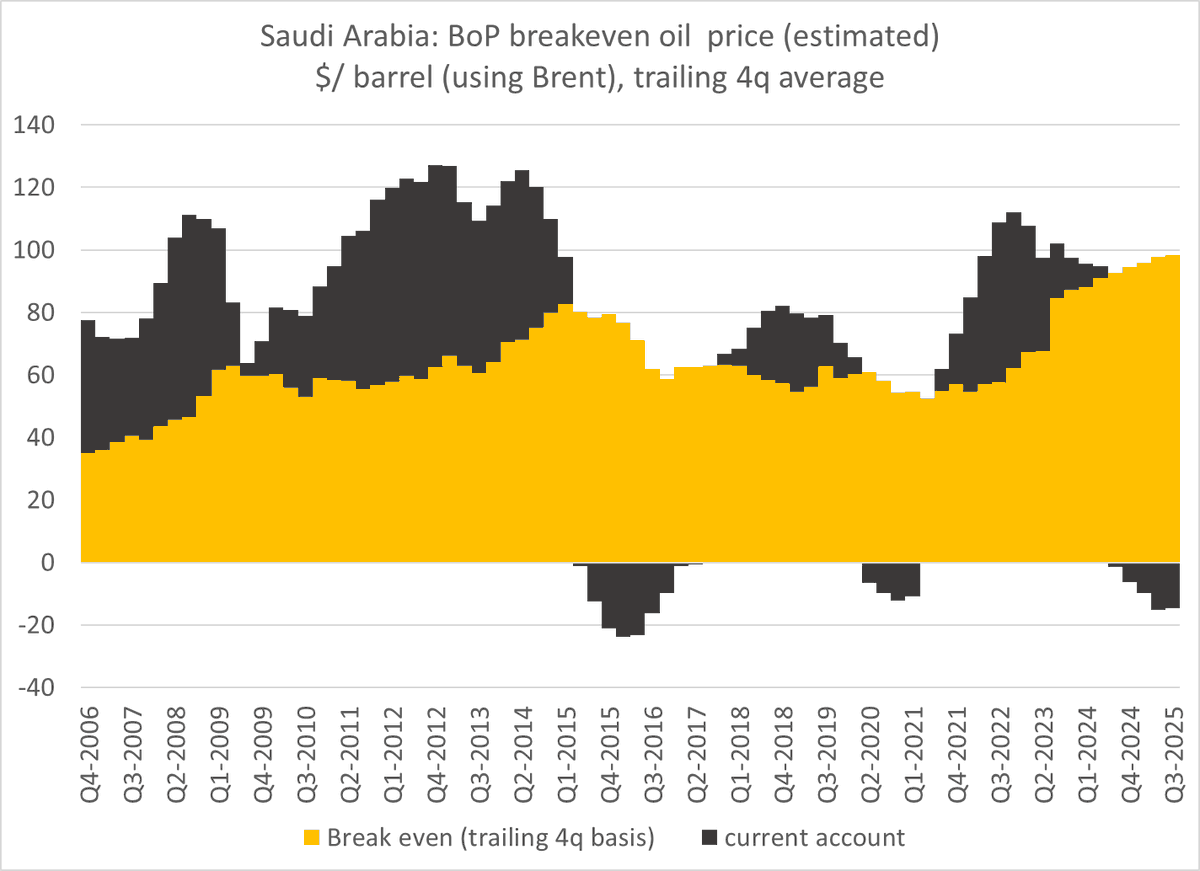
A reminder -- the external break even is calculating using reported oil export revenues, the non-oil current account, and net exports (my numbers there are dependent on getting regular updates from @Rory_Johnston )
2/
@Rory_Johnston i.e. Saudi Arabia needs $250 billion a year in export receipts from oil to balance its current account -- and that is much more than it gets with oil at ~ $60 a barrel
3/
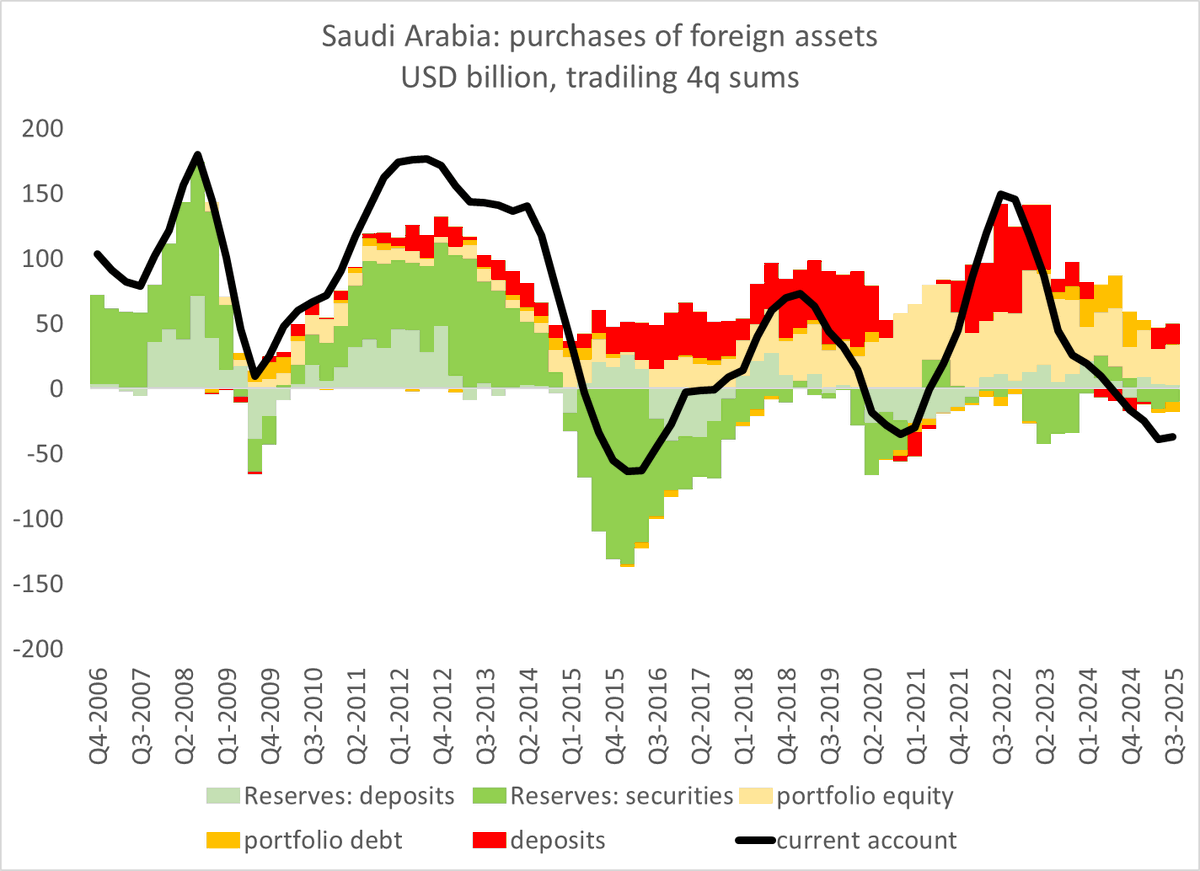
@Rory_Johnston There isn't yet any evidence that the Saudis (or MBS) are adjusting to current oil realities ... though the pace of external spending is growing a bit more slowly. The Saudis also continue to accumulate external assets even with a $40b current account deficit ...
4/
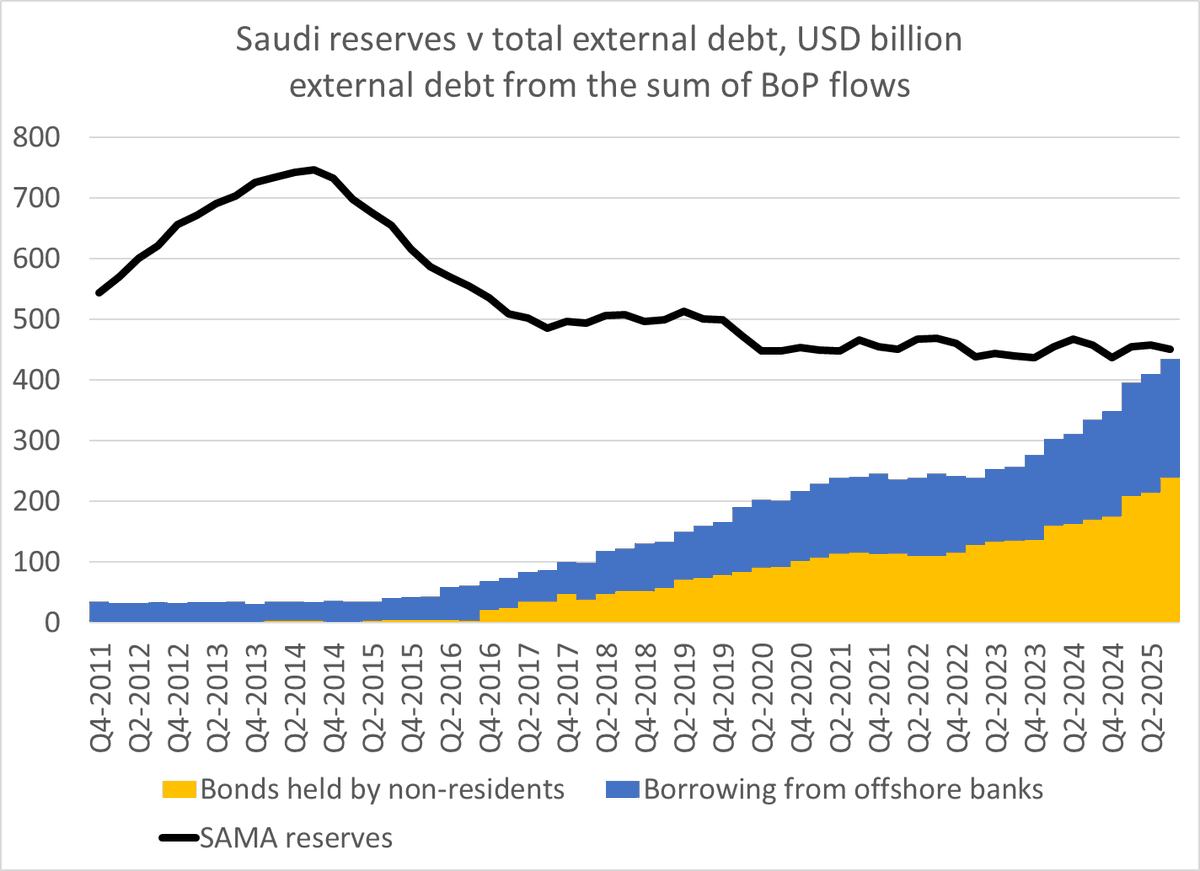
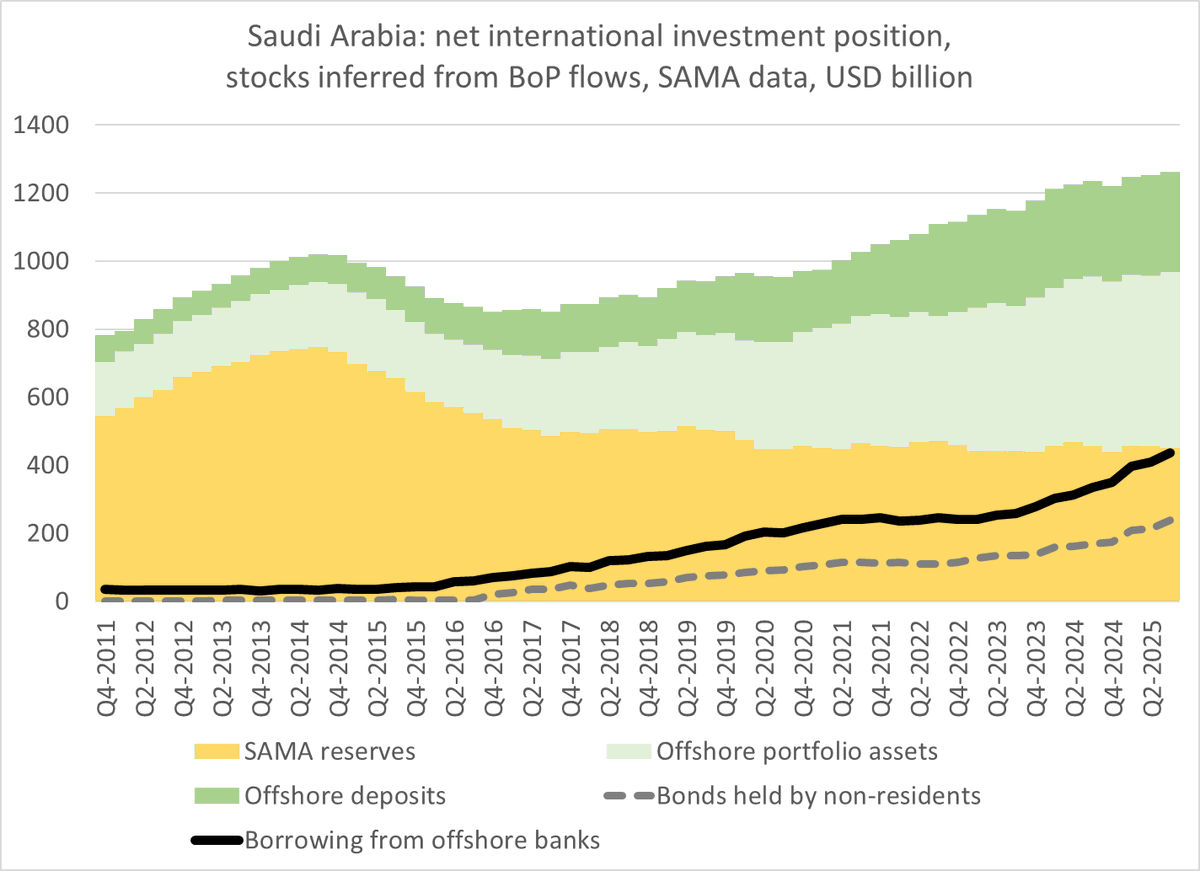
@Rory_Johnston That is possible, of course, because the Saudis (the government, the PIF, Aramco ... ) are big borrowers -- placing bonds externally, taking out new bank loans, and so on ... external debt is poised to top reserves by end the of q4
5/
@Rory_Johnston External borrowing from the market was over $70b over the last 4qs -- not a small sum
6/
@Rory_Johnston To be sure, the Saudis have substantial non-reserve foreign assets; their aggregate external position is still solid ...
7/
@Rory_Johnston But with a fiscal break even of ~ $100, a similar balance of payments break even, and rising external debt relative to reserves, I really don't understand why S&P upgraded Saudi Arabia last year ... its credit quality is getting worse not better
@Rory_Johnston I have given @IMFNews a hard time for ignoring balance of payments variables in their analysis of China (until recently) and in their market access debt sustainability analysis. But a lack of fluency in the balance of payments is now a more general problem
9/9
• • •
Missing some Tweet in this thread? You can try to
force a refresh

The Treasury has indicated that it will look at the activities of China's state banks in its next assessment of China's currency policies--
It is hard to see how this doesn't become a bit of an issue ... unless of course summitry gets in the way of analysis 1/
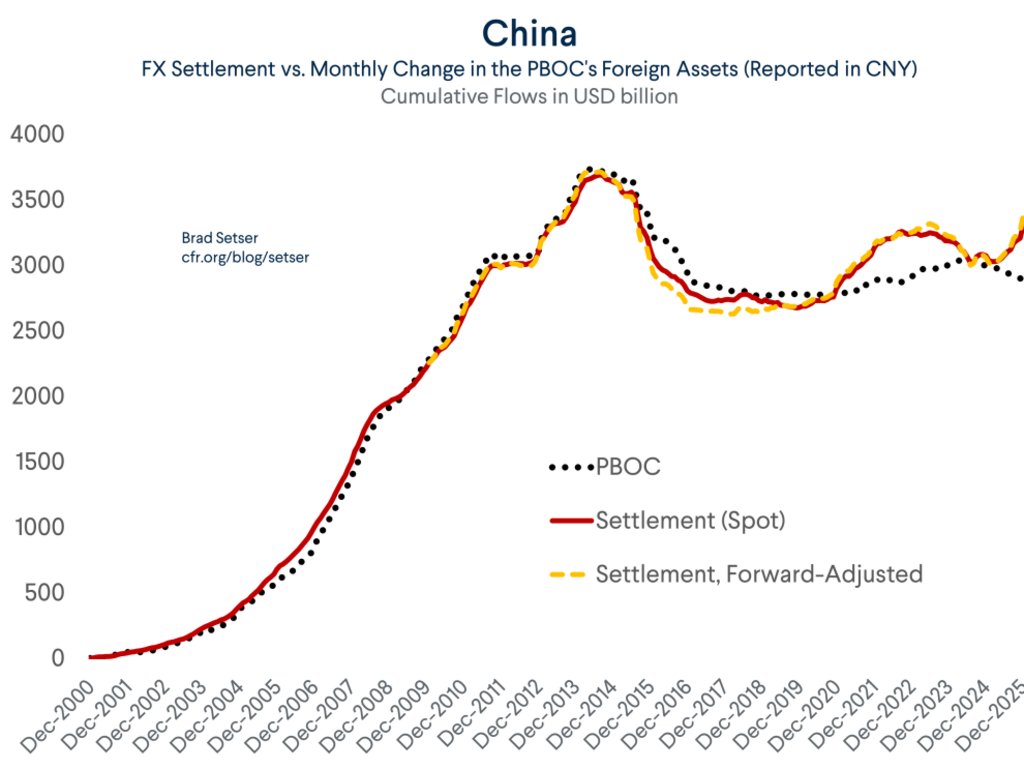
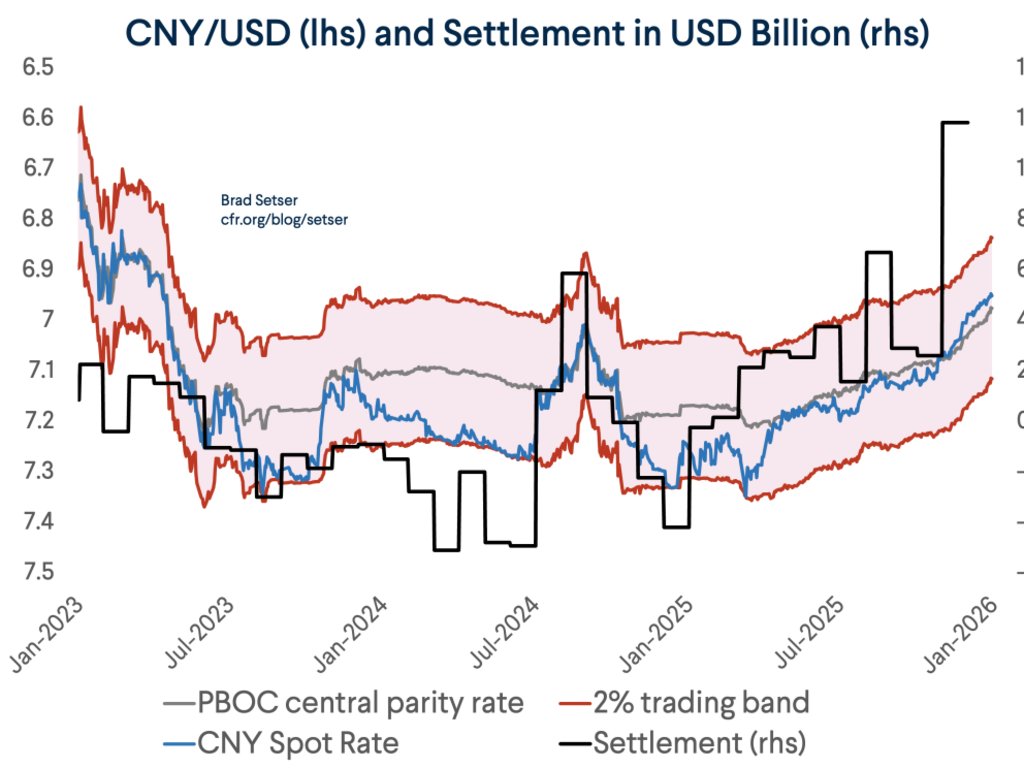
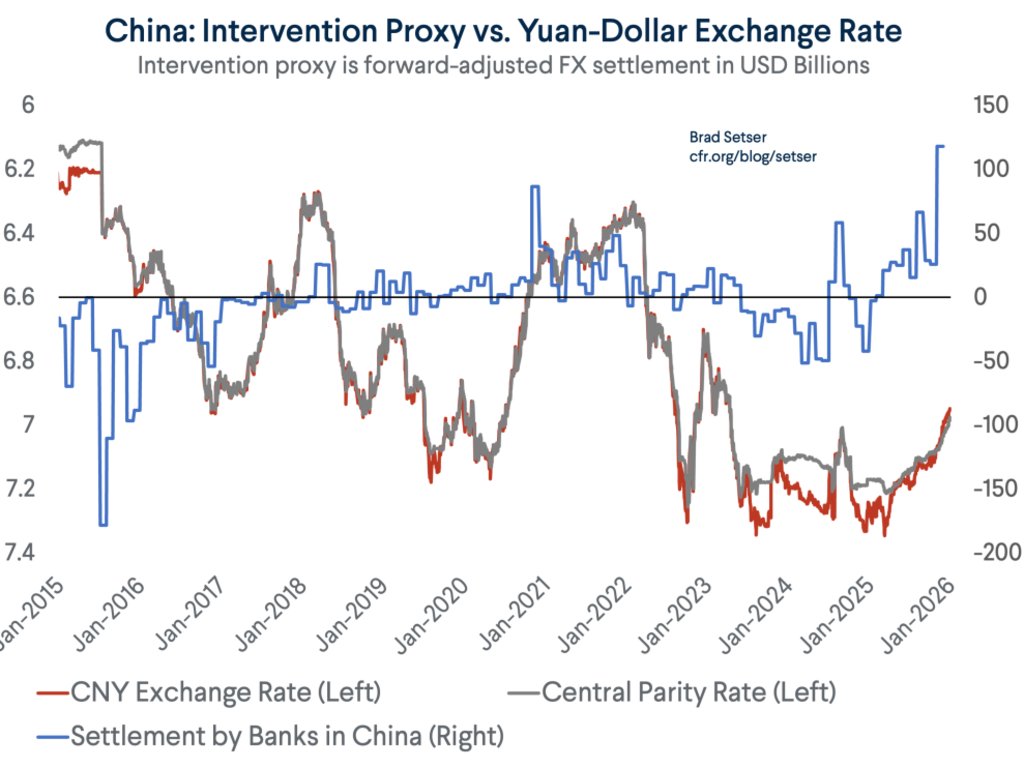
It is quite clear that state bank purchases (and in 23/ early 24 sales) of fx have replaced PBOC purchases and sales and the core technique China uses to manage the band around the daily fx -- i.e. settlement looks like an intervention variable
2/
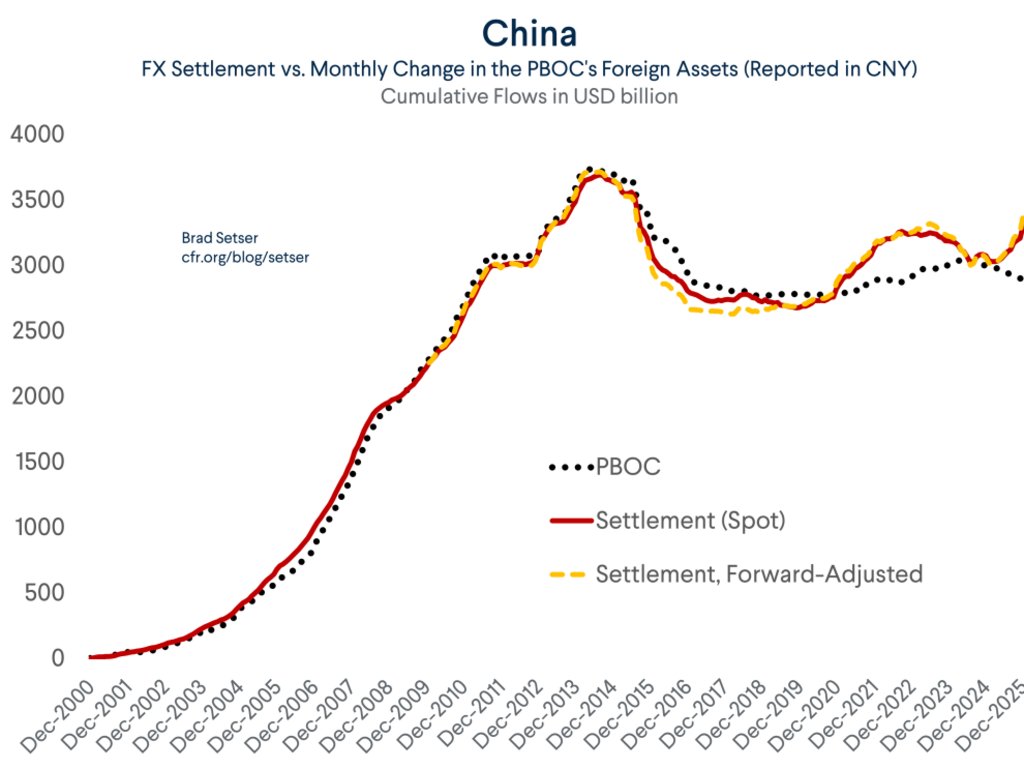
My latest blog looks both at how fx settlement (a measure that includes the state banks) has displaced the PBOC's own reported reserves as the best metric for Chinese intervention & lat some of SAFE's balance sheet mysteries
The blog is detailed and technical -- and thus probably best read by those with a real interest in central bank balance sheets, the balance of payments and how to assess backdoor foreign currency intervention
2/
Drawing on historical data, I propose that the gap between fx settlement and the foreign assets on the PBOC's balance sheet (fx reserves + other f. assets) is a good indicator of hidden intervention --
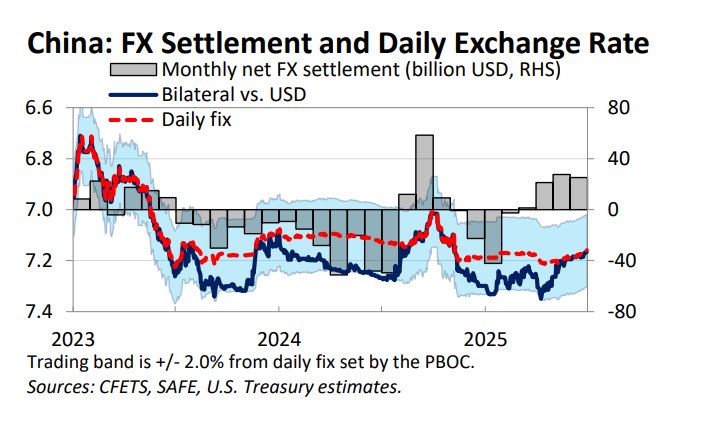
Obviously overshadowed by the news about a Fed nomination, but the Treasury released its delated October 2025 FX report today and it is worth reading -- not the least b/c of a clear warning to SAFE.
1/
This seems clear
"An economy that fails to publish intervention data or whose data are incomplete will not be given any benefit of the doubt in Treasury’s assessment of intervention practices."
This report only covers the period between July 24 and June 25, so it misses the bulk of the 2025 surge in fx settlement (December = $100b plus). But this chart suggests the use of more sophisticated analytical techniques than those used in past reports --
A bit of background. Taiwan's lifers hold $700 billion in foreign currency assets abroad (more counting their holdings of local ETFs that invest heavily in foreign bonds) v ~ $200 billion in domestic fx policies -- so fx gap (pre hedging) of $500 billion
2/
Taiwan's regulator (perhaps the most complicit regulator on earth) not allows the lifers NOT to mark their fx holdings to the fx market -- so the lifers are incentivized not to hedge (and they are rapidly reducing their hedge ratio)
Japan is an interesting case in a lot of ways. It has a ton of domestic debt (and significant domestic financial assets) which generates heated concerns about its solvency/ ability to manage higher rates. But it is also a massive global creditor --
1/
Japan's net holdings of bonds (net of foreign holdings of JGBs) is close to 50% of its GDP (a creditor position as big v GDP as the US net det position). That includes $1 trillion in bonds held in Japan's $1.175 trillion in reserves, + over $2 trillion in other holdings
2/
That translates into big holdings of US debt -- the MoF's Treasuries all show up in the US TIC data, but the corporate bonds held by the lifers, postbank and the GPIF are only partially captured in the US data b/c of third party management/ the use of EU custodians
14m cars would be roughly 1/4th of the global market for cars outside China (the Chinese market is ~ 25m cars) ... no way that doesn't have a disruptive impact.
China would go from 6 to 14m cars in a two year period if 2025 isn't an outlier ...
2/
Not clear that German/ European politics can caught up to the scale of China's export tsunami. And some European firms think they can profit from China's subsidies and strong local supply chain by producing in China for the European market