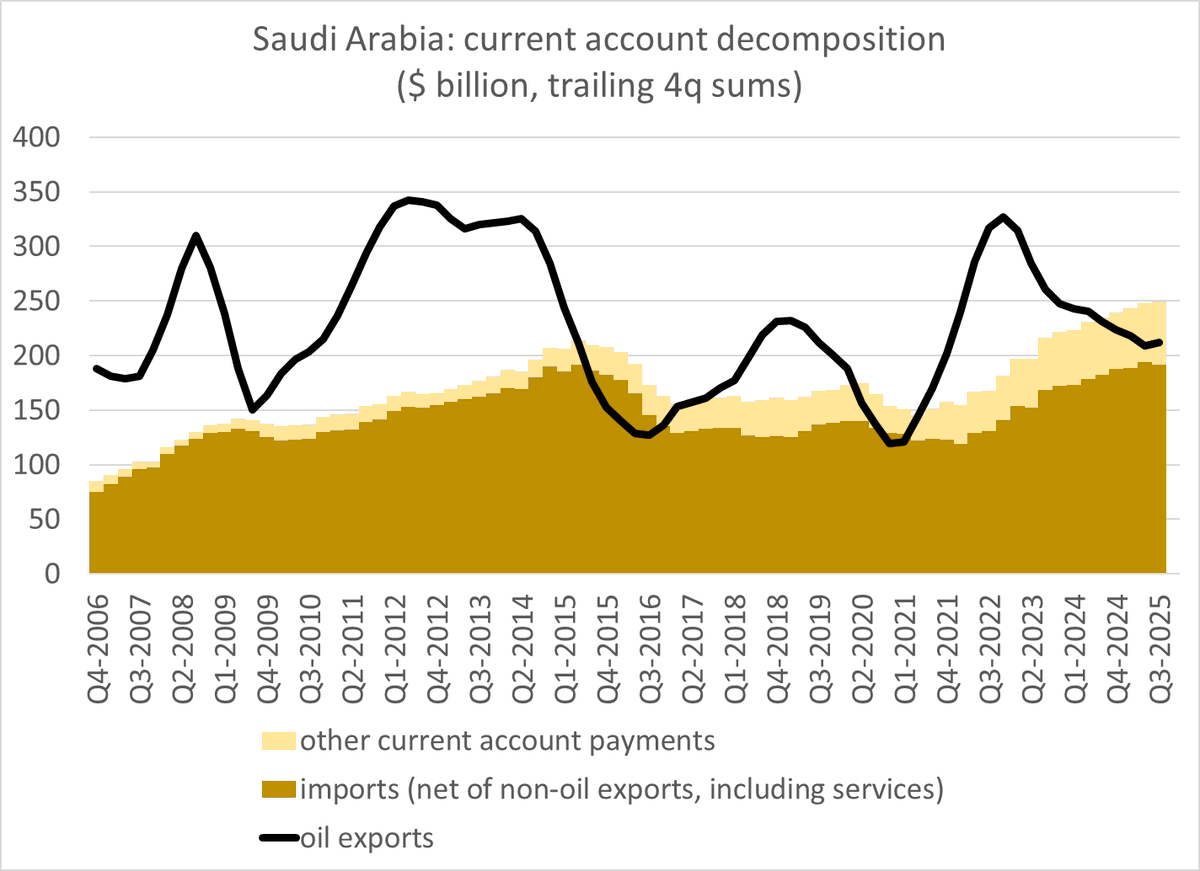
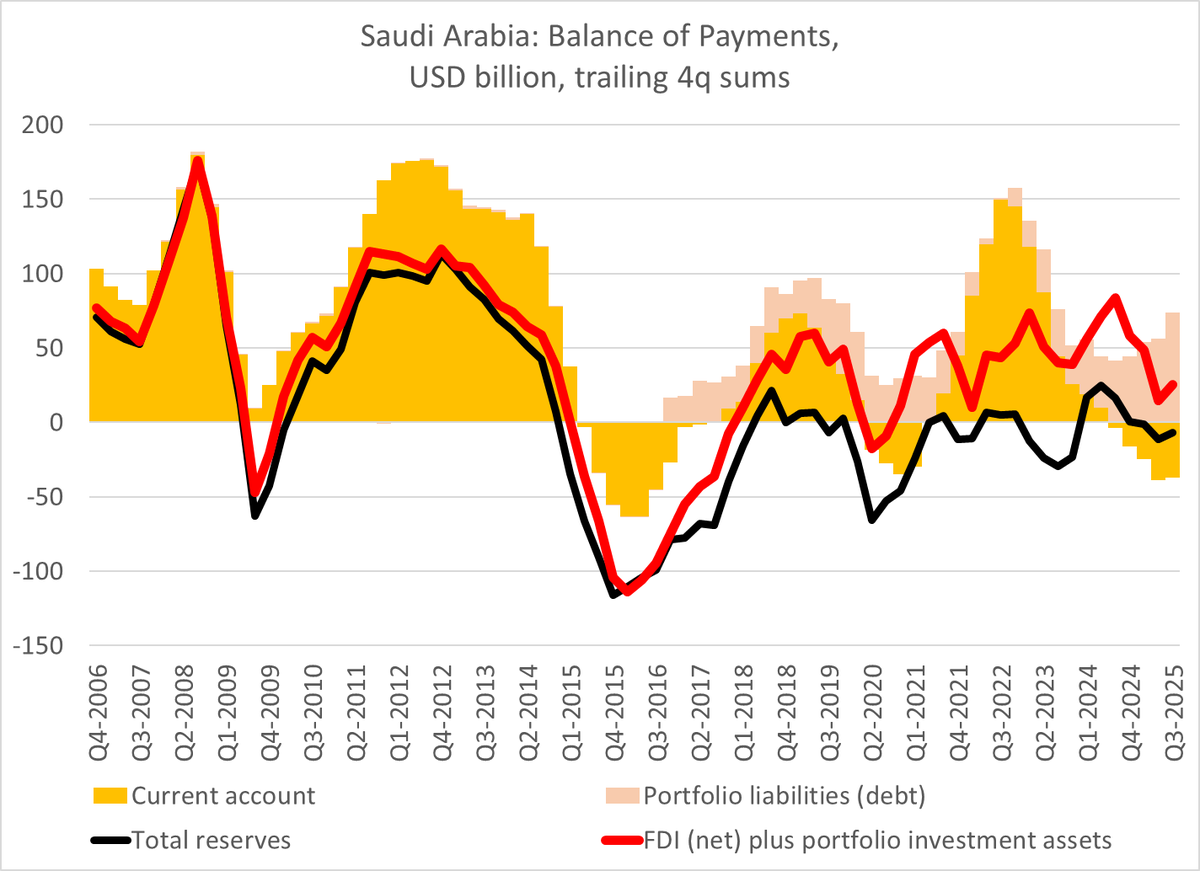
Saudi Arabia's q3 current account numbers are out, and they -- unsurprisingly -- showed an ongoing deficit.
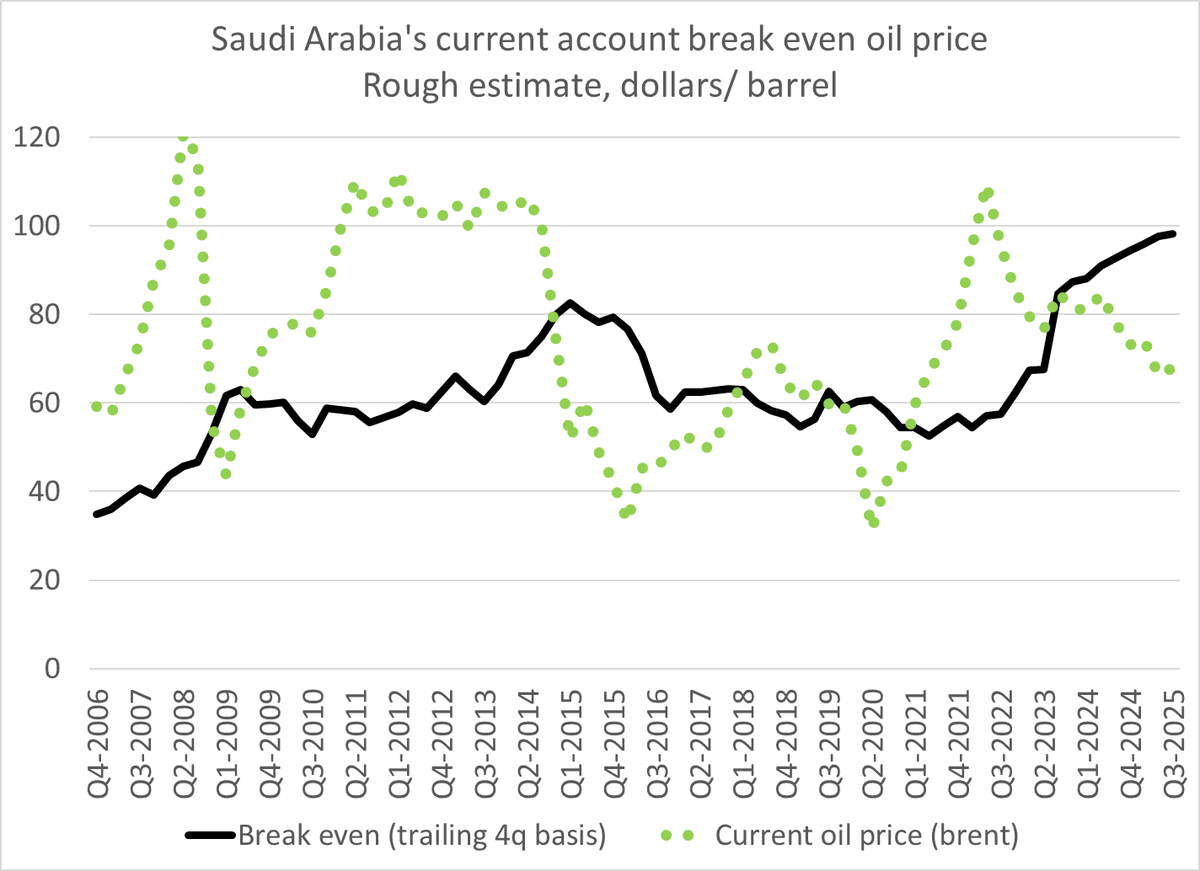
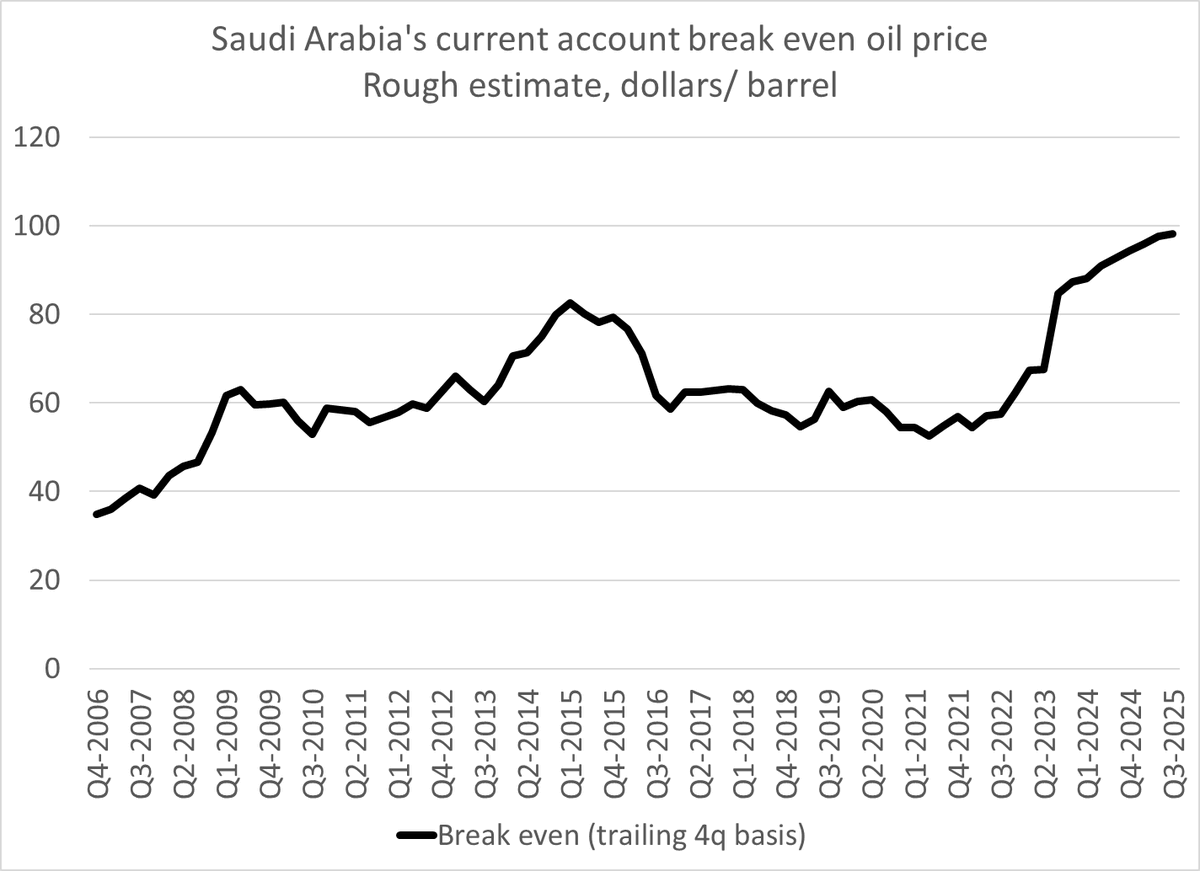
My rough estimate for Saudi Arabia's current account break even (the oil price that results in external balance) continues to be over $90 a barrel
1/x
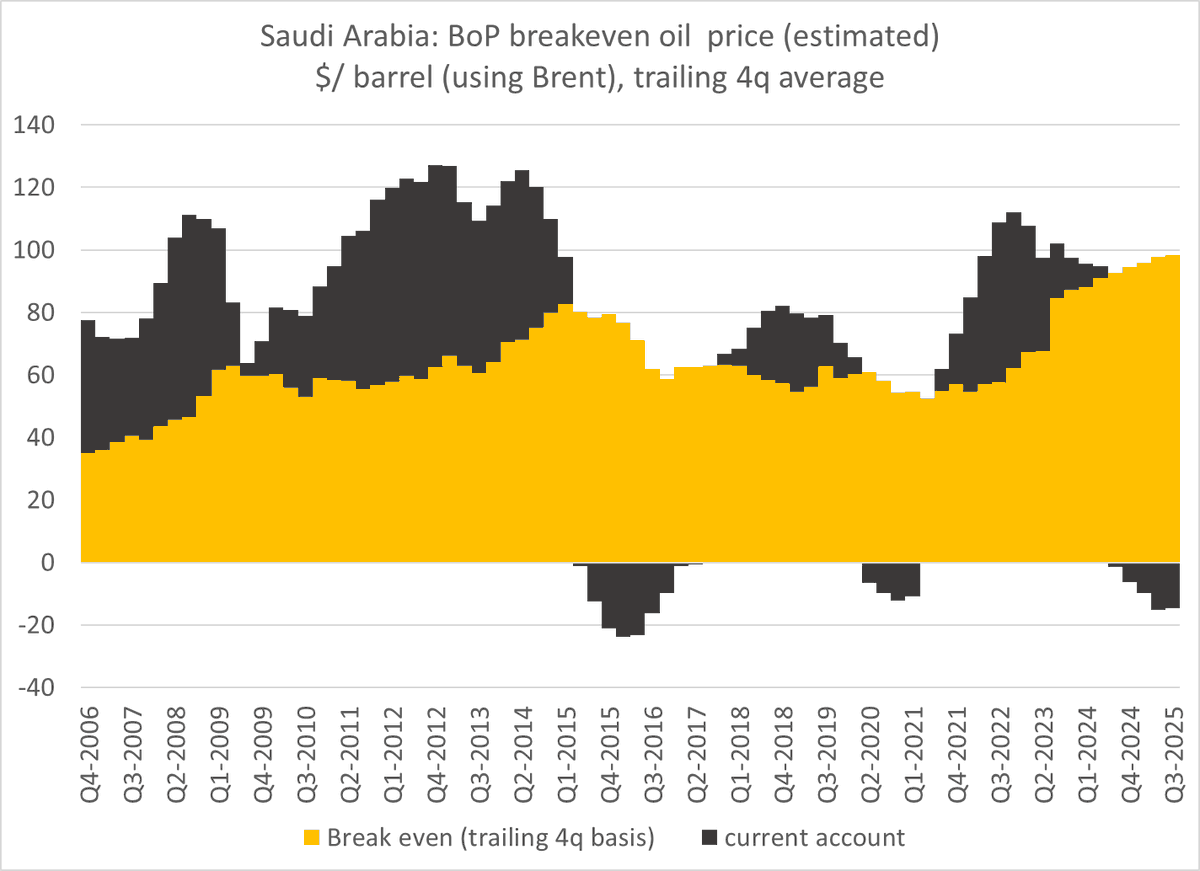
A reminder -- the external break even is calculating using reported oil export revenues, the non-oil current account, and net exports (my numbers there are dependent on getting regular updates from @Rory_Johnston )
2/
@Rory_Johnston i.e. Saudi Arabia needs $250 billion a year in export receipts from oil to balance its current account -- and that is much more than it gets with oil at ~ $60 a barrel
3/
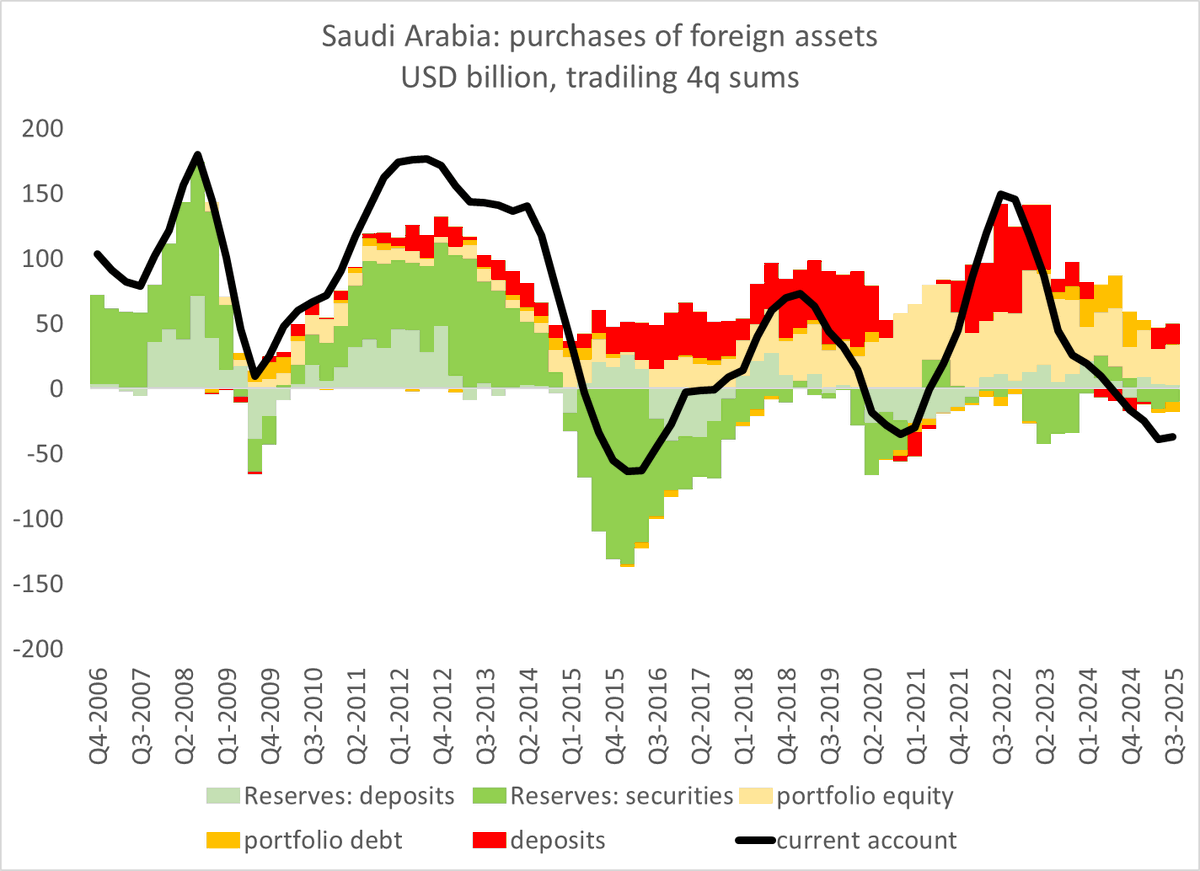
@Rory_Johnston There isn't yet any evidence that the Saudis (or MBS) are adjusting to current oil realities ... though the pace of external spending is growing a bit more slowly. The Saudis also continue to accumulate external assets even with a $40b current account deficit ...
4/
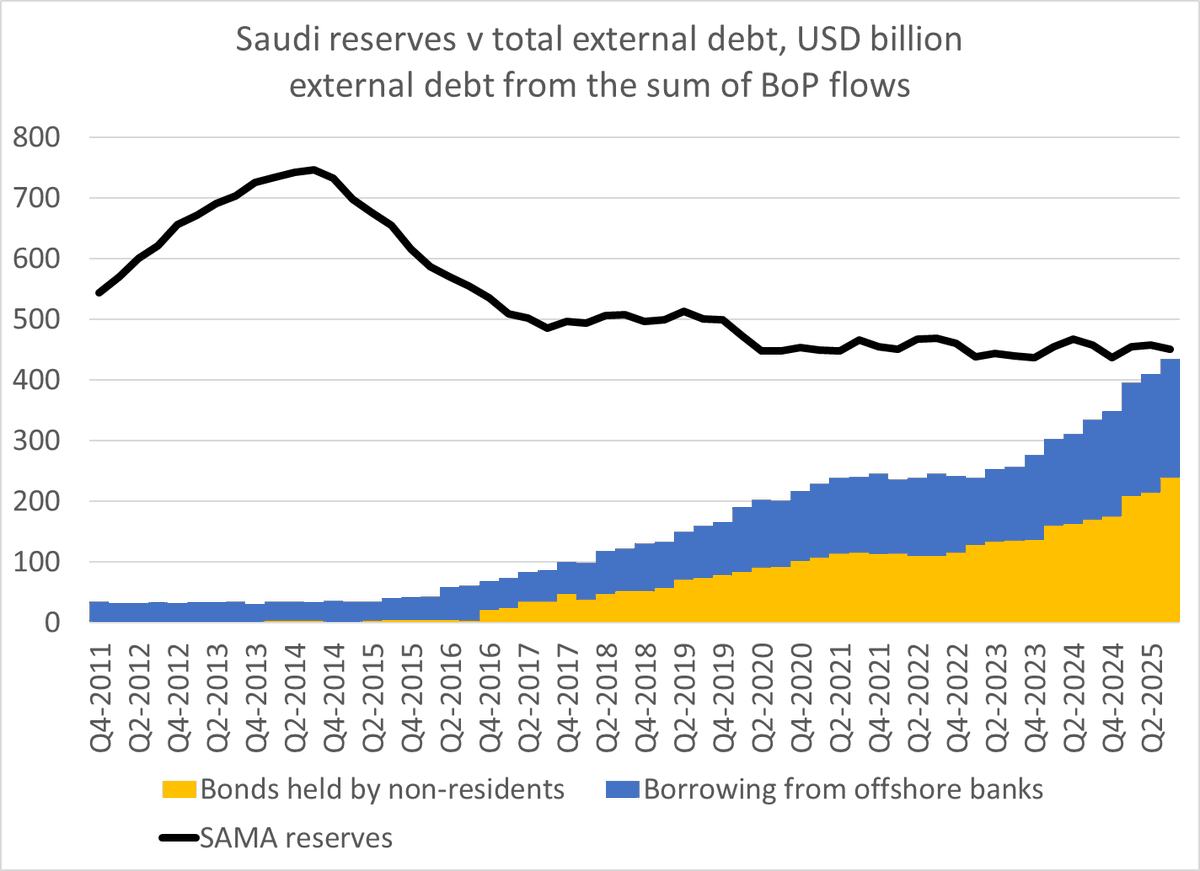
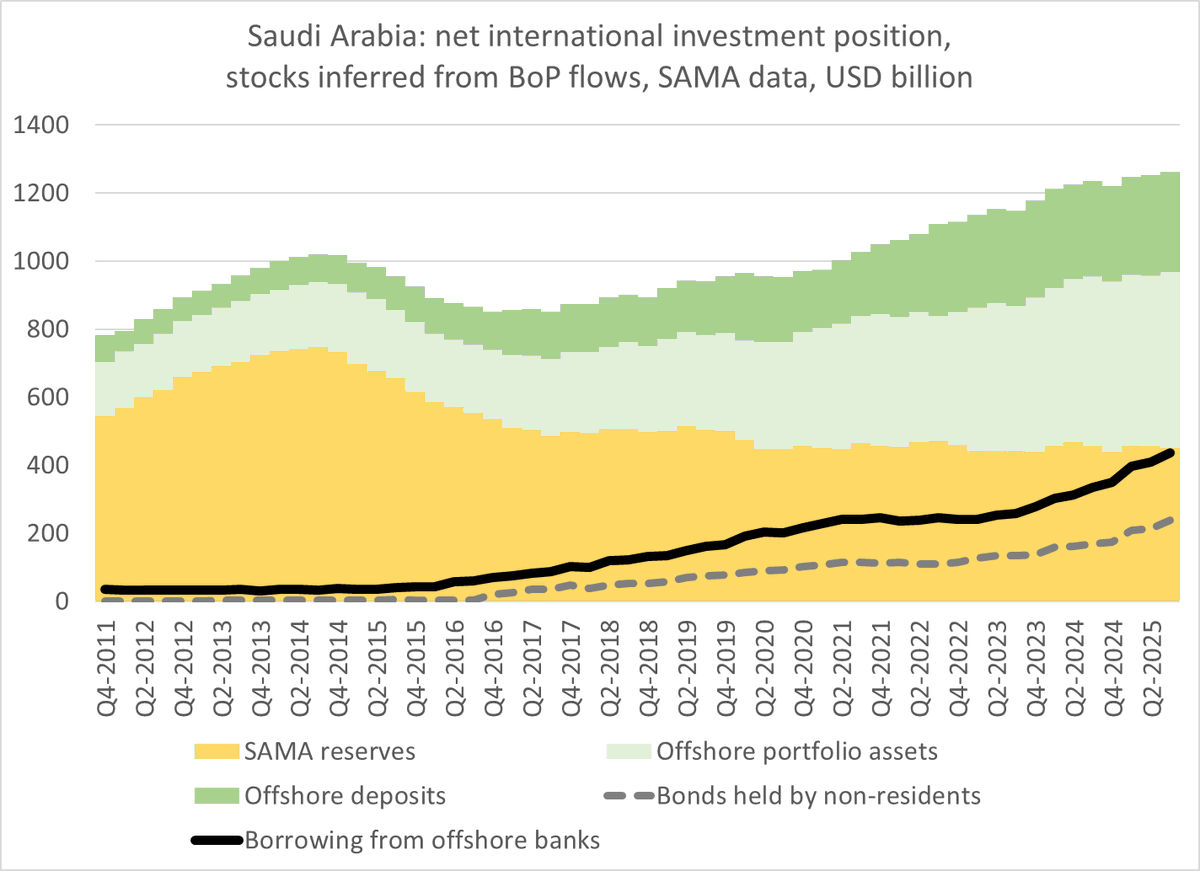
@Rory_Johnston That is possible, of course, because the Saudis (the government, the PIF, Aramco ... ) are big borrowers -- placing bonds externally, taking out new bank loans, and so on ... external debt is poised to top reserves by end the of q4
5/
@Rory_Johnston External borrowing from the market was over $70b over the last 4qs -- not a small sum
6/
@Rory_Johnston To be sure, the Saudis have substantial non-reserve foreign assets; their aggregate external position is still solid ...
7/
@Rory_Johnston But with a fiscal break even of ~ $100, a similar balance of payments break even, and rising external debt relative to reserves, I really don't understand why S&P upgraded Saudi Arabia last year ... its credit quality is getting worse not better
@Rory_Johnston I have given @IMFNews a hard time for ignoring balance of payments variables in their analysis of China (until recently) and in their market access debt sustainability analysis. But a lack of fluency in the balance of payments is now a more general problem
9/9
• • •
Missing some Tweet in this thread? You can try to
force a refresh

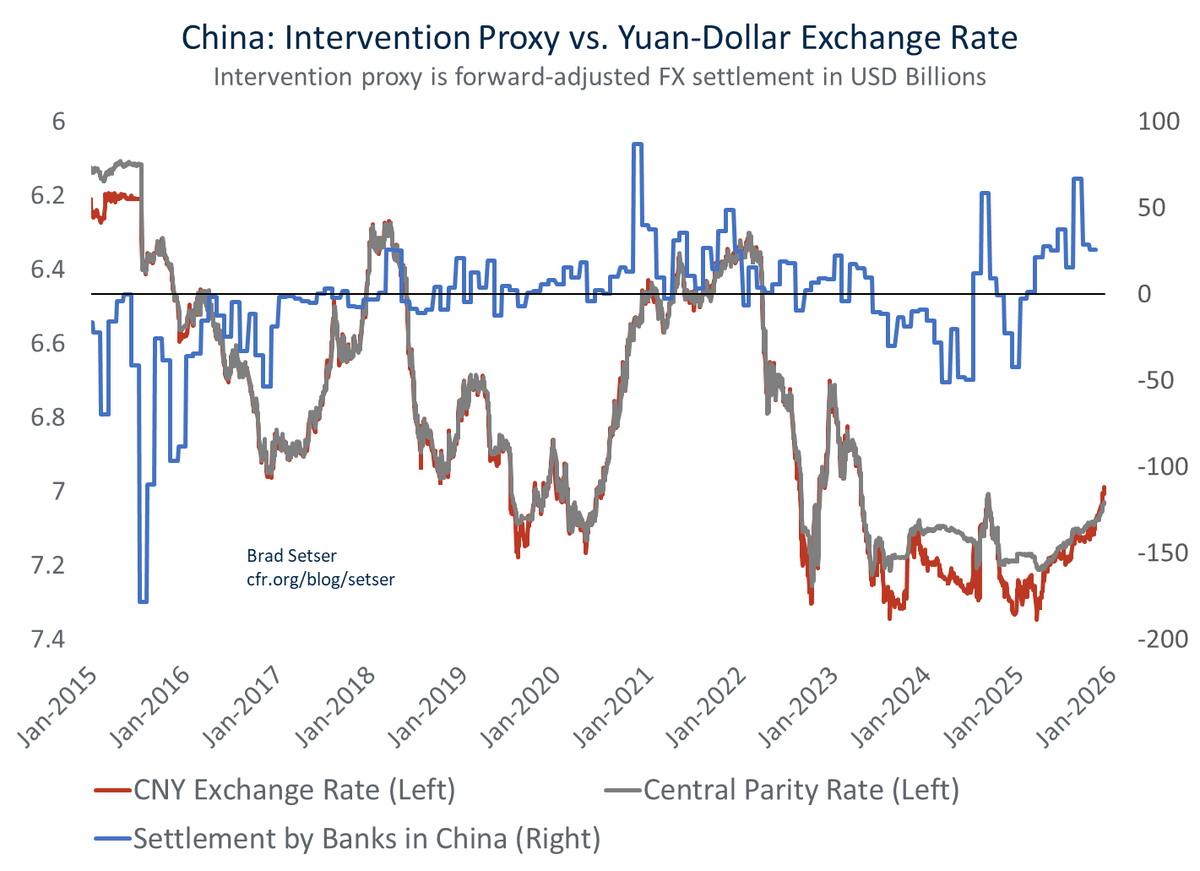
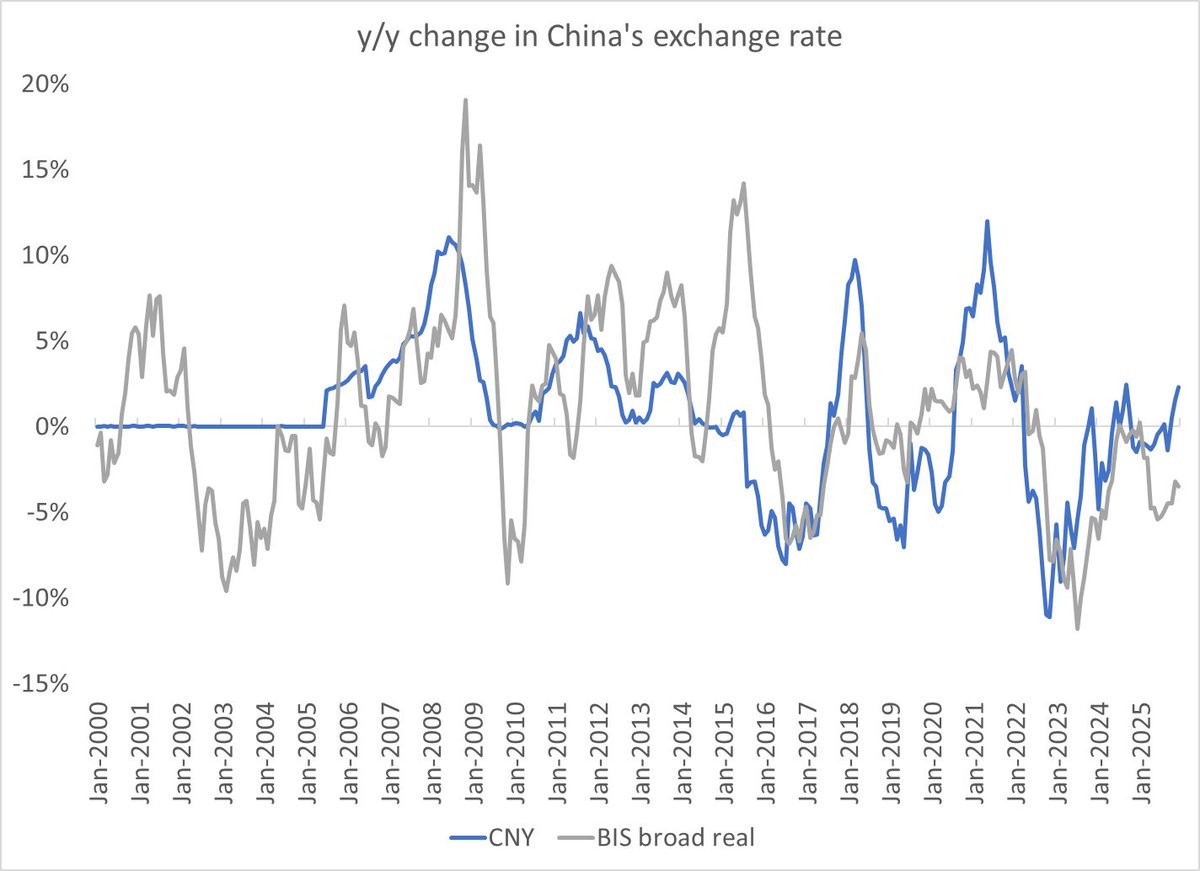
The appreciation of the yuan (against the dollar) in the second half of 2025 -- and particularly in December -- has attracted a bit of attention.
(h/t to @Mike_Weilandt for the chart)
1/ many
It isn't like the yuan's appreciation against the dollar has been particularly fast. But it has been steady. And a predictable no volatility appreciation that exceeds the loss from the rate differential is bound to get attention
2/
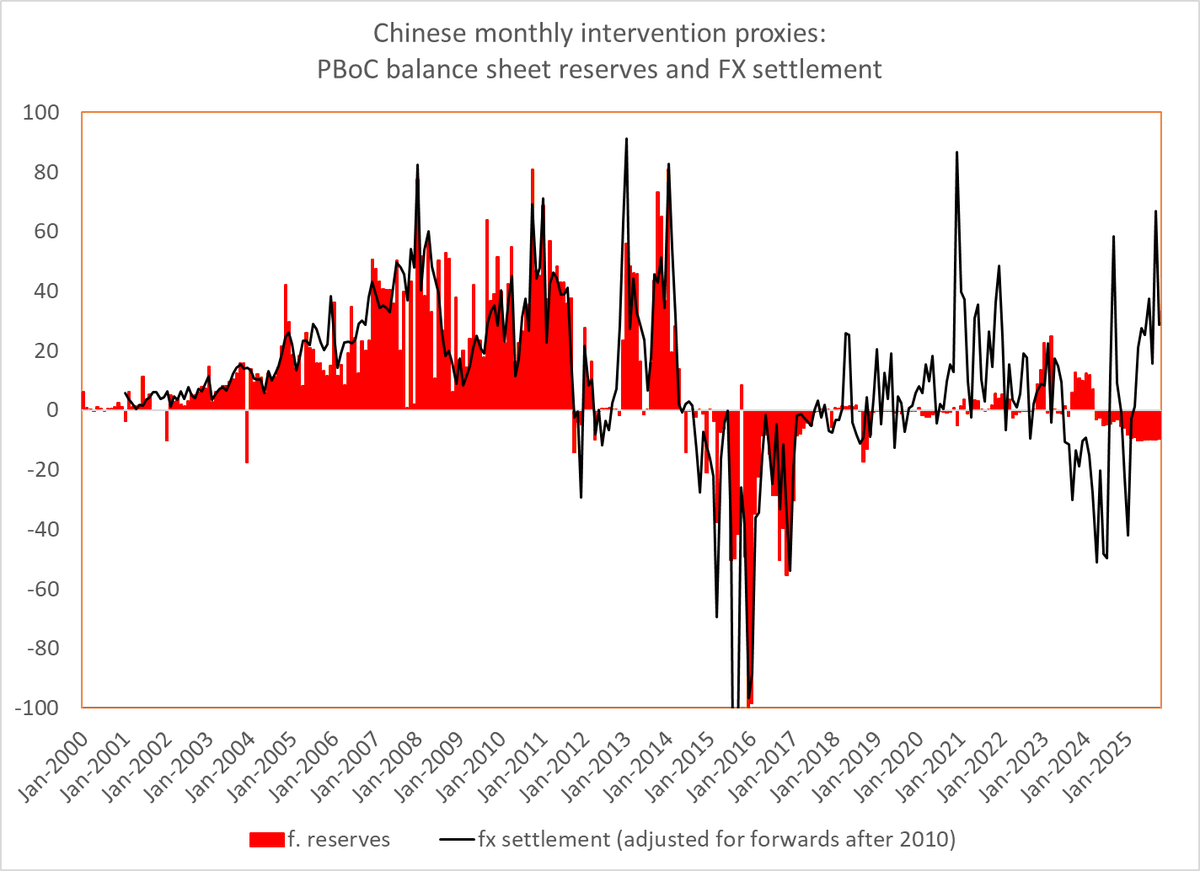
It will be interesting to see the numbers for fx settlement in December. The number of reports of activity in the market (dollar buying to limit appreciation) by state banks in say Bloomberg's fx coverage picked up in December.
There is a lot of talk -- not the least from the US Administration -- about the windfall from Venezuela's oil. It is worth doing a bit of (boring) quantification.
Bottom line: it isn't going to pay for everything ...
1/
Venezuela's oil is heavy and sour, so it trades at a discount to sweet light.
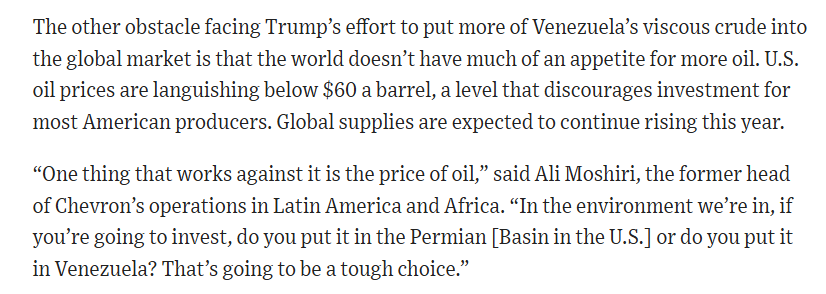
2024 production was 0.9 mbd. Domestic consumption isn't zero. To generous, assume 0.75 mbd at day at $50 a barrel -- that generates $14 billion a year in exports.
2/
Industry experts (@Big_Orrin ) think the upper bound on how much additional production could be generated if the international oil service giants came in to revitalize the fields is ~ 1 mbd, or a ~$18b
3/
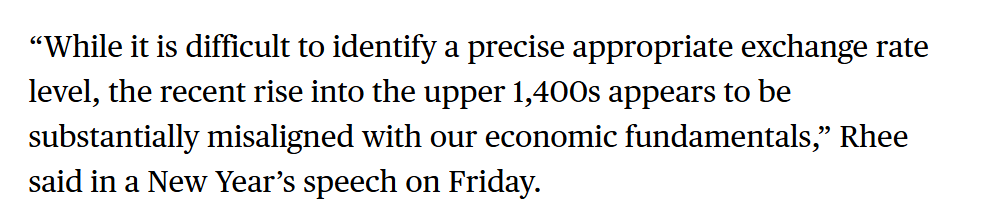
Interesting comments from South Korea's Rhee (central bank governor). Seems like there is a level of the won that is too weak even for Korea ...
1/ many
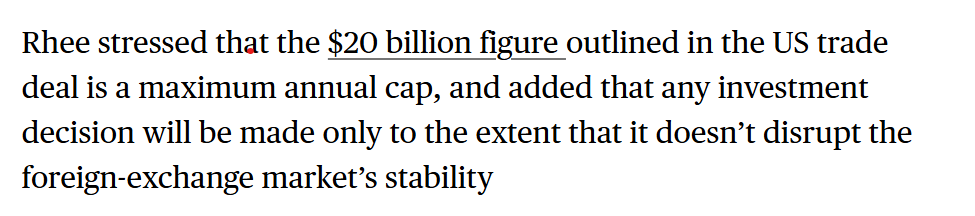
Rhee also emphasized the foreign exchange implications of Korea's investment pledge (part of its "deal" with Lutnick and Trump). Rhee "vowed to oppose any US investment decisions that could threaten the stability of the foreign-exchange market"
2/
I share Governor Rhee's misgivings -- explicitly relying on Korea (and Japan and perhaps Taiwan) to finance investment in the US -- if it actually happens (incentives aren't well aligned) likely implies accepting continued trade imbalances ...
Second Peter's comment. Xi is not for turning. The question is how China's trading partners -- not just the US -- react. Suspect France and Germany will set the direction of policy in 2026 ...
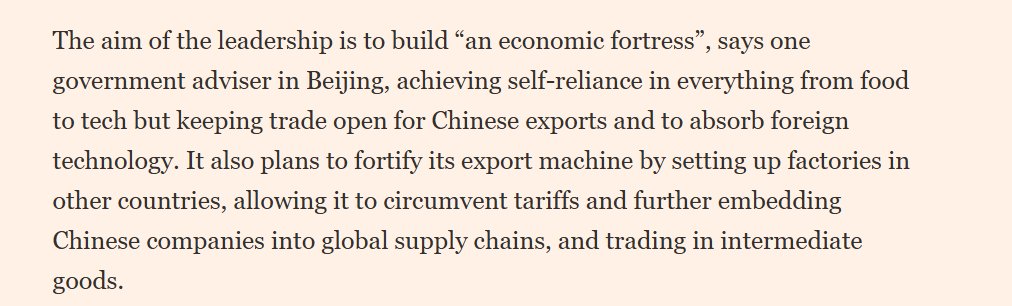
China's top leadership seems convinced that there is a "fortress" in one country global equilibrium -- where China exports (and controls key supply chains) but doesn't import (at least not much beyond oil and iron)
2/
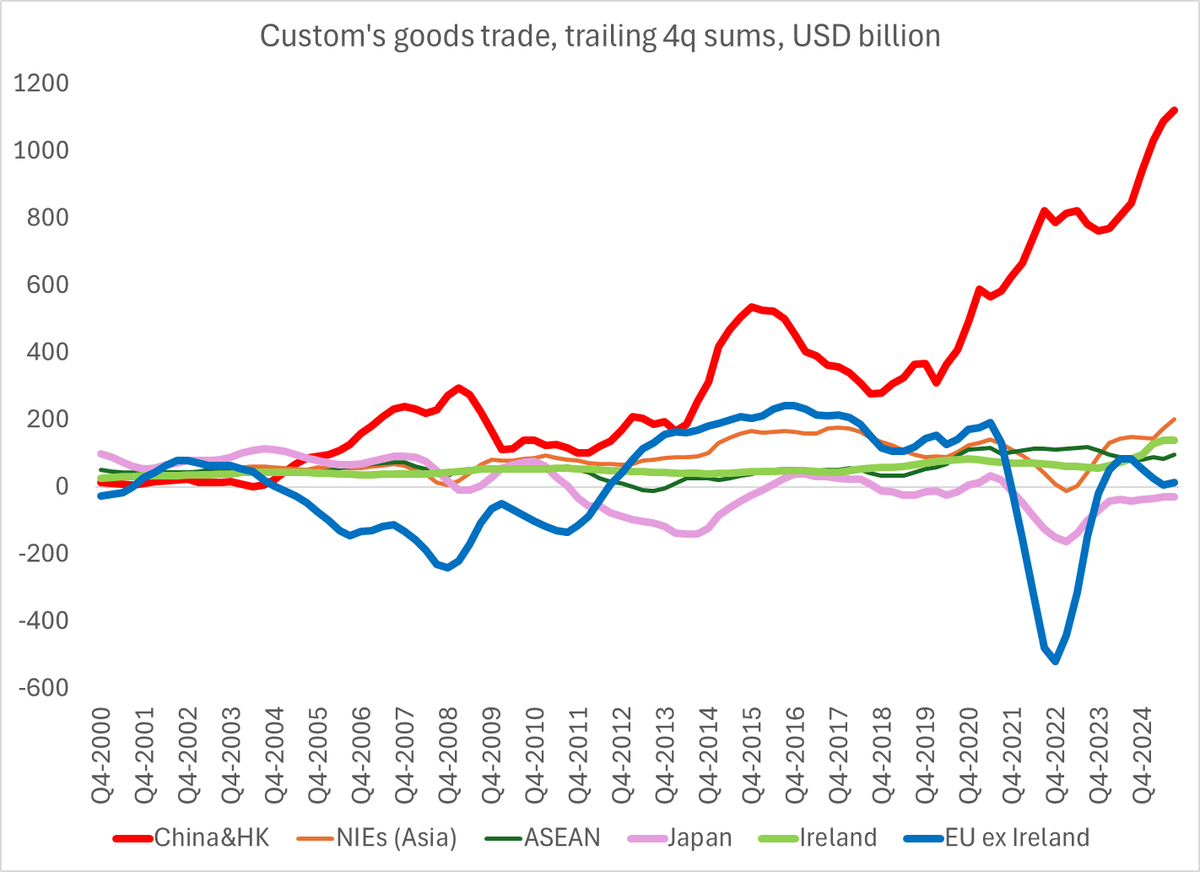
But I am a bit skeptical that a China that doesn't import yet continues to export is a sustainable equilibrium, politically or economically.
Note that a constant 1 to 1.5 pp net export contribution implies an ever widening trade surplus
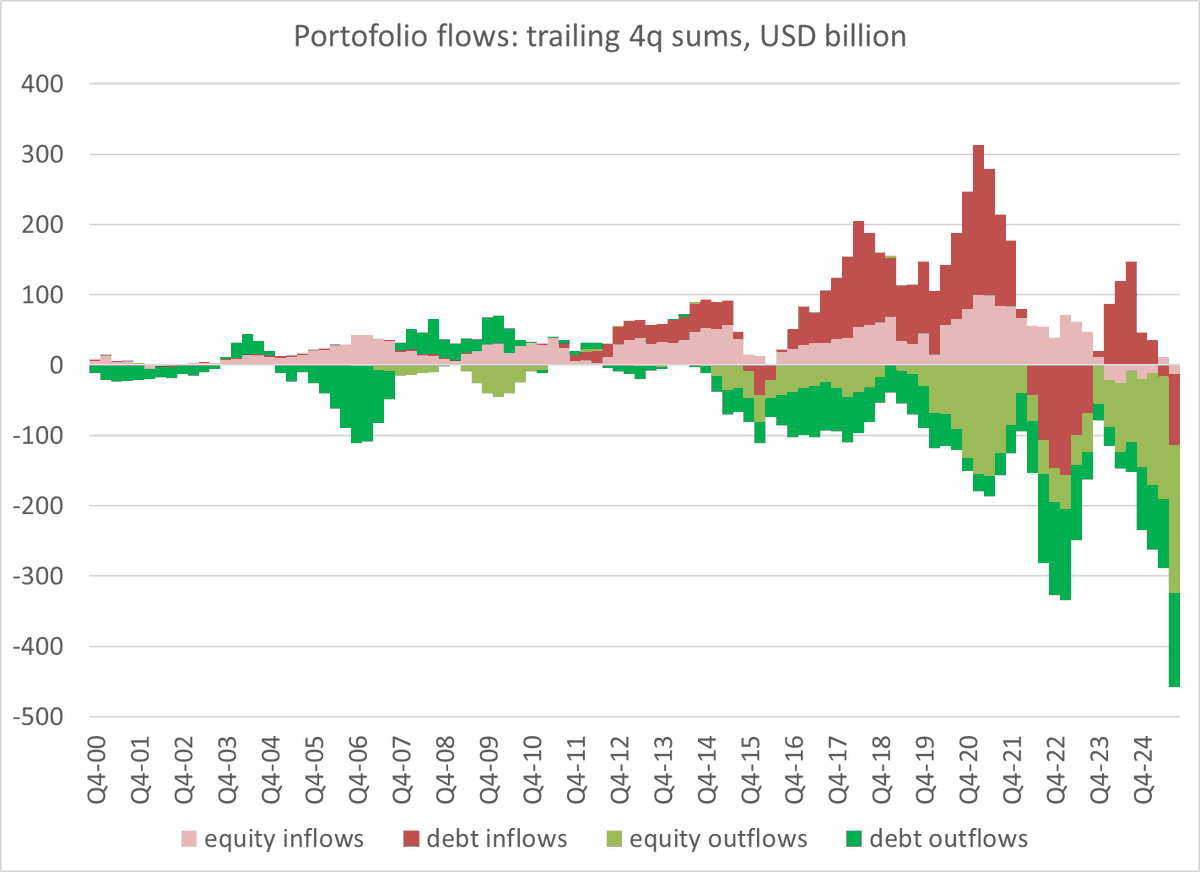
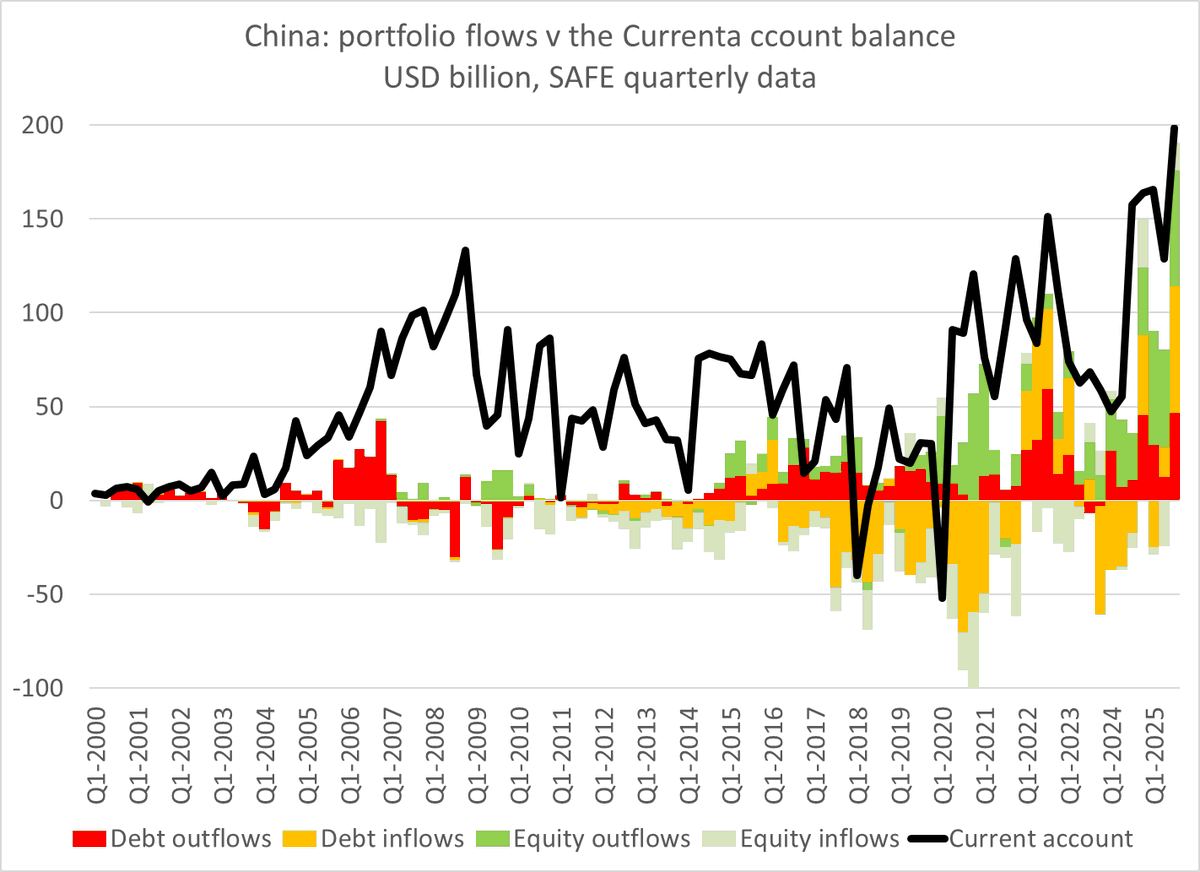
Let me draw out one point in China's q3 balance of payments (a rather subtle one) -- namely the large sales of Chinese bonds by foreign investors in q3.
This is a reversal of inflows from back in 2023 ... and as my earlier thread notes, I think the change in direction factors into the reported current account surplus (even though it should not technically) given China's error minimization formula post 2022 ...
2/
And why was there a change in direction in these flows? The answer in part is tied to the pressure on the CNY-USD swap market -- and thus to backdoor state bank currency management ... see this September Bloomberg story
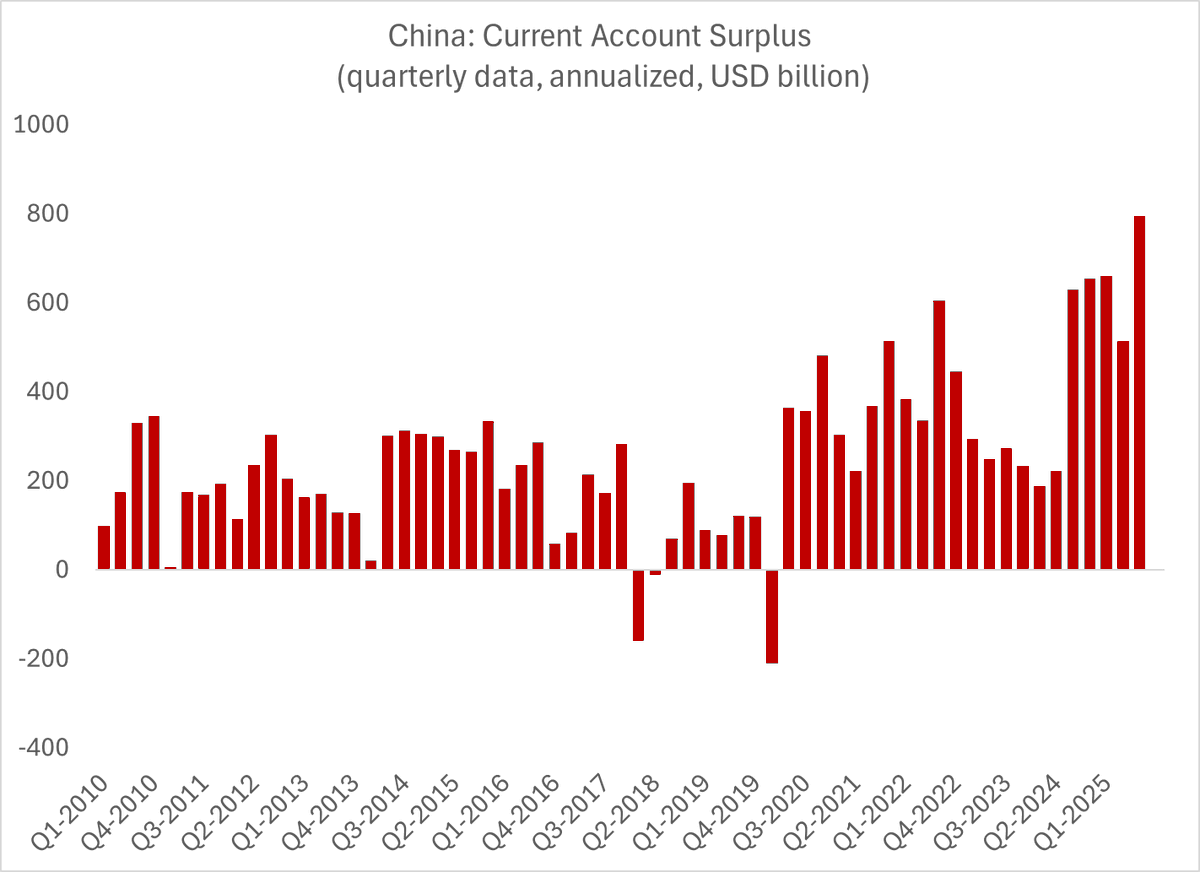
As always, China's detailed balance of payments data is worth parsing -- in part because China's surplus is big ($800b annualized in q3) and in part because the financial account confuses most of the world (China isn't adding to its reserves anymore) ...
1/many
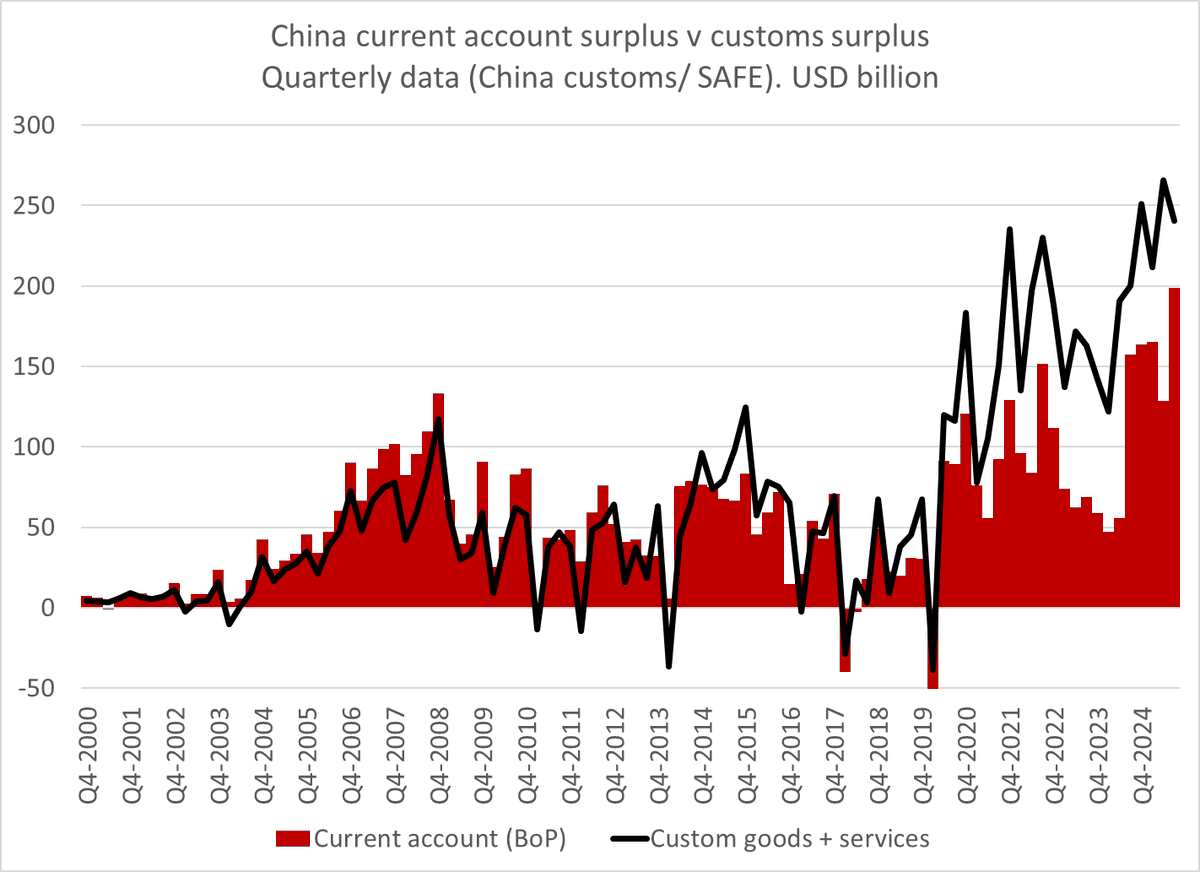
Let's start with the current account -- $200b or so in q3. That is still a bit smaller than it should be. But it is has jumped from an implausibly low $50b a quarter in late 23 and early 24 to a number that is much closer to reality.
2/
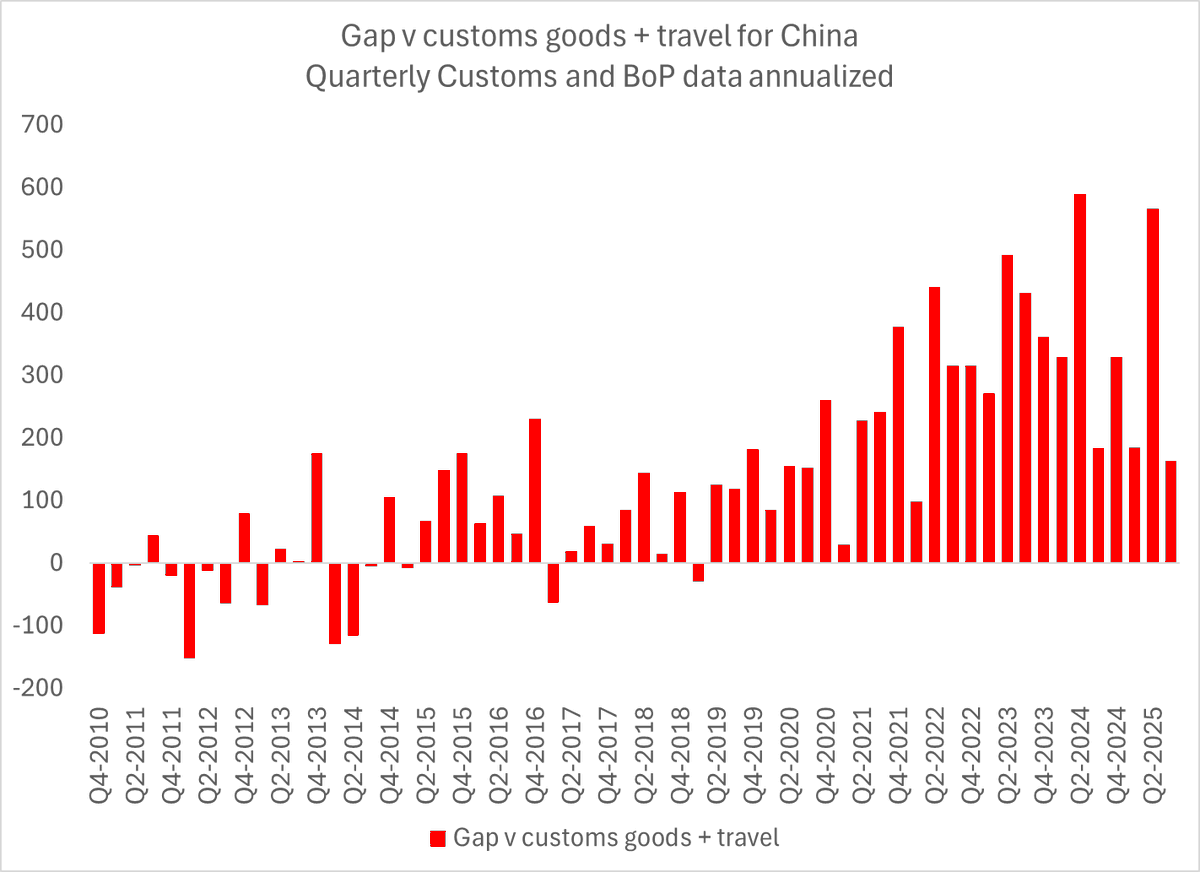
With China's new current account methodology (introduced in calendar 2022) there isn't a stable relationship between the reported customs surplus and what shows up in the BoP, as this chart of the "gap" shows --