Putin now admits what he has denied for months: Russia's war-driven growth is over.
Labor reserves are exhausted, unemployment — at record lows, with no solutions in sight.
1/13 🧵Takeaways from his annual Q&A
Televised "Direct Line" is not a conversation, but a content hub. Its messages are designed to be clipped, repeated, and amplified across state media, turning a staged Q&A into weeks of narrative reinforcement
[2/13]
This year, over four and a half hours, he reinforced the regime’s core priorities: war, mobilization, and confrontation with the West. He pointedly avoided any meaningful discussion of long-term development
[3/13]
On the war in Ukraine, Putin signaled “readiness” to negotiate, but dismissed any incentive to compromise. As long as the Kremlin believes the battlefield balance favors Russia and Ukraine is nearing exhaustion, its demands will remain unchanged
[4/13]
Those demands now go beyond territory and limits on Ukraine's military. The Kremlin is once again questioning Ukraine’s political legitimacy, openly gesturing toward regime change and promoting its own model of what a “legitimate” election would look like in the country
[5/13]
That model includes the rehabilitation of pro-Russian figures and projects like “The Other Ukraine”, built around exiled politicians such as Viktor Medvedchuk and presented as proof that an alternative, Kremlin-compliant Ukraine still exists
[6/13]
The economic message Putin sent was notably bleaker than in previous years. Gone was the confident talk of war-driven growth. In its place were admissions of limited resources, slower growth, and tighter fiscal constraints
[7/13]
Officially, the slowdown is framed as a choice - Russia, the regime says, is sacrificing growth in favour of stability and low inflation. But in reality, the war has shifted from being marketed as an economic stimulus to an acknowledged long-term burden
[8/13]
With labor reserves exhausted and unemployment at record lows, the Kremlin has no credible answer to structural stagnation. Its main response - efforts to increase the birth rate - offers no relief in the short or medium term
[9/13]
Social policy is increasingly fused with the war effort. Benefits are concentrated on soldiers and their families, while the “war hero” is elevated as the ideal citizen: loyal, obedient, traditional, and willing to subordinate private life to the state
[10/13]
Without any positive vision of Russia’s future, confrontation with the West fills the void. Europe is cast as the permanent enemy, while the United States under Donald Trump is framed as a potential deal-maker
[11/13]
Militarisation, in this context, is not temporary. Even if active fighting ebbs, conflict - real or hypothetical - is becoming the organizing principle that replaces development, reform, and ambition. In other words, Putin is no longer selling progress. He is selling endurance.
Russia's "import substitution" policy is a cruel joke and has created a catastrophic dependence on China.
How the promise of independence led to a humiliating reality of isolation and decline. 🧵[1/18]
After annexing Crimea in 2014, Russia faced a barrage of Western sanctions. In response, the Kremlin came up with the "import substitution" policy and promised to replace foreign goods with domestic production. 10 years on, the results are a case study in failure.
[2/18]
The automotive industry is the most visible exemplification of this failure. Despite inheriting Western infrastructure, Russia can't produce its own cars.
What happens when one builds a military on convicted criminals?
Eventually they start hunting each other—and torturing civilians caught in between.
🧵A window into Putin’s collapsing internal order: [1/14]
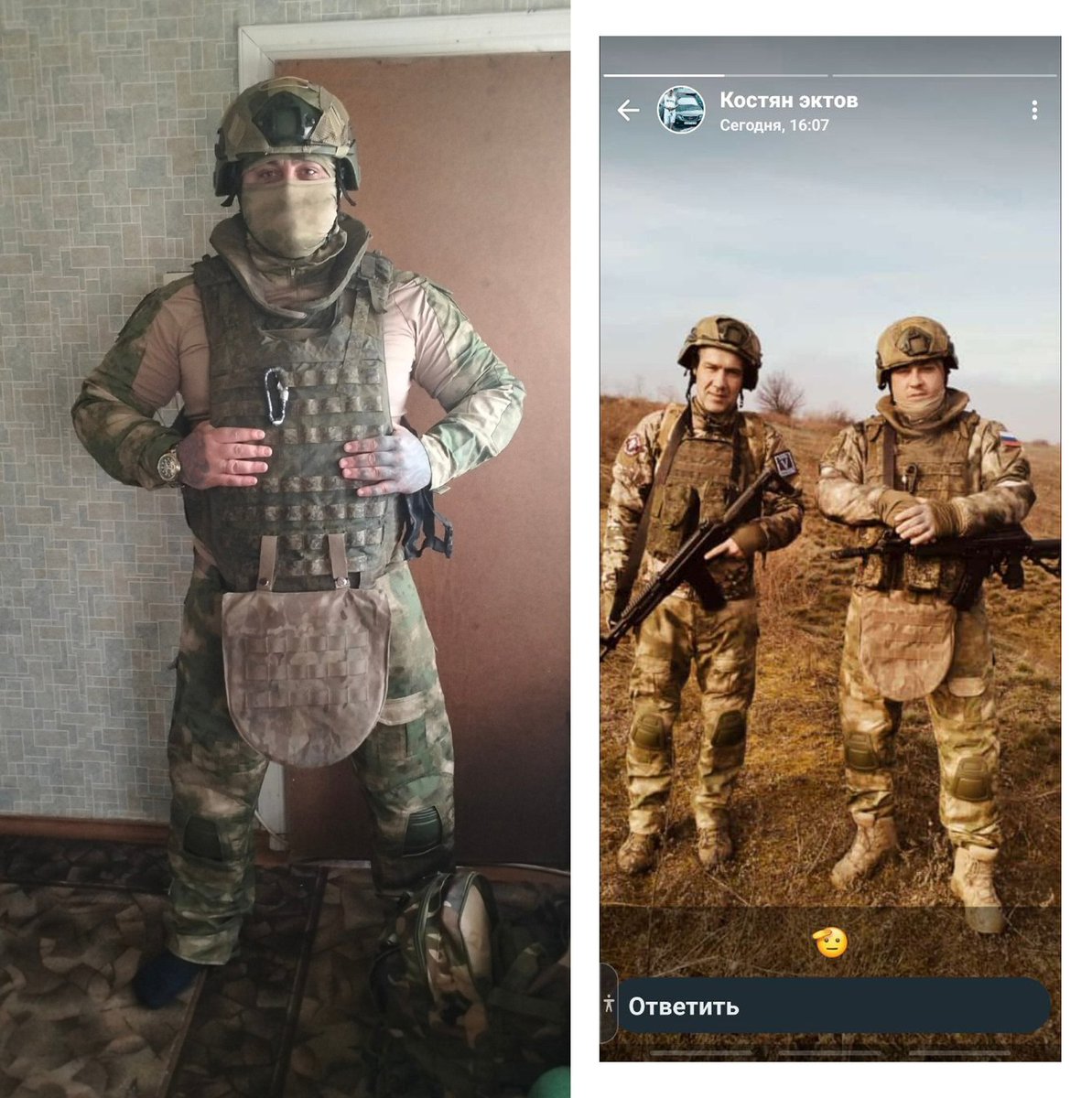
Konstantin Ektov spent eight years in Russian prisons for robbery and theft before volunteering for the war in 2023. After an injury took him off the front, he was reassigned to an "operative search group" in a small town near the Chinese border
[2/14]
His job was to track down soldiers who had fled their units and drag them back. He wasn't the only one with a criminal record doing this work—he told friends many in the search groups had done time
Germany just jailed Russian saboteurs. But the real threat isn't spies, it's Kadyrov's men working in plain sight.
🧵 How did a Chechen warlord's loyalists infiltrated Europe's most critical ports? [1/12]
On October 30, a Munich court jailed three Russian-German dual citizens for spying on military movements, a Bavarian refinery, and US troop deployments. Investigators say they worked for Russia between late 2023 and early 2024.
This was not an isolated cell. German security services say Russia has been running large-scale espionage operations for years, often recruiting people with dual citizenship to photograph infrastructure and track rail traffic.
If you think Russia’s nuclear weapons are constrained by procedure, you are dangerously wrong.
There is no "Red Button." There is just one man, and a room full of people too afraid to stop him
🧵[Read on — 1/18]
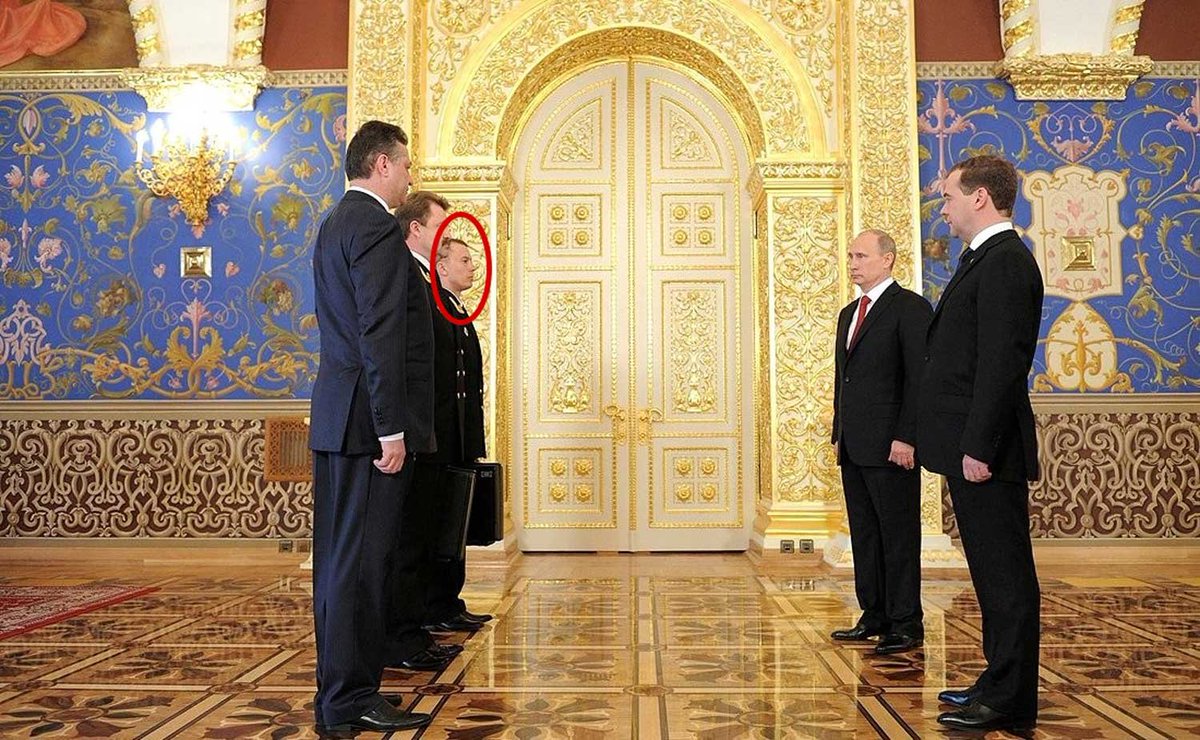
Russia’s nuclear weapons are not guarded by institutions or checks and balances. They are carried, quite literally, by a handful of officers whose sole job is to obey one man. So, what is Service K?
[2/18]
These officers are the people who physically carry and operate Russia’s nuclear command-and-control terminals (“Cheget” briefcases) alongside the president, the defense minister, and the chief of the General Staff
The most dangerous moment in dealing with the Kremlin is when Putin opens his mouth.
He guaranteed Prigozhin’s safety weeks before blowing him out of the sky; promised Ukraine peace days before attacking.
🧵 We may have to deal with him, but we must never trust him [1/13]
Here are some of the instances when Putin egregiously went against his own word (for those who didn't pay attention)
[2/13]
On Raising the Pension Age
◇"I am firmly convinced that we should not raise the retirement age... While I am President, this decision will not be made." — April 25, 2005, during a "Direct Line" Q&A session.
◆ Signs the bill raising the pension age by 5 years for both men and women. — October 3, 2018, signs the Federal Law No. 350 and increases the retirement age.
With the release of Epstein files pending, let me remind what @dossier_center uncovered:
Convicted sex-trafficker worked directly with an FSB officer who ran Putin's elite St. Petersburg Economic Forum. We have their emails
🧵(Read on — 1/9)
The timing is crucial here: in 2014-2015, right after Crimea, right after the first sanctions.
Putin's regime desperately needed Western business participation at Russian events to maintain any semblance of legitimacy. Epstein had access to exactly those people.
[2/9]
Sergei Belyakov graduated from FSB Academy in 1998. His career trajectory tells you everything you need to know about how Russian intelligence embeds its officers in economic elites.
By 2012, he's Deputy Minister of Economic Development. By 2014, he's running the St. Petersburg Forum Foundation.