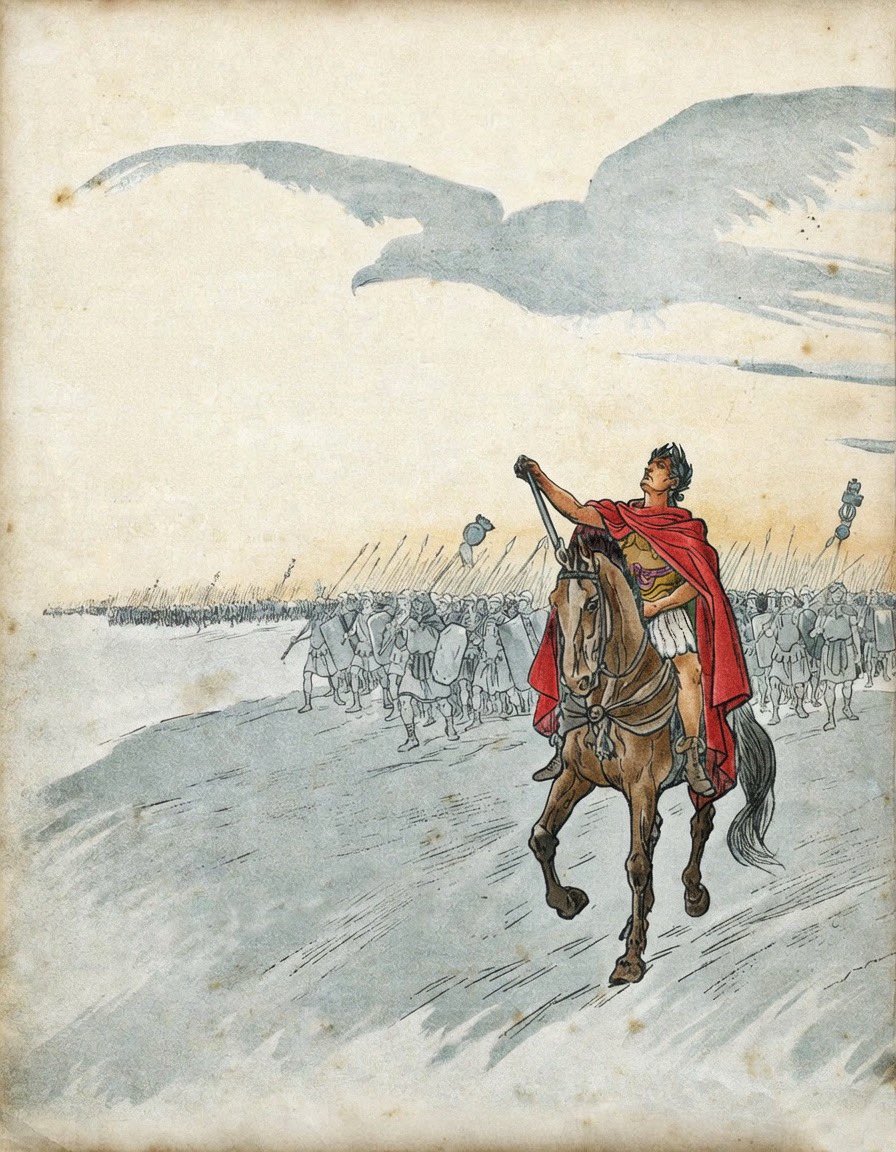
Alfred the Great and Æthelred the King fought ‘for life, loved ones, and country’ and thrashed the Vikings at…
The Battle of Ashdown!
[Thread]🧵
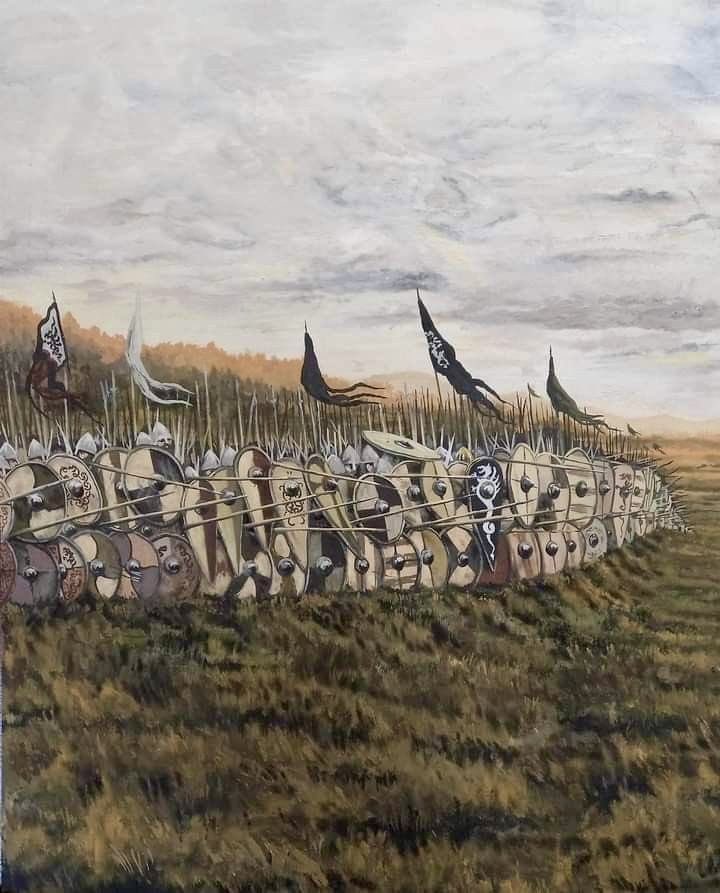
By 870 the Vikings ‘of hateful memory’ had stormed into England and conquered Northumbria and East-Anglia!
On the 31st of December 870, after invading Wessex, a force of Vikings led from the main host was defeated at the Battle of Englefield by the Ealdorman of Berkshire, Æthelwulf, and his levies.
However, King Æthelred and his brother Alfred, having tried to capitalise on this victory were defeated by the Vikings just a few days later at the battle of Reading.
But they were ‘roused by grief and shame’ and rallied at Windsor.
The Saxons then marched to face the Vikings again with ‘all their might and in a determined frame of mind’ and met them at Ashdown.
The Vikings divided their army into two contingents. One was led by kings Bagsecg and Halfdan, and the other was led by the Vikings earls.
The English did the same with Alfred facing the earls and Æthelred facing the kings.
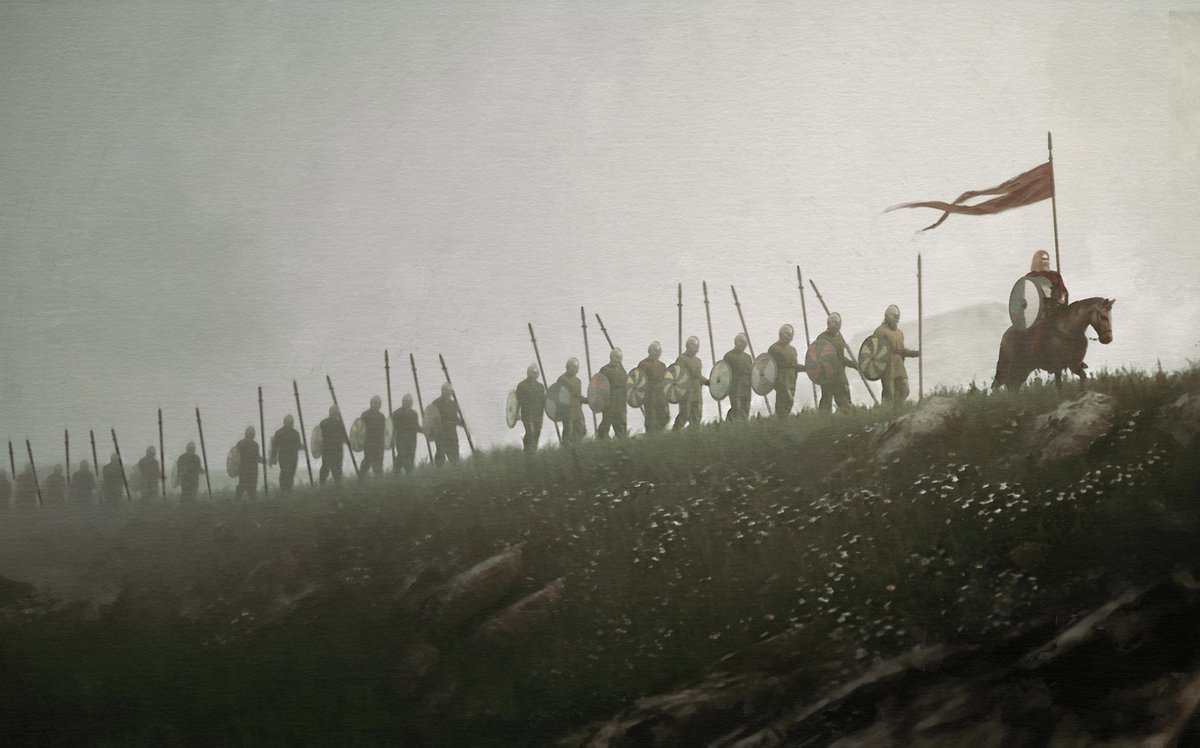
While Æthelred withdrew to his tent to pray before the battle, Alfred charged the enemy!
Fighting ‘like a wild boar’, Alfred and his men valiantly opposed the Vikings but his contingent, outnumbered without the aid of the king, became overwhelmed.
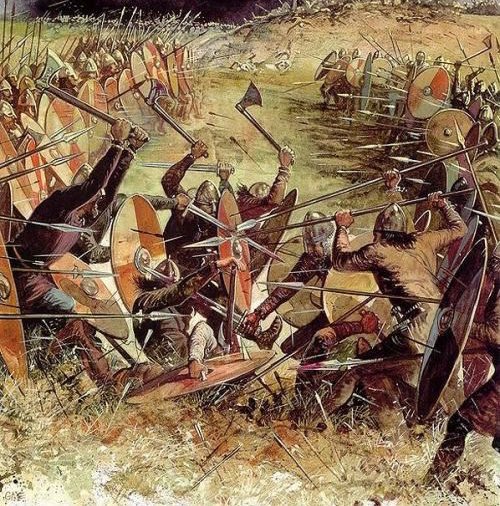
When Æthelred did eventually join the battle and was ‘set to fight for life, loved ones and country’, the Vikings were now overwhelmed and King Bagsecg and five earls died in the fighting!
After much fierce fighting the Vikings broke and fled and the Saxons pursued them until nightfall.
The war between the Anglo-Saxons and Vikings was not over yet through and yet more battles were to come before peace returned to England.
• • •
Missing some Tweet in this thread? You can try to
force a refresh

The year is drawing to a close so I thought I would do a recommendation thread for the accounts I have enjoyed interacting with the most this year!
These are all accounts dedicated to history and art free of political flim flam or AI slop!
[Thread]🧵
.@HeraldOfRome covers the history of the Roman Empire with a focus on politics, identity and the nature of power in the Roman state.
.@EchoesofEmpire_ Katie dedicated to posting some of the most exquisite artwork from beyond the periods I usually focus on. There are slso threads on some of the most thrilling episodes from history!
Julius Caesar wrote accounts of the most fearless soldiers under his command.
This is a thread of the men who ‘displayed a courage past defeating when they went upon any danger where Caesar's glory was concerned!’
[Thread]🧵
• Cassius Scaeva •
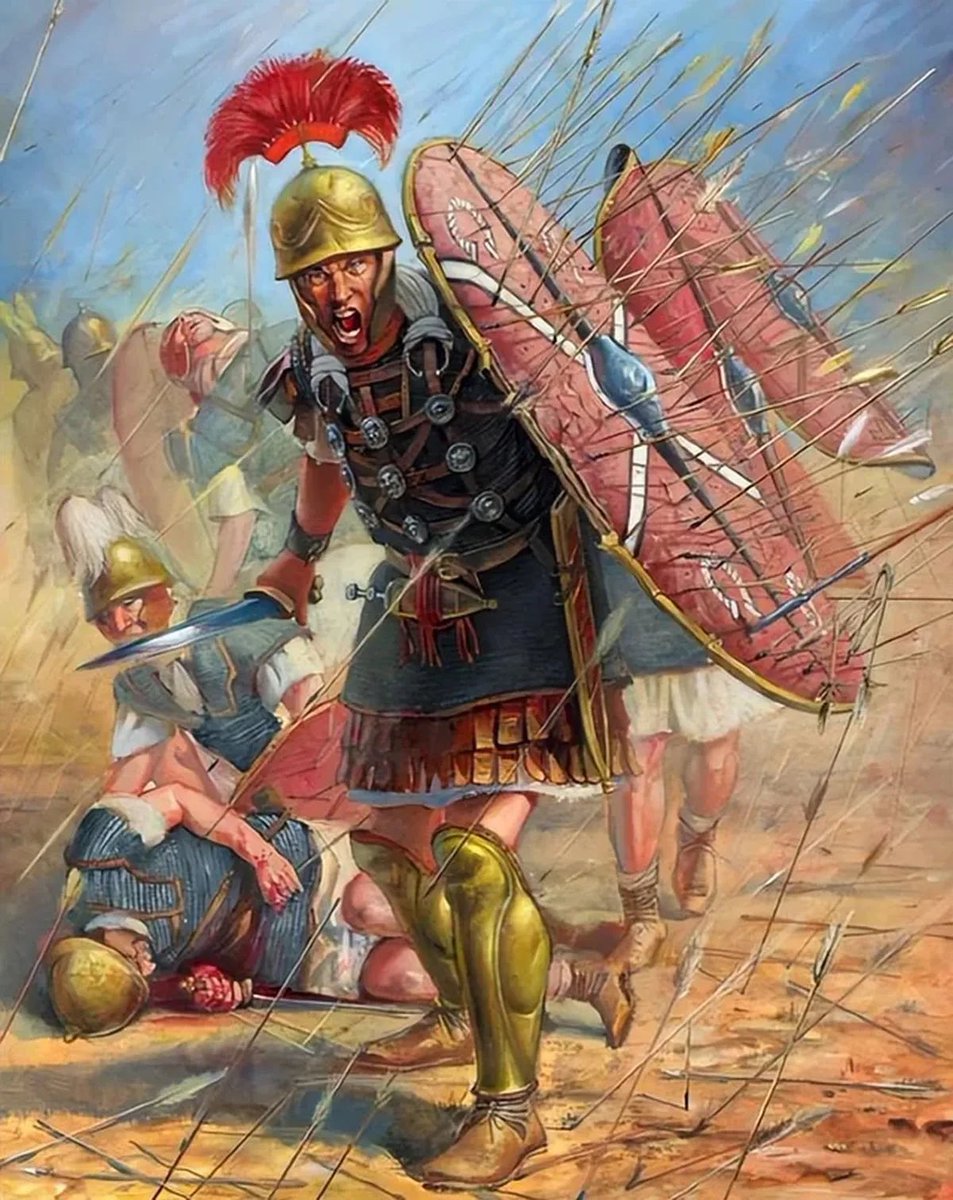
At the Battle of Dyrrachium where Pompey broke out of the city and attacked Caesar’s forts, one fort in particular came under attack. Caesar wrote that 30,000 arrows had been fired into it. He added that ‘in the fort, not a single soldier escaped without a wound; and in one cohort, four centurions lost their eyes’.
Plutarch wrote that ‘Cassius Scæva, who, in a battle near Dyrrhachium, had one of his eyes shot out with an arrow, his shoulder pierced with one javelin, and his thigh with another; and having received one hundred and thirty darts upon his target, called to the enemy, as though he would surrender himself. But when two of them came up to him, he cut off the shoulder of one with a sword, and by a blow over the face forced the other to retire, and so with the assistance of his friends, who now came up, made his escape.’
Suetonius’ version is that ‘Scaeva, with one eye gone, his thigh and shoulder wounded, and his shield bored through in a hundred and twenty places, continued to guard the gate of a fortress put in his charge’.
• Acilius •
Suetonius wrote of one soldier by the name of Acilius who lost his hand at the sea battle of Massillia.
‘Acilius in the sea-fight at Massilia grasped the stern of one of the enemy’s ships, and when his right hand was lopped off, rivalling the famous exploit of the Greek hero Cynegirus, boarded the ship and drove the enemy before him with the boss of his shield.’
Plutarch adds that he did this ‘until he drove them off and made himself master of the vessel.’
In the 8th century the fate of the world hung in the balance when a series of defeats tested the might of the Umayyad Caliphate.
From Spain to China the onslaught of Islamic Jihad was halted and pushed back!
[Thread]🧵
• Jihad •
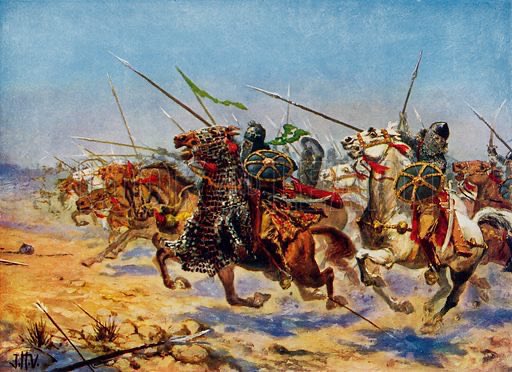
After the death of Muhammad, his followers invaded the Roman Empire and Persia.
Both empires suffered devastating defeats at the battles of Yarmouk and al-Qadisiyyah, respectively.
The Muslims captured the Levant from the Romans and Iraq from the Persians before effectively destroying the remnants of the Persian army at Nahavand in 642.
While the Persian state suffered total collapse, the Roman emperor Heraclius pulled back his forces back behind the Taurus mountains to fight another day.
The centuries long rivalry between Rome and Persia came to an end with the culmination of one of the most spectacular military campaigns ever fought.
When Heraclius triumphed at Nineveh!
[Thread]🧵
By the start of the 7th century the empire had been struck by plague in 542, 558, 573, 586, and 599 and the emperor Maurice was tirelessly campaigning against the Slavs and Avars in the Balkans, having won respite against the Persians by intervening to aid the Shah Khusrow II when he was ousted.
In AD 602 the Roman field army in the Balkans rebelled and marched on Constantinople, killed Maurice and installed Phocas as emperor.
Khusrow declared war, executed Roman emissaries, and invaded.
The war was going poorly when Heraclius deposed Phocas and when Khusrow refused his offer to step down and allow Khusrow to nominate his own Emperor, it was clear that this would be a war fought to the very end.
It has been suggested that Khusrow’s motivation for pressing on with the war was to destroy the empire or weaken it to the point of irrelevance as the Persians did not want a Christian Empire claiming to be the protector of all Christians, even those in Persia, especially at a time when they felt increasingly threatened by their Turkic neighbours.
This painting is famous the world over, but did you know it depicts the Hospitaller Knight Mathew of Clermont?
When the Muslims poured over the walls of Acre in 1291 he refused to flee and fought until he ‘was covered on all sides and glistening with blood!’
[Thread]🧵
The glory of those mightiest of Christian warriors who stormed Jerusalem in AD 1099 had long since faded and the power of the Kingdom of Jerusalem was shattered long before 1291 when the Muslims gathered outside Acre, the last stronghold of Christendom in the Holy Land.
The truces were over, the Muslims were coming, and no crusade was on its way this time.
The Mamluk Sultan called up troops from Syria and Egypt. The Muslims arrived on the 6th of April and began undermining the walls.
The Hospitallers and Templars sent troops to defend Acre led by Mathew de Clermont and Geoffroi de Vendac. The Hospitallers led by Mathew and their grandmaster Jean de Villiers were responsible for defending the important Gate of St. Anthony which they guarded in alternating shifts with the English knights.
This is a thread on the arms and armour of the Roman Army from the founding of Rome 753 BC to the fall of Constantinople in AD 1453
Over 2000 year of military innovation, indomitable spirit, and glory!
[Thread]🧵
• The Earliest Times •
The traditional date for the founding of Rome is 753 BC. At this point Rome is centuries away from being thru powerful city we know. Warfare for the next few centuries seems to be small-scale skirmishing between warrior bands. A hint of this is given in Livy when he describes the Fabii gens asking the senate to let them fight the city of Veii by themselves with 306 men.
This is a reconstruction of the earliest Roman warriors based on burial finds. However, it would be a mistake to assume that armour at this time was standard across all Romans.
• Hoplites •
Eventually the Romans adopted hoplite armour by at the 6th century BC.
Until the adoption of the gladius in later centuries, Romans fought using Greek styled xiphos and falcata.