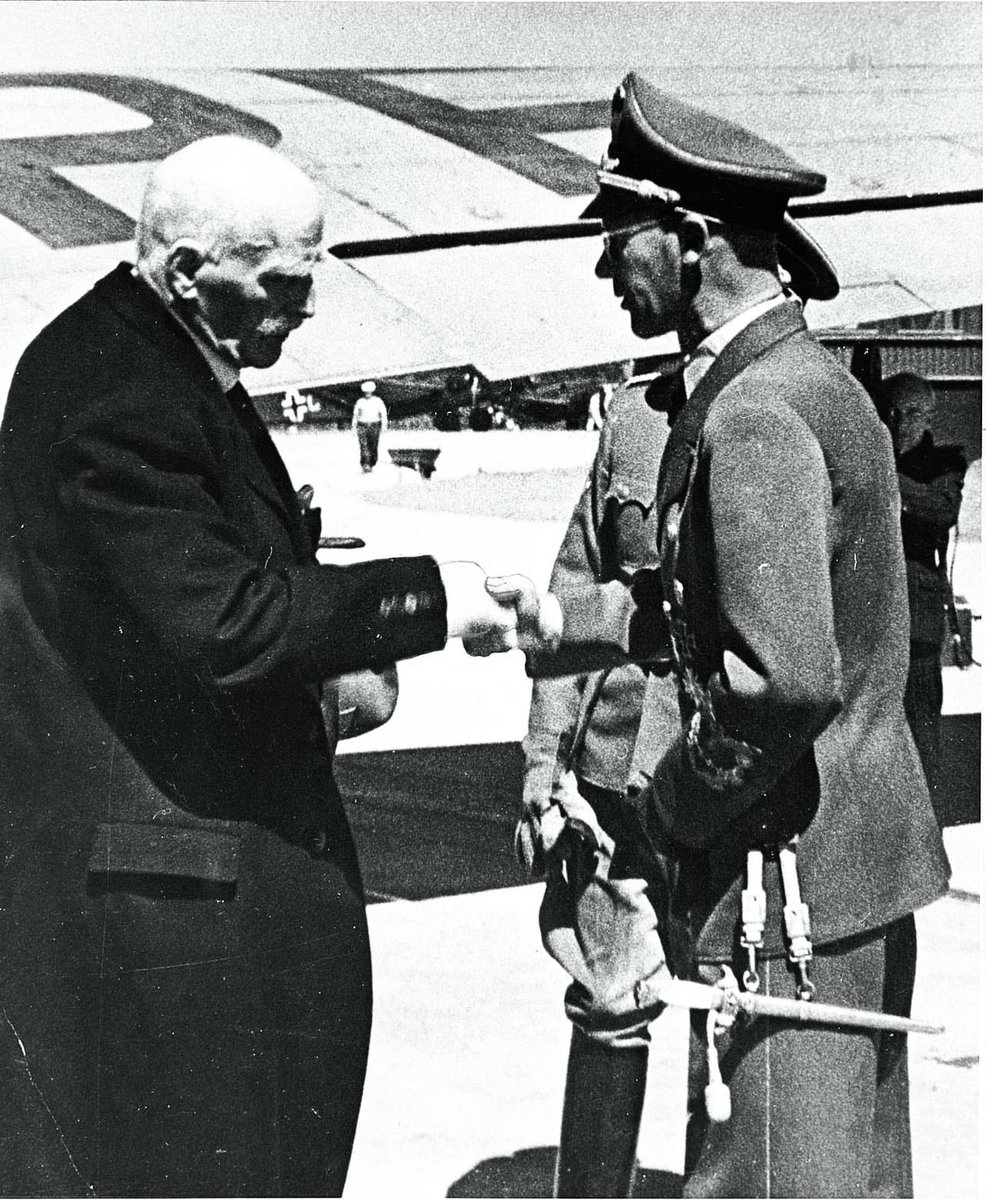
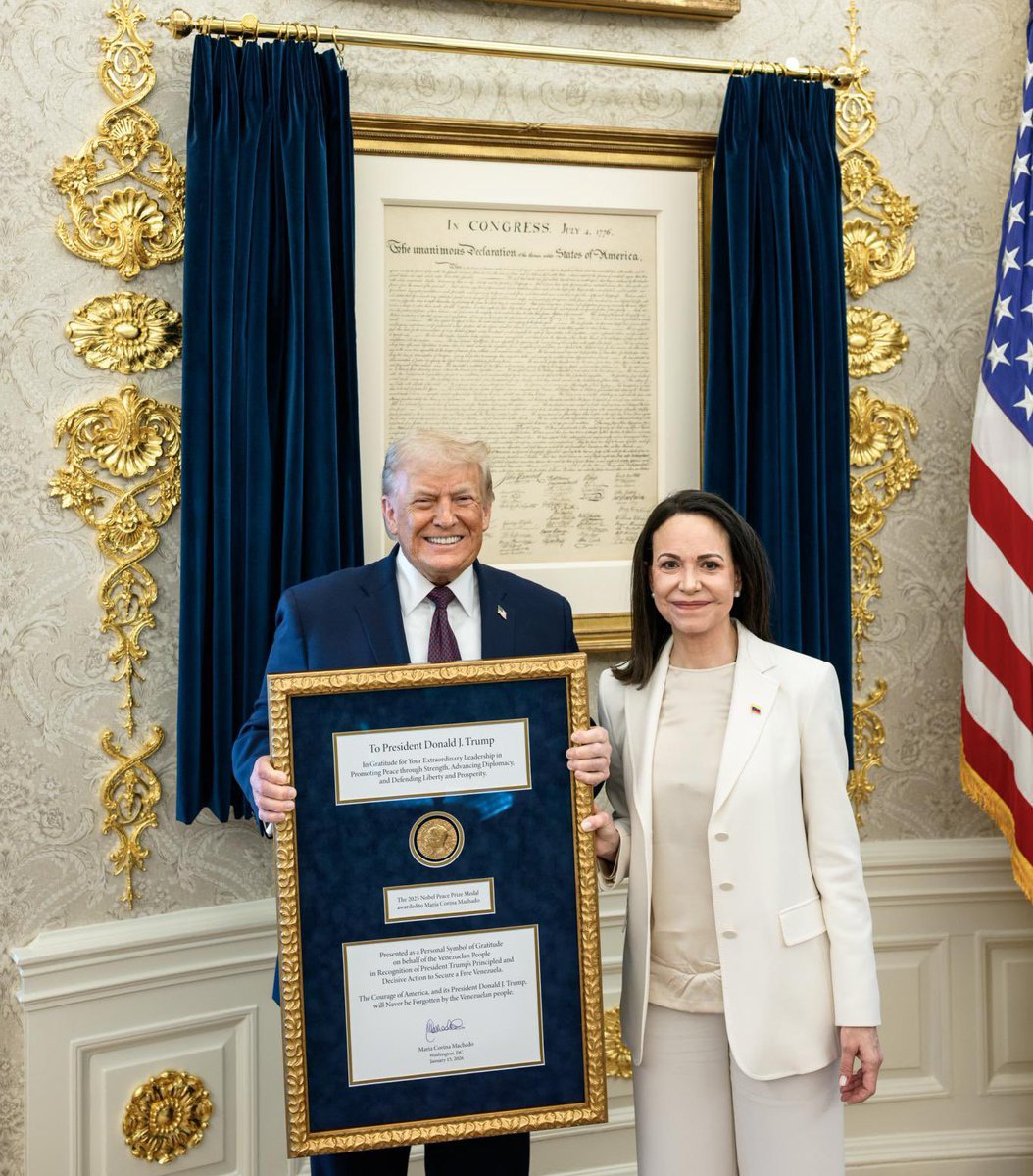
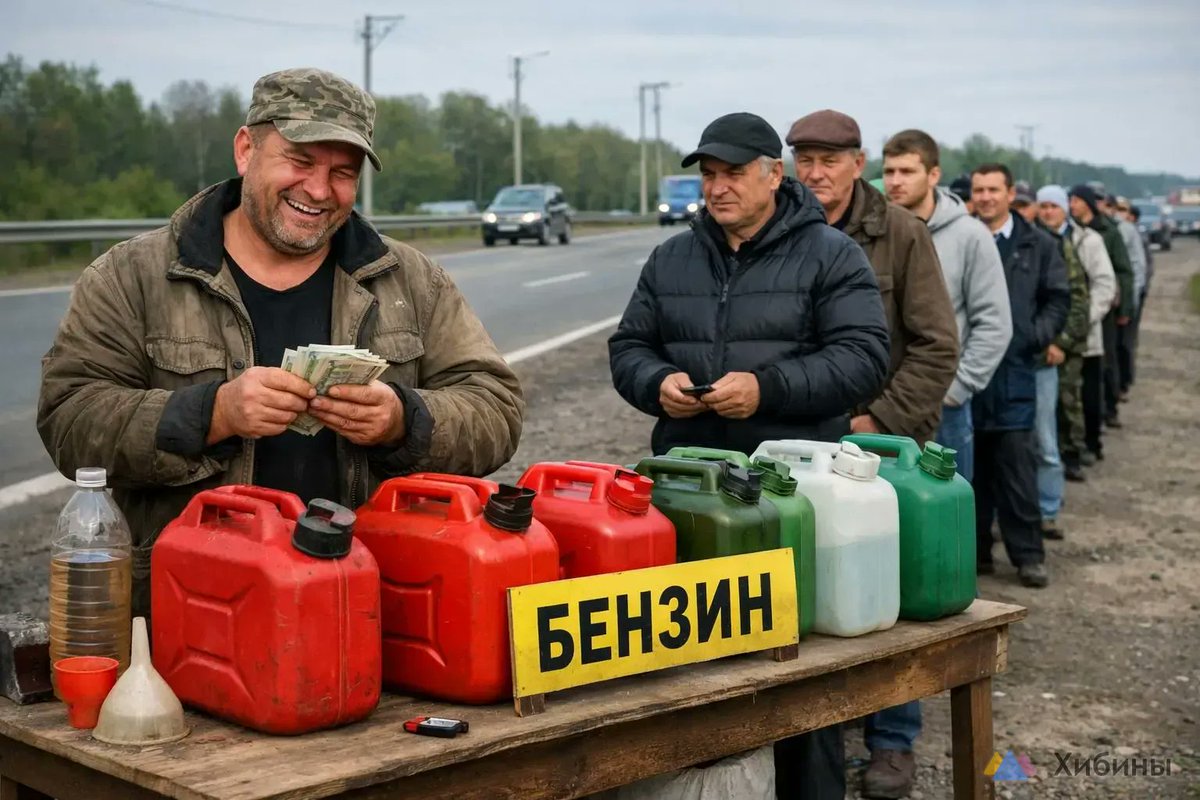
1/ Donald Trump isn't the first person to be given someone else's Nobel Prize medal. The last recipient of an unearned Nobel medal was none other than Nazi propaganda chief Joseph Goebbels, at the instigation of Norwegian author Knut Hamsun. ⬇️
2/ Hamsun had won the Nobel Prize for Literature in 1920. After Nazi Germany invaded Norway in April 1940, he became a strong supporter of the Nazi occupation, writing numerous highly Anglophobic articles blaming the British for fighting over Norwegian territory.
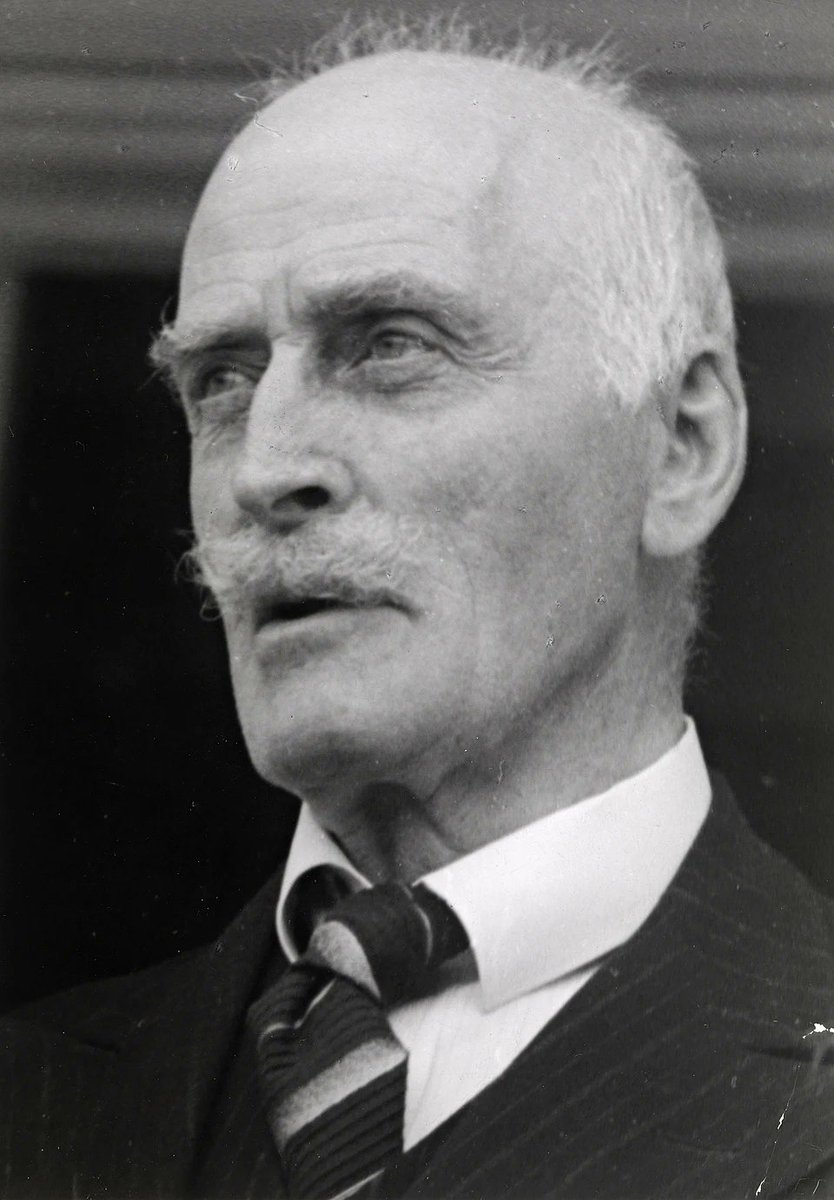
3/ He was also an enthusiastic admirer of Hitler, travelling to the Eagle's Nest to meet him. Hamsun wrote in 1940 that "the Germans are fighting for us", and later eulogised Hitler as "a warrior for mankind" and "a preacher of the gospel of justice for all nations".
4/ The Nazi Minister of Propaganda, Joseph Goebbels, held a private meeting with Hamsun in May 1943, in which he recorded in a diary entry that the writer's "faith in German victory is unshakable". The warm relationship was reciprocal and led to Hamsun's medal donation.
5/ After Hamsun returned to Norway, he sent Goebbels his Nobel Prize medal, writing in a letter of 17 June 1943: "I know of no one who has so tirelessly written and spoken year after year on the cause of Europe and humanity as idealistically as you, Herr Reichsminister."
6/ "I beg your pardon for sending you my medal. It is a completely useless thing for you, but I have nothing else to give."
7/ Goebbels was evidently touched and wrote back on 23 June: "I see it as an expression of your connection with our struggle for a useful Europe and a happy society." The medal disappeared after his death in May 1945 and is still lost.
8/ After the war, Hamsun's collaboration with the Nazis plunged him into disgrace. He was arrested but was assessed as having "permanently impaired mental faculties”. He was nonetheless fined 325,000 kroner for his membership of the pro-Nazi Nasjonal Samling party. /end
1/ Russian mobile air defence teams are stuck in queues outside gas stations and are being denied preferential access to scarce fuel, a Russian source says in a plea to a warblogger for help. The problem has arisen because the teams don't drive military-registered vehicles. ⬇️
2/ A relative of a member of a Russian mobile fire group (MOG) writes to ask the governor of the Belgorod region to intervene:
"Greetings. I'm writing to you on behalf of my father, who is currently shooting down drones with the Belgorod BARS [reserve forces] unit."
3/ "He's asking you to raise the issue of fuel supplies for mobile task forces. Considering that our new acting governor [Alexander Shuvaev] is a military man, I'm sure (or at least want to believe) that he or his aides are reading your posts and will be able to reach them…
1/ Russia's fuel crisis has developed rapidly and with increasing nationwide severity. A Russian commentary notes that the Russian government only has limited options for dealing with fuel shortages, but these are being overtaken by a fast-growing black market in fuel. ⬇️
2/ 'Federation Towers' highlights how quickly Russia has been plunged into a full-scale fuel crisis:
"The Russian fuel market held up smoothly for all four years of the Special Military Operation."
3/ "In one week in July, it suffered a blow on two fronts: gasoline prices rose by 2.1%, diesel by 3.4%, and gas stations in dozens of regions are experiencing physical shortages of fuel.
1/ It's logistically impossible for Russia to protect all of its strategic sites with its limited number of missile-based air defence systems, warns a Russian warblogger. Huge sites and obscured visibility requires many such systems but reduces the effectiveness of each. ⬇️
2/ 'Military Informant' highlights the practical difficulties of using SAM systems to provide adequate protection:
"When discussing the protection of rear-line facilities from cruise missile attacks, one thing is often forgotten."
3/ "People often ask, "Where are the Pantsir/Tor missiles?" But the fact is that protecting every strategically important facility with its own "reliable, classic ground-based air defence" against low-altitude, relatively fast targets with complex trajectories has long been…
1/ In a stark illustration of the impact of Ukraine's drone strike campaign against Russian refineries, videos from occupied Mariupol show vehicles all but absent from the streets, with burned-out trucks visible along the roads. A Russian commentary highlights the crisis. ⬇️
2/ 'Novorossiya Militia Reports' writes:
"If anyone is monitoring the situation, they should know that Ukraine is delivering an average of two [destroyed] refineries to us per day."
3/ "The authorities' statements about the normalisation of the fuel situation in a "week" or "two" are surprising.
1/ The Russian government's aggressive suppression of news about Ukraine's oil refinery drone strikes appears to be backfiring. According to Russian sources, ordinary people don't think fuel shortages are real and are blaming the government instead. ⬇️
2/ News in Russia is tightly controlled, with most people getting their information from state TV and news outlets that are friendly towards the Kremlin. Negative news about the war in Ukraine, or even actual battlefield footage, is often absent from the state-controlled media.
3/ Oleg Tsarev points out the flaws in this approach:
"A friend was traveling to Yalta and shared his observations:
1/ Russia faces a car apocalypse in the next few months due to the government's decision to allow scarce gasoline to be adulterated, a Russian warblogger warns. The low-quality gasoline will inevitably cause mass failures of vehicles across the country. ⬇️
2/ Alexey Zhivov writes:
"In August and October, the country will be inundated with tens of thousands of video messages from car owners facing lengthy and expensive repairs. Some will be left without wheels."
3/ "This will happen just in time for the State Duma elections, and you can be sure the enemy Center for Social and Political Studies will exploit this topic to the fullest.