A Russian schoolteacher secretly filmed his own workplace as it was turned into a war propaganda machine. That footage is now part of a documentary shortlisted for an Oscar.
Here’s the story behind ‘Mr Nobody in Russia’:👇
[1/12]
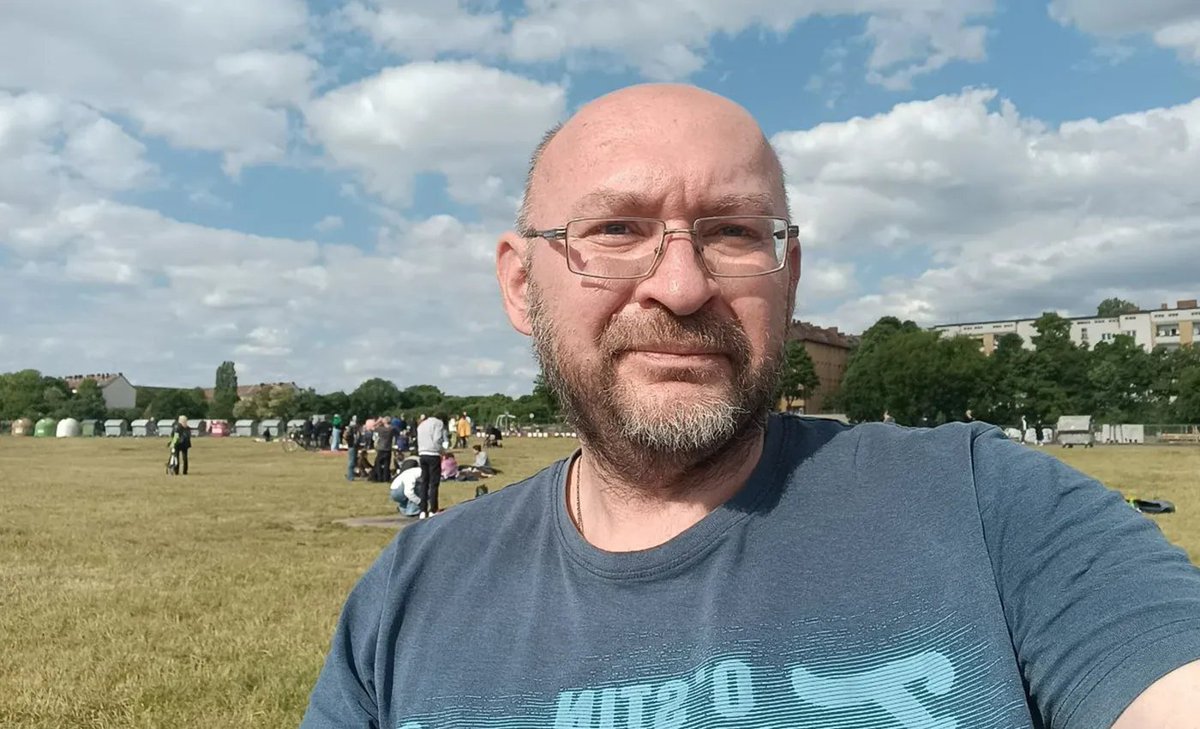
Pavel Talankin spent most of his life at School No. 1 in Karabash, a small industrial town in Russia’s Urals. First as a student, later as an events coordinator, he ran clubs, filmed concerts, and built a refuge where students felt safe
[2/12]
Everything changed after Russia invaded Ukraine in February 2022. Within weeks, schools were ordered to implement a new “patriotic” curriculum designed to normalize war and loyalty to the state
[3/12]
Students competed in 'grenade-throwing contests'. Weekly lectures labeled regime critics “parasites.” At assemblies, Wagner mercenaries taught children how to identify landmines and survive losing limbs
[4/12]
Talankin was ordered to film it all and upload the footage to prove compliance. What he captured instead was something else: the mechanics of indoctrination, recorded from inside the system enforcing it
[5/12]
Teachers struggled through scripted lines about “denazification.” Social media accounts were seized and used for army recruitment. Staff and students were pressured to repost propaganda, turning daily school life into state messaging
[6/12]
Rather than quit, Talankin kept filming. Quietly, he began sharing footage with a filmmaker abroad, unsure if it was a trap. The project relied on trust across borders in a country where dissent is criminalized
[7/12]
In 2024, after organizing one final graduation ceremony, Talankin left Russia for the first time, carrying hard drives instead of luggage. He did not expect to become an exile
[8/12]
When the film premiered, authorities reacted fast. Colleagues were pressured to cut ties. Talankin was branded a traitor. Yet parents and teachers also reached out, shocked by how far militarization had gone
[9/12]
One response disturbed him most: a former student said he saw no propaganda at all. The lesson had already worked
[10/12]
'Mr. Nobody Against Putin' is not just about Russia. It is a warning about what happens when institutions teach children that killing is normal, and when silence, adaptation, and self-censorship become habits rather than choices.
That if people have access to facts, they'll figure it out.
This turned out to be completely, dangerously wrong
(🧵Read on)
Information is no longer scarce: everyone has access to it. The Kremlin understood this sooner than most. Unlike Pravda in Soviet times, they don't see hiding facts as the biggest priority — instead, they flood you with versions of events until you start drowning in them.
[2/15]
This is not to say censorship in Russia isn't brutal — it absolutely is, and people spend years in prison for speaking out. It's just not the regime's most important tool. They do silence dissent, but what makes the real difference is what they amplify and how they frame it.
The Abu Dhabi talks won't end the war—but they're far from pointless. Here's what they could actually achieve, and why Putin may be forced to soften his demands within months: 🧵[1/8]
Previous rounds of talks have led to some important, albeit limited results. First and foremost, I'm talking about prisoner exchanges - the UAE has mediated 17 of them in the past four years, allowing thousands of captured soldiers to return to their families
[2/8]
Secondly, such negotiations are important because they formalize the rules of engagement. Yes, these are often violated by Putin, but it is important that they be documented nevertheless, because this allows such breaches to be identified easily
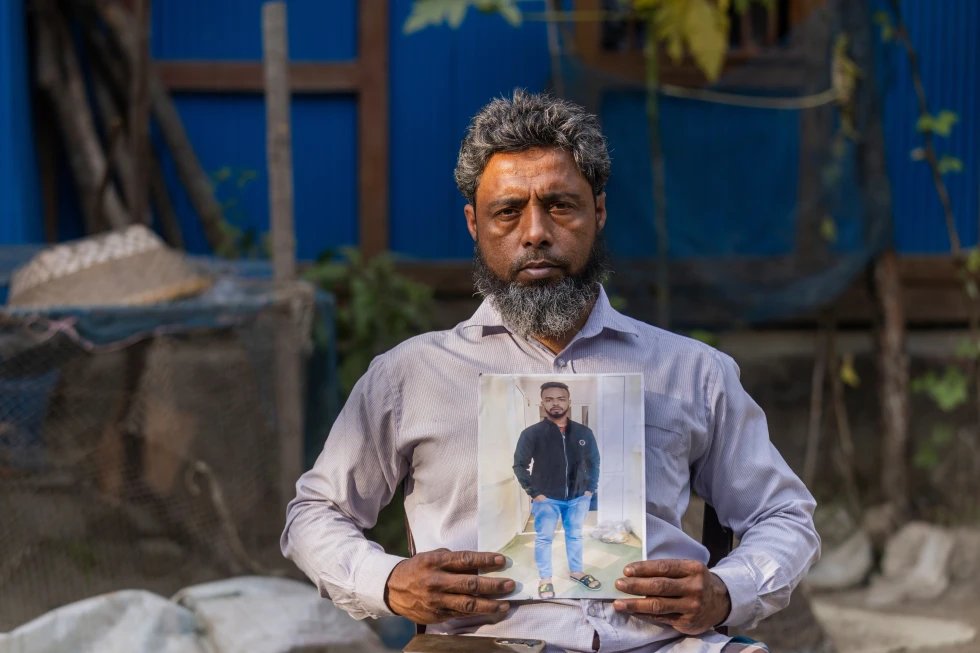
A Bangladeshi janitor arrived in Russia expecting a cleaning job. Within weeks, he was sent to the front lines in Ukraine with a rifle in his hands.
🧵Read on to learn how Putin is avoiding another round of mobilization: [1/12]
An investigation by @ap has found that Russian companies have been approaching Bangladeshi workers, claiming to be recruiting for civilian jobs - but when they arrive in Russia, the migrants are coerced into signing military contracts and deployed into combat zones against their will
[2/12]
The men enter Russia legally on work visas. They are presented with documents in Russian they cannot read, and told they are standard labor agreements. Only later do they learn that those papers are army contracts
An IT specialist was deported back to Russia at the weekend after being detained for jaywalking in Kazakhstan. The moment his plane landed in Russia, he was arrested for treason.
🧵 The walls are closing in for those fleeing the Putin regime [1/10]
Russian-Ukrainian dual citizen Alexander Kachkurkin is one of two people to be handed over to the Kremlin by Kazakhstan in the past four days, which clearly shows that the country is no longer safe for Russians pursued by the regime.
[2/10]
According to the human rights group Pervy Otdel (First Department), Kachkurkin was a DevOps engineer who had been collaborating with OpenAI before being deported to face treason charges in Russia for his alleged financial support of Ukraine.
For years, the West didn't know what to do with Russians who reject Putin. Engage them? Ignore them? Sanction them anyway?
That confusion just ended. @PACE_News has launched a formal platform for Russian democratic forces.
🧵Here's why this matters [1/14]
First, what is PACE? The Parliamentary Assembly of the Council of Europe—the continent's oldest international parliamentary body. 46 countries, founded in 1949 to defend human rights and democratic governance.
Russia was expelled in 2022 after the full-scale invasion of Ukraine.
[2/14]
PACE is not the EU Parliament and has no legislative power. But its members are parliamentarians who make decisions in their own countries. This platform gives Russian democratic opposition direct access to decision-makers across 46 nations.
He traveled to visit his elderly parents. Instead, he was arrested for his wife's social media posts.
🧵A Russian-Irish man now faces terrorism charges because he married a Ukrainian citizen [1/6]
Dmitry Simbayev, 49, has lived in Ireland for more than 20 years but travels to visit his elderly parents in Chelyabinsk every year. His wife, Darya Petrenko, fled to Ireland in 2022 after Putin launched his full-scale invasion of Ukraine
[2/6]
Last August, Dmitry arrived in Chelyabinsk for his annual visit to his parents, but was immediately arrested at the airport. He was interrogated for 14 hours, and police told him he had been detained over 'anti-Russian content'