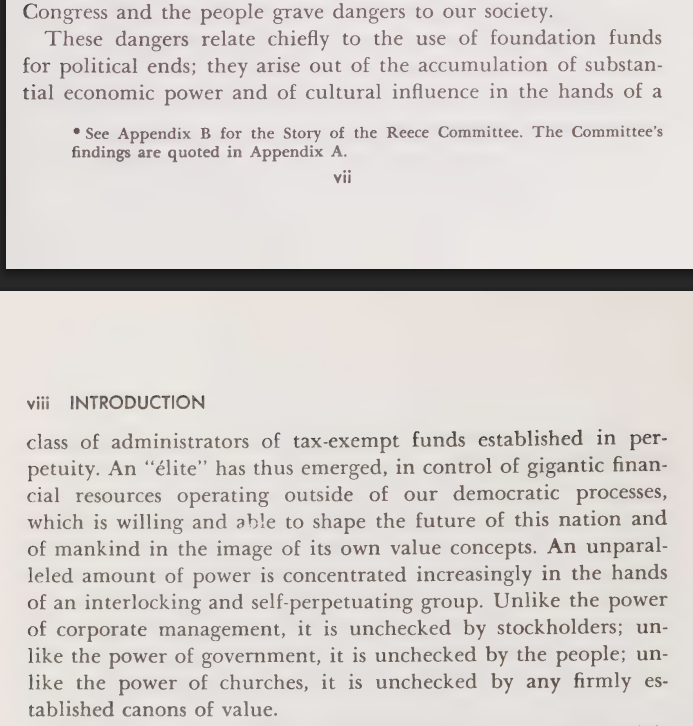
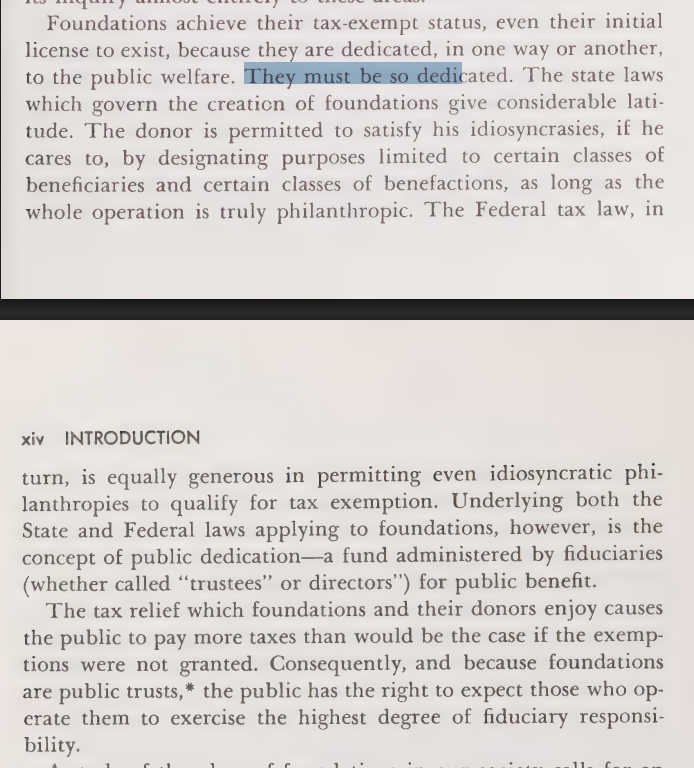
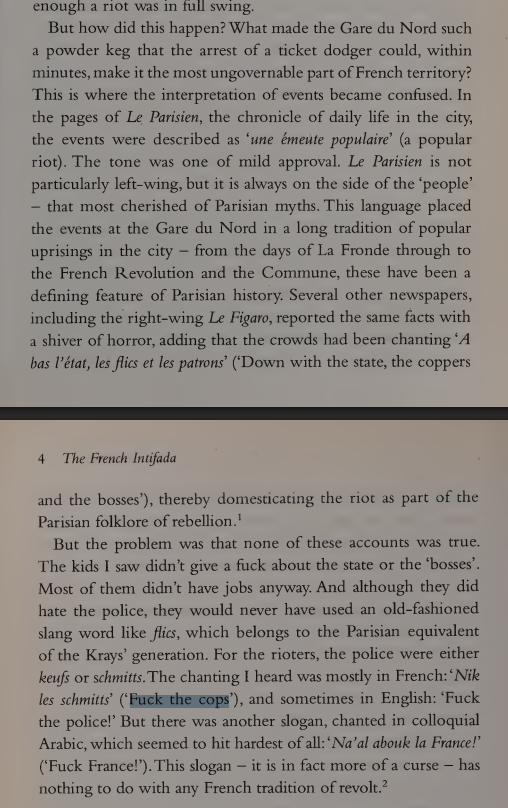
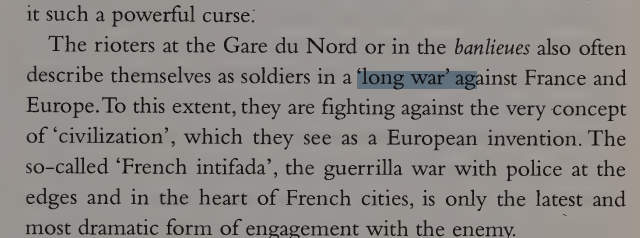
Thread with excerpts from the 1976 essay "On Meritocracy and Equality." I want to clear up some misconceptions around the idea of "meritocracy." The word was initially coined as a *pejorative* in 1958 to describe presently-existing Anglo-American society. 
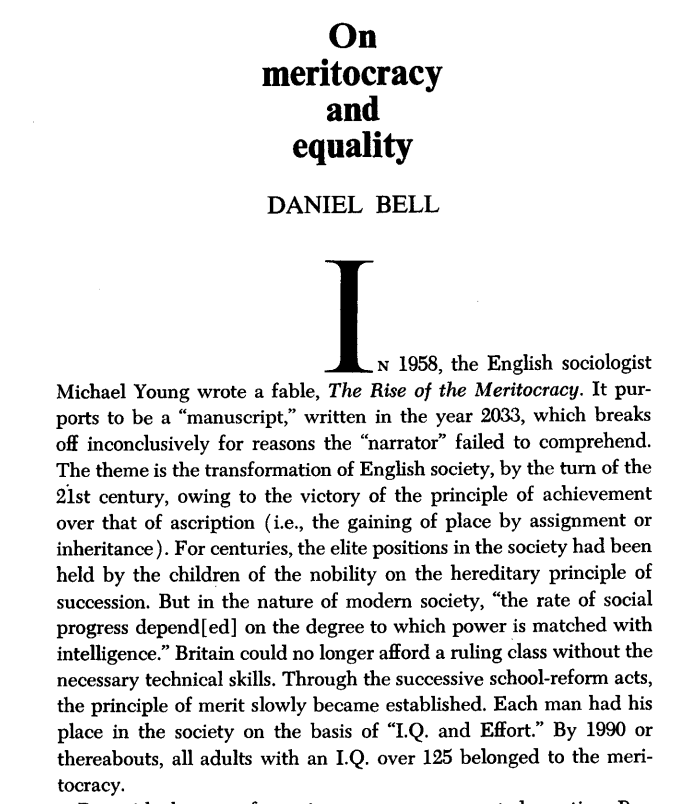
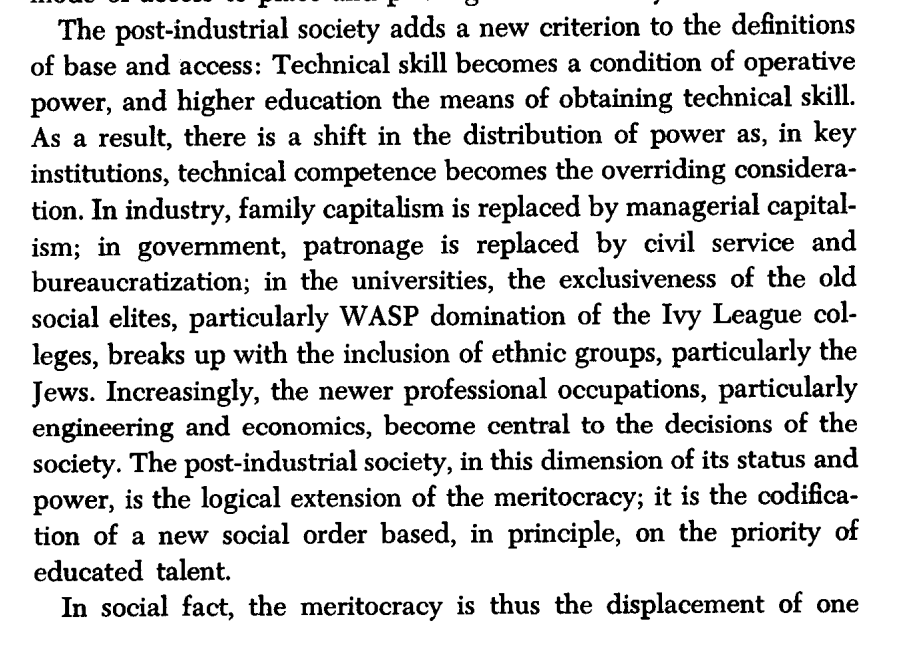
What characterized WWII and postwar Anglo-American society that made the word "meritocracy" appropriate? That talent (as measured by heavily genetic IQ) and technical skill, rather than hereditary privilege or some other mechanism, led to status and wealth.
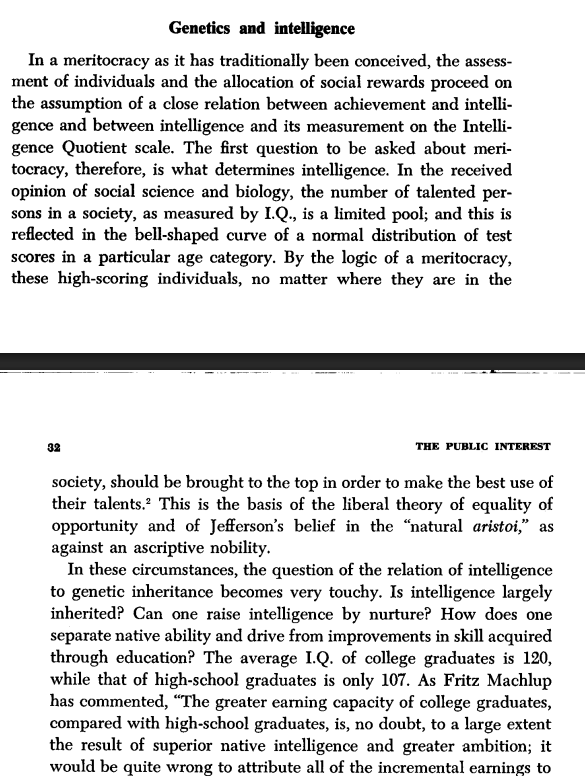
But by 1976, this had already been successfully attacked and overthrown by the New Left/Civil Rights state, which replaced talent with hereditary privilege (race, sex) as the ideal arbiter of status.
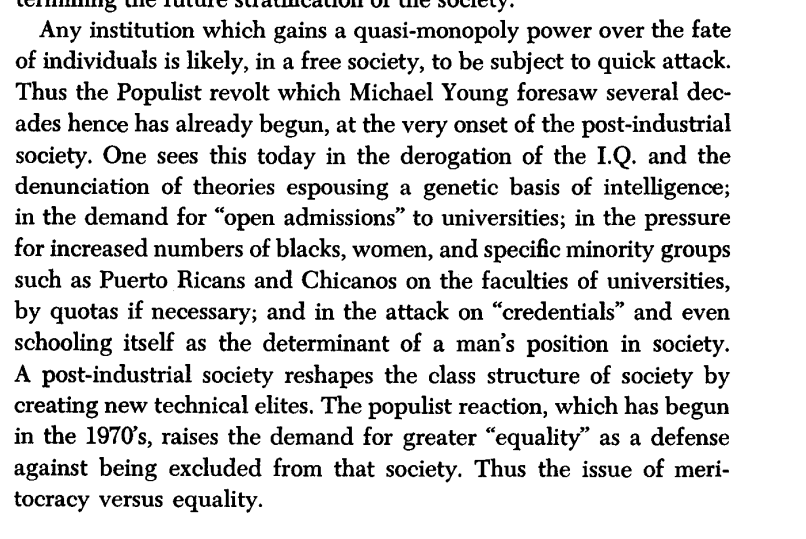
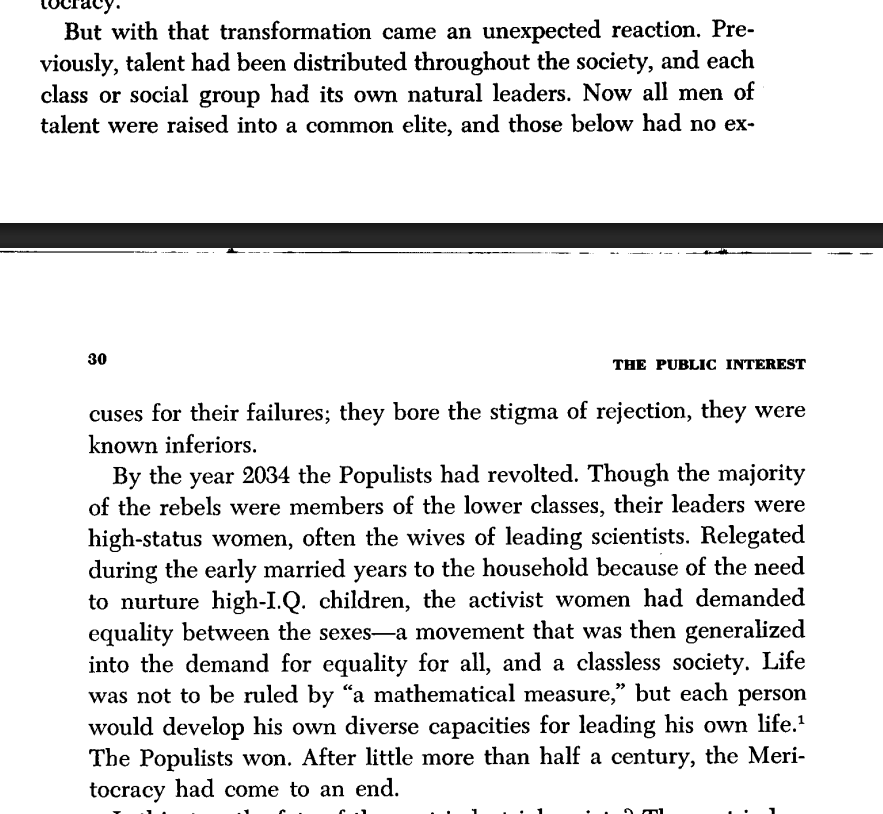
This is fairly close to what had been predicted by the essay that coined the term meritocracy, which foresaw "Populists" rebelling against the principle of merit in favor of equality and helping "each person develop his own diverse capacities" (think multiple intelligences).
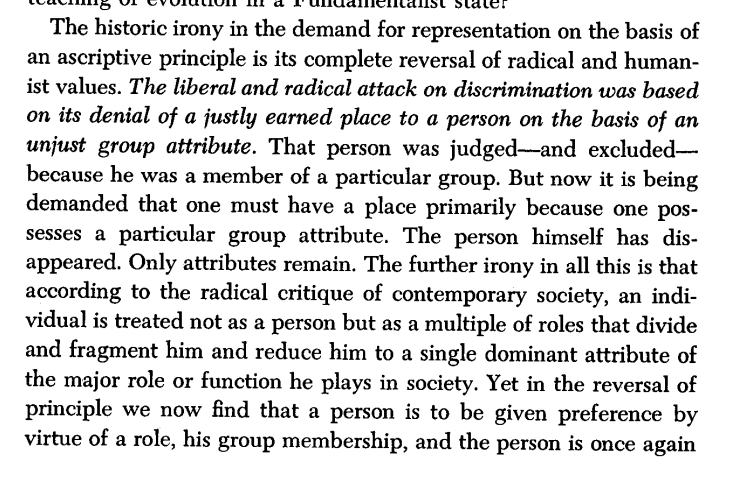
This successful 1960s attack on meritocracy in the form of affirmative action/Civil Rights *overthrew* the liberal individualist position that someone's place should not be based on their group attributes.
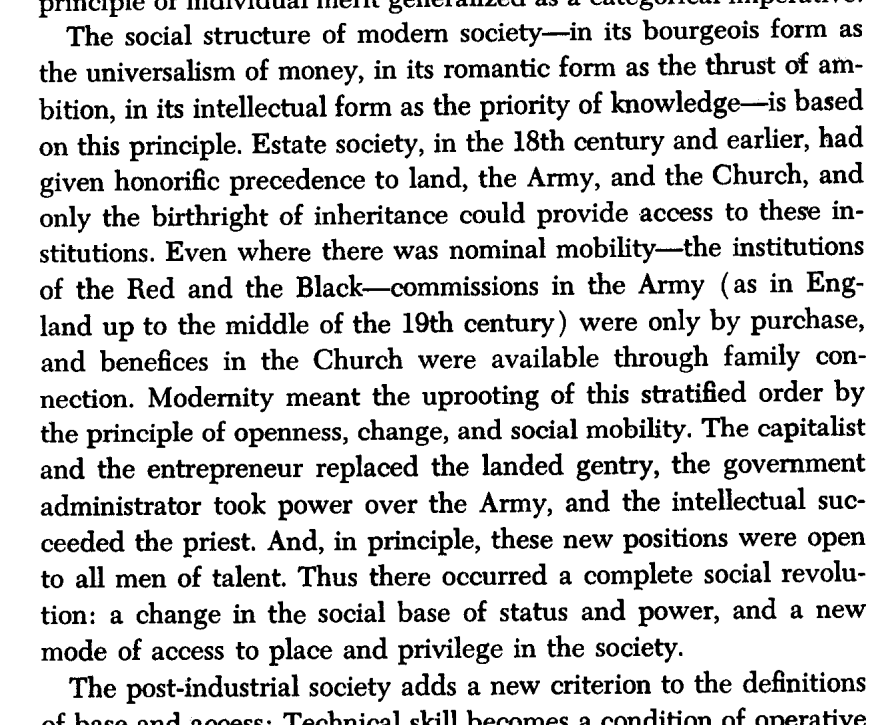
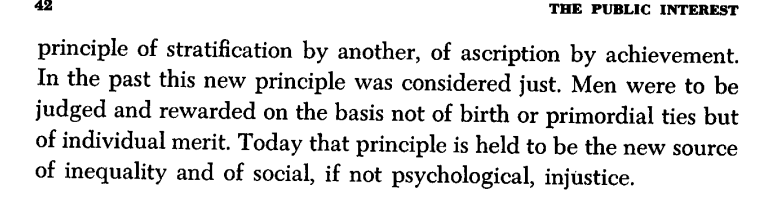
In the 18th century, many institutions, such as the army and the Church and land ownership, required hereditary privilege to access. This principle was replaced with the principle of achievement in the 19th/20th. *And then achievement was replaced again in the 1960s*.
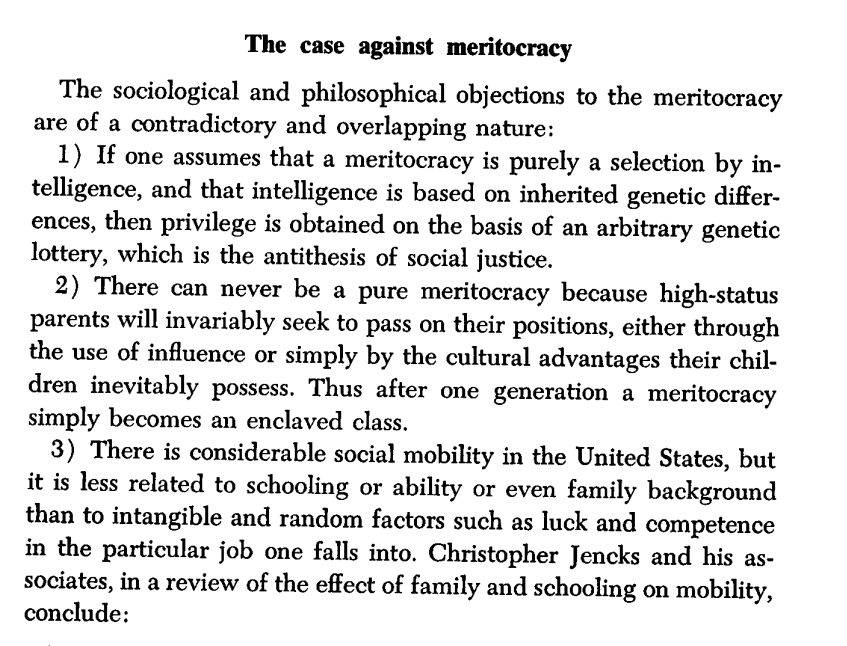
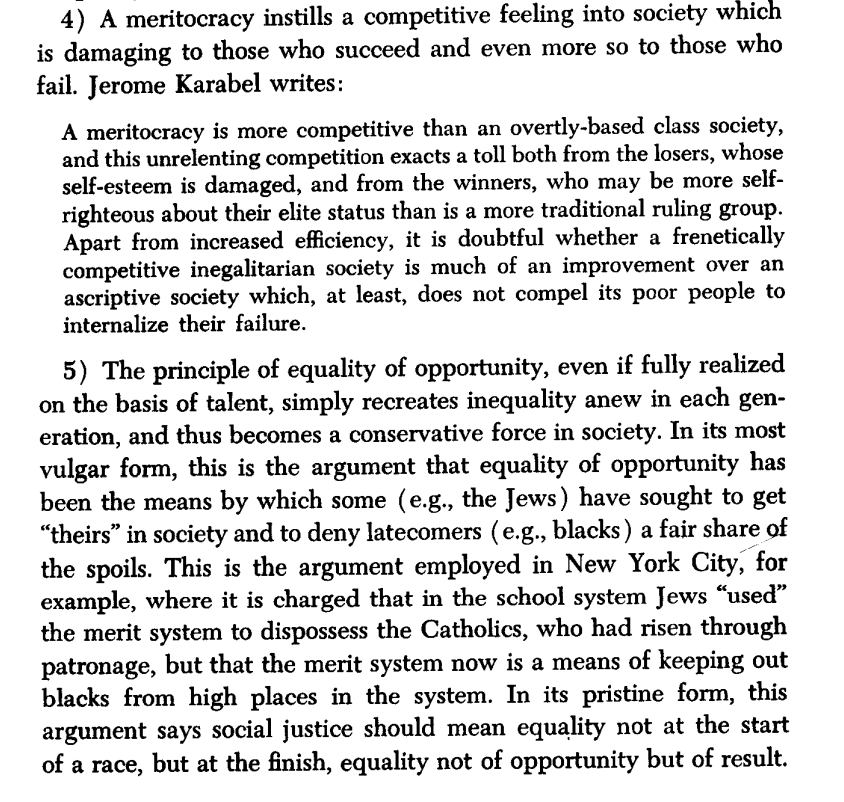
Various New Left attacks on meritocracy:
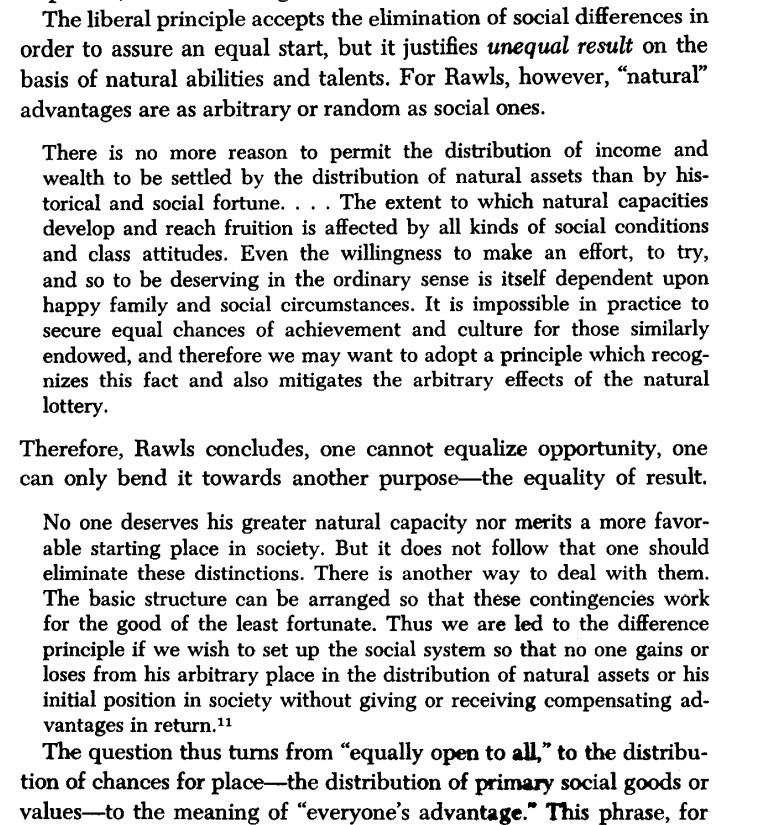
1) More status because you are better because of genetic gifts is unfair (Rawlsian)
2) Pure meritocracy is impossible
3) Social mobility is basically luck
4) Meritocracy makes society overly competitive
5) Meritocracy creates inequality
1) More status because you are better because of genetic gifts is unfair (Rawlsian)
2) Pure meritocracy is impossible
3) Social mobility is basically luck
4) Meritocracy makes society overly competitive
5) Meritocracy creates inequality
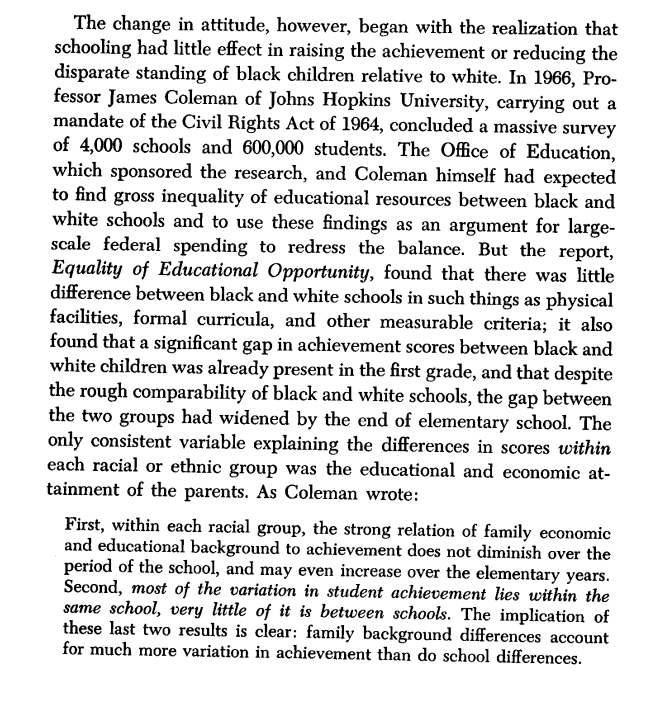
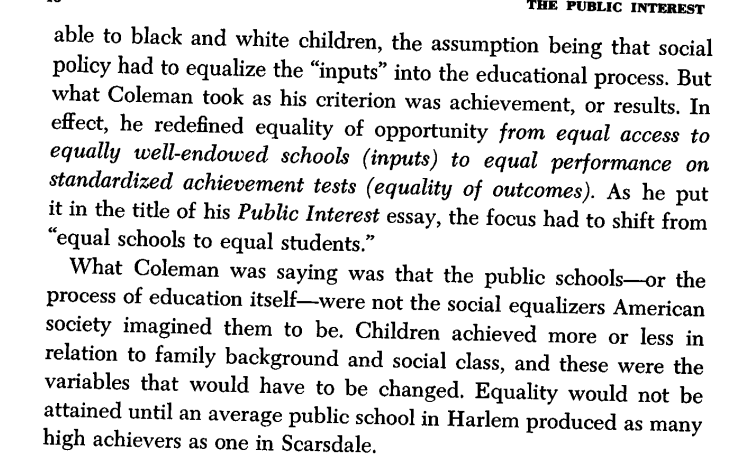
The author, Daniel Bell, traces this destruction of democracy to the failure of the mainstream Civil Rights movement, premised on the idea that equality of opportunity would lead to equality of results, a decade earlier with the 1966 Coleman Report.
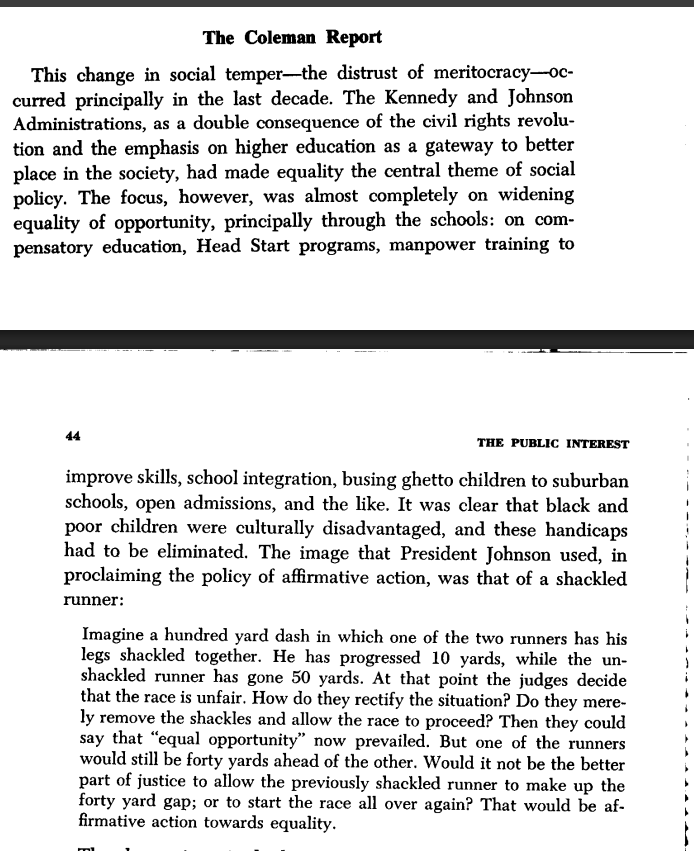
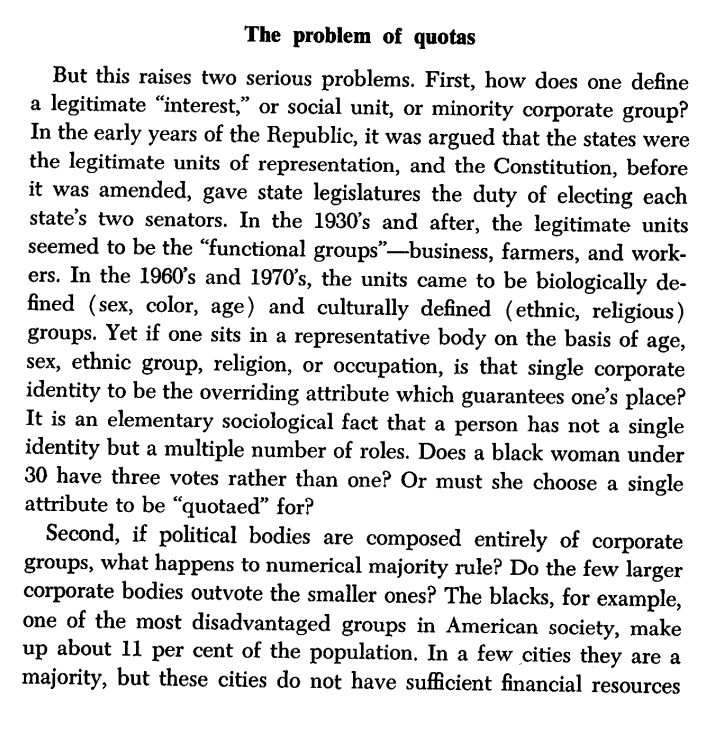
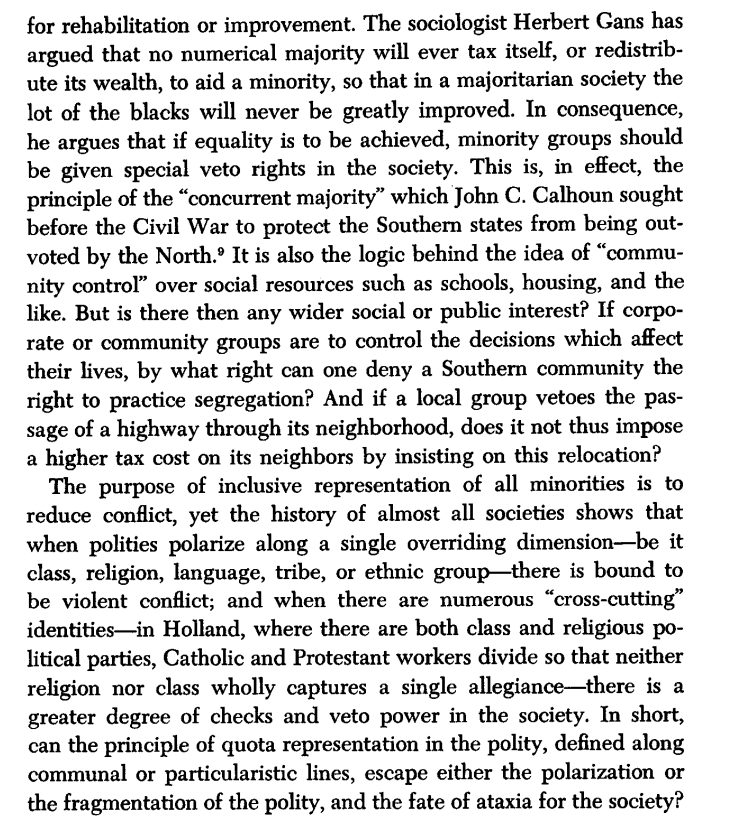
New Lefties re-invented John Calhoun's doctrine of the "concurrent majority," saying blacks shouldn't be counted equally to whites because as a minority they could never get what they wanted that way, and needed special privileges. This is the logic behind the VRA.
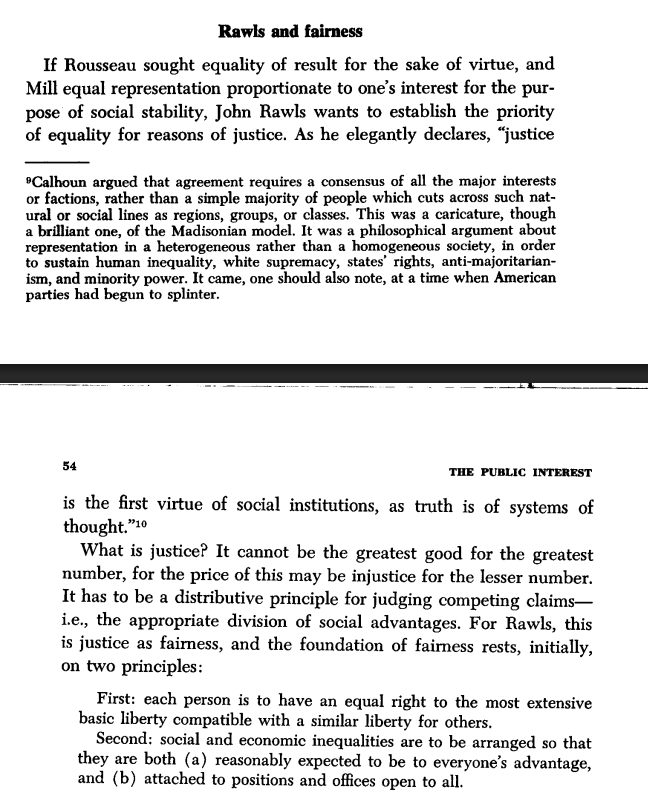
According to John Rawls, natural advantages (like being smarter or better looking) are as arbitrary as social ones (like being nobility), and the *only* justification for rewarding talent is if doing so helps the non-talented even more.
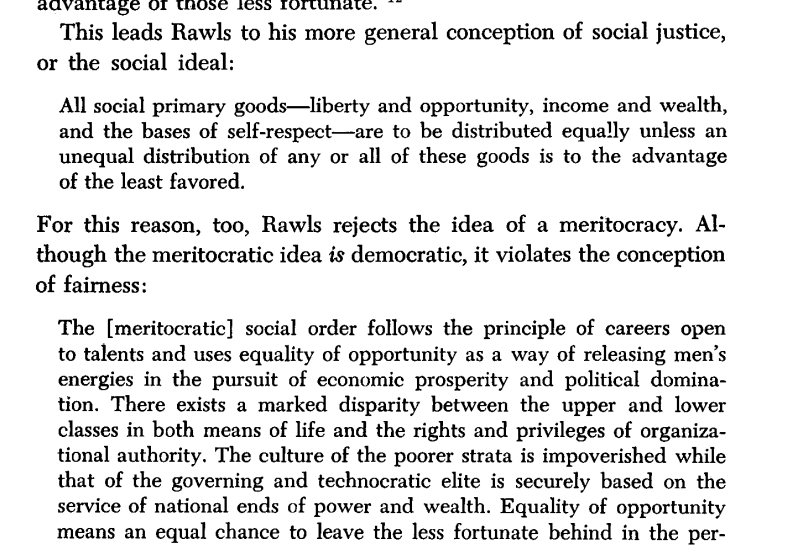
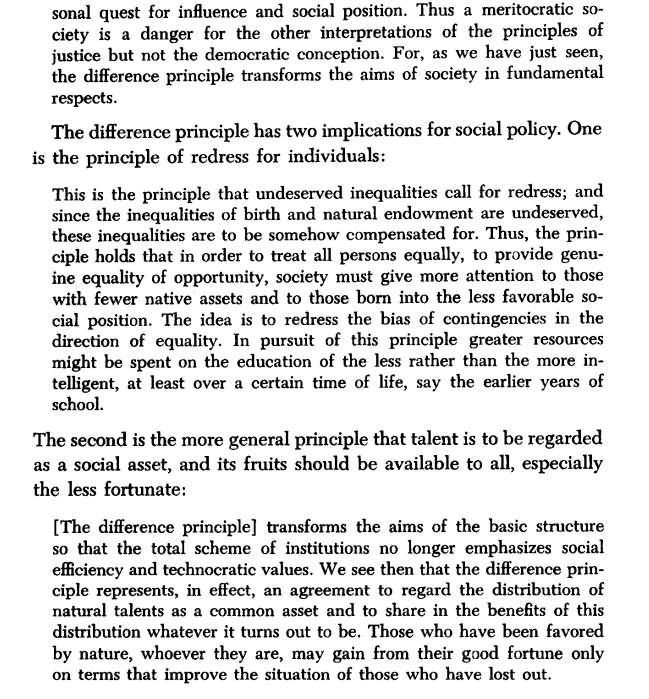
This represents the end of liberalism. The liberal ideal was to set no prescriptive ends, simply a set of procedural rules, and to let things work out as they may. The New Left overthrew and destroyed this in favor of redress for "disadvantaged groups" as the basis of society.
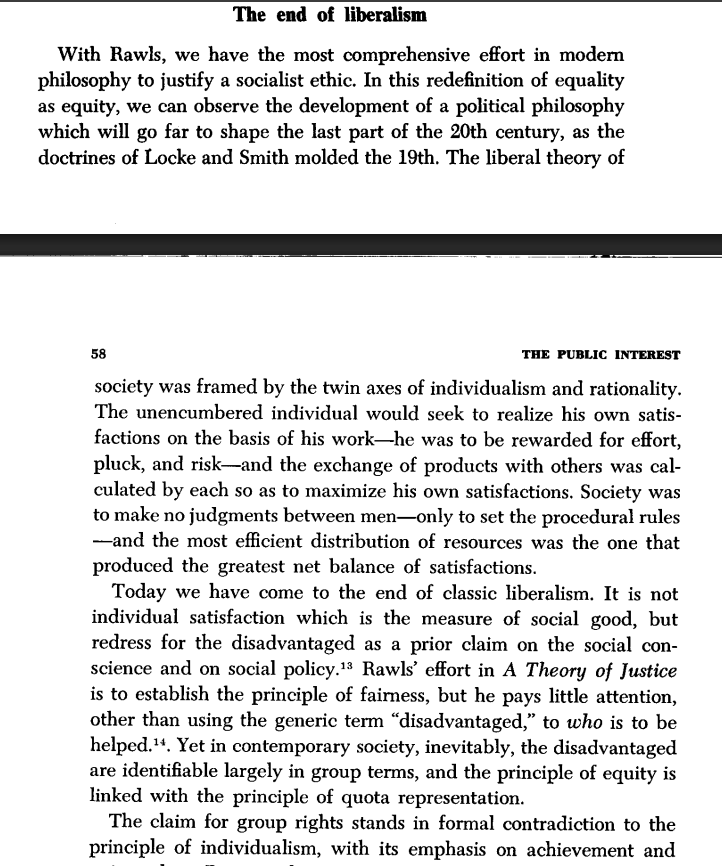
This should be seen, in my view, as a sort of "de-modernization" process. Rather than individuals equal under the law, we've returned to an ancien-regime like system of group representation, rights, and privileges, millets or estates or "communities" rather than citizens.
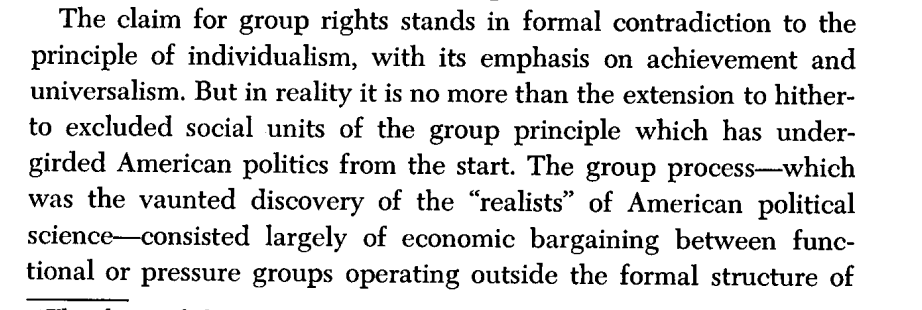
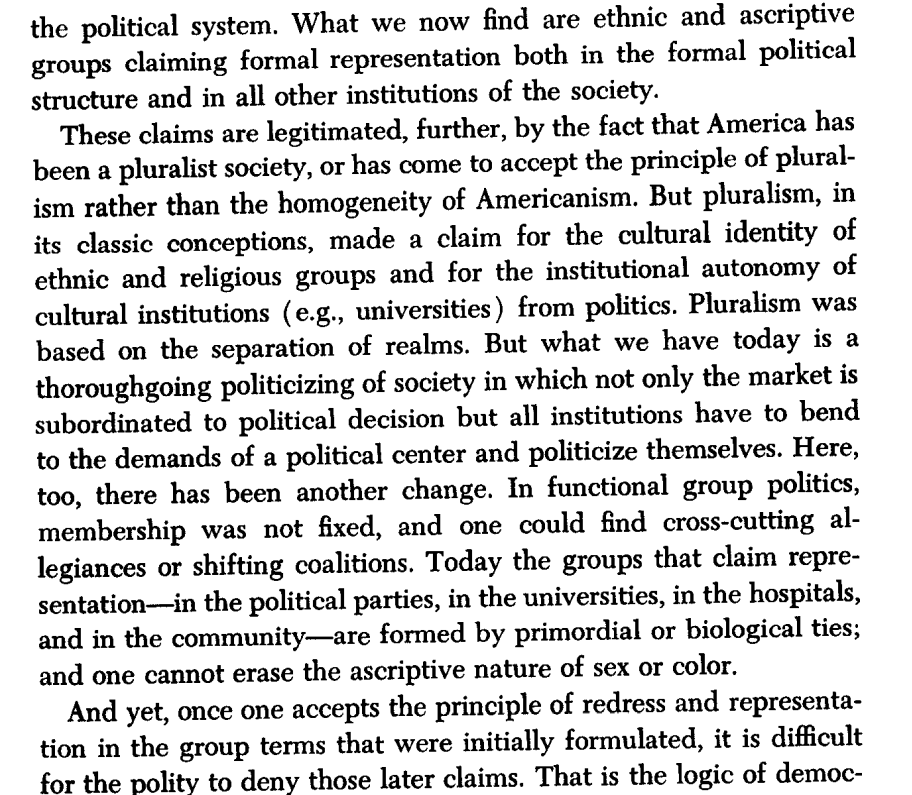
Why write this thread? You often see attacks on "meritocracy" or "individualism" as too prevalent in 21st century America. This is like criticisms of "white supremacy" or "patriarchy" - all were overthrown 60 years ago by the New Left and attacking them today is playing pretend.
NLSY data backs this up. For example, the correlation between income percentile and IQ dropped between NLSY79 cohort (born 1957-64) and the NLSY97 cohort (born 1980-1984), and this is after the destruction of meritocracy/liberalism began.
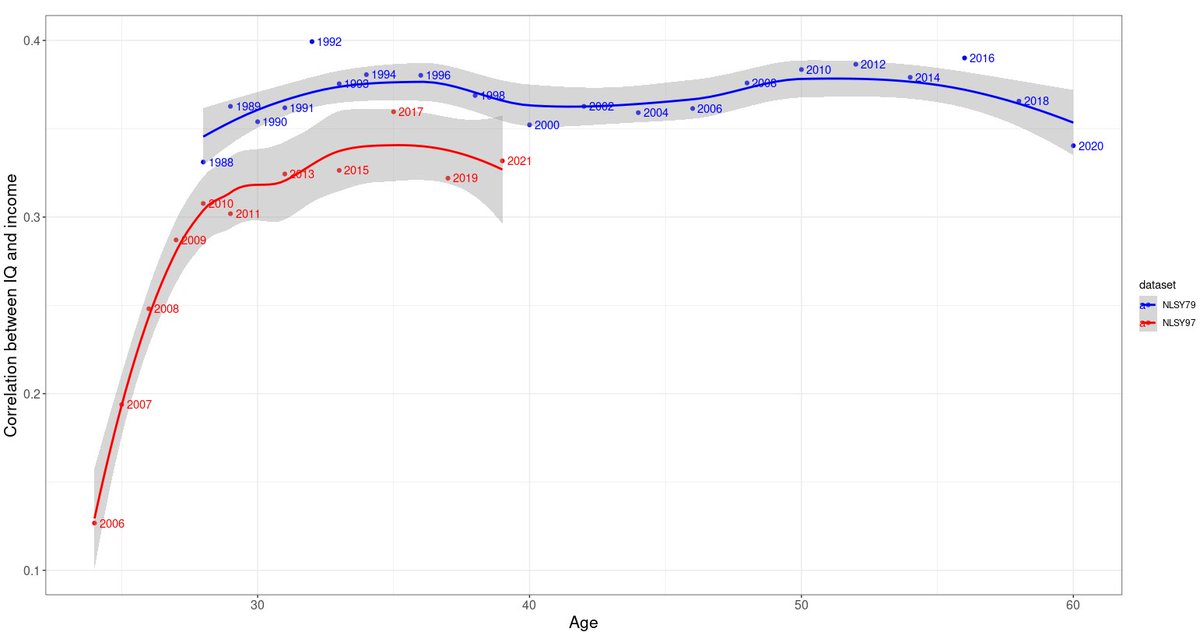
It drives me mad to see people playacting as though we are still in the 1950s. Here is a link to the 1976 essay I excerpted all of this from; I recommend reading the whole thing (only 40 pages).
nationalaffairs.com/storage/app/up…
nationalaffairs.com/storage/app/up…
• • •
Missing some Tweet in this thread? You can try to
force a refresh