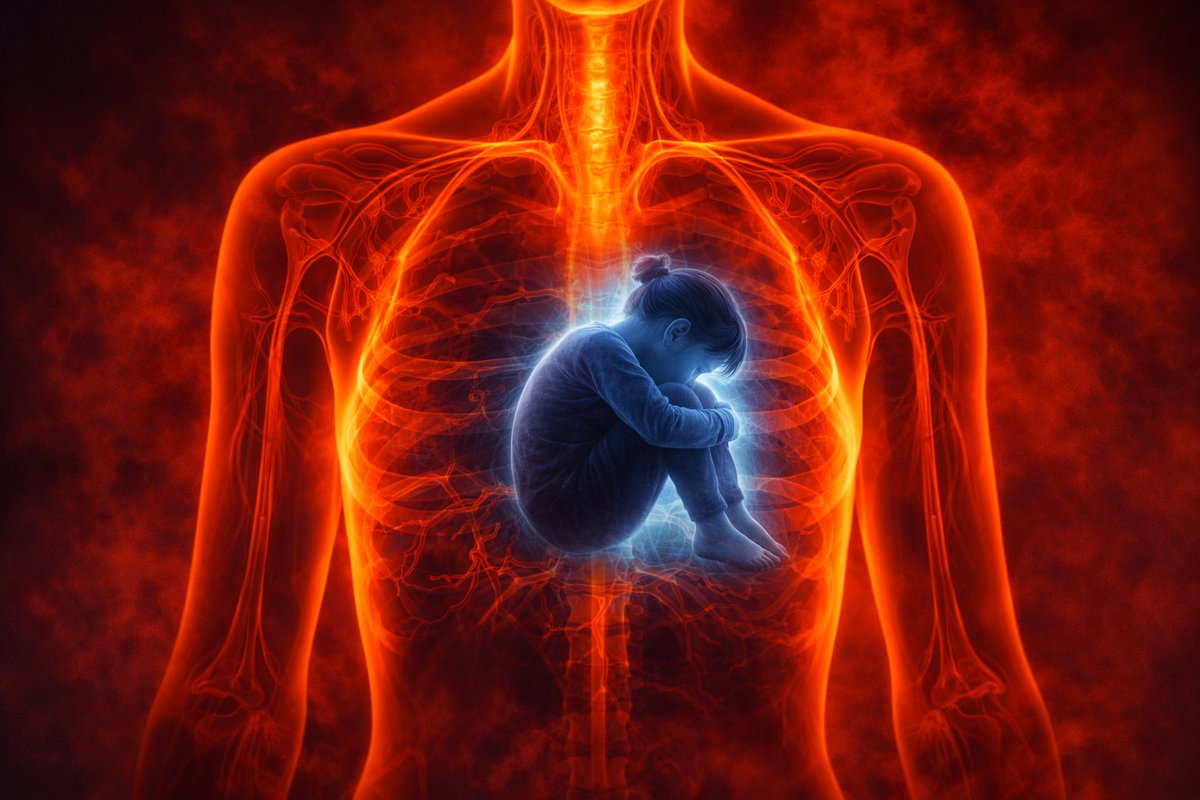
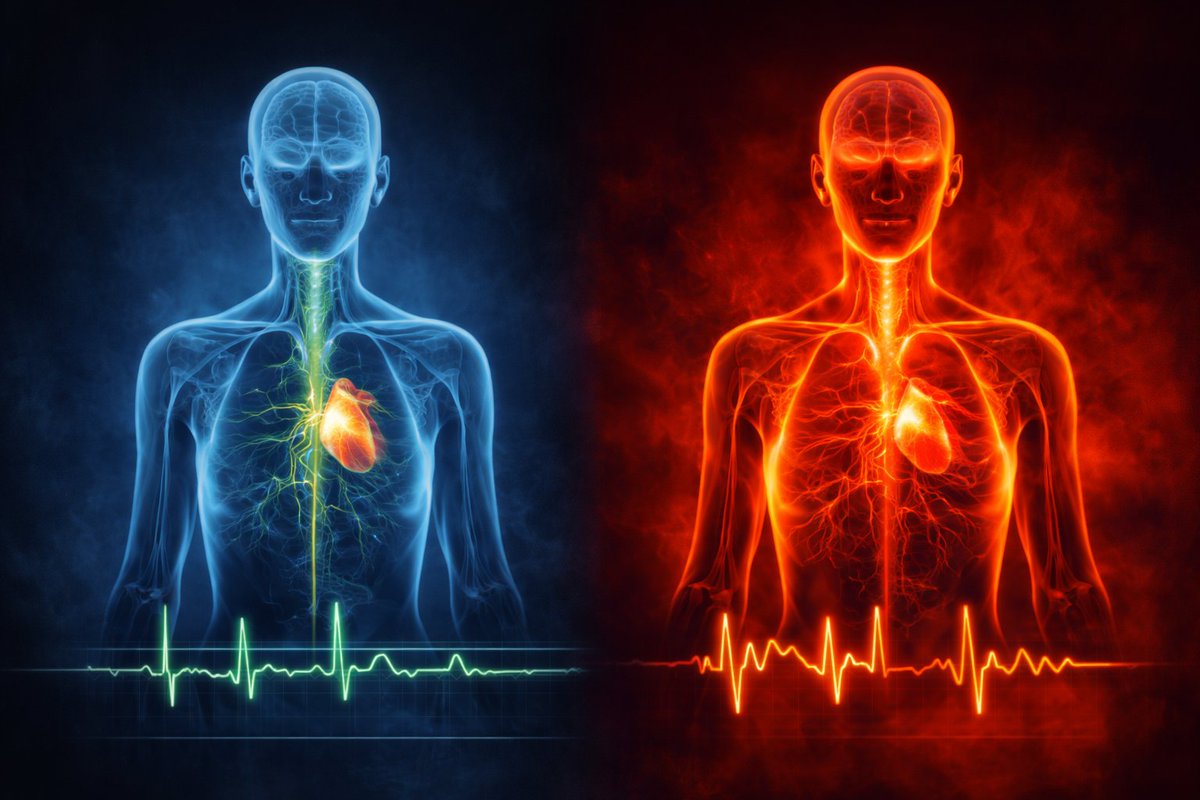
Anxiety isn’t just in your head.
It’s stored in your nervous system.
Here are 9 body-based ways to release it (without medication) 🧵
1. Cold water on your face.
It’s stored in your nervous system.
Here are 9 body-based ways to release it (without medication) 🧵
1. Cold water on your face.

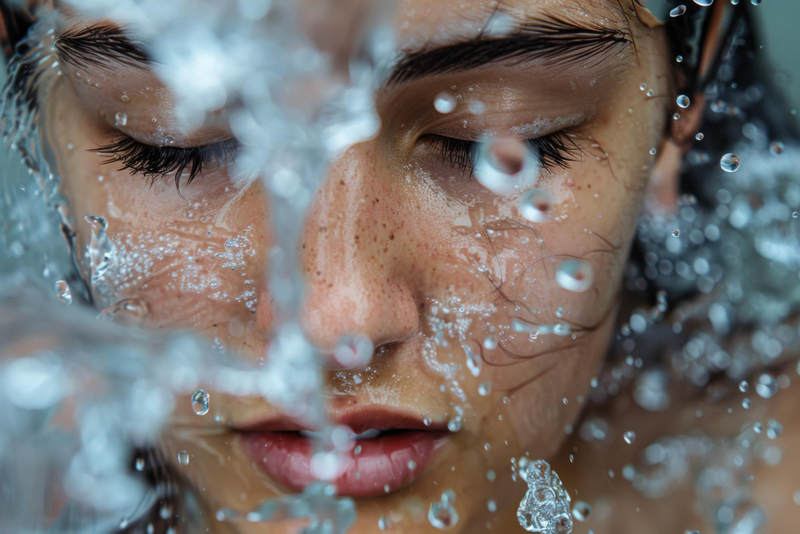
1. Cold water on your face activates the vagus nerve.
It triggers the mammalian diving reflex → increases parasympathetic (vagal) activity and slows your heart rate, which helps interrupt panic attacks.
Cold water also signals GABAergic release, giving you a quick, refreshing, invigorating feeling. It's a sure-fire way to interrupt negative thought loops.
It triggers the mammalian diving reflex → increases parasympathetic (vagal) activity and slows your heart rate, which helps interrupt panic attacks.
Cold water also signals GABAergic release, giving you a quick, refreshing, invigorating feeling. It's a sure-fire way to interrupt negative thought loops.
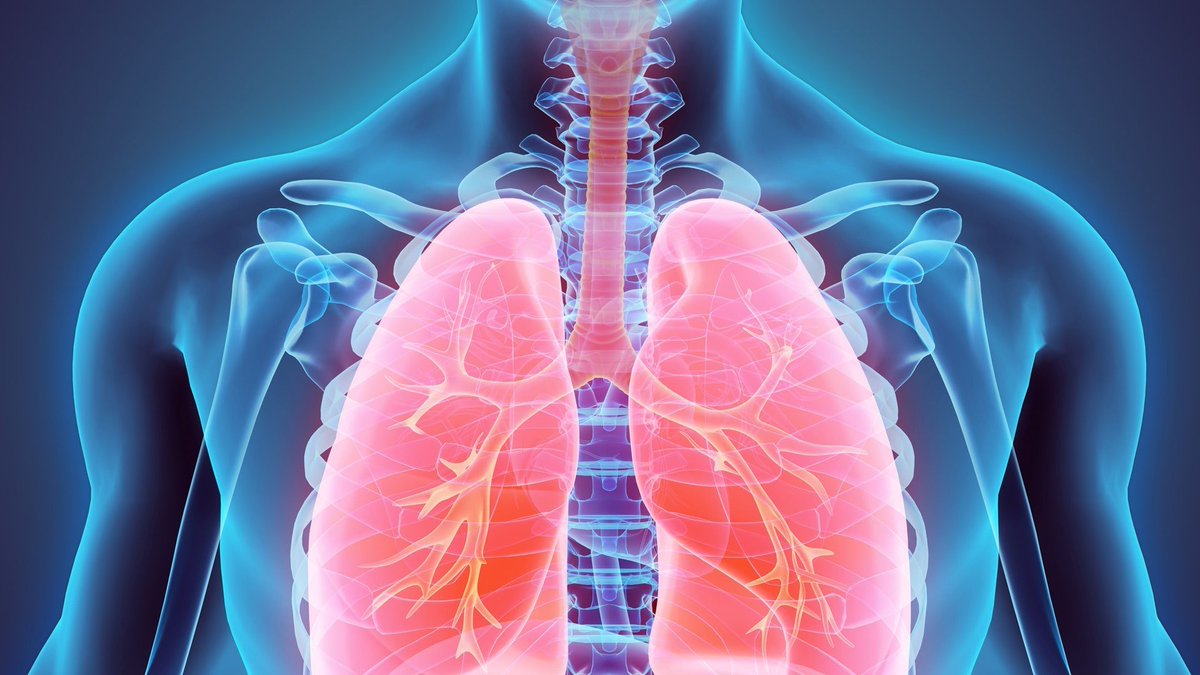
2. Slow exhales stop the fight-or-flight response-- in seconds.
Long exhales increase respiratory sinus arrhythmia (RSA) and vagal calming. Your entire body relaxes, and visual clarity is restored.
This often increases HRV and shifts autonomic balance away from the fight-or-flight response.
Long exhales increase respiratory sinus arrhythmia (RSA) and vagal calming. Your entire body relaxes, and visual clarity is restored.
This often increases HRV and shifts autonomic balance away from the fight-or-flight response.
3. Device-free walking – resets threat scanning.
Rhythmic movement and sensory flow reduce sustained threat monitoring.
It lowers maladaptive mind-wandering, which is your Default Mode Network (DMN) caught in rumination.
The salience network (SN) is not jolted with urgent pings. And walking helps metabolize stress-related chemicals, such as catecholamines.
Rhythmic movement and sensory flow reduce sustained threat monitoring.
It lowers maladaptive mind-wandering, which is your Default Mode Network (DMN) caught in rumination.
The salience network (SN) is not jolted with urgent pings. And walking helps metabolize stress-related chemicals, such as catecholamines.
4. Drawing externalizes your emotions.
When we externalize our feelings by putting them on paper, we reduce cognitive load and downshift limbic reactivity.
Drawing engages visuomotor networks and sensory-motor integration and can help you tolerate uncomfortable emotions.
Research shows that it reduces amygdala activation. When you can name the feeling and express it, you've gotten it out of your head.
When we externalize our feelings by putting them on paper, we reduce cognitive load and downshift limbic reactivity.
Drawing engages visuomotor networks and sensory-motor integration and can help you tolerate uncomfortable emotions.
Research shows that it reduces amygdala activation. When you can name the feeling and express it, you've gotten it out of your head.
5. Eye softening – reduces hypervigilance.
Threat states narrow our visual attention. We get “tunnel vision”.
When you soften, or widen your gaze, it reduces that defensive narrowing and sends a safety cue through the body's orienting system.
It helps shift the freeze response to a broader perceptual field.
Anxiety is associated with attentional bias. Practices that broaden attention reduce perceived threat intensity.
Threat states narrow our visual attention. We get “tunnel vision”.
When you soften, or widen your gaze, it reduces that defensive narrowing and sends a safety cue through the body's orienting system.
It helps shift the freeze response to a broader perceptual field.
Anxiety is associated with attentional bias. Practices that broaden attention reduce perceived threat intensity.
6. Try a whole body Sigh
Research shows that when we sigh our heart rate goes down. And, you feel instant relief.
Listen to Huberman talk about the neurological benefits of the physiological sigh.
Best use: 60–90-second intervals, any time of day.
Research shows that when we sigh our heart rate goes down. And, you feel instant relief.
Listen to Huberman talk about the neurological benefits of the physiological sigh.
Best use: 60–90-second intervals, any time of day.
7. Rocking movements are self-soothing.
Rhythmic vestibular stimulation is common among humans (think infant soothing).
Rocking can reduce arousal by entraining a steady rhythm and shifting attention to bodily sensation.
Best use: slow rocking or sway for 1–3 minutes, especially when agitation is high.
Rhythmic vestibular stimulation is common among humans (think infant soothing).
Rocking can reduce arousal by entraining a steady rhythm and shifting attention to bodily sensation.
Best use: slow rocking or sway for 1–3 minutes, especially when agitation is high.
8. Humming – stimulates the vagus nerve and restores calm.
Vocalization engages breath control and can stimulate vagal pathways via laryngeal/pharyngeal activity.
Chanting and tonal singing increase social safety.
Best use: hum on long exhales for 1–2 minutes.
Vocalization engages breath control and can stimulate vagal pathways via laryngeal/pharyngeal activity.
Chanting and tonal singing increase social safety.
Best use: hum on long exhales for 1–2 minutes.
9. Nature exposure – calms the salience network (SN).
Nature scenes reduce stress reactivity, improve mood, and reduce rumination. It's often linked to reduced DMN rumination and lower sympathetic activity.
“Green space” and “forest bathing” suggest a significant reduction in stress markers and improved well-being.
Best use: 20+ minutes outside, ideally green/trees, slow pace.
Nature scenes reduce stress reactivity, improve mood, and reduce rumination. It's often linked to reduced DMN rumination and lower sympathetic activity.
“Green space” and “forest bathing” suggest a significant reduction in stress markers and improved well-being.
Best use: 20+ minutes outside, ideally green/trees, slow pace.
Our bodies carry what our minds can't process.
Releasing body tension empowers you, helps you feel safe, and gives you a way to handle unsettling emotions.
If you want a guided process, book a discovery call to see if my ART community is a fit.
calendly.com/lorwen_consult…
Releasing body tension empowers you, helps you feel safe, and gives you a way to handle unsettling emotions.
If you want a guided process, book a discovery call to see if my ART community is a fit.
calendly.com/lorwen_consult…
• • •
Missing some Tweet in this thread? You can try to
force a refresh