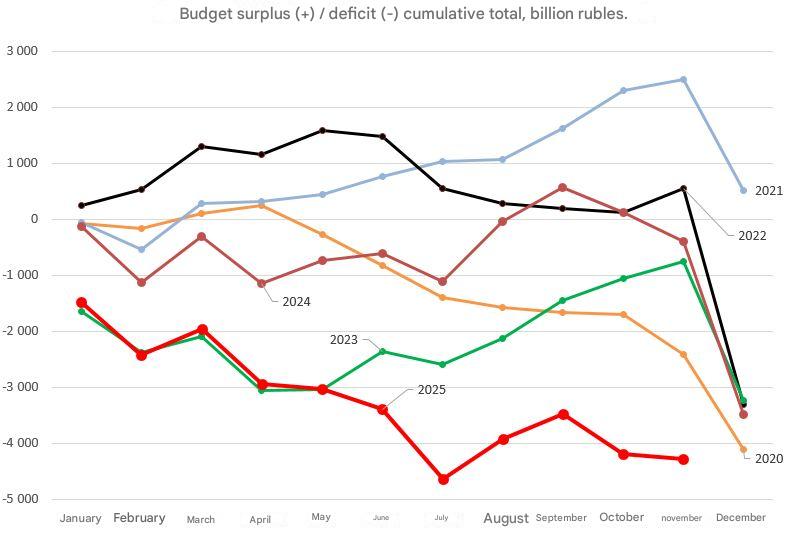
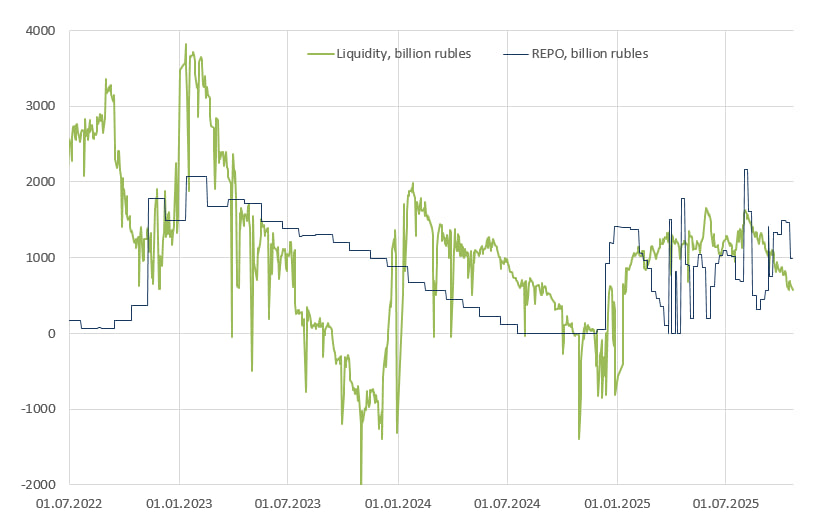
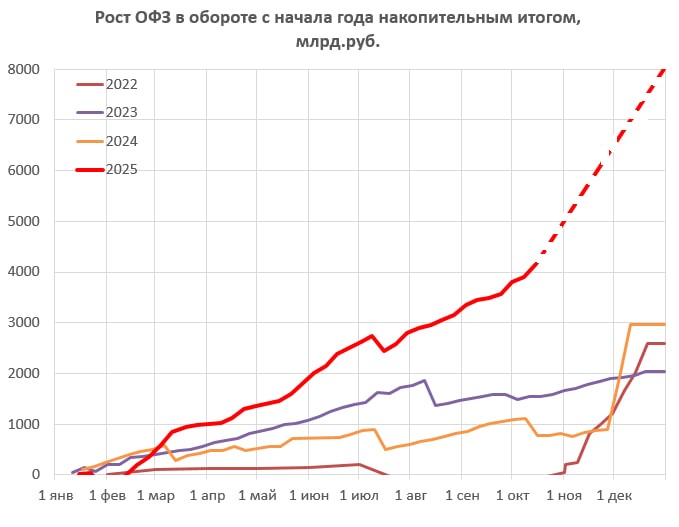
Russian Federation budget execution data for December has been released.
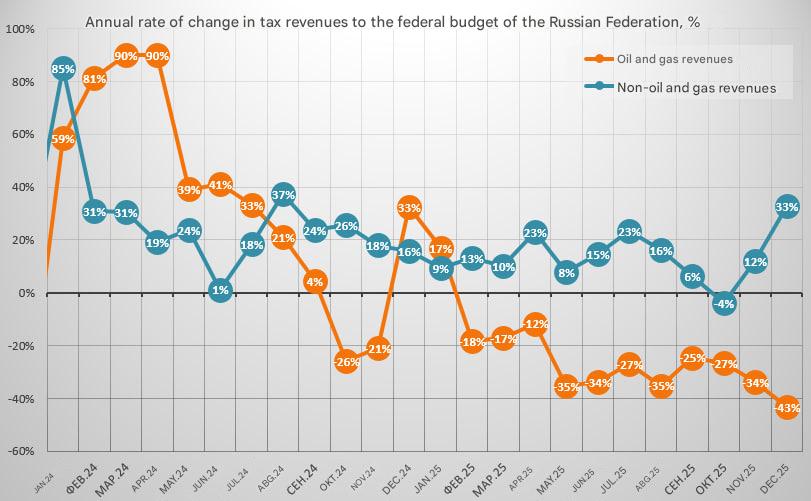
Revenue: +8%
Of which:
- Oil and gas: -43%
- Non-oil and gas: +33%
Expenses: -20%
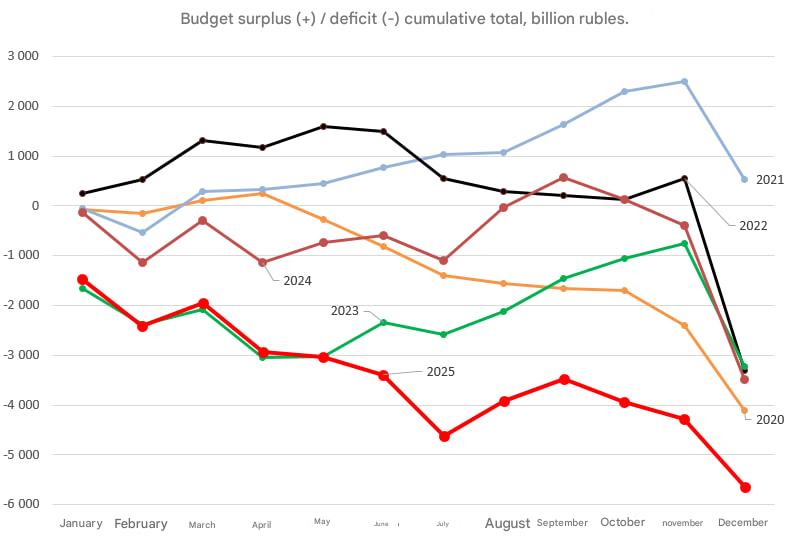
Deficit: (-1,369 billion rubles) Last December, there was a deficit (-3,095 billion rubles) 1/
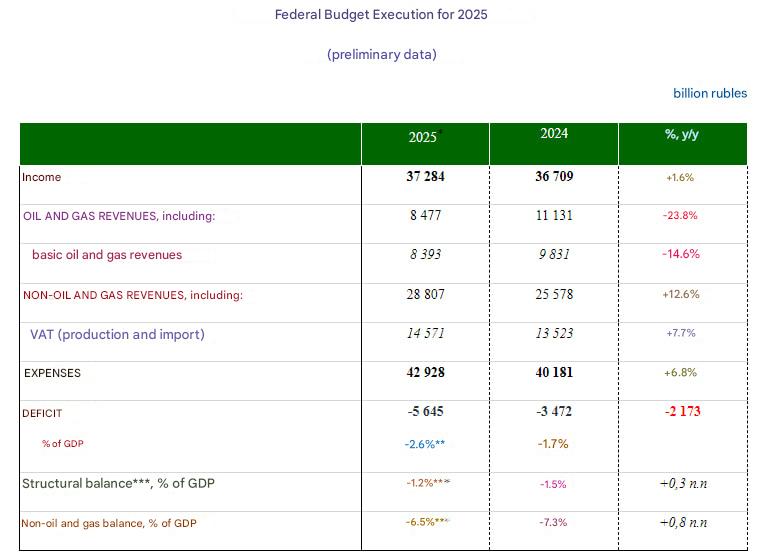
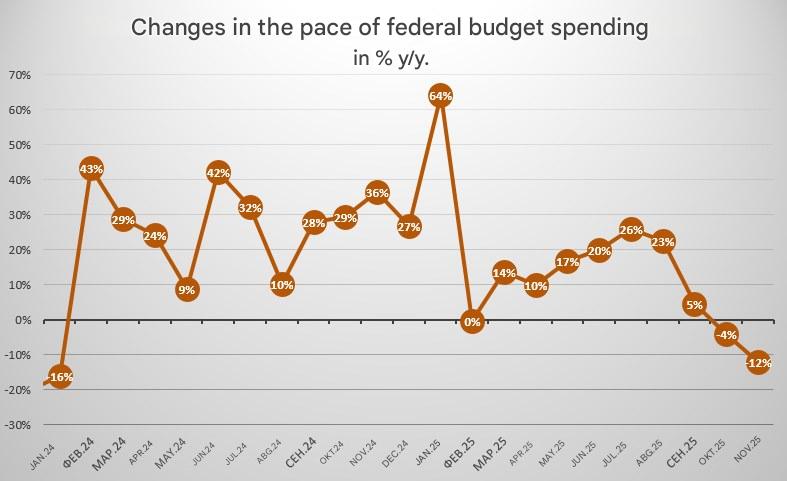
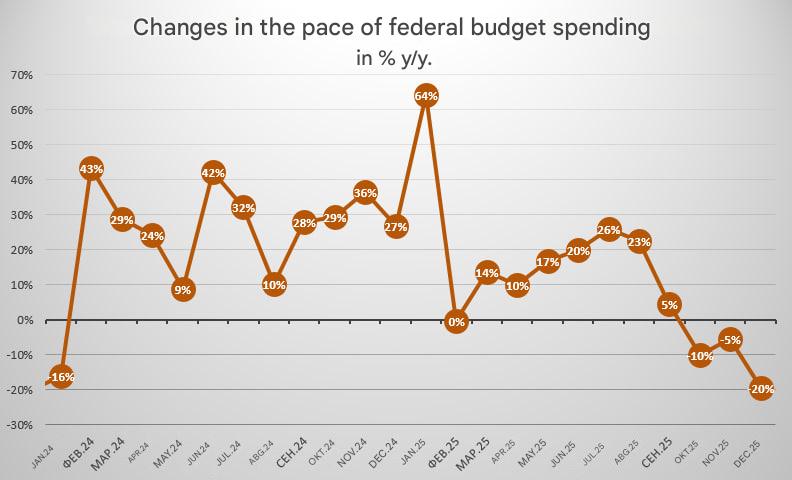
The most astonishing thing is that budget expenditures fell by 20% in December!!!!
This will lead to a significant slowdown in the entire economy! 2/
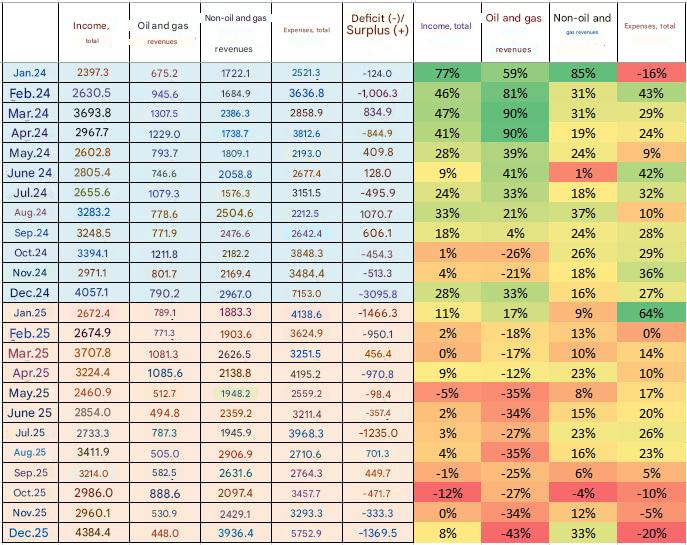
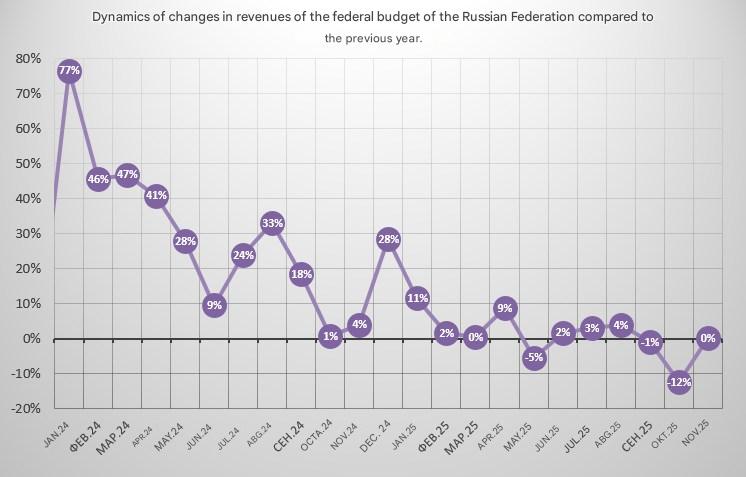
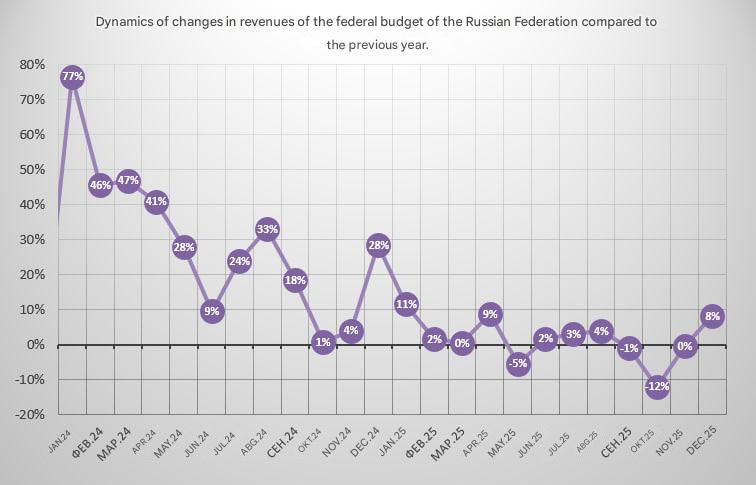
Budget revenues in December grew by 8% year-on-year.
I suspect they added some non-tax funds (fines, seizures, etc.) to the budget. 3/
Oil revenues fell by 43%, while non-oil revenues grew by 33%. This is nonsense. Tax revenues couldn't have grown so sharply. The Russians are lying. 4/
Budget spending plummeted by 20% in December.
This is the largest collapse in two years!
The entire budgetary boost to the economy was neutralized!
But I suspect that large-scale spending has been postponed until January 2026. 5/
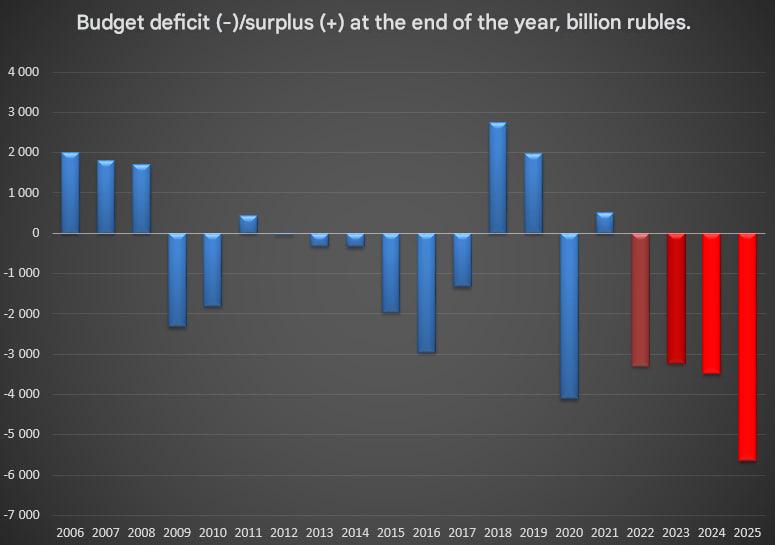
The budget deficit in December was 1369 billion rubles, significantly less than the deficit in December 2024, which was 3095 billion rubles. 6/
By the end of 2025, the budget deficit had grown by 62% to 5,645 billion rubles, despite the fact that they had cut spending in December by 20%.
The budget is simply falling apart! 7/
• • •
Missing some Tweet in this thread? You can try to
force a refresh

Kuzbass. A massive crisis in the region.
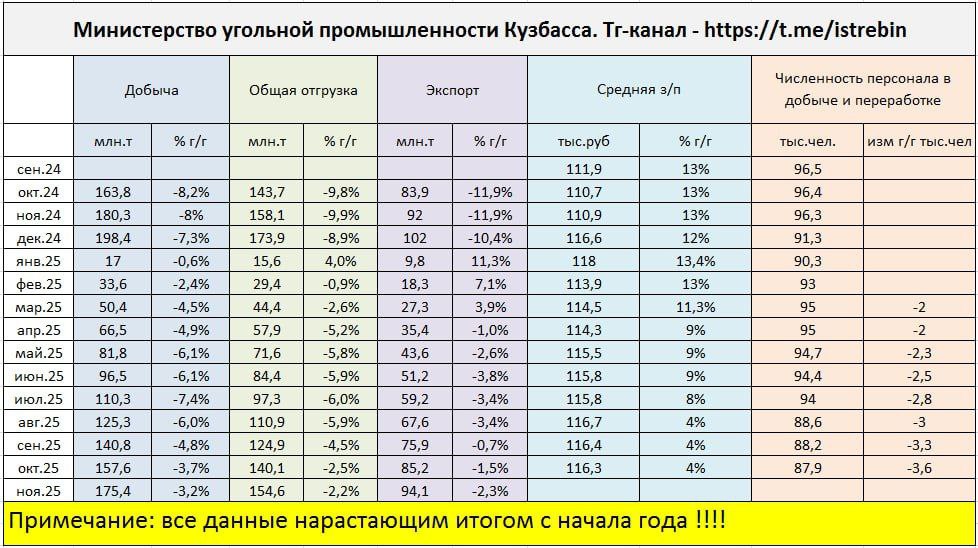
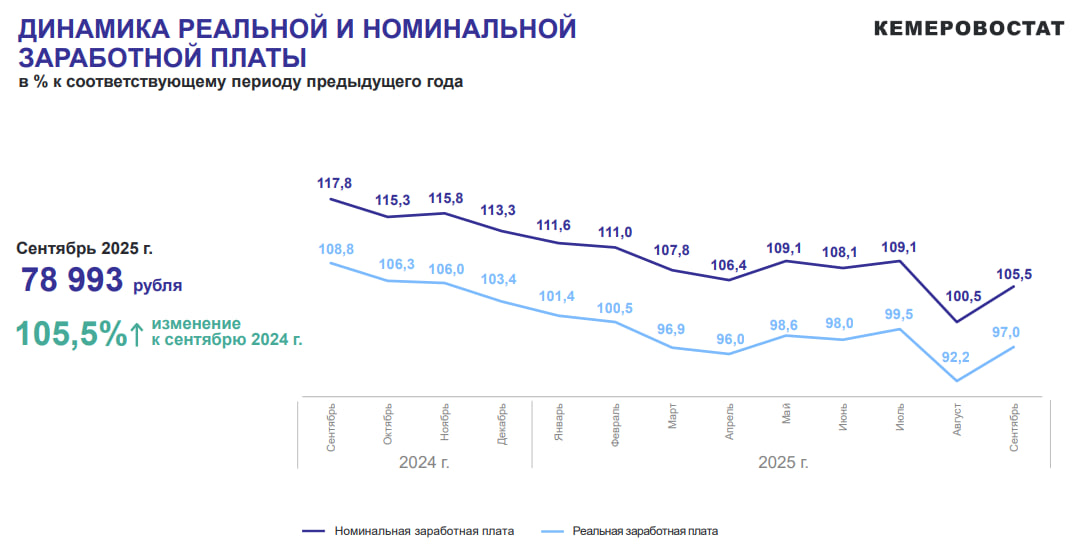
I've collected all the data, and it's very bad for them. 1. The coal industry's workforce was cut by 8,500 (-8.8% y/y) 2. Nominal wage growth since the beginning of the year has fallen from +13% to +4%, while in real terms it's (-4%) 1/
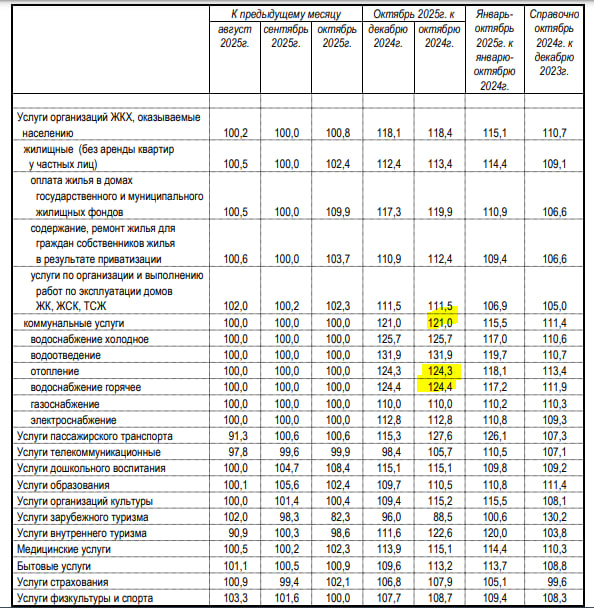
3. Utility rates increased by 21% over the year, with heating and hot water rates increasing by 24% year-on-year. 4. Wage arrears began to grow.
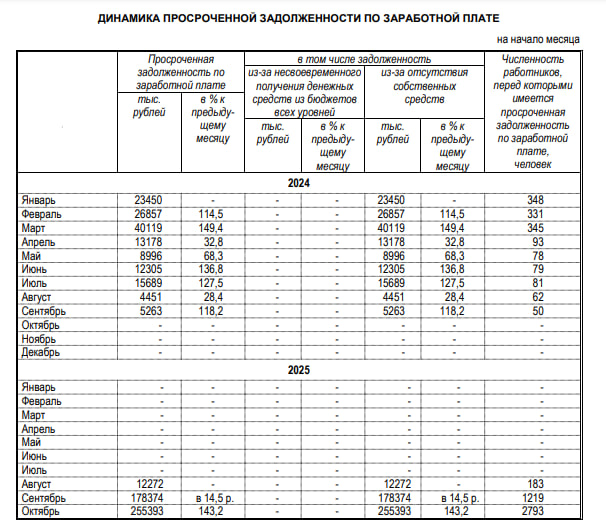
In three months, they grew from zero to 225 million rubles. The arrears are owed to 2,800 employees.
2/
The first official data on staff reductions and wage declines has emerged. So far, this only covers the Kuzbass coal industry.
Read this thread
1/
Here are official figures from the Kuzbass Ministry of Coal Industry.
Amid a decline in coal production for the second year running, layoffs began in March.
By November, more than 8,600 employees, or one in every 11, had been laid off!
2/
But the situation didn't stop with layoffs alone. In August, wages began to be cut for those who remained employed. As a result, cumulative wage growth for the first two months was +13%, but by August, it had only increased by +4%. This means that wages actually fell in August 3/
Important information!
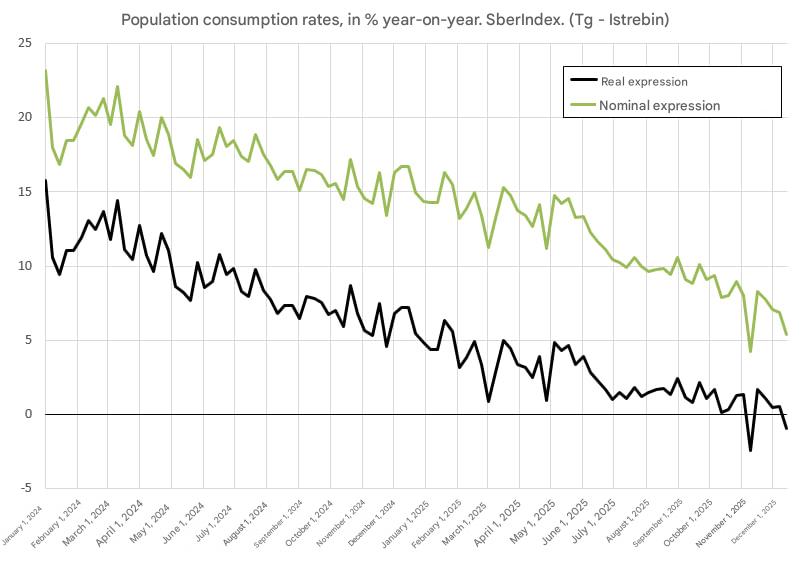
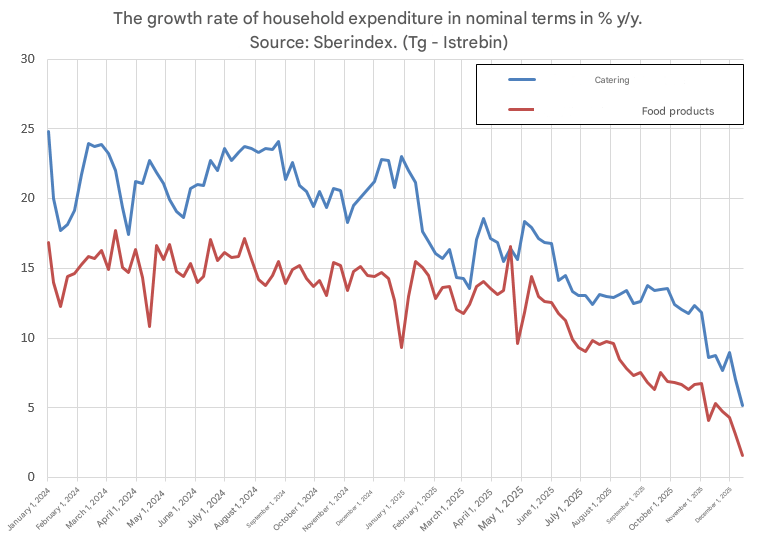
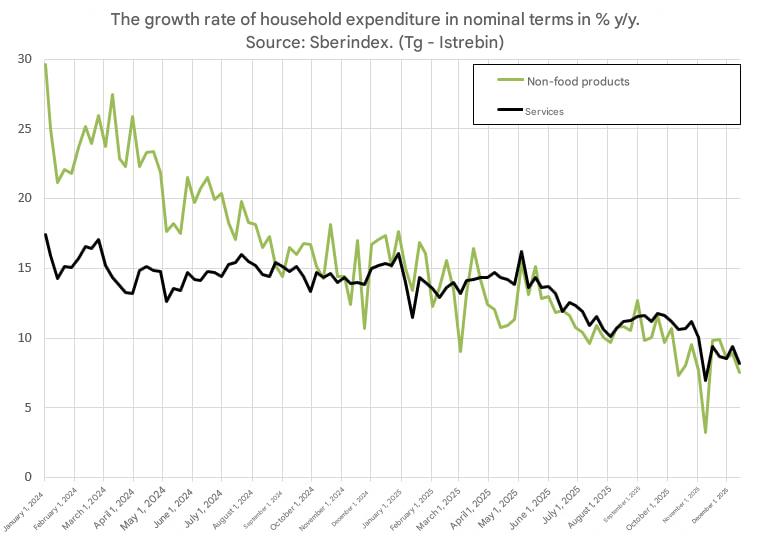
Consumer spending in Russia has begun to decline in real terms.
In December, spending fell by 0.9% year-on-year.
Short thread 1/3
2/3 The largest decline was in spending on food and cafes, bars, and restaurants.
Note that the graph shows the dynamics in nominal terms. This means that in real terms, spending is 7% lower due to inflation.
3/3 The decline in all segments of consumer spending began in earnest in the summer.
Just at this time, information began to emerge about the transition to a four-day workweek at factories and enterprises.
THIS IS A RECESSION !!!
Sensation
Russia's federal budget revenues plummeted 12% year-on-year in October!
Thread
Federal budget revenues in October - 2986 billion rubles (-12%) 1/
Revenue in October: RUB 2,986 billion (-12%)
Of which:
- Oil and gas revenue: RUB 889 billion (-27%)
- Non-oil and gas revenue: RUB 2,096 billion (-4%) 2/
Russia is preparing a large-scale bond issue.
Today, news broke that the Russian Ministry of Finance has registered five new bond issues with a nominal value of 4.25 trillion rubles.
Explanation:
To cover the budget deficit, the Ministry of Finance needs funds. The Ministry 1/
issues bonds and sells them on the market, with the proceeds going to the budget to cover the deficit.
But the problem is that it's impossible to borrow such huge sums on the Russian market.
To do this, the Central Bank issues repo agreements to banks secured by OFZs, so that
2/
the banks can use these funds to buy OFZs again. This is essentially an ISSUE (printing money without any backing). Since, under Ru law, the Central Bank of Rus is not allowed to directly finance the budget, a scheme is being used with intermediary banks. Thus, 4 tril rub
3/