Evening update: I don't think people appreciate what's coming to Texas --> Southeast and the Carolinas over the next 10-12 days. Hide the women and children.
Some of the model solutions are historic / catastrophic and previously thought impossible.
We can handle snowfall -- mostly.
Next 6-days: large area of 12-18" stretches from Oklahoma to the Carolinas along Interstate 40 through Nashville.
This "battle ground" may adjust north/south.
Temperatures will not be warming anytime soon so this snow will remain on ground.
What we can't handle is "heavy freezing rain" and ice accumulation south of this "snow zone"
Boatloads of subtropical moisture out of the Pacific + Gulf of Mexico will overrun Arctic air in the 20s (°F) and fall through it --> Saturday into Sunday.
My favorite weather model variable (precipitable water) shows the collision of extremely cold Arctic air from Canada with tropical air from Pacific/Gulf of Mexico.
The warmer/moist air will go above denser cold pool. Any precipitation falls as snow or freezing rain / sleet.
• • •
Missing some Tweet in this thread? You can try to
force a refresh

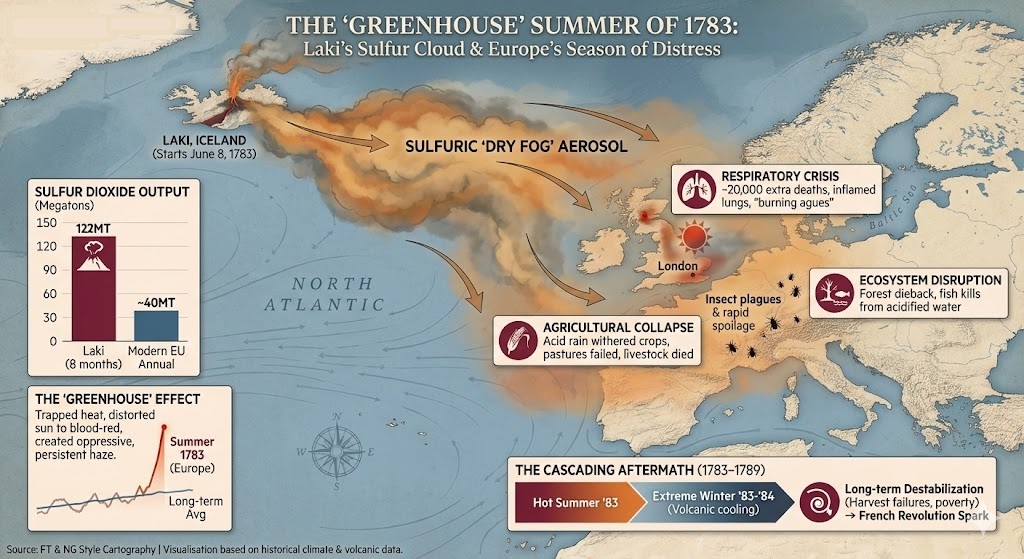
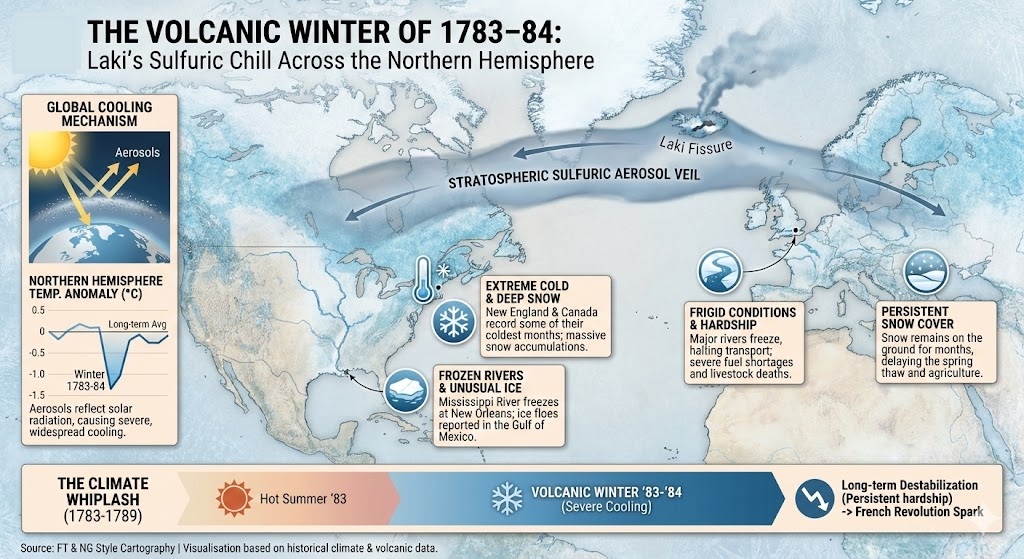
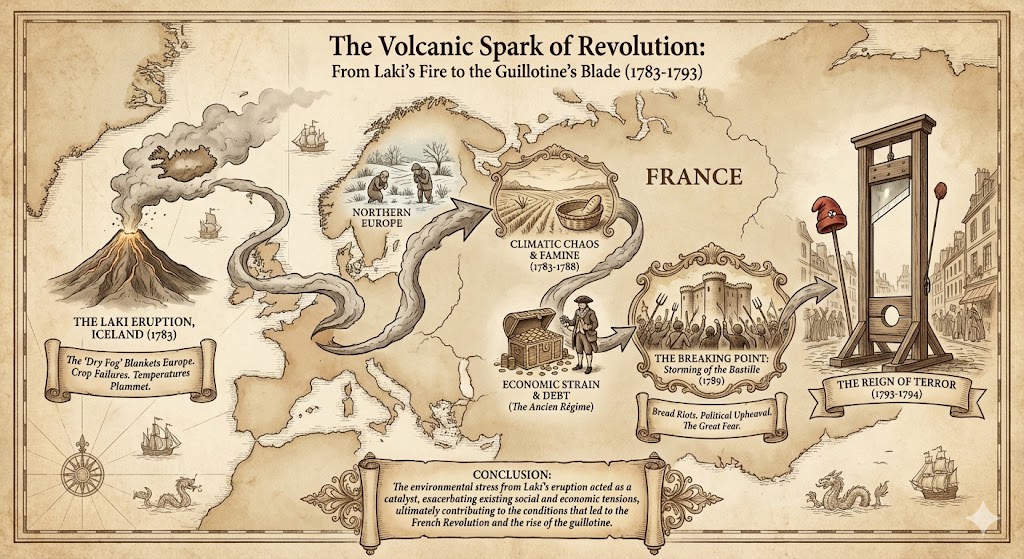
Climate chaos helped spark the French Revolution --> and another massive "oozing" eruption of a flood volcano like Laki in Iceland could greatly disrupt European society today.
The "Greenhouse" Summer of 1783 featured a toxic sulfuric acid cloud over England and Europe.
I'm sure you've seen headlines like this: 'Climate Change Made Hurricane Melissa Four Times More likely'
But what does this mean? You'll be surprised to learn -- "not much" for this particular event -- or really any event.
First, we do not have counterfactual Earths to compare what might have happened had humans not industrialized in the late 1700s. In that world, hurricanes, typhoons, or cyclones caused enormous loss of life due to lack of warning, 18th Century infrastructure, and inability to evacuate quickly.
Second, Jamaica and the rest of the Atlantic basin have experienced devastating hurricanes of major (Cat 3) to Cat 5 intensity especially during colder decades of the Little Ice Age. Paleotempestology research shows MORE tropical cyclones during colder centuries.
Jamaica's written history shows disastrous hurricanes in 1722, 1744, 1780, etc. but before barometers, we can only rely upon news reports, and possibly proxy evidence like silt.
Thus, our task is to determine how a hurricane prior to industrialization or during the 18th Century would have behaved in a similar circumstance as Melissa.
While climate models are typically used to produce counterfactual Earths, they are not particularly reliable for tropical cyclones and have highly uncertain outcomes for the past, present, and future!
For floods in the U.S. and elsewhere, catastrophe models are built to understand the recurrence intervals of extreme events. Hence, we need as much historical data as possible -- as far back in time. That's mainly dependent upon inhabitation by people.
In Europe, we have detailed river level levels back to the 1600s, and can use hundreds of years of records to determine if an event was unprecedented, and provide a more accurate Return Period (RP).
But for hurricanes in the Atlantic, that is not the case. While we have mostly complete records for hurricanes while making landfall -- especially in populated areas -- we have to infer (guess) existence, tracks, and intensity of storms in the open ocean away from shipping lanes, and later in the 1940s and 1950s, outside aircraft observations.
Even then, our records are only "pretty good" when satellites came online in the 1960s with improving quality and coverage in the late 1970s.
Today, we have 1-minute updates at 1-kilometer resolution from GOES-19 geostationary satellite + frequent aircraft sampling. However, even with all of our fancy tools, the hurricane is constantly fluctuating and measurements 15-minutes ago could be not longer representative of the present situation.
But excellent test for climate attribution pseudoscience in the courtroom.
NY Times fails to mention that the car's air conditioner broke, and weather forecasts clearly detailed the day's high temperatures.
The research study that concluded this heat wave event was "virtually impossible" without climate change does not provide an analysis of all "heat dome" events from the past 2,000 years -- instead focusing on model data since 1950.
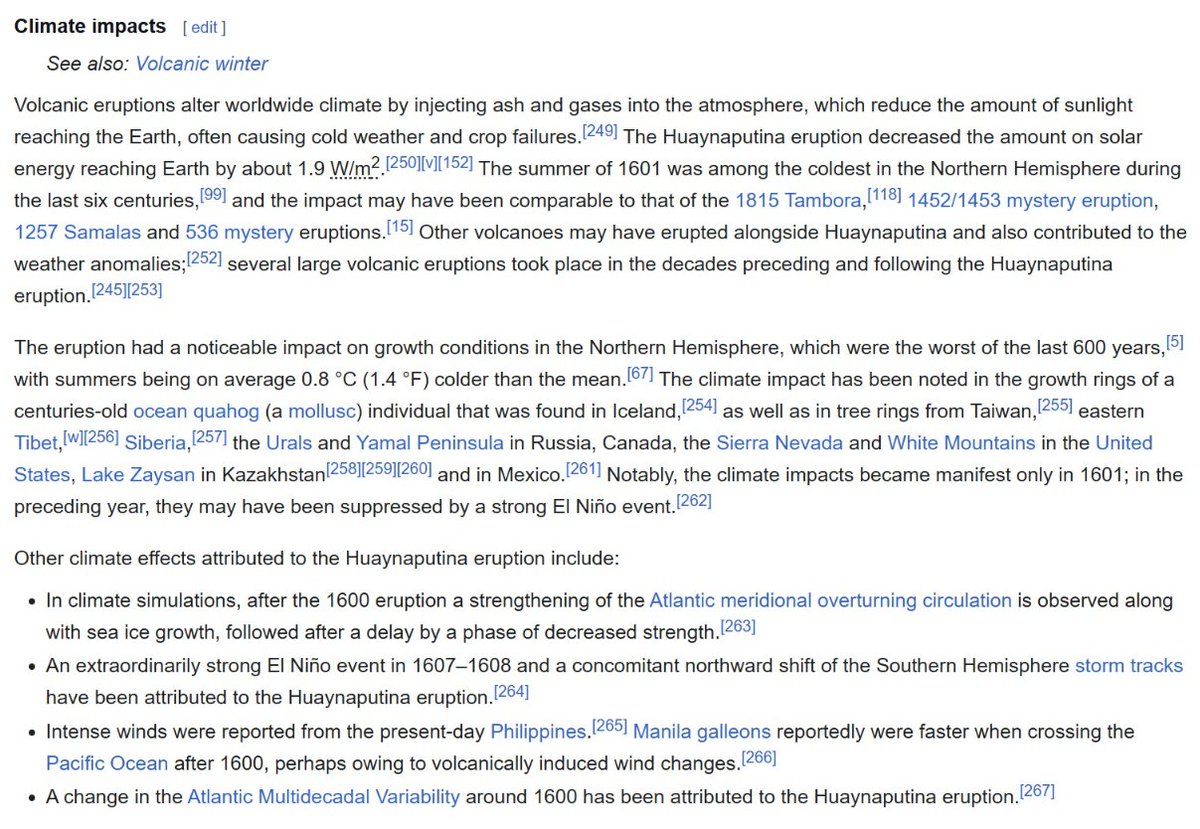
"The summer of 1601 was among the coldest in the Northern Hemisphere during the last six centuries, and the impact may have been comparable to that of the 1815 Tambora, 1452/1453 mystery eruption, 1257 Samalas and 536 mystery eruptions."
214 years from Huaynaputina --> Tambora
We are 210 years since Tambora.
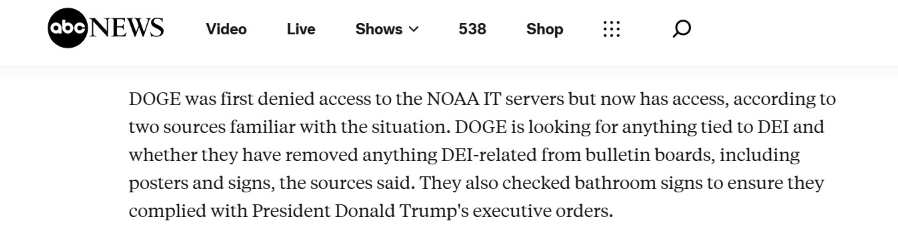
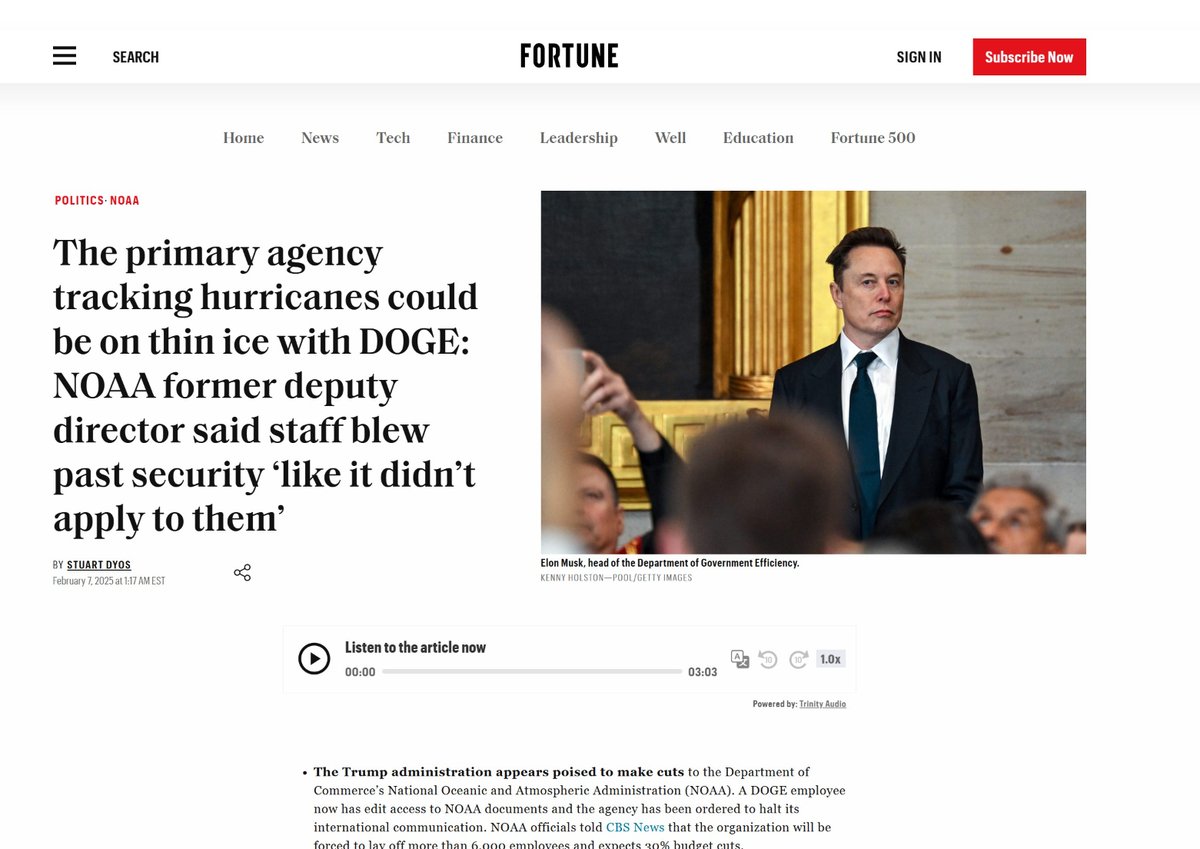
Last week, one OPM (DOGE) employee entered NOAA offices in Silver Spring, Maryland to verify the agency was complying with new DEI related executive orders.
No other agency data was permitted to be accessed.
How do we know? It was reported at the time.
ABC News reported the same information, including it in their headline.
DOGE now has access to NOAA's IT systems; reviewing DEI program, sources say
Then a flurry of misinformation spread like wildfire across other media that was obviously false.
What's going on?
Who is trying to protect themselves from an upcoming external audit?
Huge blow to Washington Post losing star reporter Jennifer Rubin.
Weirdly enough, her last column blamed Republicans for the LA fires.
Rubin's column was tasked with marketing climate change as the proximate cause of the LA fires, and the vast majority of media and Democrat politicians have jumped aboard the bandwagon.
Anyone with a cursory knowledge of Southern California climate variability and the seasonal cycle of Santa Ana winds would wonder if increasing drought was drying the brush in the hills.
Precipitation data is easy enough, especially for an LA Times journalist, to find in databases and chart up.
Observational rainfall datasets do not show a trend. Annual rainfall is highly variable.