1/ Measures to prevent Russia using the Starlink system for drone navigation have prompted alarm among Russian warbloggers. They fear losing Starlink altogether at the front line, and warn that Russia's Starlink alternative is years away from implementation. ⬇️ 

2/ In recent weeks, Russia has increasingly been using Starlink terminals embedded in kamikaze drones to carry out attacks far behind the front lines in Ukraine. Russian soldiers also rely heavily on Starlink for battlefield communications.
https://x.com/Gerashchenko_en/status/2017187906117345788
3/ Although Russia is embargoed from importing Starlink terminals, it has a well-established grey import pipeline which involves purchasing and registering terminals abroad, then importing them into Russia for use in Ukraine.
4/ Starlink is now reportedly resetting terminals if they are detected travelling faster than 90 km/h (55 mph), preventing their use on Russian drones, while Ukraine is also creating a register of terminals in use by its forces so that they can be whitelisted.
5/ The effect, according to the Russian Telegram channel Rybar, is that "terminals stop transmitting internet signals after two minutes of flight at that speed, but they become operational again after a reboot."
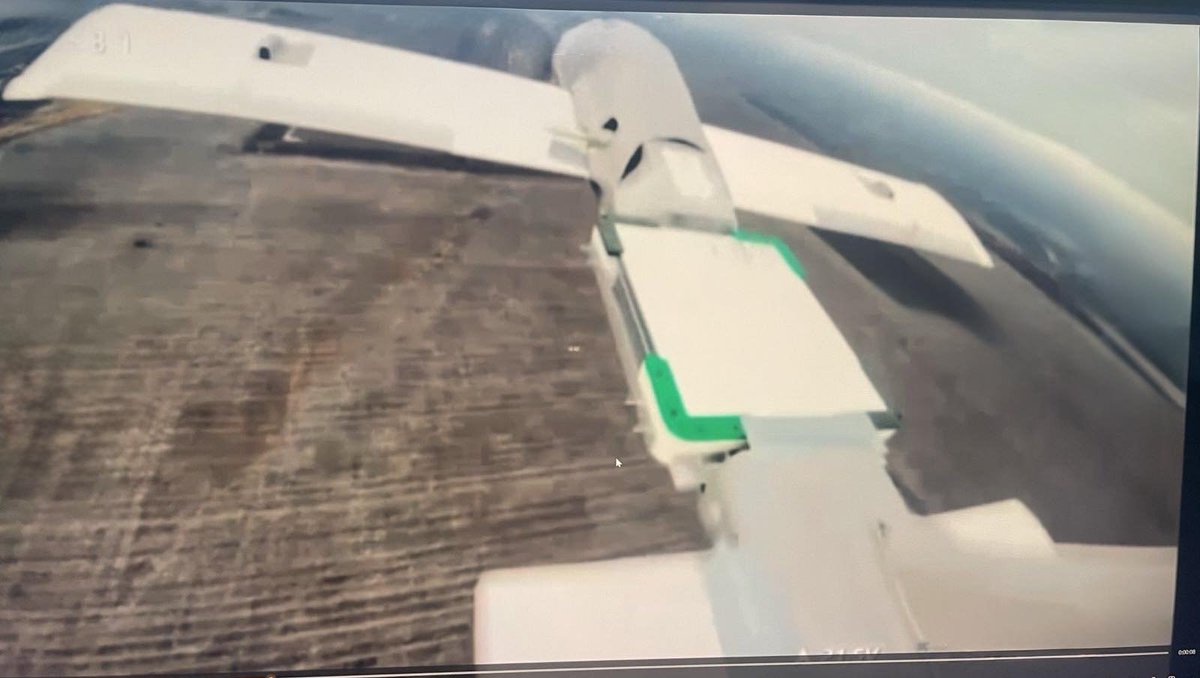
6/ "This has had the most severe impact on drones like the Molniya and BM-35, which, equipped with Starlinks, successfully struck ships near Odesa and Ukrainian Armed Forces airfields."
7/ 'UAV Developer' says that the impact will be limited, due to the limited nature of the reset and the availability of alternative navigation systems:
"Stop panicking. Exceeding the speed limit of 90 km/h requires two minutes, and only then does it trigger a ban and a restart."
"Stop panicking. Exceeding the speed limit of 90 km/h requires two minutes, and only then does it trigger a ban and a restart."
8/ "Accordingly, those with the best Comet [Russian satellite communications system] will win. This can lead the drone to the target and activate Starlink in the final stage, unleashing fury on Satan's minions during those two minutes.
9/ "This means that most scenarios for destroying the depths of Ukraine will remain unchanged, they'll just become slightly less convenient.
Plus, no one has cancelled the use of mesh networking on attack drones.
Plus, no one has cancelled the use of mesh networking on attack drones.
10/ "Plus, no one has cancelled antenna hacking.
Overall, the advantage is still on our side; the Ukrainians are worse off.
Overall, the advantage is still on our side; the Ukrainians are worse off.
11/ "I'll add that we initially lived without Starlink, and for us, it was an occasional bonus that would appear and then disappear, and we developed alternative communication methods. And we have our own high-class satellite navigation (Comet)."
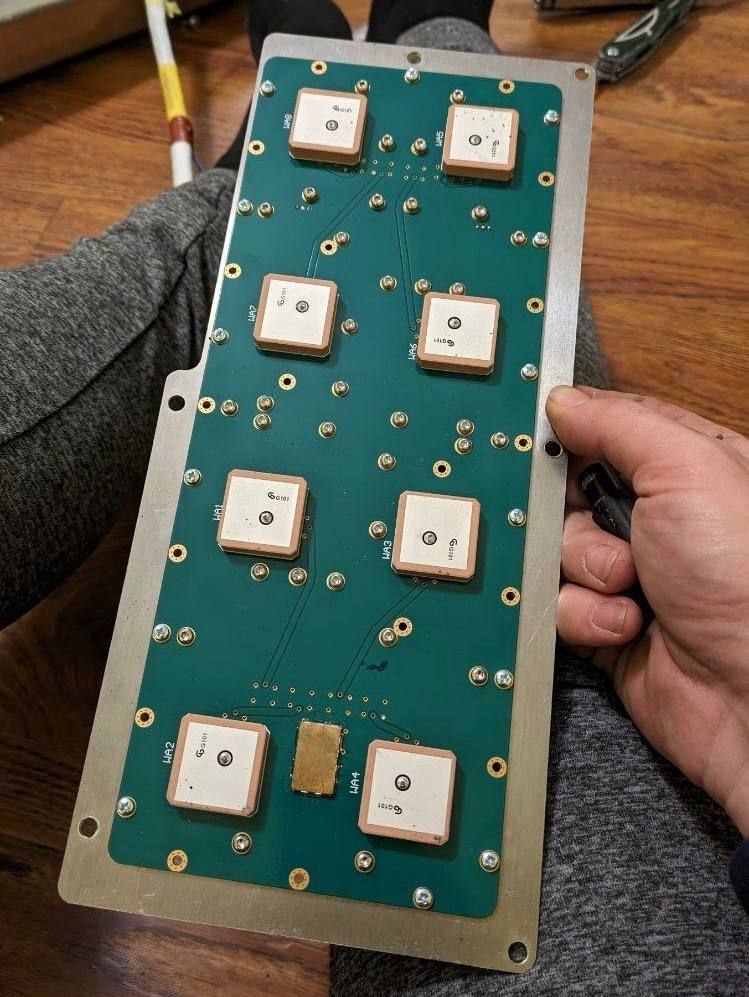
12/ 'Military Informant' is not so sanguine, pointing out that "the enemy notes that this is a temporary solution, and that "whitelists" of Ukrainian terminals are currently being developed."
13/ "This will mean that only those Starlinks previously entered into a special database will be able to operate over Ukraine, which will naturally negate their use on Russian drones.
14/ "It is currently difficult to say whether this system can be circumvented in the future, as was the case with previous speed restrictions.If not, the era of the BM-35 and Molniya-2 on Starlink will prove a bright but brief blip against the backdrop of the…
15/ …Ukrainian Armed Forces' overall superiority in drones with this type of satellite communication. Furthermore, there's a high risk that whitelisting will shut down not only drone terminals, but all Starlinks used by the Russian Armed Forces for frontline internet."
16/ 'Military Informant' and others highlight that Russia is only reliant on Starlink because it has failed to develop its own communications satellite constellation. There is no end in sight to this ongoing failure:
17/ "This is the Rassvet project from Bureau 1440. According to the announced plans, the launch of the first 16 low-orbit broadband internet satellites was supposed to take place in 2025 , but this never happened.
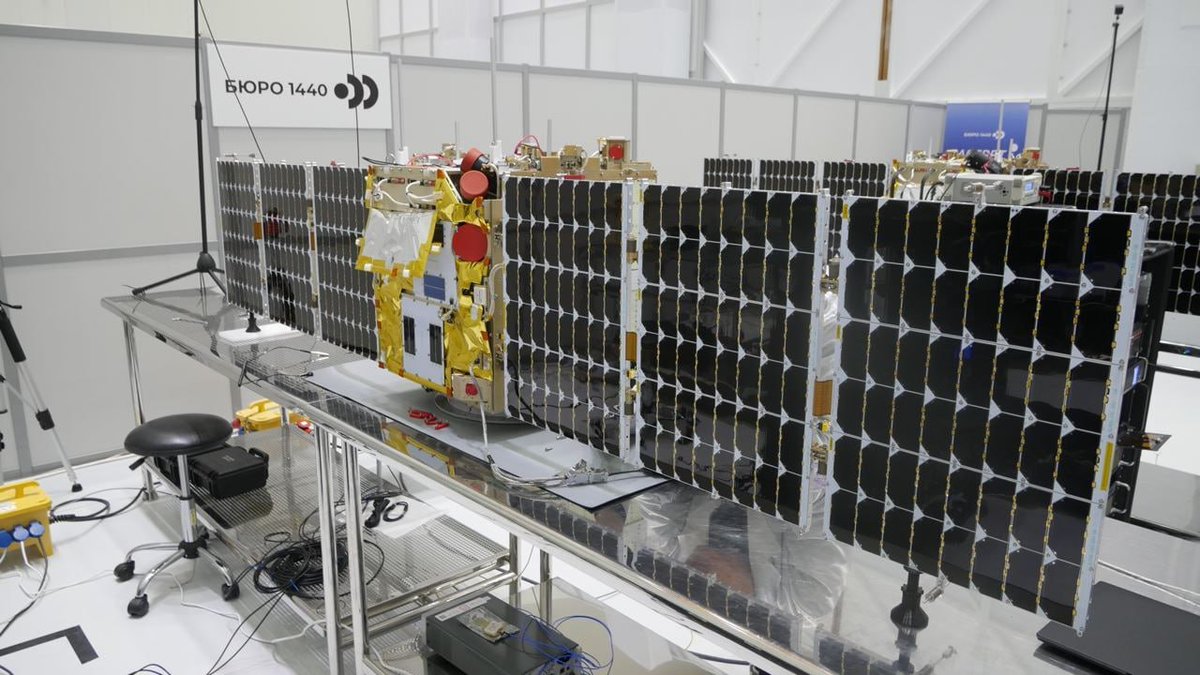
18/ "The launch was postponed to 2026, according to Kommersant, due to a lack of satellites.
Now, the entire roadmap for deploying this satellite constellation, which was originally planned for 156 satellites in 2026, 292 in 2027, and 318 in 2028, is in question.
Now, the entire roadmap for deploying this satellite constellation, which was originally planned for 156 satellites in 2026, 292 in 2027, and 318 in 2028, is in question.
19/ "But even if the deadlines are met, commercial operation of this satellite internet network is not planned until 2027, when there will be approximately 250 satellites in orbit.
20/ "Therefore, if something were to happen right now that completely deprived the Russian Armed Forces of operational Starlink terminals, not just for launching drones, but for regular frontline internet and communications,…
21/ …there would simply be nothing to quickly replace them with. A domestic equivalent isn't yet ready.
22/ "Of course, it's impossible to compare Rassvet with Starlink in terms of the number of possible satellites and coverage—Elon Musk's brainchild already has over 9,000 satellites in flight, while the domestic equivalent estimates its maximum constellation to be 10 times…
23/ …smaller—only about 900 satellites. However, even a few hundred satellites, with inferior speed and latency characteristics, could already provide the Russian Army with the critical internet needed for frontline communications and command and control."
24/ "The question is whether this program will be implemented in practice, even in the coming years, as planned."
Maxim Kalashnikov complains that the Russian government has neglected the project for years, spending tens of billions of dollars on costly vanity projects:
Maxim Kalashnikov complains that the Russian government has neglected the project for years, spending tens of billions of dollars on costly vanity projects:
25/ "But they didn't delay with the pointless Sochi Olympics, wasting $50 billion on it. Then they threw the same amount of money into equally useless football stadiums for the 2018 World Cup. [And] on the enormous temple of the Armed Forces of the Russian Federation.
26/ "Apparently, priests and football players are supposed to replace satellite communications. Lord, how tired I am of this dominance of super-expensive window dressing! Which is now taking a great toll." /end
Sources:
🔹 t.me/rybar/77140
🔹 t.me/UAVDEV/10196
🔹 t.me/milinfolive/16…
🔹 t.me/milinfolive/16…
🔹 t.me/roy_tv_mk/18445
🔹 t.me/rybar/77140
🔹 t.me/UAVDEV/10196
🔹 t.me/milinfolive/16…
🔹 t.me/milinfolive/16…
🔹 t.me/roy_tv_mk/18445
• • •
Missing some Tweet in this thread? You can try to
force a refresh