
1/4 This must be read.
Ukrainians on Threads are sharing moments from the war that broke them — moments they will carry for the rest of their lives.
This is the reality of war. This pain must be heard.
Below are translations.
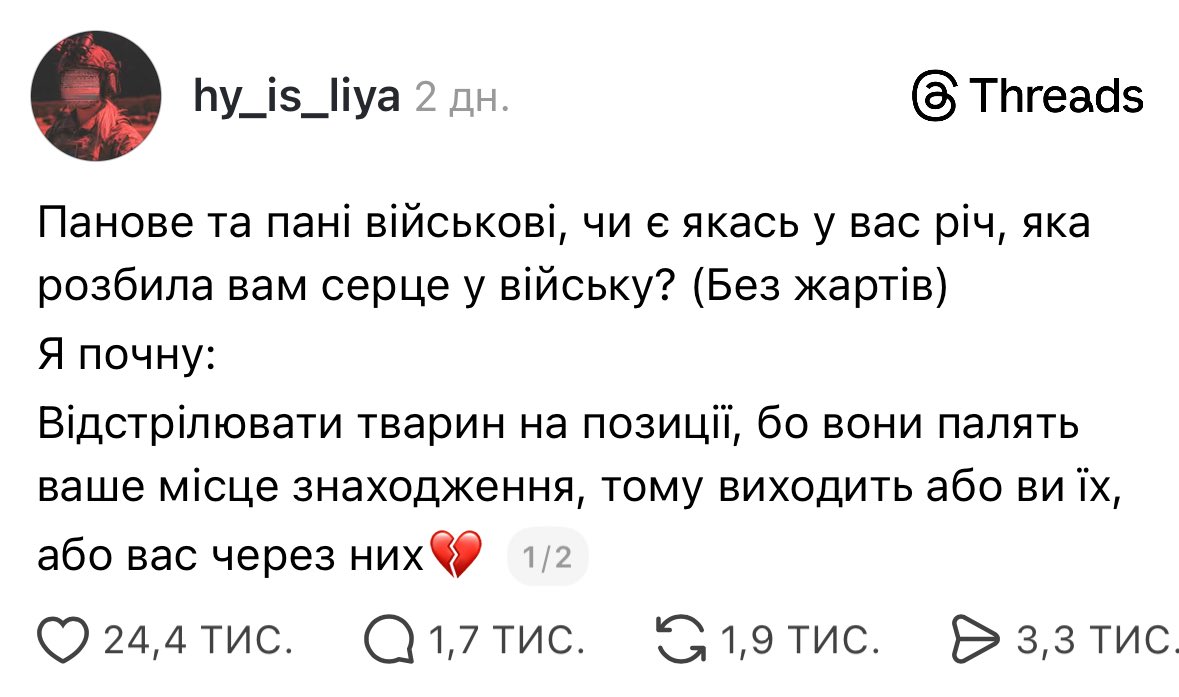
1.“To fellow soldiers: is there something that broke you during the war? (No jokes)
I’ll start.
Shooting animals on your position because they expose it — meaning it’s either them, or you, because of them.” 💔
2.“You’re lying in a shallow trench, looking into the eyes of a wounded man five meters away, out on the street.
A drone is hanging above him, waiting — for someone to crawl out to him, or for him to try to crawl to cover.
And you both understand it. That’s why he doesn’t move.
He just lies there, bleeding, looking at me.
He died.
And I never managed to help him.”
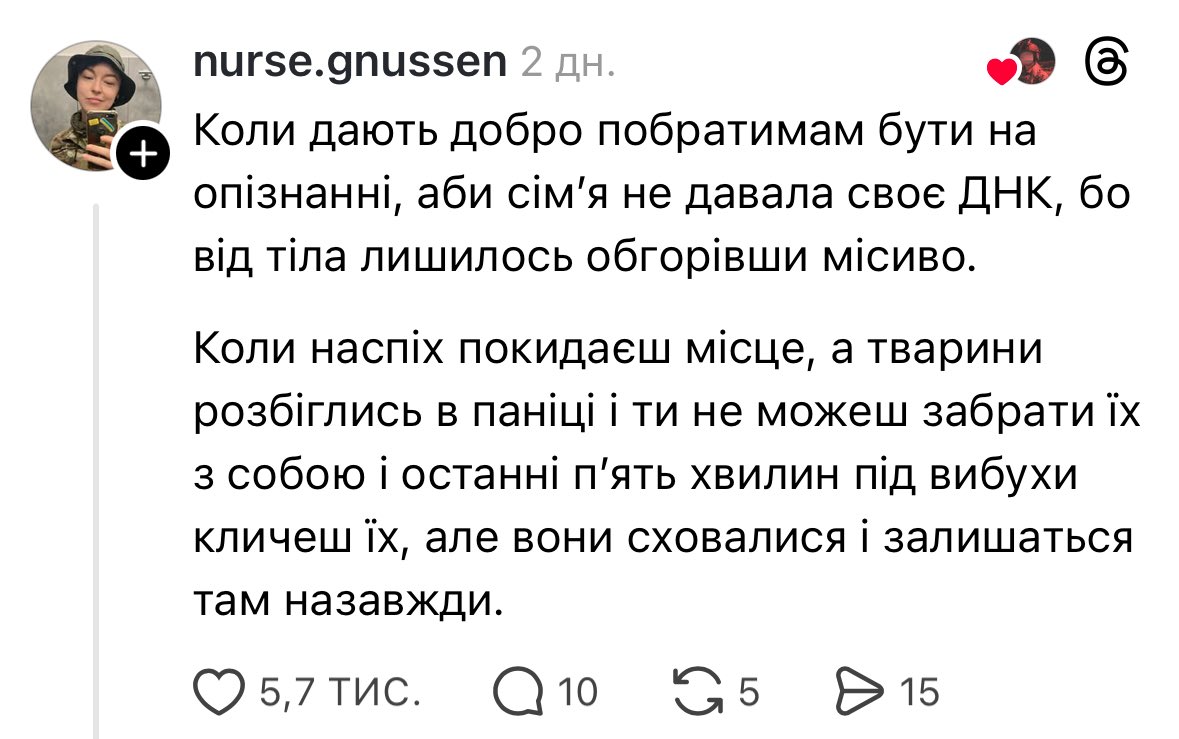
3.“When permission is given to identify a body so the family won’t have to provide DNA — because all that remains is a burned fragment.
When you’re forced to leave in a hurry, animals scatter in panic and you can’t take them with you.
In the last five minutes, under explosions, you call out to them — but they stay hidden. And remain there forever.”
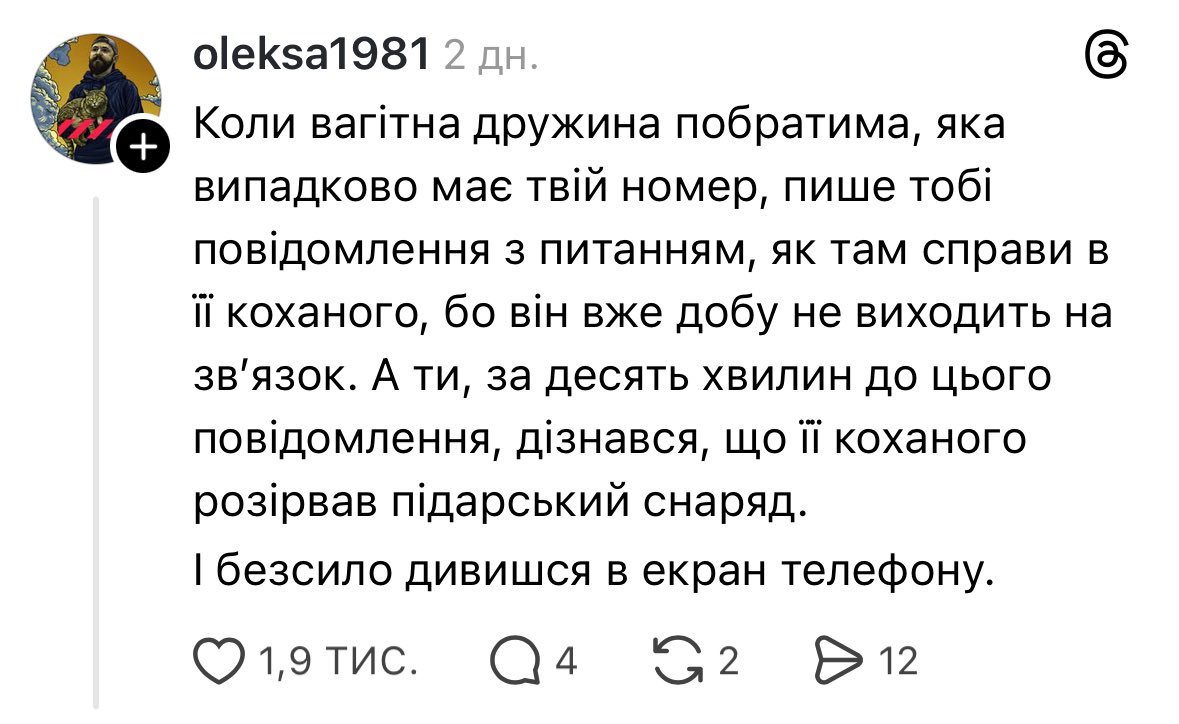
4.“When a pregnant wife of a fellow soldier — who happens to have your number — texts asking how her husband is, because he hasn’t been in touch for a day.
And ten minutes before her message, you already learned that her husband was torn apart by an artillery shell.
You look at the phone screen, powerless.”
Ukrainians on Threads are sharing moments from the war that broke them — moments they will carry for the rest of their lives.
This is the reality of war. This pain must be heard.
Below are translations.
1.“To fellow soldiers: is there something that broke you during the war? (No jokes)
I’ll start.
Shooting animals on your position because they expose it — meaning it’s either them, or you, because of them.” 💔
2.“You’re lying in a shallow trench, looking into the eyes of a wounded man five meters away, out on the street.
A drone is hanging above him, waiting — for someone to crawl out to him, or for him to try to crawl to cover.
And you both understand it. That’s why he doesn’t move.
He just lies there, bleeding, looking at me.
He died.
And I never managed to help him.”
3.“When permission is given to identify a body so the family won’t have to provide DNA — because all that remains is a burned fragment.
When you’re forced to leave in a hurry, animals scatter in panic and you can’t take them with you.
In the last five minutes, under explosions, you call out to them — but they stay hidden. And remain there forever.”
4.“When a pregnant wife of a fellow soldier — who happens to have your number — texts asking how her husband is, because he hasn’t been in touch for a day.
And ten minutes before her message, you already learned that her husband was torn apart by an artillery shell.
You look at the phone screen, powerless.”

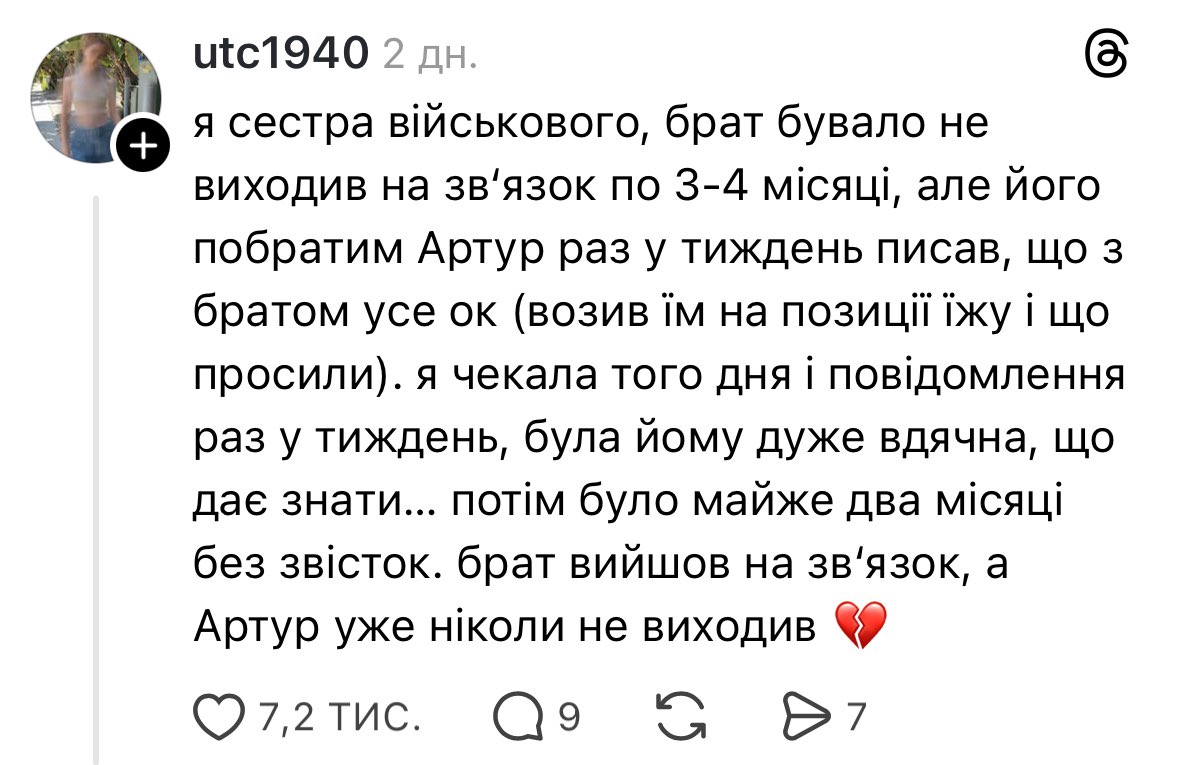
5. “I’m a soldier’s sister. Sometimes my brother wouldn’t be in touch for three or four months. But his comrade Artur would message me once a week, saying my brother was alive, that everything was okay, that he was bringing them food to their positions.
I waited for those messages. I was deeply grateful to him for letting me know.
Then there were almost two months with no news. My brother finally got in touch.
Artur never did again.”
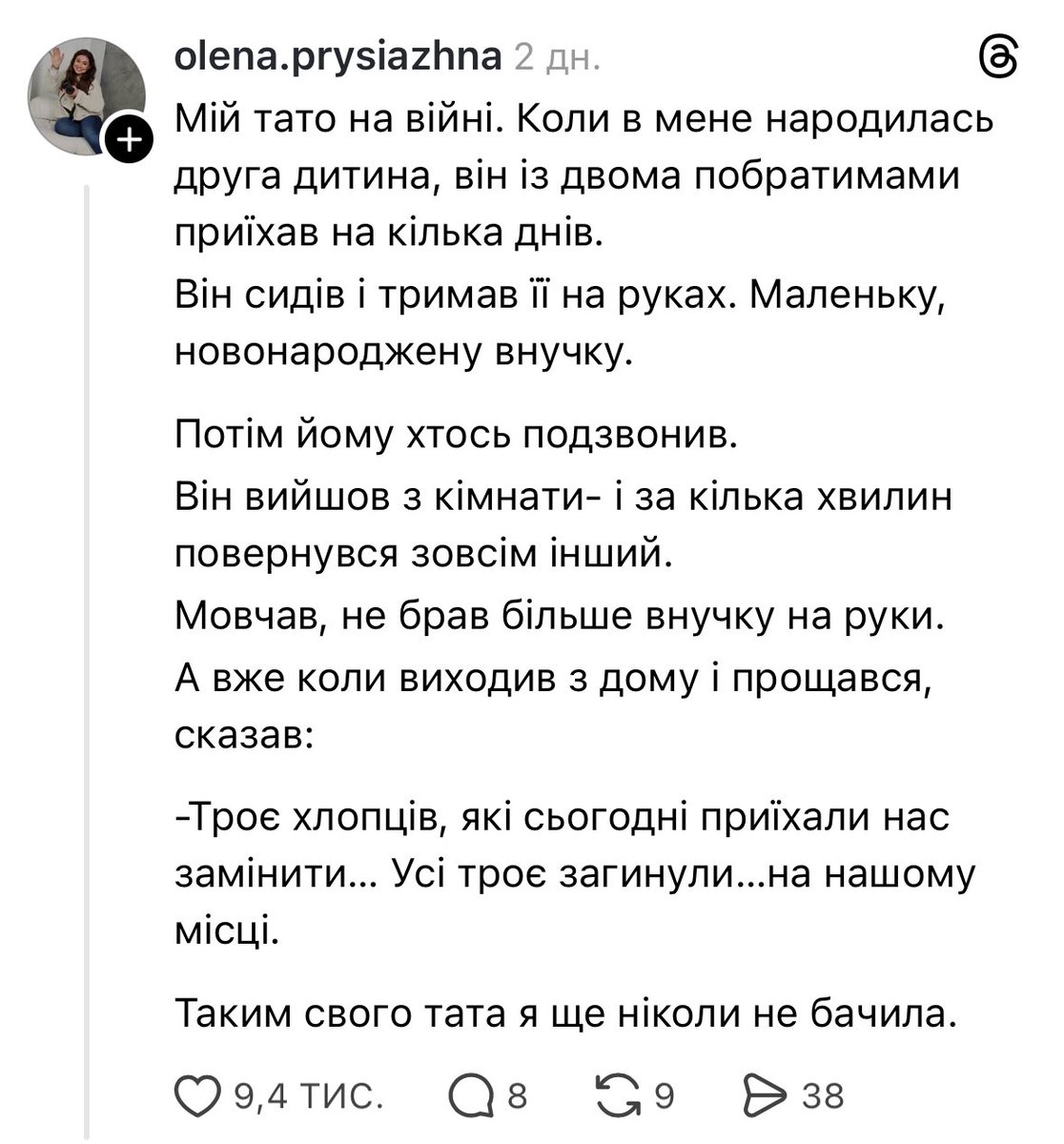
6. “My dad is at war. When my second child was born, he came home for a few days with two fellow soldiers.
He sat there, holding his newborn granddaughter in his arms.
Then someone called him. He stepped out of the room.
A few minutes later he came back completely different. Silent. He didn’t hold her again.
When he was leaving and saying goodbye, he said:
‘The three guys who arrived today to replace us… all three were killed at our position.’
I had never seen my father like that before.”
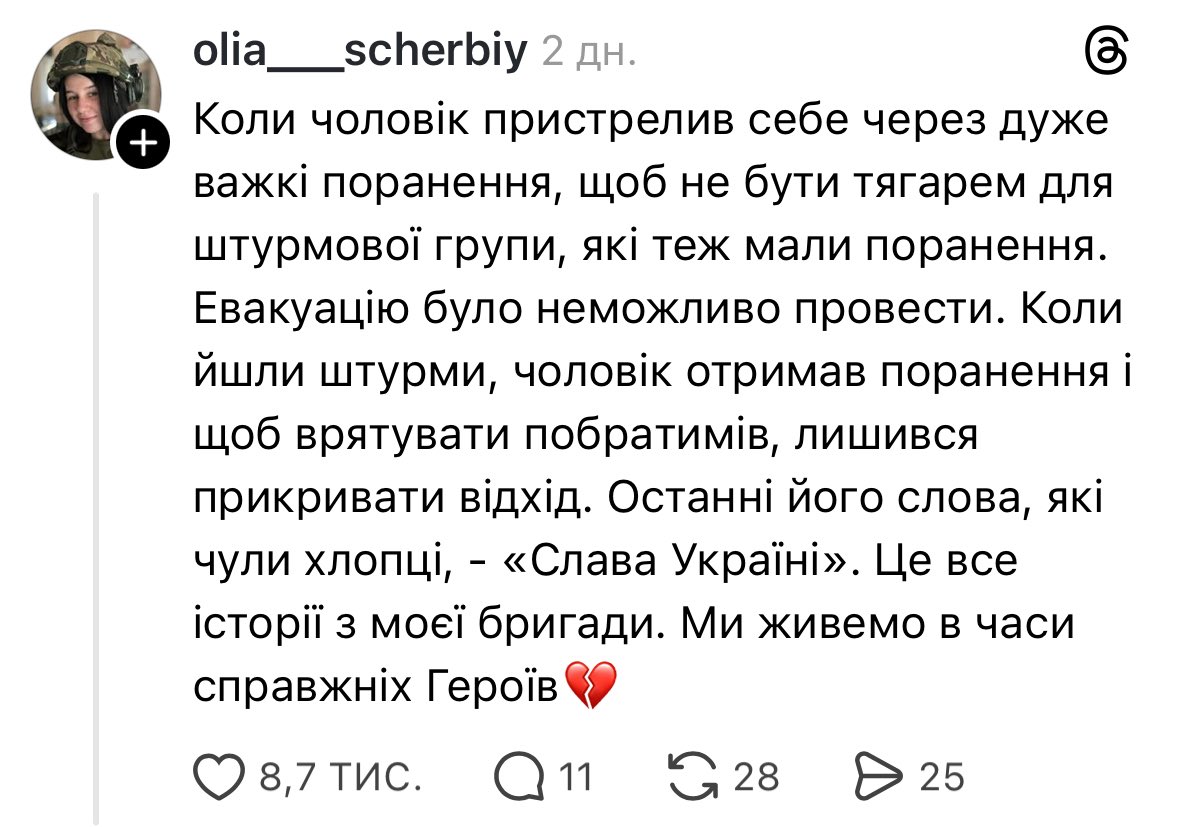
7. “When a man shоt himself because his wounds were too severe and he didn’t want to be a burden on the assault group — they were wounded too. Evacuation was impossible.
During the assault, he was wounded but stayed behind to cover the retreat and save his comrades.
The last words the guys heard from him were: ‘Slava Ukraini.’
These are stories from my brigade. We live in the time of real heroes.”
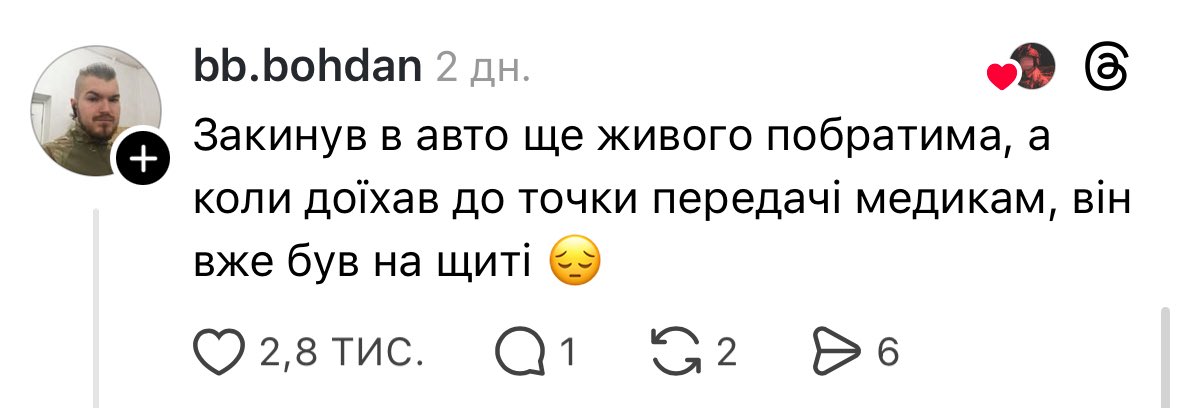
8. “I put my comrade into the car while he was still alive.
By the time I reached the medics, he was already gone.”
I waited for those messages. I was deeply grateful to him for letting me know.
Then there were almost two months with no news. My brother finally got in touch.
Artur never did again.”
6. “My dad is at war. When my second child was born, he came home for a few days with two fellow soldiers.
He sat there, holding his newborn granddaughter in his arms.
Then someone called him. He stepped out of the room.
A few minutes later he came back completely different. Silent. He didn’t hold her again.
When he was leaving and saying goodbye, he said:
‘The three guys who arrived today to replace us… all three were killed at our position.’
I had never seen my father like that before.”
7. “When a man shоt himself because his wounds were too severe and he didn’t want to be a burden on the assault group — they were wounded too. Evacuation was impossible.
During the assault, he was wounded but stayed behind to cover the retreat and save his comrades.
The last words the guys heard from him were: ‘Slava Ukraini.’
These are stories from my brigade. We live in the time of real heroes.”
8. “I put my comrade into the car while he was still alive.
By the time I reached the medics, he was already gone.”
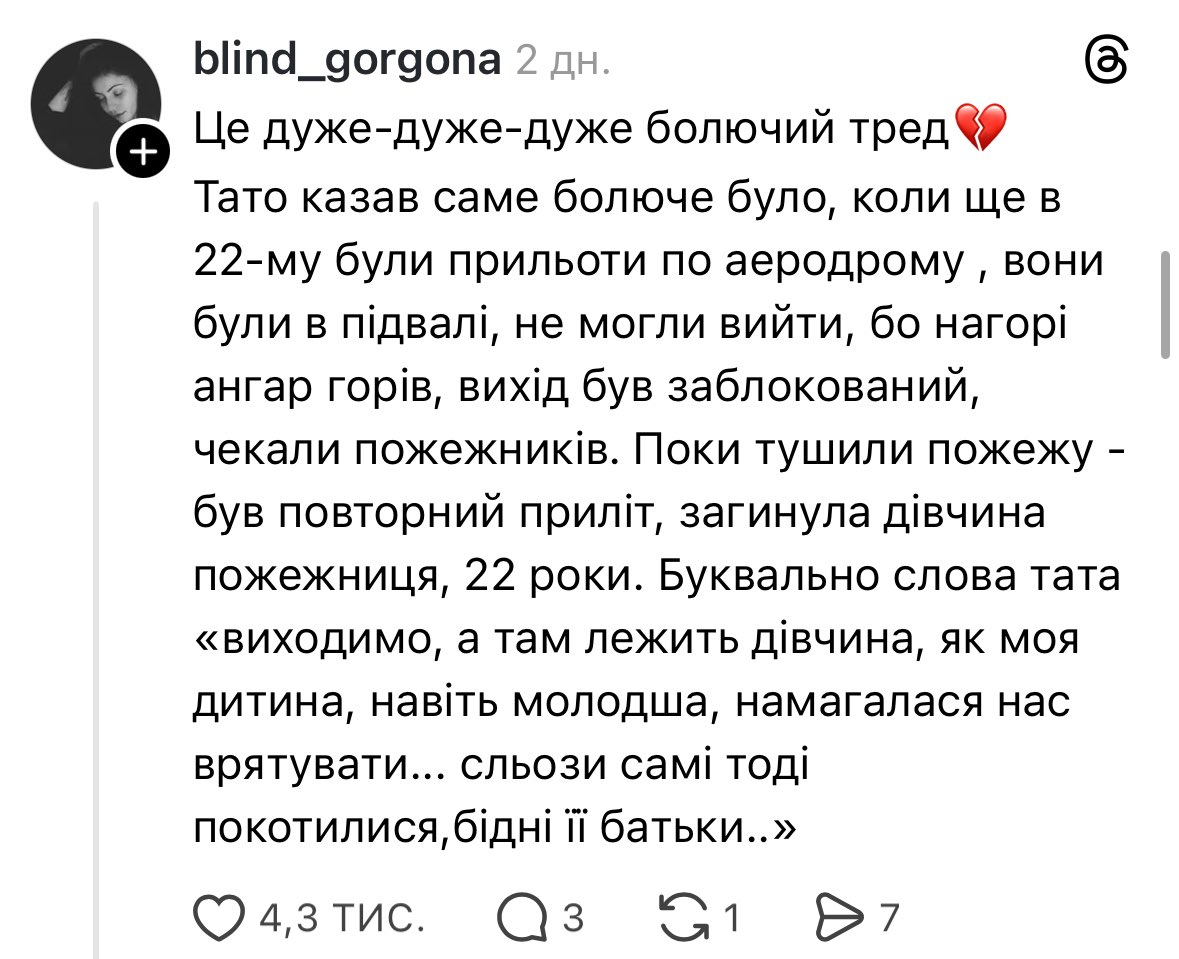
9. “This thread is unbearably painful.
My dad said the worst moment was back in 2022, when there were strikes on the airfield. They were trapped in a basement, unable to get out because a hangar above was on fire and the exit was blocked. They were waiting for firefighters.
While the fire was being put out, there was another strike. A firefighter was killed — a 22-year-old woman.
My dad’s words: ‘We came out, and there she was lying there — a girl, like my own child, even younger. She was trying to save us…’
The tears came on their own. Her poor parents.”
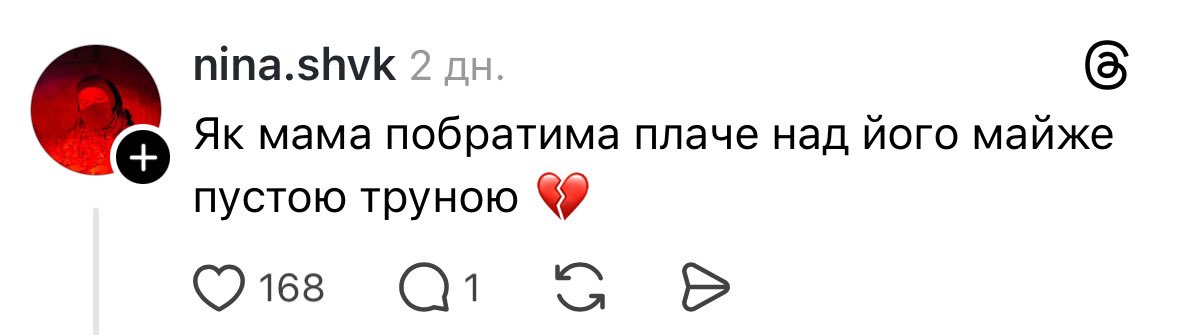
10. “A soldier’s mother crying over his almost empty coffin.”
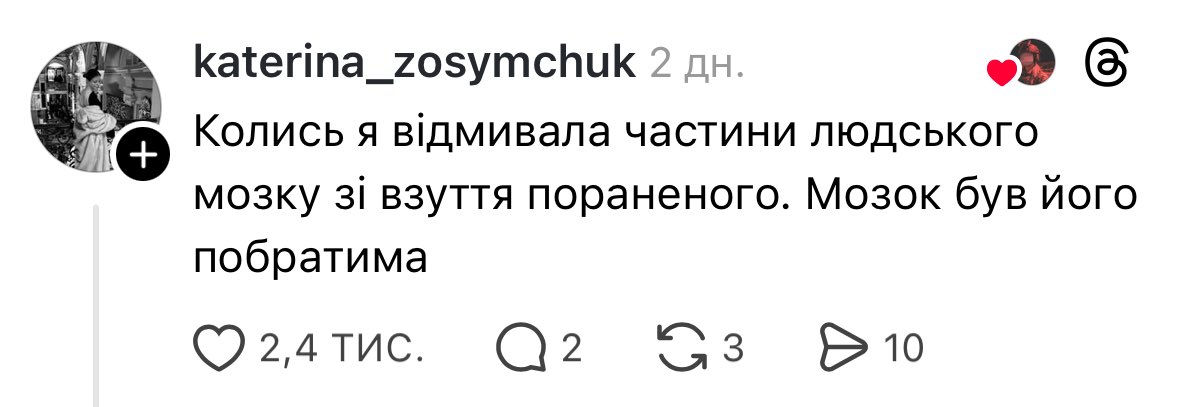
11. “Once I was washing pieces of human brain out of a wounded soldier’s boot.
The brain belonged to his comrade.”
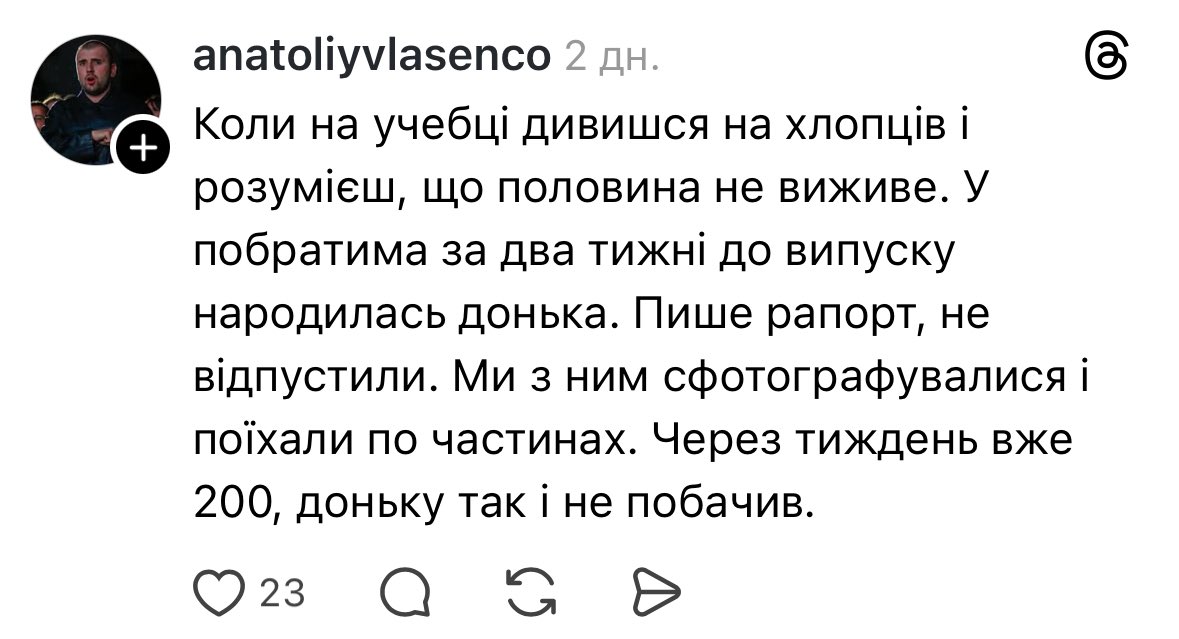
12. “During training, you look at the guys and realize that half of them won’t survive.
One of them had a daughter born two weeks before graduation. He wrote a request for leave — it was denied.
We took photos together and were sent to our units.
A week later, he was gone. He never saw his daughter.”
My dad said the worst moment was back in 2022, when there were strikes on the airfield. They were trapped in a basement, unable to get out because a hangar above was on fire and the exit was blocked. They were waiting for firefighters.
While the fire was being put out, there was another strike. A firefighter was killed — a 22-year-old woman.
My dad’s words: ‘We came out, and there she was lying there — a girl, like my own child, even younger. She was trying to save us…’
The tears came on their own. Her poor parents.”
10. “A soldier’s mother crying over his almost empty coffin.”
11. “Once I was washing pieces of human brain out of a wounded soldier’s boot.
The brain belonged to his comrade.”
12. “During training, you look at the guys and realize that half of them won’t survive.
One of them had a daughter born two weeks before graduation. He wrote a request for leave — it was denied.
We took photos together and were sent to our units.
A week later, he was gone. He never saw his daughter.”
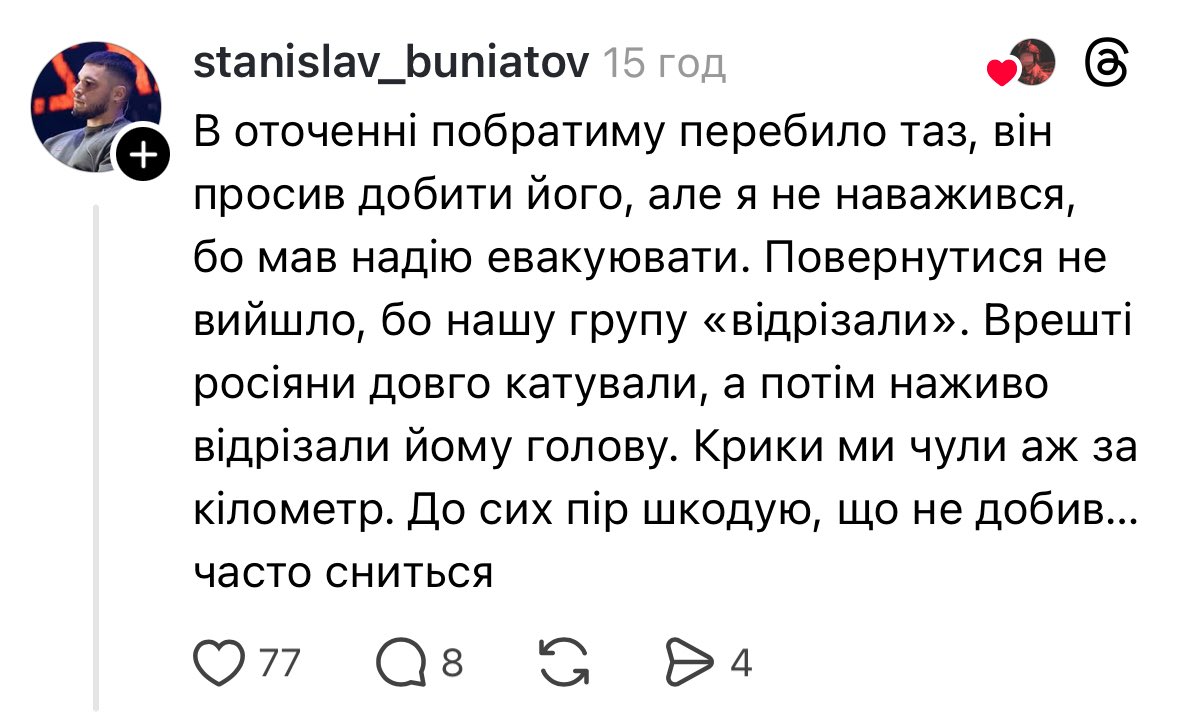
13. A fellow soldier had his pelvis shattered.
He begged me to kill him, but I didn’t dare — I still hoped we could evacuate him.
We couldn’t return. Our unit was cut off.
The russians tortured him for a long time and then beheaded him alive.
We could hear his screams from kilometers away.
I still regret not kіllіng him myself. It comes back in dreams.
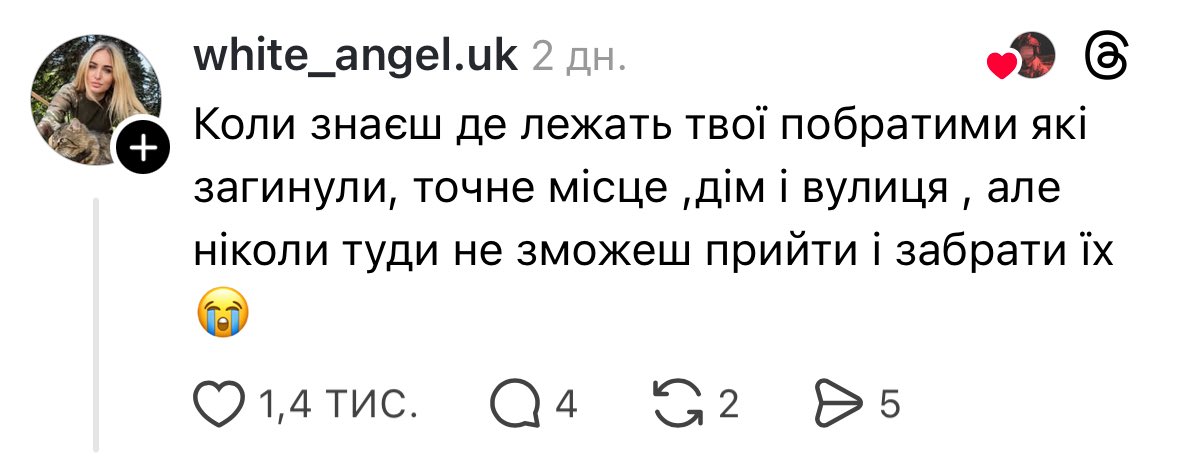
14. Knowing exactly where your brothers-in-arms were killed — the house, the street —
and knowing you will never be able to go there and bring them back.
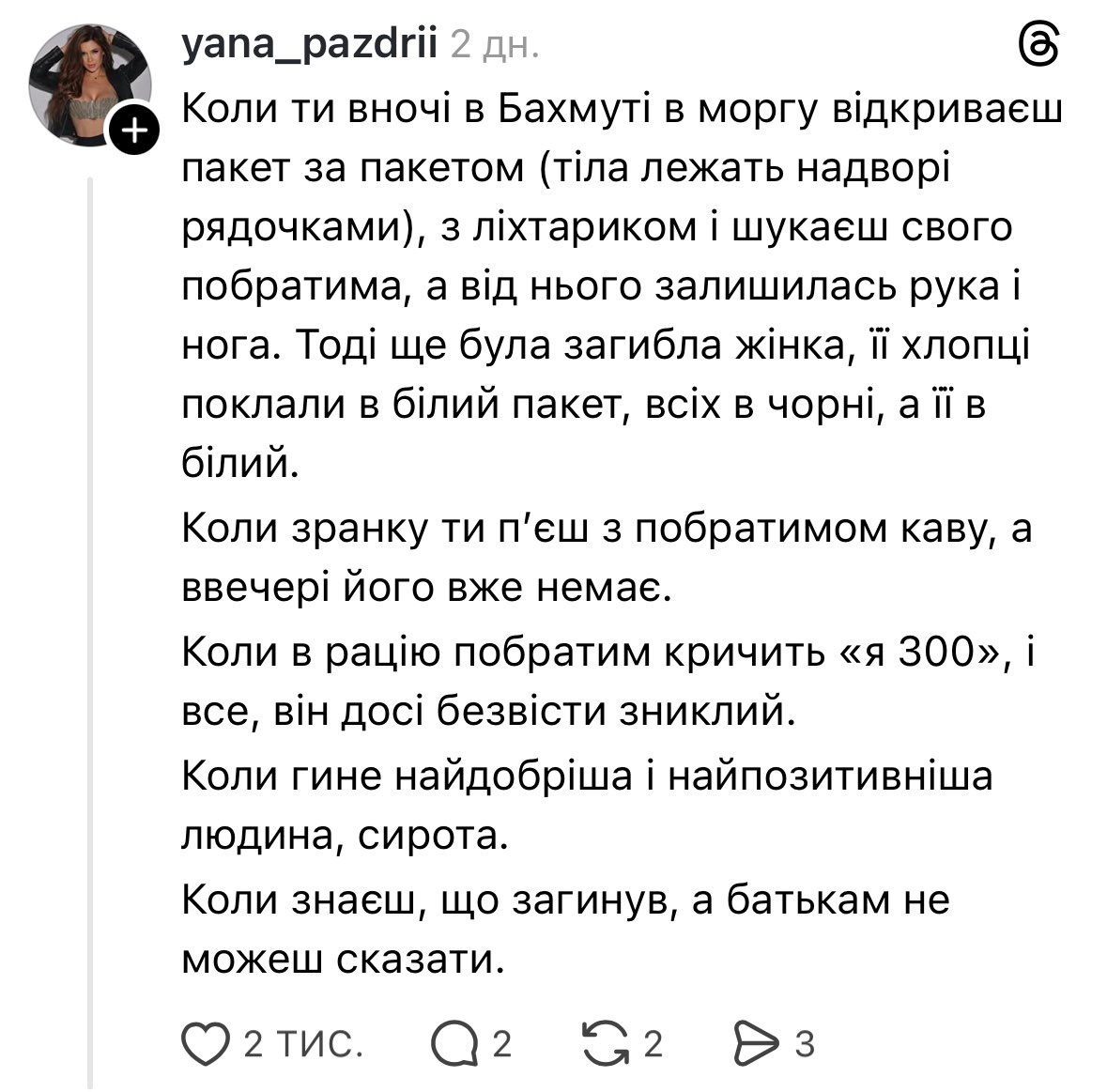
15. At night in Bakhmut, in a morgue, opening body bag after body bag with a flashlight — bodies laid outside in rows — looking for your brother-in-arms.
And finding only his arm and leg.
That same night, a woman died. They put her into a white bag. Everyone else — into black ones.
Having coffee together in the morning — by evening, he’s gone.
Hearing “I’m wounded” over the radio — and then nothing.
Knowing someone is dead, and not being able to tell their parents.
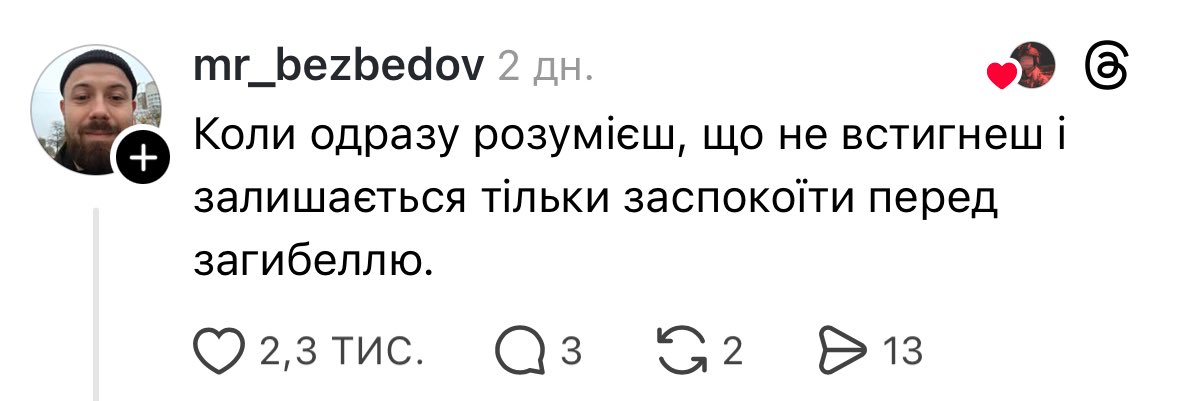
16. The moment you realize you won’t make it in time —
and all you can do is try to calm them before they dіe.
He begged me to kill him, but I didn’t dare — I still hoped we could evacuate him.
We couldn’t return. Our unit was cut off.
The russians tortured him for a long time and then beheaded him alive.
We could hear his screams from kilometers away.
I still regret not kіllіng him myself. It comes back in dreams.
14. Knowing exactly where your brothers-in-arms were killed — the house, the street —
and knowing you will never be able to go there and bring them back.
15. At night in Bakhmut, in a morgue, opening body bag after body bag with a flashlight — bodies laid outside in rows — looking for your brother-in-arms.
And finding only his arm and leg.
That same night, a woman died. They put her into a white bag. Everyone else — into black ones.
Having coffee together in the morning — by evening, he’s gone.
Hearing “I’m wounded” over the radio — and then nothing.
Knowing someone is dead, and not being able to tell their parents.
16. The moment you realize you won’t make it in time —
and all you can do is try to calm them before they dіe.
• • •
Missing some Tweet in this thread? You can try to
force a refresh






