1/ Russian forces in Ukraine are experiencing a devastating loss of connectivity as the Starlink terminals they rely upon are systematically shut off. With Russia's own Starlink alternative years away from implementation, Russian warbloggers say the army is in crisis. ⬇️ 
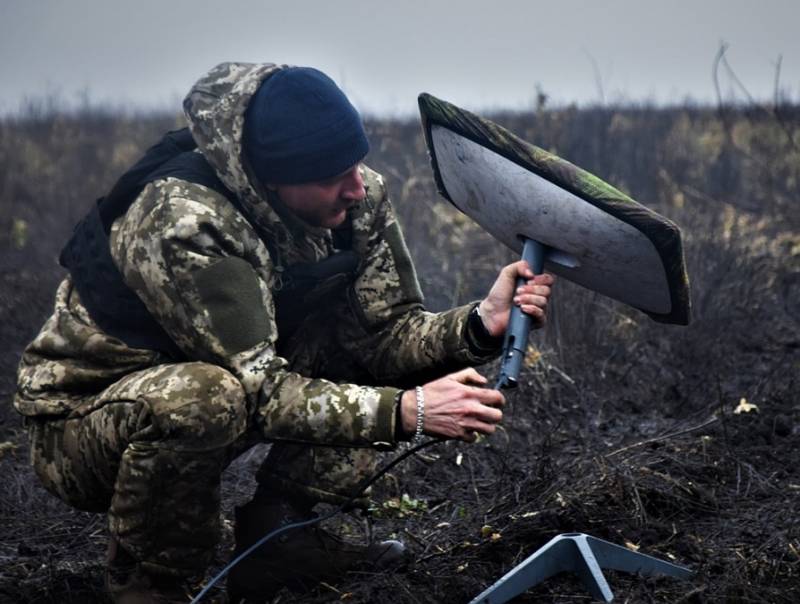
2/ The Russian army has, like Ukraine's, become dependent on Starlink for battlefield communications. Unlike Ukraine, it cannot import Starlink terminals legally and has to rely on grey imports activated in third countries.
3/ After Russian UAV makers began installing Starlink in kamikaze UAVs, SpaceX responded by implementing technical measures to disconnect fact-moving terminals and Ukraine began whitelisting its own terminals – with all non-whitelisted terminals being disabled.
4/ Disabling has now taken place on a large scale across Russia-occupied areas of Ukraine. Russian warbloggers say that it is having a disastrous effect on the Russian army's communications and complain that it has been far too complacent about its reliance on an American system.
5/ 'Two Majors' says that a "massive terminal failure... began yesterday evening at the front."
6/ The blog accuses "adored fascist Elon Musk" of serving "the interests of the Ukrainian Armed Forces" by cutting off Starlink: "The "genius" being ravaged by liberals has once again assisted the Ukrainian Armed Forces in killing our soldiers."
7/ 'Belarusian Silovik' reports: "Almost 90% of my subordinate units are currently without internet. Let's hope it's a massive Starlink outage, but it looks very much like a test before introducing satellite dish regulation over Ukrainian territory."
8/ "It's about to suddenly become clear that units cannot operate effectively without communications. That'll be news to some in high places."
9/ 'Alex Parker Returns' highlights the operational impact: "This will hit the forward assault groups hardest, for example in Kupyansk. They have lost all means of communication with the mainland [Russian-held territory]. Alas."
10/ "Communication has been lost across all branches of the Russian Armed Forces. Right now, we are back to where we were at the start of the special military operation in 2022, when there was a complete lack of coordination between units, which led to the well-known outcome."
11/ Roman Alekhin sees little room for optimism:
"This is all very bad, especially considering the huge need for communications at the front. And now it's crucial to at least equip the front with radios, so that command and control of the frontline doesn't collapse completely."
"This is all very bad, especially considering the huge need for communications at the front. And now it's crucial to at least equip the front with radios, so that command and control of the frontline doesn't collapse completely."
12/ 'Private Gubarev' comments:
"While the internet on Gazprom's satellite dishes at key communications hubs and command posts is more or less working, UAV crews, SIGINT/EW crews, firepower, and infantry positions are now without internet."
"While the internet on Gazprom's satellite dishes at key communications hubs and command posts is more or less working, UAV crews, SIGINT/EW crews, firepower, and infantry positions are now without internet."
13/ "This means no broadcasts, no battlefield imagery, etc. Now, no matter what brilliant decisions commanders make on the ground, we'll simply lose out on the speed of decision-making and execution on the battlefield."
14/ Few alternatives are available, even within Russia's border areas, because of the ongoing jamming of mobile Internet connections to hinder Ukrainian drone attacks. 'Vault No. 8' comments:
15/ "Musk took us back to the first half of 2023. Russian satellite internet is unreasonably expensive and slow.
The difference is that back then, people would cross the border into Great Russia for fast mobile internet. Now, it's jammed in many border areas."
The difference is that back then, people would cross the border into Great Russia for fast mobile internet. Now, it's jammed in many border areas."
16/ As 'Military Informant' notes, "along the front lines and in border areas, there is simply no alternative to this satellite internet in the Russian Armed Forces, and much, including combat command and control, was tied to it and taken for granted."
17/ 'Belarusian Silovik' laments the short-term thinking that led to reliance on Starlink:
"Many also relied on a simple and cheap solution—Musk's terminals. So simple that they've started using them as a one-way consumable—even on UAV platforms. Convenient, efficient, fast."
"Many also relied on a simple and cheap solution—Musk's terminals. So simple that they've started using them as a one-way consumable—even on UAV platforms. Convenient, efficient, fast."
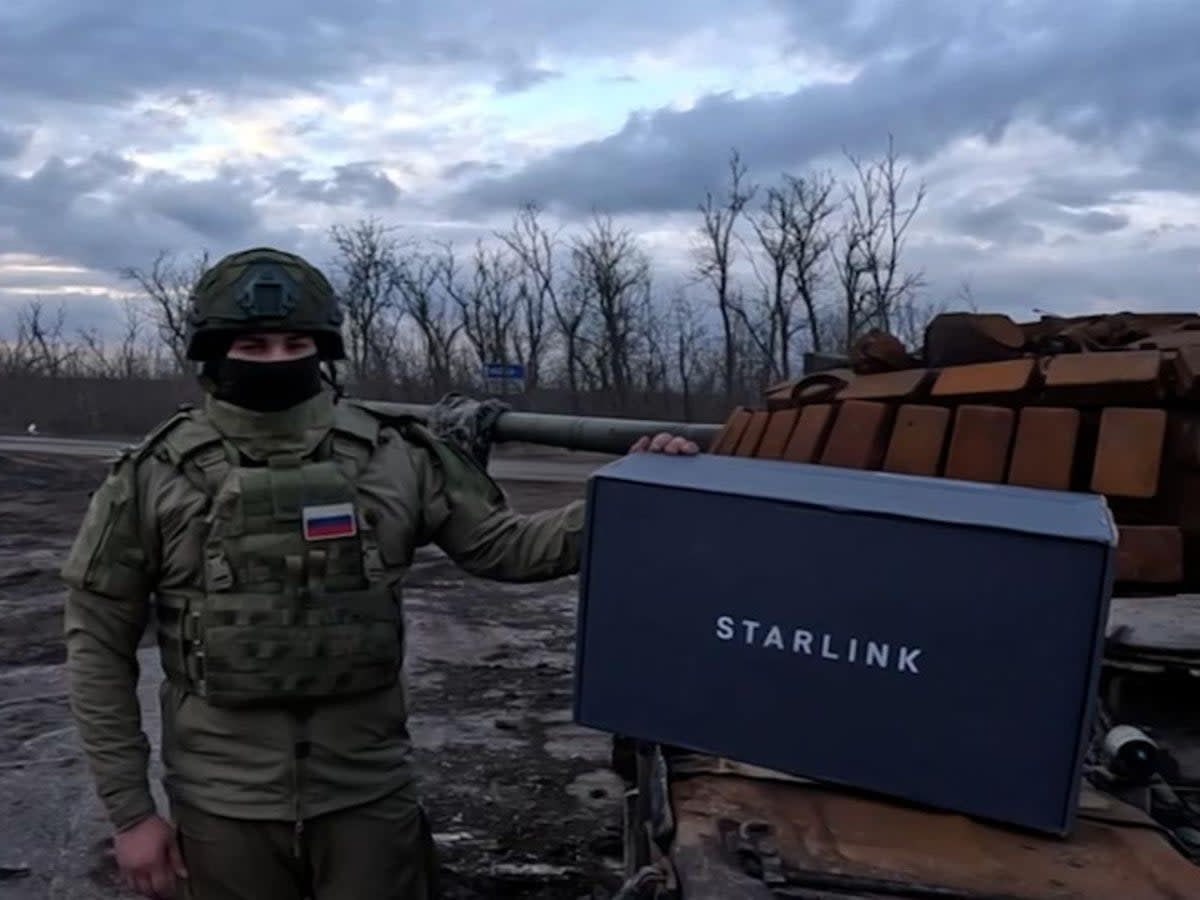
18/ "And here's the key: the temporary solution was supposed to be a bridge until they could plug the hole with their own communications and process. But it wasn't.
19/ "The result was a classic:
🔴 American software in the office is an "information security threat";
🔴 American satellite internet in combat positions—give me two.
🔴 American software in the office is an "information security threat";
🔴 American satellite internet in combat positions—give me two.
20/ "Now it will be very interesting to hear explanations from "high places" as to why the communications problem hasn't been voiced as a problem for years. Because formally, it "didn't exist"—it was covered up with a workaround.
21/ "An unofficial, proactive one, "from the ground up," but a workable one.
Those who were simultaneously laying fibre optics, building "bridges," maintaining backup channels—that is, not swearing by Starlink alone as a religion—will suffer the least."
Those who were simultaneously laying fibre optics, building "bridges," maintaining backup channels—that is, not swearing by Starlink alone as a religion—will suffer the least."
22/ Many bloggers accuse the Russian Ministry of Defence of having done nothing to provide an alternative to Starlink. 'Two Majors' says that using Starlink "was an easy way out compared to creating something of their own in space, laying out perpetually fraying fiber optic…
23/ …cables, setting up "bridges," or even working extensively with digital stations to organize the transmission of small data packets."
24/ 'Alex Parker Returns' asks: "What, other than their own utter stupidity, prevented Belousov, Bakanov, Chemezov, and Manturov from creating their own satellite communications system for the army during this time, rather than relying on communications from a NATO country,…
25/ …that same potential adversary? Musk is a man of limited power, bound by obligations to the CIA and the Pentagon, yet he still managed to give us a head start in these four years. So what did we get in the end?
26/ Nothing but another projection of stupidity from a wise politician."
'The Ghost of Novorossiya' compares Elonk Musk to a drug pusher:
'The Ghost of Novorossiya' compares Elonk Musk to a drug pusher:
27/ "Getting the entire system hooked on Starlink, letting it simmer, penetrating the core communications of divisions and armies, and then bringing it down—that's classic.🤷
28/ "An even greater classic is to take advantage of the collapse by implementing operational and even tactical combinations.🤷🤷"
He points out that even when Russian communications specialists tried to develop alternatives to Starlink, they were frozen out by superiors:
He points out that even when Russian communications specialists tried to develop alternatives to Starlink, they were frozen out by superiors:
29/ "Smart communications specialists in the Russian Armed Forces, realizing that the advantage of unadministered, universal access to Starlinks would inevitably end at the most inconvenient moment, thought about this in advance and took appropriate action.
30/ "They were clad in fibre optic cables, experimenting with radio bridges, and searching in every way for more labour-intensive, but still autonomous and reliable workarounds.
31/ "Did they receive any approval from higher up? Support? Did this translate into stimulating synergies between them and the military-industrial complex? They were simply looked at as idiots.
32/ "And some looked at me that way too, even when, most recently, last year I was sounding the alarm, warning: either you control the resource, or the resource controls you."
'Military Informant' tells his readers not to blame Musk or Trump:
'Military Informant' tells his readers not to blame Musk or Trump:
33/ "These aren't the guys who hooked the entire frontline army on what amounts to a direct enemy's technology, making the Russian Armed Forces dependent on a single central switch in Washington.
34/ "These aren't the guys who did absolutely nothing for years to change this, to scrape together at least a rough equivalent or find an alternative access method.
35/ "These aren't the guys who took the situation for granted for years, using Starlink and assuming it would always be this way—that satellite internet was as common as air."
36/ 'DSHRG Rusych' says that their Starlinks have all stopped working, but a silver lining is that it will force officers – who are often conspicuously absent from the front line – to move closer to the front to communicate with their men.
37/ "It looks like the Starlinks are all gone (they've stopped working for us).
Our satellite constellation overhead isn't visible yet. We'll probably have to install Wi-Fi bridges.
But that will probably have its advantages.
Our satellite constellation overhead isn't visible yet. We'll probably have to install Wi-Fi bridges.
But that will probably have its advantages.
38/ "The junior and mid-level command staff, accustomed to watching the poor [UAV] pilots' broadcasts, will move closer to the front (to those very same Mavic control stations). And they'll be, so to speak, closer to their subordinate personnel." /end
Sources:
🔹 t.me/dva_majors/876…
🔹 t.me/apwagner/54904
🔹 t.me/apwagner/54919
🔹 t.me/apwagner/54925
🔹 t.me/belarusian_sil…
🔹 t.me/belarusian_sil…
🔹 t.me/Alekhin_Telega…
🔹 t.me/vault8pro/53740
🔹 t.me/dva_majors/876…
🔹 t.me/apwagner/54904
🔹 t.me/apwagner/54919
🔹 t.me/apwagner/54925
🔹 t.me/belarusian_sil…
🔹 t.me/belarusian_sil…
🔹 t.me/Alekhin_Telega…
🔹 t.me/vault8pro/53740
🔹 t.me/milinfolive/16…
🔹 t.me/milinfolive/16…
🔹 t.me/dshrg2/4563
🔹 t.me/ghost_of_novor…
🔹 t.me/ghost_of_novor…
🔹 t.me/milinfolive/16…
🔹 t.me/dshrg2/4563
🔹 t.me/ghost_of_novor…
🔹 t.me/ghost_of_novor…
• • •
Missing some Tweet in this thread? You can try to
force a refresh