In 2015, Scott Adams made a “crazy” prediction that most people thought was impossible.
He said Trump had a 98% chance of becoming president, and he made that call on a single observation.
The winning attribute that made Scott confident in Trump’s victory was his one-of-a-kind persuasion skills.
While political betting markets dismissed Trump’s chances, Adams argued—using his background in persuasion and hypnosis—that Trump was the most psychologically effective candidate in the race and therefore favored to win.
He built a massive following by showing how persuasion, not policy, drives political outcomes.
That insight proved correct. But it also revealed something darker. 🧵
He said Trump had a 98% chance of becoming president, and he made that call on a single observation.
The winning attribute that made Scott confident in Trump’s victory was his one-of-a-kind persuasion skills.
While political betting markets dismissed Trump’s chances, Adams argued—using his background in persuasion and hypnosis—that Trump was the most psychologically effective candidate in the race and therefore favored to win.
He built a massive following by showing how persuasion, not policy, drives political outcomes.
That insight proved correct. But it also revealed something darker. 🧵
After Trump’s victory, Adams pivoted to punditry—and during COVID, even he struggled to see the truth.
Scott strongly endorsed the vaccines, vaccinated himself, and publicly belittled followers who refused. Many later derisively called him “Clot Adams.”
In January 2023, Adams admitted—on video—that he’d been wrong and that the anti-vaxxers were correct. But he framed it as luck: the right people just happened to distrust the government, while “all the data” supposedly pointed intelligent analysts toward vaccination.
That framing matters. It reveals how even skilled observers of persuasion can mistake marketing consensus for truth—and how the same system that manufactures medical certainty also hides the limits of medicine, until reality forces a reckoning.
Scott strongly endorsed the vaccines, vaccinated himself, and publicly belittled followers who refused. Many later derisively called him “Clot Adams.”
In January 2023, Adams admitted—on video—that he’d been wrong and that the anti-vaxxers were correct. But he framed it as luck: the right people just happened to distrust the government, while “all the data” supposedly pointed intelligent analysts toward vaccination.
That framing matters. It reveals how even skilled observers of persuasion can mistake marketing consensus for truth—and how the same system that manufactures medical certainty also hides the limits of medicine, until reality forces a reckoning.
Last May, Scott told the world something most people never say out loud until it’s unavoidable: he had terminal, metastatic prostate cancer.
He openly stated he planned to use California’s medically assisted dying to reduce suffering.
He also shut down speculation—saying he had already tried fenbendazole and ivermectin and had no interest in continuing them.
The reaction was explosive.
People weren’t just debating treatment choices—they were watching, in real time, what a protracted, modern death actually looks like.
For many, it shattered comforting abstractions about both cancer and mortality.
He openly stated he planned to use California’s medically assisted dying to reduce suffering.
He also shut down speculation—saying he had already tried fenbendazole and ivermectin and had no interest in continuing them.
The reaction was explosive.
People weren’t just debating treatment choices—they were watching, in real time, what a protracted, modern death actually looks like.
For many, it shattered comforting abstractions about both cancer and mortality.
What followed quietly exposed the system.
Scott pursued multiple cutting-edge conventional therapies recommended by elite oncologists. At one point, when Kaiser abruptly cut off access, the Trump administration intervened directly on his behalf—an extraordinary step that highlighted what patients without influence routinely face when care is denied.
But even with connections, advocacy, and top-tier medicine, nothing worked.
Scott said his goodbyes publicly and died at home in January.
This wasn’t a failure of effort. It was a confrontation with medicine’s limits—made visible as millions watched.
Scott pursued multiple cutting-edge conventional therapies recommended by elite oncologists. At one point, when Kaiser abruptly cut off access, the Trump administration intervened directly on his behalf—an extraordinary step that highlighted what patients without influence routinely face when care is denied.
But even with connections, advocacy, and top-tier medicine, nothing worked.
Scott said his goodbyes publicly and died at home in January.
This wasn’t a failure of effort. It was a confrontation with medicine’s limits—made visible as millions watched.
This information comes from the work of medical researcher @MidwesternDoc. For all the sources and details, read the full report below:
midwesterndoctor.com/p/the-medicali…
midwesterndoctor.com/p/the-medicali…
Our modern society doesn’t just fear death—it’s been trained to outsource it.
Ivan Illich warned that conditioning people to believe they always need doctors to recover would create endless medical demand that could never be satisfied.
He even traced how death was transformed—from an intimate, ever-present companion to a medical enemy to be conquered.
From the Renaissance Danse Macabre to ICU-defined “brain death,” dying has been stripped of autonomy and handed to institutions.
And the result isn’t progress—it’s social control, commodified death, and populations alienated from our own mortality.
Ivan Illich warned that conditioning people to believe they always need doctors to recover would create endless medical demand that could never be satisfied.
He even traced how death was transformed—from an intimate, ever-present companion to a medical enemy to be conquered.
From the Renaissance Danse Macabre to ICU-defined “brain death,” dying has been stripped of autonomy and handed to institutions.
And the result isn’t progress—it’s social control, commodified death, and populations alienated from our own mortality.

Modern medicine treats death as a failure.
Not a natural biological process.
Not an inevitable part of life.
A failure.
This single assumption has quietly reshaped how people die—where it happens, what’s done to their bodies, how much suffering is endured, and how little control patients often have at the end.
The result isn’t just fear of death. It’s a system that prolongs dying while calling it care.
Not a natural biological process.
Not an inevitable part of life.
A failure.
This single assumption has quietly reshaped how people die—where it happens, what’s done to their bodies, how much suffering is endured, and how little control patients often have at the end.
The result isn’t just fear of death. It’s a system that prolongs dying while calling it care.
Medicalized death in a hospital setting is now the default way most Americans die.
But few actually want that.
Why? Because…
• End of life care is invasive and uncomfortable
• End of life care is often futile
• End of life care is one of the largest medical expenses in the U.S.
• Families insist on doing “everything,” even when it prolongs suffering and strips their loved one of their dignity
• Limiting care is framed as the government “executing” people to save money
This is the system we’ve normalized.
But few actually want that.
Why? Because…
• End of life care is invasive and uncomfortable
• End of life care is often futile
• End of life care is one of the largest medical expenses in the U.S.
• Families insist on doing “everything,” even when it prolongs suffering and strips their loved one of their dignity
• Limiting care is framed as the government “executing” people to save money
This is the system we’ve normalized.

@MidwesternDoc Few people are told what end-of-life interventions really do to the body.
The breakdown from @MidwesternDoc—why consent is often an illusion—is laid out in the full article.
midwesterndoctor.com/p/the-medicali…
The breakdown from @MidwesternDoc—why consent is often an illusion—is laid out in the full article.
midwesterndoctor.com/p/the-medicali…
For most of human history, death wasn’t hidden inside institutions.
People died at home.
Families were present.
Communities understood death as something to prepare for, not endlessly fight.
Medical intervention existed—but it wasn’t the default response to every decline. Comfort, meaning, and dignity mattered more than squeezing out another week attached to machines.
People died at home.
Families were present.
Communities understood death as something to prepare for, not endlessly fight.
Medical intervention existed—but it wasn’t the default response to every decline. Comfort, meaning, and dignity mattered more than squeezing out another week attached to machines.

That changed when medicine became industrialized.
Hospitals replaced homes.
Technology replaced conversation.
Death became something professionals “handled.”
Once death entered the medical system, it became subject to the same logic as everything else—protocols, metrics, billing codes, liability, and performance measures.
Hospitals replaced homes.
Technology replaced conversation.
Death became something professionals “handled.”
Once death entered the medical system, it became subject to the same logic as everything else—protocols, metrics, billing codes, liability, and performance measures.

In this framework, death equals failure.
Doctors are trained to intervene.
Hospitals are paid to intervene.
Families are conditioned to demand intervention.
Very little in the system rewards restraint, honesty, or acceptance—especially when saying “there’s nothing meaningful left to do” can trigger complaints, lawsuits, or moral outrage.
Doctors are trained to intervene.
Hospitals are paid to intervene.
Families are conditioned to demand intervention.
Very little in the system rewards restraint, honesty, or acceptance—especially when saying “there’s nothing meaningful left to do” can trigger complaints, lawsuits, or moral outrage.

Financial incentives quietly drive this process.
Hospitals and clinicians are reimbursed for procedures, tests, ICU days, intubations, dialysis, and resuscitation attempts.
They are not reimbursed for:
• long conversations
• advance care planning
• helping someone die comfortably at home
The system pays for doing more—even when more causes harm.
Hospitals and clinicians are reimbursed for procedures, tests, ICU days, intubations, dialysis, and resuscitation attempts.
They are not reimbursed for:
• long conversations
• advance care planning
• helping someone die comfortably at home
The system pays for doing more—even when more causes harm.

Doctors see this reality up close—and they reject it for themselves.
Studies and essays like How Doctors Die show physicians are less likely to choose aggressive end-of-life care, ICU stays, surgery, or hospital deaths.
They know modern medicine’s limits.
They know what “futile care” looks like.
And they don’t want it.
That gap matters.
Studies and essays like How Doctors Die show physicians are less likely to choose aggressive end-of-life care, ICU stays, surgery, or hospital deaths.
They know modern medicine’s limits.
They know what “futile care” looks like.
And they don’t want it.
That gap matters.
Here’s the tragedy: Most people say they want to die at home—comfortable and surrounded by loved ones. But most people die in hospitals—hooked up to tubes, under harsh lighting, and sometimes alone.
The tragedy is that many patients don’t actually want more treatment.
When asked clearly, people near the end of life often prioritize:
• comfort over longevity
• clarity over sedation
• being with loved ones over being in an ICU
The tragedy is that many patients don’t actually want more treatment.
When asked clearly, people near the end of life often prioritize:
• comfort over longevity
• clarity over sedation
• being with loved ones over being in an ICU
Fear, confusion, vague wishes, and a system that equates “do everything” with moral duty override patient intent.
Even explicit directives can be swallowed by the machine—because overtreatment is safer, legally and financially.
Suffering is the byproduct.
But there’s no chance for a do-over.
Even explicit directives can be swallowed by the machine—because overtreatment is safer, legally and financially.
Suffering is the byproduct.
But there’s no chance for a do-over.

Fortunately, there has been some progress in this area. Hospital deaths have decreased and hospice care has grown.
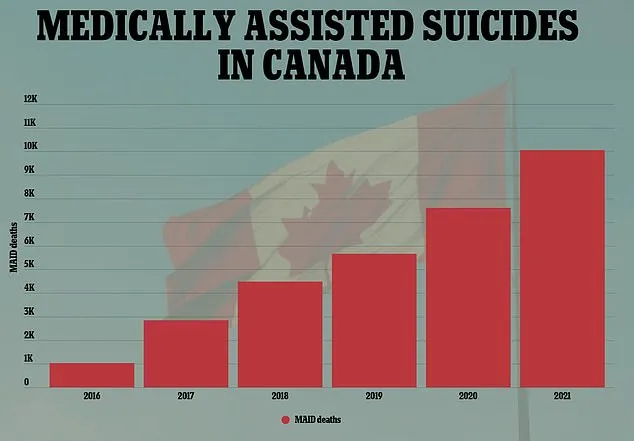
However, medically assisted dying (MAID) is expanding—especially in socialized systems that don’t want to treat chronic or psychiatric illness.
In Canada, 5.1% of all deaths in 2024 were MAID.
That should stop you cold.
However, medically assisted dying (MAID) is expanding—especially in socialized systems that don’t want to treat chronic or psychiatric illness.
In Canada, 5.1% of all deaths in 2024 were MAID.
That should stop you cold.
Medical ethics should be the backbone of medicine—but it’s treated like an elective.
Doctors get a cursory overview, then ethics quietly bends to whatever is billable.
Doctors are being taught to respect patient autonomy—until it’s inconvenient.
This was incredibly clear when the COVID vaccine mandates rolled out. Patient autonomy went out the window.
Doctors get a cursory overview, then ethics quietly bends to whatever is billable.
Doctors are being taught to respect patient autonomy—until it’s inconvenient.
This was incredibly clear when the COVID vaccine mandates rolled out. Patient autonomy went out the window.

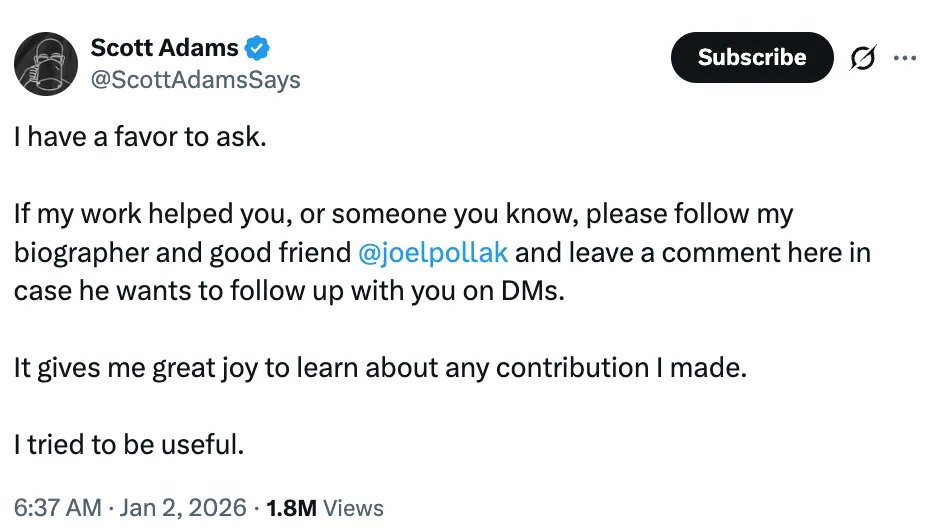
When Scott realized his condition was terminal, he decided to spend his remaining time engaging with his audience. Even when he was on the verge of death.
While few would make this choice, it was emblematic of Scott’s values.
And he handled his dying process very well, despite it being in full public view.
While few would make this choice, it was emblematic of Scott’s values.
And he handled his dying process very well, despite it being in full public view.
Society hijacks our attention, time, and values—often pushing people to chase status over meaning for the bulk of their time on earth.
Near death, those filters fall away.
And what matters is strikingly consistent: helping others, authenticity, love and repair, deep pursuits, real relationships, and caring for one’s body—not the rat race.
Near death, those filters fall away.
And what matters is strikingly consistent: helping others, authenticity, love and repair, deep pursuits, real relationships, and caring for one’s body—not the rat race.

That is exactly why medicalized death is so troubling.
When clarity finally arrives, autonomy is often stripped away.
The wisdom of the dying is a gift to the living. In those final moments, we should honor what they actually want and resolve what matters.
Right now, you protect your future self with a living will and advance directives.
When clarity finally arrives, autonomy is often stripped away.
The wisdom of the dying is a gift to the living. In those final moments, we should honor what they actually want and resolve what matters.
Right now, you protect your future self with a living will and advance directives.
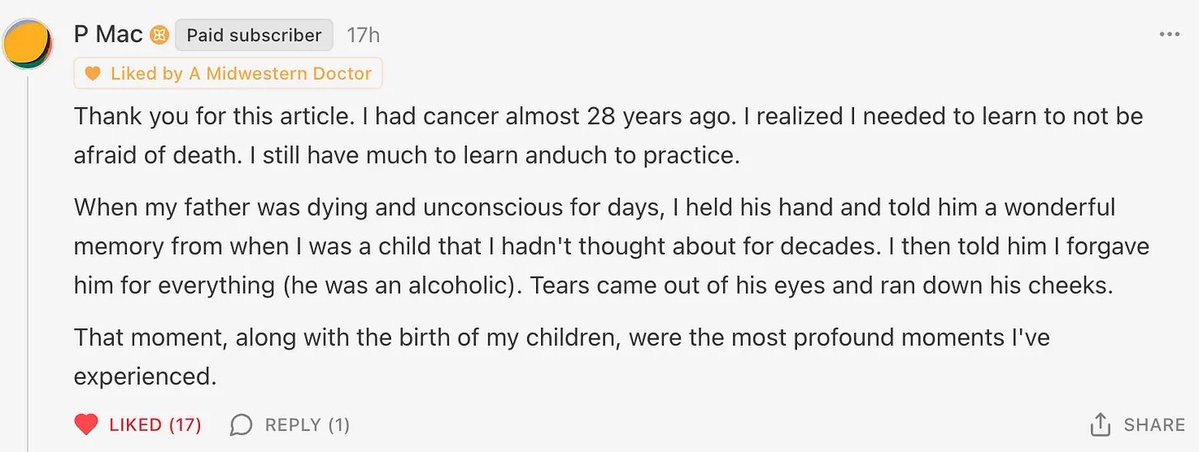
@MidwesternDoc Most people assume they’ll be asked what they want at the end.
They often aren’t.
Why that happens—and how to prevent it—is explained here by @MidwesternDoc:
midwesterndoctor.com/p/the-medicali…
They often aren’t.
Why that happens—and how to prevent it—is explained here by @MidwesternDoc:
midwesterndoctor.com/p/the-medicali…
Advance care planning changes everything.
Clear documentation of values—not just checkboxes—dramatically reduces unwanted interventions.
When goals are defined early, medical care shifts from reflexive action to intentional support.
Dying becomes something guided—not something done to someone.
Clear documentation of values—not just checkboxes—dramatically reduces unwanted interventions.
When goals are defined early, medical care shifts from reflexive action to intentional support.
Dying becomes something guided—not something done to someone.

Materialist science became our culture’s de-facto religion—and in doing so, it dismissed the spiritual dimensions of human experience it can’t explain.
But cracks keep showing: organ transplant recipients inheriting donors’ traits, near-death experiences with awareness outside the body, and consistent reports at death suggesting consciousness transforms rather than disappears.
These challenge the dogma that mind = brain—and radically change how we should think about dying.
But cracks keep showing: organ transplant recipients inheriting donors’ traits, near-death experiences with awareness outside the body, and consistent reports at death suggesting consciousness transforms rather than disappears.
These challenge the dogma that mind = brain—and radically change how we should think about dying.

@MidwesternDoc This isn’t an argument against medicine.
It’s an argument against a system that:
• confuses prolonging life with preserving meaning
• treats death as a defect
• substitutes technology for truth
Medicine works best when it serves human values—not when it overrides them.
It’s an argument against a system that:
• confuses prolonging life with preserving meaning
• treats death as a defect
• substitutes technology for truth
Medicine works best when it serves human values—not when it overrides them.

@MidwesternDoc Dying well isn’t about refusing care.
It’s about choosing the right care.
Practical guidance for those conversations is here:
midwesterndoctor.com/p/the-medicali…
It’s about choosing the right care.
Practical guidance for those conversations is here:
midwesterndoctor.com/p/the-medicali…
@MidwesternDoc A healthier culture doesn’t deny death.
It prepares for it.
It speaks honestly about limits.
It values dignity as much as duration.
It recognizes that some forms of “treatment” only prolong suffering.
It prepares for it.
It speaks honestly about limits.
It values dignity as much as duration.
It recognizes that some forms of “treatment” only prolong suffering.
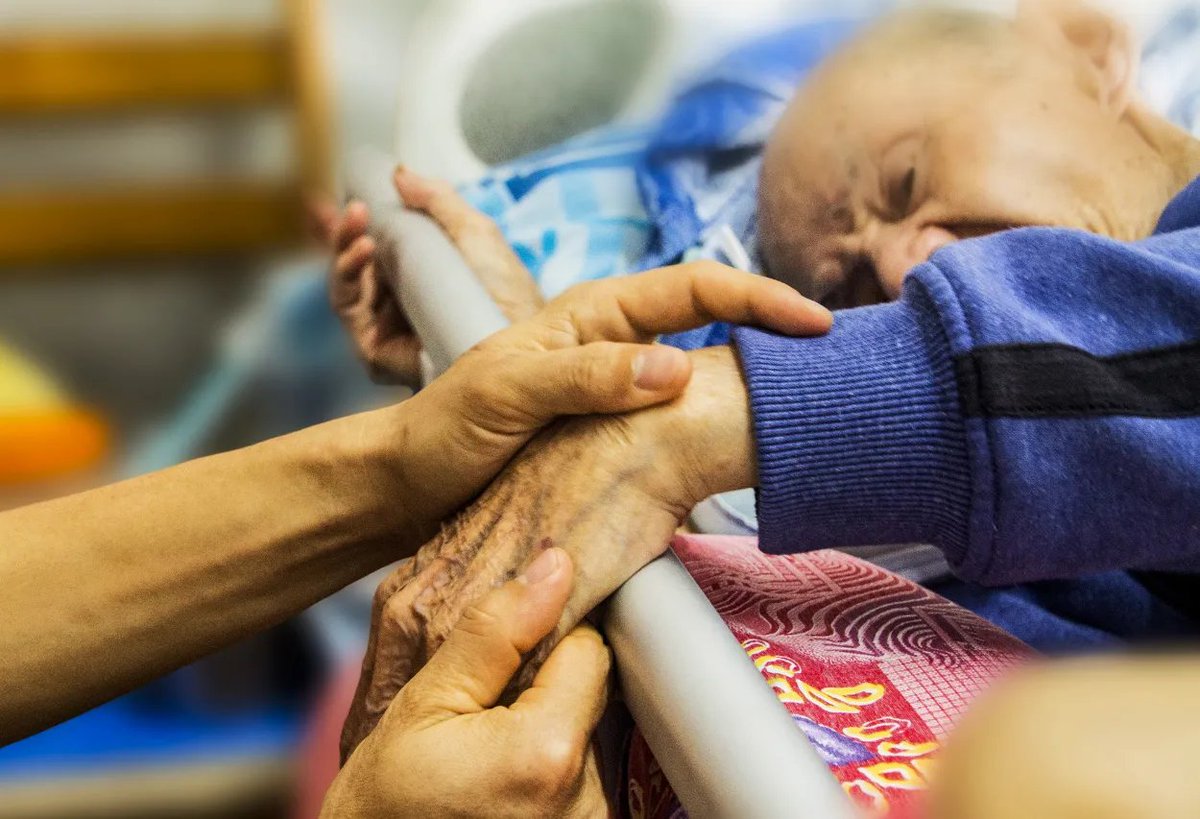
@MidwesternDoc The most humane act in medicine may not be doing more—but knowing when not to.
Talk early.
Define values clearly.
Ask hard questions before crisis forces them.
Because death will come either way.
The difference is whether it’s faced with fear—or with intention.
Talk early.
Define values clearly.
Ask hard questions before crisis forces them.
Because death will come either way.
The difference is whether it’s faced with fear—or with intention.

@MidwesternDoc Thanks for reading! This information was based on a report originally published by @MidwesternDoc . Key details were streamlined and editorialized for clarity and impact. Read the original report here.
midwesterndoctor.com/p/the-medicali…
midwesterndoctor.com/p/the-medicali…
@MidwesternDoc For a deeper dive into what modern medicine has overlooked—or intentionally buried—check out these other eye-opening reports by @MidwesternDoc:
What Happens When the Body Doesn’t Get Enough Sleep?
vigilantfox.com/p/what-happens…
What Happens When the Body Doesn’t Get Enough Sleep?
vigilantfox.com/p/what-happens…
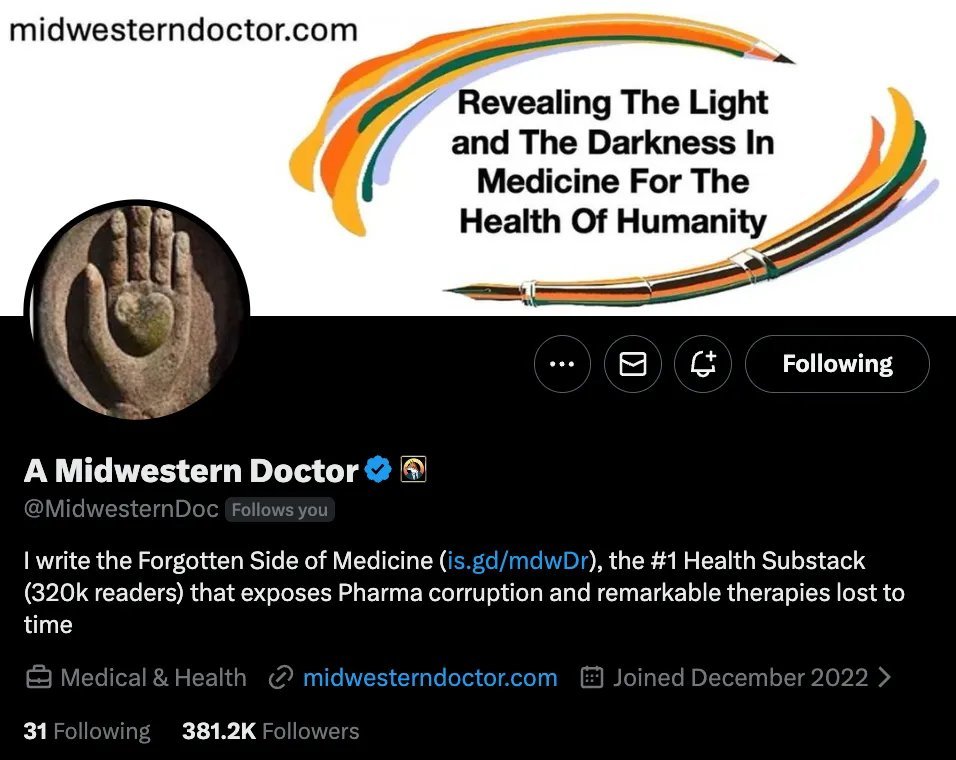
@MidwesternDoc While you’re at it, give @MidwesternDoc a follow.
No one brings more research, clinical insight, or historical context when it comes to exposing the health myths we’ve all been fed.
This is easily one of the most valuable accounts you’ll ever follow.
--> @MidwesternDoc
No one brings more research, clinical insight, or historical context when it comes to exposing the health myths we’ve all been fed.
This is easily one of the most valuable accounts you’ll ever follow.
--> @MidwesternDoc
• • •
Missing some Tweet in this thread? You can try to
force a refresh