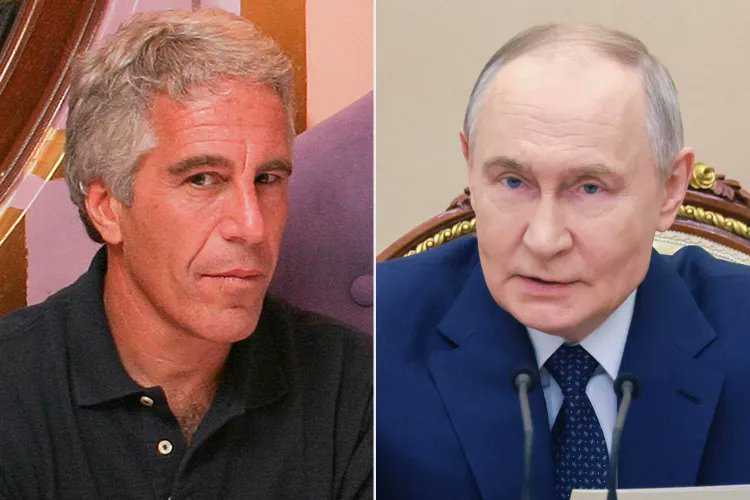
Jeffrey Epstein spent years trying to meet Putin, cultivated ties with Russian officials including an FSB academy grad.
Epstein once asked a Kremlin contact for help after claiming a Russian woman was blackmailing "powerful businessmen" in NYC — The WP. 1/
Putin’s name appears 1,000+ times in newly released DOJ files. He made repeated attempts from 2013-2018 to arrange a Putin meeting, often through former Norwegian PM Thorbjørn Jagland. No evidence shows it ever happened. 2/
Sergey Belyakov, a high-ranking FSB academy graduate and Russia's deputy economic development minister, maintained a close friendship with Epstein from 2014-2018. He invited Epstein to Russia's top investment forum multiple times. 3/
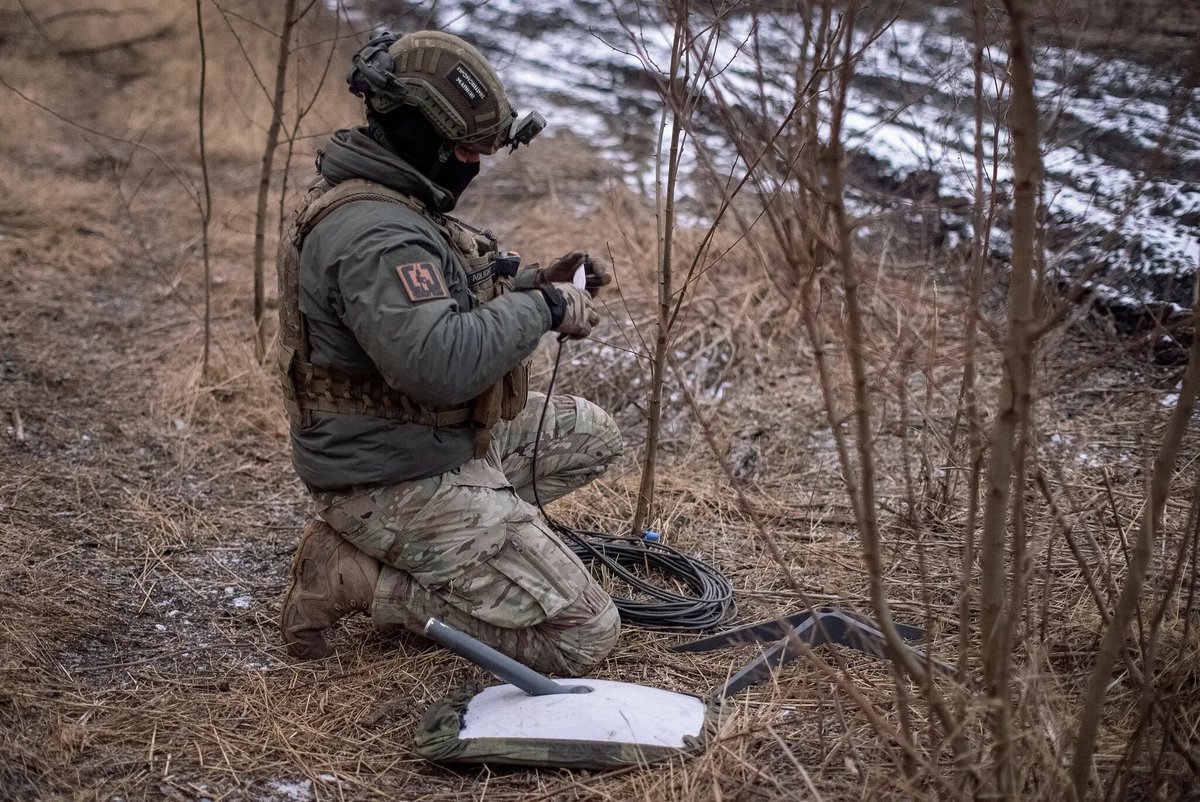
Brittney Shki-Giiziz, Canadian volunteer in Ukraine: My first day fighting was absolutely excellent. I destroyed a train station with a tank. Being at war was physically easier than the training the Canadian Army puts us through. It prepared me very well for war. 1/
Shki-Giiziz: The truth is that Russia is pushing. We are holding, but we are being pushed back constantly.
Our safe houses are pushed further back. We had positions in Myrnograd and Pokrovsk not so long ago. 2/
Shki-Giiziz: My first motivation for learning Ukrainian was to serve in a tank. Language was a requirement. I studied Ukrainian and the 25th Brigade gave me a chance. At first I just studied the commands. Now I’m conversational and can work freely in Ukrainian. 3/
A German wargame claims Russia could break NATO with just 15,000 troops — by exploiting hesitation.
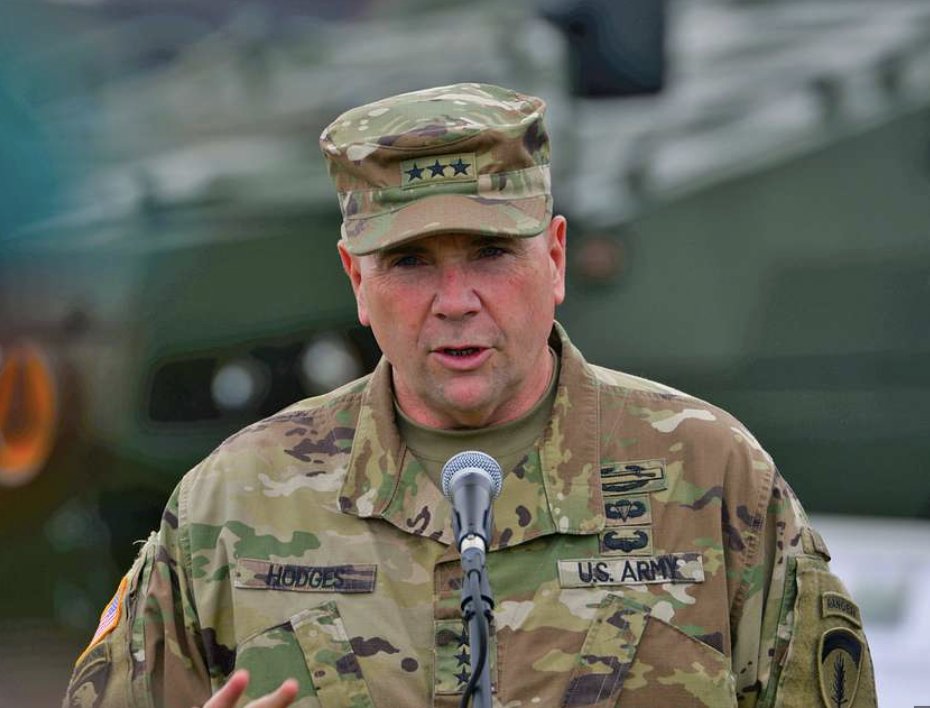
Ben Hodges for Telegraph: A small Russian force could break NATO due to Western paralysis. The core fix is Ukraine. 1/
The scenario: Oct 2026. Russia stages a “humanitarian crisis” in Kaliningrad, moves into the Suwałki Corridor, seizes Marijampolė.
US stays out. Poland mobilises but hesitates. Germany dithers. Baltics get cut off. NATO credibility collapses — on paper. 2/
Hodges: Ukraine stopped a far stronger Russian army in 2022. Helping Ukraine defeat Russia is the strongest deterrent — it destroys the myth that Russia can win against NATO-level forces. 3/
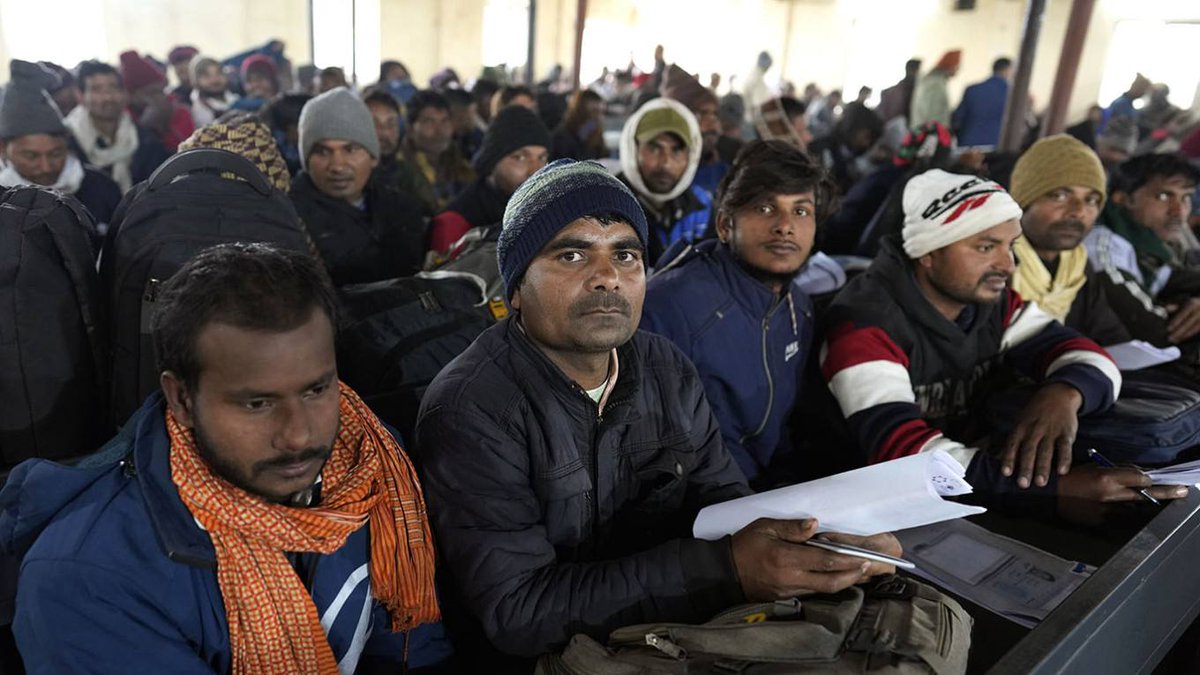
Bloomberg: Russia is short nearly 10-11 mln workers and is now recruiting labor from India and Sri Lanka to keep its economy running as war and demographics drain the workforce. 1/
For decades, Russia relied on migrants from Central Asia. That model is breaking down as the Ukraine war, emigration, and aging push the country into its deepest labor crisis in years. 2/
Moscow estimates it will need 11 mln additional workers by 2030. Unemployment is about 2%, while one-quarter of the population is already retirement age. There is no domestic reserve left. 3/
When their father was taken POW, the children were 1 meter tall. Today, the son is 1.70 meters.
Eskender broke through 2 encirclements from Mariupol, was captured, and sentenced to 30 years in Russia. Haven’t seen family since 2022.
Hromadske about returned Ukrainian POWs. 1/
Ivan traveled to every exchange for 3 years. Today he found out that his son had finally been released. For 3 years, his father was called the chief optimist.
Galina, mother: “His blood pressure is 160 over 90. They already gave me something at the hospital...” 2/
Marine Ruslan Kurtmalayev also returned home. He was held captive for almost 4 years.
His wife Olga, who has stage IV cancer, continued to fight for him. Four Azov soldiers were returned. Another 700 remain in captivity. They are the most difficult to exchange. 3X
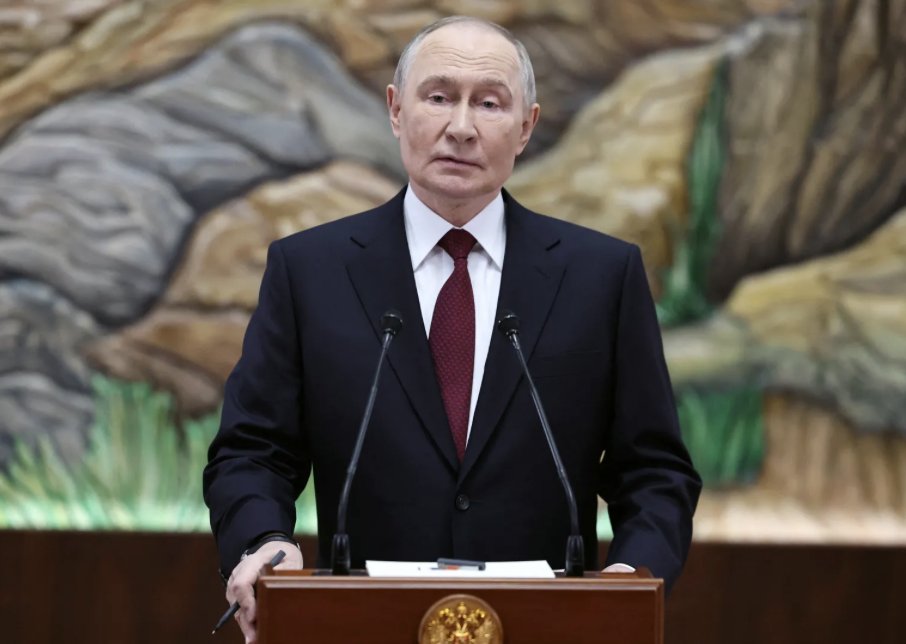
Putin isn’t really winning. Europe needs to realize that and hit at Russia's weaknesses.
FT: Putin’s victory narrative is loud but brittle. Behind claims of momentum in Ukraine is Russian system under strain. Europe needs to expose the gaps — and project their own power. 1/
Putin claims Russia has the “strategic initiative,” sanctions-proof stability, and inevitable control of Donbas.
US voices echo it: JD Vance predicts a Russian win, Trump called Putin’s army “invincible”. 2/
If Russia’s story sticks — that victory is inevitable — Moscow gains leverage.
It can demand more in talks, blame failures on Ukraine and Europe, and frame concessions as realism rather than coercion. 3/