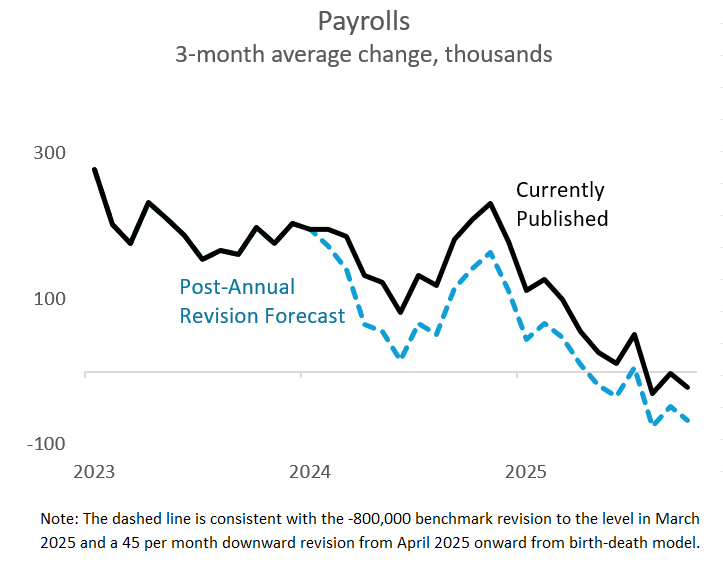
Good news in January, but the downward revisions are huge. More than a million fewer jobs than previously estimated by the end of 2025. And four months last year with outright declines in payrolls. bls.gov/news.release/e…
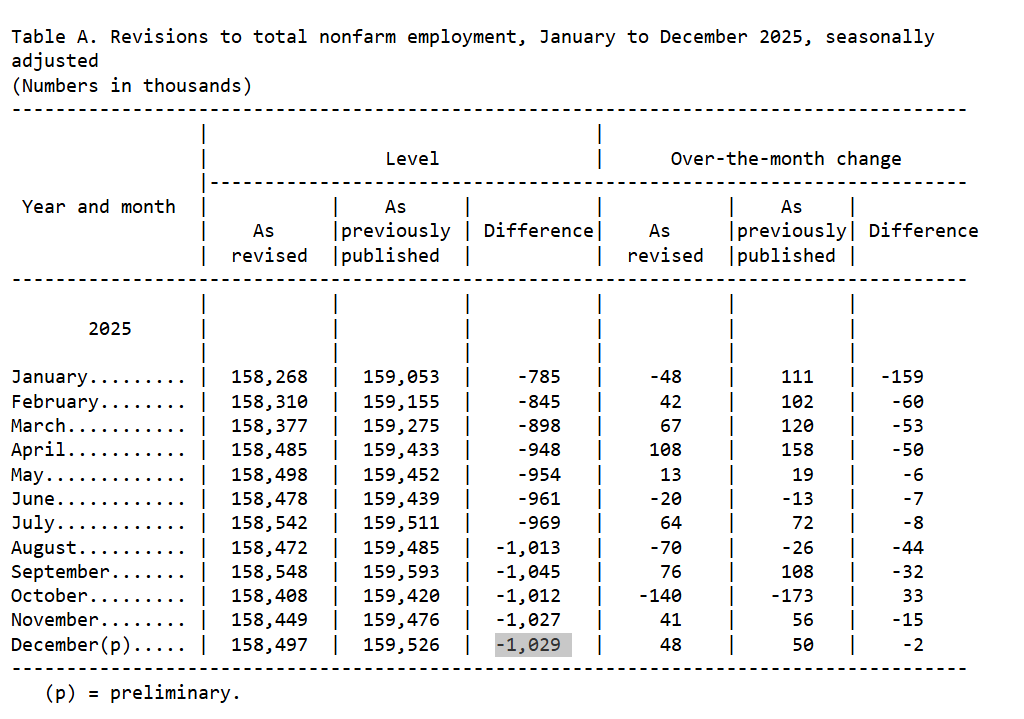
Last year, the US created 181,000 jobs, on net. That's basically nothing relative to total jobs of 158 million.
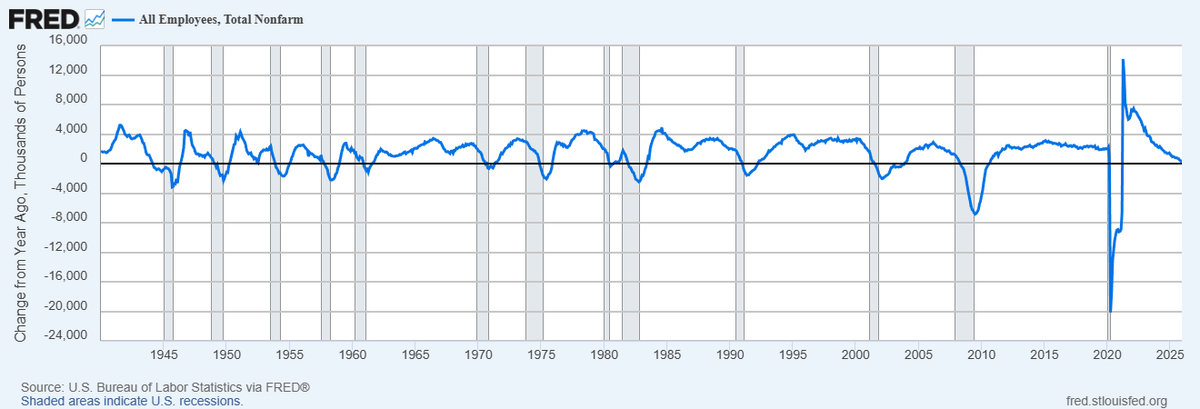
Such a low year-over-year change in jobs is very rare outside of a recession. We are not in a recession, making it even more notable.
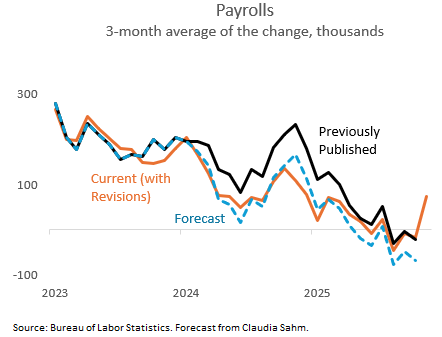
Updated my chart. Orange line is data published today. You can see the news today was the relatively upbeat January. My forecast of revisions (dashed blue) was fairly accurate. Where did I learn to forecast? The Fed. The news today at the Fed was January--adding to signs of stabilization.
"[The revisions are] not a sign that the @BLS_gov is asleep at the wheel. We just have some major dynamics in the economy, and it's really tough to measure in real time. We've got better data today, and that's a great starting point for understanding where we are going!" #JobsDay
WH keeps 'pumping up' payrolls for tomorrow. Here's why. Revisions could wipe out all job growth last year. Zero. zip. nada.
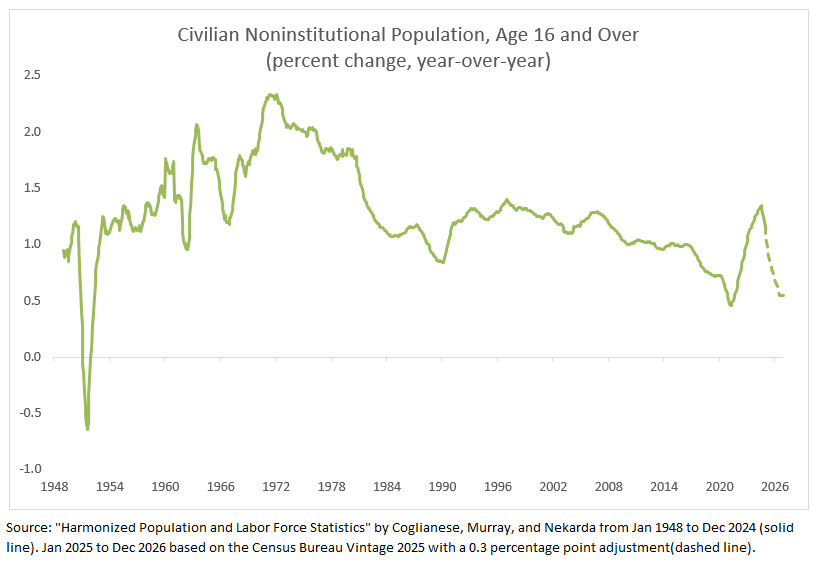
The swing in immigration -- restrictions began in summer of 2024 and intensified in 2025 -- is almost certainly behind much (not all) of the slowing.
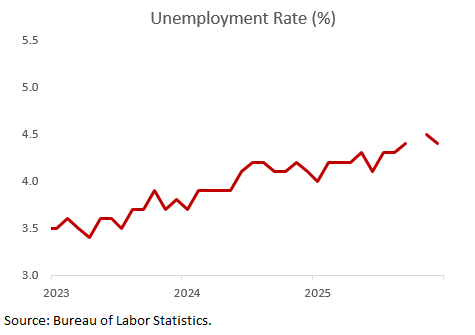
Even so, the unemployment rate has been rising gradually, almost 1 percentage point over the past three years. Demand for workers is not keeping up with supply, even with the much lower immigration.
Many are tying the Democrat losses in the election to high inflation in recent years. There's some truth to that, but it's complicated, and it's crucial to take the right lessons.
There are many lessons to learn from the election, but I see a wrong lesson circulating that must be nipped in the bud. Here is an example from @BetseyStevenson, a professor of economics who served in the Obama Administration:
I’m not taking part in the reckoning because it’s not true. People want low unemployment and low inflation. The real lesson is that leaving inflation to the Fed alone was not good enough.
Also, the simple Phillips curve trade-off between inflation and unemployment is not a thing, and leaning on it would have led to worse outcomes in people’s lives and at the ballot box.
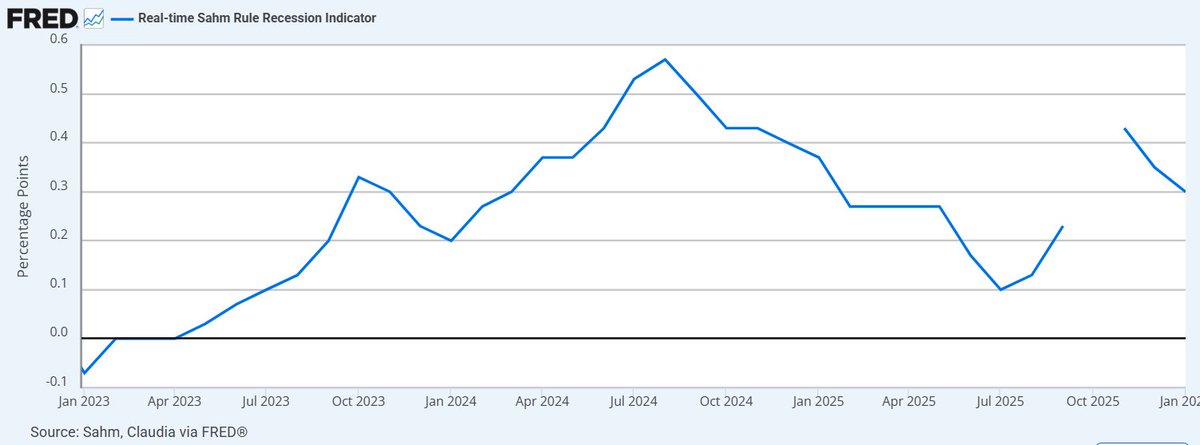
""The US is not in a recession, despite the Sahm Rule indicator bearing my name saying that it is. That said, the risk of a recession is elevated, strengthening the case for the US Federal Reserve to cut interest rates.""
my @opinionbloomberg.com/opinion/articl…
In saying no recession for July 2024 despite the Sahm rule, I am looking broadly at the data the NBER uses , not just the Sahm rule and unemployment rate. My assessment is that even after possible downward revisions it's not a contraction. Not not. fredaccount.stlouisfed.org/public/dashboa…
Note I could be too upbeat about the current situation, and @AnnaEconomist is putting out great content on revisions and turning points. Where we are is always hard to know, especially at times like these. PS I trained the Sahm rule on the unrevised data.
"Why don’t economists ever talk about the fact that more and more workers at the lower end of the payscale have to work at more than one job to make a living? ... It seems to me that is a big reason why many don’t feel the economy is good right now."
Facts:
Comment (continued):
"Workers have to work multiple jobs, far more hours than their parents worked, and still can’t save enough to buy a house like their parents and grandparents did. That should be a quantifiable statistic included in every news story."
Facts:
Both. PS: Building more housing is at the top of my list for policymakers.
Four years ago, the harsh reality of Covid hit the United States; the bottom fell out for millions of lives and livelihoods. We're in a far better place now, and where we are headed holds promise.
Today’s post may start too heavy for some with its look back on four years ago at the start of the pandemic. It’s important because it gives us context for where we are now, but if it's too much, skip ahead to the sections on the present and future; they are more optimistic.
The day that changed everything.
March 11, 2020, was the day Covid became real for Americans. The oral history of that day is powerful, as Garrett Graff (@vermontgmg) collects in his compelling, must-read piece. wired.com/story/an-oral-…
Labor shortages hit hard in 2021-2022, affecting business owners and customers with inflation.
How important were immigrants in getting us out of that mess? Very important. Covid was deeply disruptive. Millions left the labor force, and immigrants came back more quickly.
That simple chart has so many things going on under the hood. But let's step back from the immigrant vs US-born debate, which often gets xenophobic.
Why did millions of people drop out of the labor force? They are not unemployed; they are not looking.
COVID!!!!!!!!
My biggest frustration -- and there are many -- with the macroeconomic debate is too often, it acts like the pandemic never happened. It did.
This was a once-in-generations disaster. Here is a good piece on why so many left. We are all in this together. stlouisfed.org/publications/r…