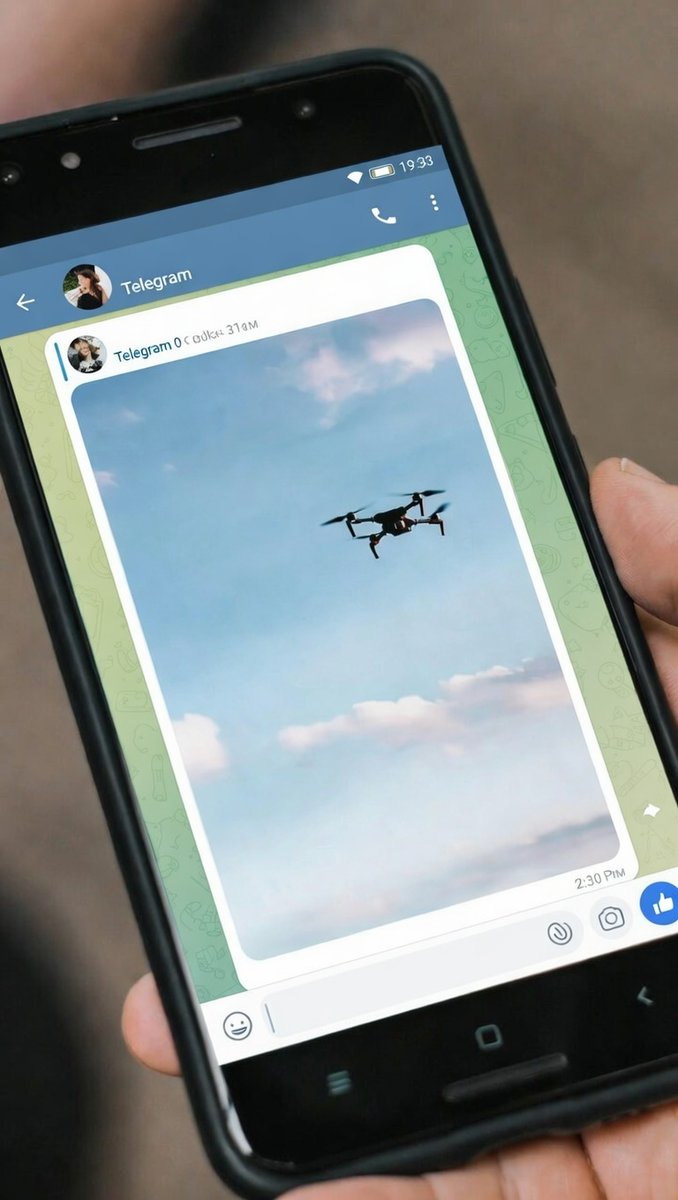
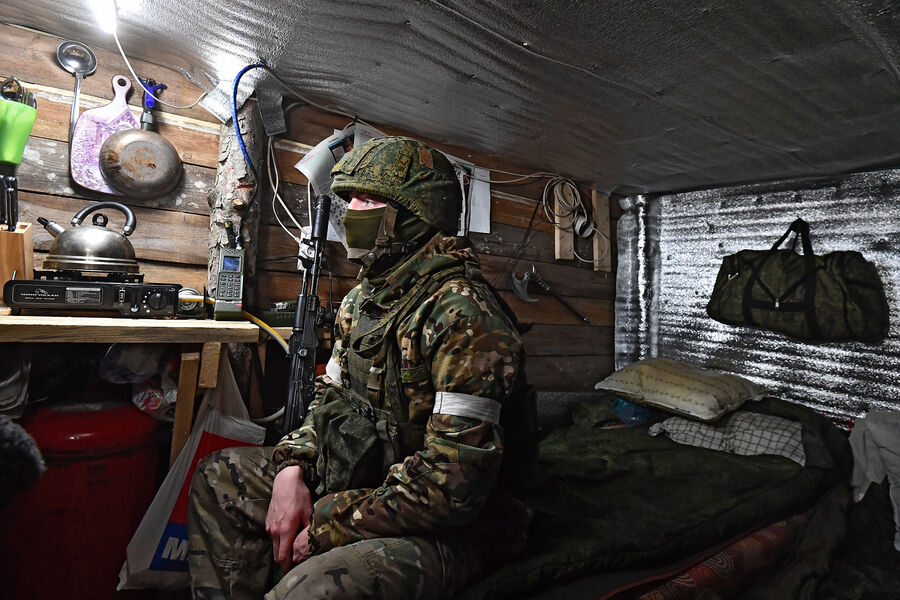
1/ Russian warbloggers are continuing to provide examples of how Telegram is used for frontline battlefield communications, to refute the claim of presidential spokesman Dmitri Peskov that such a thing is "not possible to imagine". ⬇️
2/ Platon Mamadov provides two detailed examples:
"Example number one:
Aerial reconnaissance of Unit N spotted a Ukrainian self-propelled gun in a shelter in the middle of town N."
3/ "Five minutes after the discovery, the target's coordinates and a detailed video were uploaded to a special secret chat group read by all drone operators, scouts, and artillerymen in that sector of the front.
4/ "The strikers used the video to understand how to approach the target: where the branches were, where the nets were, where the infantry with rifles were guarding the air.
5/ "And also the nature of the target - armor thickness, vulnerable spots under the armor and barbecue, and so on.
Twenty minutes after the target was detected, the first drone with the appropriate munitions was inserted into it.
6/ "Forty minutes after the target was detected, it caught fire.
The hit was recorded by aerial reconnaissance.
All those involved added the relevant item to their reports, attaching first-person and objective control videos.
7/ "After which, they immediately switched to other tasks.
Example number two:
The enemy threw two tanks and an infantry fighting vehicle with paratroopers into the breach.
8/ "One of the dozens of Mavics hovering over the line of contact around the clock spotted the armoured group.
9/ "Information about the incident was broadcast in real time via video. Who was driving, where they were parked, what they were doing, where our incoming attacks were heading.
My attack drone was over the targets 20 minutes after their detection.
10/ "By this point, one of the two tanks and the infantry fighting vehicle was already burning. Corpses of the landing force lay around the infantry fighting vehicle, and the surviving tank, under the rain of bullets falling on it, hastily scurried back.
11/ "Not a single unit participating in the disco was identified or hit by the enemy.
Just as they had not been identified in the previous two years of the war.
12/ "Despite the active use of Telegram, whose creator is something in Paris, blah-blah-blah, NATO.
Now tell me, please, how we can achieve such results without using the Internet and instant messaging." /end
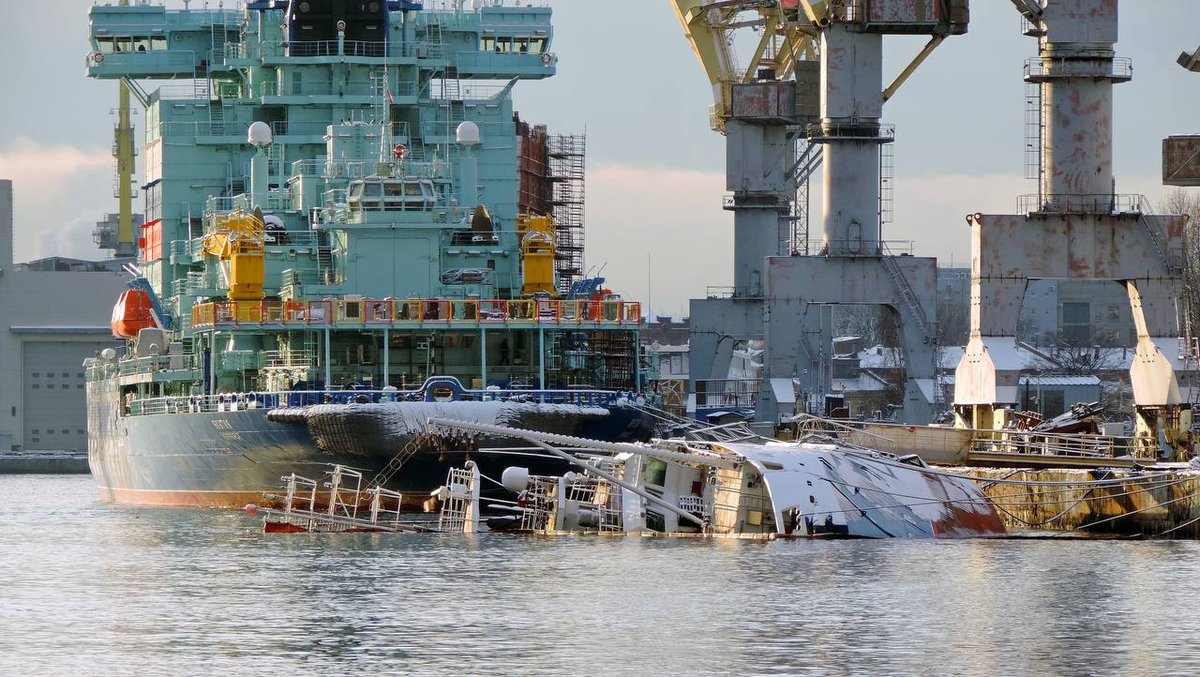
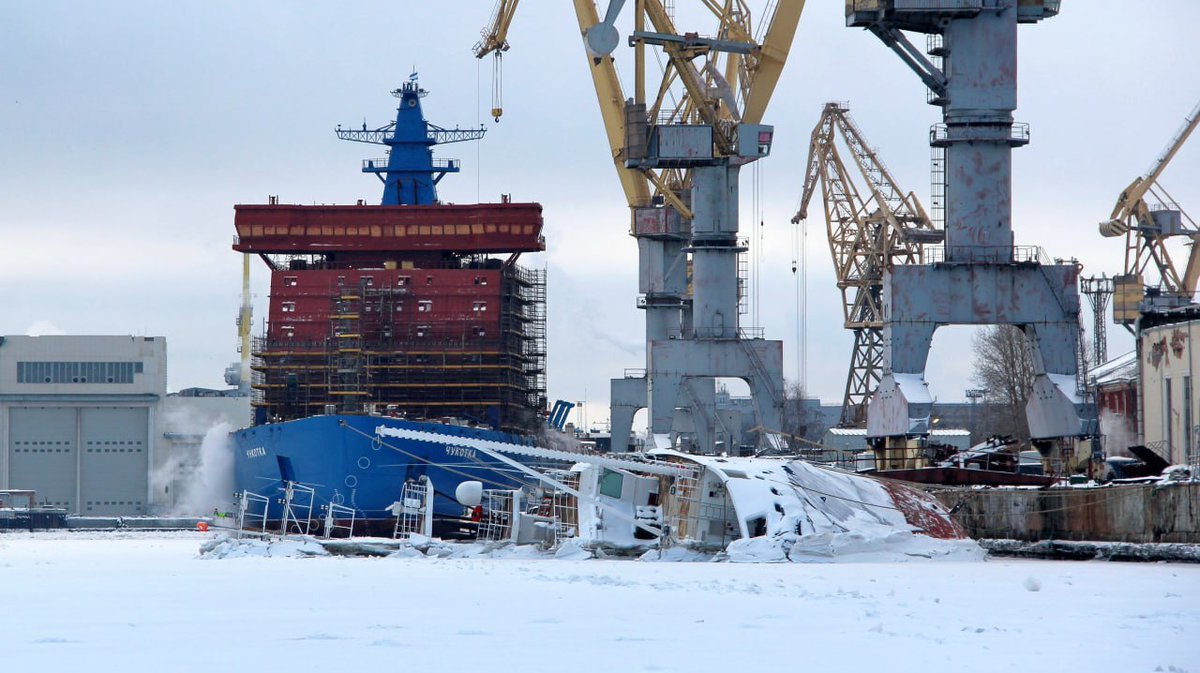
1/ Six months ago, the newly built Russian Navy tugboat Kapitan Ushakov capsized at its moorings during its final outfitting, when it was 97% complete. It's still there today, resting on its side, leading to some hard questions for the Northern Fleet. ⬇️
2/ The only thing that seems to have changed after six months is that the boat is now encased in ice at the Baltic Shipyard pier in St. Petersburg. It's an "endless disgrace", 'Military Informant' complains. But how and why has it not been raised?
3/ The shipyard's owner, Yaroslavl Shipyard (YaSZ), says that because the vessel "is being built under a state defence contract ... there is no permission to disclose this information or comment on it."
1/ Russian ultra-nationalist ideologue Alexander Dugin predicts that Western civilization will collapse due to the Epstein files, clearing the way for Russia and China to take over. He calls for all-out opposition to the West, and for Russia to save Iran from Donald Trump. ⬇️
2/ Dugin writes:
"The West, thanks to Epstein's lists, is beginning to crumble before our eyes. Russia and China have a historic opportunity to become the beneficiaries of the total collapse of the entire Western system.
3/ "Now it's no longer a matter of right or left, if they have a "right" like Epstein Island (or a left). It's time to end the West.
1/ Russia is reportedly considering proposing a wide-ranging economic partnership with the Trump administration, including joint cooperation to push fossil fuels as an alternative to Chinese and European clean energy solutions, in opposition to curbing climate change. ⬇️
2/ Bloomberg is reporting that Russia has prepared a seven-point memo that includes a return to the dollar settlement system, reversing Putin's by now well-established policy of creating an alternative system insulated from US economic pressure.
3/ The proposals also include joint US-Russian ventures in manufacturing, nuclear energy, oil and LNG extraction, preferential conditions for US companies in Russia to compensate for past losses, cooperation on raw materials, and jointly working against clean energy.
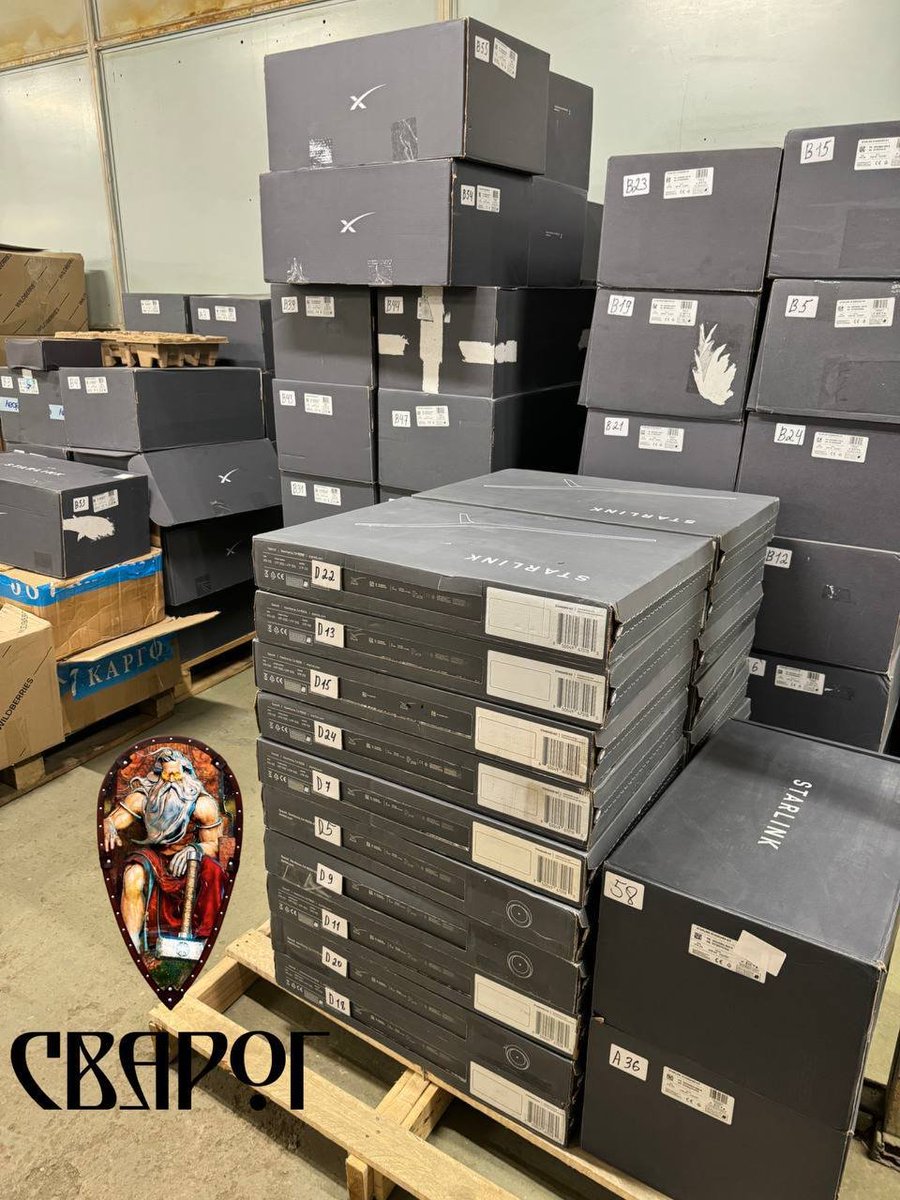
1/ Why does the Russian government appear to be so clueless about the role Telegram plays in military communications? The answer, one warblogger suggests, is that the military leadership doesn't want to admit its failure to provide its own reliable communications solutions. ⬇️
2/ Recent claims by high-ranking officials that Telegram isn't relevant to military communications have prompted howls of outrage and detailed rebuttals from Russian warbloggers, but have also pointed to a deeper problem about what reliance on Telegram (and Starlink) represents.
3/ In both cases, the Russian military has failed abysmally to provide workable solutions. Telegram and Starlink were both adopted so widely because the 'official' alternatives (military messngers and the Yamal satellite constellation) are slow, unreliable and lack key features.
1/ Telegram is deeply embedded into Russian military units' internal communications, providing functionality that MAX, the Russian government's authorised app, doesn't have. A commentary highlights the vast gap that is being opened up by the government's blocking of Telegram. ⬇️
2/ The Two Majors Charitable Foundation writes that without Telegram, information exchange, skills transfer, and moral mobilisation work within the Russian army will be crippled:
3/ "I'd really like to add that for a long time, we've been gathering specialized groups in closed chats, including those focused on engineering and UAVs, to share experiences and build a knowledge base. Almost everyone there is a frontline engineer.
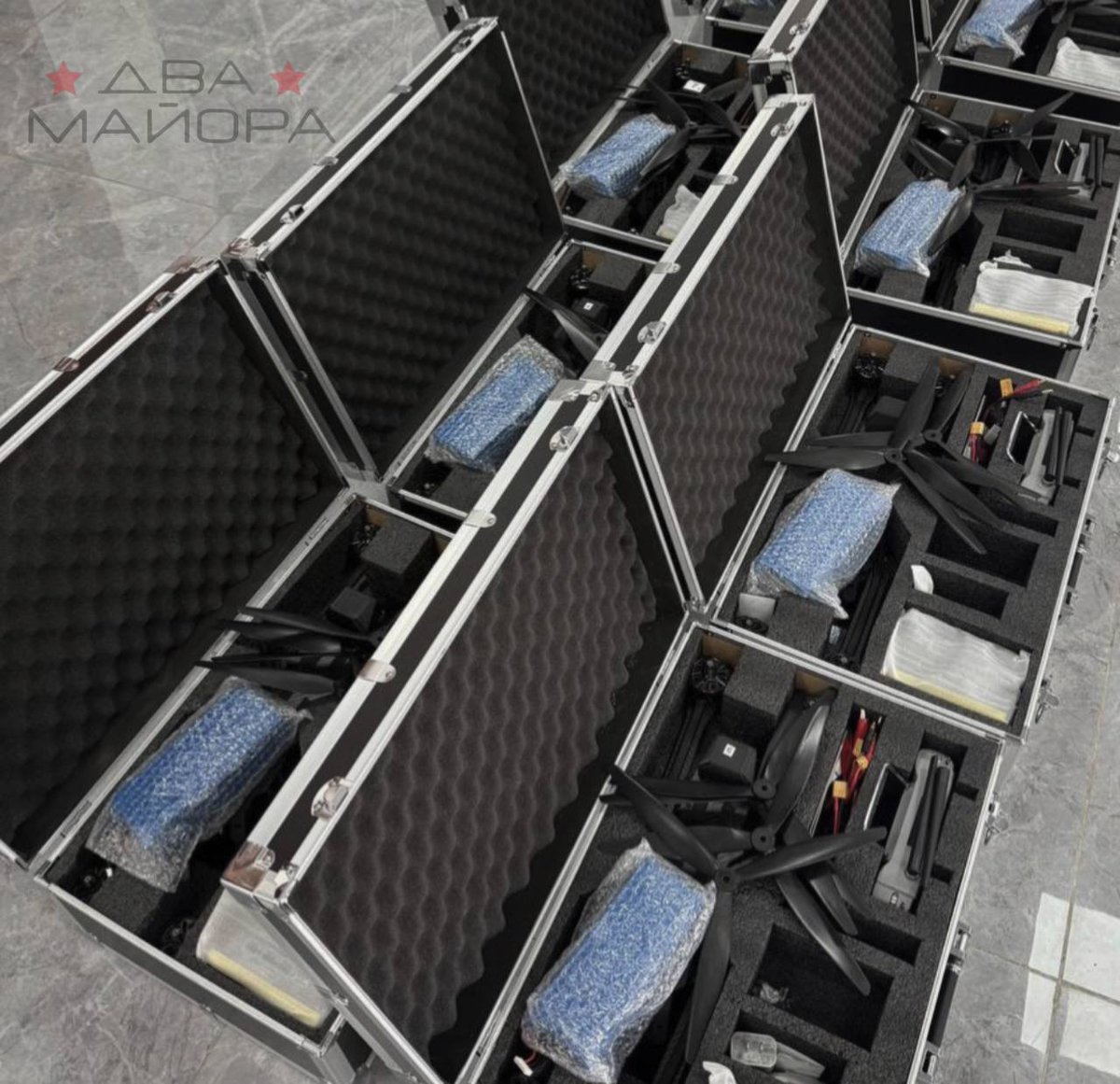
1/ Russia's Federal Customs Service is seeking to prosecute Russian volunteers who are importing reconnaissance drones from China to give to frontline troops. It's the latest chapter in a saga of bureaucratic obstruction that is blocking vital supplies to the Russian army. ⬇️
2/ Much of the army's equipment, and many of its drones, are purchased with private money by volunteer supporters or the soldiers themselves. High-tech equipment such as drones and communications equipment is purchased in China or Central Asia and imported into Russia.
3/ However, the Federal Customs Service has been a major blocker. Increased customs checks on the borders have meant that cargo trucks have suffered delays of days or even weeks, drastically slowing the provision of essential supplies for the Russian army.