BREAKING: You can now fact-check anything in real time using AI.
Here are 10 Perplexity prompts that verify claims, check sources, and find the truth faster than anyone: (Save for later):
Here are 10 Perplexity prompts that verify claims, check sources, and find the truth faster than anyone: (Save for later):
1/ The Instant Claim Verifier
Next time someone drops a "stat" in a meeting or online, paste this:
"Fact-check the following claim: [PASTE CLAIM HERE].
Please provide:
→ Verdict: True, False, Misleading, Partially True, or Unverifiable
→ Trace it back to where this claim first appeared find the original source
→ 3 credible sources that support or contradict it (with direct links)
→ Critical context that changes how this claim should be interpreted
→ If a number or statistic is included, verify the exact figure and note if it's outdated, cherry-picked, or out of context
Give me the most accurate version of this statement based on current evidence."
Works on tweets, headlines, podcast quotes, anything.
Next time someone drops a "stat" in a meeting or online, paste this:
"Fact-check the following claim: [PASTE CLAIM HERE].
Please provide:
→ Verdict: True, False, Misleading, Partially True, or Unverifiable
→ Trace it back to where this claim first appeared find the original source
→ 3 credible sources that support or contradict it (with direct links)
→ Critical context that changes how this claim should be interpreted
→ If a number or statistic is included, verify the exact figure and note if it's outdated, cherry-picked, or out of context
Give me the most accurate version of this statement based on current evidence."
Works on tweets, headlines, podcast quotes, anything.
2/ The News Story Cross-Reference
Stop reading one article and assuming it's the full picture:
"I just read this news story: [PASTE HEADLINE OR URL].
Do a full cross-reference:
→ Find 5 other sources covering the same story from different outlets
→ What facts do ALL sources agree on? (the confirmed core)
→ Where do sources disagree or present conflicting details?
→ Flag any details that only ONE source reports and no one else has confirmed
→ Has any outlet published a correction or retraction on this story?
→ Trace it to the original primary source (press release, court filing, study, official statement)
→ Rate overall reliability: High Confidence / Medium Confidence / Low Confidence
Present as a source comparison breakdown."
One prompt replaces hours of manual research.
Stop reading one article and assuming it's the full picture:
"I just read this news story: [PASTE HEADLINE OR URL].
Do a full cross-reference:
→ Find 5 other sources covering the same story from different outlets
→ What facts do ALL sources agree on? (the confirmed core)
→ Where do sources disagree or present conflicting details?
→ Flag any details that only ONE source reports and no one else has confirmed
→ Has any outlet published a correction or retraction on this story?
→ Trace it to the original primary source (press release, court filing, study, official statement)
→ Rate overall reliability: High Confidence / Medium Confidence / Low Confidence
Present as a source comparison breakdown."
One prompt replaces hours of manual research.
3/ The Viral Post Debunker
Social media is 90% claims with 0% sources. Fix that:
"This post is going viral: [PASTE POST TEXT OR DESCRIBE IT].
Investigate:
→ Is the core claim accurate, misleading, or false?
→ Has any fact-checking organization (Snopes, PolitiFact, Reuters Fact Check, AP Fact Check) already reviewed this? What was their verdict?
→ Where did this claim first appear? Trace the origin
→ Is the image, video, or data referenced real, edited, or taken out of context?
→ What critical context is the post leaving out?
→ Has this exact claim gone viral before? (Check if it's recycled misinformation)
Give me a clear verdict I can share with someone who believes this post."
The prompt that saves you from sharing embarrassing misinformation.
Social media is 90% claims with 0% sources. Fix that:
"This post is going viral: [PASTE POST TEXT OR DESCRIBE IT].
Investigate:
→ Is the core claim accurate, misleading, or false?
→ Has any fact-checking organization (Snopes, PolitiFact, Reuters Fact Check, AP Fact Check) already reviewed this? What was their verdict?
→ Where did this claim first appear? Trace the origin
→ Is the image, video, or data referenced real, edited, or taken out of context?
→ What critical context is the post leaving out?
→ Has this exact claim gone viral before? (Check if it's recycled misinformation)
Give me a clear verdict I can share with someone who believes this post."
The prompt that saves you from sharing embarrassing misinformation.
4/ The Statistics & Data Verifier
80% of stats shared online are wrong, outdated, or manipulated:
"Verify this statistic: [PASTE STATISTIC].
→ Find the ORIGINAL source — the actual study, report, or dataset
→ Is this current or outdated? What year was the data collected?
→ Sample size and methodology — is it statistically reliable?
→ Has this number been updated since? What's the most recent figure?
→ Is it presented in the right context, or cherry-picked to prove a point?
→ Do other credible sources report a different number? What's the range?
Give me the verified stat with the correct source, year, and proper citation I can actually use."
Never quote a fake stat in a presentation again.
80% of stats shared online are wrong, outdated, or manipulated:
"Verify this statistic: [PASTE STATISTIC].
→ Find the ORIGINAL source — the actual study, report, or dataset
→ Is this current or outdated? What year was the data collected?
→ Sample size and methodology — is it statistically reliable?
→ Has this number been updated since? What's the most recent figure?
→ Is it presented in the right context, or cherry-picked to prove a point?
→ Do other credible sources report a different number? What's the range?
Give me the verified stat with the correct source, year, and proper citation I can actually use."
Never quote a fake stat in a presentation again.
5/ The Quote Authentication Prompt
"Did they actually say that?" now you can check in 10 seconds:
"Verify this quote: '[PASTE QUOTE]' attributed to [PERSON'S NAME].
→ Did this person actually say or write this? Find the original source (speech, interview, book, article, post)
→ If yes when, where, and in what context?
→ If no where did this misattribution originate? Who actually said it?
→ Is the quote word-for-word accurate, or has it been altered over time?
→ Is there surrounding context that changes its meaning?
→ Has any fact-checker flagged this quote as misattributed?
Give me a definitive answer with the original source linked."
Half the quotes on the internet are misattributed. This fixes that.
"Did they actually say that?" now you can check in 10 seconds:
"Verify this quote: '[PASTE QUOTE]' attributed to [PERSON'S NAME].
→ Did this person actually say or write this? Find the original source (speech, interview, book, article, post)
→ If yes when, where, and in what context?
→ If no where did this misattribution originate? Who actually said it?
→ Is the quote word-for-word accurate, or has it been altered over time?
→ Is there surrounding context that changes its meaning?
→ Has any fact-checker flagged this quote as misattributed?
Give me a definitive answer with the original source linked."
Half the quotes on the internet are misattributed. This fixes that.
6/ The Scientific Study Analyzer
Someone shares a study to "prove" their point. Check if it actually does:
"Analyze this study: [PASTE STUDY TITLE, URL, OR CLAIM].
→ Who conducted it, when, and where was it published?
→ Is the journal peer-reviewed and reputable?
→ Sample size is the study large enough to support its conclusions?
→ Has it been replicated? What did other researchers find?
→ Has it been retracted, corrected, or heavily criticized?
→ What does the broader scientific consensus say does it agree or disagree?
→ Is the media headline accurately representing what the study actually found?
→ Who funded this research? Any conflicts of interest?
Rate it: Strong Evidence / Moderate Evidence / Weak Evidence / Misleading."
The prompt that destroys "studies show" arguments when the study shows nothing.
Someone shares a study to "prove" their point. Check if it actually does:
"Analyze this study: [PASTE STUDY TITLE, URL, OR CLAIM].
→ Who conducted it, when, and where was it published?
→ Is the journal peer-reviewed and reputable?
→ Sample size is the study large enough to support its conclusions?
→ Has it been replicated? What did other researchers find?
→ Has it been retracted, corrected, or heavily criticized?
→ What does the broader scientific consensus say does it agree or disagree?
→ Is the media headline accurately representing what the study actually found?
→ Who funded this research? Any conflicts of interest?
Rate it: Strong Evidence / Moderate Evidence / Weak Evidence / Misleading."
The prompt that destroys "studies show" arguments when the study shows nothing.
7/ The Historical Claim Checker
History gets rewritten daily on the internet:
"Fact-check this historical claim: [PASTE CLAIM].
→ Is this accurate based on primary sources and academic consensus?
→ Is this a common myth or well-known misconception? What's the real story?
→ Are there multiple credible historical interpretations, or is one clearly supported by evidence?
→ What important context is being left out?
→ If the claim includes specific dates, numbers, or event details verify each one individually
→ Provide 3 credible academic or encyclopedic sources
Give me the accurate version with proper historical citations."
Because "I saw it in a documentary" is not a source.
History gets rewritten daily on the internet:
"Fact-check this historical claim: [PASTE CLAIM].
→ Is this accurate based on primary sources and academic consensus?
→ Is this a common myth or well-known misconception? What's the real story?
→ Are there multiple credible historical interpretations, or is one clearly supported by evidence?
→ What important context is being left out?
→ If the claim includes specific dates, numbers, or event details verify each one individually
→ Provide 3 credible academic or encyclopedic sources
Give me the accurate version with proper historical citations."
Because "I saw it in a documentary" is not a source.
8/ The Product & Health Claim Verifier
Companies will say anything to sell. Check if it's real:
"Verify this claim: [PASTE CLAIM e.g., 'This supplement boosts immunity by 300%' or 'Our app saves users 10 hours per week'].
→ Is there peer-reviewed scientific evidence supporting this?
→ What do regulatory bodies (FDA, FTC, EFSA, WHO) say about claims like this?
→ Has this company been flagged for false advertising or misleading marketing?
→ What do independent reviews and consumer reports say?
→ Is the claimed statistic from real data, a biased internal study, or completely made up?
→ Any lawsuits, warnings, or regulatory actions related to this claim?
Verdict: Supported by Evidence / Exaggerated / Misleading / No Evidence Found."
Save yourself from buying things that don't work.
Companies will say anything to sell. Check if it's real:
"Verify this claim: [PASTE CLAIM e.g., 'This supplement boosts immunity by 300%' or 'Our app saves users 10 hours per week'].
→ Is there peer-reviewed scientific evidence supporting this?
→ What do regulatory bodies (FDA, FTC, EFSA, WHO) say about claims like this?
→ Has this company been flagged for false advertising or misleading marketing?
→ What do independent reviews and consumer reports say?
→ Is the claimed statistic from real data, a biased internal study, or completely made up?
→ Any lawsuits, warnings, or regulatory actions related to this claim?
Verdict: Supported by Evidence / Exaggerated / Misleading / No Evidence Found."
Save yourself from buying things that don't work.
9/ The Media Bias Detector
Every story has a spin. Find it:
"Analyze the media coverage around this topic: [PASTE TOPIC OR HEADLINE].
→ How are left-leaning outlets framing this? (Key arguments and emphasis)
→ How are right-leaning outlets framing this? (Key arguments and emphasis)
→ How are neutral wire services covering it? (Reuters, AP, BBC)
→ What FACTS are universally agreed upon across all outlets?
→ What is being emphasized or downplayed depending on political leaning?
→ What information is being left out by BOTH sides?
→ Where can I find the most neutral, fact-based coverage?
Present as a side-by-side comparison so I can form my own opinion."
This is how you stop being manipulated by any single news source.
Every story has a spin. Find it:
"Analyze the media coverage around this topic: [PASTE TOPIC OR HEADLINE].
→ How are left-leaning outlets framing this? (Key arguments and emphasis)
→ How are right-leaning outlets framing this? (Key arguments and emphasis)
→ How are neutral wire services covering it? (Reuters, AP, BBC)
→ What FACTS are universally agreed upon across all outlets?
→ What is being emphasized or downplayed depending on political leaning?
→ What information is being left out by BOTH sides?
→ Where can I find the most neutral, fact-based coverage?
Present as a side-by-side comparison so I can form my own opinion."
This is how you stop being manipulated by any single news source.
10/ The Breaking News Verifier (The Master Prompt)
Breaking news is almost always wrong in the first 2 hours. Verify before you share:
"A major event is being reported: [DESCRIBE EVENT OR PASTE HEADLINE].
Do a real-time verification:
→ 🟢 CONFIRMED: What has been verified by official sources? (government, law enforcement, organizations directly involved)
→ 🟡 UNCONFIRMED: What is being reported by media but not yet officially verified?
→ 🔴 LIKELY MISINFORMATION: What false claims are already circulating? (old images, fake accounts, recycled footage)
→ Who are the PRIMARY sources vs. secondhand reports?
→ What are the 3 most reliable sources covering this right now?
→ What key facts are still unknown or developing?
→ What questions should I ask before sharing anything about this?
Give me ONLY what we know, clearly separated from what we think."
The prompt that stops you from spreading misinformation during breaking news.
Breaking news is almost always wrong in the first 2 hours. Verify before you share:
"A major event is being reported: [DESCRIBE EVENT OR PASTE HEADLINE].
Do a real-time verification:
→ 🟢 CONFIRMED: What has been verified by official sources? (government, law enforcement, organizations directly involved)
→ 🟡 UNCONFIRMED: What is being reported by media but not yet officially verified?
→ 🔴 LIKELY MISINFORMATION: What false claims are already circulating? (old images, fake accounts, recycled footage)
→ Who are the PRIMARY sources vs. secondhand reports?
→ What are the 3 most reliable sources covering this right now?
→ What key facts are still unknown or developing?
→ What questions should I ask before sharing anything about this?
Give me ONLY what we know, clearly separated from what we think."
The prompt that stops you from spreading misinformation during breaking news.
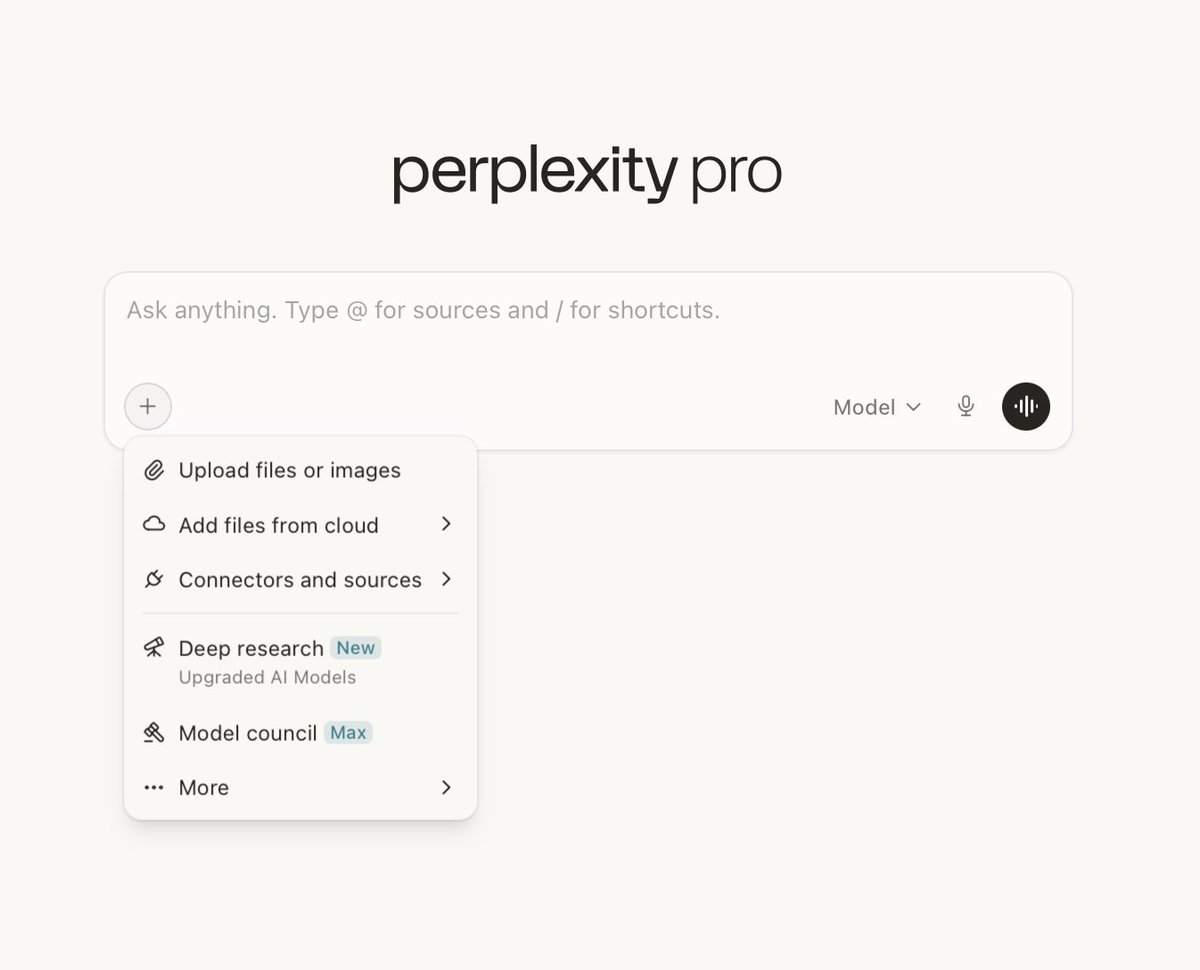
Use them on Perplexity Pro for the best results (it searches the web natively).
But they also work incredibly well on Grok (real-time X + web search) and Gemini (Google search integration).
In a world full of misinformation, the person who verifies fastest wins.
But they also work incredibly well on Grok (real-time X + web search) and Gemini (Google search integration).
In a world full of misinformation, the person who verifies fastest wins.
I hope this post helped you today.
Follow me @socialwithaayan for more
Share it with someone who might need it.
Follow me @socialwithaayan for more
Share it with someone who might need it.
https://twitter.com/1575650469787369473/status/2021898201515930051
• • •
Missing some Tweet in this thread? You can try to
force a refresh