1/ Why does the Russian government appear to be so clueless about the role Telegram plays in military communications? The answer, one warblogger suggests, is that the military leadership doesn't want to admit its failure to provide its own reliable communications solutions. ⬇️
2/ Recent claims by high-ranking officials that Telegram isn't relevant to military communications have prompted howls of outrage and detailed rebuttals from Russian warbloggers, but have also pointed to a deeper problem about what reliance on Telegram (and Starlink) represents.
3/ In both cases, the Russian military has failed abysmally to provide workable solutions. Telegram and Starlink were both adopted so widely because the 'official' alternatives (military messngers and the Yamal satellite constellation) are slow, unreliable and lack key features.
4/ This has resulted in Telegram lacking a senior champion within the military leadership, because to champion it would be to admit their own failure. They can't admit their troops' dependence on it to the government, which remains ignorant of the reality.
5/ The problem is discussed by 'Older than Edda':
"Municipal/regional authorities, businesses, and the military all have a stake in Telegram's operation."
6/ "Moreover, the closer to the front, the stronger their interest, especially for those who need prompt notification of drone attacks in the border zone. We'll simply leave aside purely military needs.
7/ "But in the peaceful rear, there's no unified structure that could express this interest at the highest political level. And in war? In war, first and foremost, we don't have a politician directly responsible for matters of state governance in wartime.
8/ "The government, based in Moscow, governs the country as a whole. Governors each have their own separate responsibilities, and for each of them, Telegram's accessibility may be important, but not so important that they should be focused on it at the expense of everything else.
9/ "This issue could have been quite important at the level of the working group on military affairs with the right to report to the president, which was once headed by Andrei Turchak, but after he left for Altai, the group quietly died, apparently.
10/ "The military remains. But the problem with the military is that when the top brass directly asks, "Do you really need Telegram?" no one will answer affirmatively, because then the questions immediately arise, "What does the Main Communications Directorate of the…
11/ …Armed Forces do?"
As a result, Telegram ended up "ownerless" in the sense that, while important for everyone, it didn't have sufficient priority for anyone at the top political level.
12/ "And the working group—with the right to report to the president!—wouldn't be a bad idea to reactivate it. It's really about time. And its leader should be influential enough that anyone who wanted to eat him in a political struggle would risk choking." /end
1/ Telegram is deeply embedded into Russian military units' internal communications, providing functionality that MAX, the Russian government's authorised app, doesn't have. A commentary highlights the vast gap that is being opened up by the government's blocking of Telegram. ⬇️
2/ The Two Majors Charitable Foundation writes that without Telegram, information exchange, skills transfer, and moral mobilisation work within the Russian army will be crippled:
3/ "I'd really like to add that for a long time, we've been gathering specialized groups in closed chats, including those focused on engineering and UAVs, to share experiences and build a knowledge base. Almost everyone there is a frontline engineer.
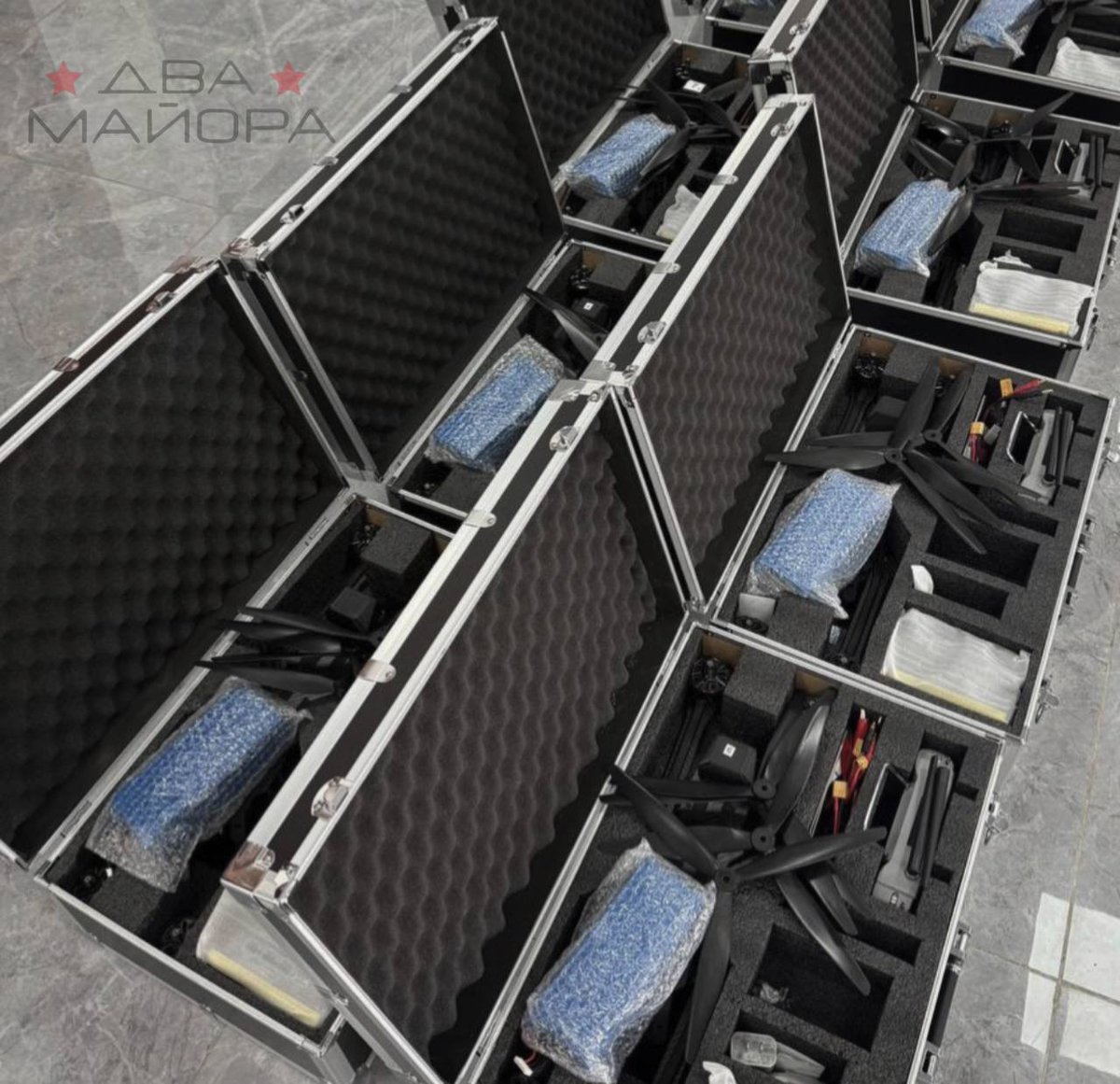
1/ Russia's Federal Customs Service is seeking to prosecute Russian volunteers who are importing reconnaissance drones from China to give to frontline troops. It's the latest chapter in a saga of bureaucratic obstruction that is blocking vital supplies to the Russian army. ⬇️
2/ Much of the army's equipment, and many of its drones, are purchased with private money by volunteer supporters or the soldiers themselves. High-tech equipment such as drones and communications equipment is purchased in China or Central Asia and imported into Russia.
3/ However, the Federal Customs Service has been a major blocker. Increased customs checks on the borders have meant that cargo trucks have suffered delays of days or even weeks, drastically slowing the provision of essential supplies for the Russian army.
1/ Leaked casualty figures from an elite Russian special forces brigade indicate that it has suffered huge losses in Ukraine, equivalent to more than half of its entire roster of personnel. Scores of men are listed as being 'unaccounted for', in other words having deserted. ⬇️
2/ The 10th Separate Guards Special Purpose Brigade (military unit 51532) is a special forces (spetsnaz) unit under the GRU. It is a 2002 refoundation by Russia of a Soviet-era spetsnaz unit that, ironically, passed to Ukraine when the Soviet Union broke up in 1991.
3/ Since the invasion of February 2022, the brigade has been fighting on the Kherson front, which has seen constant and extremely bloody fighting over the islands in the Dnipro river and delta. Russian sources have reported very high casualties.
1/ Russian warbloggers are continuing to provide examples of how Telegram is used for frontline battlefield communications, to refute the claim of presidential spokesman Dmitri Peskov that such a thing is "not possible to imagine". ⬇️
2/ Platon Mamadov provides two detailed examples:
"Example number one:
Aerial reconnaissance of Unit N spotted a Ukrainian self-propelled gun in a shelter in the middle of town N."
3/ "Five minutes after the discovery, the target's coordinates and a detailed video were uploaded to a special secret chat group read by all drone operators, scouts, and artillerymen in that sector of the front.
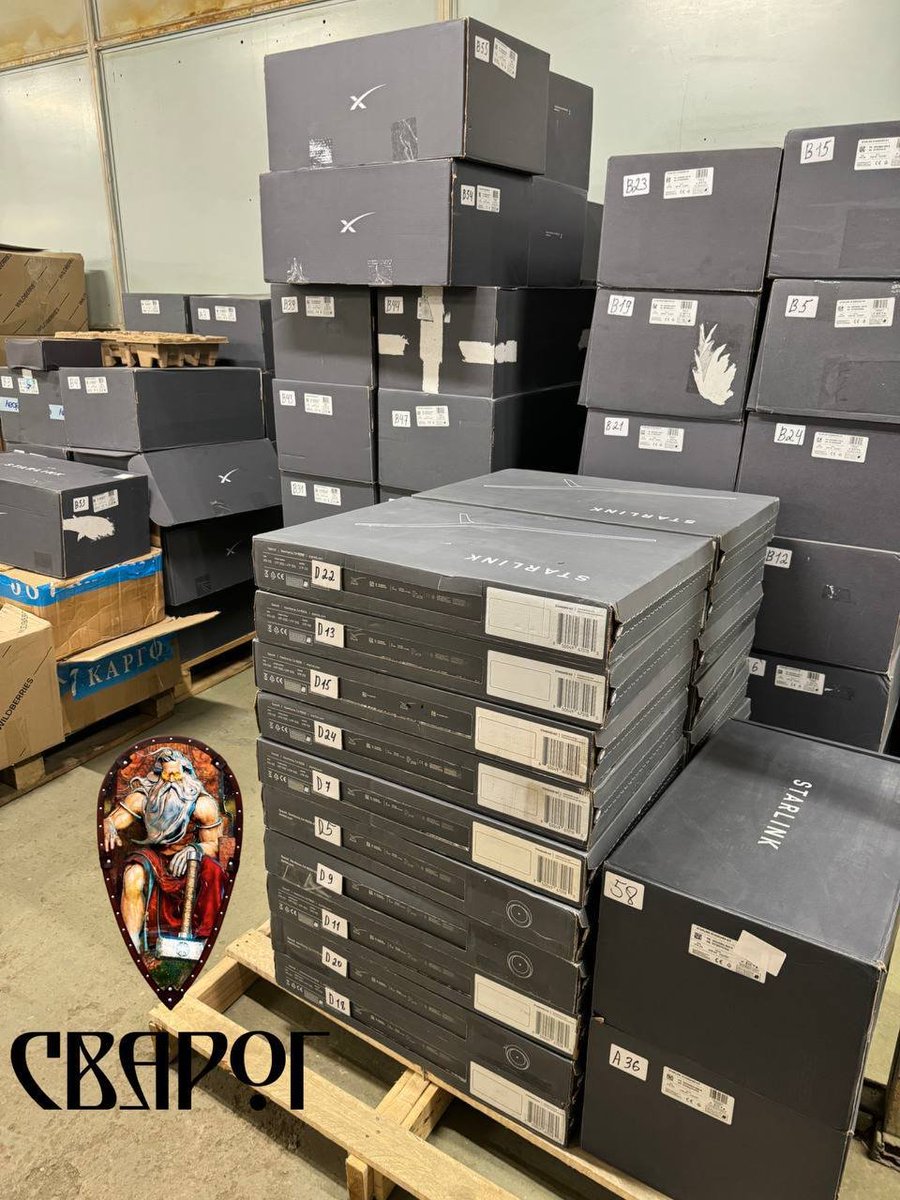
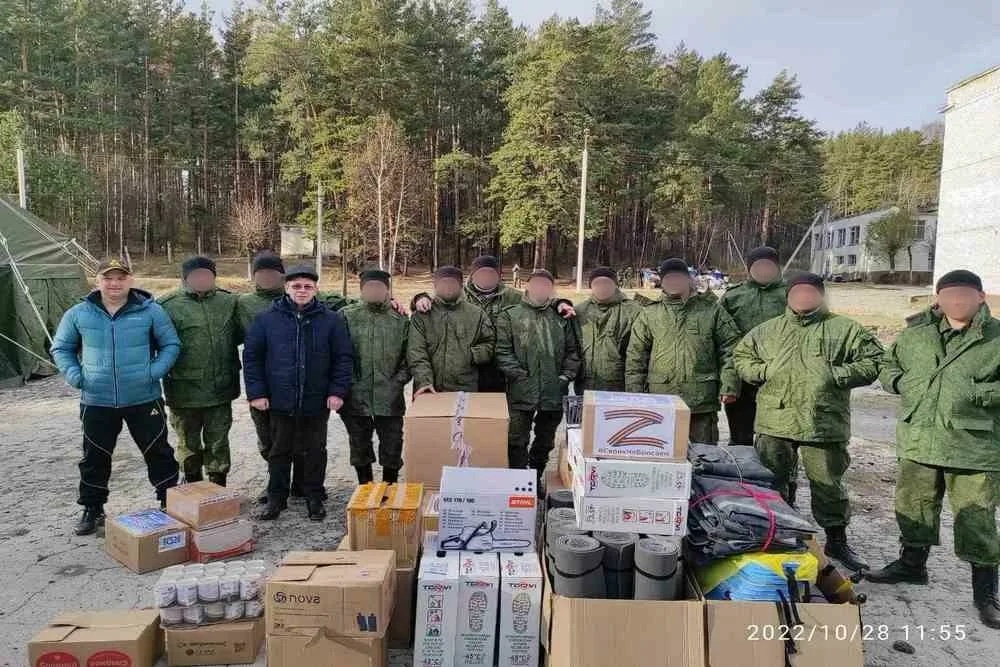
1/ The Russian army faces a crisis with obtaining aid for its soldiers, who are dependent on volunteers to provide them with everything from socks to Starlink terminals. Russian warbloggers say that the blocking of Telegram will wreck voluntary assistance efforts. ⬇️
2/ 'It's time ZOV to go home' writes:
"Since 2022, Telegram has become the primary source of funds for the front. Numerous units and volunteers have created their own channels."
3/ "This has enabled us to address a colossal number of issues that needed to be addressed right then and there. It's impossible otherwise: when a fundraising campaign begins, it means the fundraising item was needed yesterday, and there's no time to waste.
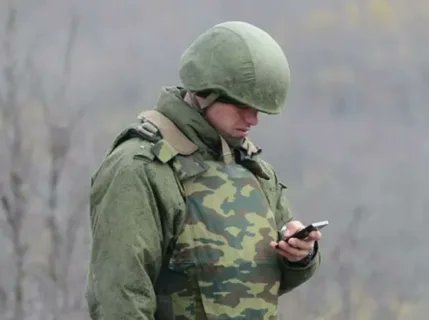
1/ Russian soldiers overwhelmingly prefer to use Telegram for tactical communications despite the Russian army having its own dedicated military messengers. The reason isn't complex – the military's own alternatives are unreliable and difficult to use. ⬇️
2/ 'Vault No. 8' explains the problem:
"The Telegram slowdown is particularly nasty because Telegram is used for communication on the front lines.
Military messengers have been around since I wrote about this, but... Guess what you have to do to get a firmware-ready smartphone?
3/ "That's right! Buy it [with your own money] and send it in for a firmware update. On top of that, one of the military messengers periodically crashes like crazy, and the phone has to be sent in for a [periodic] firmware update, which takes at least a couple of weeks.