1) We have a new preprint paper out about population immunity to H5N1 and H5N5. Results are in line with what others have seen but there are two new findings. medrxiv.org/content/10.648…
2) Since there was a recent fatal H5N5 infection in the US, we also assessed population immunity to N5. Compared to N1, where we see a lot of neuraminidase inhibition activity to H5N1, this is basically absent for H5N5. Humans don't have a lot of antibodies to N5.
3) We also specifically looked at NA immunity to an H5N1 strain from a severe human case in British Columbia. The N1 from that strain had gained an additional N-linked glycosylation site. This makes it more resistant to human N1 anitbodies.
4) Conclusions: Humans have strong immunity to the N1 component of H5N1 but not to the N5 component of H5N5. Also, H5N1 strains with additional glycosylation sites in N1 partially escape immunity. H5N5 and H5N1+glyc would have it likely easier to spread in humans.
• • •
Missing some Tweet in this thread? You can try to
force a refresh

1) Since there is a lot of confusion about the reduction of the overhead rate on NIH grants to 15% (see here: ) I'll do a little tweetorial (or X-torial?) about it.grants.nih.gov/grants/guide/n…
2) So, for every dollar that NIH pays for research through a grant (we call this direct cost), they usually add extra money (which we call indirect cost). While the direct cost pays for the actual research (salaries of scientists, reagents etc.), the indirect cost pays for....
3)....infrastructure and utilities. It pays for basic things like electricity, water, heat, even toilet paper but also things like maintenance of animal facilities, core facilities with special equipment, administrative services, building maintenance, security, mail, internet....
1) We recently published a serosurvey in Nature Communications that nicely describes the development of anti-SARS-CoV-2 antibody titers in the New York City population.
2) This was a very nice collaboration between Harm van Bakel's lab, Mia Sordillo, @VivianaSimonLab and @AubreeGordonPhD , spearheaded by @abramwagner and of course first author Juan Manuel Carreño who is leading my serology core.
3) For this study, we measured antibody titers to spike from the February 2020 to fall of 2023 throughout different waves of SARS-CoV-2 and the rollout of vaccines. Several hundred random leftover samples from our hospital were assessed for spike titers every week (>55 000 total).
1) I am reviewing some of the literature re antigenic distances between XBB.1.5 nd JN.1 and how well the XBB.1.5 vaccine works right now. I'll post random papers here. Just for nerds. (this is not a story, just a bunch of papers).
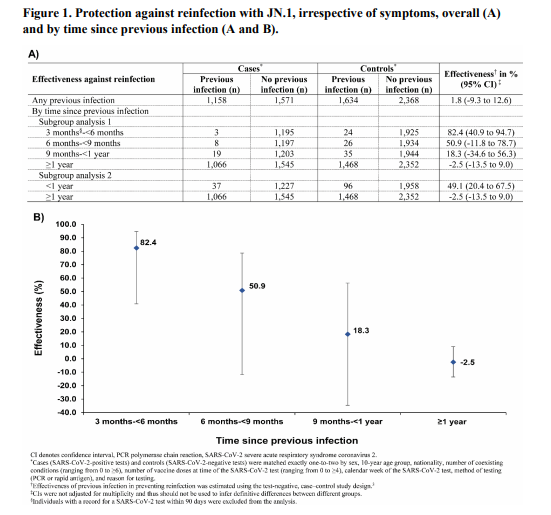
2) Interesting paper from Qatar re protection of infection from JN.1 reinfection. Take home message is probably that JN.1 is antigenically distant from XBB.1.5. medrxiv.org/content/10.110…
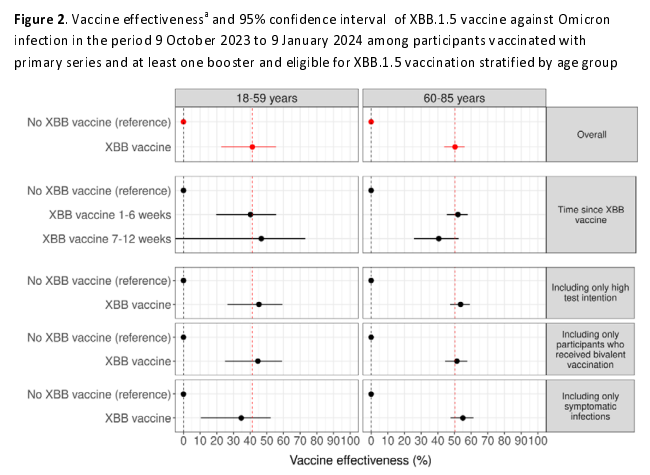
3) Nice paper from the Netherlands (@dirkeggink) looking at XBB.1.5 vaccine effectiveness against XBB.1.5 and JN.1. Take home message: Vaccine works. medrxiv.org/content/10.110…
1) Our preprint describing 3 years of our PARIS study is live. There are a few interesting observations I wanted to highlight. This was the work of a large team but the lead is really @VivianaSimonLab medrxiv.org/content/10.110…
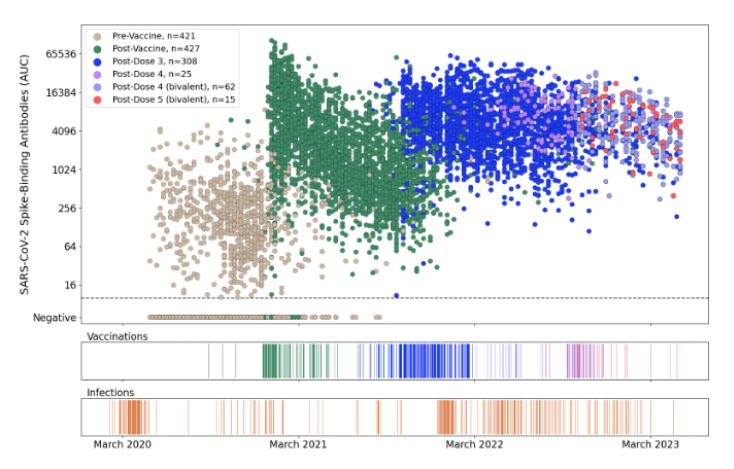
2) First, here is an overview of the spike titers of all the study time points. We had 501 individuals in the study and measure their anti-spike binding antibodies on a regular basis.
3) The first take home message is: Antibody decay after mRNA vaccination is biphasic. First a steep drop, then a stabilization phase. The graph here shows titers after the primary immunization series. Blue is previously naive individuals, orange is hybrid immune.
1) I feel this paper by Mattias Forsell's group is often overlooked but shows something very important: Binding antibody to SARS-CoV-2 spike - in the absence of strong neutralizing antibodies to a new variant - predict protection from mortality. .thelancet.com/journals/lanep…
2) Individuals with the lowest antibody titer have the highest risk, individuals with higher titers are protected. Of course, we are not talking about protection from infection or protection from symptomatic disease by binding, non-neutralizing antibodies here, but protection....
3) ...from severe outcomes. Why is this important? Neutralizing antibodies (which likely are the main protective factor when it comes to protection from infection or symptomatic disease) often drop steeply against new variants while binding antibodies are in most cases.....
1) In a recent study with @gabagagan, Anass Abbad, Juan Manuel Carreño and @VivianaSimonLab we wanted to see how much crossreactivity exists in the post-COVID era to spikes beyond SARS-CoV-2. We expressed all the spikes shown in the tree below and got going.
2) We ran ELISAs with longitudinal samples from people who had received the primary vaccination series of COVID-19 mRNA vaccines including naive individuals (grey) and people who previously had SARS-CoV-2 infections (black).
3) Titers actually went up for all sarbecoviruses and even for most other betacoronaviruses (with the exception of nobecoviruses where there was no increase in reactivity for one of the two spikes tested).