The results of the AR7a renewables auction expose government lies about the cost of renewables and net zero. A thread 🧵(1/n) (link to full article in bio)
AR7a awarded contracts for 4.9GW of new solar at a clearing price of £68/MWh (in 2025 prices), 1.3GW of onshore wind at £75/MWh and a further 21MW of tidal stream capacity. (2/n)
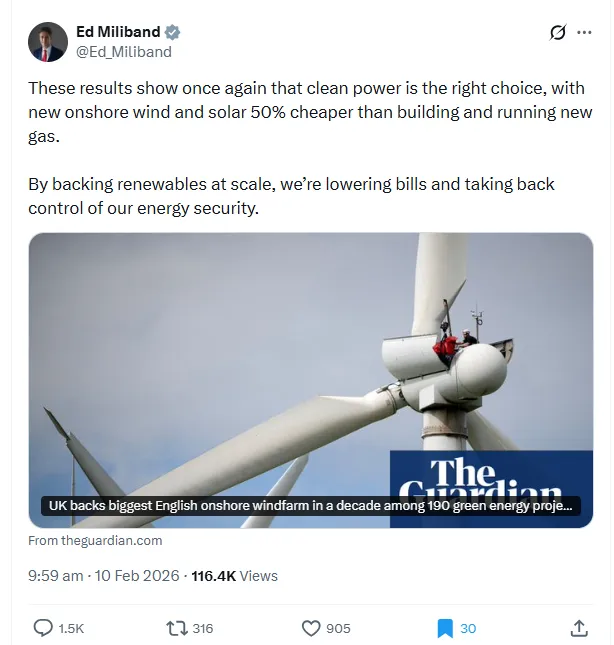
Superficially it looks cheap, leading @Ed_Miliband to claim new onshore wind & solar are 50% cheaper than gas & he is lowering bills. But his claims are based on lies (3/n)
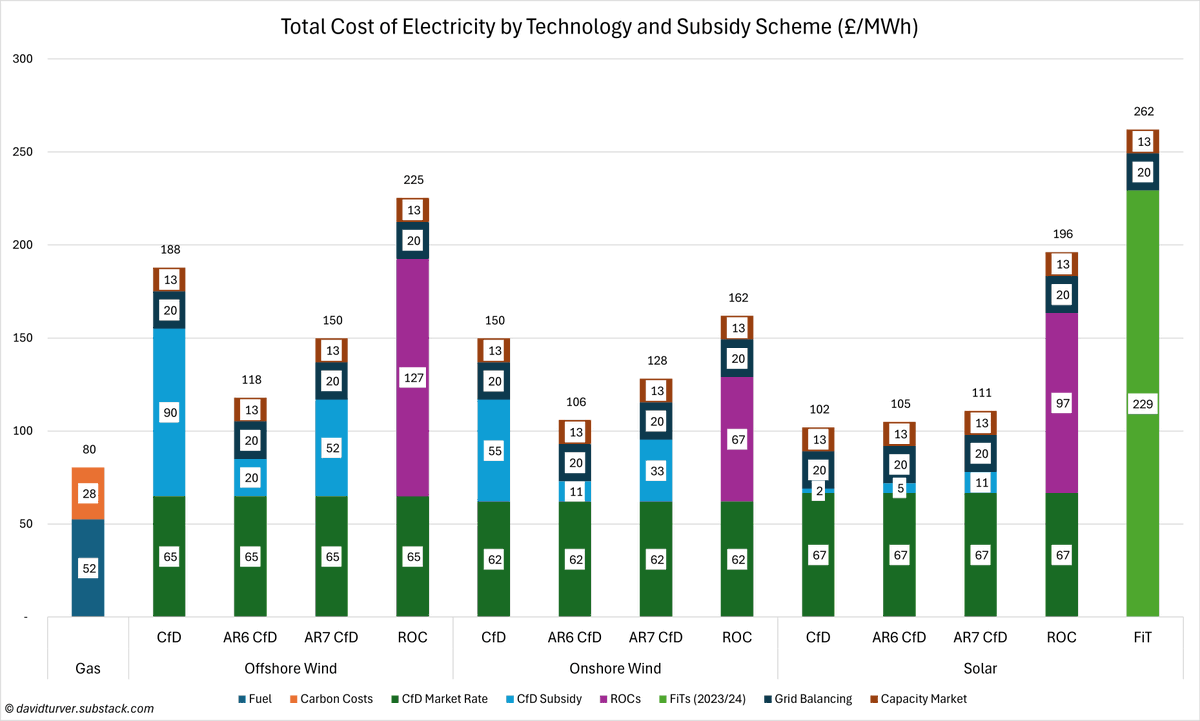
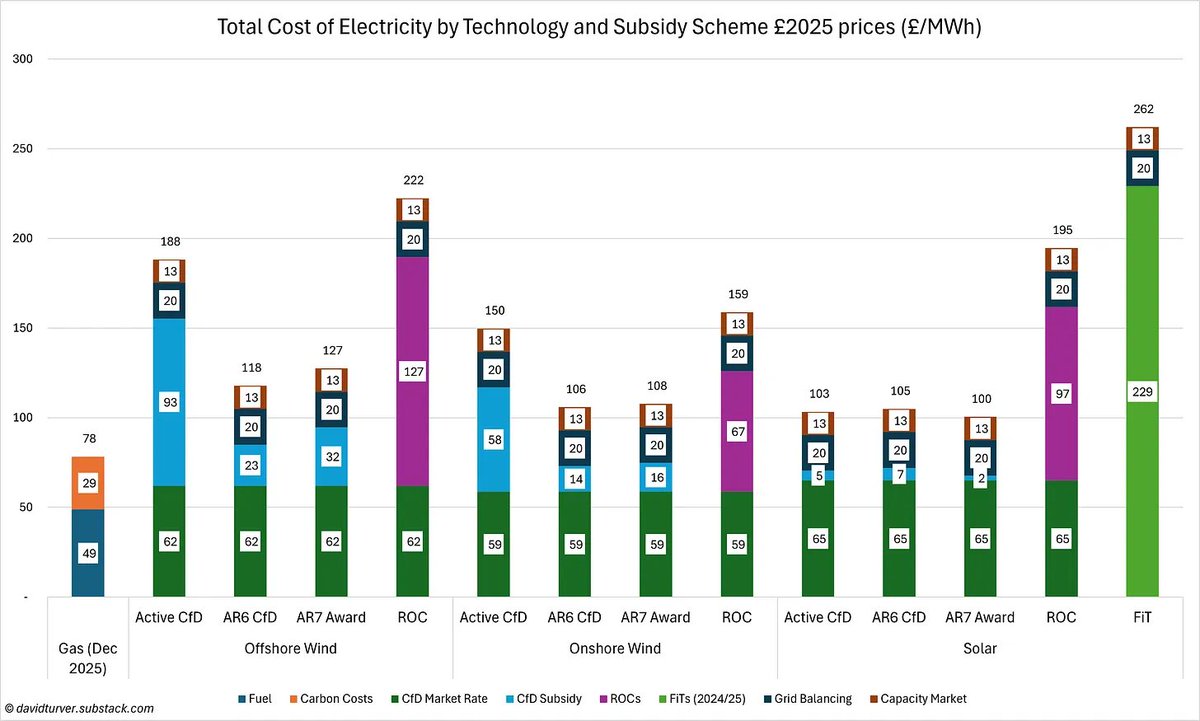
The raw costs of the auction don't represent the full costs of renewables. When you add £33/MWh for grid balancing and backup through the capacity market, prices are above recent gas-fired electricity including carbon taxes, without even considering grid expansion costs (4/n)
Miliband's claims rest on a flawed reading of the recent Electricity Generation Cost 2025 report that shows new gas plants running at 30% load factor costing £145/MWh (5/n)
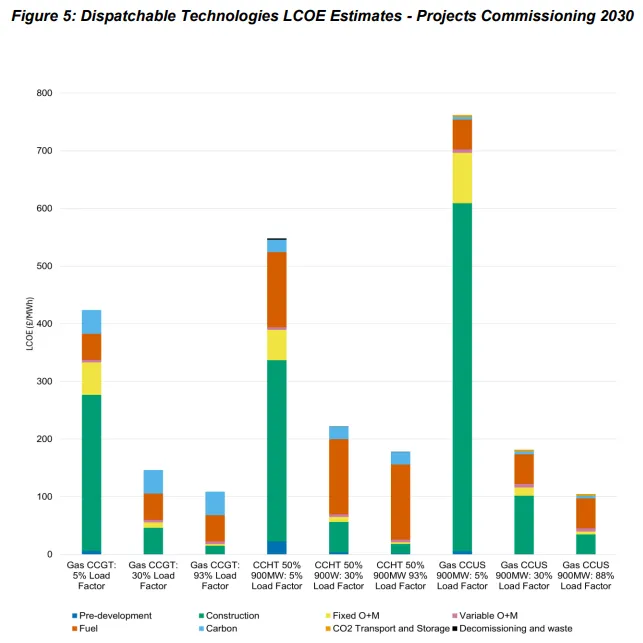
But this is a flawed analysis. First, gas plants on have such a low load factor because of renewables. Running them more could reduce costs as low as £109/MWh (6/n)
Second, the costs of gas-fired plants are loaded with £41/MWh of made-up carbon costs. If we cut that then the cost of gas would to £104/MWh (30% LF) or £68/MWh (93% LF) (7/n)
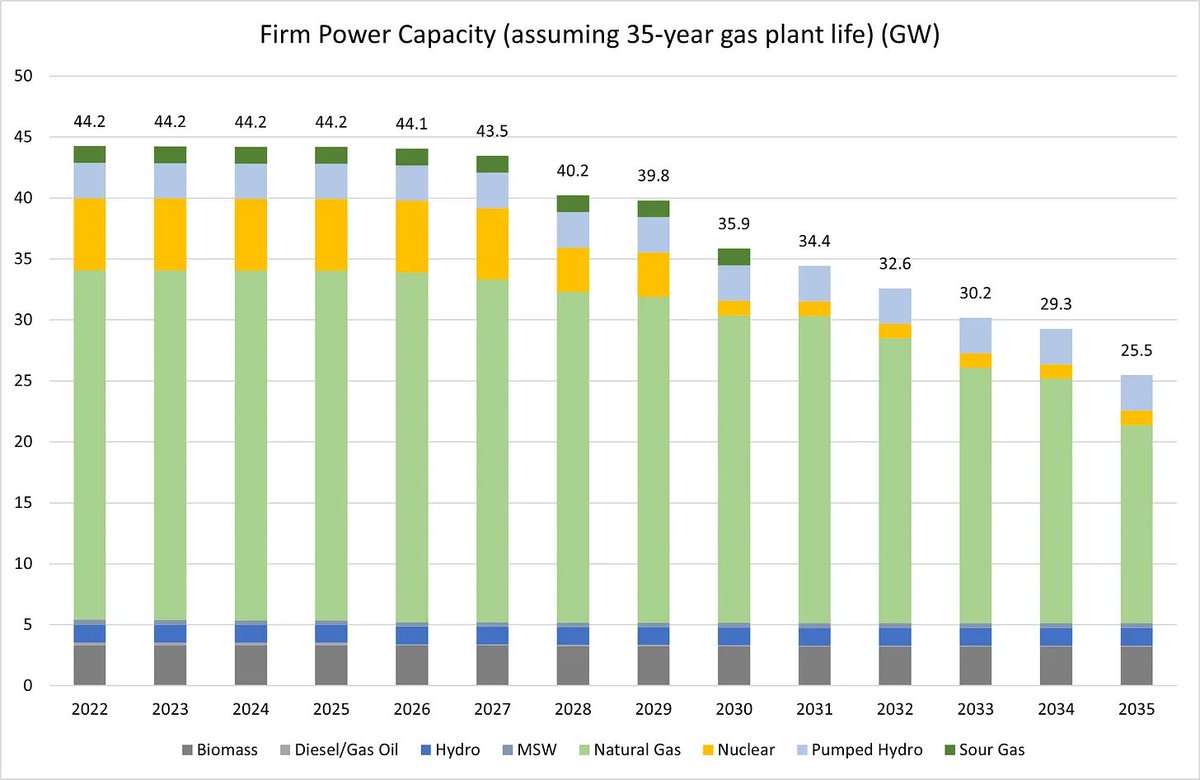
Finally, as NESO acknowledged in their Clean Power 2030 Report we will need 35GW of unabated gas-fired generation in 2030 & the gas fleet is aging so the capex needs to be spent anyway (8/n)
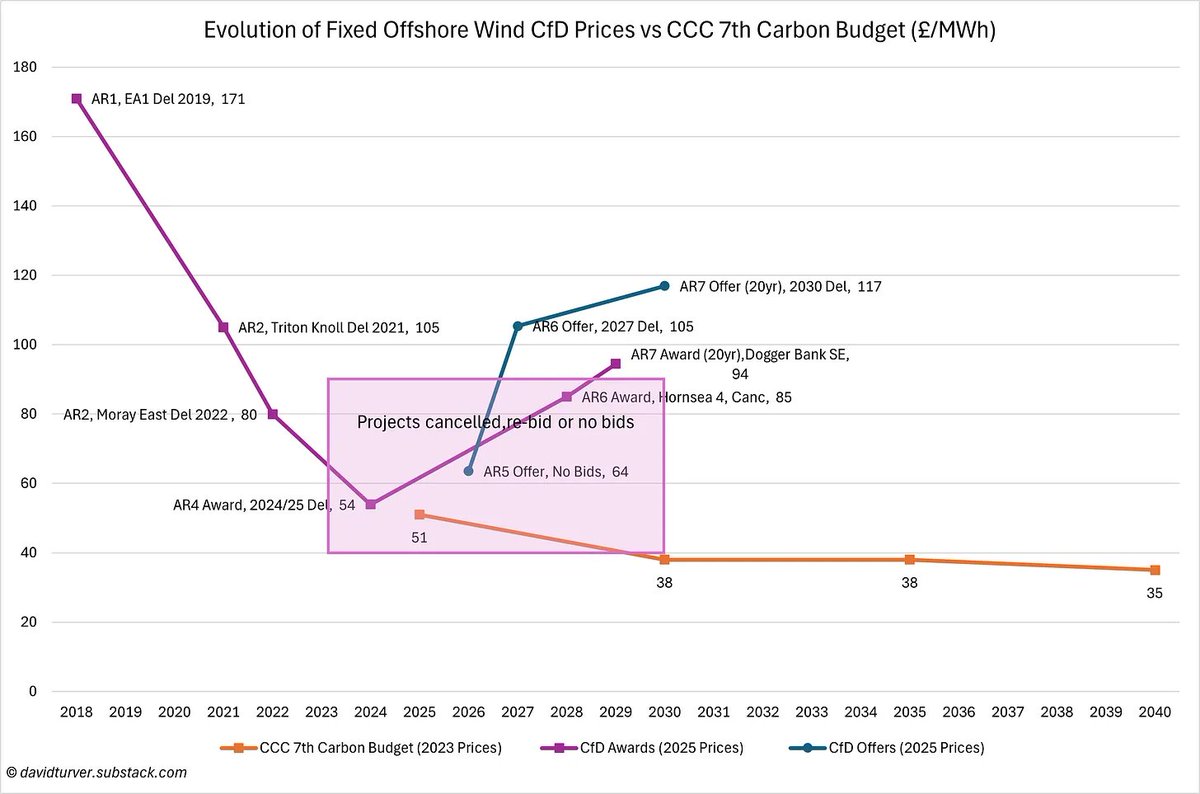
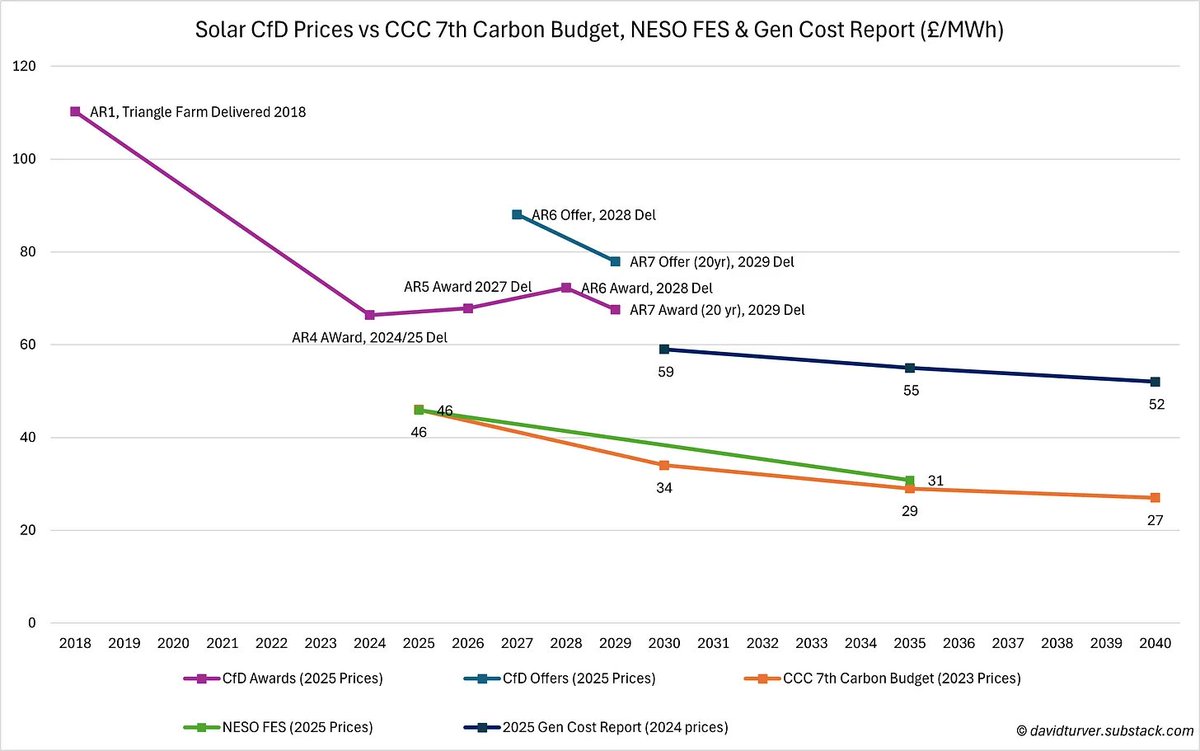
The prices for renewables awarded contracts in AR7 & AR7a is much higher than assumed by either NESO in their FES report and the CCC in their 7th carbon budget. Solar strike prices are roughly half those assumed and would be even higher if contracts not extended to 20 yrs (9/n)
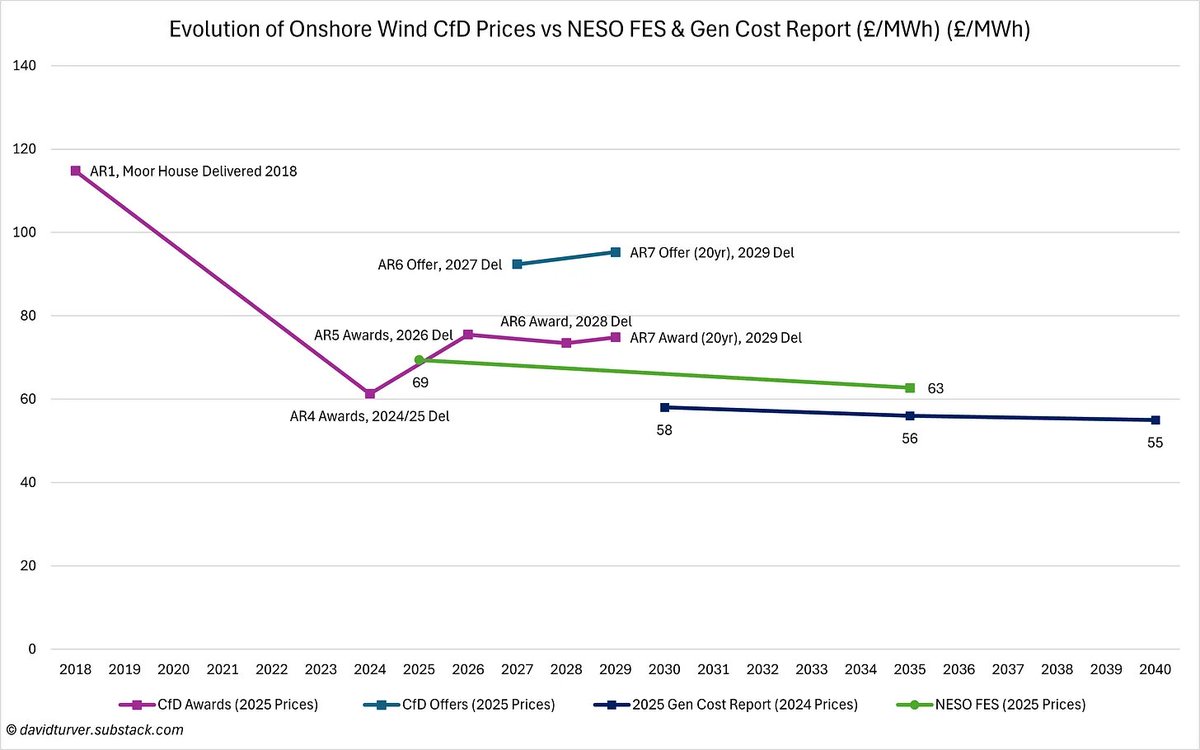
Onshore wind strike prices were also higher than assumed by NESO. CCC didn't even bother to cost onshore wind (10/n)
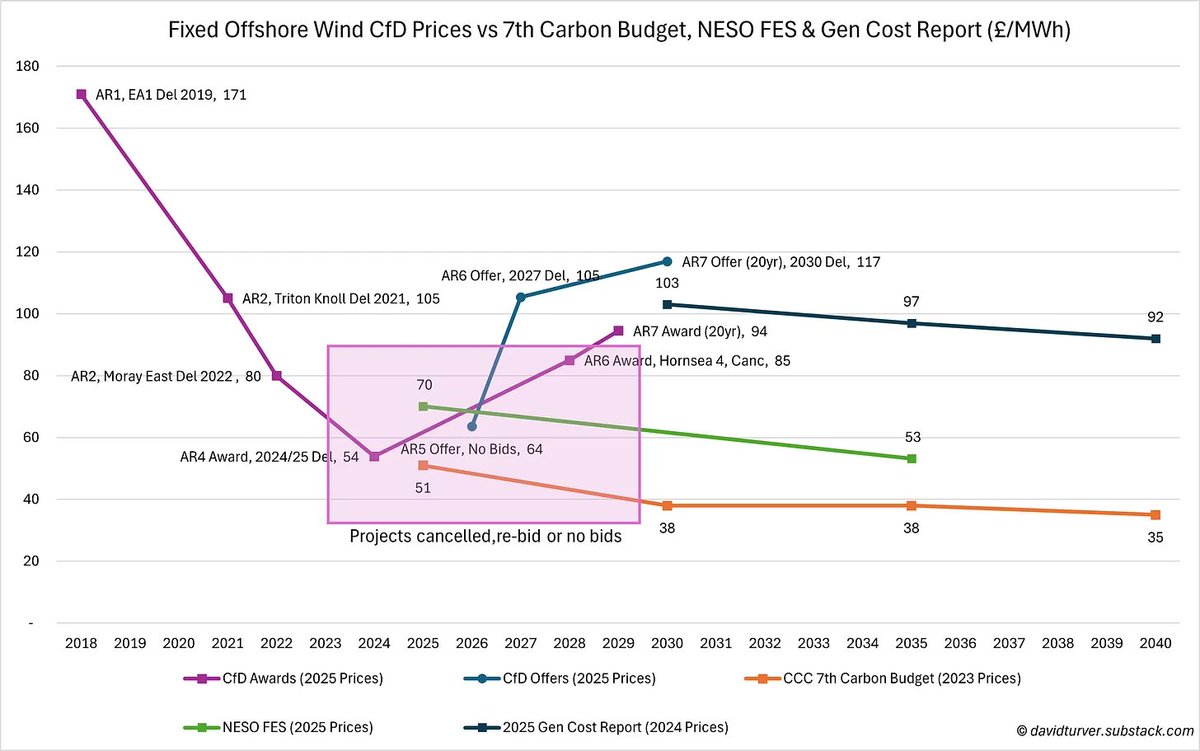
The headline fixed-bottom offshore wind strike prices were 2.5 times those assumed by the CCC and ~50% higher than NESO assumptions (11/n)
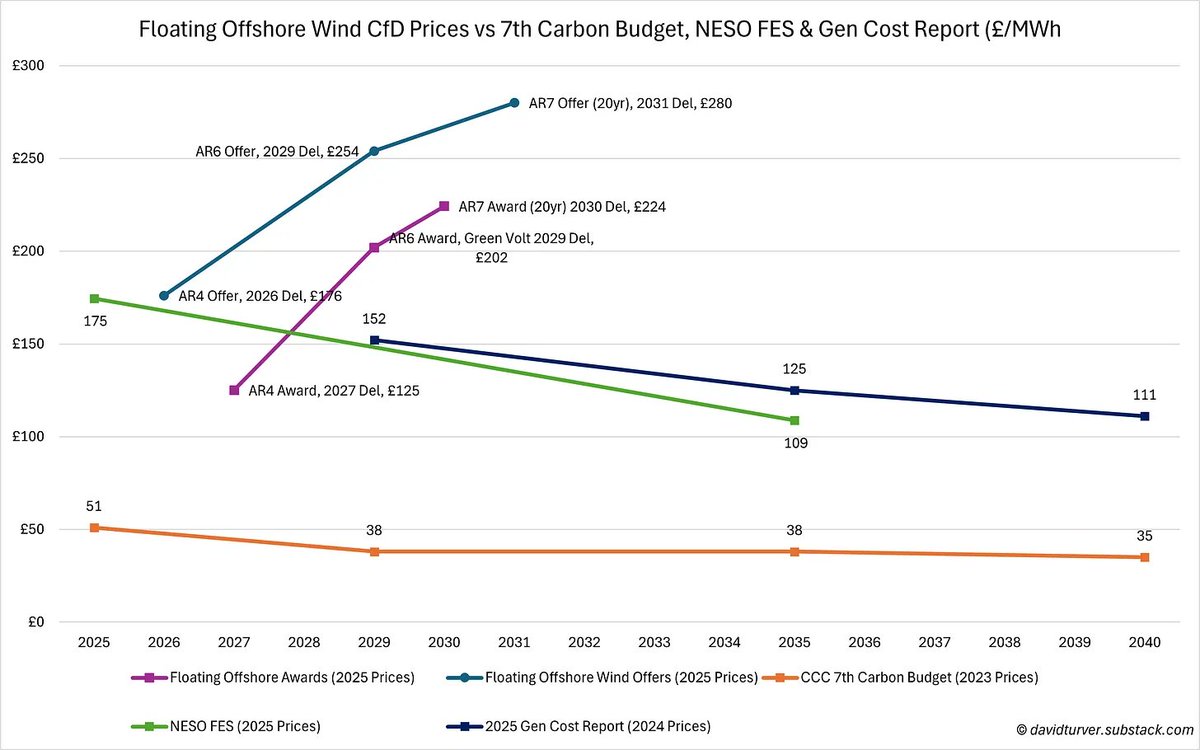
And floating offshore wind was even more expensive - ~6X CCC assumption for generic offshore wind & ~58% higher than NESO assumptions (12/n)
Miliband claimed to be “lowering bills” and @mgshanks solar and onshore wind are the cheapest power we can build and operate. As we have seen, both claims are outright lies (13/n)
The agencies of government like NESO and the CCC are making even more egregious claims about the cost of renewables to make the whole Net Zero project look cheap (14/n)
This sham cannot be allowed to continue and there must be legal penalties for telling lies and misleading the nation (15/n)
If you enjoyed this thread, please like and share. You can sign up for free to read the full article on the link below (16/16) open.substack.com/pub/davidturve…
Hi @threadreaderapp unroll please.
• • •
Missing some Tweet in this thread? You can try to
force a refresh

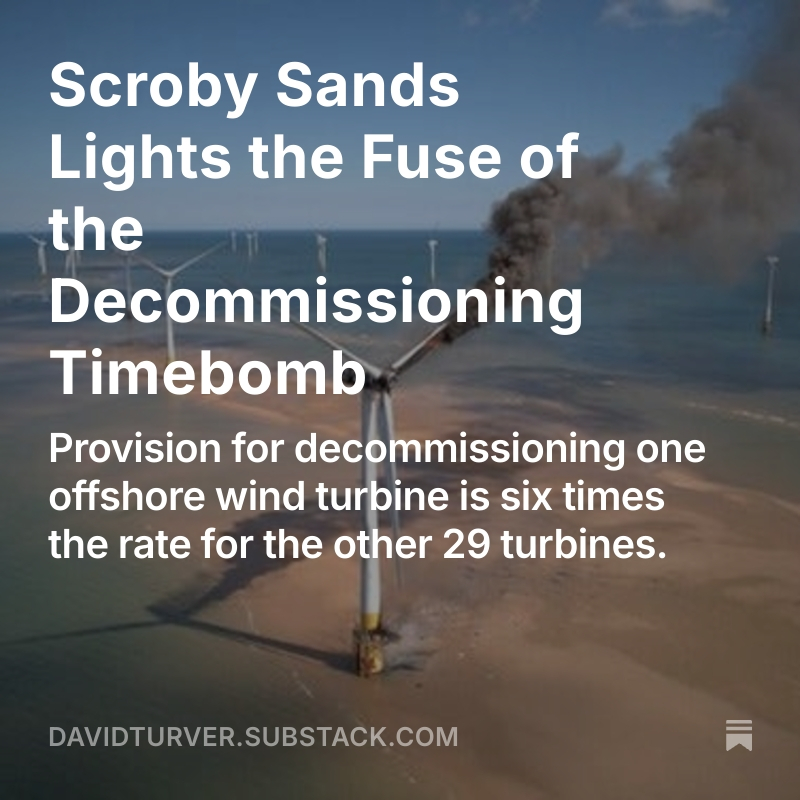
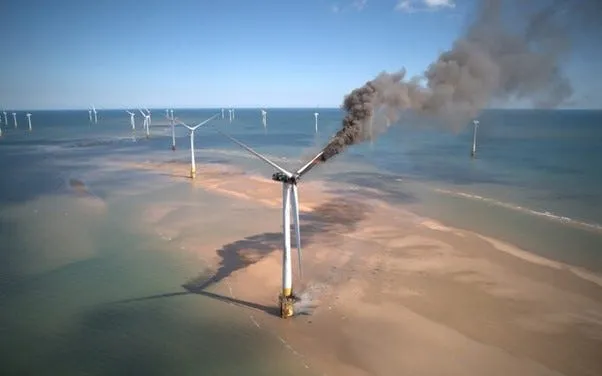
One failed turbine at Scroby Sands exposes the scale of the cost of decommissioning offshore wind farms. And there’s precious little cash being set aside to cover it. A thread (1/n)
Scroby Sands is a relatively small 60MW offshore windfarm. In 2023 one of the 30 turbines caught fire and owner RWE has decided to decommission that single turbine (2/n)
In the accounts up to end 2024, we can see the wind farm is losing money, with pre-tax losses of £4.7m, despite earning ROC subsidies worth £9.8m, or nearly 48% of revenue (3/n)
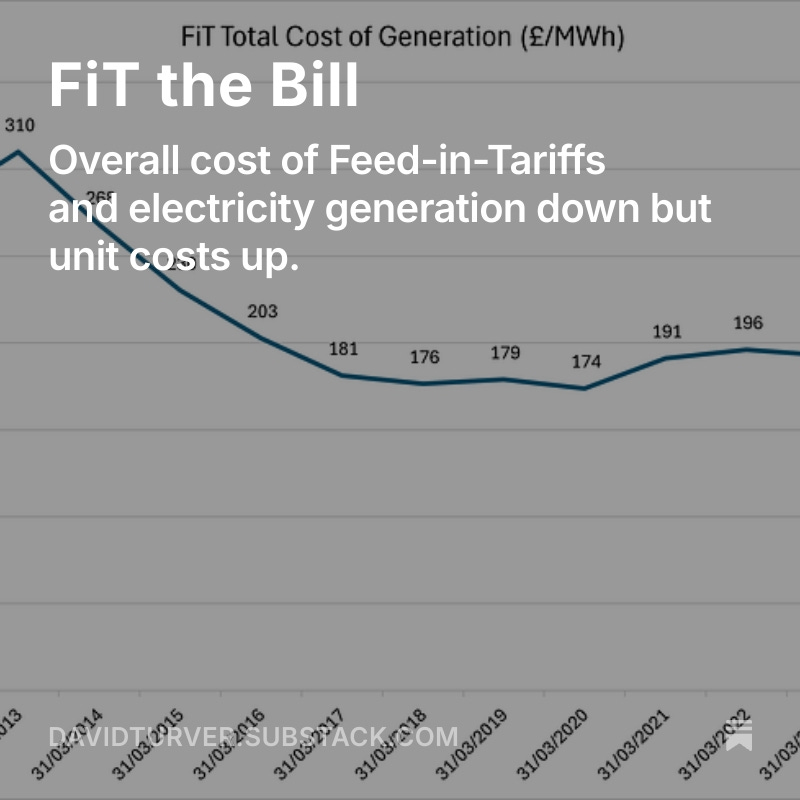
The data is in, so now we know how much the Feed-in-Tariff (FiT) scheme cost us in 2024/25. A thread 🧵(1/n)
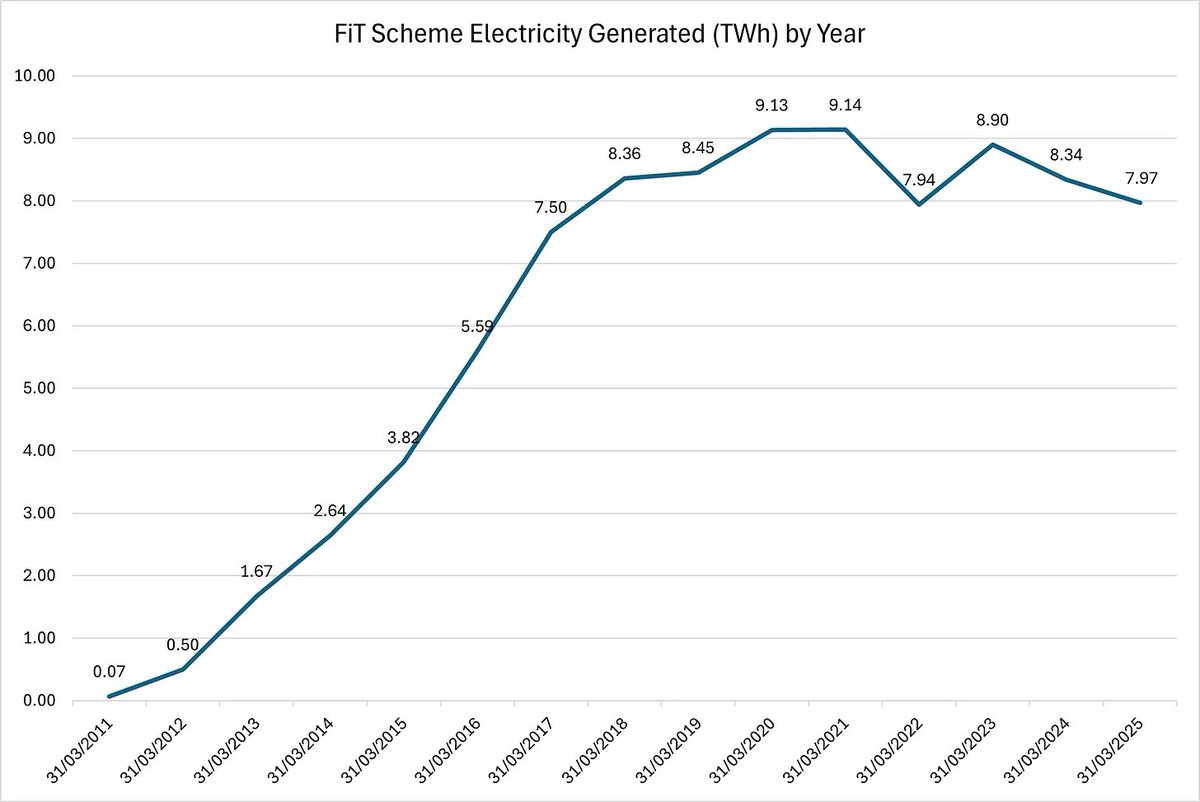
First, overall generation under the scheme was down on the year at just under 8TWh. It is beginning to look like a downtrend has been in place since 2020/21 (2/n)
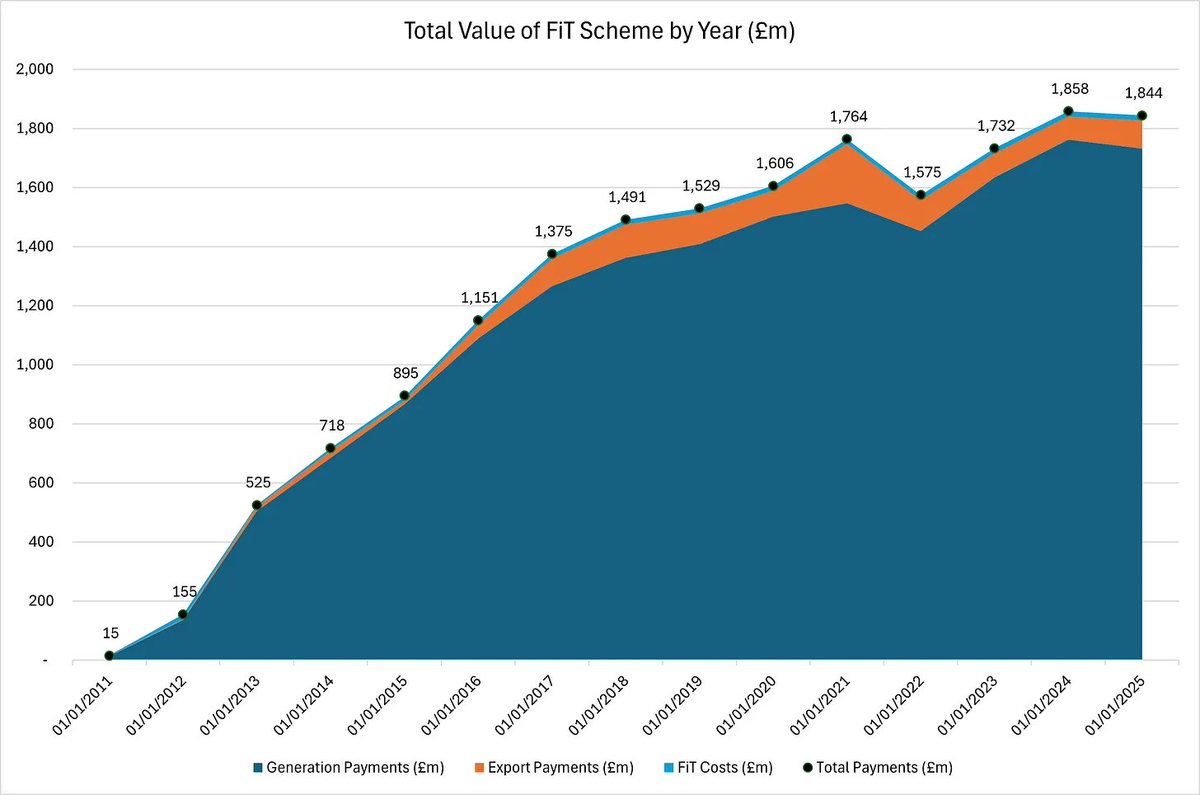
The total cost of the scheme fell slightly too to £1.84bn (3/n)
If NESO cannot produce a complete set of energy scenarios and we can't rely on the costs, then what is the point of NESO. A thread (1/n)
Many green blobbers have got very huffy about my report for the IEA looking into the various estimates of the cost of Net Zero (2/n) iea.org.uk/publications/t…
Fulminator-in-chief was @ret_ward who even went even went so far as to write to the @iealondon and demand the report was withdrawn (3/n)
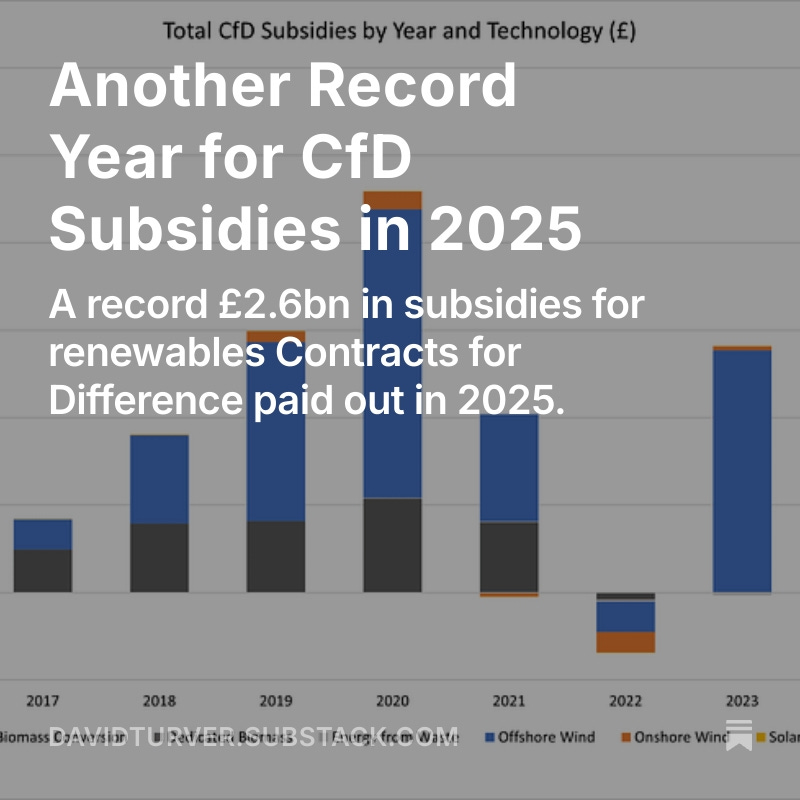
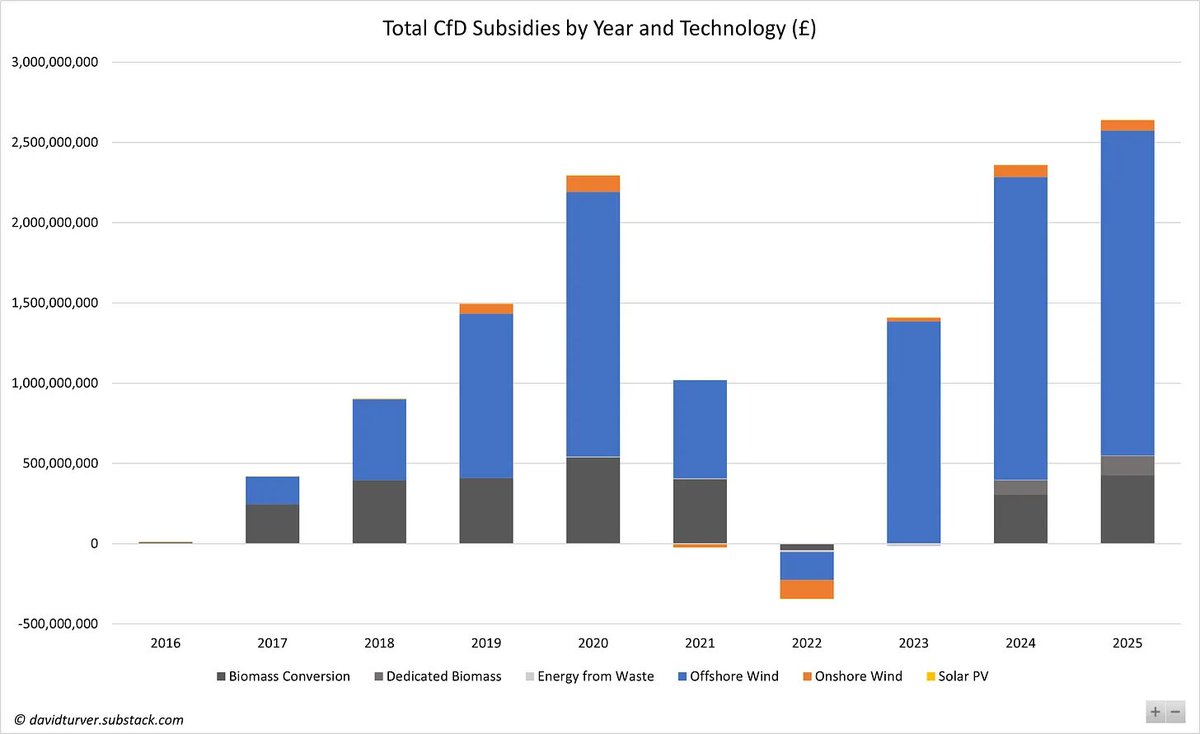
Another record year for CfD subsidies with £2.6bn paid out to renewables generators. Where does all the money go? A thread 🧵(1/n)
2025 was a record year, with £2.6bn paid out, up from £2.4bn in 2024. Offshore wind took the lion's share of over £2bn, with tree-burning taking £428m, dedicated biomass £118m. Onshore wind took 67m and solar £0.1m. (2/n)
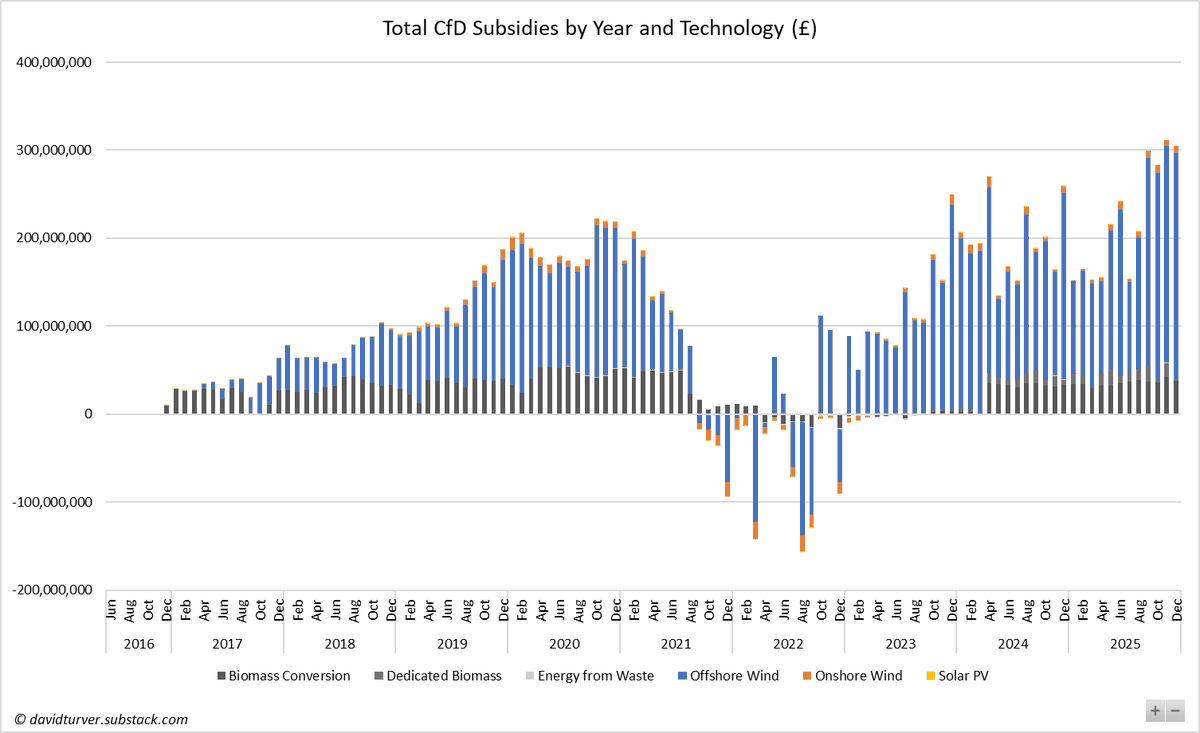
September to December 2025 were also the top 4 subsidy months on record, with November 2025 being the highest month taking £311m. (3/n)
Yesterday's AR7 results show that Miliband, NESO and the CCC are gaslighting the nation. AR7 is locking in index-linked high electricity prices for decades. A thread 🧵(1/n)
So, what happened? A total of 8.4GW of offshore wind was awarded contracts. Of this 8.2GW was fixed-bottom at an average of £91/MWh in 2024 prices, with 0.2GW of floating at £216/MWh. But these prices show the price of offshore wind is rising (2/n)
AR7's 20-year index-linked contracts are only about £9/MWh above AR6's Hornsea 4 15-year contract that was cancelled as uneconomic. However, on a like for like basis AR7 would probably have cost about £105/MWh (3/n)
Alastair and Rory caught telling porkies about solar power while shilling for lossmaking Fuse Energy. When facts and truth are ignored, The Rest is Propaganda. A thread 🧵 (1/n)
The central claim of their clip was that solar is a “very cheap and affordable way to generate electricity”. But in the UK at least, that claim is manifestly untrue. Solar is in fact very expensive (2/n)
We subsidise solar in 3 ways. The basic cost of solar from feed-in-tariffs is £229/MWh for 2024/25. To that we must add £33/MWh for grid balancing and backup costs, giving a total of £282/MWh, or >3X gas-fired electricity including carbon costs (3/n)