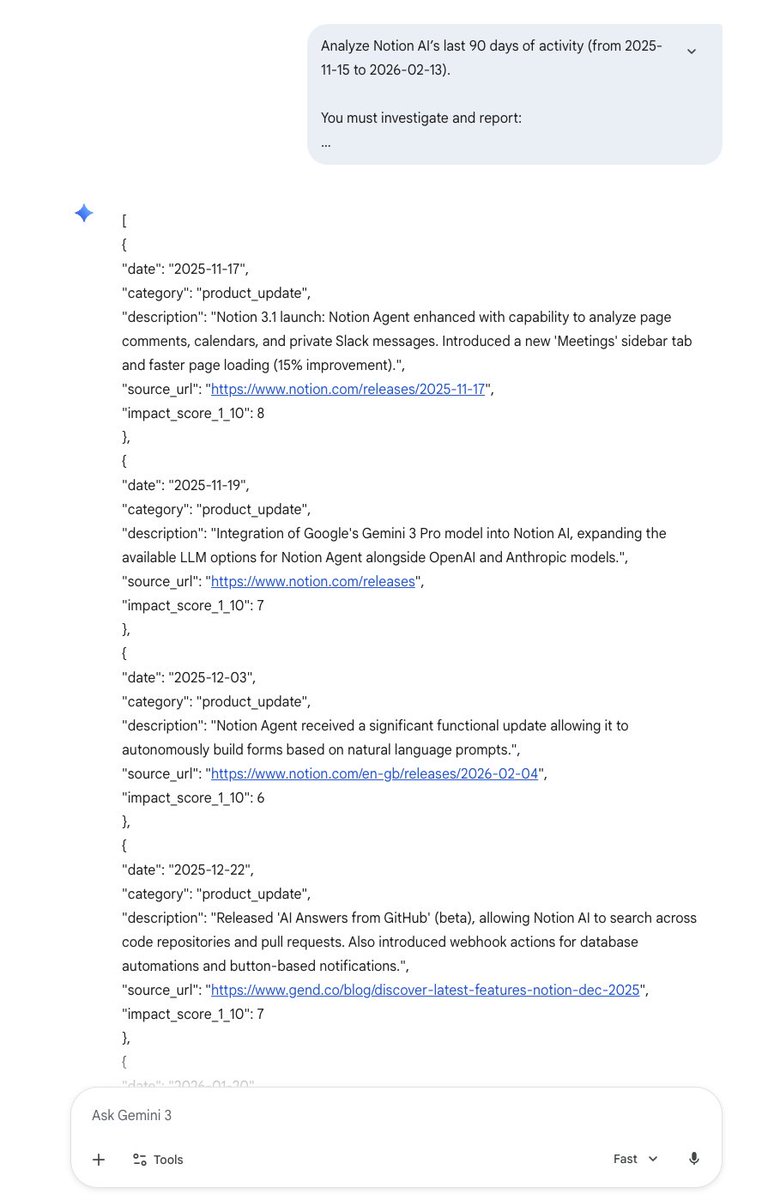
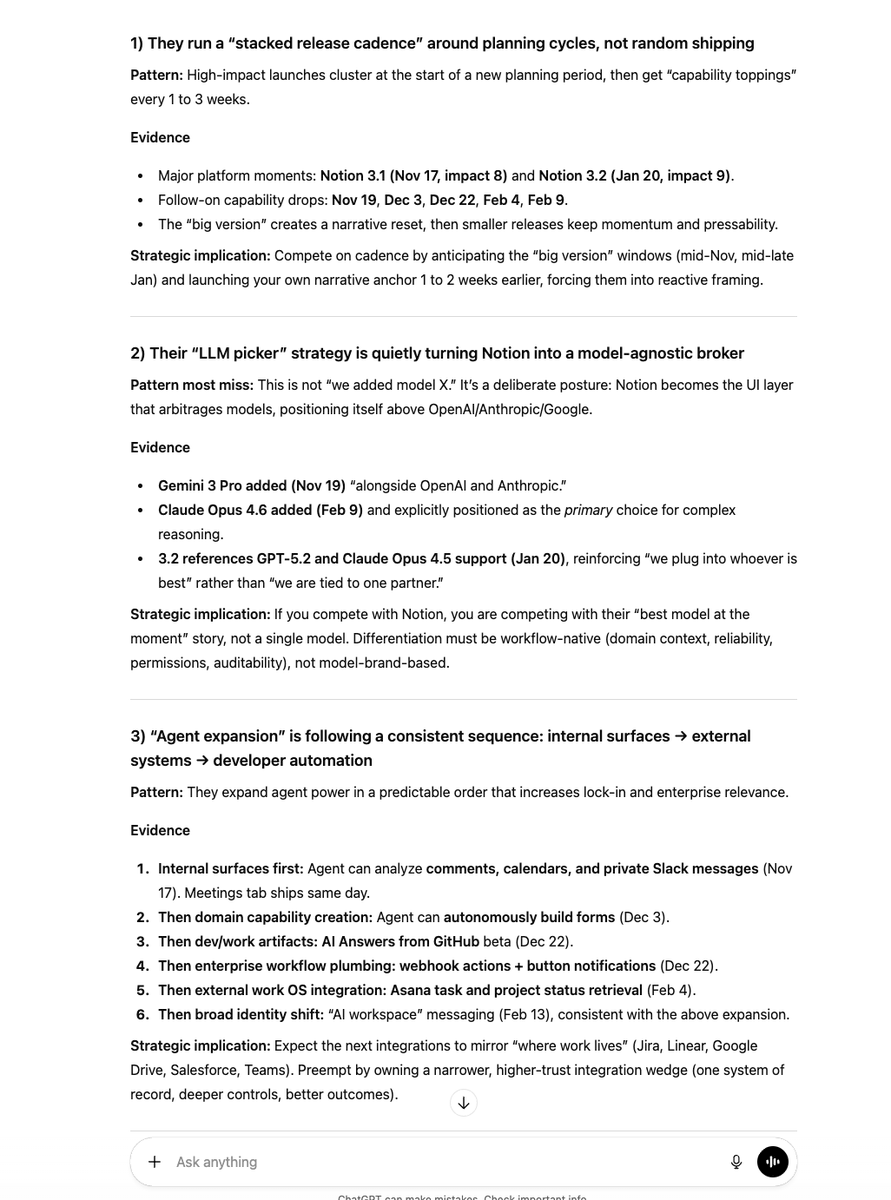
🚨 R.I.P Harvard MBA.
I built a personal MBA using 12 prompts across Claude and Gemini.
It teaches business strategy, growth tactics, and pricing psychology better than any $200K degree.
Here's every prompt you can copy & paste:
I built a personal MBA using 12 prompts across Claude and Gemini.
It teaches business strategy, growth tactics, and pricing psychology better than any $200K degree.
Here's every prompt you can copy & paste:
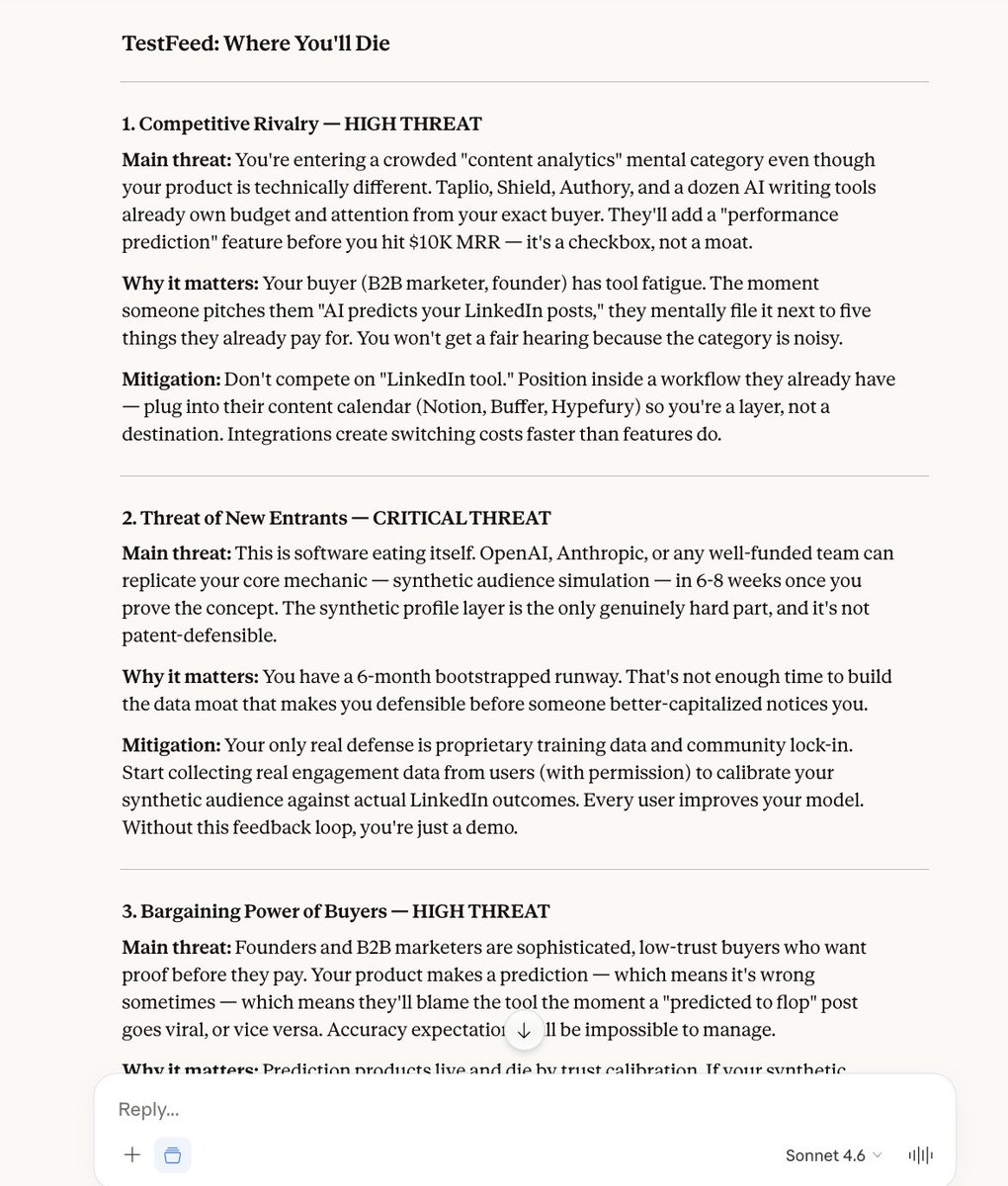
1. Business Strategy (Claude)
Prompt:
"Act as a strategy consultant. Analyze my business idea using
Porter's Five Forces. Be brutal. Tell me where I'll die,
not where I'll win. Business idea: [YOURS]"
Prompt:
"Act as a strategy consultant. Analyze my business idea using
Porter's Five Forces. Be brutal. Tell me where I'll die,
not where I'll win. Business idea: [YOURS]"
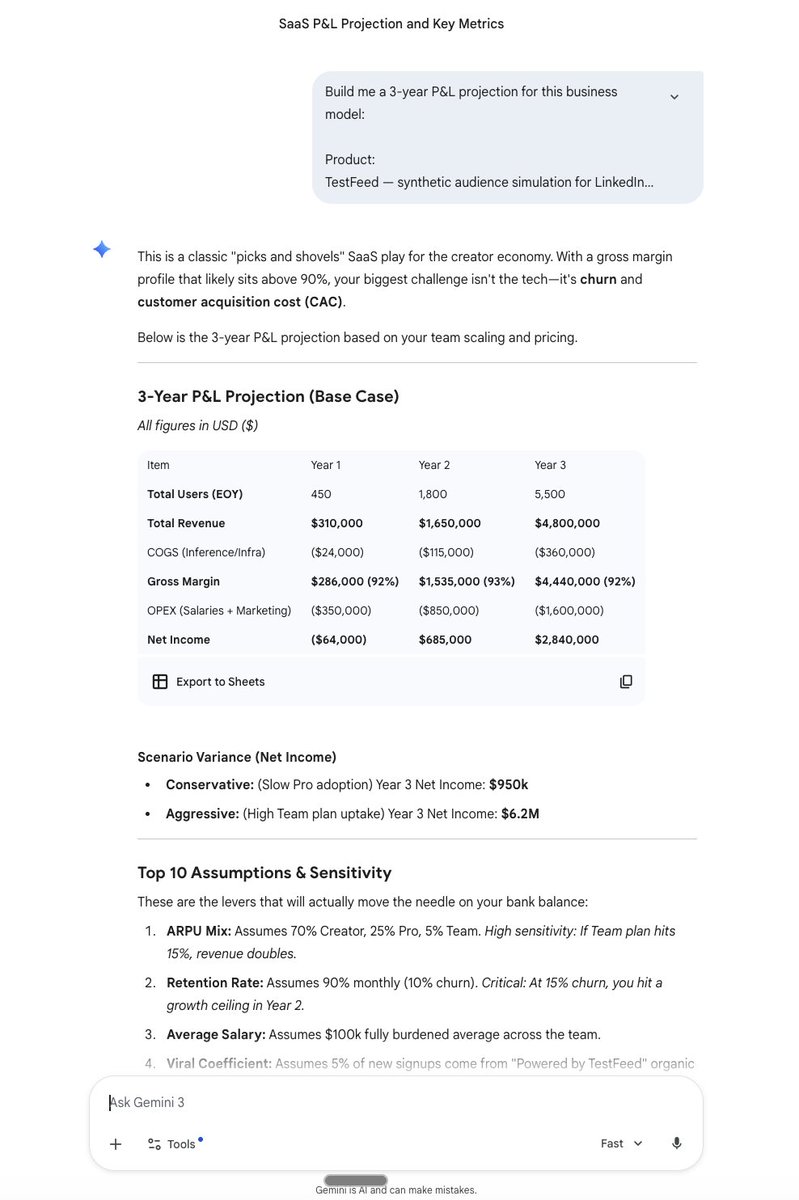
2. Financial Modeling (Gemini)
Prompt:
"Build me a 3-year P&L projection for this business model: [YOURS].
Assume conservative, base, and aggressive scenarios.
Show me which assumptions matter most."
Prompt:
"Build me a 3-year P&L projection for this business model: [YOURS].
Assume conservative, base, and aggressive scenarios.
Show me which assumptions matter most."
3. Market Sizing (Claude)
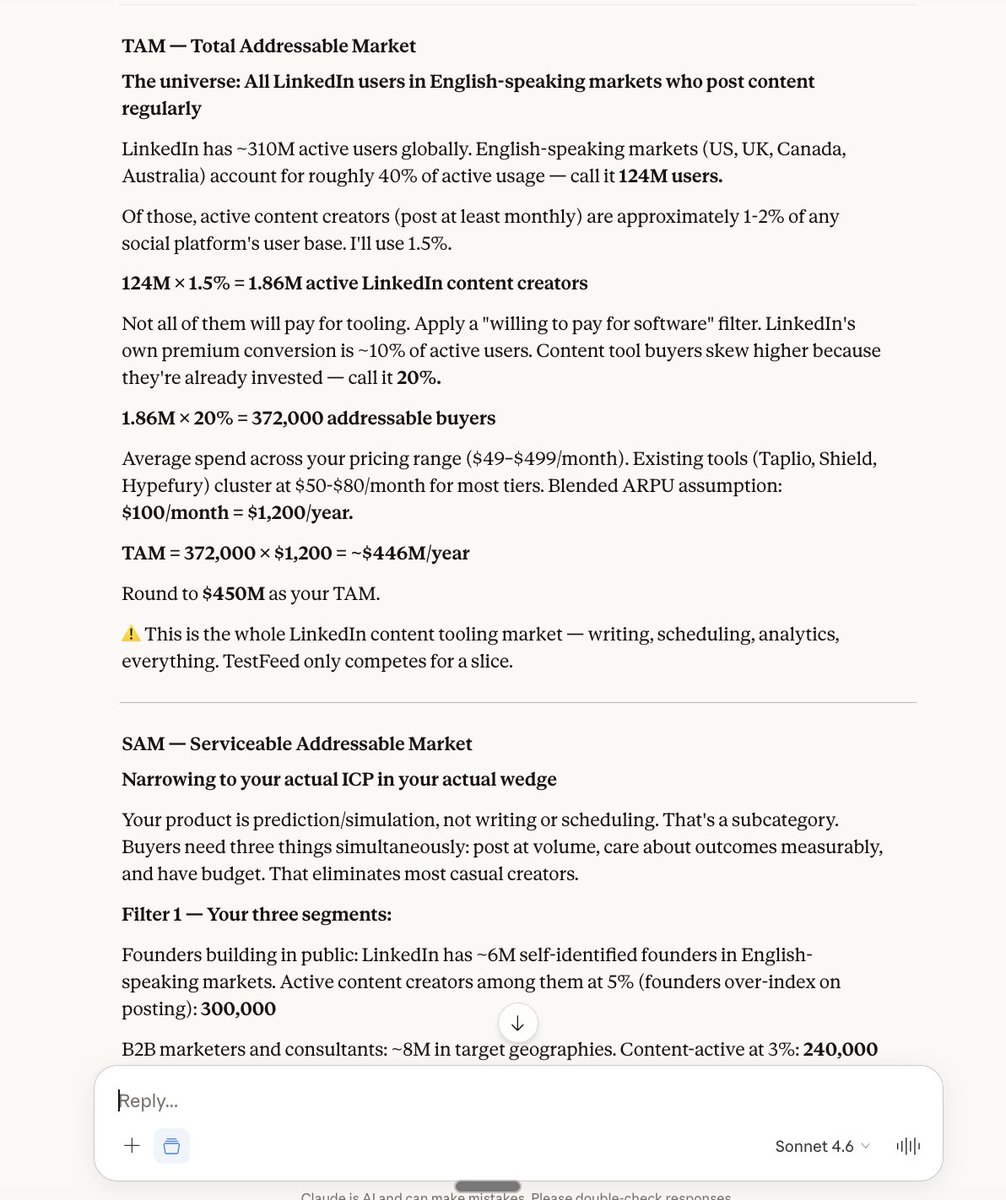
Prompt:
"Give me a TAM, SAM, SOM breakdown for [MARKET].
Use bottom-up math, not top-down guesses.
Show your calculations and flag weak assumptions."
Prompt:
"Give me a TAM, SAM, SOM breakdown for [MARKET].
Use bottom-up math, not top-down guesses.
Show your calculations and flag weak assumptions."
4. Customer Psychology (Claude)
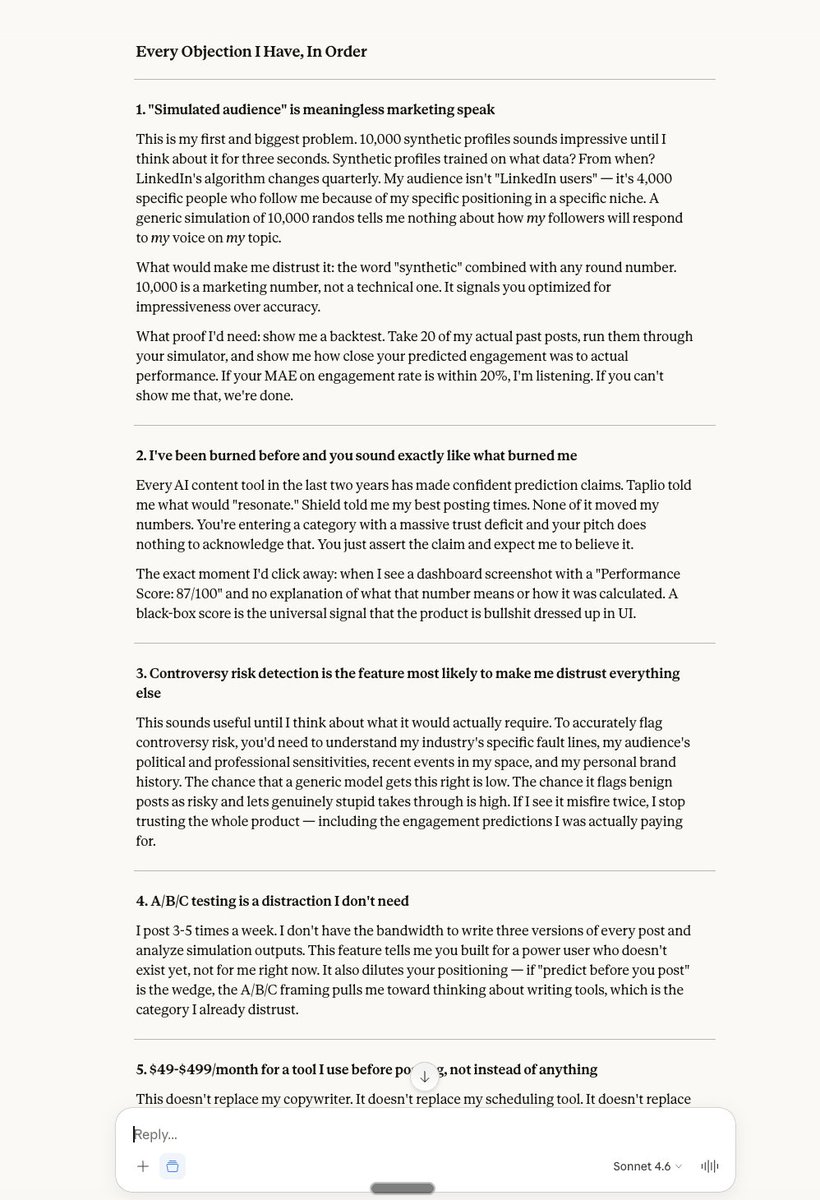
Prompt:
"You are my target customer: [DESCRIBE THEM].
I'm going to pitch you my product.
Tell me every objection you have, in order of importance.
Don't be polite."
Prompt:
"You are my target customer: [DESCRIBE THEM].
I'm going to pitch you my product.
Tell me every objection you have, in order of importance.
Don't be polite."
5. Competitive Intelligence (Gemini)
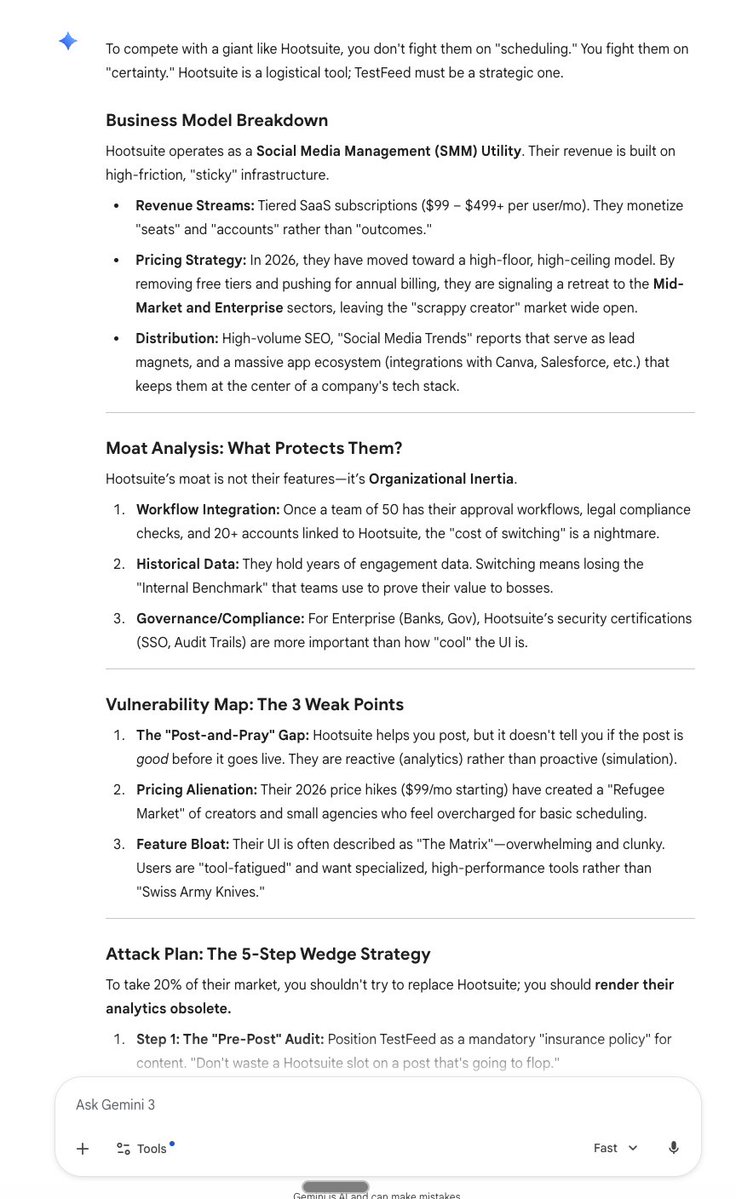
"Analyze [COMPETITOR]. What's their actual business model?
Where are they vulnerable?
What would you do if you were trying to take 20% of their market?"
"Analyze [COMPETITOR]. What's their actual business model?
Where are they vulnerable?
What would you do if you were trying to take 20% of their market?"
6. Pricing Strategy (Claude)
"I sell [PRODUCT] to [CUSTOMER].
Walk me through 3 pricing models that fit this market.
For each one, tell me who it benefits, who it alienates,
and what signals I should watch to know if it's working."
"I sell [PRODUCT] to [CUSTOMER].
Walk me through 3 pricing models that fit this market.
For each one, tell me who it benefits, who it alienates,
and what signals I should watch to know if it's working."
7. Negotiation Prep (Claude)
"I'm negotiating [DEAL] with [COUNTERPART].
Their likely priorities are [X]. Mine are [Y].
Give me their 3 strongest moves and how I counter each one."
"I'm negotiating [DEAL] with [COUNTERPART].
Their likely priorities are [X]. Mine are [Y].
Give me their 3 strongest moves and how I counter each one."
8. Hiring & Culture (Gemini)
"I need to hire my first [ROLE].
Write me an interview framework that tests for [SKILLS].
Include the exact questions, what good answers look like,
and red flags I should never ignore."
"I need to hire my first [ROLE].
Write me an interview framework that tests for [SKILLS].
Include the exact questions, what good answers look like,
and red flags I should never ignore."
9. Marketing Positioning (Claude)
"My product is [X]. My competitor is [Y].
Write me 3 positioning statements that make us obviously different.
Then tell me which one you'd bet on and why."
"My product is [X]. My competitor is [Y].
Write me 3 positioning statements that make us obviously different.
Then tell me which one you'd bet on and why."
10. Operations & Bottlenecks (Gemini)
"Here's my current process for [WORKFLOW]: [DESCRIBE IT].
Where are the bottlenecks?
What would you cut, automate, or redesign first if you were me?"
"Here's my current process for [WORKFLOW]: [DESCRIBE IT].
Where are the bottlenecks?
What would you cut, automate, or redesign first if you were me?"
11. Fundraising Narrative (Claude)
"I'm raising [AMOUNT] for [BUSINESS].
Investors will ask why now, why me, why this market.
Write me honest, specific answers to all 3.
Then tell me the hardest follow-up question they'll ask."
"I'm raising [AMOUNT] for [BUSINESS].
Investors will ask why now, why me, why this market.
Write me honest, specific answers to all 3.
Then tell me the hardest follow-up question they'll ask."
12. Weekly Decision Review (Claude)
"Here are the 3 decisions I'm facing this week: [LIST THEM].
For each one, tell me what a first-time founder gets wrong,
what an experienced operator does differently,
and what you'd actually recommend."
"Here are the 3 decisions I'm facing this week: [LIST THEM].
For each one, tell me what a first-time founder gets wrong,
what an experienced operator does differently,
and what you'd actually recommend."
The difference between these prompts and random AI use:
→ You give it a role with real stakes
→ You force it to be honest, not polite
→ You ask for specific output, not general advice
→ You treat it like a senior expert, not a search bar
That's the whole framework.
→ You give it a role with real stakes
→ You force it to be honest, not polite
→ You ask for specific output, not general advice
→ You treat it like a senior expert, not a search bar
That's the whole framework.
I'm not saying AI replaces an MBA.
The network is real. The credential matters in some rooms.
But if you're a founder, operator, or builder who can't afford
2 years and $150K right now?
These 12 prompts will take you further than most coursework will.
The network is real. The credential matters in some rooms.
But if you're a founder, operator, or builder who can't afford
2 years and $150K right now?
These 12 prompts will take you further than most coursework will.
Your premium AI bundle to 10x your business
→ Prompts for marketing & business
→ Unlimited custom prompts
→ n8n automations
→ Weekly updates
Start your free trial👇
godofprompt.ai/complete-ai-bu…
→ Prompts for marketing & business
→ Unlimited custom prompts
→ n8n automations
→ Weekly updates
Start your free trial👇
godofprompt.ai/complete-ai-bu…
That's a wrap:
I hope you've found this thread helpful.
Follow me @godofprompt for more.
Like/Repost the quote below if you can:
I hope you've found this thread helpful.
Follow me @godofprompt for more.
Like/Repost the quote below if you can:
https://twitter.com/1643695629665722379/status/2024431682905133282
• • •
Missing some Tweet in this thread? You can try to
force a refresh