Nikolai Rostov Profile picture
Feb 20 8 tweets 7 min read Read on X
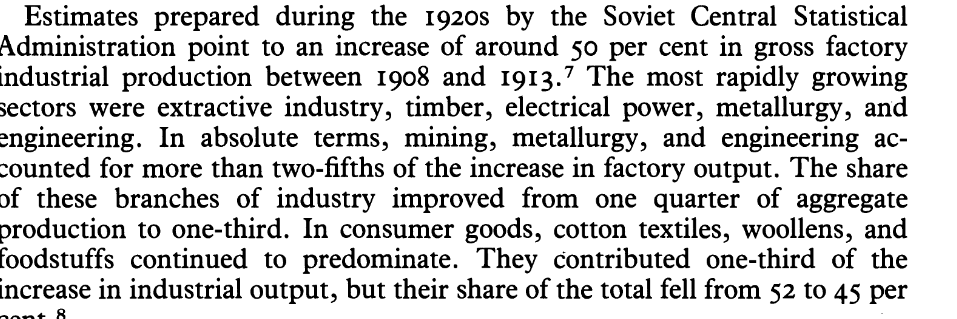
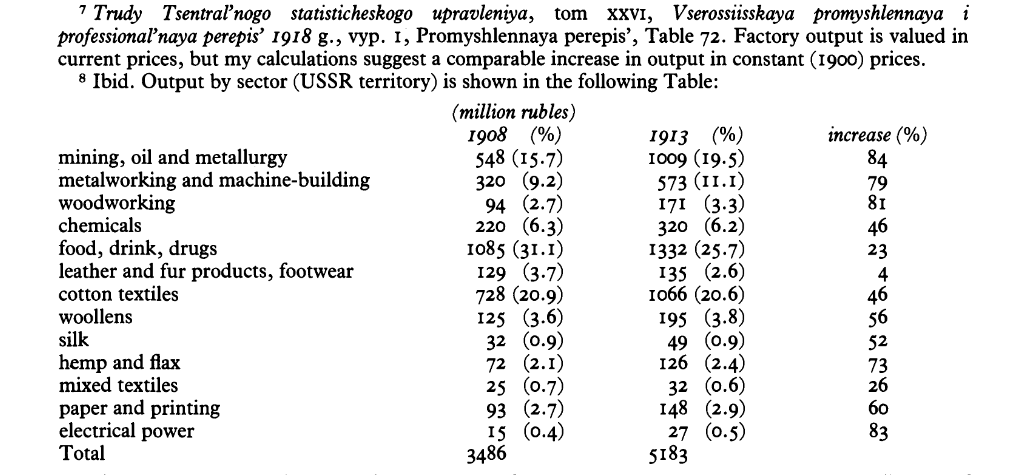
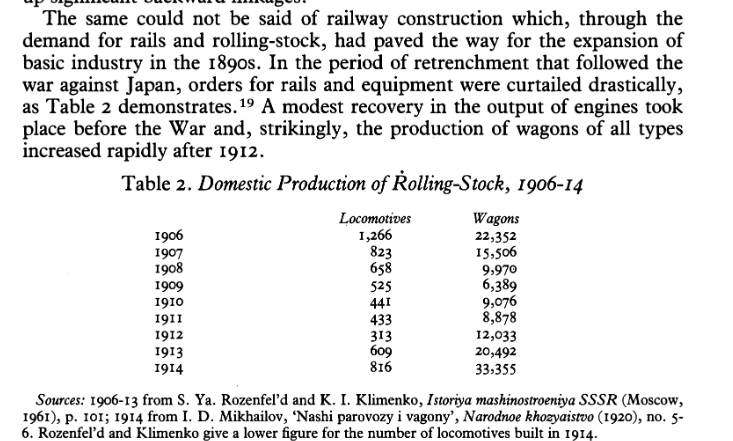
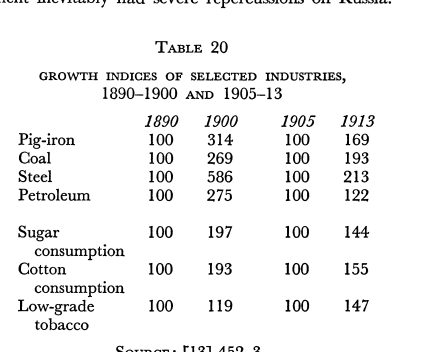
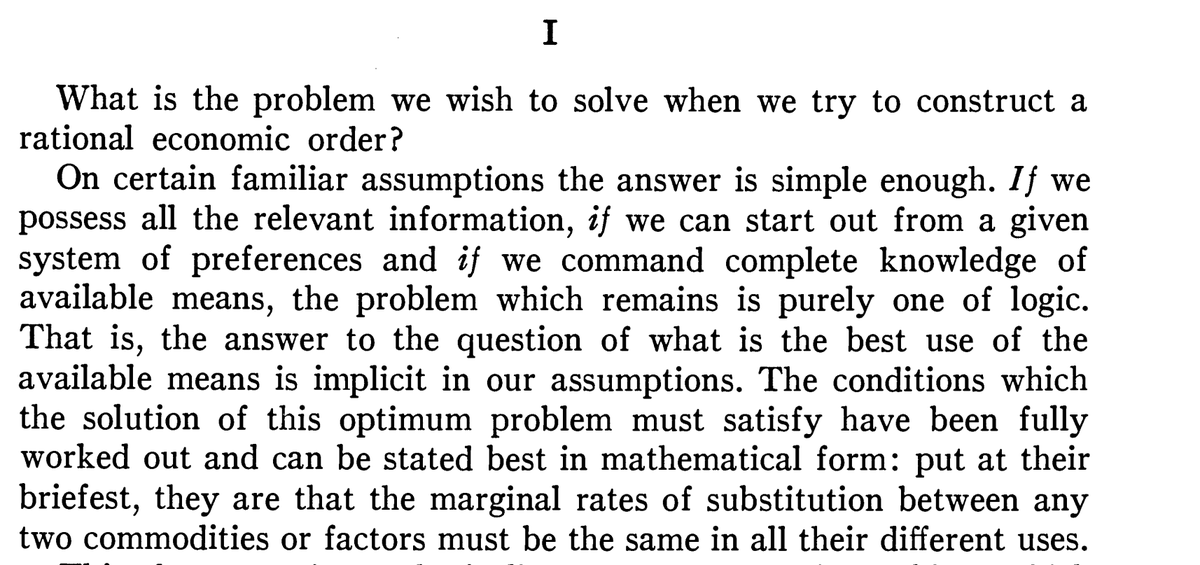
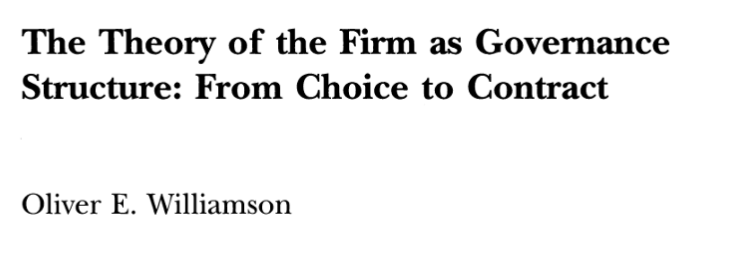
But shortly before the February Revolution Tsarist reforms led by people like Witte and Stolypin led to drastic industrialisation. Metallurgy and mining increased 84%. metalworking 79%, textiles 46%, electrical power 83% and woollens 56%. Light industries like sugar, cotton, low-growth tobacco etc. also showed growth. The railroad boom in the 1890s also helped bolster the process of industrialisation and began to recover before the War...
x.com/ProletarioP_/s…Image
Image
Image
Image
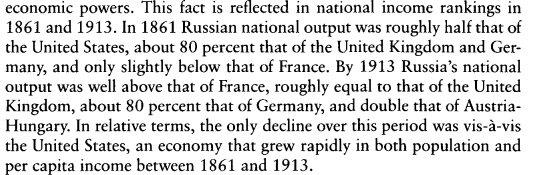
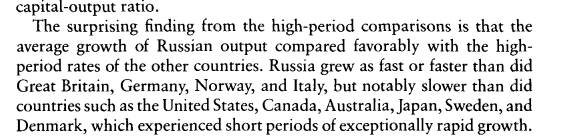
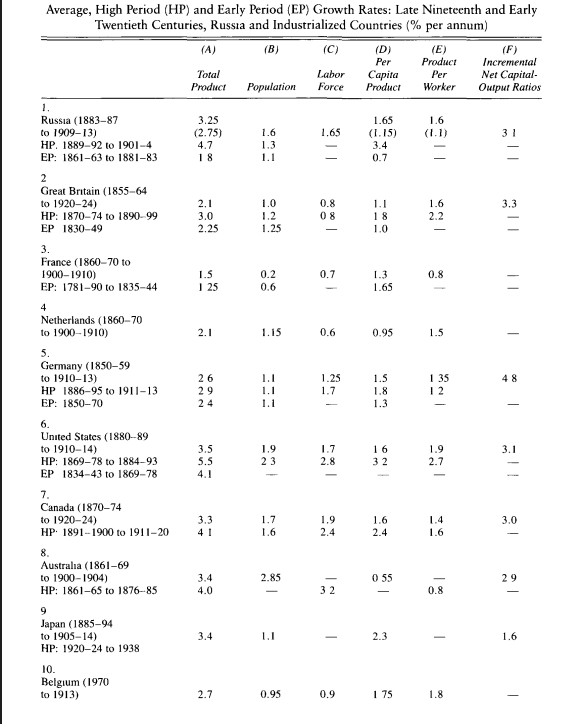
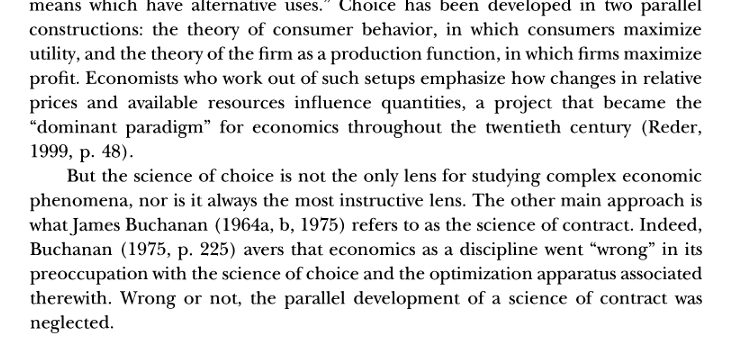
Output-wise Russia began at half the level of the US, 80% the UK and Germany, and only slightly below France. By 1913 output was well above France and comparable to Germany and the UK, and only really lagged behind the US. Overall growth levels were similar to the UK, Germany, Italy, etc. but slower than that of the US, Canada, Scandinavia etc. Per-capita product was comparable to Germany, the United States and Canada whom were mostly in the "late" stages of industrialisation.Image
Image
Image
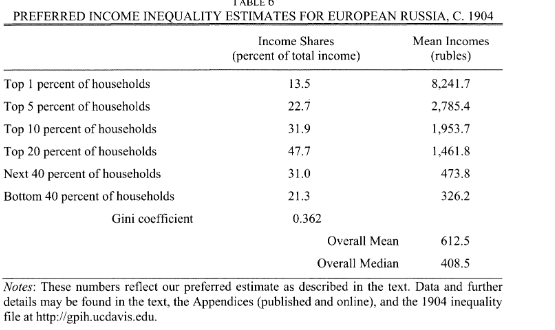
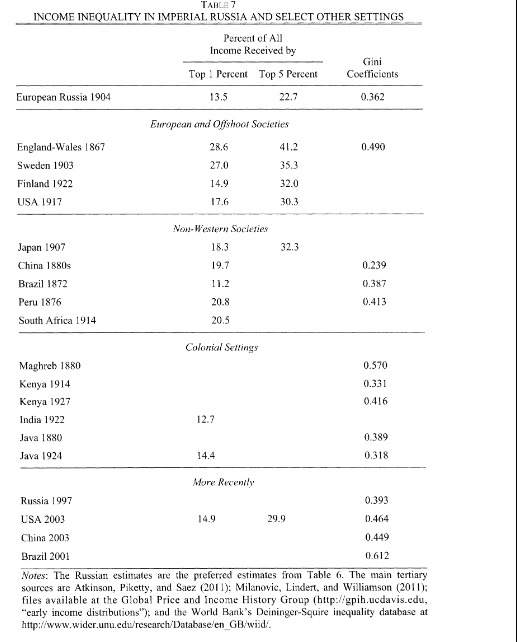
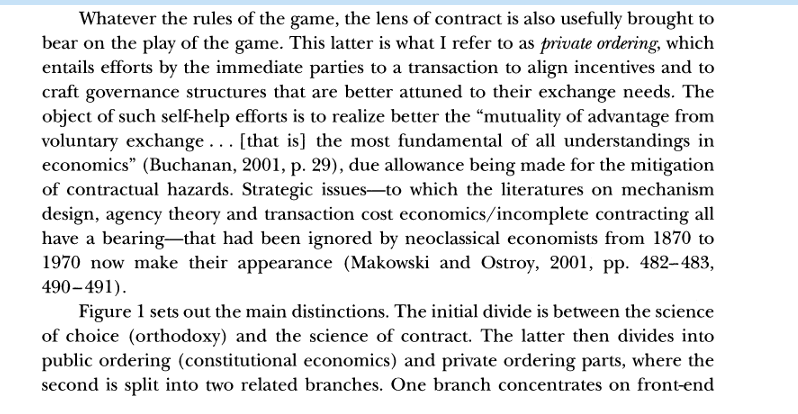
Although Russian income inequality is often stated as extremely drastic, it turns out that it was not terrible for the time or even the present-day. The Gini Coefficient of 0,362 was lower than Victorian England at the time and is comparable to nations like Latvia and the UK today, and the income share of the top 1 & 5% was lower than comparable European/Scandinavian nations at the time.Image
Image
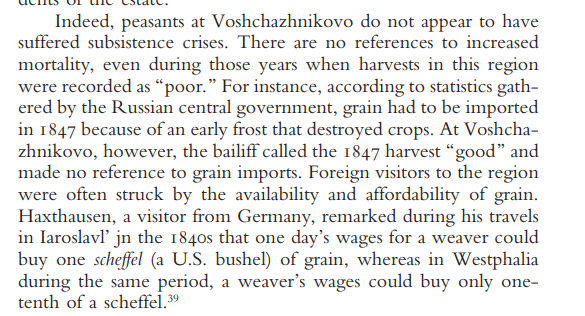
The idea of a despondent peasant class, wherein the peasantry lived primarily in subsistence, also does not seem to be universally accurate. For instance, in the Voschchazhnikovo area there are no references to increased mortality, and foreigners remarked that grain prices were cheaper and more available. In the Volga region there are evidence of local markets which had more than 140 items for sale. In Voschchazkhniovo markets offered needles, linen, tobacco, paper and other consumer goods. In addition, only about the bottom 25% actually lived in wooden huts-the majority in these rural areas had two-story stone houses.Image
Image
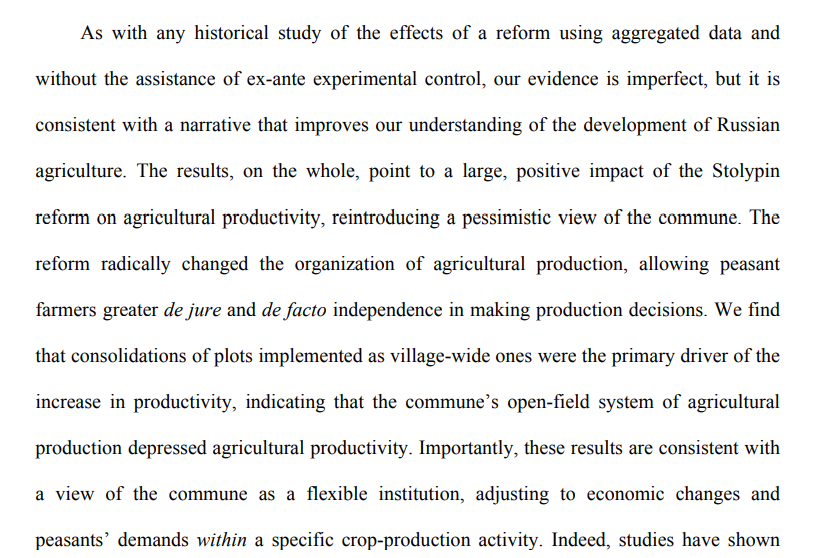
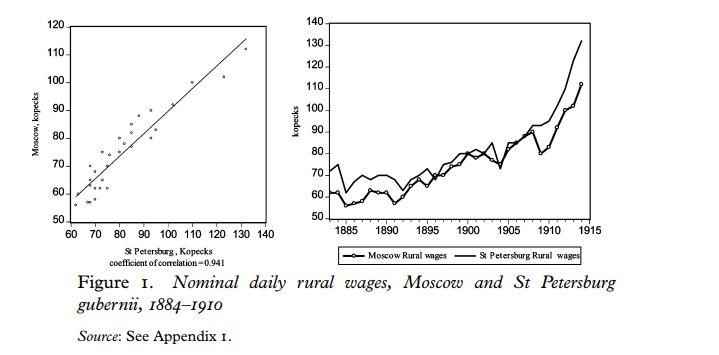
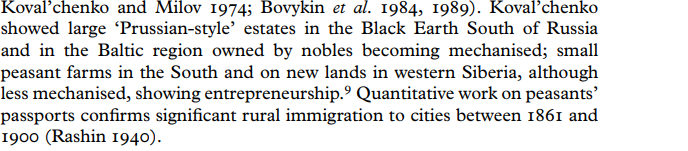
The idea of limited labour mobility and low land productivity due to the mir commune system (commonly referred to as the agrarian crises) is also reductionist. The Stolypin reforms, which allowed exits from the mir commune and the enclosure/privatisation of previous communes. This drove increases in land productivity as communes and farmers adjusted for economic changes. There were also examples of entrepreneurship within the Black Earth South and Baltic regions and examples of significant immigration from rural to urban region evidenced via. passports. Nominal rural wages also increased during this time in both Moscow and St.Petersburg.Image
Image
Image
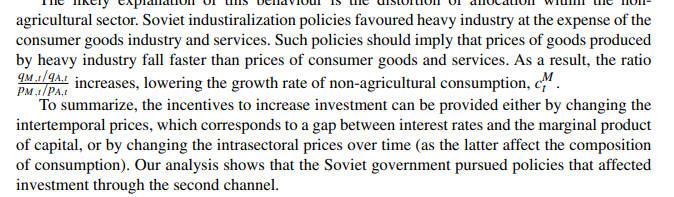
I want to conclude my revisionism by arguing that Soviet industrialisation was also imbalanced and to an extent illusory. Soviet industrialisation favoured heavy industry disproportionately at the extent of light industry, which lowered the growth rate of non-agricultural consumption.

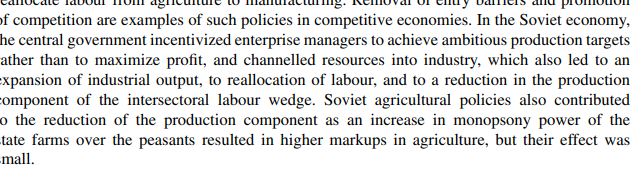
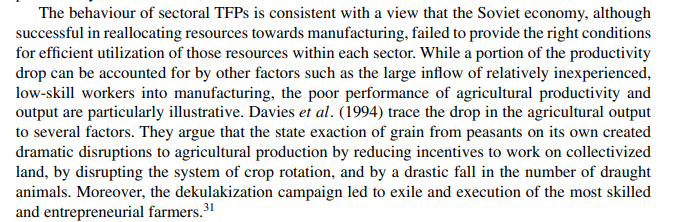
Total factor productivity in Soviet Russia was also continuously lower than that of the Tsarists, particularly in the agricultural sector. As Davies argues, this was because of re-collectivisation, by disrupting crop rotation, and by the fall of draught animals and loss of entrepreneurship caused by dekulakisation. Also, in the industrial sector, extremely ambitious production targets caused expansion of industrial output and labour allocation, but this lowered labour productivity overall.Image
Image
Image
I do not want to argue that the Tsarist economy was perfect. It had extreme structural flaws and barriers-of-entry that prevented it from fully flourishing; for instance, the massive channeling of money towards rail networks, the protectionism on foodstuffs, the export-oriented industrial policy, state-supported cartelisation on oil, steel, iron and coal that allowed them to set price controls, and low levels of human capital.

But the standard narrative that Tsarist Russia was stagnant and pre-industrial, that agrarianism prevented industrialisation, that labour markets were inflexible, that land communes failed to develop, that rural citizens were extensively impoverished etc. is at best overly simplistic.
Sources:
Industrial Expansion in Tsarist Russia, 1908-14 by Peter Gatrell
The Industrialisation of Russia, 1700-1914 by M.E. Falkus
Before command : an economic history of Russia by Paul R. Gregory
The rural/urban wage gap in the industrialisation of Russia, 1884–1910 by Leonid Borodkin, Brigitte Granville And Carol Scott Leonard
Tracy Dennison and Steven Nafziger, Living Standards in Nineteenth-Century Russia
The Stolypin Reform and Agricultural Productivity in Late Imperial Russia Paul Castañeda, Dower University of Wisconsin-Madison
Russian Inequality on the Eve of Revolution, Peter H. Lindert, Steven Nafziger
WAS STALIN NECESSARY FOR RUSSIA'S ECONOMIC DEVELOPMENT? Anton Cheremukhin

• • •

Missing some Tweet in this thread? You can try to force a refresh

 

Keep Current with Nikolai Rostov

Nikolai Rostov Profile picture

Stay in touch and get notified when new unrolls are available from this author!

Read all threads

This Thread may be Removed Anytime!

PDF

Twitter may remove this content at anytime! Save it as PDF for later use!

Try unrolling a thread yourself!

how to unroll video
  1. Follow @ThreadReaderApp to mention us!

  2. From a Twitter thread mention us with a keyword "unroll"
@threadreaderapp unroll

Practice here first or read more on our help page!

More from @austrosillyism

Mar 9
There are certain misconceptions about the Kowloon Walled City, the so-called anarchic and festering slum of British Hong Kong. Some include that housing quality and space was almost non-existent or that they were at least far inferior to less spontaneous public housing programmes; that poverty was significantly higher, that quality of life was far worse and that the area lacked governance (not to be equated with a state in this case). These are for the most part, misleading.Image
Please note: although I'm pretty decent in Cantonese as it is one of my primary languages (我嘅廣東話一般般啦) I am mostly using Colonial-era Romanisation of certain location names. So don't take offence if you are one of the few people to be offended by that.
Despite the fact that government interests favouring the demolition of the walled City were at play, a report found no structurally defective or unsafe buildings 17 years after the Walled City's construction. This was after considering potential factors such as collapse, a lack of structural integrity, fire, disease outbreak, or a plane mis-approximating its approach to Kai Tak Airport (one of the most challenging approaches in the world, mind you). It seems as if the buildings being packed together actually contributed to their structural integrity.

However, many public rental buildings were found to be structurally unsound, such that 27 housing blocks were demolished and 411 required heavy costs and maintenance to survive. This was due to the shoddiness of public housing projects, which I shall cover in due course.Image
Image
Read 16 tweets
Mar 5
There are several problematic propositions employed when studying and understanding the role, expansion, and nature of Government, as first detailed by Robert Higgs (1991). These fallacies are employed by economists, political scientists, public choice theorists, and laymen. Image
The first is the idea that we can universalise all actions of government into a single "size". We can say that from government doing "X" and "Y" that it is a "big" government or "small" government. This is problematic for the following reasons; suppose that government increases defence funding whilst eliminating subsidies for certain manufacturing industries for the exact same amount. Suppose that government decreases zoning regulations (in the real estate sector) but increases excise duties at the same time.

One action is associated with increased interventionism, the other one decreased interventionism; now also consider that government officials often work at odds ("churning") with each other; for instance, the USDA doing research on developing new and more efficient crop varieties may increase the supply and decrease the price of said crop; but land regulations may decrease the supply and increase the price of said crop. These two actions are countervailing but done by the same government. Now imagine that these contradictory and offsetting actions are multiplied thousandfold, as the regulatory code is hundreds of thousandsfold; it is clear that an objective unit of account is generally not possible.Image
The next is the idea that statistics can provide us with a more legible definition of the size of government; namely, the ratio of total spending to GNP (gross national product). Or the ratio of tax revenues to GDP, or the ratio of government employees to labour force. These are proposed alternatives.

There are some simple complications in this. When one says "government spending" should one mean all government spending or the government's spending for newly purchased finished goods & services? Both measures are used, but the all-spending ratio can rise whilst the exhaustive one is level. Also there are more practical examples. Say a company produces more products ceteris paribus. The implication is that government has "shrunk" because the ratio is smaller. But has it? Suppose a government department agrees to pay more for the exact same supply of goods, so the ratio is ipso-facto higher. Has government grown? Suppose government goes from closing local meat inspection factories, instead forcing businesses to operate off a strict bureaucratic code. Has government gotten smaller?

The same is true for tax revenues, which is more complicated by taxes switching regularly from on to off budget, and by the appearance of multiple taxes. And the issue with government employees as a ratio to labour force is that government contracts many private companies to build so-called public services (roads, bridges, etc.) These workers may not be employed by government, but can we classify them as "private"? Issues abound.Image
Read 18 tweets
Feb 24
Many people claim that the end of the Glided Age was a peak example of positive interventionism: big business doing whatever they wanted with little respite, which only stopped when government regulated and broke them up, freeing consumers from the yoke of unregulated capitalism. But is this true? The answer is... no. What if, instead... the regulations were done in the name of big businesses and special interests? This might seem difficult to fathom in the here-and-now, but read on.Image
The following sections are mostly theoretical and provide for the reader a reason to believe the idea that regulation can be done for special interests, before actual empirical examples are given to bolster such an idea; if you are already well-versed in public choice theory, feel free to skip posts 3-8..)
The underlying ratiocination behind my thesis that regulations can be a tool to consolidate is this truism and its logical conclusions; large companies (and by extension, all companies, but large companies have more resources and knowledge to fulfill it) want their competitors to lose.

After all, competition is something that is done for personal gain, and by extension personal victory. This is in essence a doxastic "truth". Now in a free market the optimal way to do so is to pursue strategy that sells products that are highly demanded, at the right supply, with the correct price set. This process is very intertemporal, that is to say transient, because having the correct strategy in year X does not ensure you will have the correct strategy in year X+1.

There might be competitors who discover new methods and flood the market, or there might be new, similar goods that are in higher demand, or there might be internal tension between your own business, which causes poor execution. Or, even simpler, consumers might want different goods. So even if companies want the market entirely to themselves, it is difficult for them to hold such a position for an extremely long time without a great deal of luck.
Read 84 tweets
Feb 22
People denounce the starvation and impoverishment in present-day society. And they have a right to do so, but one must remember how starvation and famine were often the norm for many societies pre-industrialism, even amongst "colonial powers" like Europe. The examples abound.Image
(Disclaimer: I am not trying to say life was universally poor or that certain aspects like spirituality did not factor in quality of life. I am merely trying to show how much famine and overall suffering ruined even affluent and privileged imperial societies, and not just in mass disasters like the Black Death or the Potato Famine)...
Let us start in the Mediterranean, specifically in the Venetian islands of the Levant: Crete, Corfu and Cyprus in the 16th-18th century. In the late 16th c. the Rev. Father Stefano described the various natural flora and fauna of Cyprus; the white apium, a relative of celery-leaf that could be eaten when crystallised in sugar; Oldanum was a plant used for liquor; black cypress was used to provide orange dye; and herbs, cattles, donkeys and bears. Animal and plant life was teeming, so one would think human life was too.
Read 21 tweets
Jan 16
Today I will talk about the case studies of private healthcare, and how they operated without government intervention; the gradual rise of regulations internationally and the vested interests behind them; and conclude with a focus on the interventionism of American healthcare and how it has not been free-market for decades.
The most famous example of pre-State directed healthcare are the fraternal societies (or lodges) in America from the late 19th-early 20th century. Such organisations were decentralised, autonomous, and gave mutual aid for anyone affiliated. They were divided into secret societies, sick and funeral benefit societies and life insurance societies.
The first stressed rituals (like, say, freemasonry) and payed members based on predetermined schedules, whilst sick and funeral benefit societies and life insurance ones moreso stressed the necessity to pay for just health and life insurance protection. All would also go beyond insurance into offering actual healthcare, namely “lodge practice”, which we shall discuss later.Image
Image
Contrary to what one might assume, that they were nascent and fleeting institutions of proto-industrialised societies, fraternal societies developed in industrialised and well-populated areas, with the precondition that city populations reached around 1,000 to 2,000.

Affiliations were quite stratified, with mutual aid based on blood ties, geography and religion; but the way in which they payed people was inconsistent and subject to adhering to certain in-group rituals. For instance, alcoholism or blaspheming God would likely mean withholding aid.Image
Image
Read 30 tweets
Dec 29, 2025
"Who will build the roads?" An interesting question which obviously demands a serious and comprehensive answer. It is easy to say "private companies", but "privatisation" of utilities invites the picture of graft/corruption, and empirical examples are scarcely discussed. As such we must demonstrate that the private ownership and construction of roads is both possible and feasible.
A very early example of private roads are the Viae privatae/rusticae/agrariae; or roads constructed by private individuals to connect their home, villa or farm to rome. Viae vicinales were roads that connected districts or villages through or to other villages and had some private funding, and could be maintained by landowners. This is not to say the entire Roman system was privatised, but that individual initiative on a reasonable scale funding roads is not at all a modern phenomenon.Image
Later and more established examples are that in Britain. In 14th century Britain guilds (most famously the Guild of the Holy Cross), individuals and trusts (to be discussed later) gave gifts and actively pursued to facilitate the maintenance of roads.
For instance in Sheffield, Peter Blundell gifted one hundred pounds dedicated to the Tiverton highways, in Bury, Anne Barrett gifted a part of her eleven marks (somewhere around 11-15 pence or so) to maintaining the roads, Sir William Hanley and Sir Hugh Cholmond had done the same at Huntington Lane, and Sir John Cowper had told the executors of his will to carry six score loads (roughly 120 total) of small stones to fix the roads.

These do not seem to be isolated instances in Middle-Ages England.Image
Image
Image
Read 21 tweets

Did Thread Reader help you today?

Support us! We are indie developers!


This site is made by just two indie developers on a laptop doing marketing, support and development! Read more about the story.

Become a Premium Member ($3/month or $30/year) and get exclusive features!

Become Premium

Don't want to be a Premium member but still want to support us?

Make a small donation by buying us coffee ($5) or help with server cost ($10)

Donate via Paypal

Or Donate anonymously using crypto!

Ethereum

0xfe58350B80634f60Fa6Dc149a72b4DFbc17D341E copy

Bitcoin

3ATGMxNzCUFzxpMCHL5sWSt4DVtS8UqXpi copy

Thank you for your support!

Follow Us!

:(