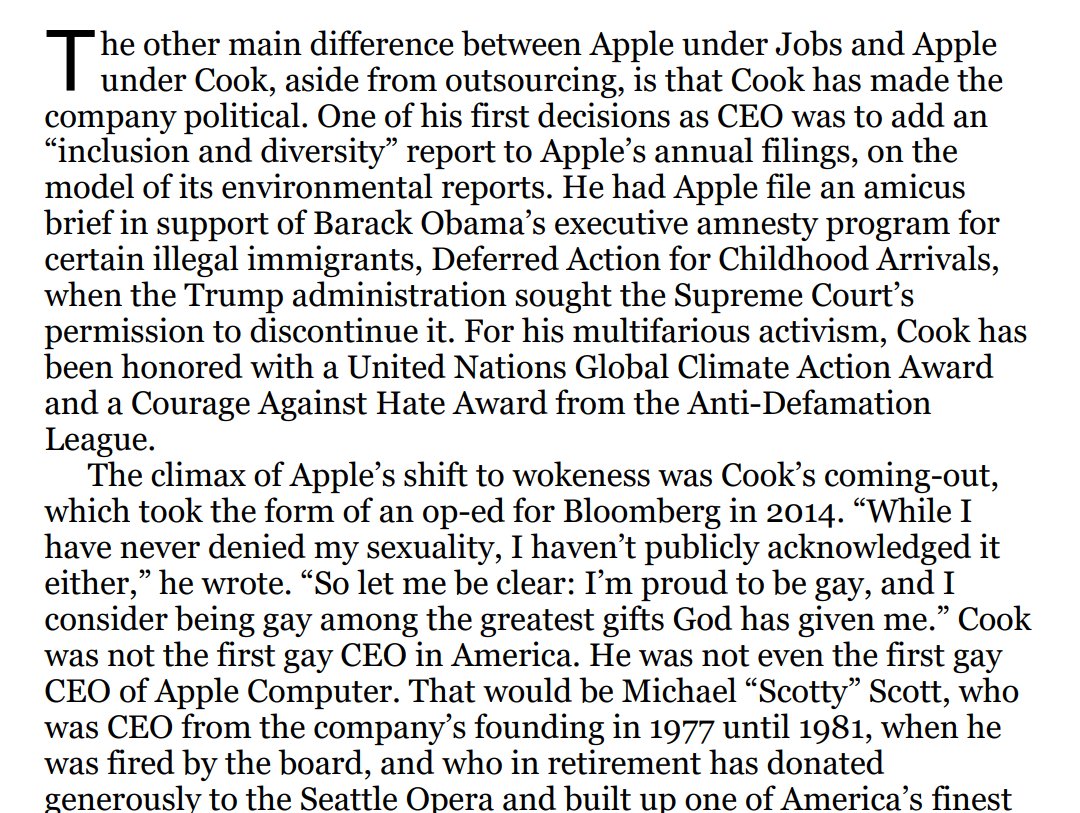
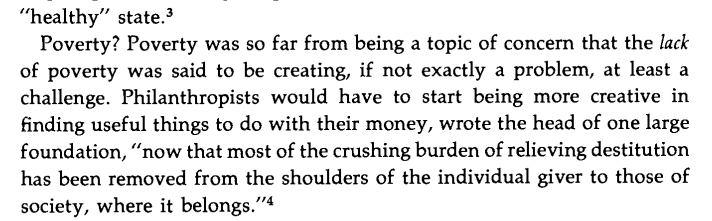
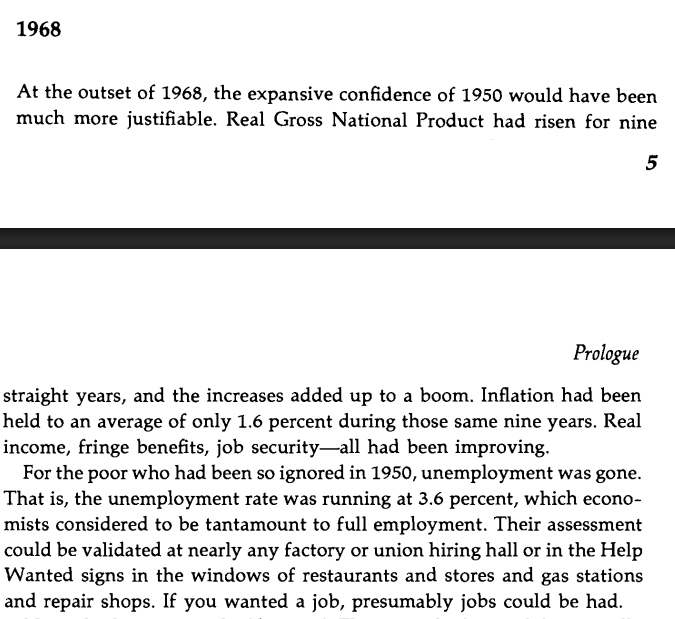
Thread with excerpts from "Why Post-Liberalism Failed." Thesis: liberalism is dead and has been for a long time. Modern post-liberalism fails because self-described post-liberals are attacking an order that died a century ago; we live under actually-existing post-liberalism. 
(I would recommend reading the entire essay rather than this thread, because I'm leaving out a lot, but it is quite long. Link here. Thread continues below.)
web.archive.org/web/2023063016…
web.archive.org/web/2023063016…
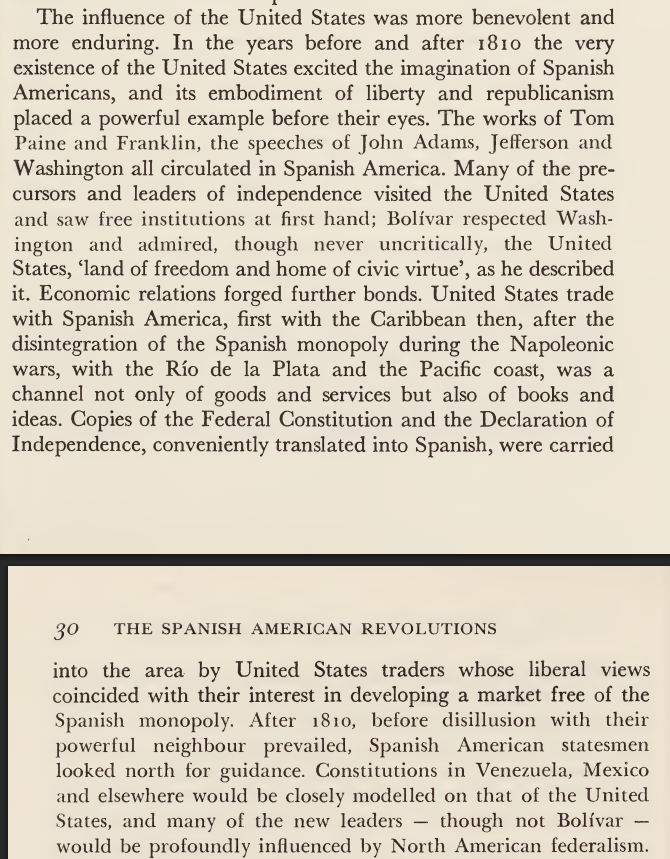
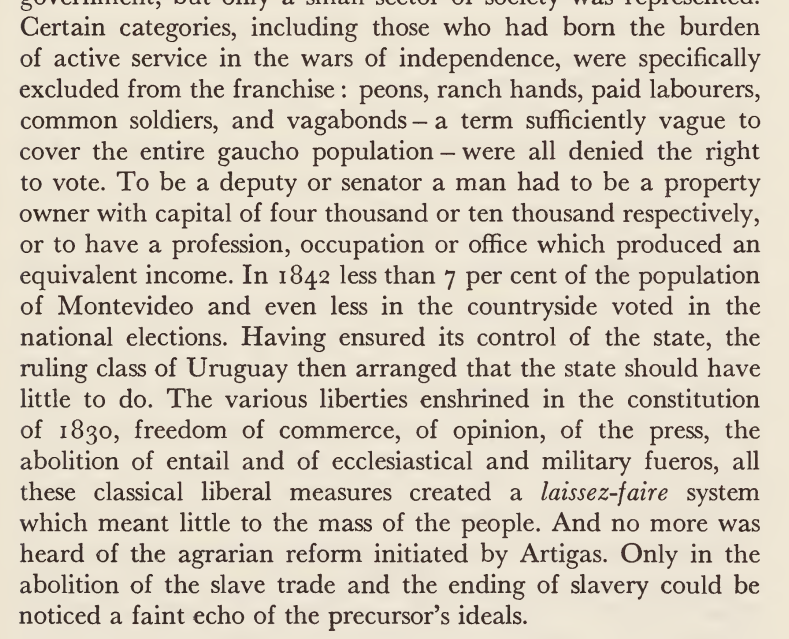
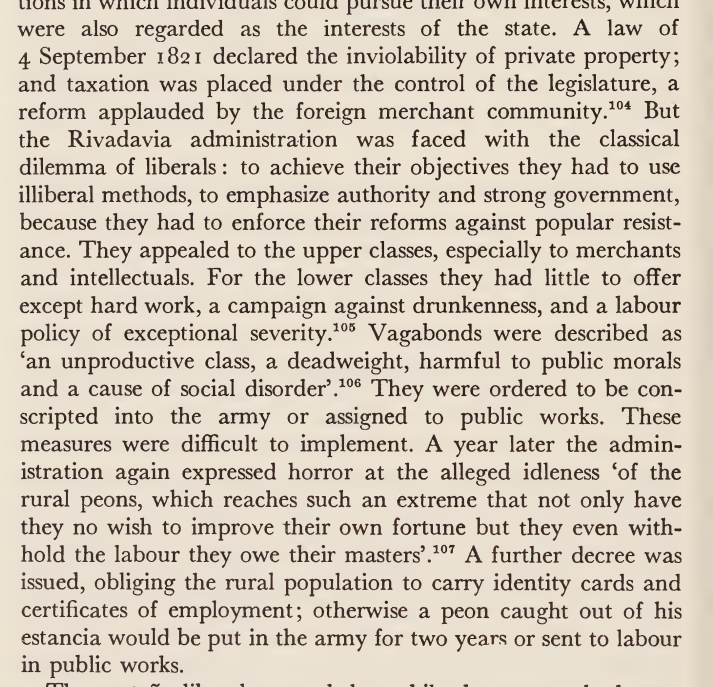
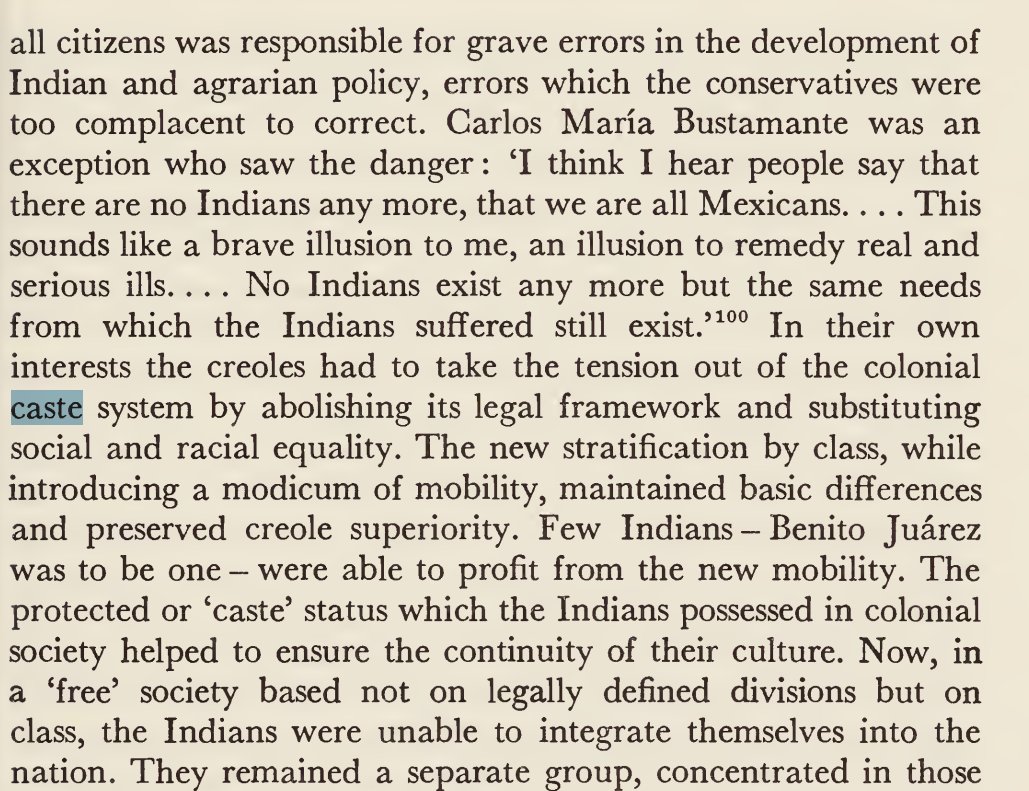
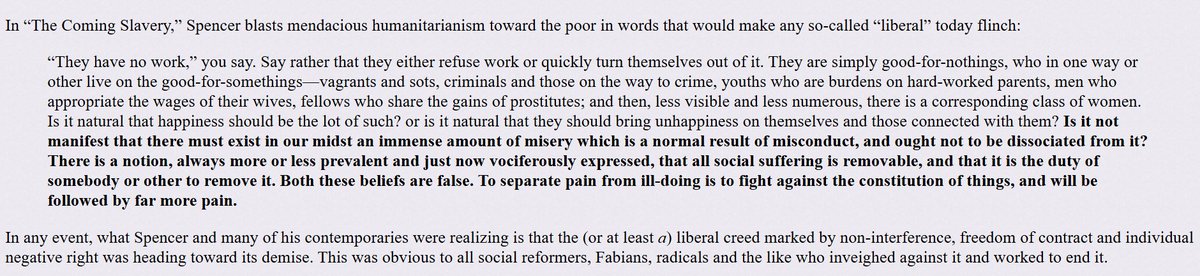
The liberal order was defined by non-interference, freedom of contract, and negative right. It was already clearly threatened by the 1880s in Britain, as lamented by Herbert Spencer.
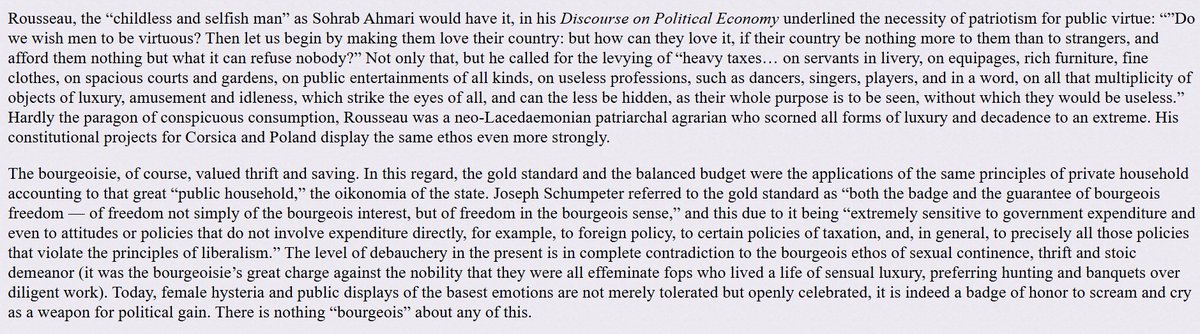
The liberal bourgeoisie tended to be thrifty, austere, stoic, and sexually continent. None of these apply to the current order.
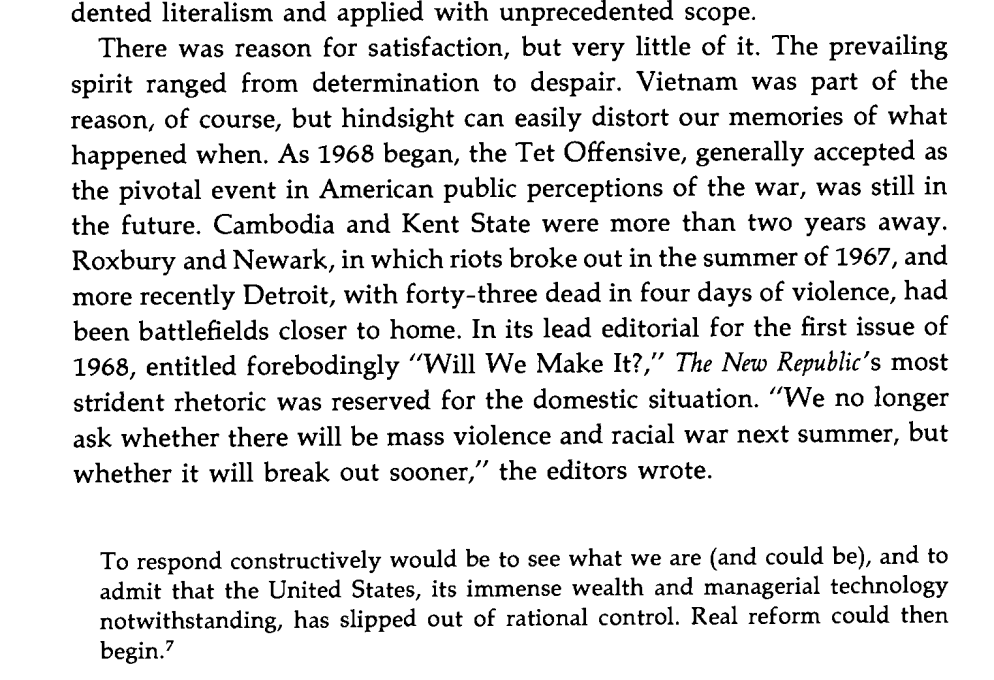
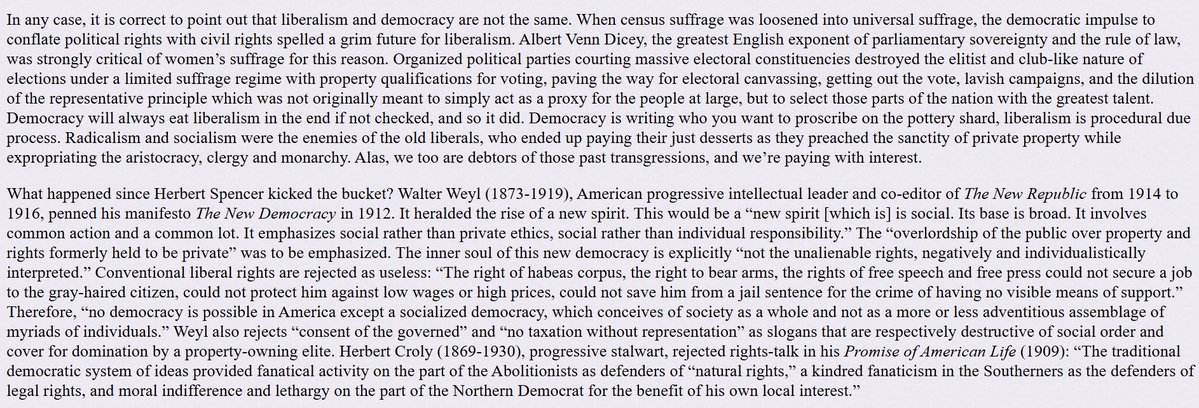
Democracy is not synonymous with liberalism, and indeed devours liberalism in practice. By 1912, some American progressives were already sounding very post-liberal, claiming that negative rights were either irrelevant or impossible and prioritizing social over private ethics.

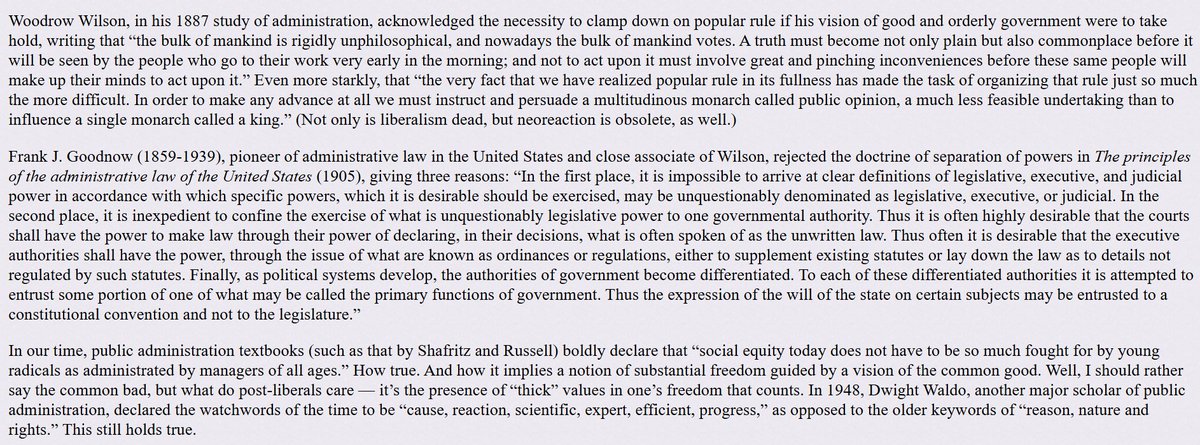
American progressives were rejecting the doctrine of separation of powers in favor of administrative law as early as 1905. They won. "Social equity today does not have to be so much fought for by young radicals as administrated by managers of all ages."
The judicial/legal core of liberalism: "legal equality, or of the universal subjection of all classes to one law administered by the ordinary Courts."
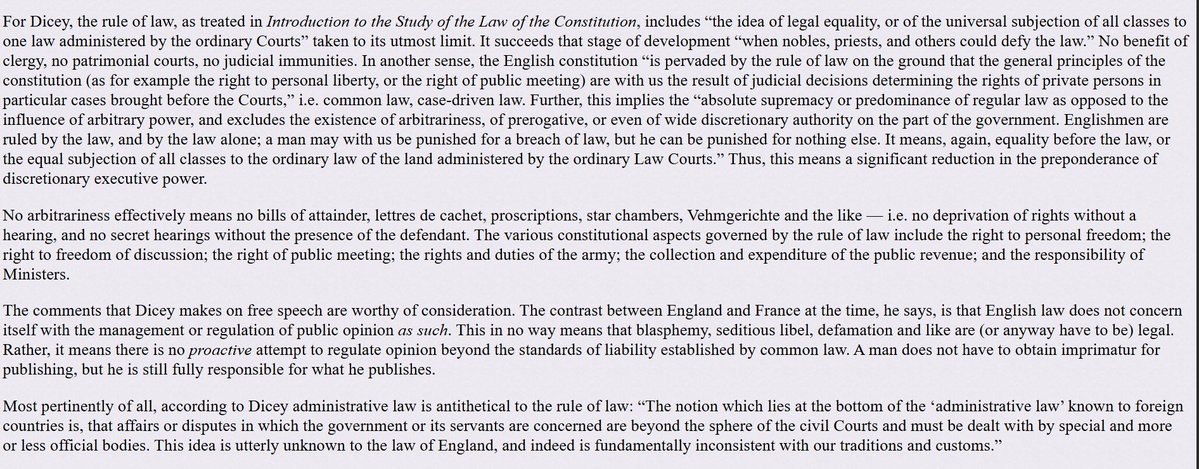
This is antithetical to, among other things, administrative law, with judicial powers conferred on non-ordinary courts.

In the US, rule of law has effectively been abolished by executive agencies, which not only violate separation of powers but also create basic constitutional norms from thin air.

Some examples: the Obama HUD reinterpreting a "general welfare" clause in a 1949 law to require transgender clients in homeless shelters be grouped according to self-identification, or the Obama DoJ refusing to defend the Defense of Marriage Act in 2011.

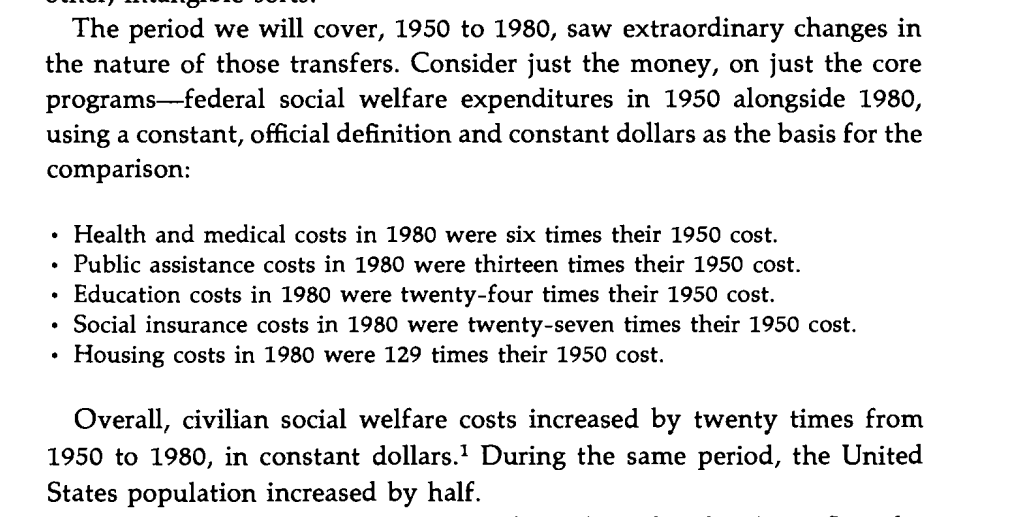
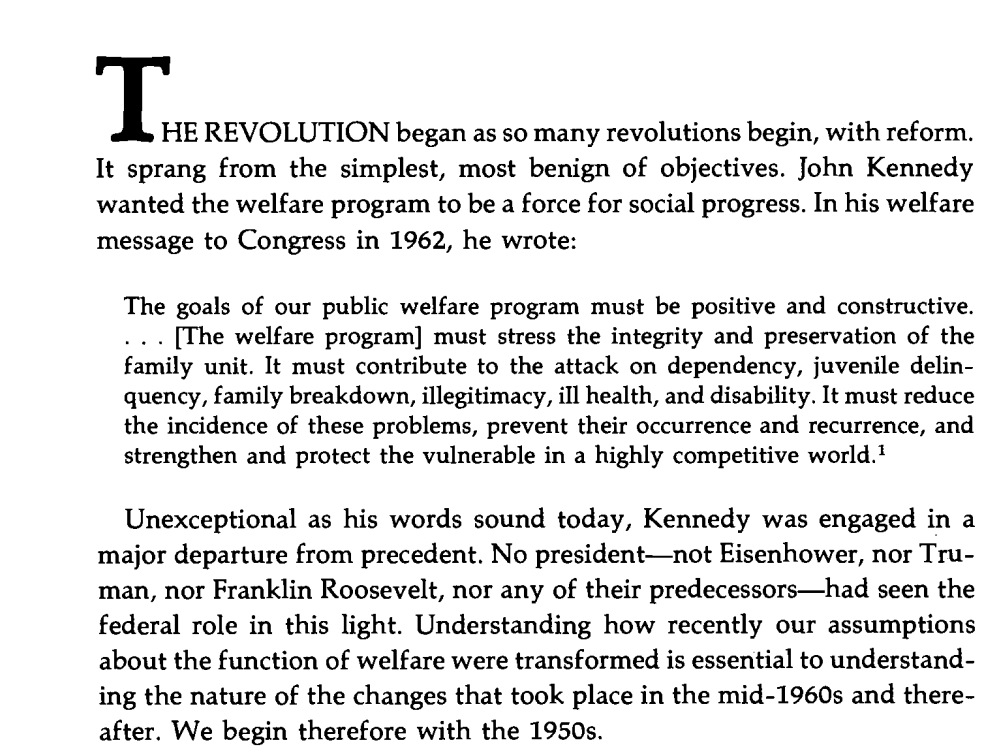
The Department of Health, Education, and Welfare mounting a judicial activity campaign to redefine welfare benefits as property and hence ban states from restricting them according to moral criteria, creating a constitutional right for layabouts to live off other people's $$$.

Reparations for slavery, which have already been paid out in several locales, are a bill of penalties: a group is being expropriated for the benefit of another in the reward of punitive damages without due process of law, violating Article I Section 9 of the Constitution.

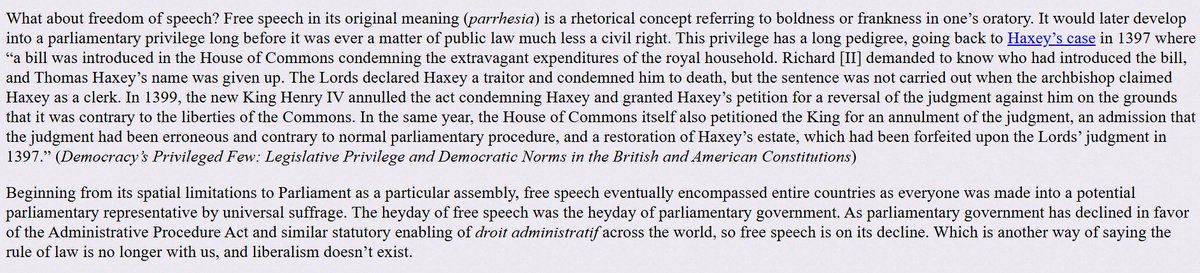
Freedom of speech was always closely connected to parliamentary government; as the latter has declined vis a vis administrative agencies and judges, the former has withered (very obviously true when the essay was written, in 2021).
Liberalism is focused on procedure, legality, and formality. This makes liberal democracies vulnerable to paradox-of-tolerance attacks. But this bug was patched via "militant democracy" in the 30s/40s, which eschewed liberalism to preserve democracy.
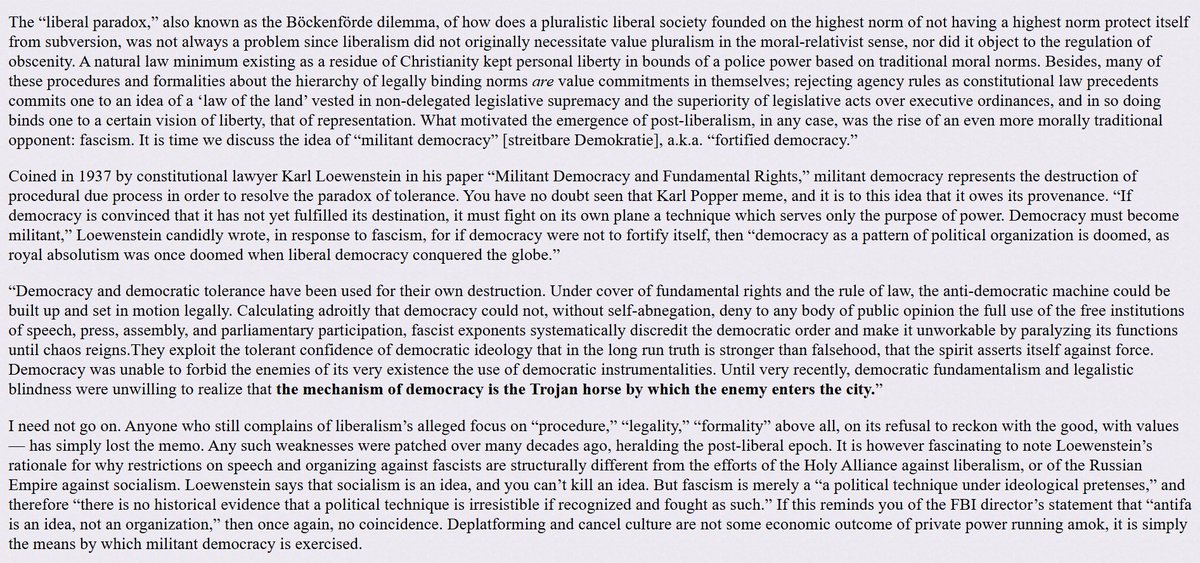
The Federal Republic of Germany is very explicit about this, mandating property shall serve the public good and that "abuse" of basic rights will lead to forfeiting them. Very post-liberal of them.

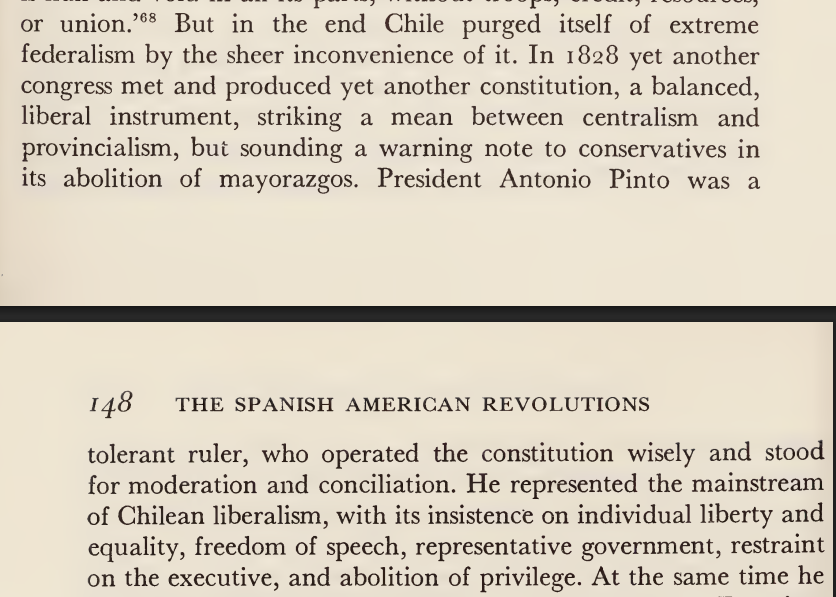
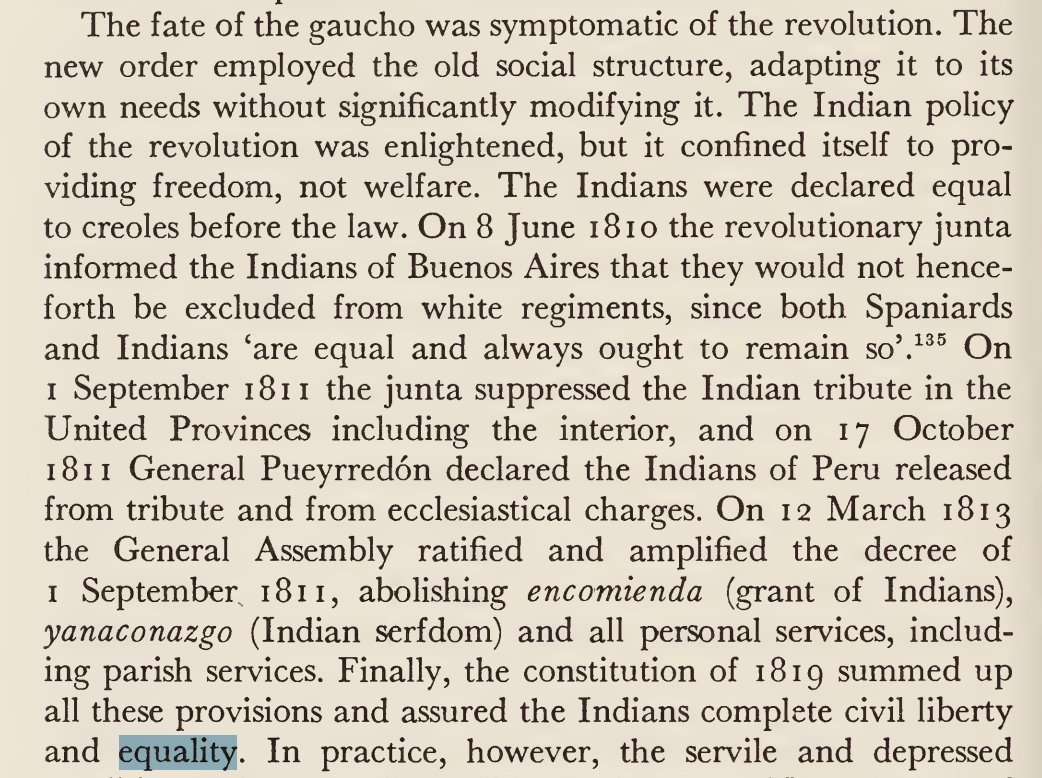
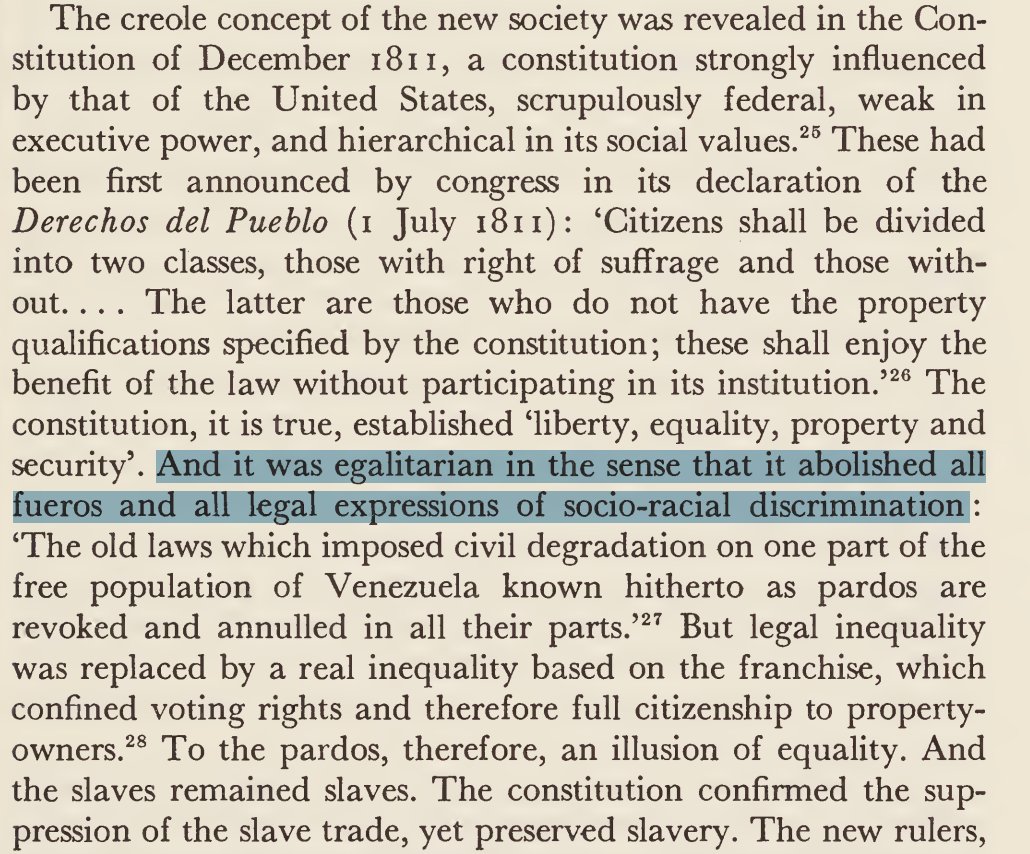
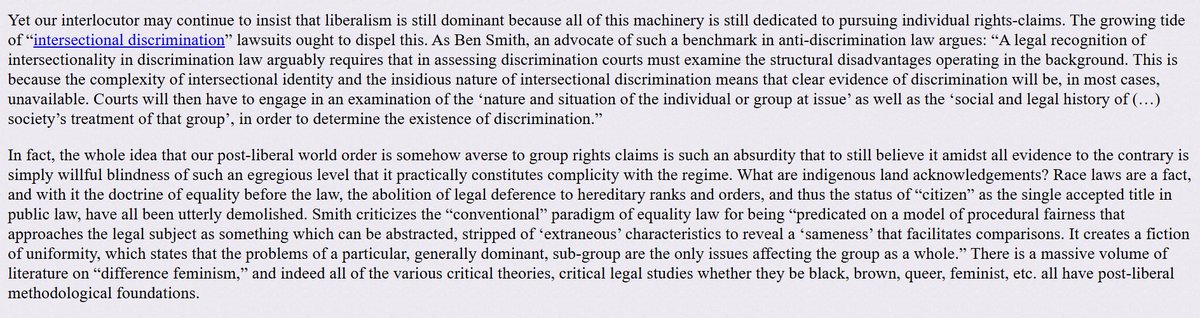
"Race laws are a fact, and with it the doctrine of equality before the law, the abolition of legal deference to hereditary ranks and orders, and thus the status of “citizen” as the single accepted title in public law, have all been utterly demolished."
Post-liberalism failed as an intellectual movement because it did not realize it had already won a century ago.
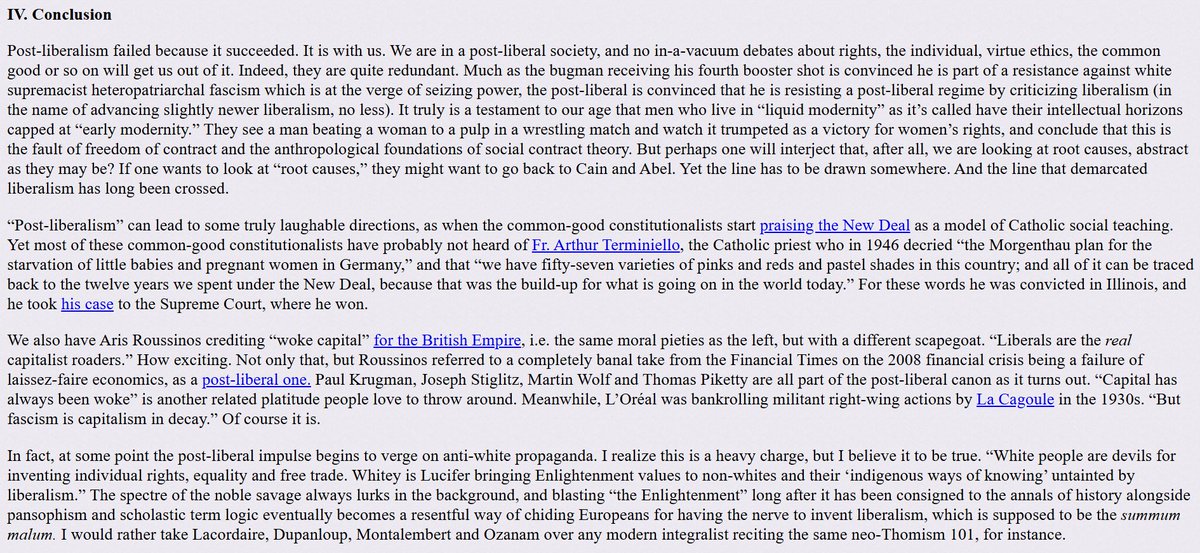
A liberal state under the rule of law today would have no restrictions on confessional schooling, no anti-discrimination law, no Federal Reserve, no state-level education commissions demanding sacrifices to Aztec gods, no funding for planned parenthood, and no welfare mamas.

(none of this should be taken as endorsement either by myself or by the author of actual liberalism, merely an observation that it died a century ago and we do not live in a liberal society today; the political faction skinsuiting the term is the one that killed it).

• • •
Missing some Tweet in this thread? You can try to
force a refresh